Texas Shrubs With Roots Less Likely To Damage Foundations
Our official state soil, Houston Black clay, can crack open wide enough in summer to swallow a garden trowel. Texas named it a state symbol in 1997, which feels funny once you see what it does to houses.
That clay swells like a sponge after storms, then shrinks hard during long droughts and heat waves. Thirsty roots near a slab can speed up that drying, pulling moisture from soil right under your walls.
I have to admit, I once planted a fast-growing tree way too close to my own porch. You might notice sticking doors or new cracks before you ever suspect the green culprit in your yard.
Shrubs with modest, well-behaved roots make far kinder neighbors for your foundation than big thirsty trees do.
1. Dwarf Yaupon Holly
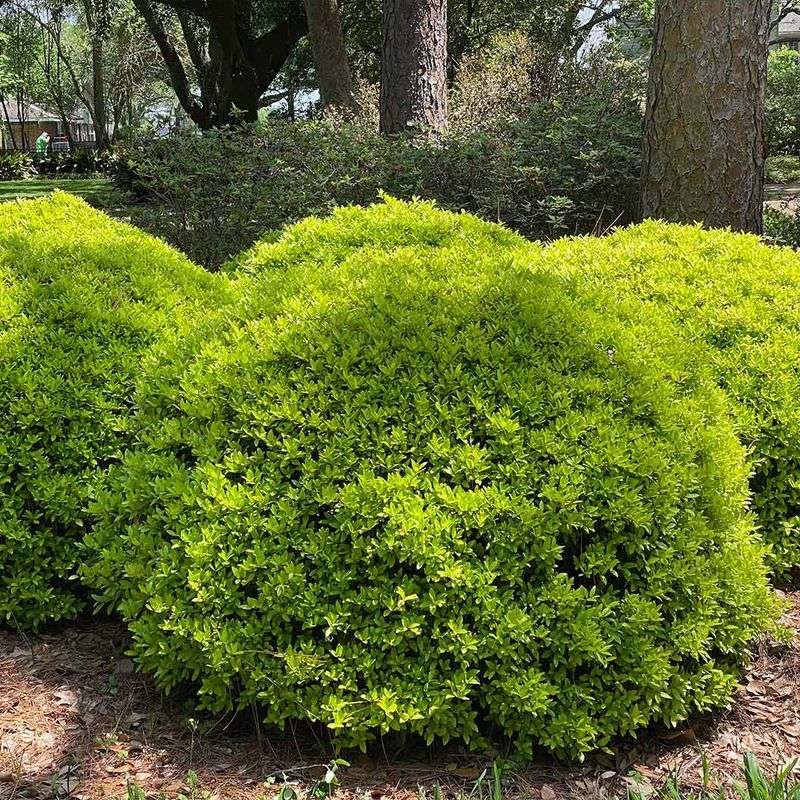
Few shrubs stay as politely round as dwarf yaupon, which barely needs a trim to keep its tidy shape. I love running my hand over its tiny glossy leaves, which feel like smooth little buttons in the sun.
The botanical name is Ilex vomitoria ‘Nana’, and the dwarf form usually reaches about three to five feet tall. Its dense, fine-textured growth fills out close to the ground, so it hides bare foundation edges nicely.
Its fibrous roots stay fairly compact, which makes it a popular foundation shrub across the state for good reason. Still, you should plant it about three feet from your walls so air and maintenance access stay easy.
Fun fact, the wild species has caffeine in its leaves, and Native Americans brewed it into a ceremonial tea.
Yaupon is often called the only native North American plant known to contain caffeine, which still amazes me.
Expect few berries on the dwarf form, since ‘Nana’ rarely fruits heavily compared with its taller cousins in the wild.
If you want red berries for birds, a female upright yaupon planted farther from the house works well.
Sun or part shade suits it fine, and it handles both clay and sandy soil once roots settle in. Water deeply during the first summer, then cut back to occasional soaks during long dry spells in August.
Personally, I think this shrub is the easiest way to make a new house look settled and established fast. It asks for so little, yet it keeps the front bed green through every season of the year.
2. Dwarf Wax Myrtle
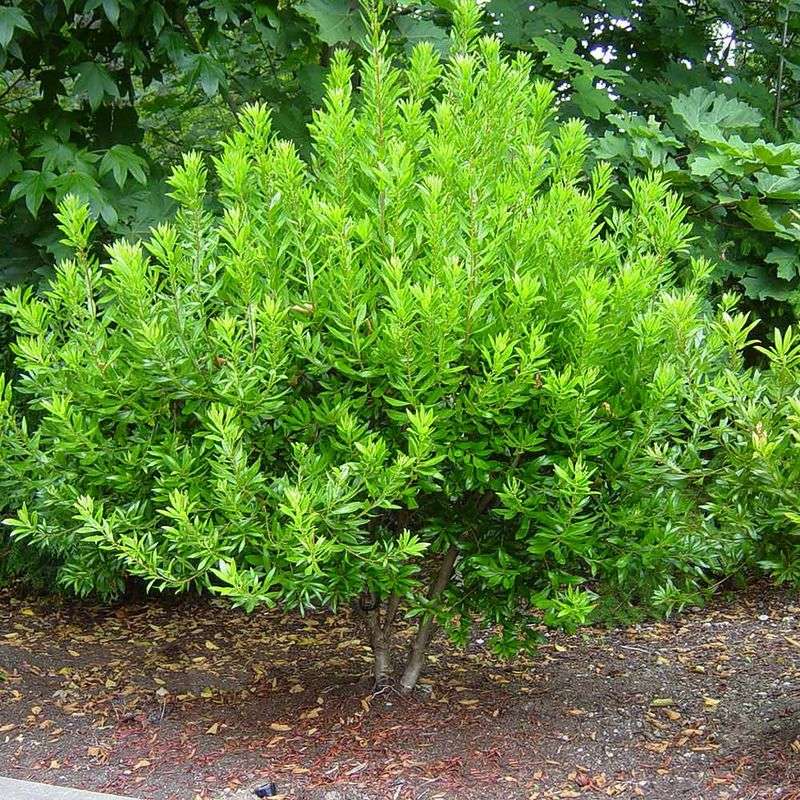
Crush a leaf of dwarf wax myrtle, and a spicy, clean scent rises up that reminds me of bayberry candles.
That connection is real, since colonists once boiled the waxy berries of wax myrtles to make candle wax.
Its scientific name is Morella cerifera, and dwarf selections usually stay around three to five feet tall and wide.
The narrow olive-green leaves have tiny resin dots, which give the plant its pleasant aroma on warm afternoons.
Roots of wax myrtle host nitrogen-fixing bacteria, so the plant can thrive in poor soil without much fertilizer. You can skip the heavy feeding, which saves money and keeps fast, floppy growth from showing up.
One quirk deserves attention, because wax myrtle can send up suckers that slowly widen the clump over several years. Pull or clip those shoots each spring, and the shrub stays neat along your foundation bed.
Female plants produce small blue-gray waxy berries that feed yellow-rumped warblers and other birds through cooler months. Male plants skip the berries, so ask your nursery which type you are buying before you plant.
Full sun to part shade works well, and this shrub tolerates both soggy spots and dry spells after establishment. I like using it on the east side of a house, where morning sun keeps foliage dense and full.
Give it about three feet of space from the wall to help airflow and make window washing much easier.
You will thank yourself later when you can reach the outdoor faucet without pushing through fragrant branches.
3. Texas Sage
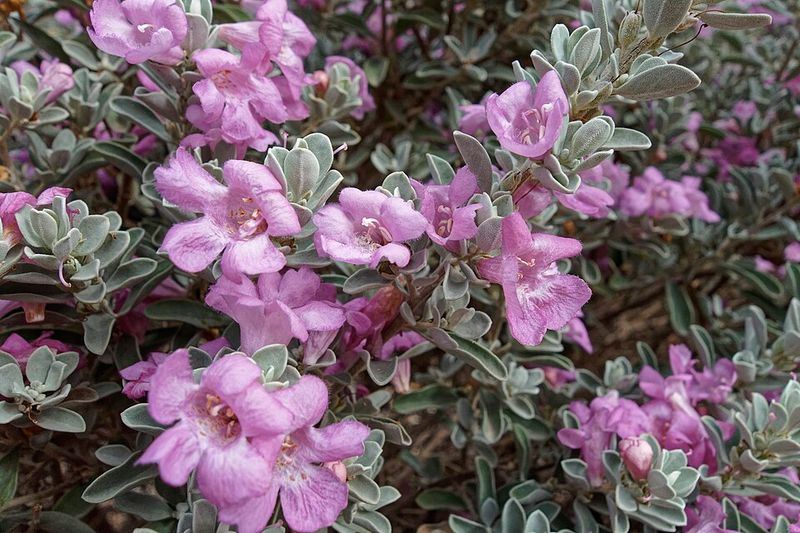
Old-timers call it the barometer bush, because it often bursts into purple bloom right after a summer rain. I can’t help grinning when a gray, quiet hedge suddenly turns lavender almost overnight after a passing storm.
Known as Leucophyllum frutescens, this native evergreen grows naturally across the Chihuahuan Desert and South Texas brushlands.
Its silvery, fuzzy leaves reflect harsh sun and help the plant hold onto precious moisture during heat waves.
Because it sips so little water once established, it rarely competes hard for moisture near your slab. Compact selections such as ‘Compacta’ stay around four to five feet, which fits nicely beneath most front windows.
Drainage matters more than anything else with this shrub, since soggy roots quickly lead to rot and decline. Plant it on a slight mound or in a raised bed if your yard holds water after heavy rains.
Skip the sprinkler zone, too, because frequent lawn watering keeps the soil too damp for its desert-loving roots.
Many gardeners lose sage plants to kindness rather than neglect, which is a lesson I learned the hard way.
Avoid shearing it into tight boxes, since that habit removes the wood where future flowers will form. A light selective trim in late winter or early spring keeps its natural shape soft and airy.
Full sun brings the most blooms, while shady spots make the plant leggy and sparse over time. Pair it with darker green shrubs, and that silver foliage will glow beautifully against your brick or stone.
4. American Beautyberry
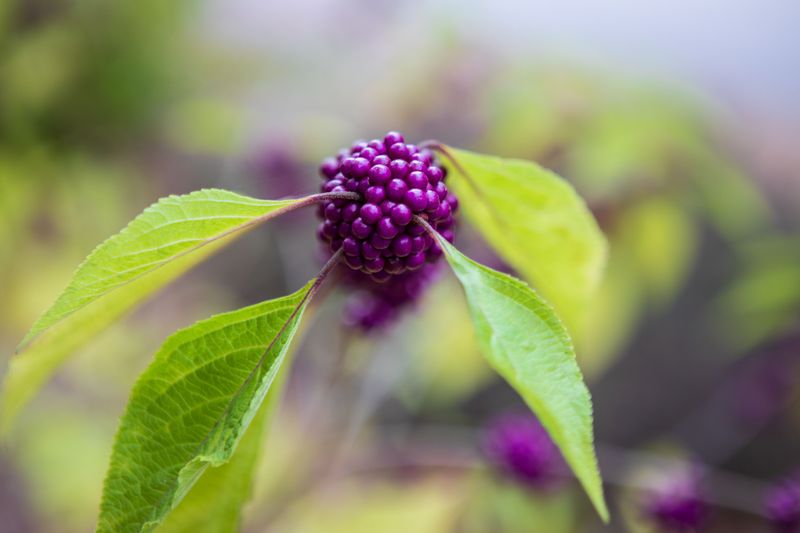
Nothing in my Texas yard draws more double takes than beautyberry in September, when shiny magenta berries circle every arching stem. Neighbors often ask if the color is real, and I love watching their faces when I say yes.
Callicarpa americana is a native deciduous shrub that usually grows about three to six feet tall and wide. Its loose, open shape feels relaxed, so it suits cottage gardens and woodland edges better than formal hedges.
The roots are fibrous and not considered aggressive, which makes it a reasonable pick for beds near the house. Plant it at least four feet from the wall, since those arching branches need room to spread gracefully.
Small pink flowers appear along the stems in late spring and summer, bringing busy bees to your garden. Berries ripen in late summer and fall, feeding mockingbirds and cardinals as cooler weather finally arrives.
Part shade keeps the leaves looking fresh, though full sun works with extra water during brutal summer stretches. Moist, well-drained soil suits it best, and a layer of mulch helps hold moisture around its roots.
A handy trick involves cutting the whole plant back to about a foot tall in late winter each year. Berries form on new growth, so this hard trim produces a tidier shrub with heavier fruit clusters later.
Crushed leaves have a strong smell, and folks once rubbed them on skin to help keep biting insects away. USDA researchers later identified compounds in the leaves that repel mosquitoes, which I find wonderfully clever.
5. Agarita
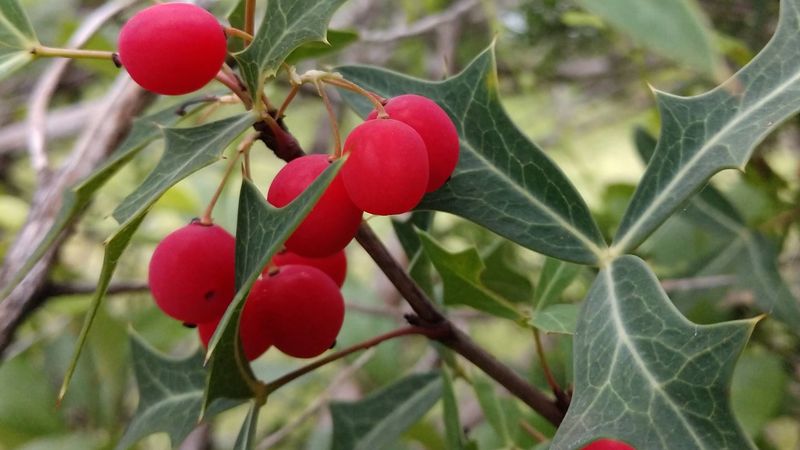
Brush against agarita without gloves, and you will learn quickly why birds love nesting inside its prickly branches. Each blue-gray leaf has three spiny leaflets, so this shrub works like a living security fence under windows.
Its scientific name is Mahonia trifoliolata, though some botanists list it as Berberis trifoliolata instead.
This evergreen native usually grows three to six feet tall and handles rocky limestone soil with impressive toughness.
Deep roots help it survive brutal droughts, yet it uses very little water once settled in your landscape. That thrifty habit means it rarely dries the soil near your foundation the way thirsty plants can.
Late winter brings tiny bright yellow flowers with a sweet scent, and early bees eagerly visit them. Red berries follow in late spring, and many folks gather them for tart jelly if they can beat the birds.
Picking those berries takes patience, so some people spread a sheet below and tap branches with a stick. I find the ritual oddly relaxing, even though my fingers usually collect a few pokes along the way.
Full sun to part shade suits it, and good drainage keeps its roots happy through wet springs. Deer usually leave it alone, which makes agarita a smart choice for Texas Hill Country yards with hungry visitors.
Keep it away from sidewalks and doorways so nobody gets scratched while carrying groceries inside. Spots beneath windows or along side yards let its prickly charm do helpful work without causing trouble.
6. Turk’s Cap
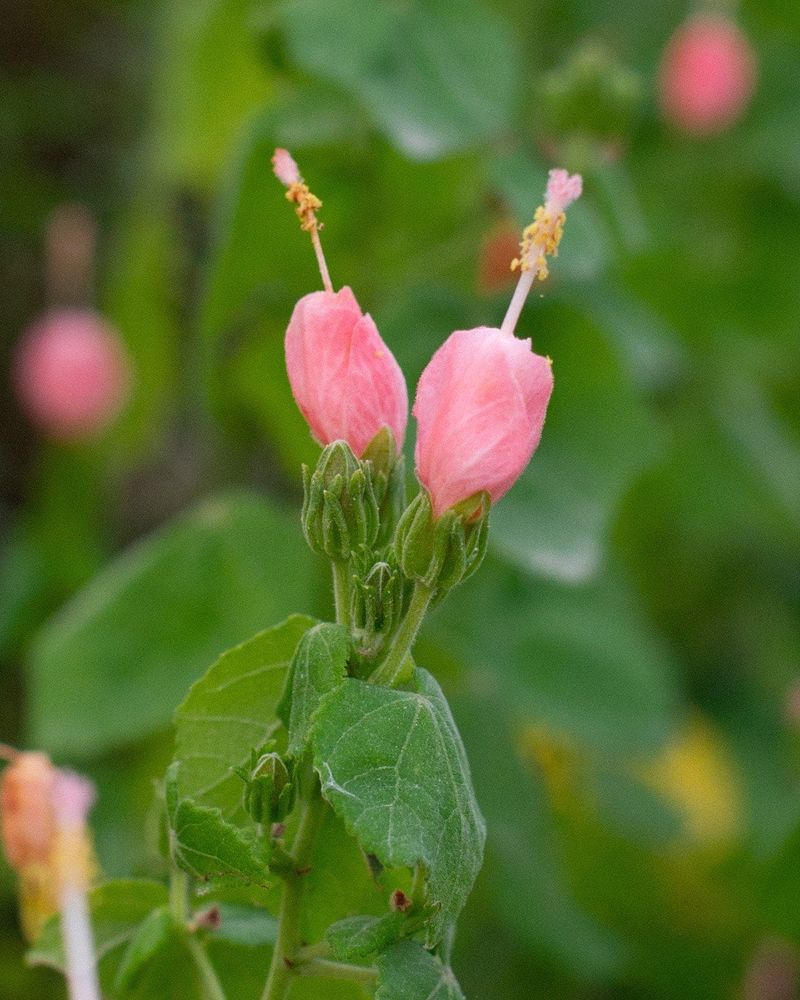
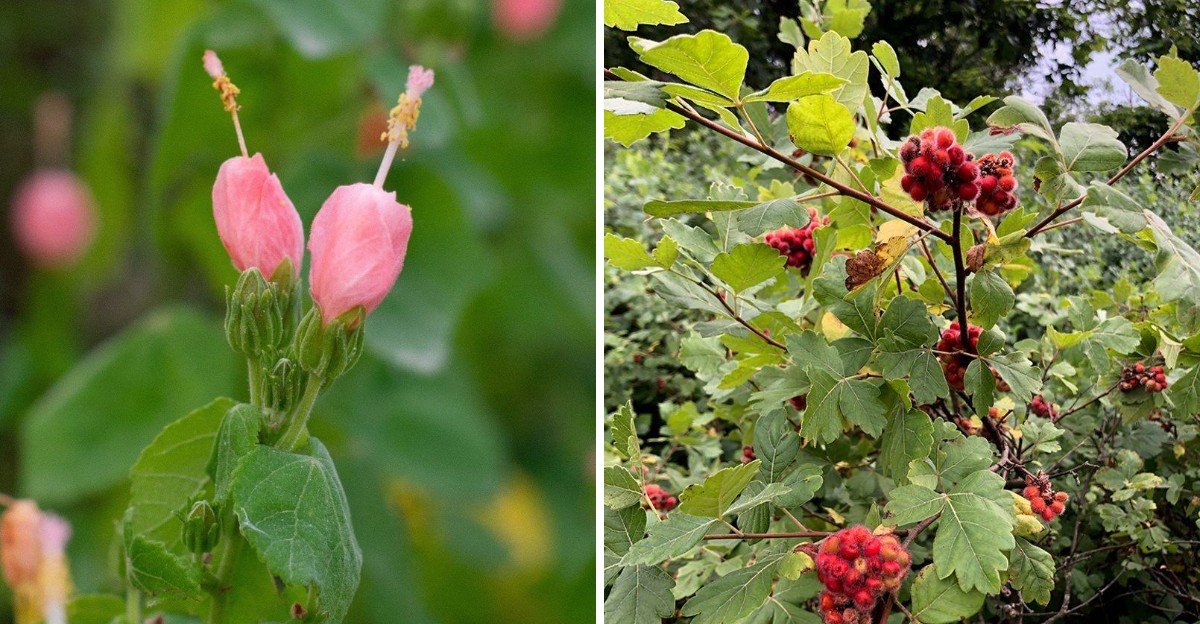
Hummingbirds treat Turk’s cap like a roadside diner, zipping between its little red blooms from summer into fall. The flowers stay twisted and mostly closed, looking like tiny swirled turbans dangling from the branches.
Botanists call it Malvaviscus arboreus var. drummondii, and it belongs to the same family as hibiscus and cotton. It usually grows about two to four feet tall, though rich soil and regular water push it taller.
Shade-tolerant flowering shrubs are rare, so this one feels like a gift for north-facing foundation beds. It blooms best with some sun, yet it still flowers reliably under trees or beside a shady wall.
Its roots are not considered aggressive, but the plant can spread slowly by seed and occasional suckers. Pull extra seedlings in spring, and you can share them with friends who need some shade color.
Freezes often knock it back to the ground in cooler regions, but it usually returns from the roots in spring. I trim the old stems in late winter, which encourages fresh, bushy growth once the weather warms.
Small red fruits follow the flowers, and many native plant fans say they taste a bit like mild apples. Birds and small mammals also enjoy them, so your garden gains extra visitors as fall arrives.
Clay and limestone soils both work fine, as long as water drains away instead of puddling around the stems. Plant it about three feet from the house so its spreading clump has plenty of breathing room.
7. Fragrant Sumac
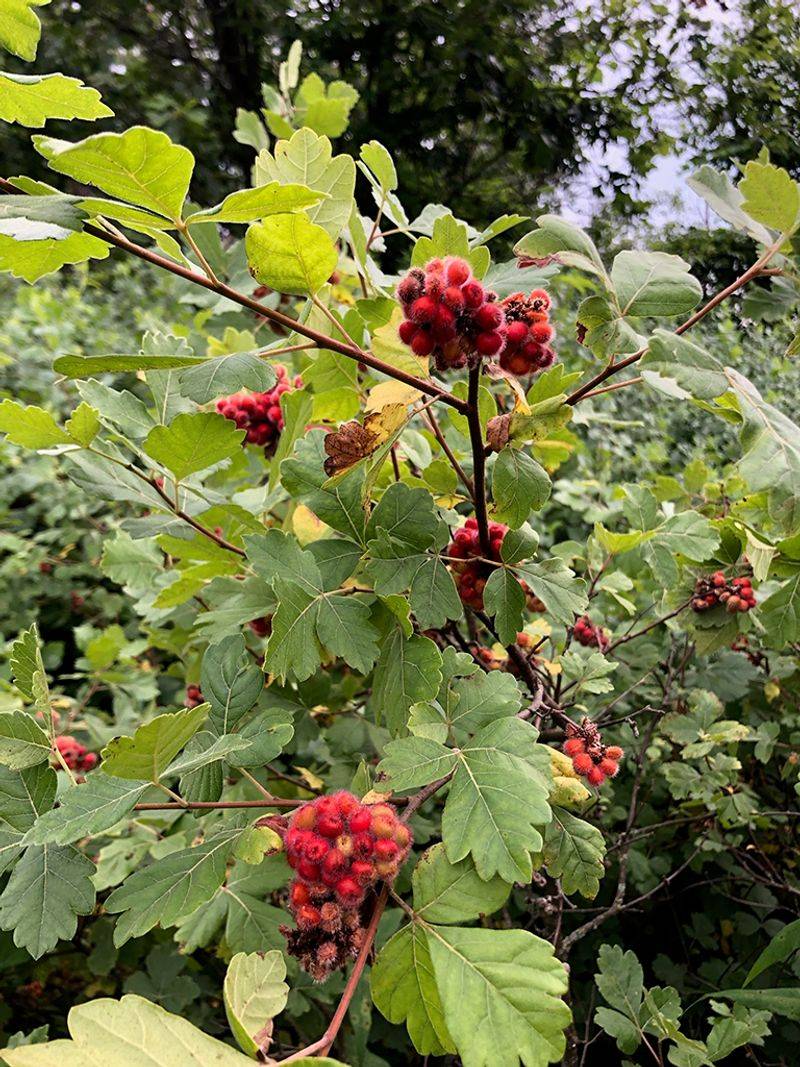
Rub a leaf of fragrant sumac between your fingers, and you may catch a citrusy scent with a slightly sharp edge. Some people call it pleasant while others find it skunky, which makes a fun debate during garden tours.
Rhus aromatica is a native deciduous shrub with three-part leaves that often get mistaken for poison ivy at first. Unlike that itchy vine, this plant is harmless to touch, and its fuzzy red berries grow in upright clusters.
Most plants grow two to six feet tall, while low selections like ‘Gro-Low’ stay around two feet high. That short, spreading habit makes it handy for covering slopes or softening a tall foundation edge.
Its roots are shallow and fibrous, which helps hold soil in place on banks and bare areas. The plant can spread by suckers, so leave room or trim new shoots if they wander toward walkways.
Autumn turns the leaves into fiery shades of orange and deep red, giving your yard a burst of late-season color. I think it rivals maple trees for drama, yet it fits easily into a small front bed.
Small yellow flowers appear in early spring before the leaves, offering early food for native bees. Female plants then form sticky red berries that birds eat, and their tart flavor once made a lemonade-style drink.
Full sun to part shade suits it, and it handles rocky or clay soil after establishment. Water deeply during the first summer, then let nature handle most of the work once roots grow strong.