Why Your Pothos Is Turning Yellow In A Pennsylvania Fall
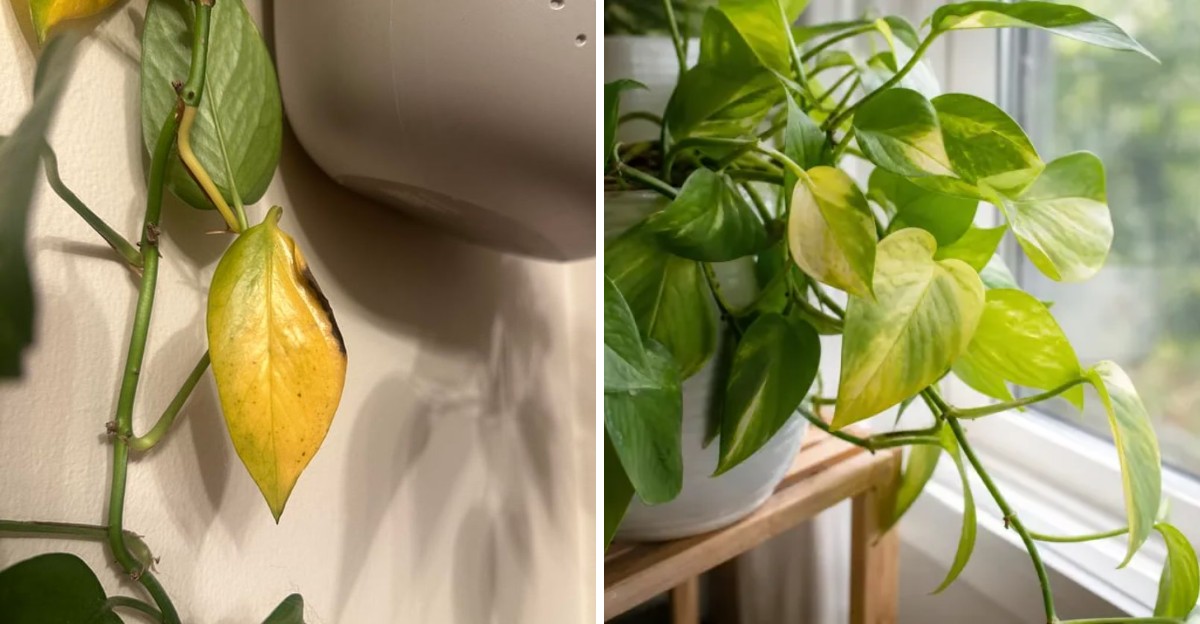
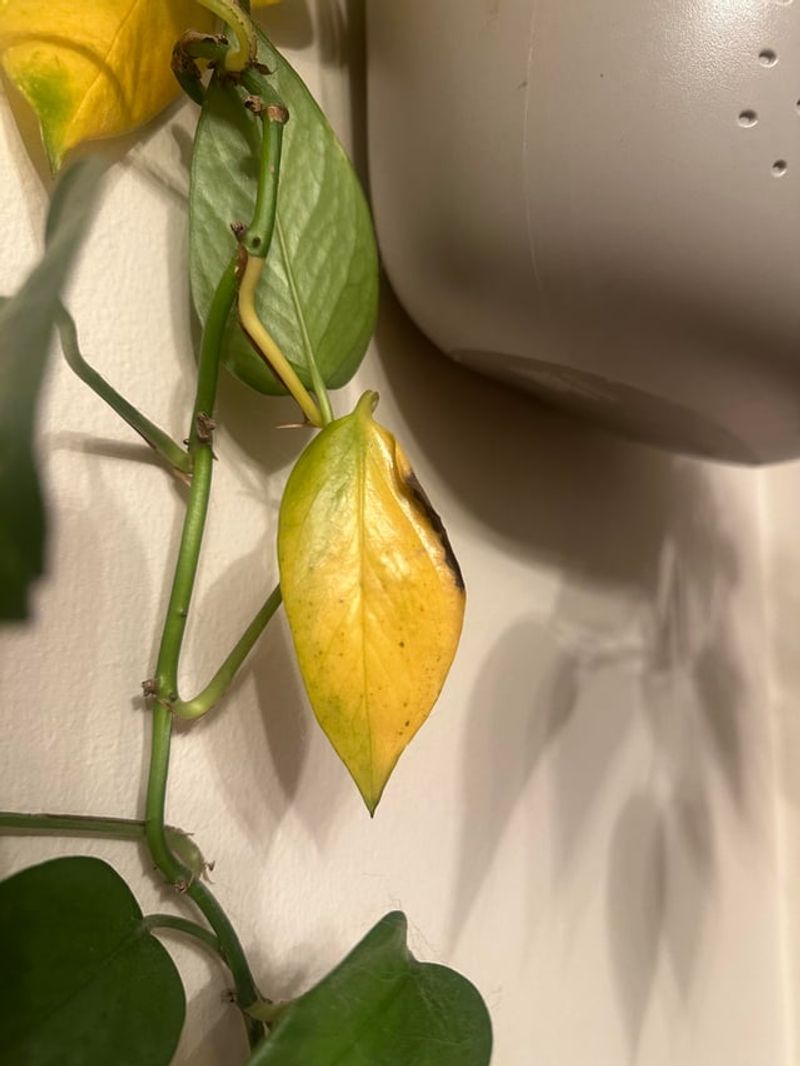
A single leaf on a trailing vine can turn bright yellow in just a few days, and the plant may be perfectly healthy. I find that both comforting and a little sneaky.
The trouble usually starts when the furnace clicks on for the first time. Indoor air in a heated home can drop well below the humidity that tropical plants enjoy. Meanwhile, autumn daylight in Pennsylvania shrinks fast, and the sun sits lower in the sky each week.
You probably did not change your routine at all. That is often the real puzzle, because the same watering schedule that worked in July can turn into a soggy mess by October. Your plant is simply drinking less while you keep pouring.
So which signal is your green buddy sending? The color, location, and texture of those golden leaves hold some surprisingly clear clues.
Those Golden Pothos Leaves Are Reacting To A Quieter Season
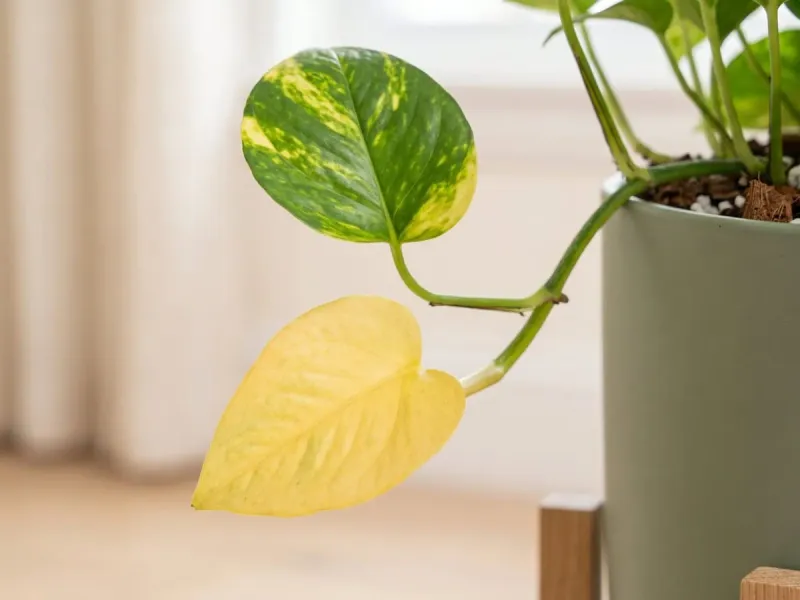
Nothing about your plant changed overnight, yet everything around it did. Pothos comes from the warm, steady tropics, where days stay roughly the same length all year.
Fall in your living room is a different story. Shorter days, cooler window glass, and a running furnace all arrive within a few weeks, and the plant responds by slowing its growth.
A slower plant uses less water and fewer nutrients. Roots take up moisture more lazily, and the vine puts less energy into older leaves.
That shift is why yellowing often shows up in October and November, even for plants that looked flawless all summer.
Pothos is not deciduous like the oaks outside. It does not drop leaves on purpose for winter, so heavy yellowing is a message, not a seasonal habit. One or two old leaves turning near the base is usually normal aging, though.
Pay attention to how many leaves change and where they sit on the vine. A single lower leaf is no reason to worry.
Several yellow leaves at once, or yellow new growth, means something in the care routine needs a closer look, and the next sections walk through the likeliest suspects.
Soggy Pothos Soil Is The Most Common Culprit
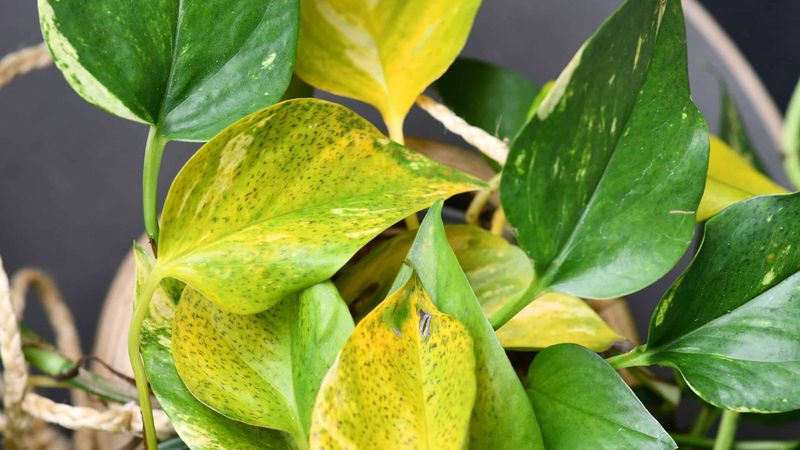
Ask any plant clinic about yellow pothos leaves and overwatering will top the list. Extension horticulturists, including those at Clemson, point to wet soil as a leading cause of houseplant trouble.
Here is how it happens in autumn. Your plant now drinks much less, but the watering can still comes out every Sunday. The soil stays damp for days, air pockets fill with water, and roots start to suffocate.
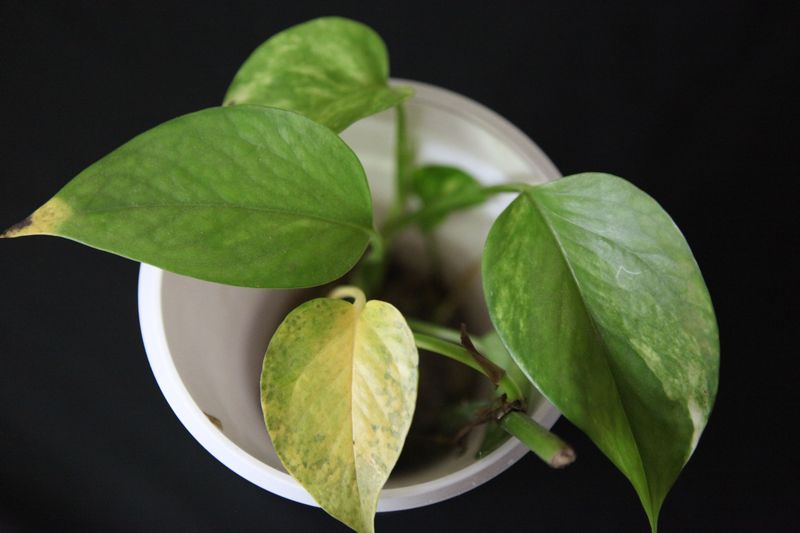
Suffocated roots can rot, turning brown and mushy instead of firm and white. Once that happens, they cannot move water or nutrients up the stems, so leaves go soft, limp, and yellow. Ironically, an overwatered plant can look thirsty.
Telltale signs include several lower leaves yellowing together, a sour or musty smell from the pot, and soil that feels heavy days after watering. Fungus gnats buzzing around the pot are another strong hint.
The fix is simple but needs patience. Let the top one to two inches of soil dry before watering again, and empty any saucer within 30 minutes.
If roots smell foul, trim the mushy parts with clean scissors and repot into fresh, well-draining mix in a pot with drainage holes.
A Quick Finger Test In The Pothos Pot Beats Any Watering Schedule
My favorite plant tool costs nothing and is attached to your hand. Push a finger into the soil up to the second knuckle before you grab the watering can.
Dry at that depth? Water slowly until it runs from the drainage holes. Still cool and damp? Walk away and check again in a few days.
In fall, the gap between waterings often stretches from one week to two or more. Exact timing depends on pot size, soil mix, room temperature, and light. A small pot near a sunny window dries much faster than a large one in a dim corner.
Pot material matters too. Terracotta breathes and dries quickly, which makes it forgiving for heavy-handed waterers. Plastic and glazed ceramic hold moisture longer, so those need extra caution once the days turn cool.
Lifting the pot works as a backup check. A freshly watered pot feels noticeably heavy, while a dry one feels light. After a few weeks, you will be able to judge it just by picking it up.
Skip the calendar reminder. Letting the soil itself decide when to water is the single best habit for keeping autumn leaves green.
Crispy Curling Pothos Leaves Mean The Opposite Problem
Overcorrecting is easy. After reading warnings about soggy soil, some of us swing too far and forget the plant for weeks.
Underwatered pothos tells a different story than an overwatered one. Leaves droop and curl inward, edges turn crispy and brown, and yellowing may appear alongside wilting. The soil often shrinks away from the pot sides, leaving a dry gap.
Furnace heat speeds this up. Warm, dry indoor air pulls moisture from soil faster than you might expect, especially in small pots placed near radiators or vents.
Here is a helpful clue. A thirsty pothos usually perks up within hours of a good drink, while an overwatered one stays limp. That quick recovery tells you which side of the line you were on.
Badly dried-out soil can repel water, letting it rush down the sides and out the bottom. Bottom watering helps here. Set the pot in a sink or tray with a few inches of water for 20 to 30 minutes, then let it drain fully.
Leaves that already went crispy will not turn green again. Trim them off, keep checking the soil, and new growth should come in healthy.
Furnace Air Leaves Pothos Leaves Craving Humidity
That first chilly morning when the heat kicks on feels wonderful for us. For a jungle vine, it can feel like a sudden desert.
Pothos grows happily in moderate humidity, with around 40 to 60 percent being a comfortable range. Forced-air heating in older homes can push indoor humidity down into the 20s or even lower on cold days.
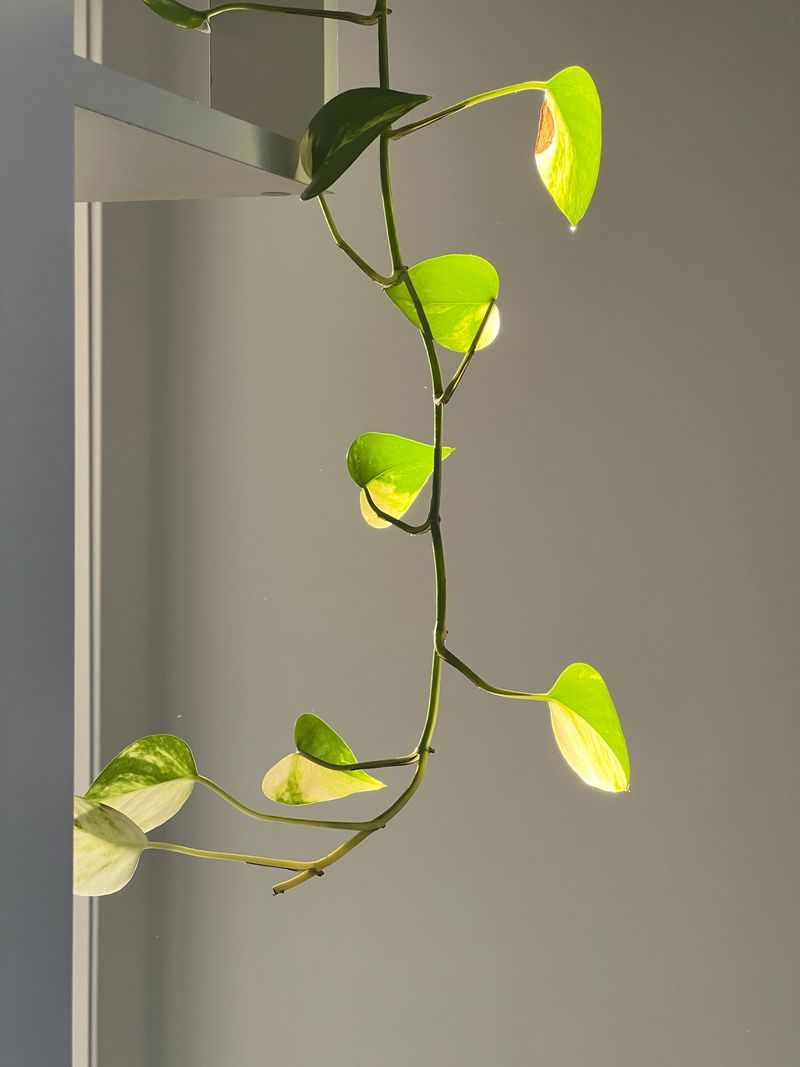
Dry air first shows up as brown, crunchy leaf tips and edges. Over time, stressed leaves may yellow and drop. Plants sitting right above a heat register or beside a radiator suffer most, since hot air blasts the foliage directly.
Move your plant a few feet away from vents, radiators, and space heaters. Cold drafts from leaky windows or exterior doors cause stress too, so find a steady middle spot.
A small cool-mist humidifier is the most effective way to raise moisture. Grouping plants together also helps, since they release moisture as a little team.
Pebble trays look nice but raise humidity only slightly, according to several extension sources.
Misting feels helpful, yet the effect fades within minutes. A cheap hygrometer will show you the real numbers, and many surprise their owners.
Shorter Days Steal Light From Your Variegated Pothos
By late December, Pennsylvania gets a little over nine hours of daylight, compared with about 15 hours in June. That is a huge drop for a plant that relies on sunshine for food.
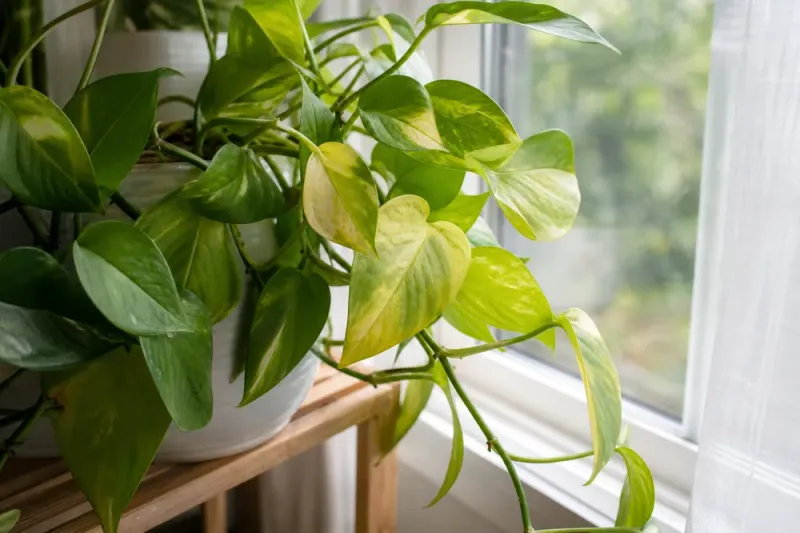
Pothos tolerates low light better than most houseplants, which is part of its charm. Tolerating is not thriving, though.
When light gets too weak, growth stalls, new leaves come in smaller, and older leaves may pale and yellow as the plant cuts back.
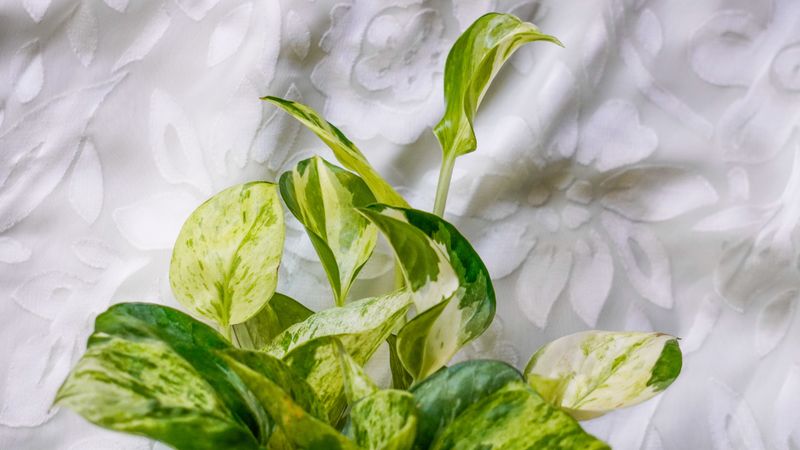
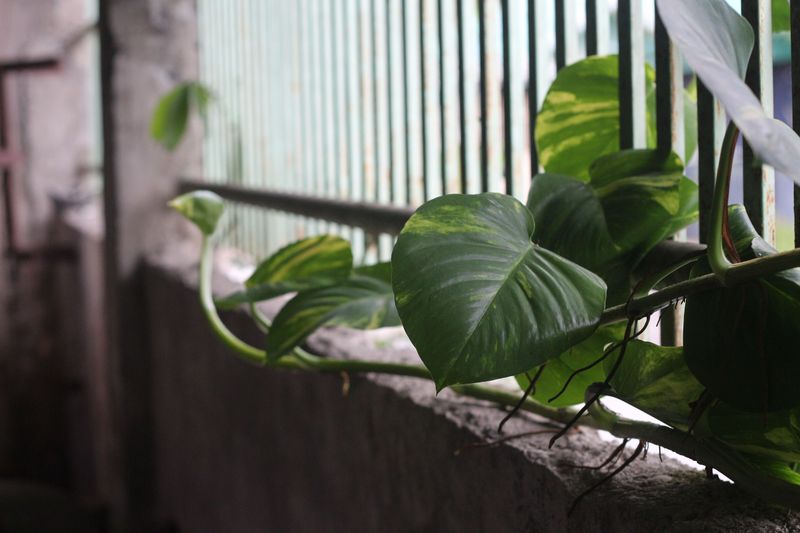
Variegated types like Marble Queen, Golden, and Snow Queen feel it most. Their white and cream patches hold no chlorophyll, so they have less green surface for making energy. In dim rooms, new leaves may turn more solid green.
Shift your plant closer to a bright window for fall and winter. East and west windows work nicely, and a south window is fine as long as the vine sits a few feet back from the glass.
Wipe dusty leaves with a damp cloth, since grime blocks light. If your home stays gloomy, a simple full-spectrum LED grow light running 10 to 12 hours a day can keep things leafy until spring.
Crowded Pothos Roots Or Missing Nutrients Can Yellow The Vine
Sometimes the clue hides underground. Slide your pothos out of its pot and take a peek at the roots.
A thick, tangled web circling the bottom means the plant is root-bound. Crowded roots struggle to take up enough water and nutrients, and the soil dries unevenly. Roots poking from drainage holes are another giveaway.
Fall is not the ideal time for a big repot, since growth is slowing. If the plant is severely cramped or rotting, go ahead and move it up just one pot size, using fresh, airy mix. Otherwise, wait until spring when it bounces back faster.
Nutrient shortages leave patterns worth reading. Nitrogen deficiency yellows older, lower leaves evenly.
Magnesium shortages often show yellow between green veins on older leaves, while iron problems tend to appear on new growth.
Hold off on heavy feeding in autumn and winter. A resting plant cannot use much fertilizer, and extra salts build up in soil, burning roots and causing more yellowing.
Many growers pause entirely or use a diluted balanced houseplant fertilizer once a month at most. Flush the pot with plain water occasionally to rinse away crusty buildup on the soil surface.
Snip Yellow Pothos Leaves And Set Up A Cozy Fall Routine
Once a leaf turns yellow, it rarely goes back to green. Clip it off near the stem with clean scissors so the plant puts energy into fresh growth instead.
Long, leggy vines can be trimmed too. Bonus: those cuttings root easily in a glass of water, giving you free plants for gifts or a fuller pot.
Now build a simple fall checklist. Check soil with your finger before watering, keep the plant away from heat vents and drafty windows, and move it toward brighter light as days shorten. Add a humidifier if the air feels dry.
Watch for pests while you are at it. Spider mites love dry indoor air, leaving fine webbing and speckled, fading leaves.
Mealybugs look like small cotton tufts in leaf joints and can be wiped away with rubbing alcohol on a cotton swab.
One last reminder for families. Pothos contains calcium oxalate crystals, and the ASPCA lists it as toxic to cats and dogs, so keep trailing vines out of reach.
Give your plant steady, gentle care through Pennsylvania’s gray months. By spring, it should be pushing out glossy new leaves again.