10 Reasons Your Christmas Cactus Isn’t Blooming in North Carolina
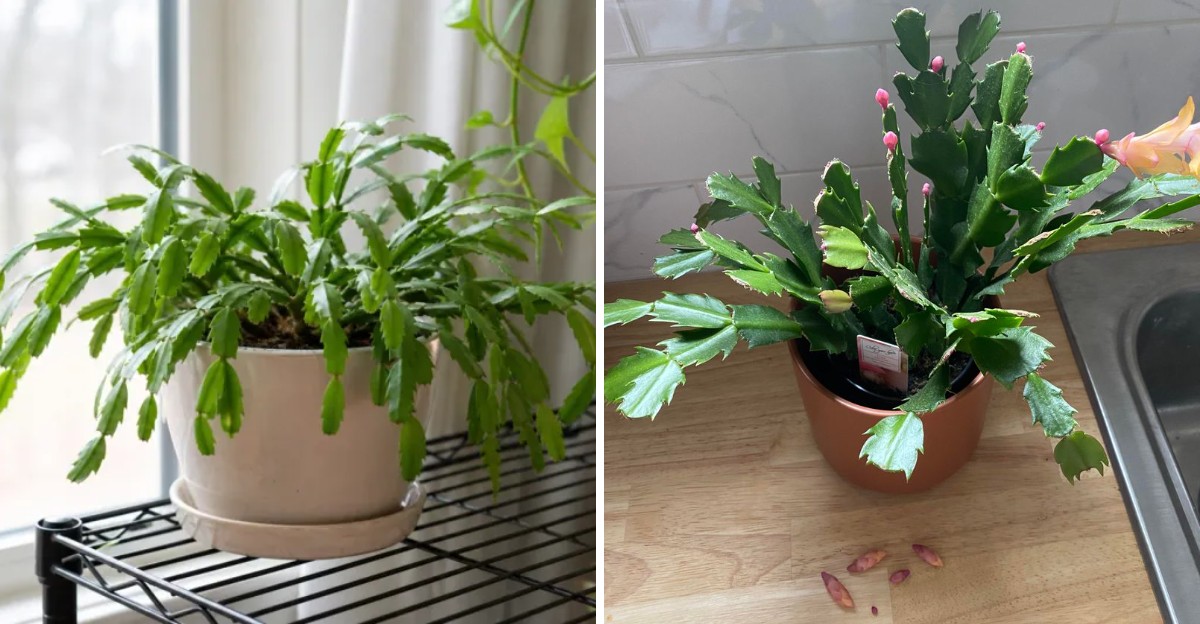
A favorite holiday houseplant actually grows on tree branches in the misty coastal mountains of southeastern Brazil. Its wild cousins cling to mossy bark and rocks, sipping rain and fog instead of desert sand.
That rainforest background explains a lot about why some plants sulk in our living rooms every December. These plants read the length of the night and the chill in the air like a calendar.
I love seeing one smothered in pink blossoms, yet plenty of North Carolina gardeners get nothing but green stems. You may be surprised to discover that a few small habits inside the house can quietly cancel the show.
Our warm autumns and cozy heated homes in North Carolina add their own twists to the puzzle. Here’s what might be keeping your plant from wearing its holiday colors this year.
1. Streetlights And Lamps Are Interrupting Christmas Cactus Nights
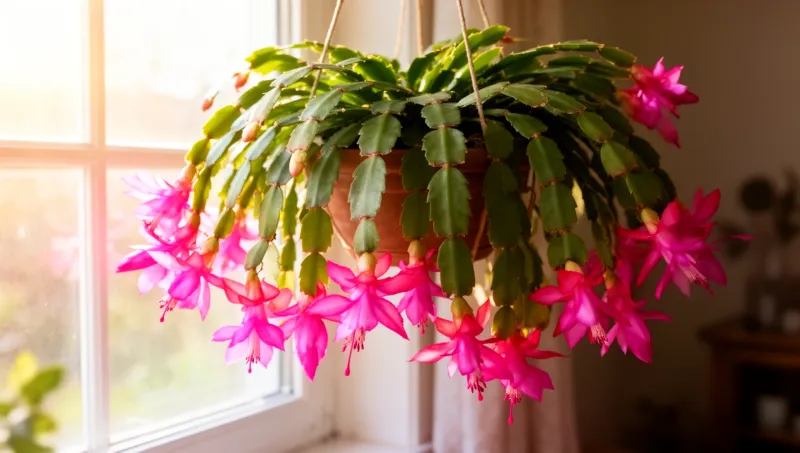
Those cozy evening lamps you love might be the reason your cactus stays stubbornly green all through December. Christmas cacti are short-day plants, so they rely on long and unbroken nights to start forming flower buds.
Most guides suggest about 12 to 14 hours of steady darkness each night for roughly six to eight weeks. Starting that routine in late September or early October usually lines up nicely with a holiday bloom.
A bright porch light shining through the window can count as daytime to these surprisingly sensitive green stems. Even a television glow in the evening may be enough to confuse the plant and reset its internal clock.
In my experience, a spare bedroom that nobody uses after dinner makes a wonderful spot for setting buds. You can also slide the pot into a closet at night and carry it back out each morning.
Daytime light still matters, because the plant needs energy from bright, indirect sun to fuel those pretty blossoms. An east-facing window works well, giving gentle morning rays without scorching the flat green stem segments.
Temperature plays a role here too, and research shows that cool nights can trigger buds regardless of day length. If your house stays warm, though, darkness becomes the main tool you have for coaxing out flowers.
Once tiny buds appear at the stem tips, you can relax the strict darkness schedule a little bit. Keep the plant in its usual bright spot and enjoy watching those colorful tips swell larger each week.
2. Warm Living Rooms Keep Christmas Cactus Buds From Forming
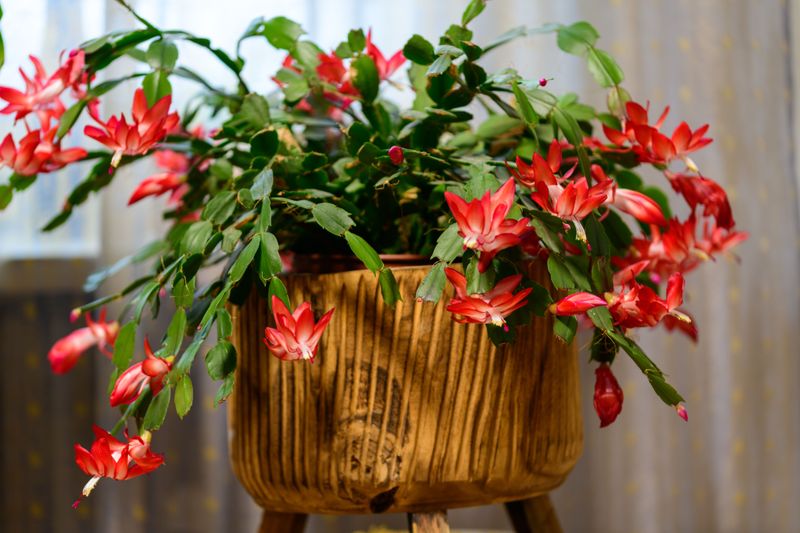
Funny enough, the toasty living room that keeps your family comfortable can feel like a summer heat wave to this plant. Cool nights between 50 and 55 degrees Fahrenheit are what really nudge a Christmas cactus toward making flower buds.
When indoor temperatures sit above roughly 70 degrees most of the time, buds often refuse to form at all. The plant simply keeps growing leafy segments, as if the calendar still says it is late summer outside.
Here in North Carolina, early fall nights in the Piedmont and mountains often drift into that helpful cool range. Many gardeners leave their pots on a shaded porch until nighttime lows threaten to dip below about 45 degrees.
The way I see it, a chilly sunroom or unheated guest room makes a perfect indoor stand-in afterward. Just bring the plant inside well before any frost, since these tropical stems cannot handle freezing weather at all.
Once buds show up, aim for steady temperatures around 65 to 70 degrees to help them open properly. Sudden swings from hot to cold are a common reason gardeners find tiny buds scattered across the floor.
Keep the pot away from heating vents, fireplaces, and drafty doors that blast warm or icy air in bursts. A quick check with a cheap indoor thermometer can reveal hidden hot spots that you might not notice yourself.
Coastal homes with milder autumns may need extra help creating that cool stretch before the holiday season arrives. A cooler room paired with long, dark nights usually gives your plant the strongest signal to start blooming.
3. Soggy Or Bone Dry Soil Stresses Holiday Cactus Roots
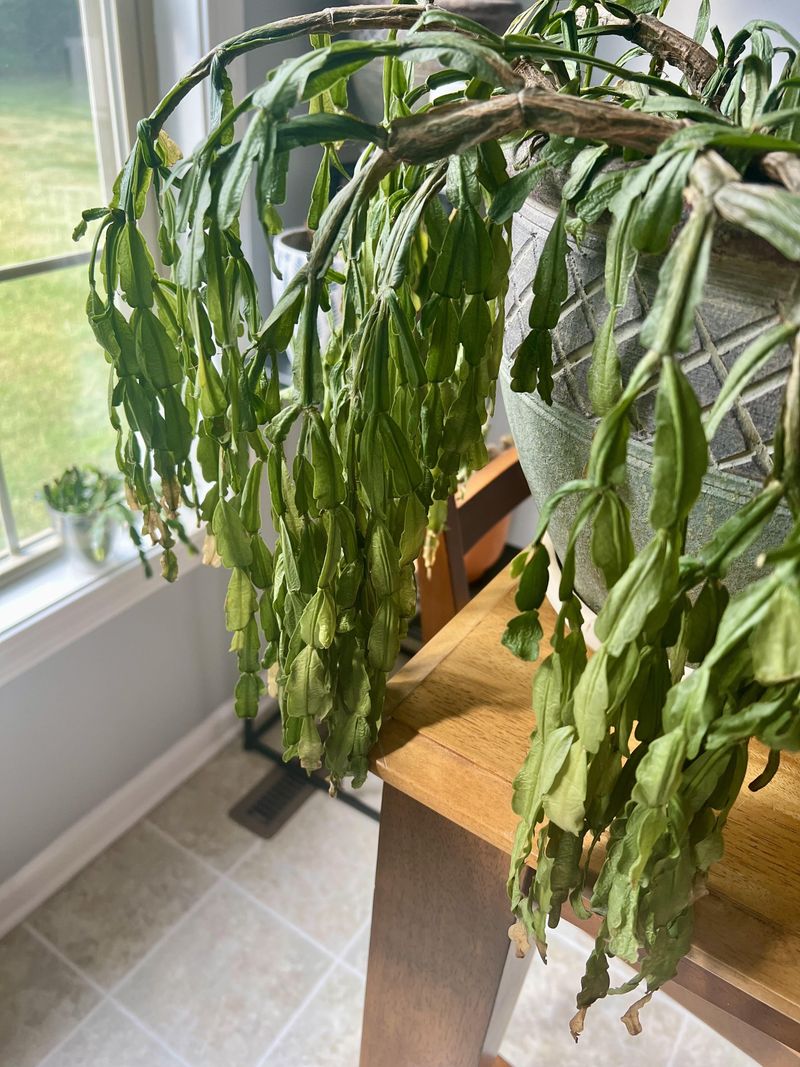
Watering a rainforest cactus can feel like a riddle, because it wants more moisture than a desert cactus but less than a fern. Getting that balance wrong is one of the most common reasons a plant skips its holiday bloom.
Soggy soil is the bigger troublemaker, since roots sitting in water quickly develop rot and start to decline. Limp, droopy stems and falling buds are often the first clues that the pot has stayed wet too long.
On the flip side, letting the mix stay dry for weeks also stresses the plant and causes shriveled segments. A thirsty cactus tends to drop its buds early, which is heartbreaking after weeks of careful darkness and cool nights.
My simple rule is to poke a finger into the soil and water when the top inch feels dry. Pour slowly until water runs out the bottom, then empty the saucer so the roots are not left sitting soaked.
A pot with drainage holes and a light, airy mix makes this job much easier for busy gardeners like us. Many growers blend regular potting soil with perlite or orchid bark to mimic the loose debris these plants grow in.
During early fall, you can water a little less often to help the plant shift toward flower production. Just avoid letting it become bone dry, because buds need steady moisture to swell and finally open into blossoms.
Watch the stems closely, since firm, plump segments usually mean your watering routine is right on track this season. Wrinkled or mushy segments, on the other hand, signal that it is time to adjust your schedule soon.
4. Dry Winter Air Makes Christmas Cactus Buds Drop
Back home in the Brazilian mountains, this plant enjoys fog and humid air that would make our hair frizz instantly. Indoors, once the furnace kicks on, that soft moisture vanishes faster than holiday cookies on a kitchen counter.
Many experts suggest humidity around 50 to 60 percent for happy holiday cacti that hold onto their buds. Heated homes in winter often fall closer to 30 or 40 percent, which feels like a desert to these stems.
Low humidity can lead to shriveled segments and buds that fall off before they ever get a chance to open. Even summer humidity in North Carolina does not help much once the indoor heat dries everything out.
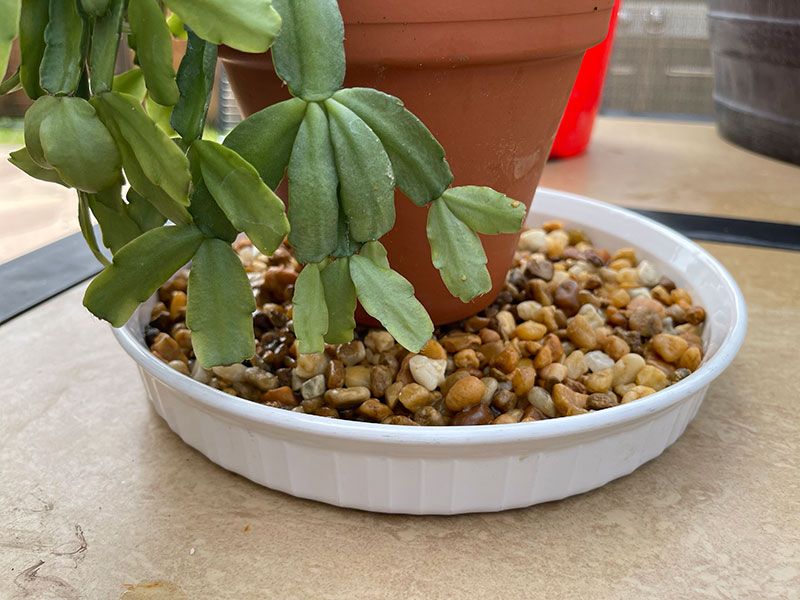
One trick I like is setting the pot on a shallow tray of pebbles with water poured around them. As the water evaporates, it creates a small pocket of moist air right where the plant needs it most.
Make sure the bottom of the pot sits above the waterline so the roots do not stay soggy. Refill the tray every few days, especially during cold snaps when the heating system runs for long stretches.
Grouping several houseplants together also raises the humidity a little, since each plant releases moisture through its leaves. A small room humidifier works too and may help your skin and sinuses feel better at the same time.
Misting the stems now and then offers a quick boost, though the effect fades within an hour or so. Combining a pebble tray with grouped plants usually gives longer-lasting results than spraying the leaves by itself.
5. Heavy Fertilizer Pushes Leaves Instead Of Flowers
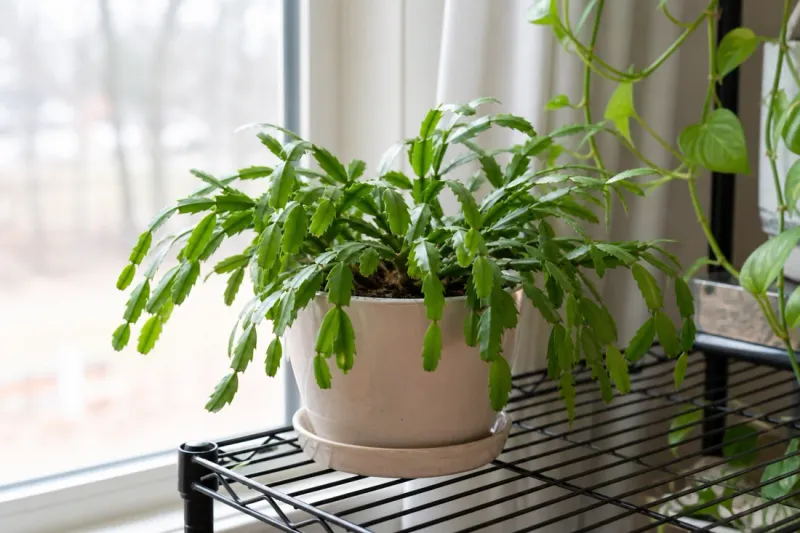
Lush, glossy growth looks impressive in July, but piles of new segments in October can mean the flowers got skipped. Fertilizer is helpful for this plant, yet too much of it at the wrong time sends the wrong message.
During spring and summer, a balanced water-soluble houseplant food mixed at half strength works nicely about once a month. That steady feeding supports healthy stems, which become the launching pads for next winter’s blossoms.
As fall arrives, it makes sense to cut back or stop feeding so the plant focuses on buds. Lots of nitrogen late in the season tends to encourage leafy growth instead of the colorful show you were hoping for.
Some gardeners switch to a low-nitrogen, higher-phosphorus formula in late summer, though results can vary from plant to plant. I think stopping fertilizer by early fall is the simplest approach, especially for anyone just learning this plant.
Christmas cacti also seem to need a bit more magnesium than many other houseplants, according to several extension sources. A teaspoon of Epsom salt in a gallon of water, used monthly during the growing season, can supply some.
Avoid using Epsom salt in the same week as your regular fertilizer, since alternating keeps things gentle on the roots. Too much of any mineral can build up in the pot, so flush the soil with plain water occasionally.
White crust on the soil surface or pot rim often signals extra salts that need to be rinsed away. A slow, thorough watering in the sink helps wash those salts out and keeps the roots feeling fresh.
6. An Oversized Pot Slows Christmas Cactus Blooms
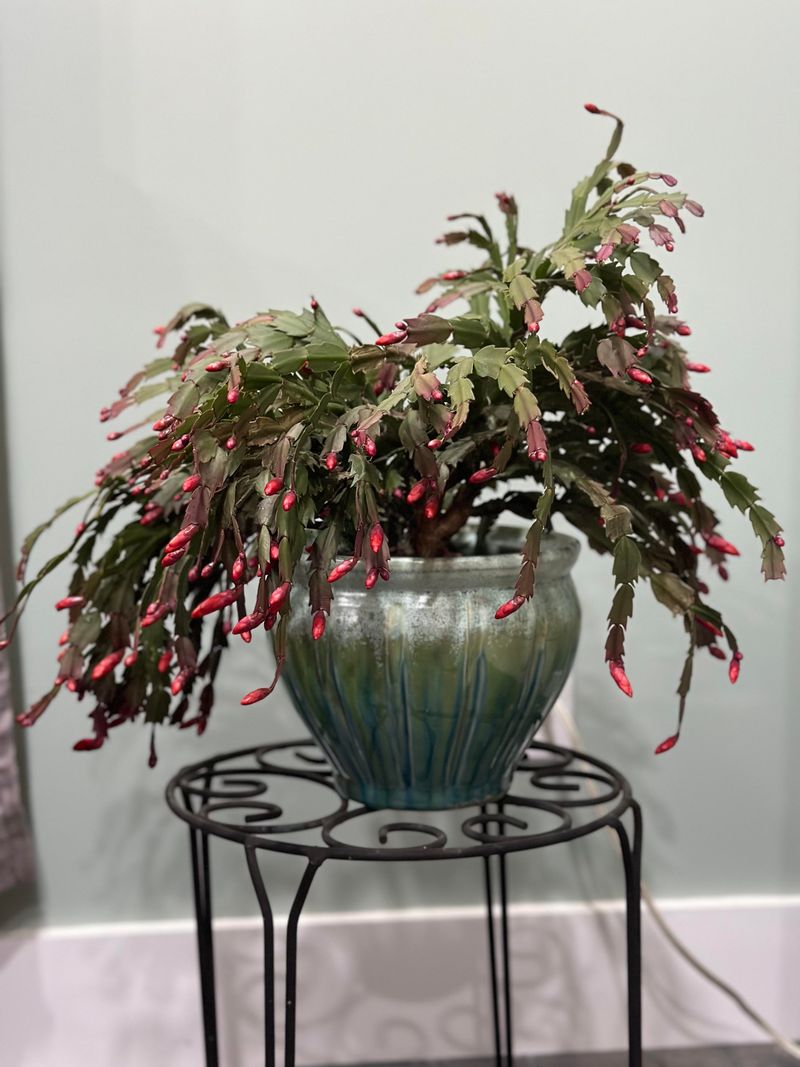
Strangely enough, a Christmas cactus seems to bloom best when its roots feel a little snug in their container. Moving it into a roomy new pot can feel generous, yet the plant may answer with roots instead of flowers.
In a big container, the plant often pours its energy into filling the extra soil with fresh root growth. That project can take a full season, which leaves less fuel for producing the buds you are waiting to see.
Large pots also hold much more water, so the soil stays wet longer after every single watering session. Damp soil around a small root system raises the risk of rot, which is the last thing anyone wants.
Still, a plant crammed into the same pot for many years can struggle to take up water and nutrients. Roots poking out of drainage holes or circling the bottom tell you it is finally ready for an upgrade.
Most growers repot every two or three years, ideally in late winter or spring after the flowers fade. That timing gives the roots months to settle in before the important bud-setting weeks of the next fall.
Pick a pot only one size larger than the current one, usually about an inch or two wider. I like terracotta for this plant, since the clay breathes and helps the soil dry out a bit faster.
Fill the new pot with a loose, well-draining mix and avoid packing the soil down too firmly around the stems. Water lightly afterward, then let the plant rest in bright, indirect light while it adjusts to its fresh home.
7. Moving The Plant Shocks Christmas Cactus Flower Buds
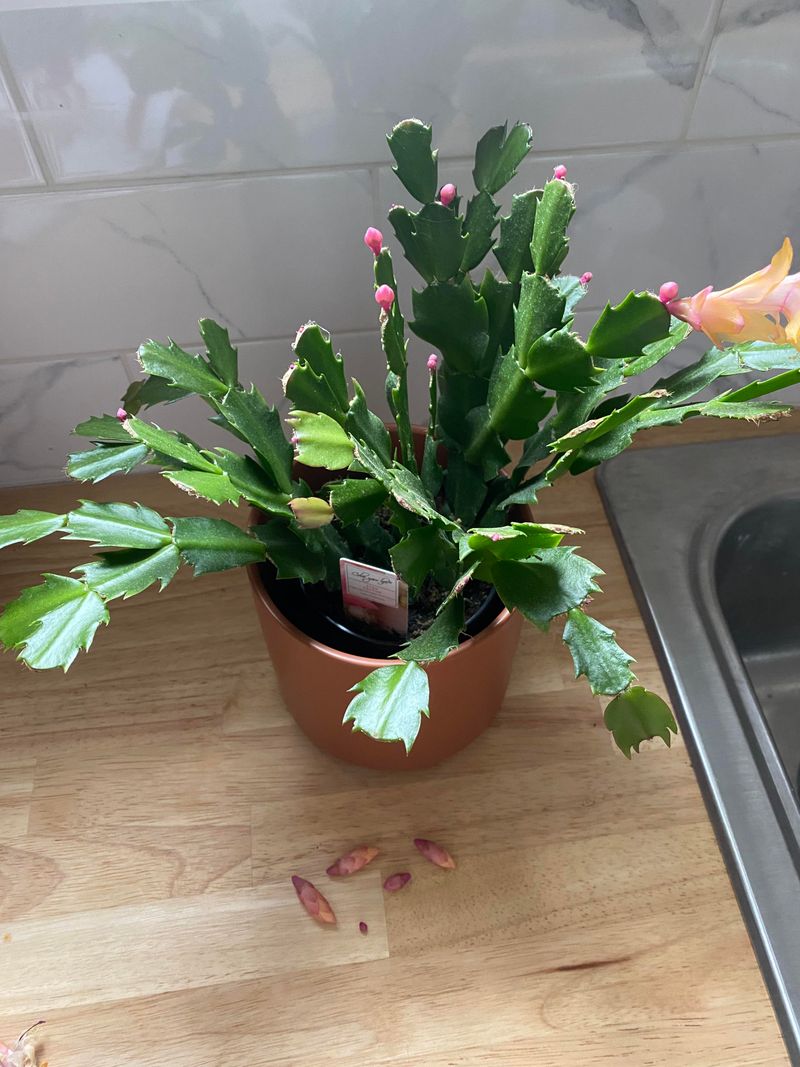
Nothing stings quite like finding a sprinkle of tiny pink buds on the floor the morning after rearranging furniture. These plants are creatures of habit, and they often react to sudden change by dropping their developing flowers.
Once buds form, the plant has tuned itself to a certain amount of light, warmth, and moisture in that spot. Carrying it to a new room can shift those conditions overnight, and the buds may simply let go in protest.
Even turning the pot around can upset some plants, since buds tend to orient toward their light source. I have learned to resist the urge to spin mine for even growth once those little colorful tips appear.
Repotting during bud season is another common shock, because disturbing the roots adds stress at a delicate moment. Waiting until after flowering ends gives the plant a calmer time to recover from any root work you do.
Holiday travel can cause trouble too, especially when a gift plant rides home in a cold car. If you buy one at a store, wrap it well and get it inside quickly to avoid a chilly surprise.
A newly purchased or freshly repotted cactus may need several weeks in steady, bright, indirect light to settle in. During that period, keep watering consistent and avoid feeding until you see healthy new growth starting again.
Choose a good bloom spot in early fall, then let the plant stay put through the whole flowering season. A little patience with furniture plans pays off when every bud opens right where it formed.
8. Your Plant Might Be A Thanksgiving Cactus
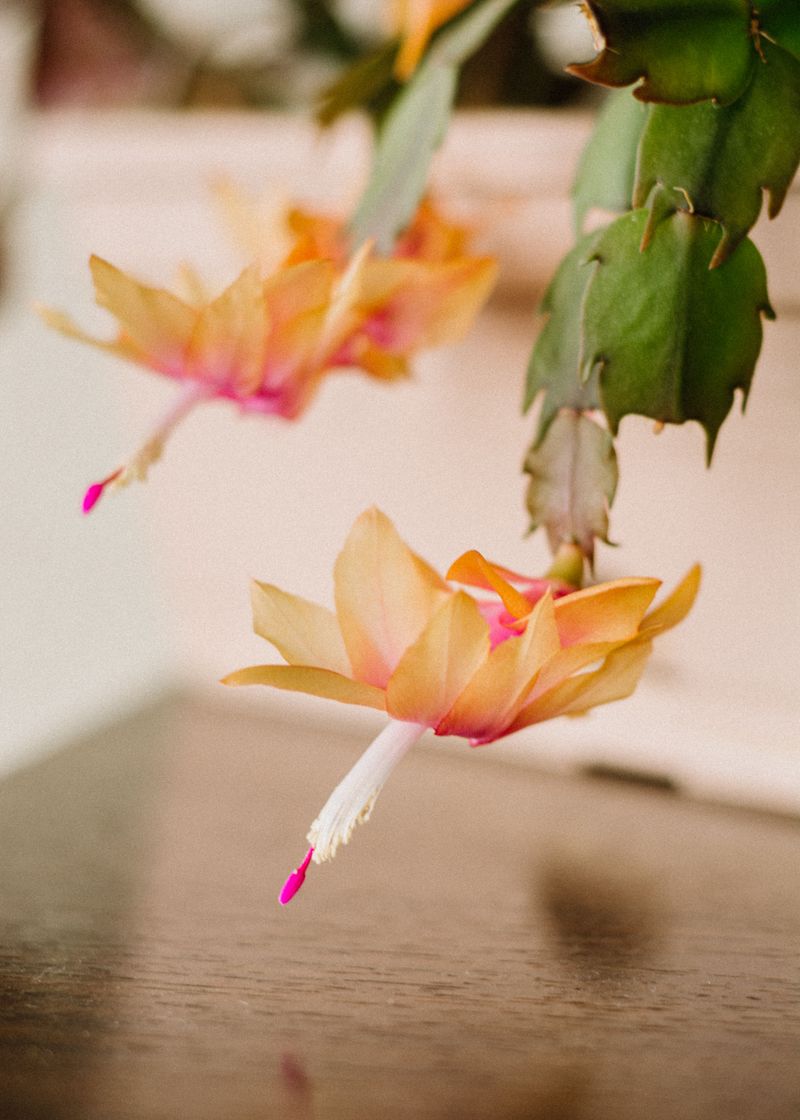
Plot twist time, because the plant on your windowsill may not be a true Christmas cactus at all. Many holiday cacti sold in stores each fall are actually Thanksgiving cacti, known scientifically as Schlumbergera truncata.
A Thanksgiving cactus usually blooms in November, roughly a month ahead of its December-flowering relative in most homes. If yours flowered weeks ago and now looks plain, it may have done its job right on schedule.
Check the edges of the flat stem segments to solve the mystery in just a few seconds. Thanksgiving cacti have pointed, claw-like teeth, while true Christmas cacti have smoother, rounded scallops along each segment.
The true Christmas cactus is a hybrid called Schlumbergera x buckleyi, and it has been grown for well over a century. Older plants passed down through families are often this type, which is part of their charm.
There is also an Easter cactus, now usually listed as Schlumbergera gaertneri, which typically flowers in spring. I once waited all winter for blooms on one before realizing it simply preferred a different holiday entirely.
Care for these cousins is fairly similar, with long nights and cool temperatures encouraging buds for each type. The main difference is timing, so knowing your plant helps you set realistic expectations each year.
Many gardeners in North Carolina grow more than one kind to stretch the flowering season across several months. Labeling each pot with its correct name makes it easier to track bloom times and adjust your care.
9. Young Christmas Cactus Cuttings Need Time To Mature
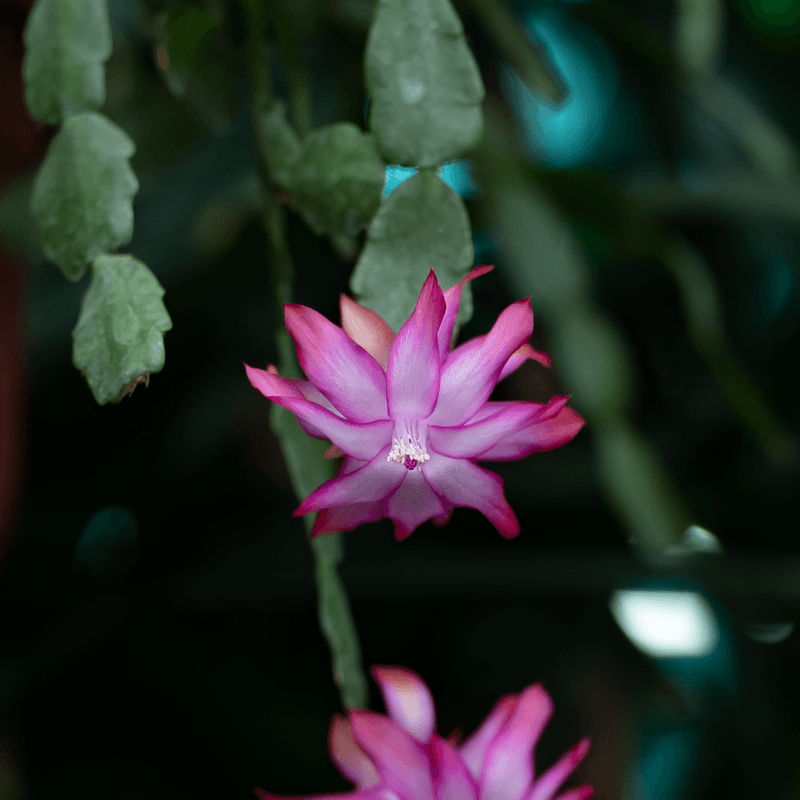
Patience may be the most underrated tool in any gardener’s kit, and young holiday cacti test it gently. A freshly rooted cutting from a friend can look healthy for months without producing a single bloom.
Small plants often spend their first year building roots and new stem segments before they focus on flowers. More segments mean more tips, and those tips are where future buds eventually appear each fall.
Newly purchased plants also need time to adjust after leaving the steady conditions of a commercial greenhouse. Light, humidity, and temperature in your home may feel very different, so a quiet first season is pretty normal.
I love how forgiving these plants are once they settle in and find a rhythm. Well-cared-for specimens can live for decades, and some families share cuttings from plants that belonged to great-grandparents.
Giving a young plant steady care all year sets the stage for a much bigger show down the road. Bright, indirect light in summer and the right dark, cool nights in fall usually make the biggest difference.
Spending summer outdoors in a shaded spot can help young plants grow sturdy, as long as afternoon sun stays off them. Here in North Carolina, a covered porch with morning light often suits them well until fall cools things down.
Keep notes on when buds form and how many flowers open each year, since progress can feel slow. Looking back after two or three seasons, you will likely notice a fuller plant with plenty more blooms.
10. Late Summer Pruning Removes Future Christmas Cactus Flowers
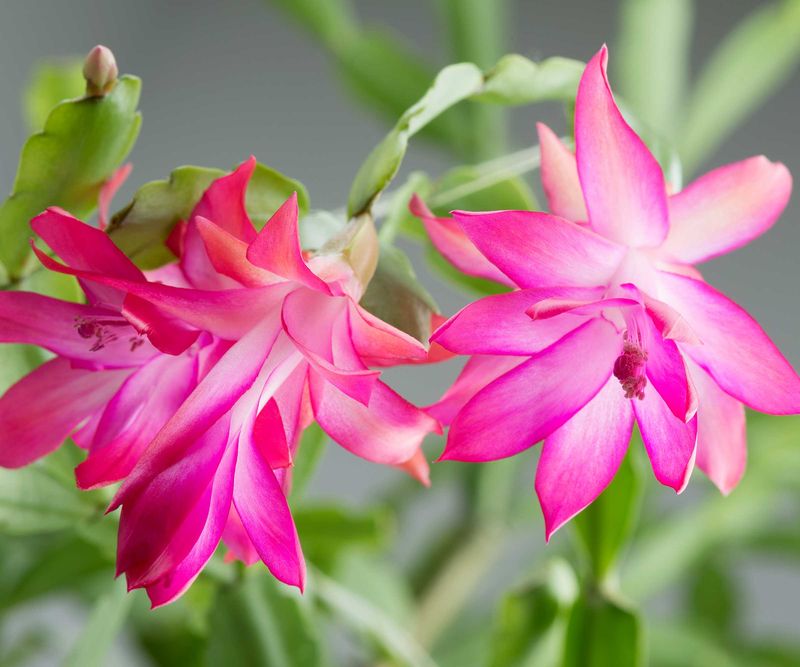
A little trim can turn a lanky cactus into a bushy beauty loaded with flowers, but timing matters a lot. Snip at the wrong moment, and you may toss out the very stems that would have carried buds.
Most experts recommend pruning soon after flowering wraps up, usually in late winter or early spring. That window gives the plant plenty of months to grow fresh branches before the fall bloom cycle starts again.
Each cut encourages new segments to branch out, and those fresh tips become future flowering spots. A fuller plant simply has more places for buds to form, which means a richer display come December.
Pruning in late summer or fall can backfire, since the plant may already be preparing tips for buds. I like to put the scissors away by early summer so nothing interferes with the upcoming show.
You can remove a few segments by twisting them gently at the joints instead of cutting with blades. Taking off up to about a third of the plant is usually fine for shaping a leggy or uneven specimen.
Those removed pieces are not waste, because they root easily in slightly moist potting mix. A few cuttings tucked into a small pot can become thoughtful gifts for friends next holiday season.
After pruning, keep the plant in bright, indirect light and resume your normal watering routine. Within weeks, you should spot tiny new segments forming, a cheerful sign that next winter’s blooms are on the way.