Spidery Yellow Flowers Opening In Maryland Woods In November Belong To A Native Shrub
Some woodland flowers open in November and then wait months for their seeds to ripen. The ripe seed pods finally split with a pop and fling seeds as far as 30 feet. I didn’t believe that part until I read it twice.
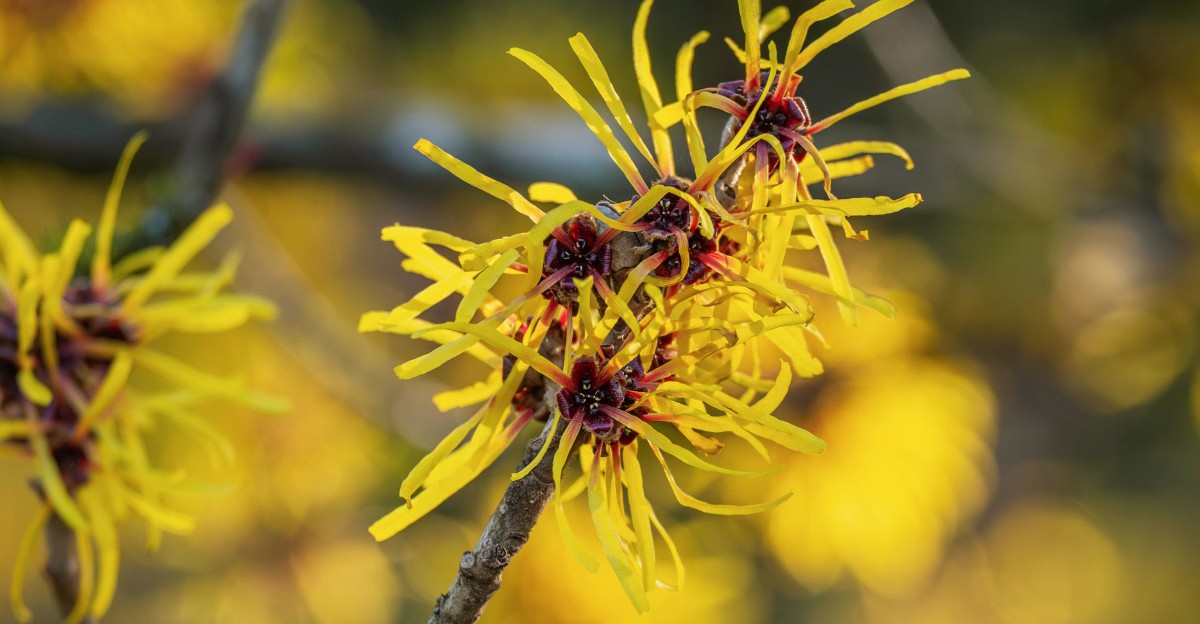
Every fall, I walk the trails expecting nothing but brown leaves and bare branches. Then a twig glows with yellow threads, each petal thin and crinkled like a curled ribbon. They show up after most trees have dropped their leaves, right when the woods feel quiet.
Here’s what gets me most. This shrub grows wild across Maryland, from the mountains down to the coastal plain, yet plenty of hikers walk right past it. Many of us already keep a bottle made from it in the bathroom cabinet.
Who is out there pollinating flowers when frost is on the way? That answer surprised me more than the blooms did.
Those Curly Yellow Petals On Bare November Branches Have A Story
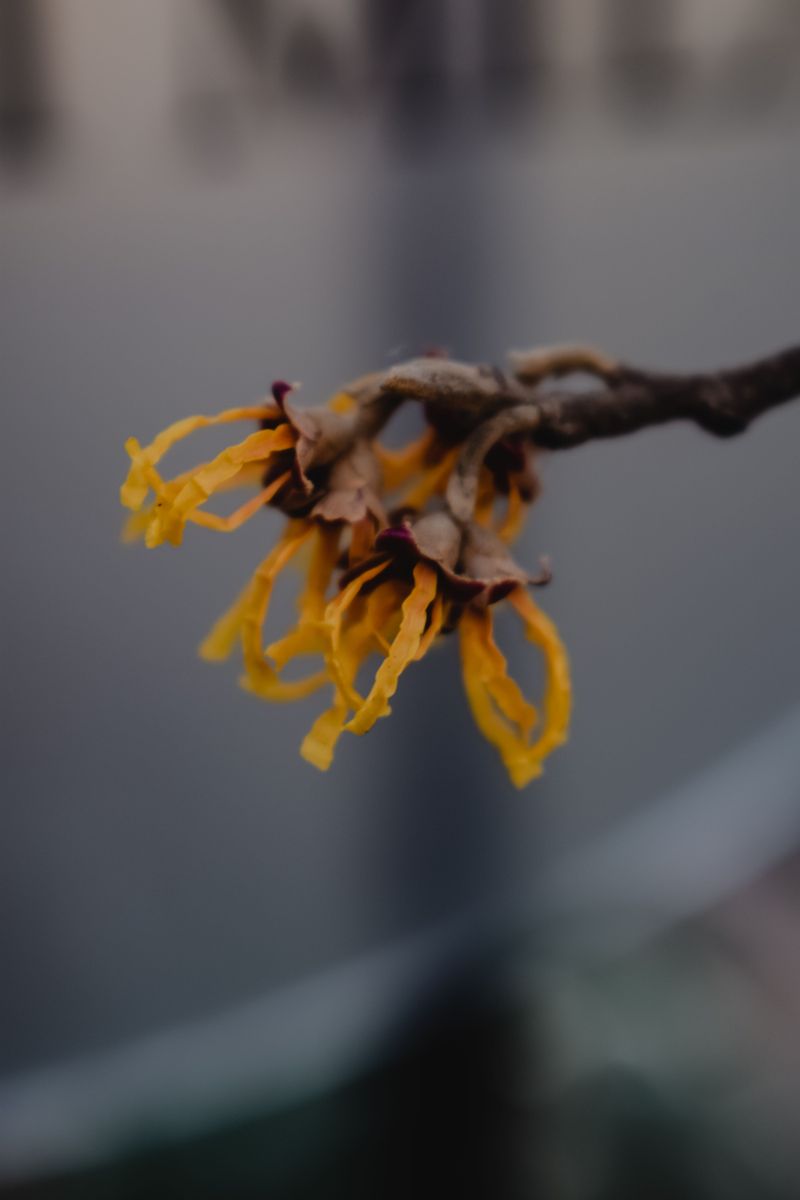
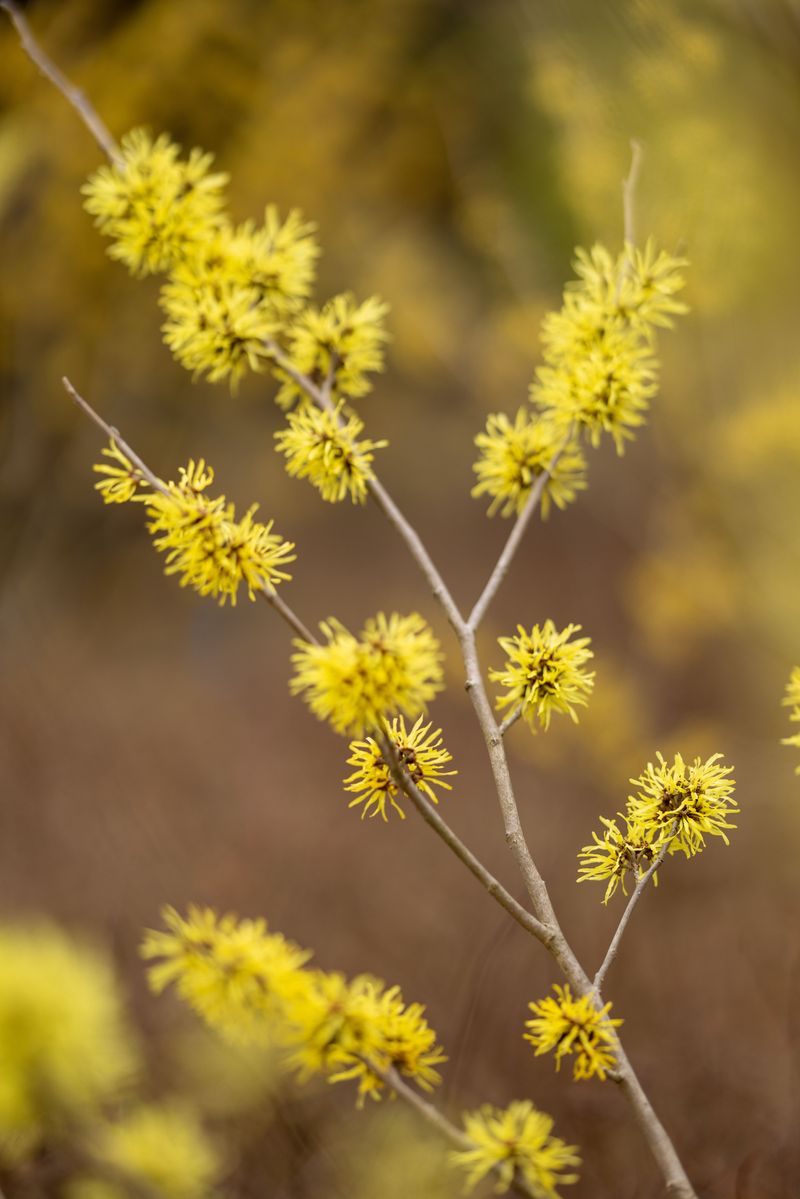
Those thin yellow streamers clinging to bare twigs are not lost spring flowers. They belong to common witch hazel, a native shrub with the scientific name Hamamelis virginiana.
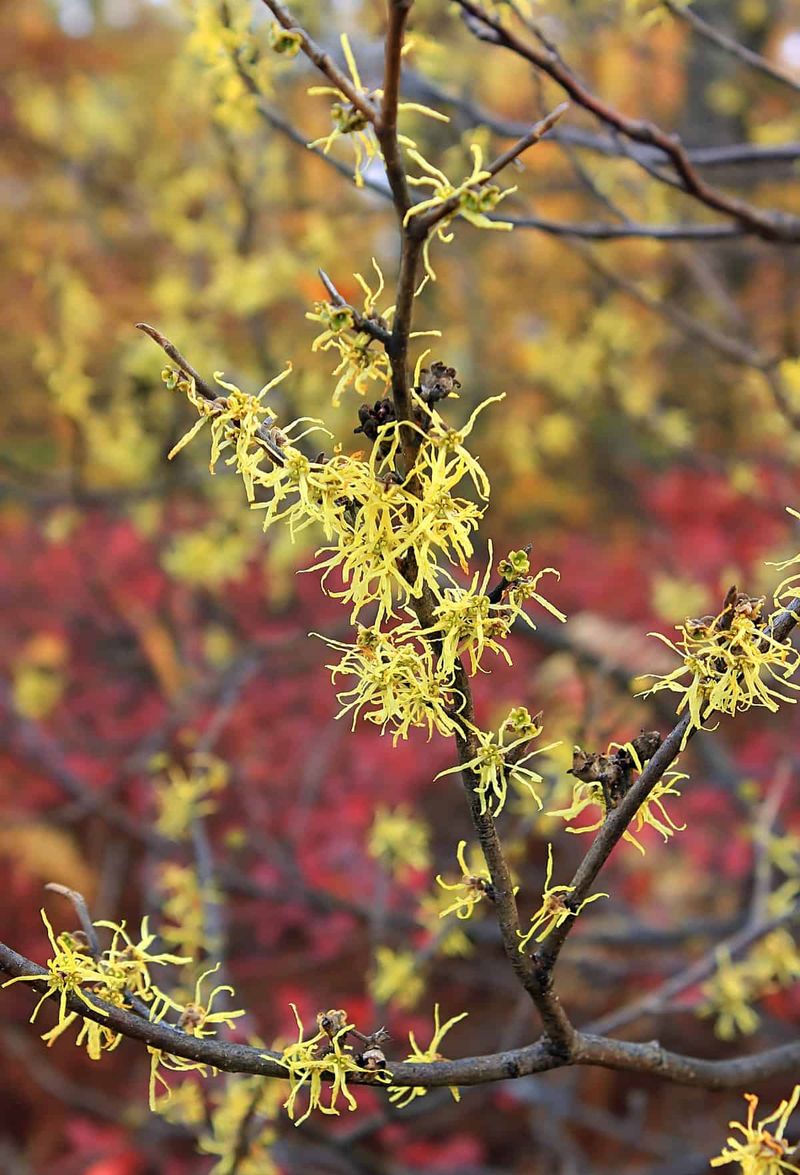
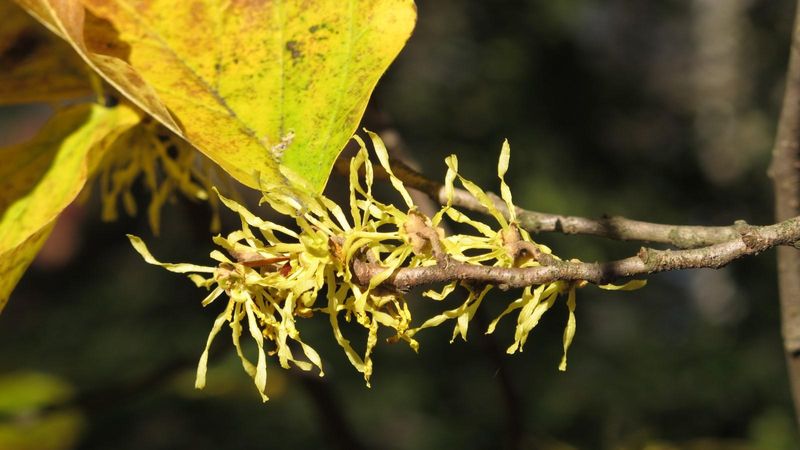
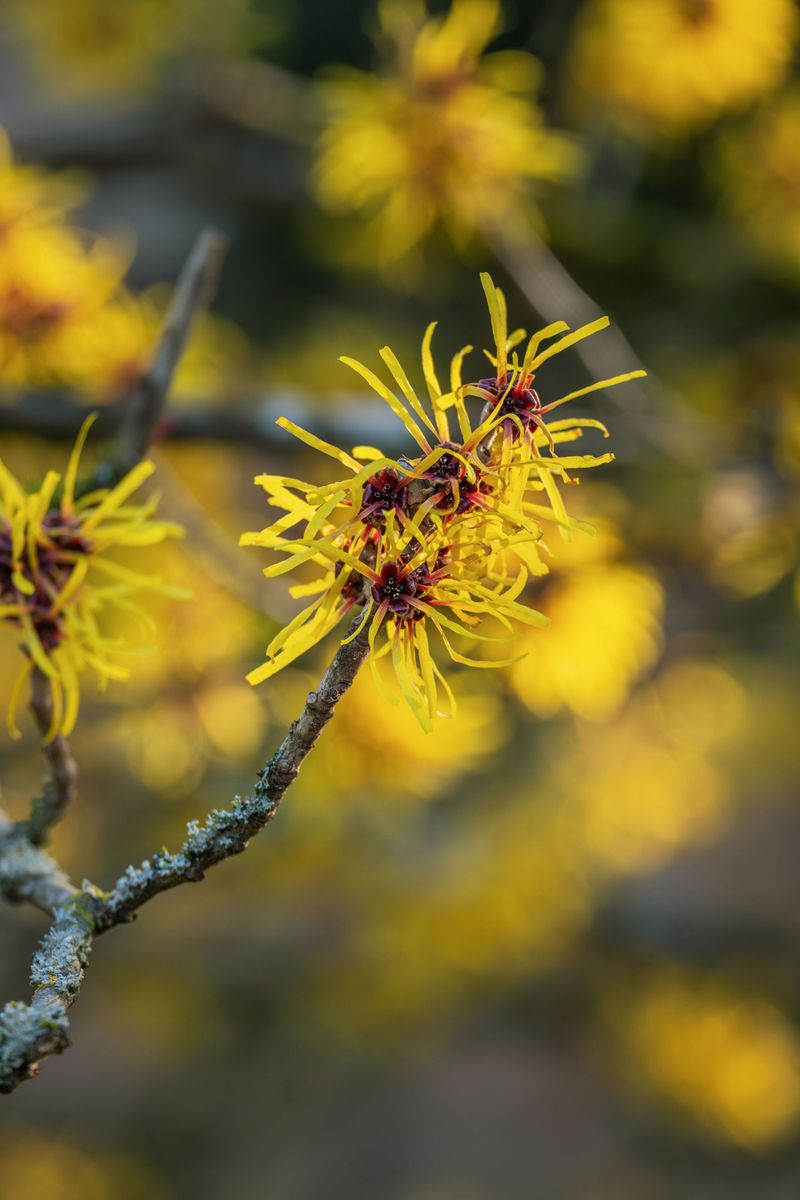
Each flower has four narrow, strap-shaped petals about half an inch to an inch long. They crinkle and twist like tiny paper party streamers. Small clusters line the stems, so a whole branch can look fuzzy and gold from a short distance.
In Maryland, the show usually runs from October into December. November is often peak time, and the blooms frequently open after the leaves have turned yellow and dropped. Sometimes a few leaves hang on, and the flowers hide among them, which makes them easy to miss.
Get close if you can. Many people notice a light, sweet, slightly spicy scent on a mild afternoon.
One neat trick is worth watching for. On very cold days, the petals can curl up tightly, then unroll again when the air warms. That habit seems to help them handle frosty nights.
So if you spot that yellow glow in the woods, you have not found a confused plant. You have found a shrub doing exactly what it has done for thousands of years.
Common Witch Hazel Is The Native Shrub Behind The Fall Bloom
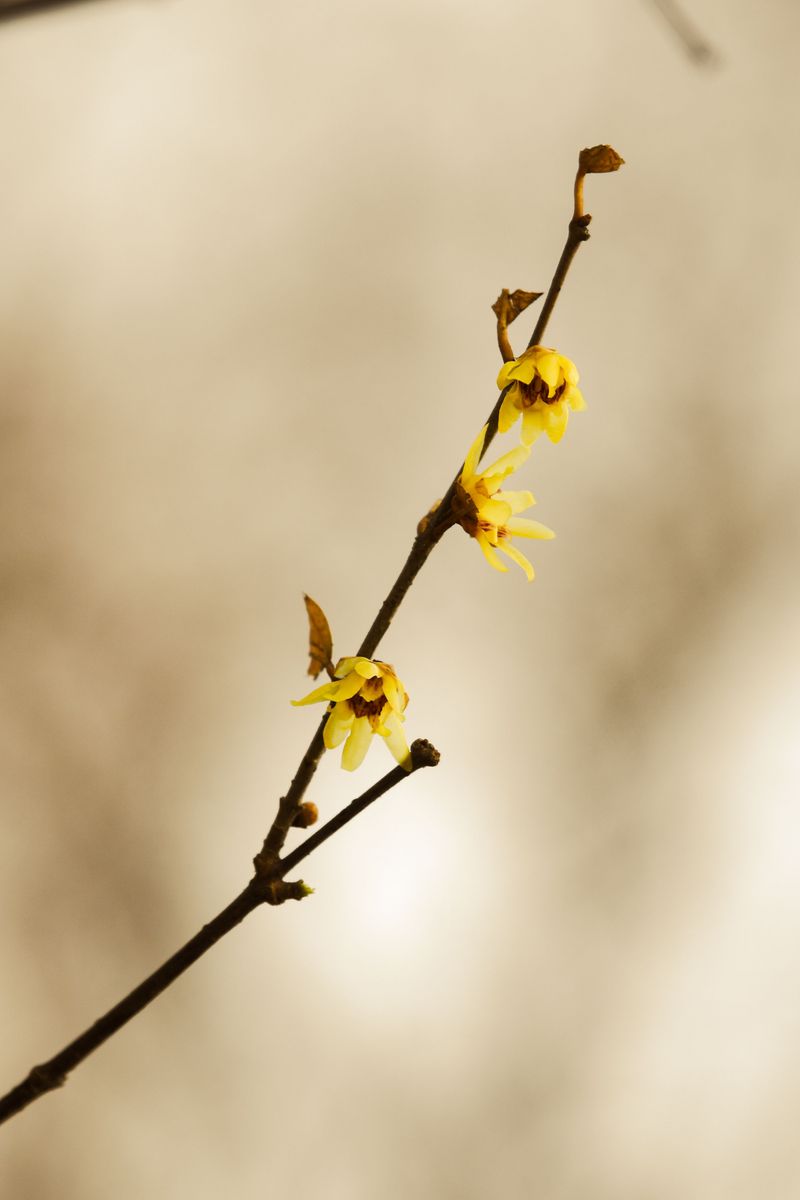
Plenty of folks guess forsythia when they see yellow flowers in the woods. Forsythia is an Asian import that blooms in early spring, though, and its flowers are bell-shaped, not spidery.
Common witch hazel is a true native. It grows wild across the eastern United States, including every region of Maryland, from western ridges to Eastern Shore woodlands. Look for it in the shady understory beneath oaks, maples, and tulip trees, often along streams and slopes.
The plant usually grows as a loose, multi-stemmed shrub or small tree, about 10 to 20 feet tall. Its bark is smooth and gray-brown. Its leaves are oval with wavy, scalloped edges and an uneven base, which is a handy clue in summer.
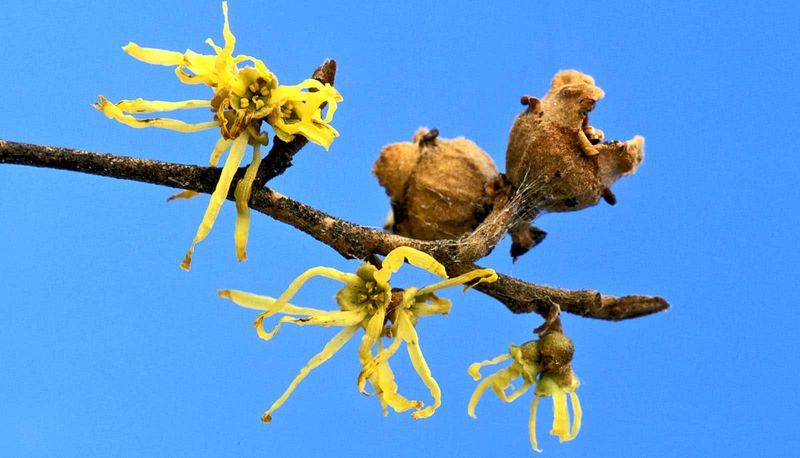
Spotting tips help a lot here. Check twigs for fuzzy yellow clusters, and look for small woody brown seed capsules from last year, sometimes on the same branch.
A winter-blooming relative called vernal witch hazel lives mostly in the Ozarks, and garden hybrids bloom in late winter. If you see flowers in November in a wild Maryland forest, common witch hazel is by far the likeliest match.
Moths And Tiny Flies Visit Witch Hazel Flowers On Chilly Nights
Bees are mostly tucked away by November, so who does the pollinating? Researchers have found that owlet moths are key visitors to common witch hazel.
These winter-active moths have a clever skill. They can shiver their flight muscles to warm up, letting them fly on cool nights when most insects stay still. They sip the flowers’ nectar and carry pollen from plant to plant.
On warmer afternoons, you might also see small flies, gnats, and an occasional bee checking out the blooms. Not every flower gets visited, and studies show witch hazel sets only a modest amount of seed. Blooming late means less company, but also far less competition.
The shrub feeds wildlife in other ways too. It serves as a host plant for dozens of moth and butterfly caterpillars, which in turn feed nesting songbirds. Ruffed grouse, wild turkeys, and northern bobwhites eat the seeds, and deer may nibble twigs.
Try this on a mild November evening. Bring a flashlight to a witch hazel patch and look closely at the flowers. Spotting a moth sipping nectar in near-freezing air feels like catching a secret.
Woody Witch Hazel Seed Pods Can Launch Seeds Across The Yard
Pop! That sound in a quiet autumn forest might be a witch hazel capsule firing off its seeds.
Here is how it works. After a flower is pollinated in fall, the seed takes about a full year to mature. By the next autumn, a hard, fuzzy brown capsule holds two shiny black seeds.
As the capsule dries, its walls squeeze tighter and tighter. Finally it splits open and shoots the seeds out with real force. Reports describe seeds landing 20 to 30 feet away from the parent shrub, which is impressive for something smaller than a pea.
That timing creates a fun sight. You can often find open seed capsules and fresh yellow flowers on the same branch at once. It looks like the plant is closing one chapter while opening the next.
Want to see it at home? Some naturalists collect a few closed capsules in early fall and set them in a paper bag or a shallow box indoors. Within days, you may hear little clicks as seeds bounce around.
Collect only a handful, and only where it is allowed. State parks and other protected lands usually have rules against removing plant material.
Your Yard Can Host A Witch Hazel Shrub Of Its Own
Gardeners who crave something blooming after the mums fade will love this shrub. Common witch hazel adds color, scent, and wildlife value when most yards look tired.
Give it part shade to part sun. Morning sun with afternoon shade suits it well, though more sun can mean more flowers if the soil stays moist. Deep shade still works, but blooms may be sparse.
It prefers moist, well-drained, slightly acidic soil rich in organic matter. It handles clay better than many shrubs and tolerates brief wet spells. It grows well across Maryland’s USDA zones, roughly 6a in the far west to 8a near the coast.
Plant in early fall or spring. Dig a hole twice as wide as the root ball but no deeper, then water deeply. Spread two to three inches of shredded leaves or mulch, keeping it off the stems.
Plan for size too. A mature plant can reach 10 to 20 feet tall and nearly as wide, so tuck it at a woodland edge, behind a patio, or near a path. Placing it where you walk daily means you will actually notice those November flowers and their sweet scent.
That Bottle Of Witch Hazel In Your Medicine Cabinet Comes From These Branches
Grab that clear bottle labeled witch hazel from your bathroom shelf. Odds are good it started as twigs and bark from this very shrub.
Native American groups used witch hazel bark and leaves long before European settlers arrived. They made teas and washes for sore muscles, swelling, cuts, and skin troubles. Settlers learned these uses, and by the 1800s, witch hazel extract was sold widely in the United States.
Today, witch hazel is one of the few plant ingredients recognized by the FDA in certain over-the-counter products. It appears in astringents, toners, and soothing pads. People use it to calm minor skin irritation, bug bites, and razor bumps.
The name has a fun backstory too. Many sources say the word witch likely comes from an Old English word, wice, meaning bendable. Forked branches were also once used by water dowsers searching for underground water.
Please skip making your own remedies from wild plants. Store-bought products are made in controlled ways, and homemade versions can bother sensitive skin. Ask a doctor or pharmacist before using any product on broken skin or for a health concern.
Pick The True Native Witch Hazel At The Nursery And Keep It Thriving
Ready to bring one home? Start by checking the plant tag carefully.
Many garden centers sell hybrid witch hazels, like Hamamelis x intermedia, plus Chinese and Japanese types. They are lovely, but they bloom in late winter and do not offer the same fall support for local moths. Look for Hamamelis virginiana by name, and try native plant nurseries or Maryland native plant sales when possible.
Care is refreshingly easy. Water weekly during the first two summers, especially in dry spells. After that, established shrubs rarely need extra water unless a long drought hits.
Skip heavy fertilizer, since rich, leafy soil usually provides enough. Prune lightly, right after flowering finishes in late fall or early winter, to remove crossing branches or root suckers. Avoid heavy summer cuts, because next fall’s flower buds form during the growing season.
Minor issues may pop up, like witch hazel cone gall aphids creating small cone shapes on leaves. These galls look odd but rarely harm the shrub, so leave them alone.
Then simply wait. Some November afternoon, that first curly yellow bloom will catch your eye, and it will feel like a gift from your own backyard.