The Venomous Migration Happening Quietly in Southern Illinois
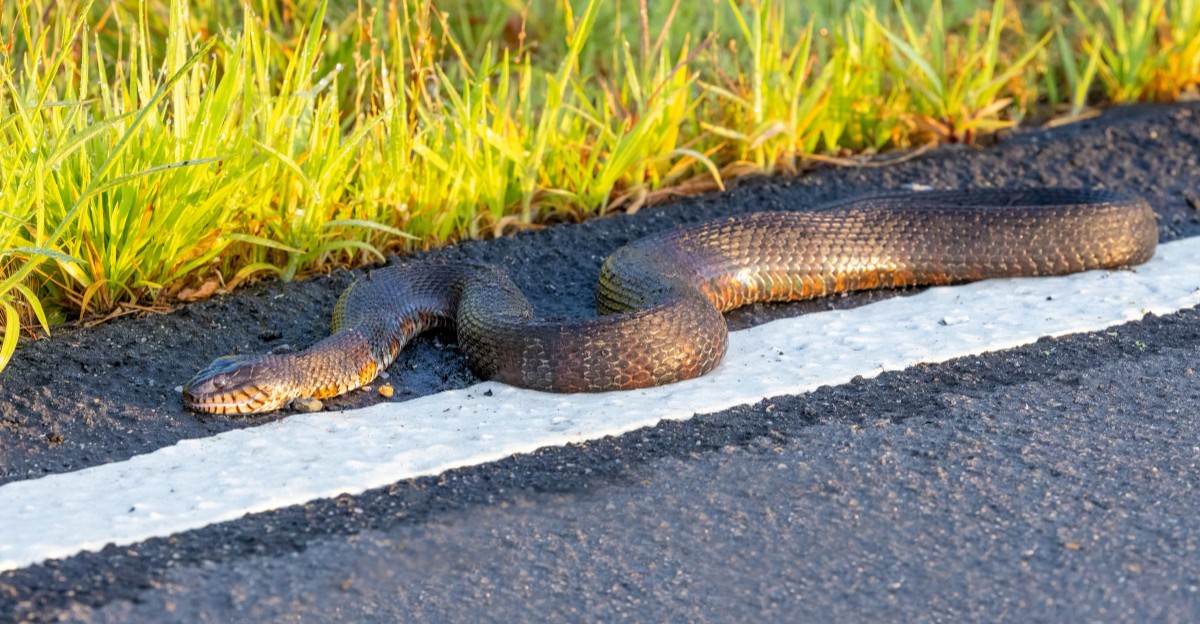
Twice a year, the U.S. Forest Service shuts down a gravel road in southern Illinois so that wildlife can cross it in peace.
Cars are turned away, and the travelers who take over move on their bellies. The road sits between a towering wall of limestone bluffs and a wide, buggy swamp.
Many of the animals crossing it spend winter tucked inside rock cracks and summer hunting frogs in the shallow water. It is an old route, used long before the road existed.
I am surprised how few Illinois gardeners know about this, since the timing lines up with our own seasons. You trade rakes for seed catalogs in fall, and they trade swamp for stone.
A few of these quiet commuters carry venom, and some are protected by state law. Who exactly is crossing that road, and should you worry about them in your own backyard?
A Gravel Road Below the LaRue Bluffs Gets Handed Over to Snakes
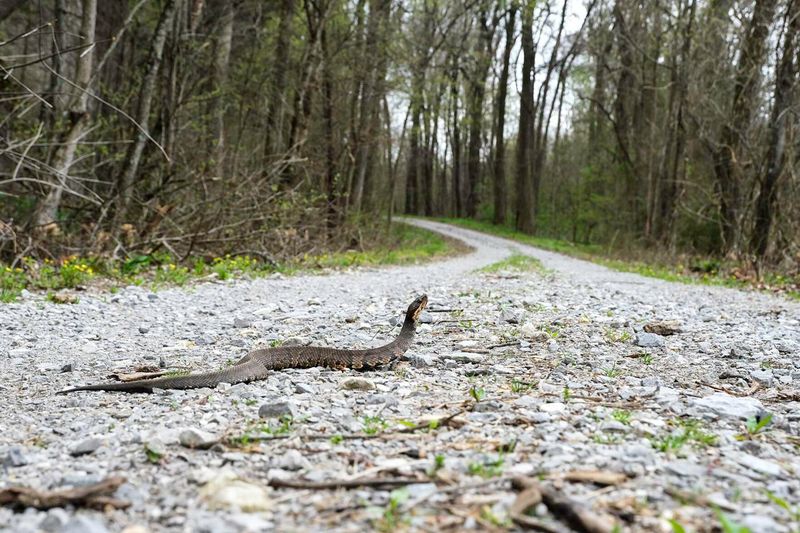
Most roads are built for people. Forest Road 345 in the Shawnee National Forest works the other way around for part of the year.
Locals simply call it Snake Road, and the nickname is earned. The road runs about two and a half miles along the base of the LaRue-Pine Hills, a rugged area in Union County near the Mississippi River floodplain.
On one side rise steep limestone cliffs. On the other side sits LaRue Swamp, full of frogs, fish, and insects.
Snakes and other cold-blooded animals need both places, so they cross the road to reach them. Before the closures began in the early 1970s, many were run over by cars. The Forest Service decided the animals deserved a safer commute.
So now the gates close each spring and fall. Vehicles stay out, and walkers are welcome to come and watch quietly.
I love that a federal agency looked at a simple gravel road and chose wildlife first. It is one of the few places in the country set aside this way.
The whole site is also part of a protected Research Natural Area, which means the bluffs and swamp are valued for science and study, not just scenery.
Spring and Fall Gates Mark the Snake Road Crossing Season
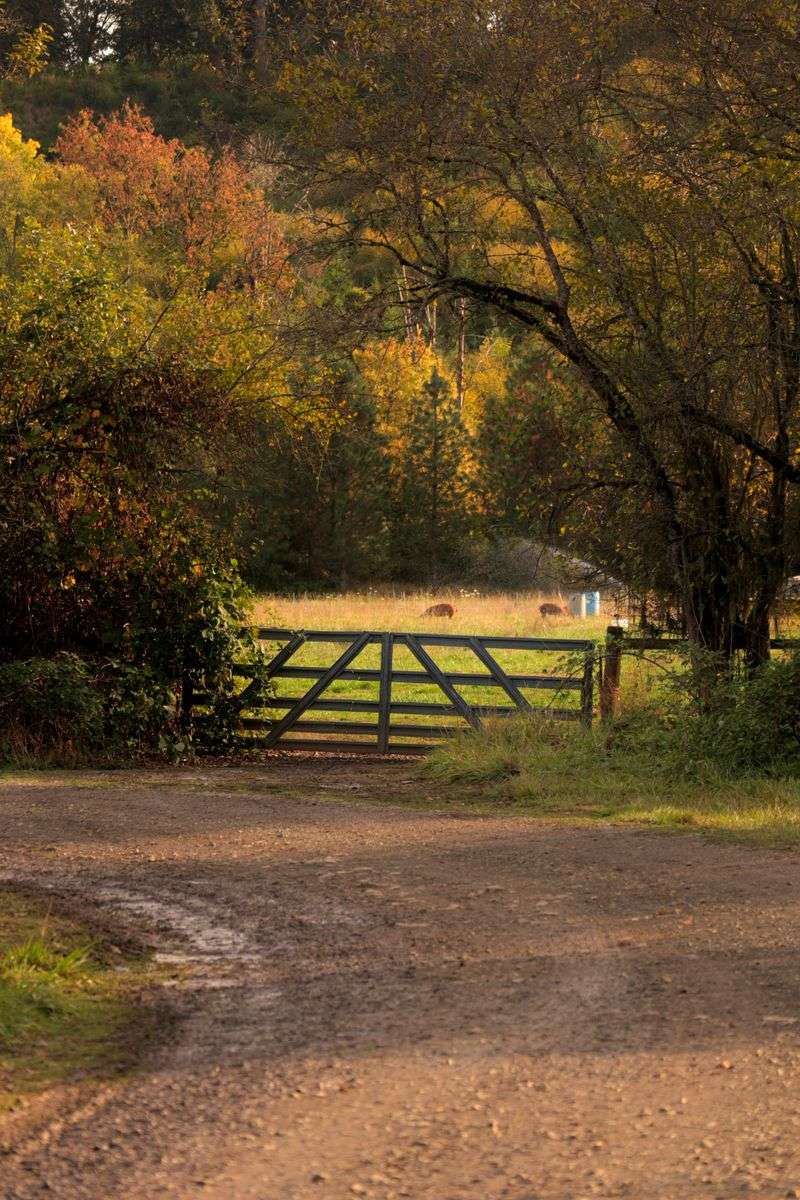
Mark your calendar, because the timing is set and predictable. The road closes to vehicles from early March to May 15, then again from September 1 to October 30, and closures can be extended during unusually warm weather.
Spring is the outbound trip. Snakes leave their winter hideouts in the bluffs as the days warm up, then slide down toward the swamp to feed and find mates.
A sunny afternoon in April can bring plenty of movement. Fall is the return trip. As nights cool, the animals head back toward the rocks to settle in for winter.
Reptiles do not truly hibernate the way bears do. Their resting state is called brumation, and their bodies slow down to match the cold.
Weather matters more than the exact date. Warm, mild days after a cool spell often bring the most activity, while chilly or very hot days can feel quiet.
I have heard visitors describe one trip with dozens of sightings and another with barely one.
Before you go, check the Shawnee National Forest website for current closure dates and conditions.
Flooding from the nearby Big Muddy and Mississippi River floodplain can occasionally affect access. A quick look saves you a long drive.
Cottonmouths, Copperheads, and Timber Rattlers Make the Trip
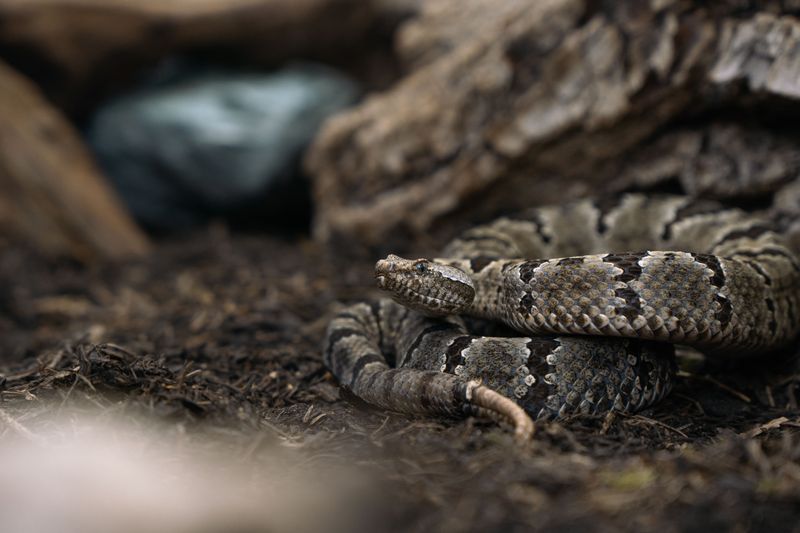
Three venomous species are the headliners here. They are the northern cottonmouth, the eastern copperhead, and the timber rattlesnake.
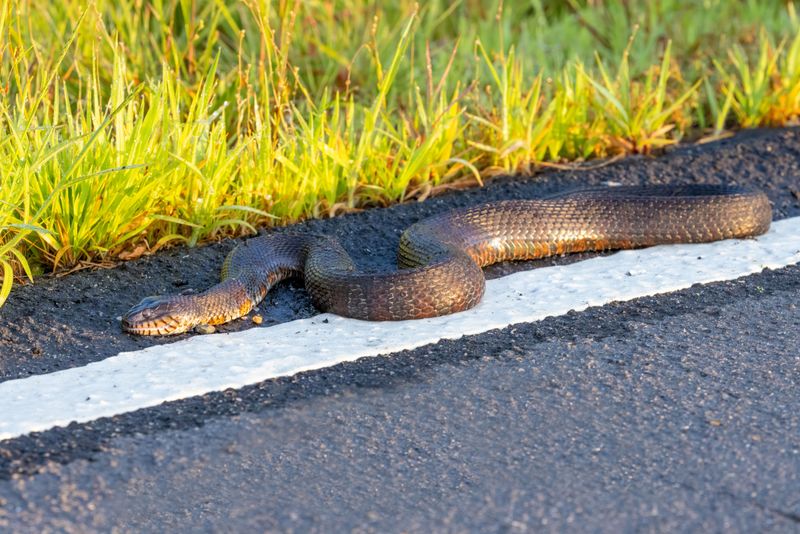
Cottonmouths are the stars of Snake Road. These thick, dark snakes love swampy water, and southern Illinois sits near the northern edge of their range.
When bothered, one may open its mouth wide to flash the bright white lining that gives it its name. That display is a warning, not a strike.
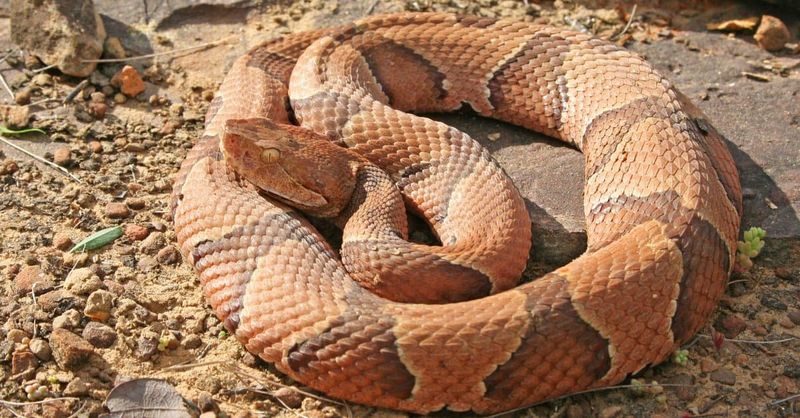
Copperheads wear a beautiful pattern of tan and copper bands shaped a bit like hourglasses. They blend into fallen leaves so well that you might walk right past one.
Timber rattlesnakes are larger, rarer, and listed as a threatened species in Illinois, so spotting one is a real treat.
Fun fact for trivia night. The state has four venomous snakes, and the fourth is the eastern massasauga, a small rattlesnake found in a few northern and central wetlands, not along this road.
All of these snakes would rather hide than strike. Bites usually happen when someone grabs, steps on, or tries to move a snake. Give them space, and they mostly go about their business without fuss.
Limestone Crevices and Swamp Water Explain the Snake Highway
Location is everything, even for snakes. The secret to this whole event is that two very different habitats sit only a few steps apart.
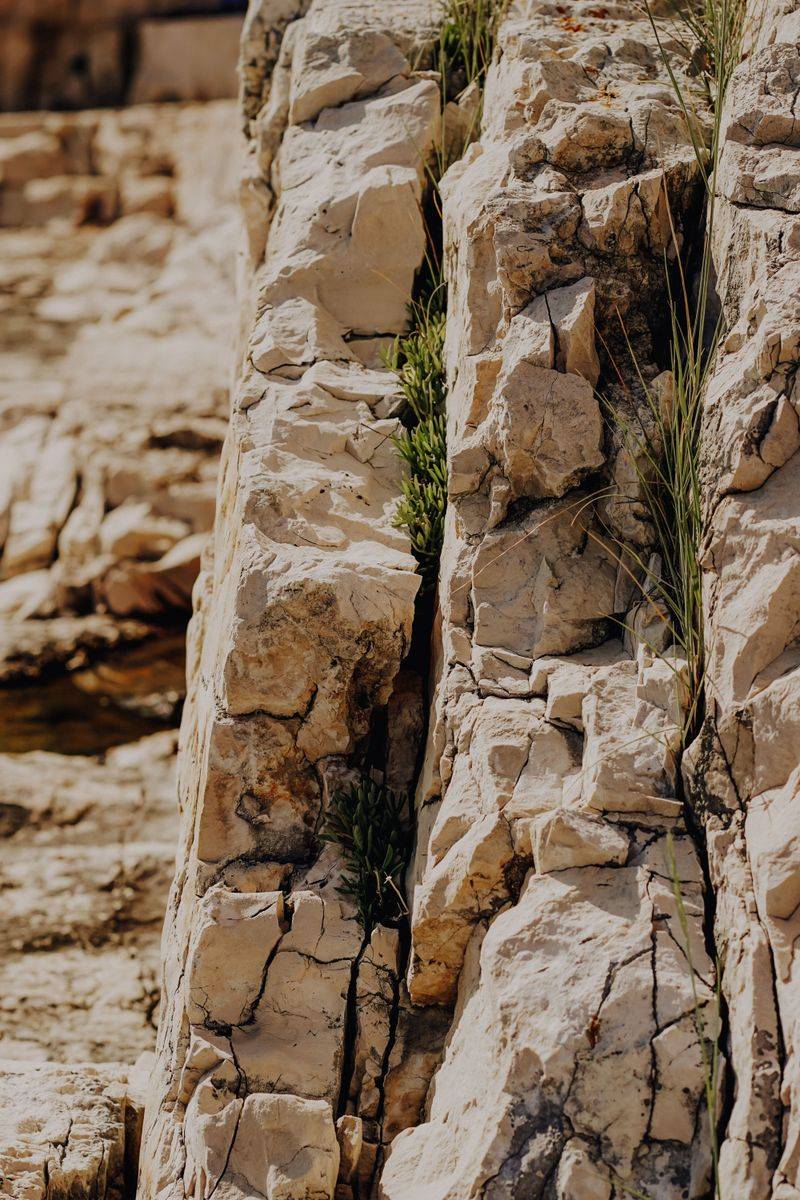
The limestone bluffs are full of deep cracks and crevices. Deep inside, the temperature stays fairly steady through winter, which keeps cold-blooded animals from freezing. A good crack in the rock works like a cozy underground cellar.
The swamp is the summer buffet. Frogs, fish, crayfish, small mammals, and insects are everywhere, so snakes can eat well and grow. Warm, shallow water also suits the cottonmouth perfectly.
Very few places in the Midwest put a winter shelter and a summer feeding ground this close together. The road just happens to sit right in the middle of the route. That is why the crossing is so concentrated and easy to see.
Gardeners can relate to this idea more than you might expect. Plants need the right soil, water, and light within reach, and wildlife needs the right shelter and food within reach too.
When those pieces line up, life shows up in big numbers. The LaRue area is a living lesson in how much habitat shape matters, from a rocky ledge down to a muddy pond edge.
Walking Snake Road Safely Takes Patience and Good Boots
Slow down, and the road starts to reveal itself. The best snake spotters walk quietly and scan the edges, the rocks, and the base of the bluff.
Wear sturdy boots and long pants, and bring binoculars or a camera with a zoom lens. A long lens lets you get great photos while staying several feet back. Watch where you put your hands, especially near rocks and logs.
Stay on the road itself. Wandering into the brush or climbing the bluffs puts you at risk and disturbs the animals. Ticks and poison ivy are also common here, so a quick check afterward is smart.
Handling, catching, or collecting any animal is not allowed. Illinois law protects native reptiles and amphibians, and the Forest Service enforces that rule on Snake Road. Pushing a snake with a stick or blocking its path is also a bad idea.
If a venomous bite does happen, stay calm, keep the bitten area still, and call 911 or get to a hospital quickly. Skip old tricks like cutting the wound or using ice.
Cell service can be spotty, so let someone know your plans before you head out. A little planning keeps the visit fun.
Frogs, Salamanders, and Turtles Share the Same Crossing
Snakes get the headlines, but they are far from alone. A whole parade of small animals uses this same crossing.
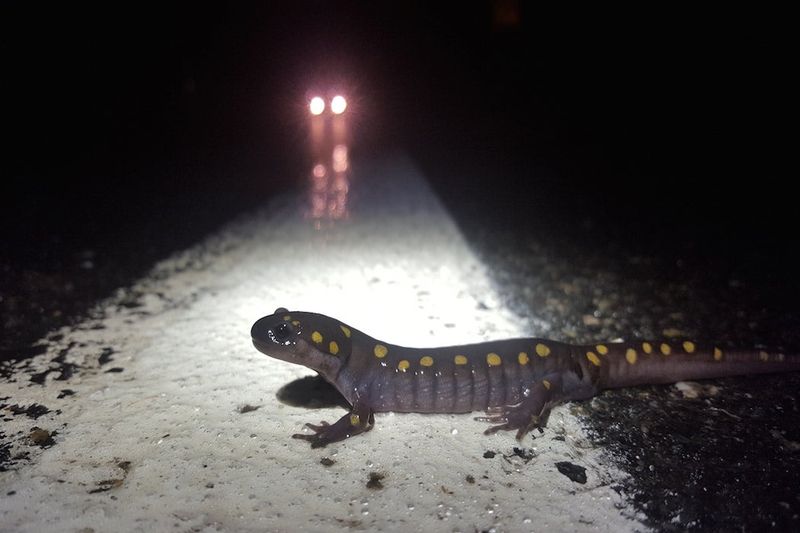
Southern leopard frogs, toads, tree frogs, and several kinds of salamanders move between the swamp and the forest. Turtles plod across too, especially in spring.
Harmless snakes outnumber the venomous ones, including watersnakes, rat snakes, racers, and tiny ringneck snakes with a bright yellow-orange belly.
Rainy spring nights can be especially busy for amphibians. Salamanders often travel when the ground is wet and the air is mild. If you visit after a soft rain, look closely at the leaf litter along the edges.
Scientists count the LaRue area among the richest spots for reptiles and amphibians in the whole Midwest. Researchers and students have studied it for decades.
That steady interest helped keep the closure in place year after year. Here is a quirky bonus. Many of the snakes crossing the road eat the very frogs crossing beside them.
It sounds harsh, but it is a normal part of a healthy food web. A swamp full of frogs supports a forest full of snakes, and those snakes help keep mice and other small critters in balance.
A Copperhead Near Your Garden Shed Is Usually Just Passing Through
Spotting a copperhead by the woodpile can make anyone jump. Take a breath, because most of these encounters end with the snake simply moving on.
The famous migration stays mostly within the LaRue area, so it will not send snakes marching into town.
Still, copperheads and other snakes live across much of the southern counties, especially near woods, creeks, and rocky slopes. In fall, they may wander a bit while looking for a winter spot.
You can make your yard less inviting without harming anything. Keep grass mowed near the house, store firewood off the ground and away from walls, and clean up piles of boards or scrap metal.
Fewer mice means fewer reasons for snakes to visit. Wear gloves and use a light when reaching into mulch, leaf piles, or under pots.
If a venomous snake settles somewhere troubling, call a licensed wildlife control professional rather than trying to handle it yourself.
My favorite takeaway is gentle. These snakes are native neighbors, and Illinois protects them for good reason.
A little awareness, a tidy shed, and a fall trip to Snake Road can turn fear into fascination. Respect the space, and the space usually respects you right back.