8 Tips To Trigger Blooming On Your Christmas Cactus
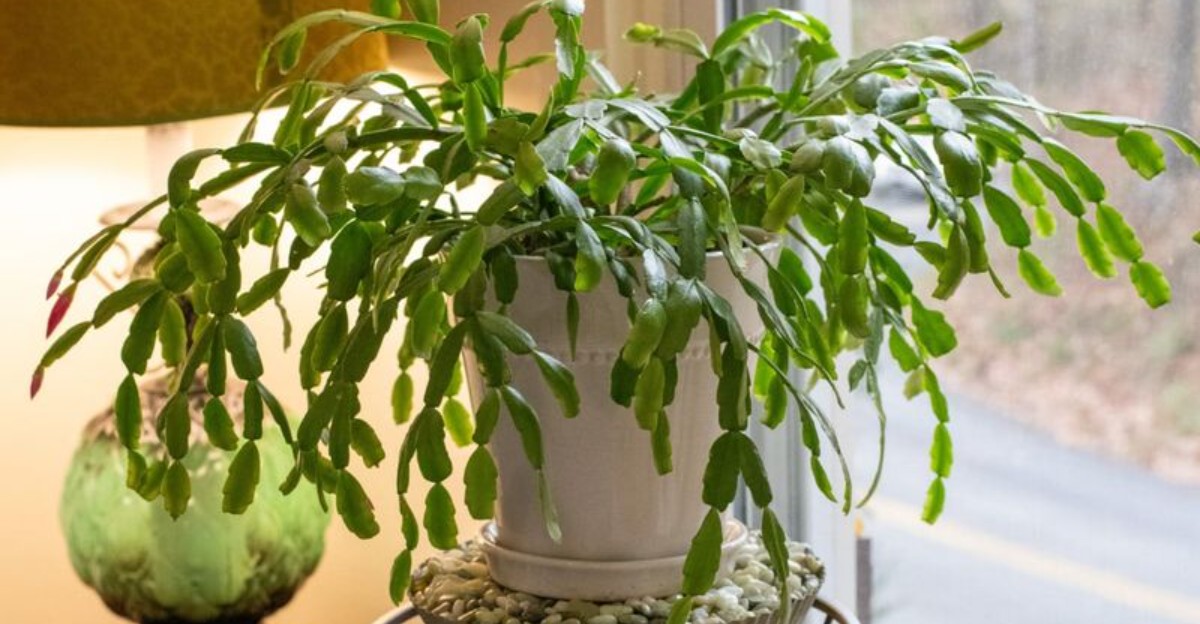
One of our favorite holiday houseplants grows wild on mossy tree branches in the misty mountains of Brazil. It belongs to the cactus family, yet it has no spines and prefers rainforest fog over desert sun.
Plenty of these plants outlive their first owners and get passed down through families for fifty years or more. Even better, they save their brightest flowers for the gloomiest weeks of the year, when gardens outside look bare.
I’ll admit it, mine sat green and stubborn for three winters while I watered it and waited for color. Maybe your own plant looks healthy and leafy, yet it stubbornly refuses to put on any kind of show.
Turns out, the secret has less to do with extra care and more to do with darkness and chilly nights. So what simple changes could finally coax those bright, dangling blossoms out of your leafy holdout?
Give Your Christmas Cactus Long Dark Nights
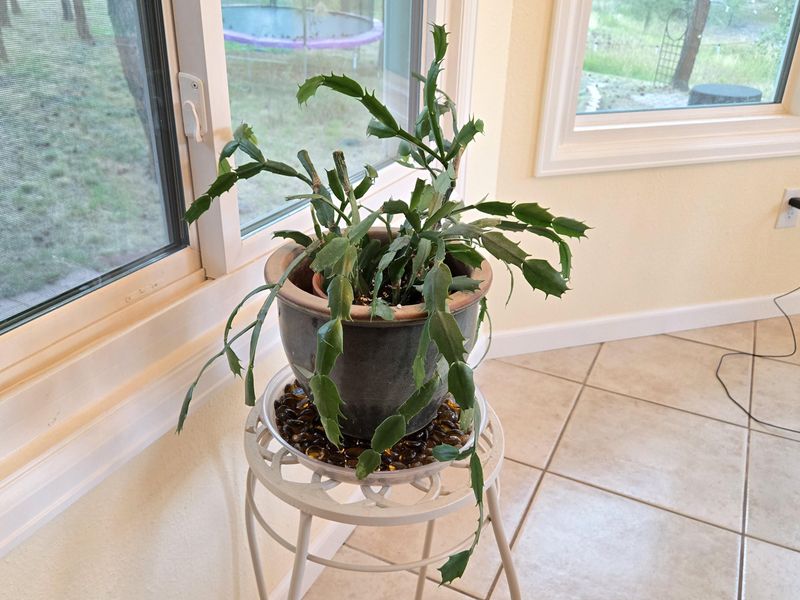
Your holiday cactus actually keeps track of night length, and it notices when autumn evenings start stretching out longer. Scientists call it a short-day plant, though the real trigger is the long, unbroken stretch of darkness.
Aim for roughly 12 to 14 hours of darkness each night for about six weeks, starting in early fall. University extension experts note that buds usually begin forming once the plant gets this steady nightly rest.
I learned the hard way that a single reading lamp can undo weeks of careful effort in my den. Even short flashes of indoor light at night can confuse the plant and delay bud formation for a while.
A spare bedroom that nobody uses after sunset works beautifully, especially if streetlights stay out of the window. Some folks slip a cardboard box over the pot each evening, then remove it the next morning.
Fair warning, the box trick takes discipline, since forgetting it a few nights in a row resets your progress. Setting a phone reminder for dusk and dawn makes the routine much easier to stick with for weeks.
During the day, the plant still needs bright light, so keep it near a window between dark sessions. Once you spot tiny pink or red nubs at the stem tips, regular household light schedules are fine.
Darkness and cool temperatures work together, and cool nights alone can sometimes trigger buds without strict light control. Still, giving both signals at once gives your plant the clearest message that flowering season has arrived.
Cool Nights Around 55 Degrees Wake Up Flower Buds
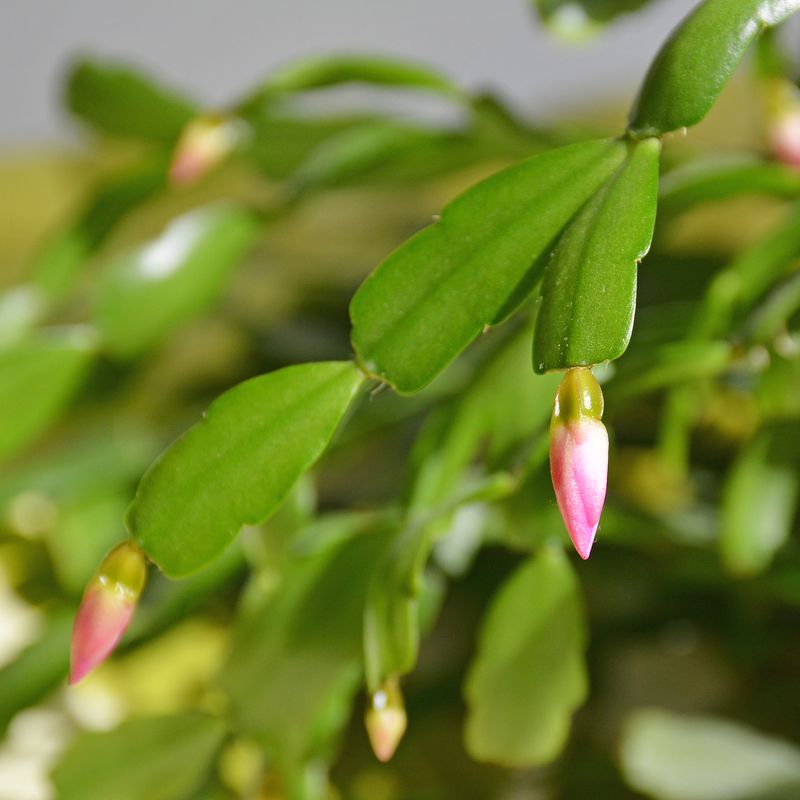
Cooler air might be the most underrated bloom trick, and it costs nothing more than a chilly corner. Thanksgiving cacti and Christmas cacti both respond strongly when nighttime temperatures drop into the low to mid fifties.
Research shared by the University of Minnesota Extension shows nights around 50 to 55 degrees encourage buds reliably. At those temperatures, many plants set flowers even when day length is not perfectly controlled indoors.
Warm homes create the biggest problem, because nights above roughly 65 degrees can slow or prevent bud development. Cozy living rooms near a furnace vent often keep these plants leafy but frustratingly flowerless all winter.
Every fall, I move mine to an unheated sunroom that stays cool but safely above freezing at night. A cool basement window or a chilly guest room can work just as well for this job.
Watch the forecast closely, since these tropical plants dislike frost and can be harmed below about 45 degrees. Bringing outdoor pots inside before the first frost protects tender stems from sudden cold damage in autumn.
Keep the cool treatment going for about six weeks, or until you see buds swelling at the tips. After that, the plant can return to normal room temperatures, though cooler rooms help flowers last longer.
Trust me on this one, a cheap indoor thermometer tells you more than guessing by feel ever will. Many corners that feel cool to us actually run several degrees warmer than we expect at night.
Ease Up On The Watering Can In Early Fall
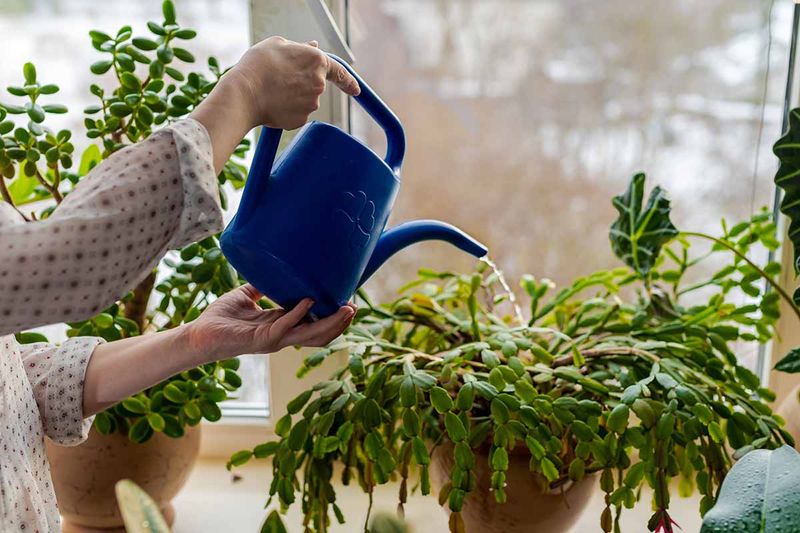
Overwatering trips up more holiday cactus owners than almost any other mistake, and I was guilty for years. Those fat, glossy segments store water, so the plant can handle short dry spells better than you think.
Starting in early fall, let the top inch or two of soil dry before watering again. That slightly leaner routine mimics the drier season in its native Brazilian forests and nudges it toward flowering.
Dry does not mean bone dry, though, because shriveled, limp stems signal that your plant is too thirsty. Poke a finger into the soil, and water only when the top layer feels dry to the touch.
Soggy soil causes a different headache, since constantly wet roots can rot and drop segments without warning. Use a pot with drainage holes, and empty any saucer about fifteen minutes after watering to stop pooling.
Once buds appear, gradually return to more regular watering so the soil stays lightly moist but not soaked. Developing flowers need steady moisture, and sudden swings between dry and wet can make buds fall early.
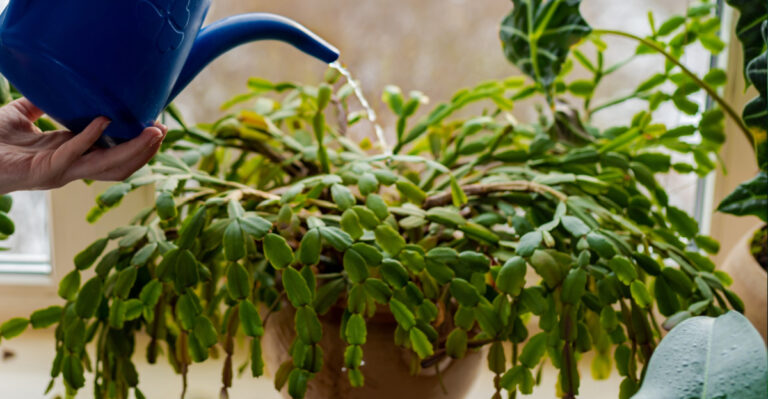
Room temperature water works best, since icy tap water can shock the roots of this rainforest native. I keep a small pitcher sitting out overnight, which takes away the chill before I water in the morning.
A loose, fast-draining potting mix helps too, especially one blended for cacti with some added peat or bark. Your plant grows on tree bark in the wild, so airy soil feels far more like home.
Bright Indirect Light Fuels Bigger Christmas Cactus Blooms
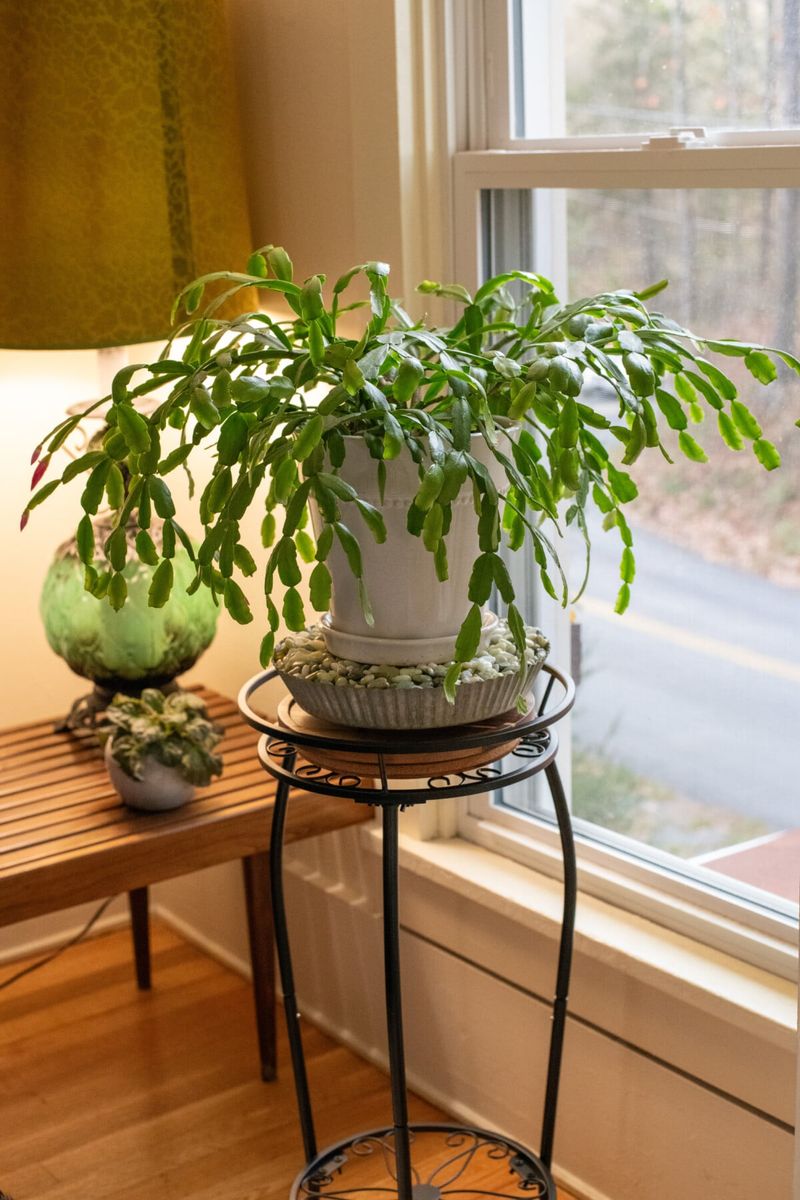
Sunshine fuels every flower your cactus will eventually produce, even though darkness gets most of the attention. During daylight hours, these plants want bright light that is filtered, similar to dappled shade under rainforest trees.
An east-facing window is often a sweet spot, offering gentle morning sun without the harsh afternoon glare. A bright north window can also work, though growth may be slower and blooms a little less plentiful.
Hot afternoon sun can scorch the flat segments, leaving them faded or tinged with an unhealthy reddish color. A bit of red tint sometimes shows up from bright light or stress, so check conditions before panicking.
I’m a sucker for a sheer curtain, since it softens strong rays while keeping the room nice and bright. Placing the pot a few feet back from a sunny south window can offer a similar balance.
Many gardeners move their plants outdoors for summer, and a shaded porch or tree canopy suits them wonderfully. Just introduce them slowly over a week or so, because even sturdy segments can sunburn after months indoors.
Remember that light at night matters too, so daytime brightness and nighttime darkness need to stay separate. A sunny kitchen window works fine during the day, as long as overhead lights stay off after dusk.
Rotating the pot every week or two helps the plant grow evenly instead of leaning toward the glass. Stop rotating once buds form, though, because changing direction can encourage some buds to drop off.
Put The Plant Food Away Before Christmas Cactus Buds Form
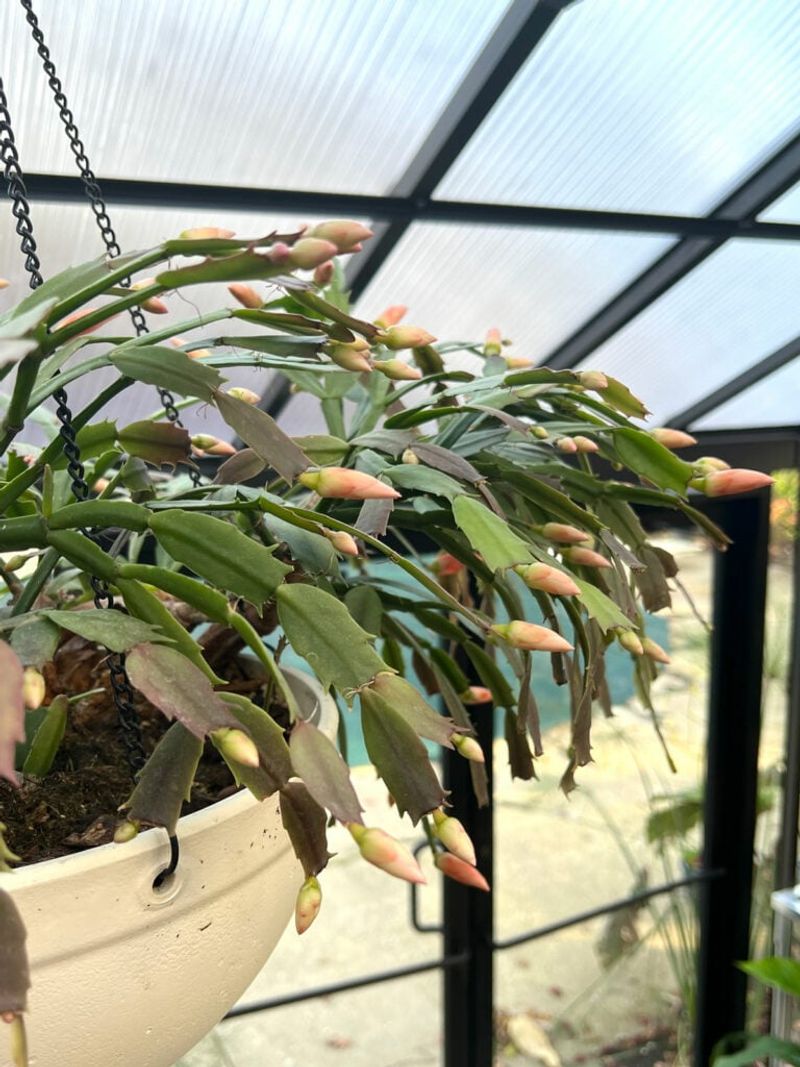
Feeding your cactus feels like a kind gesture, but timing matters far more than the amount you pour. Spring and summer are the main growing seasons, when the plant builds the new segments that will later carry flowers.
During those months, a balanced houseplant fertilizer mixed at half strength about once a month works nicely. Some growers use a formula like 20-20-20, while others prefer one slightly higher in phosphorus for blooms.
By late summer or early fall, stop feeding so the plant can shift its energy toward setting buds. Extra nutrients at that stage tend to push leafy growth, which competes with the flowers you want.
Not going to lie, I once fed mine in October and got plenty of segments but barely any color. That lesson stuck with me, and now the fertilizer bottle goes onto a high shelf every September.
Overfeeding carries another risk, since built-up salts can burn tender roots and leave white crust on the soil. Flushing the pot with plain water a few times a year helps rinse away those leftover mineral deposits.
Some extension sources also suggest occasional magnesium, since these plants seem to use more than many houseplants. A light dose of Epsom salt in water once or twice during summer is one common approach.
Resume regular feeding in spring, once flowering ends and the plant has enjoyed its short rest period. Following that seasonal rhythm keeps the plant strong without confusing the signals that lead to holiday flowers.
Pebble Trays Bring Rainforest Humidity To Your Christmas Cactus
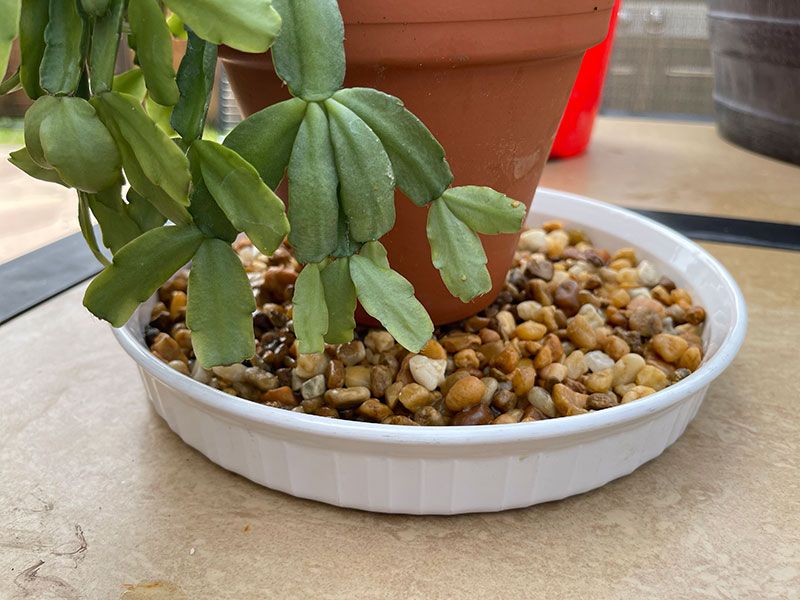
Winter air inside heated homes can get very dry, which surprises plenty of people. Your cactus evolved in humid mountain forests, so dry indoor air can leave it stressed during bud season.
Many growers aim for humidity around 50 to 60 percent, which is well above typical heated rooms. A simple digital hygrometer costs only a few dollars and shows exactly what your plant is experiencing.
Pebble trays are my favorite fix, and they take about five minutes to set up on a windowsill. Fill a shallow tray with gravel, add water just below the top, then set the pot on it.
As the water evaporates, it raises the moisture right around the leaves where the plant needs it most. Keep the pot bottom above the waterline, though, because soggy roots create problems you definitely want to avoid.
Grouping several houseplants together also helps, since leaves release moisture that lingers in the air between them. A small room humidifier nearby works even better, especially in homes with forced-air heating running for months.
Misting gets mentioned often, but its effect fades quickly, so treat it as a bonus rather than a solution. If you do mist, do it in the morning so the segments dry before cooler evening temperatures arrive.
Low humidity can contribute to shriveled segments and buds that drop before they open, which feels heartbreaking. Giving the air a little extra moisture is an easy way to protect all that patient waiting.
Prune Christmas Cactus Stems After The Flowers Fade
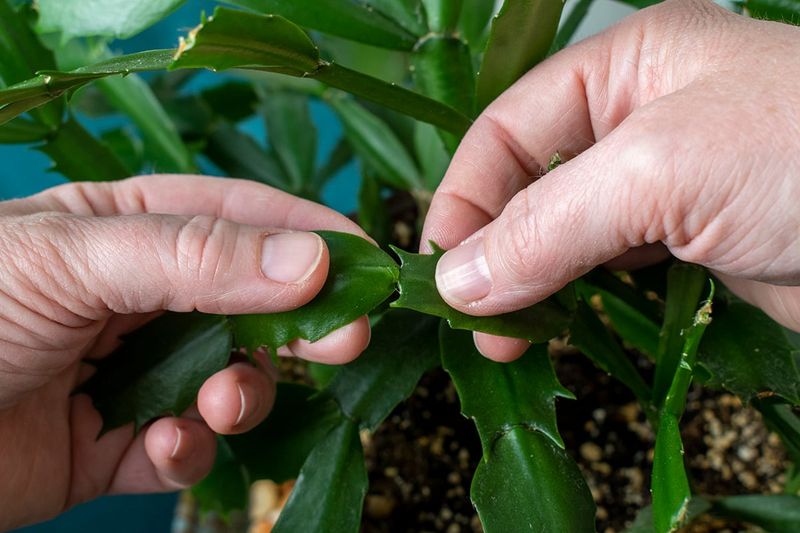
Next year’s flowers start forming at the tips of new segments, so more branch tips can mean more blooms. That simple fact turns a quick trim after flowering into one of the smartest moves you can make.
Once the last blossoms fade, give your plant a rest of about four to eight weeks. Water a little less during this time and skip fertilizer, letting the plant recover from its big show.
Late winter or early spring is the ideal pruning window, right before fresh growth begins to push out. Simply twist off one to three segments from each stem, or snip cleanly at the joints with clean scissors.
Each cut spot often sends out two new segments, which gradually creates a fuller, bushier plant. Don’t laugh, but I used to fear pruning, worried I would hurt something I had babied for years.
A light trim actually helps, and you can remove up to about a third of the plant safely. Avoid pruning in late summer or fall, since that would remove the tips where buds are about to form.
Spring is also a good time to repot if roots are crowding, though these plants like snug containers. Move up just one pot size, since a slightly root-bound plant often flowers better than an overpotted one.
Those trimmed pieces also make wonderful gifts, because they root easily in slightly damp potting mix within weeks. Let the cut ends dry for a day first, then tuck them about an inch deep into soil.
Keep Your Budding Christmas Cactus Away From Drafty Doors
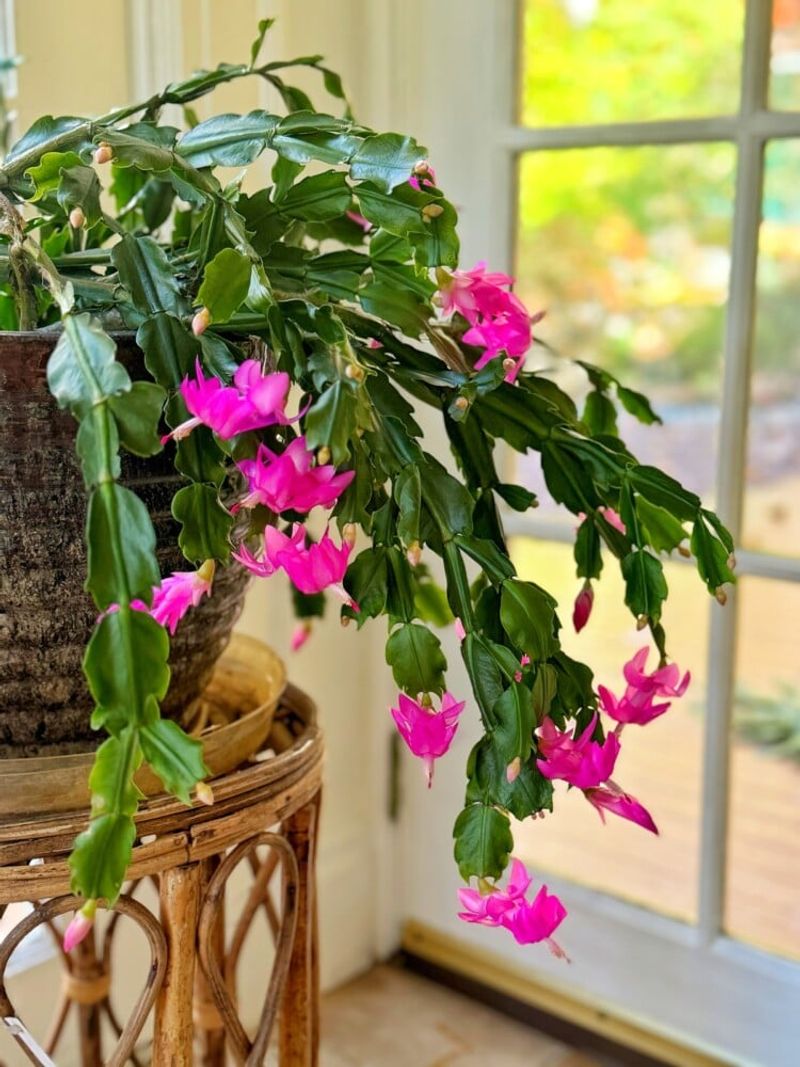
Bud drop is heartbreaking, and it happens most often right when you finally spot all those tiny pink tips. Moving the plant or changing its conditions suddenly is the most common reason those promising buds fall.
Once buds appear, pick a good spot and leave the pot there until flowering ends for the season. Carrying it to the dining table for a holiday party might look lovely, but it risks a costly reaction.
Cold drafts from frequently opened doors can shock developing buds, especially when winter winds sneak inside. Hot air from radiators or heating vents dries the plant quickly and often causes similar trouble.
I didn’t expect a mere hallway door to matter, yet my plant shed half its buds one December. Shifting it just six feet away from that drafty spot made a surprising difference the following year.
Keep watering steady while buds develop, since sudden drought or soaking can also send flowers tumbling down. Lightly moist soil and consistent room temperatures give delicate buds the calm conditions they need to open.
Gift plants often drop buds after the trip home from a store, and that usually reflects moving stress. Give a new arrival time to settle, and it may still bloom well during the next flowering season.
Each flower usually lasts several days, and a healthy plant can keep opening new blooms for weeks. That long display is the reward for all your careful patience, so enjoy every single dangling blossom.