Indiana’s Black Widow Doesn’t Wear The Hourglass Most People Look For
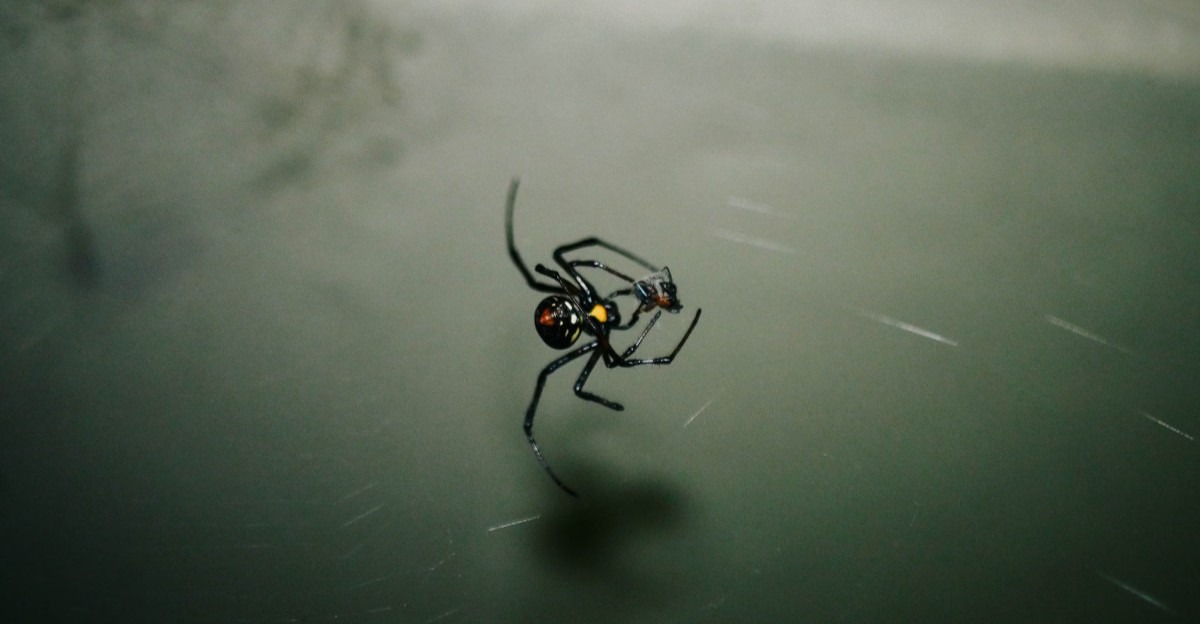
The red hourglass on many black widows in my area is snapped in half. Two separate red marks sit on the belly, with a gap right through the middle.
I’ll admit it, I once flipped a firewood log, saw that broken shape, and shrugged. I figured a real widow would show the famous full hourglass from every cartoon.
Indiana has more than one widow type, and the most common one plays by different fashion rules. Some even wear a row of red spots down the back, like tiny warning lights.
So how do you spot a spider that skips the costume everyone memorized? Your woodpile, garden shed, and flower pots may hold the answer.
That Broken Red Hourglass On A Black Widow Belly Is A Clue
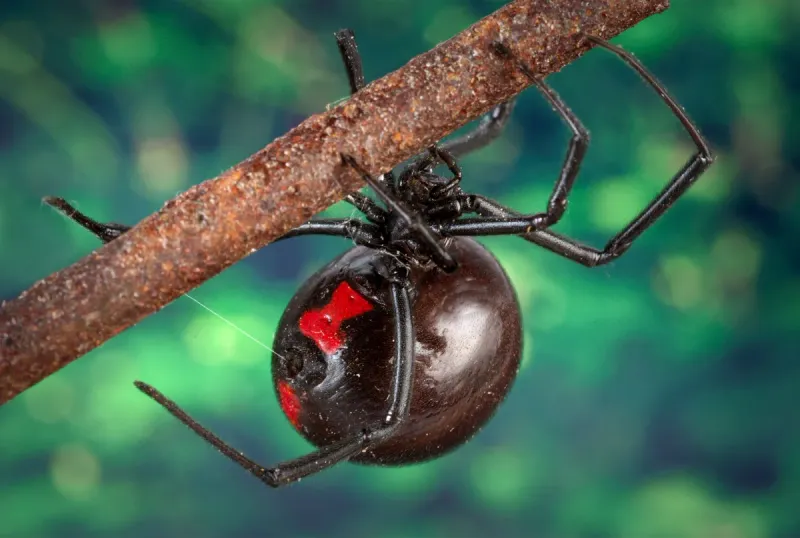
Flip a northern black widow over, and the hourglass looks like someone took scissors to it. The two red triangles do not touch, leaving a dark gap in the middle.
That split shape is the trademark of the northern black widow, Latrodectus variolus. Purdue University and other Midwest extension sources list it as the widow most often found across the state, especially in wooded and rural areas.
The southern black widow, by contrast, usually shows a complete, connected hourglass. That is the one in field guides, Halloween decorations, and nature documentaries, so it shaped how most of us picture the species.
Here is the catch, though. Markings vary from spider to spider, and some northern females have marks that nearly touch.
So the hourglass alone is a clue, not a final verdict. Shape, location, web style, and other markings work together to give you a confident ID.
I find this oddly comforting. Once you know the broken pattern exists, you stop dismissing it as a harmless lookalike.
Keep a flashlight handy when you check dark corners. A quick, careful look from a safe distance usually tells you plenty without ever handling the spider.
Red Spots Running Down The Black Widow Back Are Normal
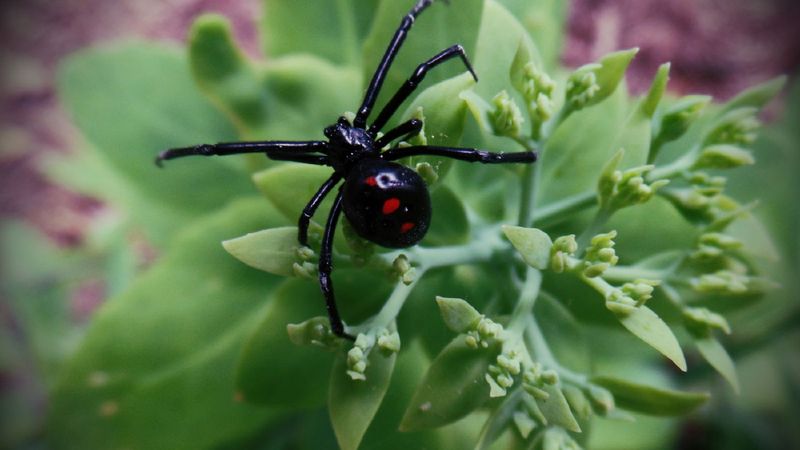
Most people only check the belly. Northern black widows often hide another hint on top.
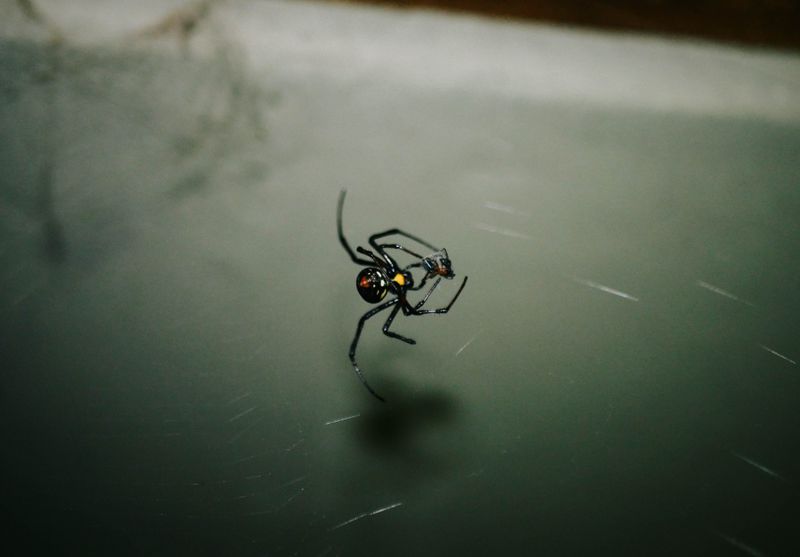
Many adult females carry a line of small red spots running down the middle of the back. Some also show faint white or cream edges around those spots, especially younger ones.
Not every individual has them, and they can fade as the spider ages. Still, a glossy black body with red dots along the top is a strong reason to slow down and look closer.
Southern black widows rarely show those back spots as adults. That difference helps separate the two species when you get a good view.
Fun fact: young widows look nothing like the adults. Juveniles often have orange, white, and tan patterns, so a colorful baby may grow into a classic shiny black adult.
Males are smaller, thinner, and usually more patterned too. They are rarely a concern for people.
When you spot those red dots, resist the urge to poke the spider for a better angle. Take a phone photo instead, zoom in later, and compare it with an extension fact sheet.
Woodpiles And Garden Sheds Are Favorite Black Widow Hideouts
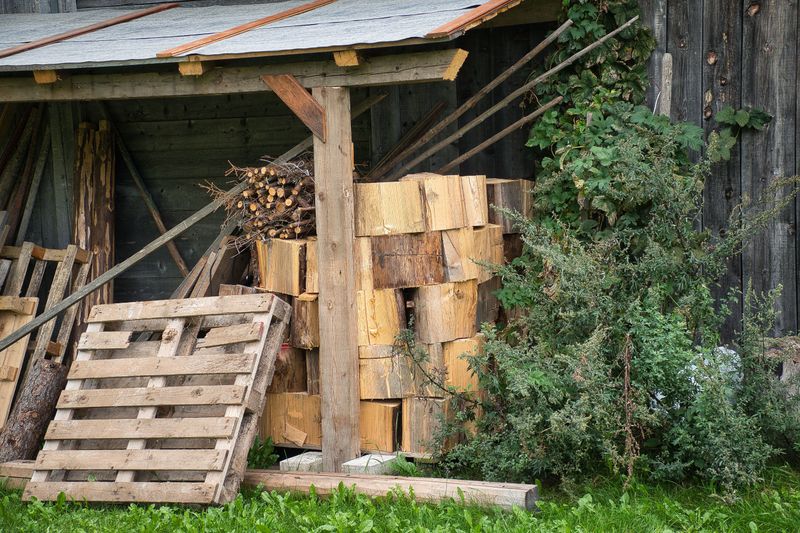
Guilty as charged, my firewood stack used to be a spider hotel. Northern black widows love quiet, sheltered spots that stay undisturbed for weeks.
Common hiding places include woodpiles, stone walls, hollow stumps, rodent burrows, and the undersides of outdoor furniture. Sheds, crawl spaces, barns, and stacked flower pots also make cozy homes.
In wooded parts of southern Indiana, they often show up near rocky ground and fallen logs. Rural properties tend to see them more than tidy city lots.
These spiders are shy. They usually stay tucked away and bite only when pressed against skin, such as when you grab a log or slip on an old glove.
A few simple habits help a lot. Wear thick gloves when moving wood, bricks, or pots, and shake out boots stored in the garage.
Stack firewood off the ground and away from your house walls. Bring in only what you will burn soon, so spiders are not carried indoors.
Clearing clutter around foundations also helps. Fewer hiding spots usually means fewer surprise encounters.
A Messy Cobweb Says More Than A Pretty Orb Web
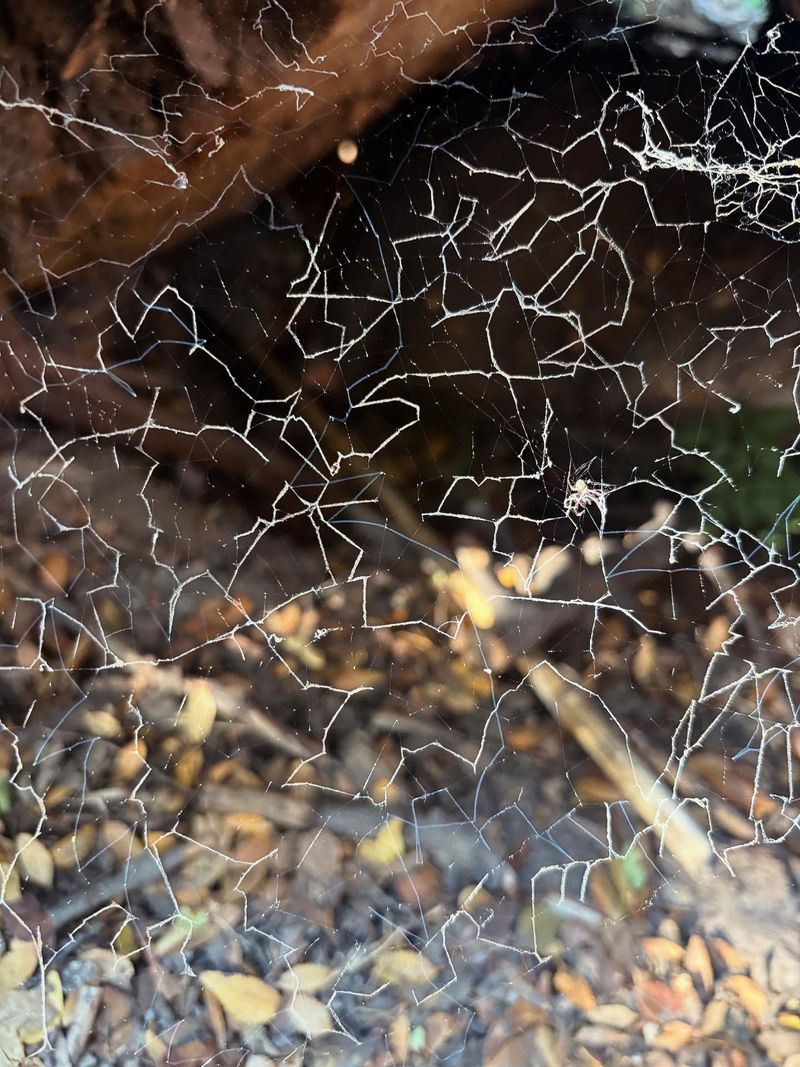
Forget the picture-perfect spiral webs you see glittering with dew. Black widows build messy, tangled cobwebs that look like someone dropped a ball of thread.
These webs sit low, usually close to the ground in dark, protected corners. The silk feels unusually strong and sticky, and some people say it almost crackles when touched with a stick.
The female often rests upside down in a hidden retreat near the web. That is why you may see her belly marking before anything else.
Orb weavers, like the big garden spiders on tomato cages, spin neat wheel-shaped webs in open, sunny spots. Those spiders are helpful and pose little risk to people.
Paying attention to web style is one of the easiest ways to sort spiders without getting close. A tangled web low in a woodpile deserves more caution than a tidy wheel strung between shrubs.
I check under deck steps and inside empty planters with a stick before reaching in. It takes two seconds and saves a lot of worry.
Leave orb webs alone when you can. Those spiders catch plenty of garden pests for you.
Southern Black Widows With Full Hourglasses Show Up Too
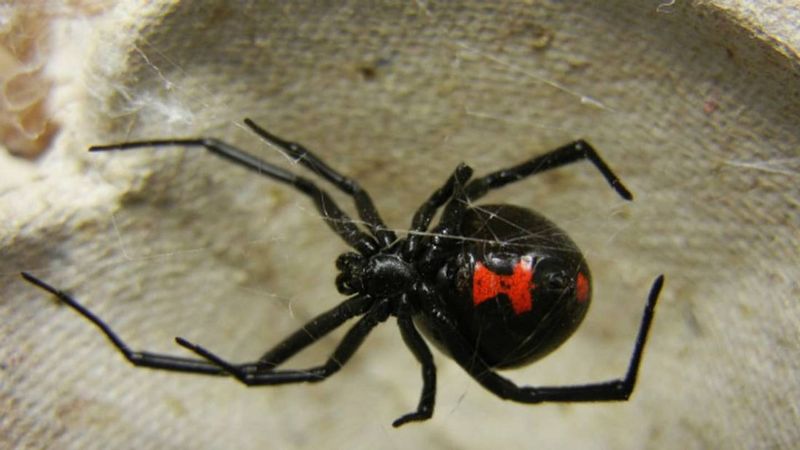
Just to keep things interesting, the classic full hourglass can turn up in Indiana as well. The southern black widow, Latrodectus mactans, reaches into the southern part of the state.
Its range overlaps with the northern species in the lower Midwest. That means a southern Indiana garage might host either one.
The southern widow usually has a connected hourglass and lacks the row of red back spots in adults. Its body is glossy black and round, much like its northern cousin.
Both species carry similar venom and deserve the same respect. Telling them apart is more about curiosity than changing how you handle them.
Spiders also travel with people. They can hitch rides in lumber, plants, produce, and moving boxes, so an odd find is not always proof of a range change.
If you spot one that does not match what you expected, take a clear photo. University entomology departments and extension offices can often help with identification.
I love that one state can hold this little puzzle. It makes every flashlight check under the porch feel a bit like detective work.
Harmless Lookalike Spiders Get Blamed For Black Widow Trouble
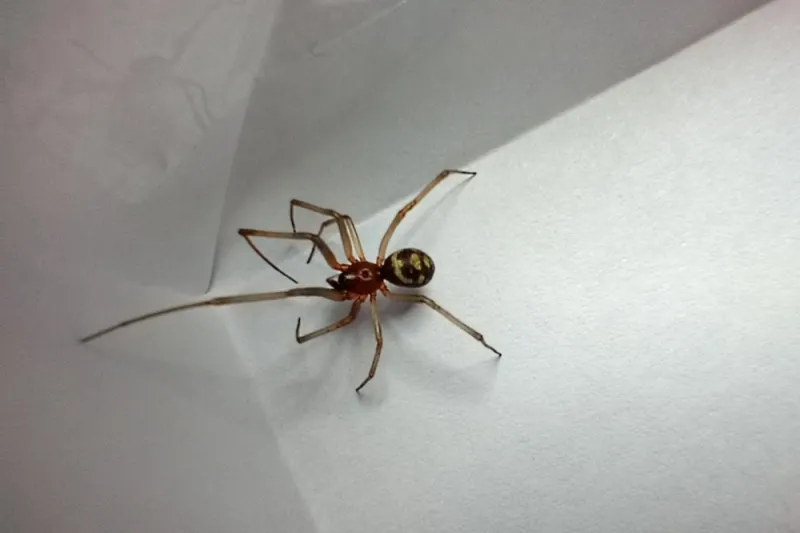
Not going to lie, I have panicked over the wrong spider more than once. Plenty of shiny, round-bodied spiders get mistaken for widows.
False widows in the genus Steatoda are common in homes and garages. They have a similar shape but are usually brown or purplish, often with pale markings and no red hourglass.
The common house spider also builds tangled cobwebs in corners. It is smaller, mottled brown, and far less concerning.
Shiny black jumping spiders sometimes cause alarm too. The bold jumper has white or orange spots on its back, but it hunts actively and has a fuzzy, compact body.
Look for a few key traits together. A glossy jet-black body, red marks underneath, a messy low web, and a sheltered hiding spot point toward a true widow.
If one or two clues do not fit, you may be looking at a harmless neighbor. Those spiders often eat insects you would rather not have around.
Purdue Extension offers free spider guides with photos. Bookmarking one on your phone makes backyard ID much easier.
Know What To Do After A Black Widow Bite
Trust me on this one, calm action matters more than fear. Black widow bites are uncommon, and serious problems are rare with modern care.
The bite may feel like a small pinprick at first. Within an hour or so, some people notice muscle cramps, stiffness, sweating, nausea, or pain spreading from the bite area.
Wash the bite with soap and water. Apply a cool compress, keep the area still, and call Poison Control at 1-800-222-1222 for guidance.
Seek medical care quickly for children, older adults, people with heart or health conditions, or anyone with strong symptoms. Doctors have effective treatments, including pain relief and, in some cases, antivenom.
If you can safely capture the spider in a jar, bring it along. A photo also helps with identification.
Prevention is simple. Wear gloves when gardening, shake out shoes and gloves stored outside, and look before reaching into dark spaces.
Most bites happen when a spider gets trapped against skin by accident. A little caution with your hands prevents almost all of those moments.
Fewer Hiding Spots Keep Black Widows Out Of Your Garden Gear
Every fall, I give my shed a serious cleanup. It is the easiest way I know to cut down on surprise spider encounters.
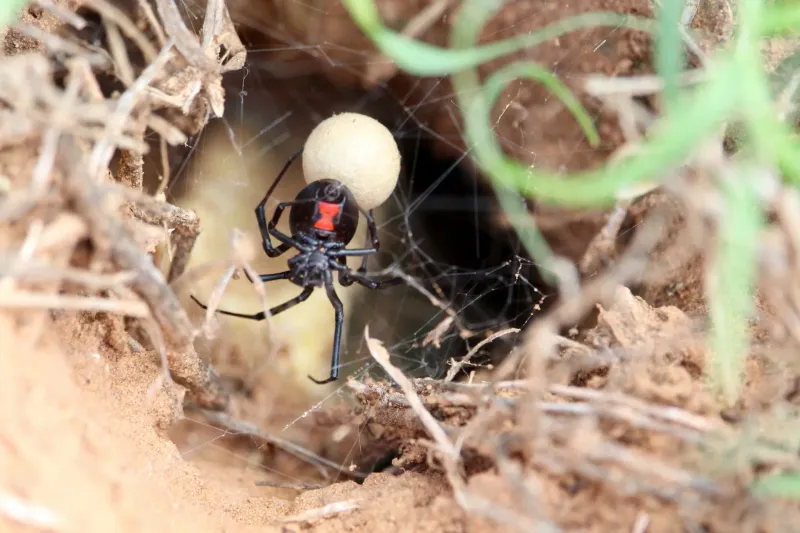
Black widows are most noticeable in late summer and fall in Indiana, when females are mature and egg sacs appear. Those papery, tan, round sacs may hold hundreds of eggs.
Remove webs and egg sacs with a long-handled broom or vacuum. Dispose of vacuum contents in a sealed bag outside.
Store gloves, boots, and small tools in sealed bins or hang them on hooks. Keep pots stacked upside down or indoors over winter.
Seal gaps around doors, windows, and foundation cracks. Reduce outdoor lights near entries, since lights draw insects that spiders feed on.
Broad pesticide spraying is rarely needed and can harm helpful insects. Extension experts generally recommend cleanup and exclusion first, with targeted treatment only when necessary.
The best takeaway is simple. Learn the broken hourglass and red back spots, respect the spider’s space, and keep your gloves on.
That small shift turns worry into confidence every time you reach for the woodpile.