The Winter Birds That Show Your North Carolina Yard Is Healthy
A bird weighing less than half an ounce can drop its body temperature on freezing nights to save energy. That tiny survival trick only works if the bird finds enough fatty food during the short daylight hours.
North Carolina sits right where many northern travelers stop for winter while our year-round neighbors stay put. Each of those birds is quietly judging your yard, checking it for seeds, berries, insects, and safe cover.
The way I see it, a garden is only as healthy as the wild guests willing to linger there. In my own backyard, the busiest feeder mornings usually arrive right after the first hard frost of the season.
You may be surprised to discover which familiar visitors count as proof of a thriving yard in North Carolina. So which feathered guests have already given your garden their quiet seal of approval this winter?
1. Northern Cardinals Flashing Red Among Winter Shrubs
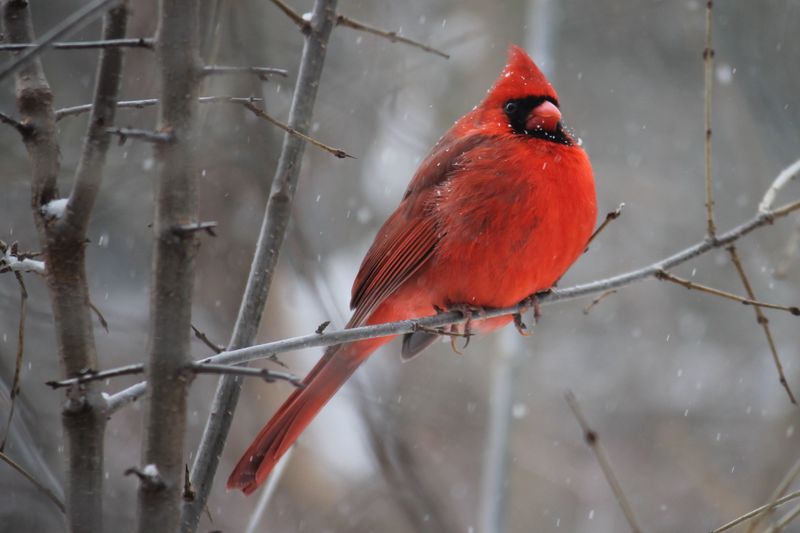
A male cardinal against a gray January hedge looks like someone dropped a holiday ornament into the shrubs. Lawmakers picked this bird as the official state bird of North Carolina back in 1943, and I understand why.
Unlike many songbirds, cardinals stay with us through every season instead of heading south when the weather cools. Females wear warm tan feathers with red edges, and both sexes carry that thick, orange, seed-cracking bill.
That heavy bill explains their winter menu, which leans hard on sunflower and safflower seeds at backyard feeders. They also pick at wild seeds and leftover fruit from native shrubs such as sumac and flowering dogwood.
Cardinals feel safest feeding low, close to thick cover where they can dash away from hawks within seconds. A yard with dense shrubs or a tangled thicket gives them the quick escape route they badly want.
In my garden, the cardinals show up earliest at dawn and linger again in the fading light of evening. Their sharp metallic chip notes often tell me they are nearby long before I spot any red feathers.
Try planting native evergreens like American holly or eastern red cedar near your feeders for year-round shelter. Those dense branches also give cardinals a protected roosting spot on bitter nights when the wind picks up.
Seeing several pairs visiting together suggests your yard offers dependable food along with places to hide and rest. Keep feeders clean and filled, and these red regulars will reward you with color through the dullest months.
2. Dark-Eyed Juncos Hopping Under Winter Feeders
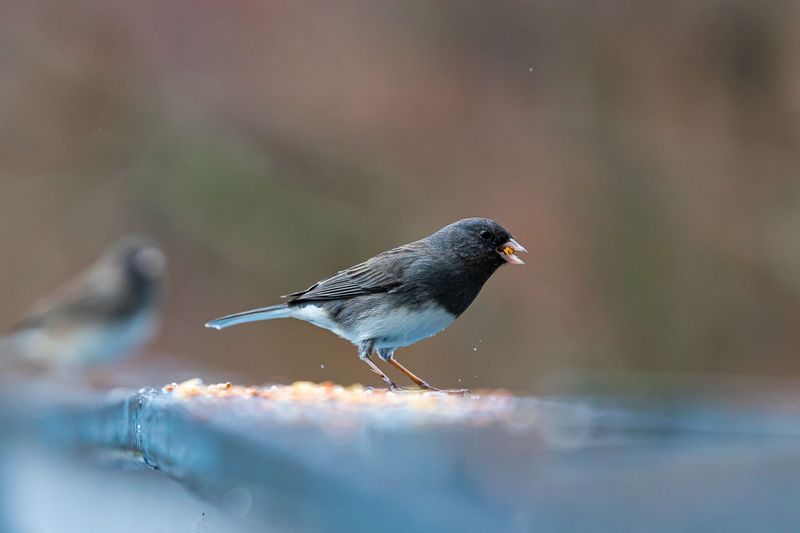
Old-timers call them snowbirds, and the name fits because juncos often appear right when the weather turns sharp. Their slate gray backs and clean white bellies look a bit like a winter sky resting over fresh snow.
Most juncos visiting the Piedmont and coast spend their summers far north or high in the mountains. In fact, some do nest in the higher Appalachian peaks of our state, which surprises plenty of people.
Watch closely as one flies away, and you’ll catch bright white outer tail feathers flashing like a signal. That quick flash may help flock members stay together and warn each other when danger comes close.
Juncos are ground feeders, so they shuffle and scratch through leaves hunting for small seeds and hidden insects. I love watching them hop backward in little kicks, tossing leaf litter aside with surprising energy.
Their habits show why a tidy, raked yard can feel like an empty pantry to many winter birds. Leave some fallen leaves under shrubs and let native grasses or coneflowers stand with their seed heads intact.
Scattering millet or cracked corn on a low platform feeder also brings them close to your windows. Place that feeder near shrubs so the birds can retreat quickly whenever a hawk or house cat appears.
A busy flock of juncos tells you the ground layer of your garden is full of useful food. Small flocks often return to the same yards each winter, so a good habitat today pays off later.
3. White-Throated Sparrows Singing From Brushy Hedgerows
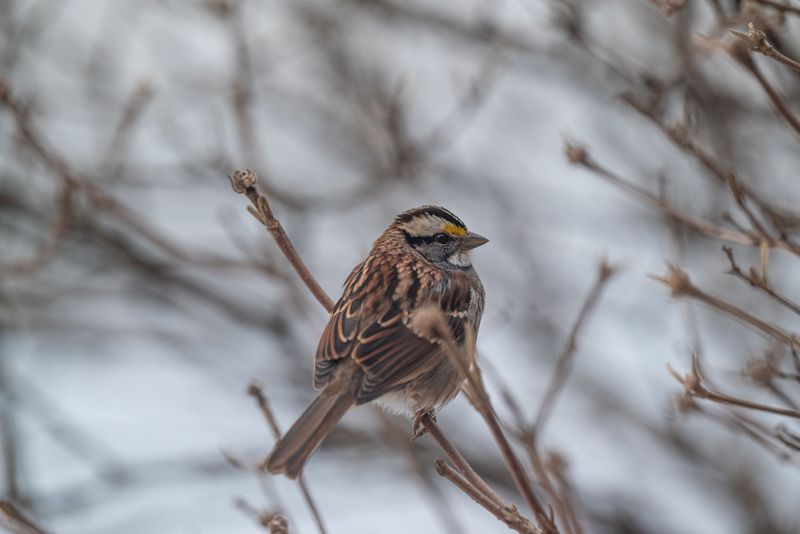
On a still winter morning, you might hear a clear, whistled song that sounds like Old Sam Peabody, Peabody. Plenty of birders hear it as Oh Sweet Canada instead, which hints at where this sparrow spends summer.
White-throated sparrows nest across Canada and the far northern states, then pour south when cold weather arrives. A crisp white throat patch and a small spot of yellow near each eye make them easy to identify.
Scientists describe two color forms, one with bright white head stripes and another with softer tan stripes. Interestingly, birds usually choose mates of the opposite form, a pattern that researchers have studied for decades.
These sparrows prefer brushy edges and thick hedgerows, where they can scratch for seeds beneath protective branches. They also nibble on small fruits and insects, so a mix of native plants keeps them well fed.
In my yard, they gather under a messy row of beautyberry and native viburnums that I rarely prune. That untidy corner draws more winter sparrows than any feeder I have hung from a tree branch.
Consider building a loose brush pile from fallen branches in a quiet corner of your property this season. It provides instant cover from wind and predators, and sparrows will hop in and out all day long.
When white-throats linger in your garden, they are telling you the shrub layer offers real shelter and food. That kind of layered planting supports wildlife long after the sparrows head north again in spring.
4. Eastern Bluebirds Gathering Around a Winter Birdbath
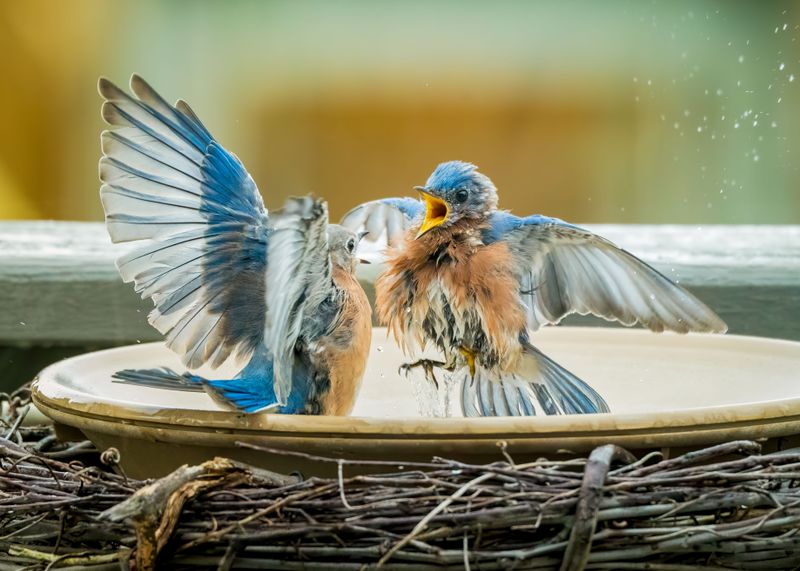
Spotting a bluebird in January feels like finding a scrap of summer sky perched on a fence post. Males glow bright royal blue above with a rusty orange chest, while females wear softer, grayer blue shades.
Many people assume bluebirds migrate away, yet plenty stay in the state through the colder months each year. Some northern birds also drift south in fall, so winter flocks can include both locals and visitors.
In summer, bluebirds mostly hunt insects, dropping from low perches to grab beetles and caterpillars from the grass. Once cold weather shrinks the bug supply, they switch largely to berries from native trees and shrubs.
Fruits from eastern red cedar, flowering dogwood, American holly, and winged sumac help carry them through lean winter weeks. You can also offer dried or live mealworms in a shallow dish, which many bluebirds quickly learn to visit.
One charming habit involves several bluebirds piling into a single nest box to share body heat overnight. Leaving your boxes up through winter gives them a cozy roosting spot when temperatures dip below freezing.
I’ve noticed bluebirds also visit open water eagerly, even on cold days when puddles have frozen solid. A heated birdbath can become one of the most popular spots in your yard during a hard freeze.
Bluebirds favor open areas with scattered trees, so a mix of short grass and native shrubs suits them nicely. Their winter visits suggest your landscape offers both fresh water and berry-rich plants in healthy balance.
5. Carolina Chickadees Grabbing Seeds From a Feeder
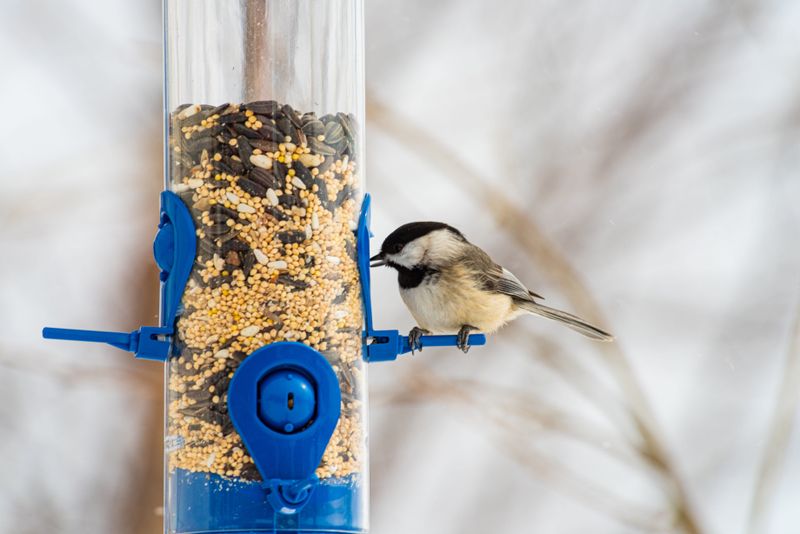
A Carolina chickadee weighs about a third of an ounce, yet it scolds hawks with fearless energy. That cheerful chick-a-dee-dee-dee call actually carries information, and more dee notes can signal a bigger threat nearby.
Its black cap and bib frame bright white cheeks, making this little acrobat easy to recognize year-round. Chickadees stay put through winter, so the ones you see now likely hatched somewhere in your neighborhood.
To survive frosty nights, chickadees can lower their body temperature and enter a state of controlled torpor. They also fluff their feathers and tuck into tree cavities, waking hungry and ready for breakfast at sunrise.
Most of their winter diet comes from insect eggs, larvae, and spiders hidden in bark and twigs. They also hide seeds in crevices to eat later, remembering many of those storage spots for days.
Research led by Doug Tallamy found one chickadee brood needs thousands of caterpillars before the young leave the nest. Native oaks and wild cherries host far more caterpillars than most imported ornamental trees usually manage.
In my garden, chickadees zip to the feeder, grab one sunflower seed, and fly off to crack it open. Black oil sunflower seeds and plain suet cakes are reliable favorites that keep them returning on cold mornings.
Chickadees often lead mixed flocks, so their presence can attract other woodland birds to your yard as well. When these busy little birds stick around, your trees are likely supporting a rich supply of hidden insects.
6. Tufted Titmice Carrying Seeds Through Bare Branches
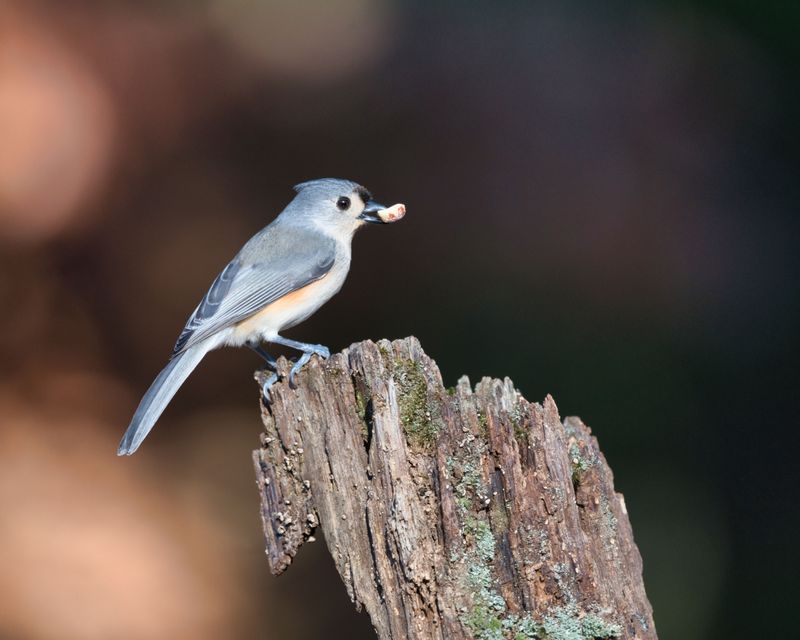
With a perky gray crest and big black eyes, the tufted titmouse looks permanently curious about everything. I like to think of it as the chickadee’s bolder cousin, and the two often travel together in winter.
Titmice live in North Carolina all year, favoring mature deciduous woods and leafy neighborhoods with tall trees. A rusty wash along their sides adds a soft touch of warmth to their mostly silver-gray feathers.
Watch a titmouse at the feeder, and you’ll notice it often takes just one seed before flying away. It then tucks that seed into bark or soil nearby, usually within about 130 feet of the feeder.
Titmice also hold seeds with their feet and hammer them open using short, strong bills against a branch. In warmer months, they eat plenty of caterpillars and beetles, making them handy partners for any gardener.
One quirky fact involves spring nesting, when titmice sometimes pluck fur from pets and occasionally from people. That soft fur lines their nests inside old woodpecker holes or natural cavities in mature trees.
Since they cannot carve their own holes, titmice rely on older trees with existing cavities for shelter. Keeping a safe, sturdy snag or adding a nest box can make your property much more appealing to them.
Offering shelled peanuts and sunflower seeds near trees gives them easy meals and plenty of nearby hiding spots. A steady titmouse presence shows your yard has the mature canopy and cavity trees woodland birds need.
7. Downy Woodpeckers Tapping on Winter Tree Bark
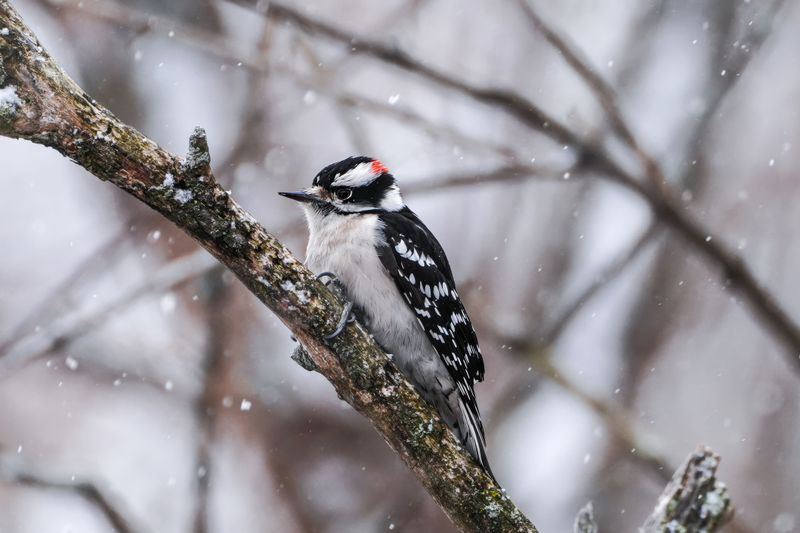
Weighing less than an ounce, the downy woodpecker is the smallest woodpecker in North America and wonderfully approachable. Its soft tapping on a winter branch sounds like someone politely knocking on a door to ask permission.
Black and white checkered wings and a clean white back make the downy stand out against bare bark. Males carry a small red patch on the back of the head, while females lack that bright splash of color.
Downies look nearly identical to hairy woodpeckers, but they have much shorter bills compared to their heads. A downy’s bill reaches only about one third the length of its head, which helps with quick identification.
In winter, downies probe bark crevices for insect larvae and eggs tucked away safely from the cold. They even chip into goldenrod galls to pull out the fat little fly larvae hiding inside each one.
That is a great reason to leave some native goldenrod stems standing in your garden until spring cleanup. I love spotting tiny peck holes in those galls, because they prove a downy found a winter snack.
Downies happily visit suet feeders, and they often join chickadees and titmice in roaming winter flocks. Hang suet near a trunk or large branch so they can cling and feed in a natural position.
Old branches and standing snags give them insects to hunt and soft wood for carving roosting holes. When downies visit regularly, your trees likely host a healthy insect community hidden just beneath the bark.
8. Cedar Waxwing Flocks Feasting on Holly Berries
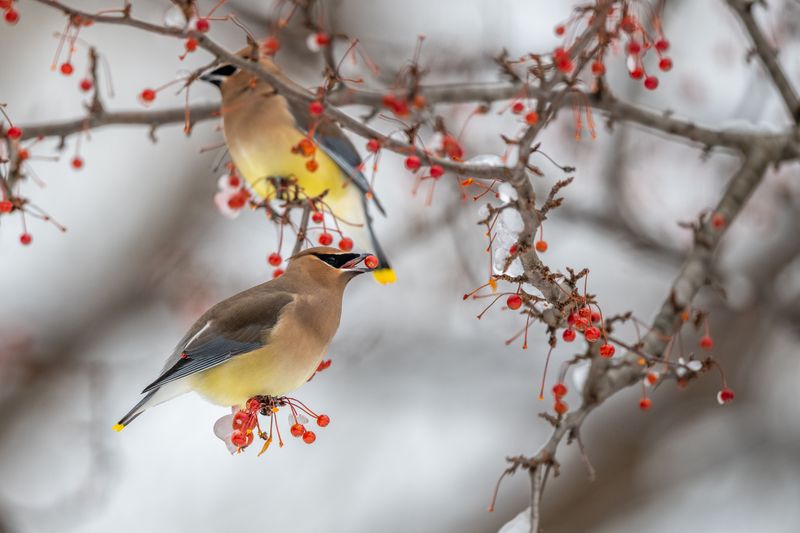
A whole flock of cedar waxwings can strip a holly tree in one afternoon, then vanish just as quickly. Their thin, high-pitched whistles often announce them before you notice dozens of sleek birds on the branches.
Silky tan feathers and a black bandit mask give waxwings a polished, almost painted look up close. Look for the red waxy tips on their wing feathers, which inspired the name waxwing in the first place.
Waxwings are mostly fruit eaters, which explains why they wander widely through winter instead of holding territories. They follow the berry crop, so a flock might visit your yard for days and then move on.
Native American holly and eastern red cedar berries are favorite winter foods across much of the Southeast. Planting a variety of fruiting natives means something stays ripe for waxwings across several different months.
One sweet behavior I love involves flock members passing a berry from beak to beak down a branch. Biologists have watched this sharing game during courtship too, when pairs pass fruit or flower petals back and forth.
Waxwings also crave water, so birdbaths become busy places when a flock settles into your neighborhood. Keep glass in mind, because these fast fliers sometimes hit windows near fruit trees, so add decals or screens.
Avoid invasive fruiting plants like Bradford pear or nandina, since nandina berries can harm waxwings that eat large amounts. Choose native fruits instead, and a visiting flock becomes a sign your landscape feeds wildlife the right way.
9. Yellow-Rumped Warblers Eating Wax Myrtle Berries
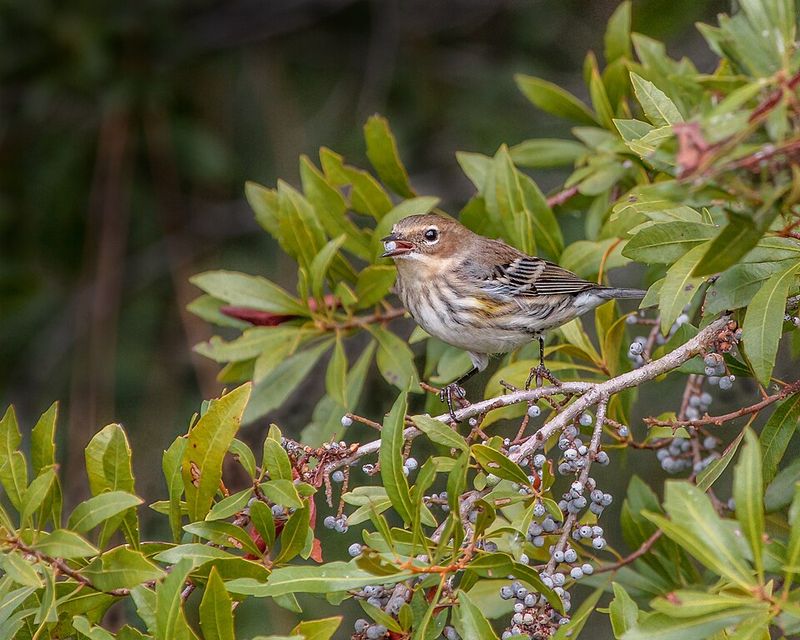
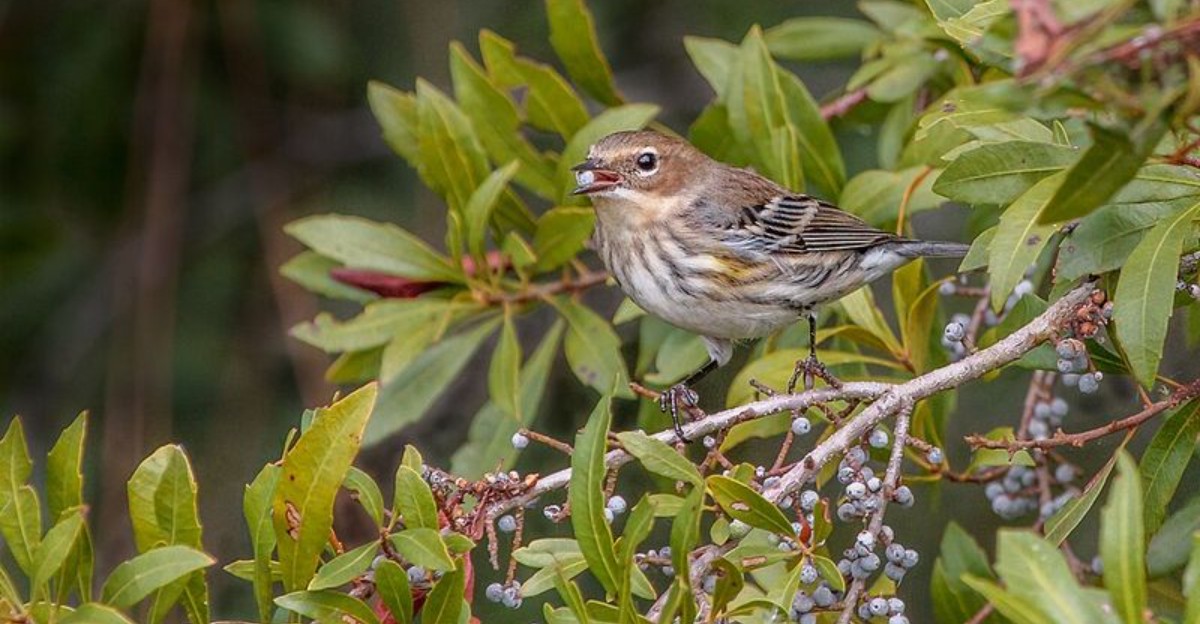
Birders lovingly call this little bird the butter-butt, thanks to a bright yellow patch right above its tail. Most warblers leave for the tropics each fall, yet this hardy one happily spends winter in our region.
Its secret is a special digestive system that handles the waxy coating on bayberry and wax myrtle fruits. Few songbirds can use that wax for energy, so this skill lets them winter farther north than relatives.
Winter yellow-rumps look fairly plain and brownish, with small yellow patches on the sides as well as the rump. Their sharp check call helps you find them, especially as they flit through shrubs and treetops together.
Southern wax myrtle, Morella cerifera, is a native evergreen shrub that thrives across the coastal plain and Piedmont. It tolerates sandy soil and some salt spray, making it a strong choice for many coastal gardens.
Only female wax myrtle plants produce berries, so plant several shrubs to ensure you get fruit for the birds. I tucked a small group along my back fence, and warblers now visit it nearly every winter morning.
Yellow-rumps also eat insects whenever they can find them, gleaning tiny bugs from bark and leaves. On warm afternoons, you might even see one fly out from a branch to snag a passing gnat.
They sometimes visit suet feeders too, especially during cold snaps when insects grow scarce for a while. Seeing these cheerful warblers in your yard shows that native berry shrubs are doing important winter work.
10. Hermit Thrushes Foraging in Leaf Litter Under Shrubs
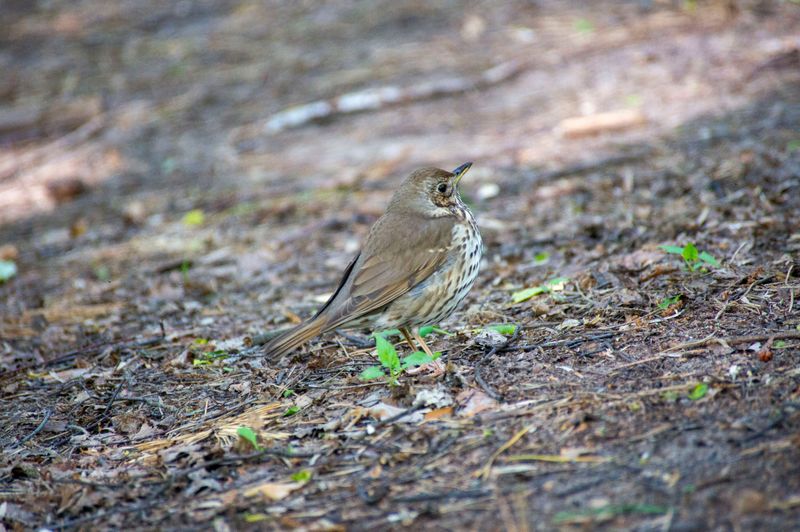
A hermit thrush has a funny habit of slowly raising its rusty tail, then lowering it like a sigh. It often flicks its wings at the same time, as if shrugging off the chilly morning air.
These quiet thrushes breed in northern forests and mountains, then spend winter across much of the Southeast. In North Carolina, you’ll usually find them lurking in wooded yards and shady thickets close to the ground.
Brown above with a spotted chest, the bird looks a lot like other thrushes until you notice that reddish tail. Its warm tail contrasts with a duller brown back, which makes identification much easier for beginner birders.
Winter hermit thrushes eat insects from the leaf litter and plenty of fruit from native shrubs and vines. Flowering dogwood and American holly berries are important foods, along with fruit from wild grapes and greenbrier.
They rarely visit seed feeders, so a thrush in your yard is usually there for natural food. I consider every sighting a small compliment, because it means the wilder parts of my garden are working.
Leave leaves in shrub beds rather than bagging them, since thrushes scratch through that layer looking for insects. Dense evergreen cover, like native hollies or wax myrtle, gives them shelter from cold winds and predators.
Their famous flute-like song is mostly saved for summer breeding grounds, though you may hear soft calls now. A hermit thrush lingering through winter quietly confirms that your yard offers healthy ground cover and food.