Why Ants Farm Scale And Aphids On California Citrus Trees
One insect colony in California stretches roughly 560 miles, from near San Diego up past San Francisco. Its members recognize each other as family and rarely fight, even when they meet hundreds of miles apart.
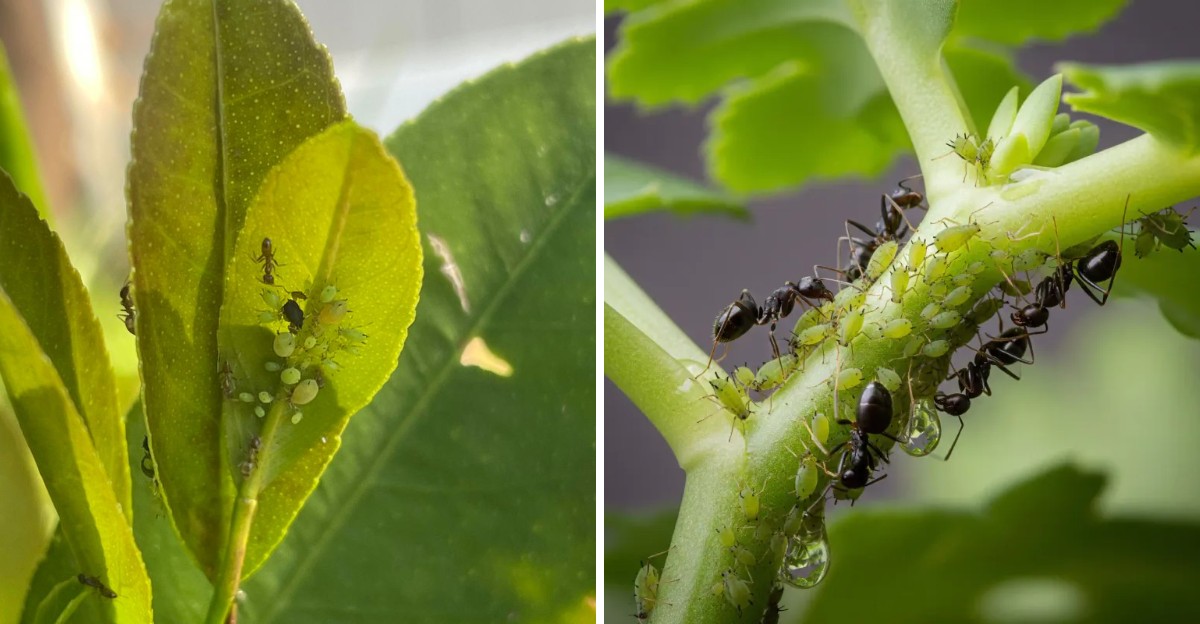
Those same tiny workers spend their days tending slow, sap-sipping bugs on backyard fruit trees like careful ranchers. They guard their herds from hungry predators and happily collect a sweet, sticky reward in return each day.
I have to admit, the first time I saw this happen in my own yard, I just stared. You might notice the same parade marching up your trunk and wonder what all the fuss is about.
Their partnership sounds charming until you see the sticky leaves and blackened fruit it creates across California. So why would a tiny farmer protect the very pests that slowly drain your favorite backyard tree?
1. Ants Crave The Sweet Honeydew That Aphids Release
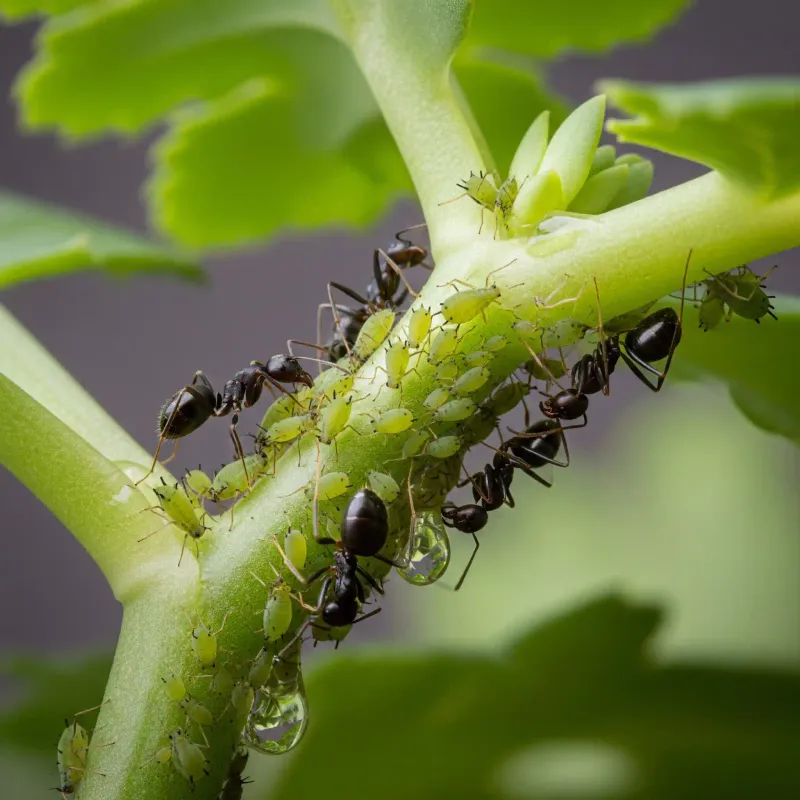
Every aphid on your lemon tree is basically a tiny sugar fountain, and ants figured that out long ago. Plant sap carries tons of sugar but very little protein, so aphids gulp far more than they need.
The extra sugar passes straight through their bodies and comes out as a clear, sweet droplet called honeydew. Ants treat those droplets like candy, lapping them up and carrying the energy home to feed their busy nest.
I love watching an ant gently tap an aphid with its antennae to ask for a fresh drop. Scientists call this tending, and some aphids seem to release honeydew more readily when ants stroke them this way.
Honeydew is mostly sugar, which gives worker ants quick fuel for long foraging trips up and down your trees. One busy colony can harvest a surprising amount, so the aphids become a steady, reliable food supply for months.
In return, the ants defend their little sugar herds from hungry insects that would otherwise gobble them up quickly. That trade explains why you often spot ant trails running straight to the newest, most tender leaves on citrus.
You can test this yourself by following an ant trail up the trunk on a warm spring morning. Chances are good the line ends at a cluster of soft green aphids huddled on fresh shoots.
Once you see the connection, every ant trail on your tree starts to look like a delivery route. Spotting those trails early gives you a head start before aphid numbers explode across your new growth.
2. Soft Scale Insects Make Even Sweeter Partners
Brown soft scale looks like a harmless bump on a twig, yet it can drip honeydew like a leaky faucet. Soft scales stay mostly in one spot once they settle, which makes them an easy herd for ants to manage.
Brown soft scale and black scale are two common honeydew producers that UC experts flag on backyard citrus. Citricola scale also shows up, especially in the Central Valley, where it can coat leaves with sticky residue.
Armored scales are different because they hide under a hard cap and produce little or no honeydew. California red scale belongs in that armored group, yet ants still make its control harder, which surprises many gardeners.
Personally, I find soft scales tricky because their brown, rounded shells blend right into bark and leaf veins. Run your fingernail gently along a twig, and you may feel tiny bumps you could not see before.
Ants hang around soft scale colonies all day, licking up honeydew and shooing away anything that comes near. Without that protection, tiny parasitic wasps and lady beetle larvae would usually keep these scales under much better control.
Look under leaves along the midrib and on young green twigs, since soft scales favor those spots. Shiny, sticky leaves below an infested branch are a strong clue that scale is feeding somewhere overhead.
Catching soft scale while numbers are low makes treatment far easier and keeps your tree looking cleaner. A quick monthly check during the warm season takes only minutes and can save a lot of frustration.
3. Argentine Ants Build Giant Supercolonies Around Citrus
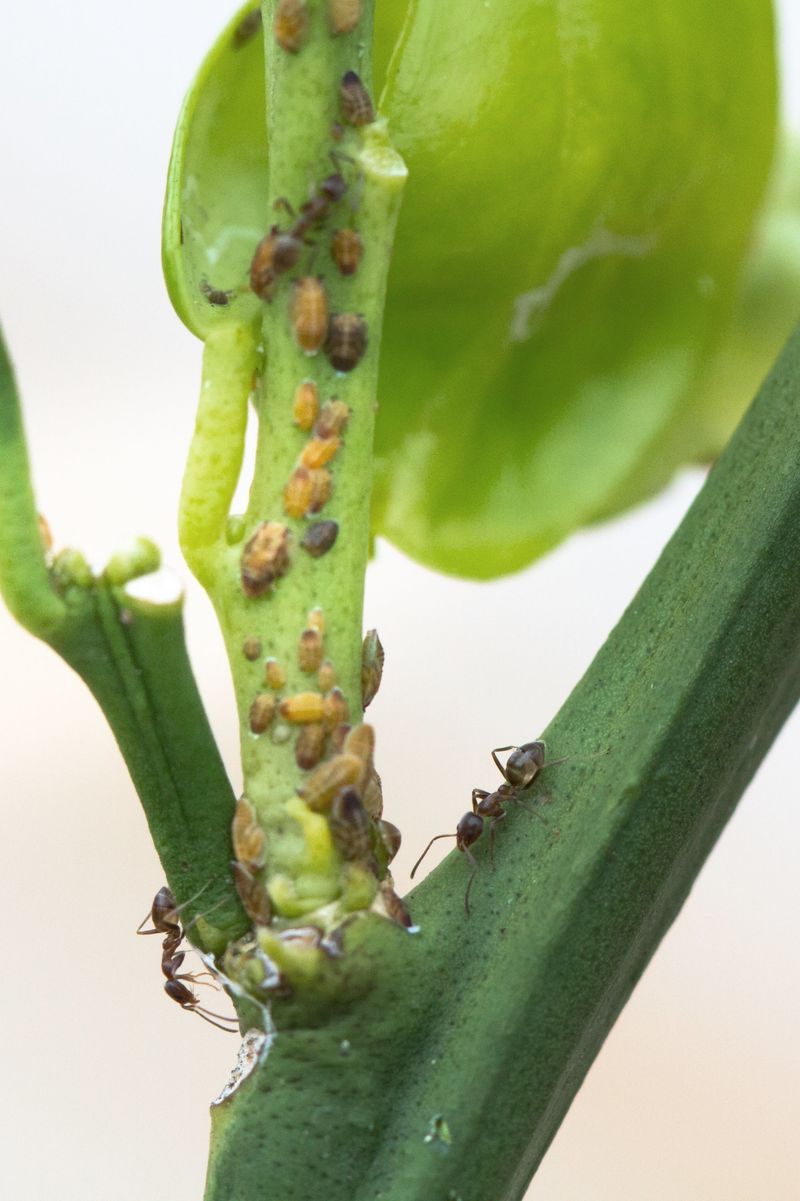
Argentine ants arrived in the United States over a century ago, probably hitching rides on shipments of goods. Today they are the main ant pest in Southern California citrus, according to the University of California IPM program.
These ants are small, about one-eighth inch long, with a dull brown color and a faint musty smell when crushed. Their scientific name is Linepithema humile, and they thrive anywhere they find water and a steady sugar supply.
What surprises me most is how rarely nests fight each other, so workers can share food across huge areas. Researchers have mapped one supercolony stretching hundreds of miles along the coast, with neighbors acting like close relatives.
That cooperation lets them flood a tree with workers, overwhelming native ants and many helpful insects nearby. You might notice thick trails running along irrigation lines and up tree trunks after a hot, dry spell.
Argentine ants love moist soil, so leaky drip emitters and soggy mulch near the trunk can invite them closer. Fixing leaks and pulling mulch back a few inches from the bark makes your tree less appealing to them.
Spraying broad insecticides at these ants rarely helps for long, because new workers stream in from connected nests. Long-term control works better with barriers and slow baits that the workers share with their many queens.
I believe understanding this ant changes how you look at every sticky leaf in your yard. Once you know who is guarding the pests, you can plan smarter steps instead of chasing symptoms.
4. Native Gray Ants And Southern Fire Ants Tend Pests Too
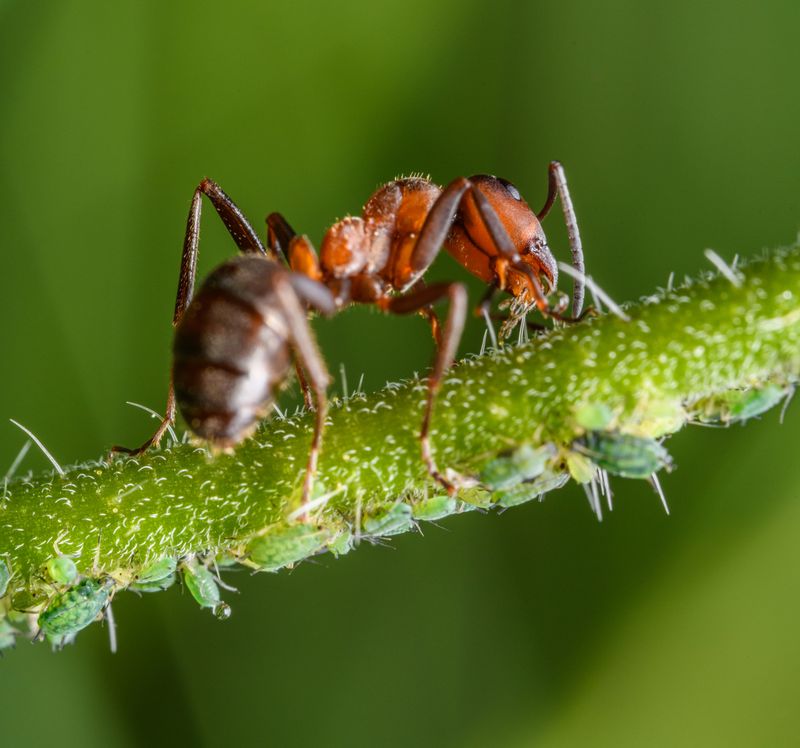
Not every ant herding aphids on your tree came from overseas, and some local species are surprisingly good farmers. UC researchers list the native gray ant and the southern fire ant as important honeydew collectors in citrus.
Native gray ants are larger and quick-moving, and they are especially common in San Joaquin Valley citrus groves. They often nest in the soil near trees and travel up trunks during warm parts of the day.
Southern fire ants are native too, with reddish heads, and their sting can leave a painful little welt. I have to admit, I learned to wear gloves after one pruning session left my wrist red and itchy.
These native species also tend aphids and soft scales, though their colonies are smaller than Argentine ant networks. Fire ants can even chew on young bark and tender twigs, which adds another type of trouble.
Knowing which ant you have really helps, because some baits attract certain species better than others. Fire ants often prefer protein or oily baits, while Argentine ants usually go for sugary liquid ones.
A simple trick is to set out a dab of jelly beside a smear of peanut butter. Watch which snack draws the crowd after an hour, and you will learn what your ants are craving.
Whatever species shows up, the goal stays the same, which is keeping ants out of the canopy. Fewer ant guards means the beneficial insects in your yard finally get a fair chance at the pests.
5. Guard Ants Chase Lady Beetles Away From Aphid Colonies
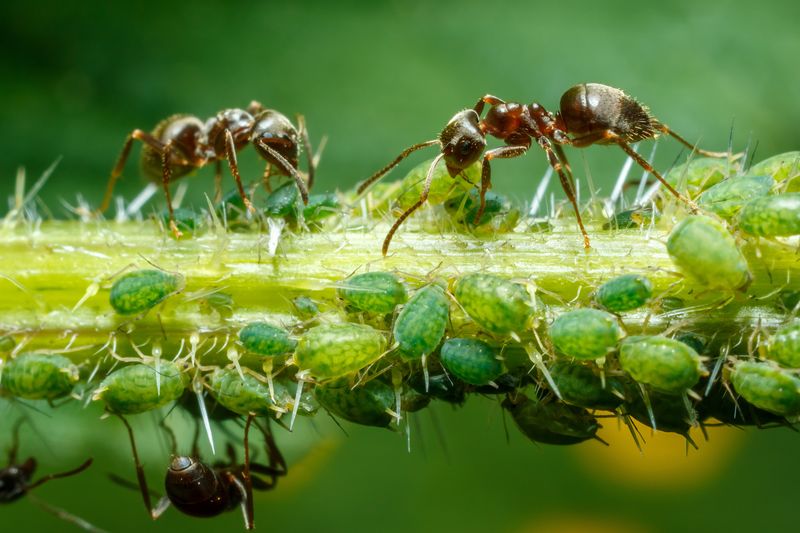
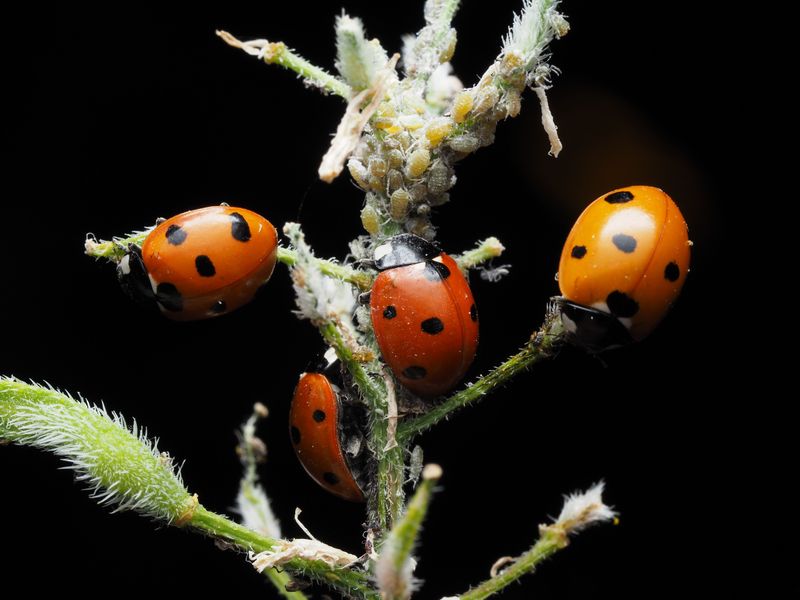
A lady beetle landing near an aphid cluster often gets mobbed within seconds by angry, biting ants. I have watched beetles tumble off a leaf like they just stumbled into a very rowdy party.
Ants protect aphids from lady beetles, lacewing larvae, syrphid fly larvae, and tiny parasitic wasps that lay eggs inside them. Those helpers normally keep aphid numbers in check, so their absence lets colonies grow much faster.
Studies on citrus show aphid and scale populations often climb higher on trees where ants have free access. When ants are excluded, natural enemies usually move in and bring those pest numbers down over time.
You can spot this battle yourself by checking a branch where ants are busy and one where they are not. The ant-free branch often has more lady beetle larvae, which look like tiny spiky alligators crawling on leaves.
Many gardeners mistake those larvae for pests, so learn their shape before you reach for any spray bottle. Lacewing larvae look similar, with curved pincer jaws, and they eat soft aphids with truly impressive speed.
Buying lady beetles rarely helps much if ants still control the canopy, since the beetles get chased off. Also, purchased beetles tend to fly away quickly, so encouraging your local crowd usually works much better.
Planting small flowers like sweet alyssum nearby gives adult hoverflies and lacewings nectar to sip between hunts. Pair those flowers with ant control, and your tree gains a hungry security team that works for free.
6. Parasitic Wasps Struggle To Reach California Red Scale
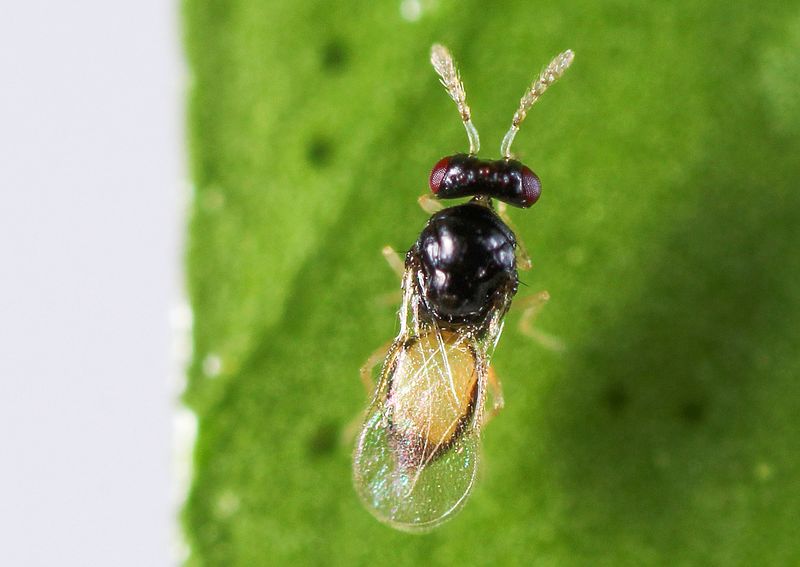
A wasp smaller than a pinhead, called Aphytis melinus, is one of the best friends a citrus grower has. It lays eggs under the shield of red scale, and its larvae then feed on the scale underneath.
Red scale is an armored scale that sucks sap from leaves and fruit across many citrus regions statewide. Heavy infestations can yellow leaves and weaken twigs, while speckled fruit loses its clean, shiny look.
Even though red scale makes little honeydew, ants still patrol the tree for aphids and soft scales nearby. Along the way, they harass Aphytis wasps and interrupt them while they search for scales to parasitize.
UC research shows red scale often builds up on trees with heavy Argentine ant traffic, even with wasps present. That is why growers who release Aphytis wasps usually manage ants first, before spending money on beneficial insects.
Personally, I find it amazing that such a tiny wasp can protect a whole grove when given room to work. Some commercial insectaries sell Aphytis for release, and many orchards use them as part of integrated pest management.
Home gardeners can help wasps simply by avoiding broad-spectrum sprays that harm beneficials along with pests. Dusty conditions also hurt these wasps, so rinsing dusty leaves and keeping road dust down can make a difference.
Look closely at red scale covers, and you may find a tiny round exit hole left by an emerging wasp. That little hole is a happy sign that your natural helpers are winning at least part of the game.
7. Black Sooty Mold Grows On Leftover Honeydew
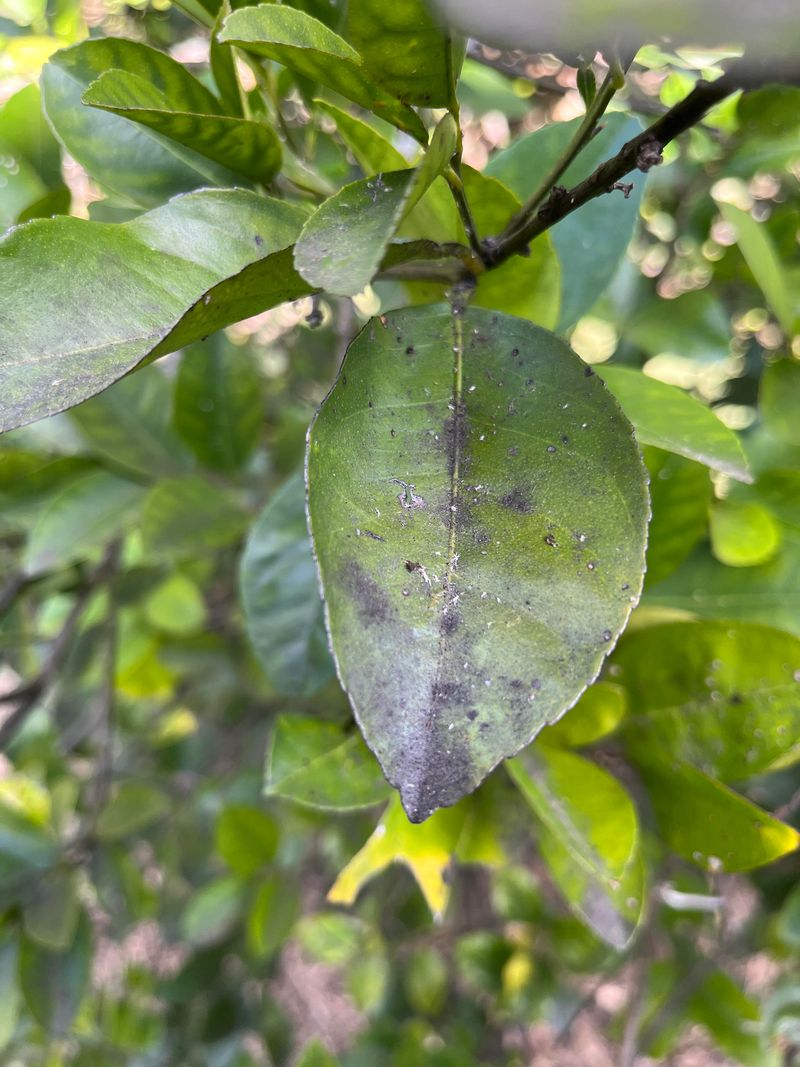
Black smudges on lemon leaves can look like someone dusted your tree with chimney soot overnight. That coating is sooty mold, a fungus that grows on honeydew rather than attacking the leaf itself.
Sooty mold does not infect citrus tissue, but the dark film blocks sunlight that leaves need for photosynthesis. Heavily coated leaves make less food for the tree, which can mean weaker growth and smaller fruit.
You might notice the mold first on lower leaves, since honeydew drips down from pests feeding higher up. Patio furniture and parked cars under the tree can get sticky too, which is often the first complaint.
Washing off sooty mold helps only briefly, because it returns as long as honeydew keeps falling. The real fix is controlling ants and the sap feeders they protect, then letting the mold weather away.
Once honeydew stops, sooty mold usually dries, cracks, and flakes off with rain and wind over several weeks. A gentle spray of water or a little diluted soap can speed things up on leaves you can reach.
I like to check fruit too, since mold-coated oranges and lemons are still safe to eat after washing. The rind may look dirty, but a quick scrub in the sink usually brings back that bright glossy color.
Think of sooty mold as a warning light on your dashboard rather than the actual engine problem. When black film appears, start looking upward for aphids or soft scales and the ant trails feeding them.
8. Aphids Curl New Citrus Leaves And Can Spread Tristeza
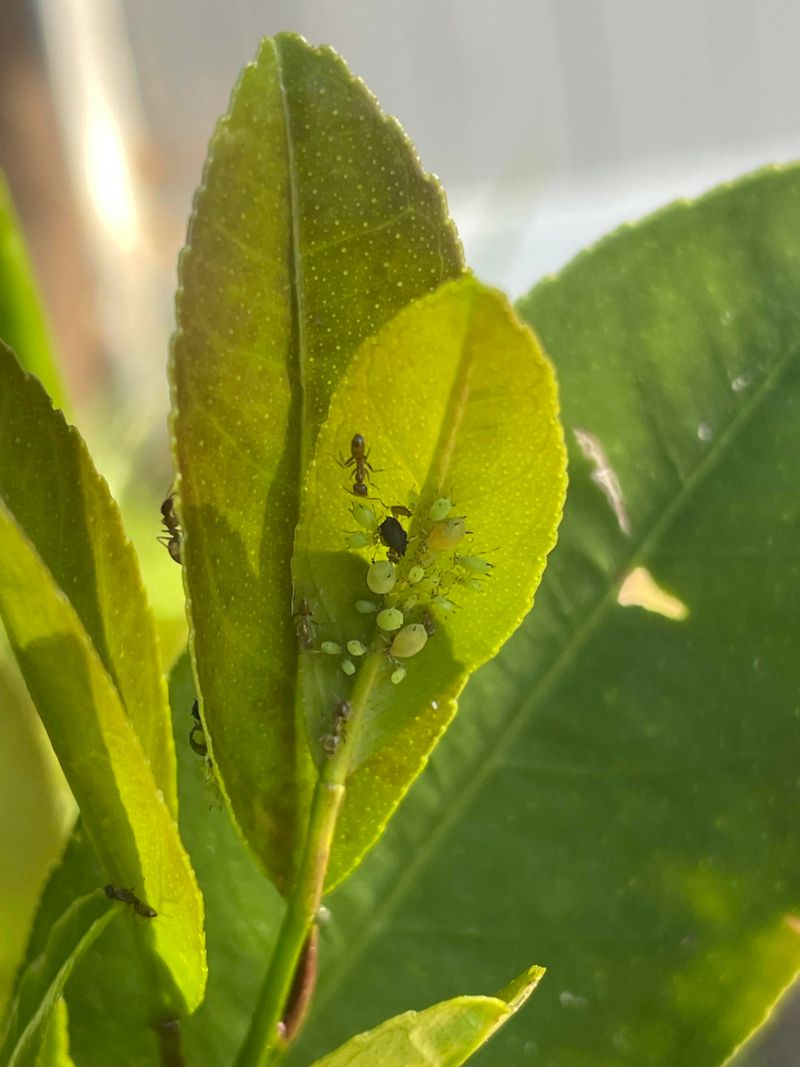
Fresh spring flush on a citrus tree is pure aphid candy, soft and packed with sugary sap. Within days, a few winged aphids can turn into crowded colonies that twist new leaves into tight curls.
Spirea aphids are bright green and common in coastal areas, while cotton aphids range from yellow to dark green. Both types cluster on shoot tips and leaf undersides, where tender tissue is easiest for them to pierce.
Mature, healthy trees usually tolerate aphid damage well, and the curled leaves still function once they harden off. Young trees deserve closer attention, because heavy feeding can stunt growth during their first few seasons.
The bigger worry is citrus tristeza virus, a disease that aphids can carry from one tree to another. Some strains cause steady decline, especially in trees grafted onto sour orange rootstock, which nurseries rarely use today.
The brown citrus aphid spreads tristeza very efficiently, but it is not established in the state right now. State agencies run quarantine and testing programs to keep the virus contained in commercial citrus areas.
You can help by buying trees from licensed nurseries rather than accepting cuttings or budwood from friends. That rule also guards against huanglongbing, the serious bacterial disease spread by the Asian citrus psyllid.
I smile every time I see lady beetles arriving to feast on a curled shoot full of aphids. Keep ants away, and those spotted hunters often clean up an outbreak before you need any spray.