Why Overwintered Geraniums Turn Leggy And How To Stop It
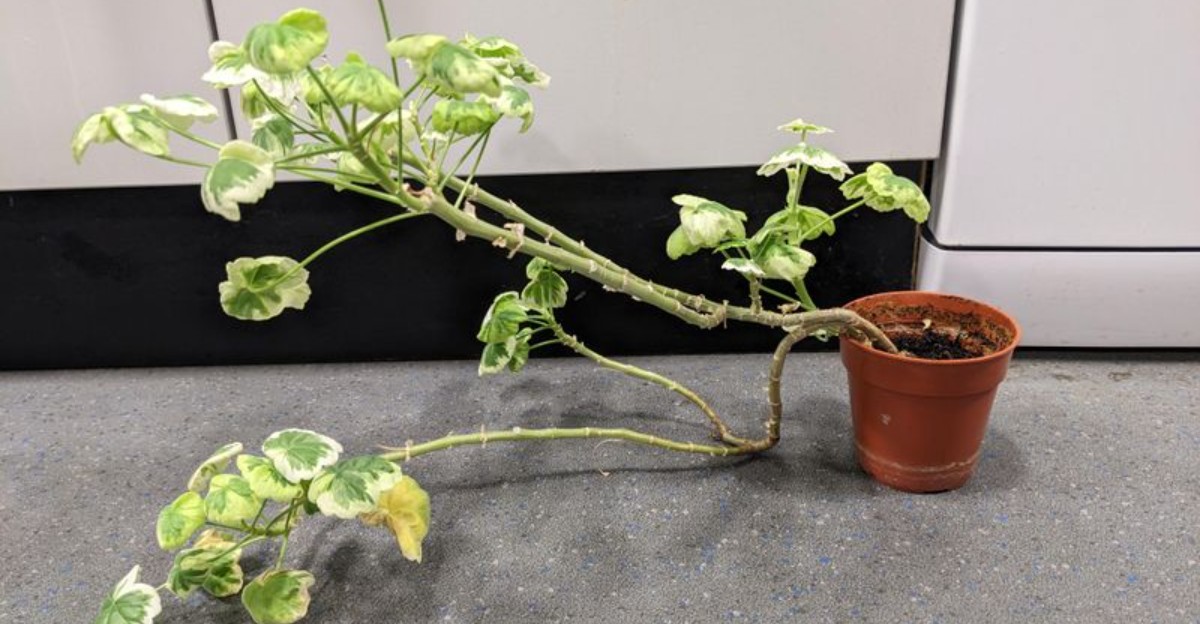
Plants growing in dim light can stretch their stems on purpose, chasing brightness like a kid reaching for the top shelf. Scientists call it etiolation, and it happens fast.
Every fall, I haul my favorite red bloomers indoors and feel like a plant hero. By February, they look like sad green spaghetti with a few leaves stuck on top.
I learned the hard way that a cozy living room is not the same as a sunny patio. Winter sun in much of the U.S. is weak, low, and gone by dinnertime. Our heated homes add another twist that most of us never consider.
The fix turned out to be simpler than I expected. It involves light, a cooler corner, a pair of clean snips, and a little less fussing. So why do these sun lovers stretch so wildly indoors?
Those Stretched Geranium Stems Are Chasing Something
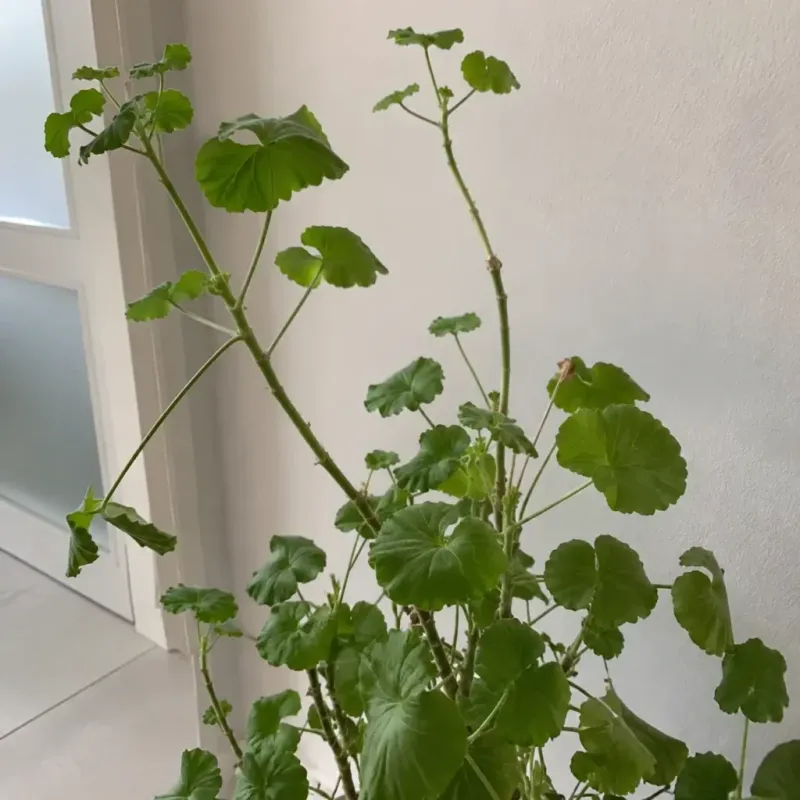
Those long, bare geranium stems are not a sign of a sick plant. They are a survival trick, and a clever one at that.
Geraniums, which belong to the genus Pelargonium, come from sunny South Africa. When light gets scarce, the plant sends energy into stretching its stems instead of building leaves. The goal is simple: reach brighter light before the leaves run out of fuel.
Plant scientists call this process etiolation. Hormones called auxins build up on the shaded side of the stem, and those cells grow longer. That is why your plant leans toward the window like it is trying to escape, a bending response called phototropism.
The result is wide gaps between leaves, which gardeners call long internodes. Leaves get smaller and paler too, since the plant is short on the light it needs to make chlorophyll.
Not going to lie, I used to blame fertilizer or bugs. Once I learned the real story, the problem made a lot more sense.
Here is the big takeaway for this whole article. Legginess is mostly about too little light paired with conditions that push growth. Fix that mismatch, and your geraniums can stay compact all winter long.
A Sunny South Window Is Your Geranium’s Best Friend
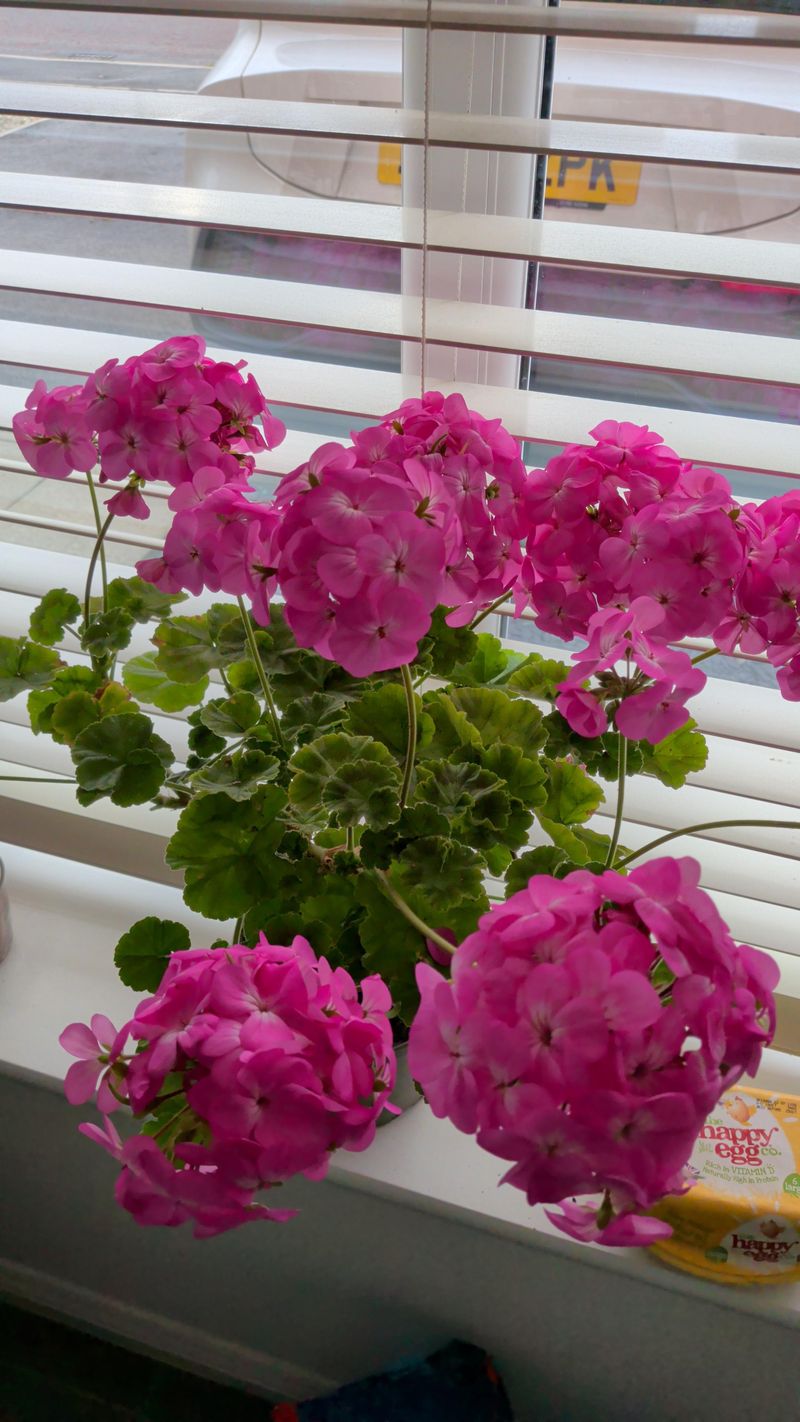
Sunlight is the number one cure for stretchy geraniums. Outdoors in summer, these plants soak up six or more hours of direct sun each day.
Indoors, that number drops fast. Window glass filters some light, and winter days in northern states like Wisconsin or Minnesota can offer only about nine hours of daylight. Giving geraniums the brightest window you have is the best way to keep them compact.
A south-facing window is usually the winner because it gets sun most of the day. West-facing windows come in second, offering strong afternoon light. North windows, sadly, rarely give geraniums enough.
Trust me on this one. Clean your windows before moving plants in, since dust and grime block more light than you would guess.
Give each pot a quarter turn every few days. That small habit keeps stems growing straight instead of bending sideways toward the glass.
Keep leaves from touching cold panes on frigid nights, though. A few inches of space protects the foliage while still letting the plant bask. If your best window still looks gloomy, there is another fix waiting just ahead.
Grow Lights Can Rescue Geraniums In Dim Rooms
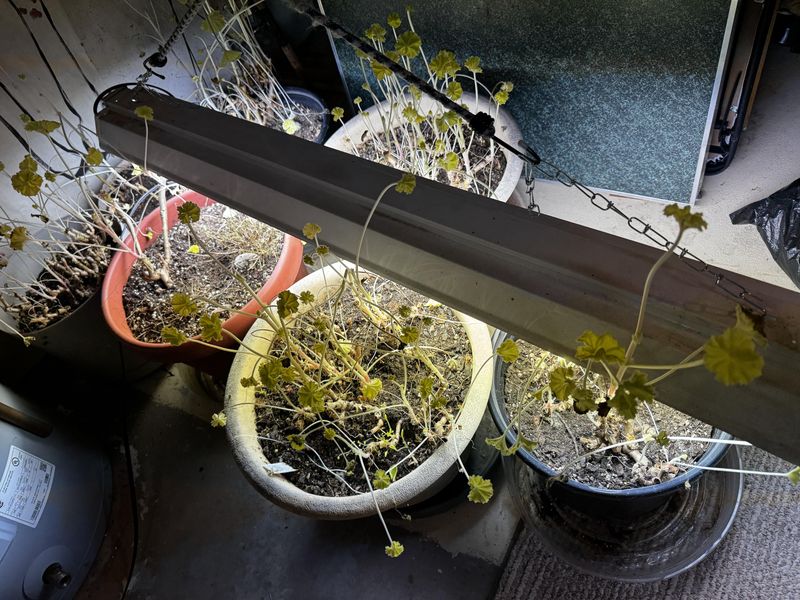
Call me stubborn, but I resisted grow lights for years. Then one dark January changed my mind for good.
Artificial lighting fills the gap when windows fall short. Full-spectrum LED grow lights are affordable, use little electricity, and stay cool enough to sit close to leaves without scorching them.
Hang the light about 6 to 12 inches above the plants. Light gets weaker quickly as distance grows, so a lamp across the room does very little. Raise the fixture as the plants grow.
Run the lights for roughly 12 to 16 hours a day. A cheap outlet timer makes this easy, so you are not flipping switches at midnight. Plants also need a dark period to rest, so skip the 24-hour schedule.
Regular fluorescent shop lights work too. Many extension services have recommended them for years for overwintering geraniums and starting seeds.
You can also combine methods. Set your pots in a bright window and add a light for extra hours in the morning and evening. That one-two boost often produces tight, leafy plants that might even keep blooming through winter.
Warm Rooms Push Geraniums To Grow Faster Than Light Allows
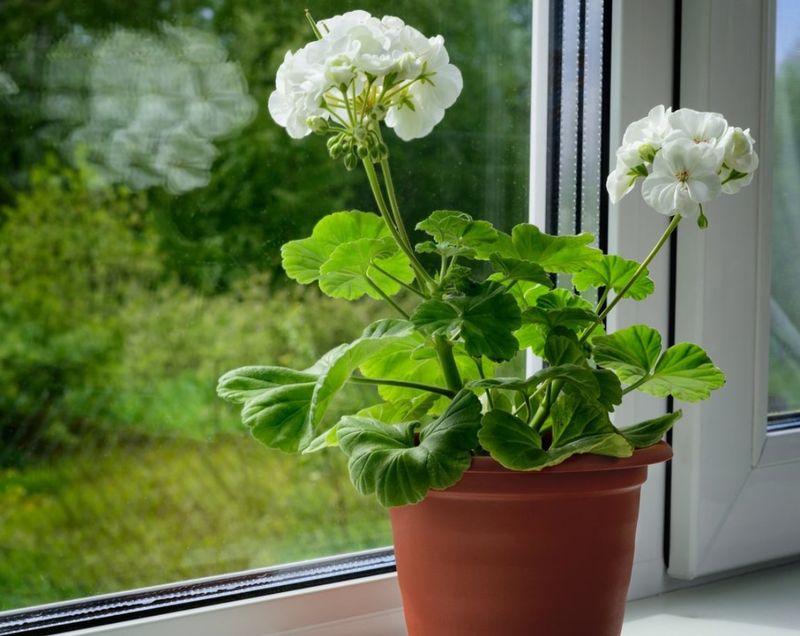
You would think warmth is a gift for a tender plant, but it can backfire. Heat tells geraniums to grow, even when the light is too weak to support that growth.
The result is fast, flimsy stems. The plant is burning energy quickly but cannot make enough food to build sturdy tissue. Picture running a race on half a breakfast.
Cooler indoor temperatures are generally recommended for overwintering. Around 60 to 65 degrees during the day works well, with nights dipping into the mid-50s.
A cool spare bedroom, an enclosed sunporch, or a bright basement window can be perfect. Even a few degrees cooler slows growth enough to keep stems tighter.
Keep pots away from heat vents, radiators, wood stoves, and fireplaces. Those spots blast dry, hot air that stresses leaves and speeds up stretching.
Just avoid freezing spots. Geraniums can be harmed by frost, so unheated garages in cold states like Michigan or Vermont may get too chilly. A simple indoor thermometer helps you find that sweet middle ground.
Cutting Geraniums Back Before They Come Inside Pays Off
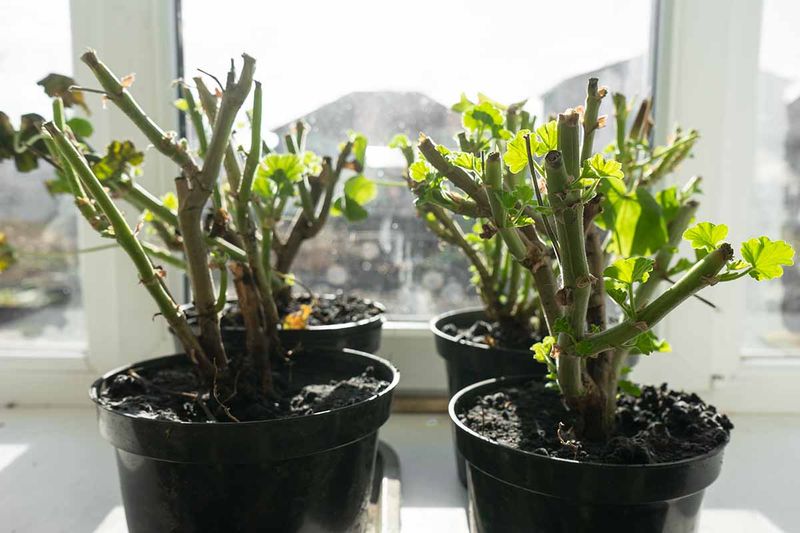
Snip, snip, done. A good fall haircut is one of the smartest moves you can make before the first frost hits.
Most experts suggest cutting geraniums back by about one-third to one-half before bringing them indoors. Do this in early fall, well before nights drop near freezing in your area.
Why bother? A smaller plant needs less light to support itself. Fewer leaves also mean less demand on weak winter sun, so the plant stays balanced instead of stretching.
Make each cut just above a leaf node, the small bump where leaves attach. New shoots sprout from those nodes, giving you a fuller shape later.
Use clean, sharp shears. Wiping blades with rubbing alcohol helps reduce the spread of plant diseases between pots.
Fair warning, the plant will look a little bare at first. I gasped the first time I did it. Within weeks, though, fresh leaves appeared, and the plant looked healthier than any unpruned one I had ever kept.
Bonus tip: those trimmings can root into brand-new plants. More on that in a later section.
Pinching Geranium Tips In Winter Keeps Plants Bushy
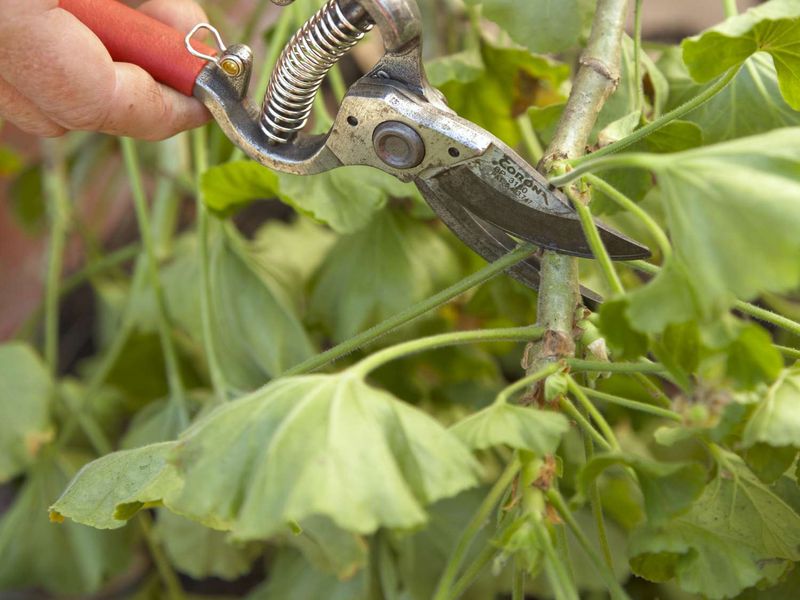
Grab your thumb and forefinger. These two tools might be the best geranium helpers you own.
Pinching means removing the soft growing tip of a stem. When you take off that tip, the plant stops pushing upward and sends energy to side buds instead. Two or more new branches often form below the pinch.
Watch for any stem that starts stretching during winter. Pinch it back just above a healthy leaf node, and you will slow that lanky growth before it gets out of hand.
For stems that have already turned long and woody, use pruners instead. Cut back to a point with a few leaves remaining so the plant can keep making food.
Late winter is a great time for a bigger trim. Many gardeners cut back overwintered plants in February or March, a few weeks before moving them outside. That timing sets up a compact shape for spring.
I’m a sucker for this little ritual. It takes about two minutes per plant, and it feels like giving each one a pep talk. The payoff is a fuller plant with more stems for future flowers.
Soggy Geranium Soil And Extra Fertilizer Make Things Worse
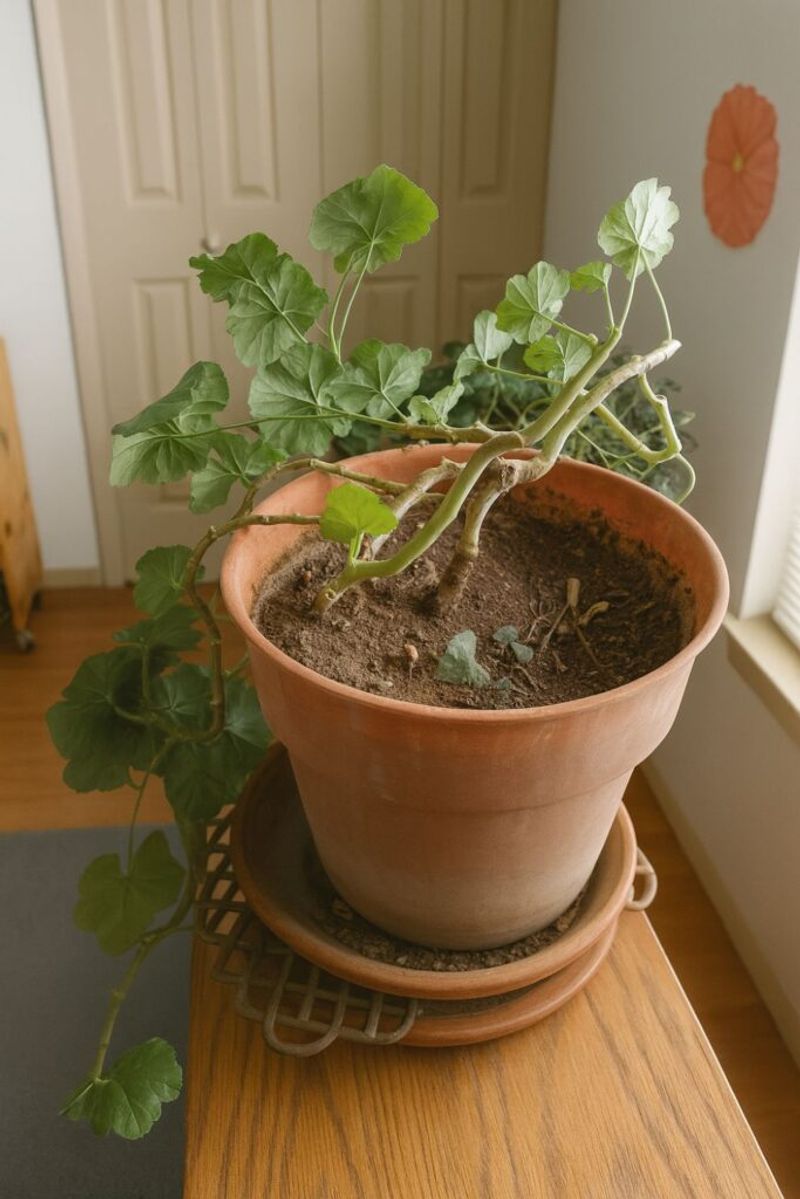
Guilty as charged, I used to water my indoor geraniums on a strict schedule. That habit caused more trouble than it solved.
Geraniums grow slowly in winter, so they drink far less. Wet soil can lead to root rot, and weak roots produce weak, spindly tops. Let the top inch or two of soil dry before watering again.
Pots need drainage holes, plain and simple. Empty saucers after watering so roots are not sitting in a puddle. Terracotta pots help too, since they breathe and dry faster.
Fertilizer is the other sneaky troublemaker. Feeding a plant in low light encourages soft, fast growth, especially with high-nitrogen formulas. That kind of growth stretches easily.
Most gardeners hold off on fertilizer through the darkest winter months. Once days lengthen in late winter and new growth appears, start again with a diluted balanced plant food.
Yellowing lower leaves can hint at overwatering. Crispy edges often mean dry air near a heater. Reading these clues helps you adjust before small problems snowball into a lanky, struggling plant by spring.
Leggy Geranium Cuttings Can Become Fresh New Plants
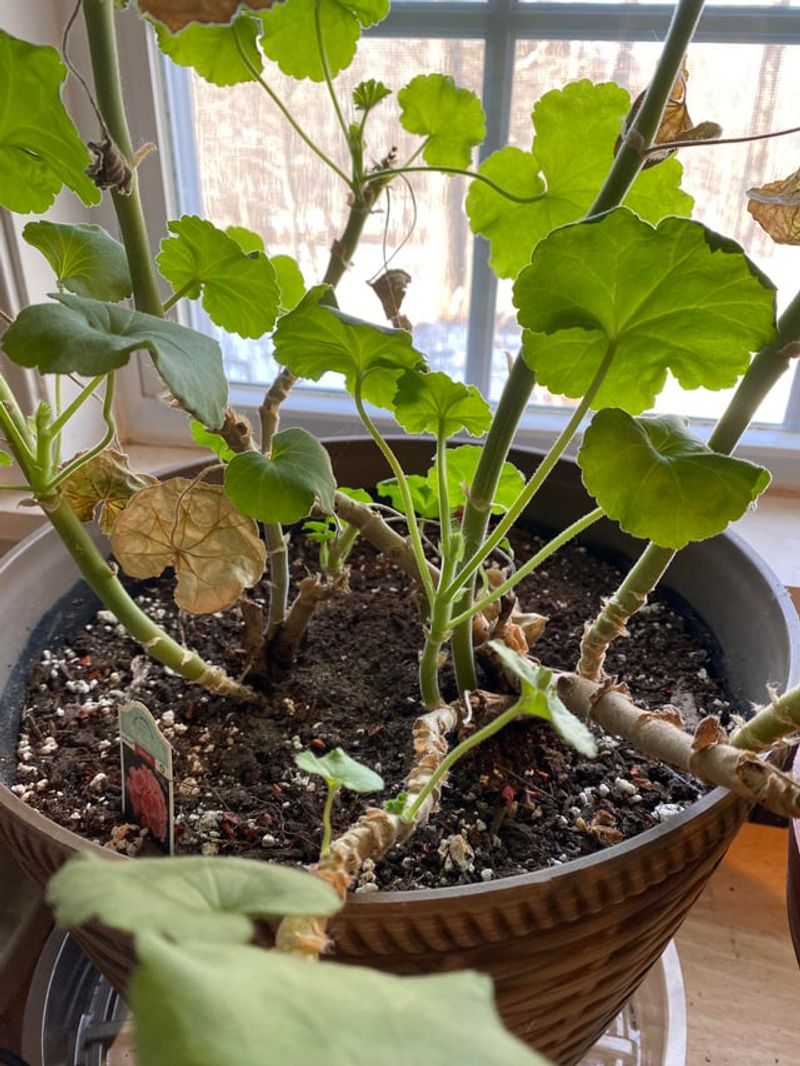
Every gardener deserves a do-over, and geraniums offer one. Those long, awkward stems can turn into brand-new plants with a little patience.
Take cuttings about 3 to 4 inches long from healthy stem tips. Remove the lower leaves, leaving two or three at the top. Let the cut ends dry for a few hours so they seal over.
Stick the cuttings in moist, well-draining potting mix or a seed-starting blend. Rooting hormone is optional, but it can speed things up. Place them in bright, indirect light and keep the soil lightly damp, not soggy.
Roots usually form in about three to four weeks. A gentle tug that meets resistance means you are in business.
Many extension services actually recommend this method for overwintering. Small cuttings take up less space and need less light than big mother plants.
Here’s what gets me every time. A plant that looked hopeless in February can give you a dozen compact babies by May. Plant them out after your last frost date, and enjoy bushier geraniums all summer, ready for another winter adventure.