The Small, Brightly Banded Snake Arizona Gardeners Might Spot Near Rocks and Ground Cover
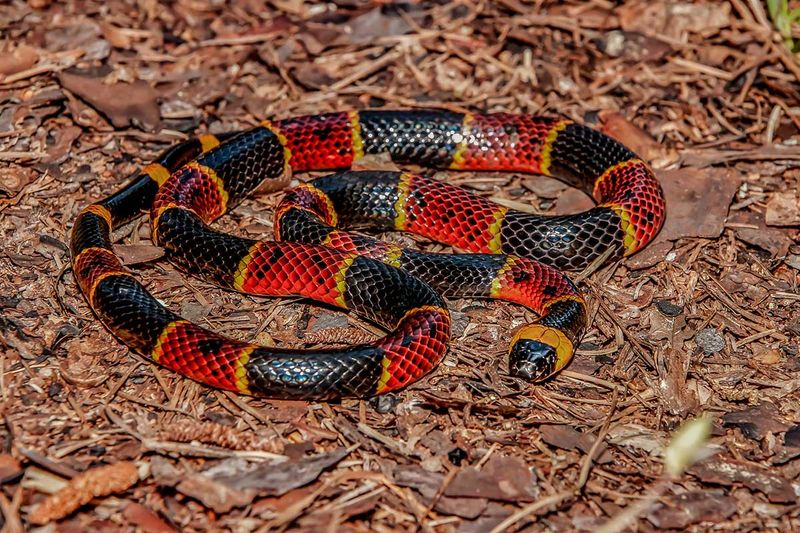
A snake barely longer than a school ruler can carry venom and still hide easily. It wears bold bands that make many people think of a warning sign.
In Arizona, a few rare sightings leave gardeners wondering what they saw. Here is a calm guide to what this snake is, what we know, and what to do.
A Small Snake With Encircling Bands
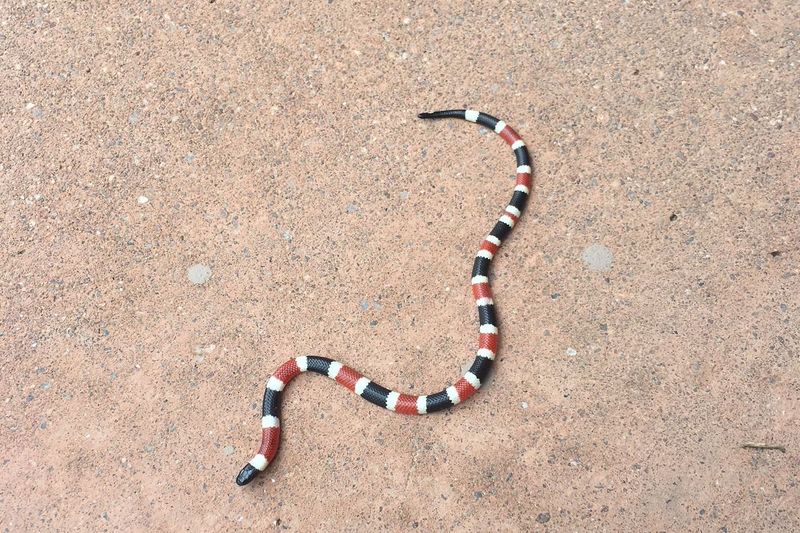
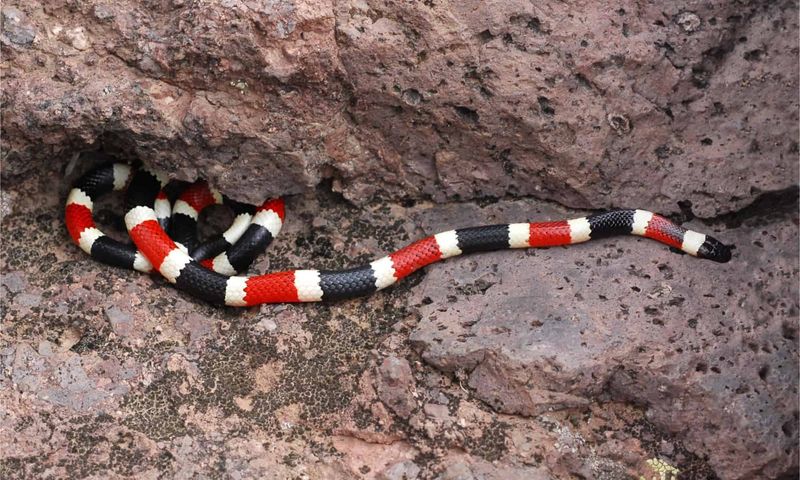
A possible match for this banded snake is the Sonoran coral snake, also called the Arizona coral snake. Think of that as a starting guess, not a certain identification.
Plenty of snakes can look striped at a glance.
According to the Arizona-Sonora Desert Museum, this snake is small, usually about 13 to 21 inches long. It has a blunt snout and a black head that extends behind the eyes.
Its red and black bands are separated by narrower yellow or white bands.
Those bands fully encircle the body, though the belly may look paler. That detail is interesting, but it is not a reason to move closer.
Please never pick up a snake or nudge it to check its markings. A clear photo from a safe distance is far better, and you can compare it later while the snake goes on its way.
Mulch Is Not A Proven Attraction
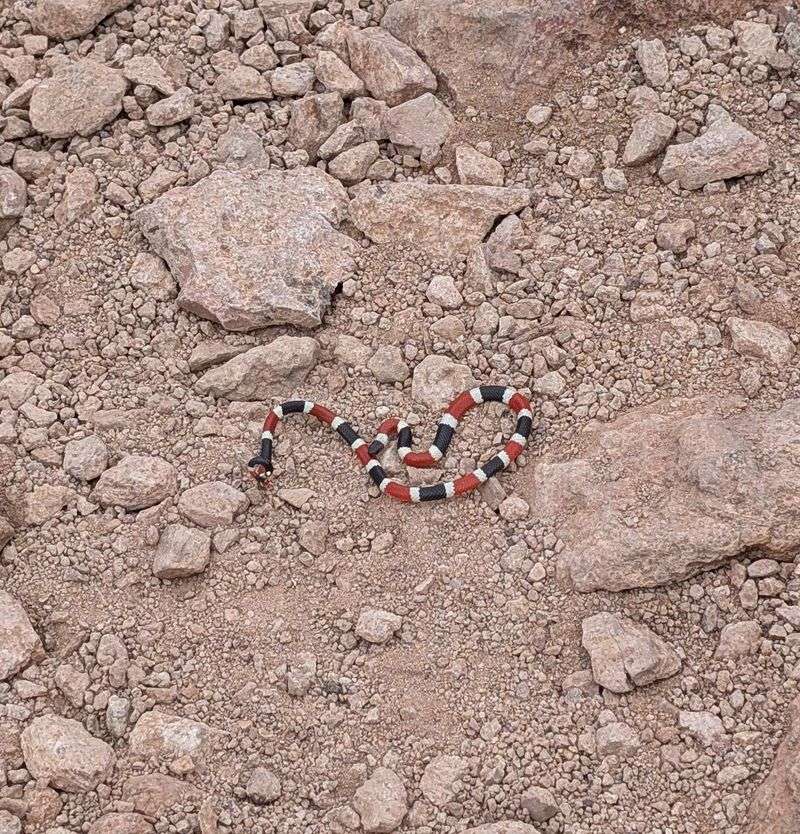
Here is the garden question many people ask: does mulch draw this snake in? The sources do not say so.
Nothing reviewed shows a preference for mulch or frequent encounters in mulch beds.
What the Desert Museum does report is that the snake lives in central and southern Arizona. It uses several arid and semiarid habitats, including desert scrub, woodland, grassland, and farmland.
It is often found in rocky areas.
Because it is small and secretive, any small animal could be harder to notice among rocks or ground cover. That is a cautious possibility, not a known habit of this species.
A regional range also does not mean one is likely to be at your property. Treat a sighting as a rare possibility rather than a routine garden event.
When The Secretive Snake May Be Active
Most of the time, this snake keeps out of sight. The Desert Museum notes that it usually comes out after sundown.
That helps explain why so few people ever see one.
It may also be active by day after rain or under overcast skies. So a damp, gray morning is a time when a surprise sighting is more possible.
Even then, a sighting would not be typical.
This behavior should not be read as a sign that it visits yards or favors a certain garden feature. It simply means a rare daytime appearance is possible in certain weather.
If you walk outdoors at dusk or after a rainstorm, watch where you step and keep a flashlight handy. Look at the ground before reaching into rock piles or leaf litter.
Why The Color Rhyme Can Fail In Arizona
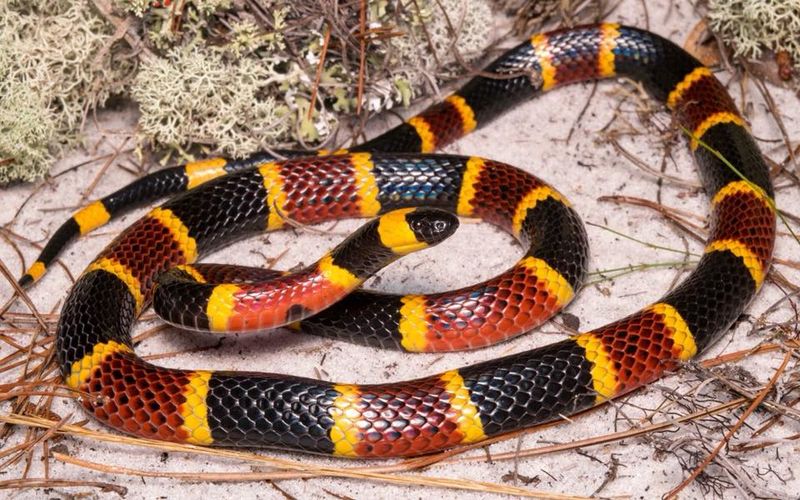
You may have heard a rhyme about red touching yellow. It is catchy, but it is not a safe test in Arizona.
The Desert Museum warns that local nonvenomous snakes can have red bands touching yellow bands.
That means a snake could break the rhyme and still be harmless, or you could misjudge one in poor light. Guessing from color alone invites mistakes.
Not every red-and-banded snake is a Sonoran coral snake.
The practical move is simple. Stay back, take a photo from a distance, and let the snake leave.
Do not lean in to check the head or belly, even if you are curious. If you want help naming it, share the picture with a local wildlife or reptile expert afterward.
Its Documented Prey Is Not Garden Pest Control
Some wildlife stories claim every snake patrols for garden pests. For this one, that claim is not supported.
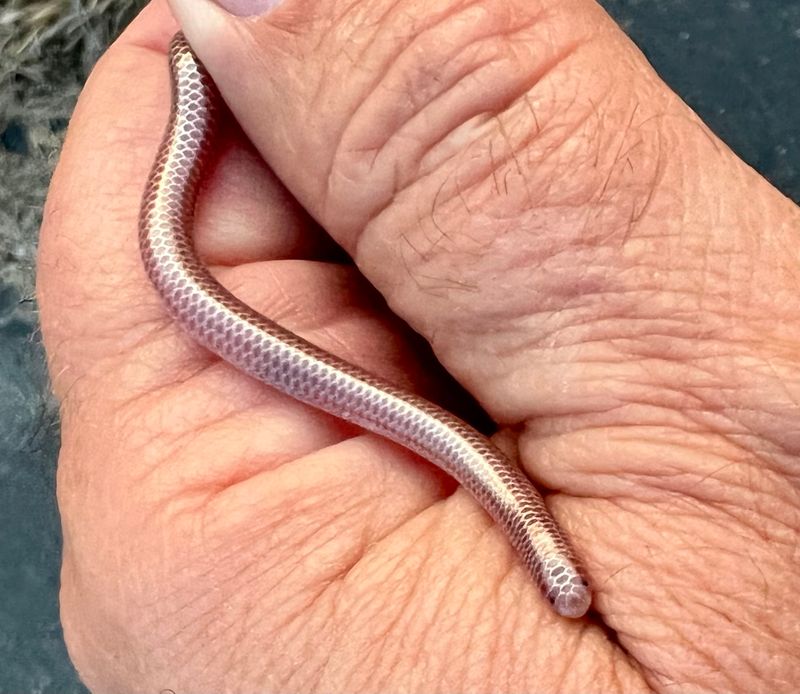
The Desert Museum identifies blind snakes and black-headed snakes as its main prey.
Those are small, secretive snakes themselves. Nothing in the sources links the Sonoran coral snake to controlling scorpions, ticks, mosquitoes, or common garden pests.
So it would be a mistake to welcome one as a helper.
If scorpions are your worry, rely on proven habits such as sealing gaps and clearing clutter. A coral snake sighting is best handled as a respectful distance matter.
Enjoy the fact that Arizona has such an unusual reptile, and leave the pest plans to other tools.
Give A Snake In The Yard Space
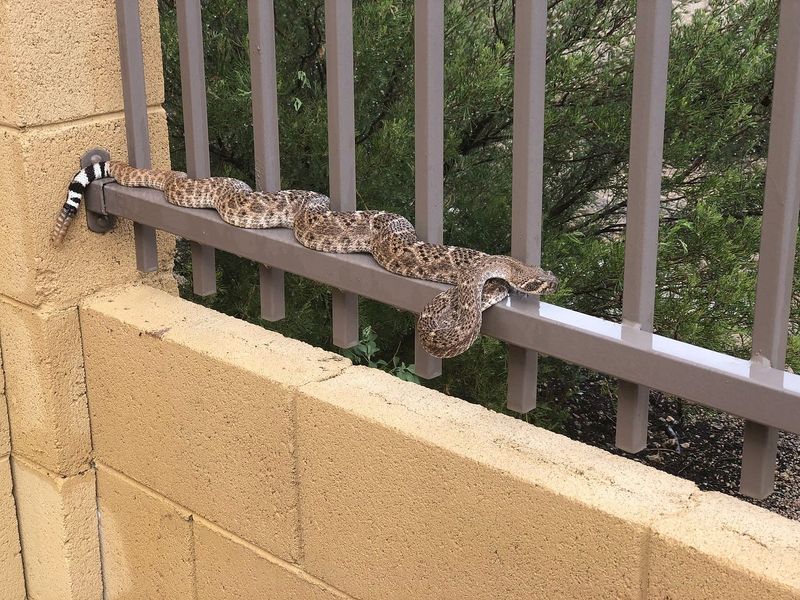
If you spot any snake in the yard, do not handle or capture it. A bite can happen when people try to move one.
Calm distance is the safest tool you have.
The City of Scottsdale advises people to observe a snake from at least six feet away. If people and pets are safe, leave it alone and it will usually move on.
See the City of Scottsdale snake safety page for details.
That distance and any relocation options are local guidance, not rules or services across all of Arizona. Check your own city or county for what is offered.
Keep children and pets indoors until the snake leaves, and do not approach to identify it.
Treat A Suspected Bite As An Emergency
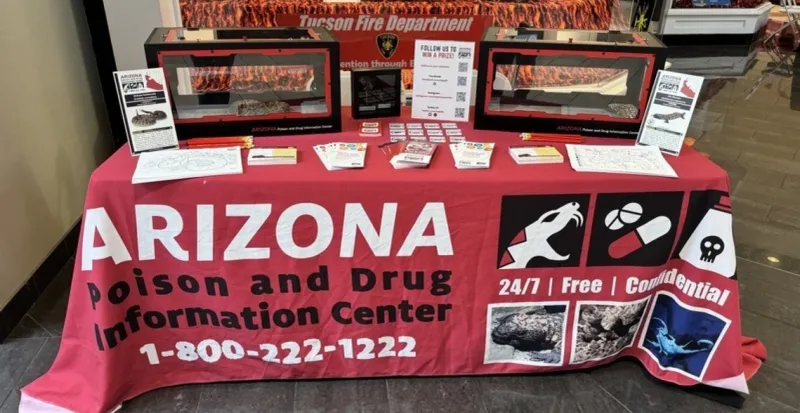
A suspected coral snake bite needs hospital care immediately. Go even if pain or swelling seems slight.
Symptoms can be delayed, so waiting to see what happens is risky.
The Arizona Poison and Drug Information Center describes this snake as shy and says significant bites are rare. Poison Control notes that most Sonoran coral snake bites do not cause significant symptoms.
Still, envenomation can become serious, so every suspected bite deserves a medical check.
While getting help, keep the person quiet and still. Remove tight items near the bite, such as rings or watches.
Do not use a tourniquet, ice, cutting, or suction.
Reduce Access Without Stripping The Yard
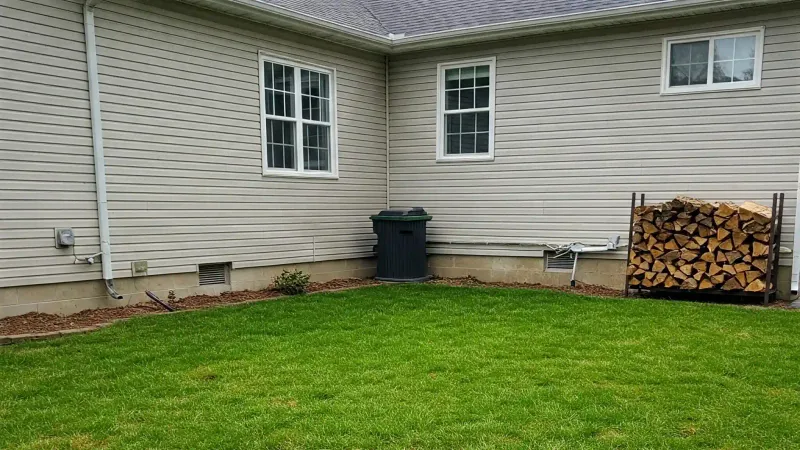
You do not need to clear every rock or bed of mulch. Aim for targeted changes near spots your family uses often, like patios and play areas.
Small steps can make the area less inviting without wrecking useful habitat.
Arizona Game and Fish says no fence is snake-proof, though barriers may reduce access. Their fencing guidance also points to reducing rodent food and removing nearby brush piles, firewood stacks, and debris.
Those steps may reduce attractants, but they cannot promise a snake-free yard.
Store pet food and birdseed securely, and tidy clutter near doors. Keep native plantings elsewhere in the yard, where they help wildlife.
A snake can be rare, but careful habits keep everyone safer.