Why Some Arizona Lemons Stay Green on the Tree and When to Pick Them
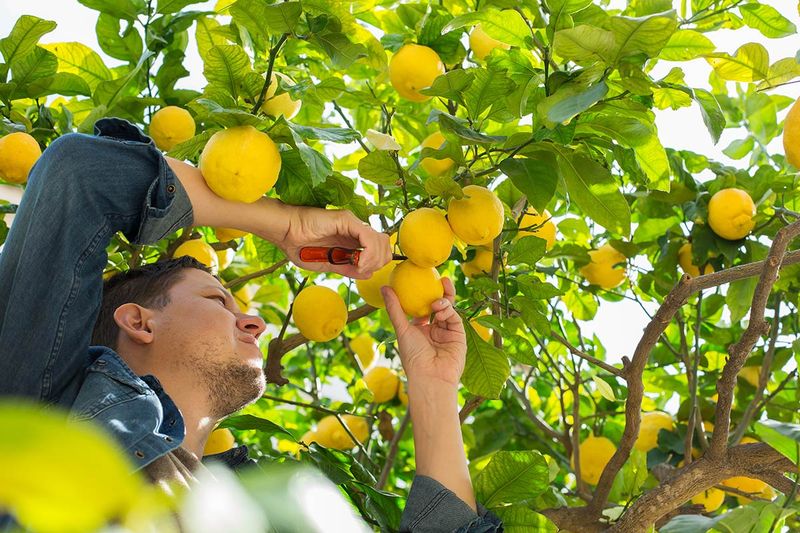
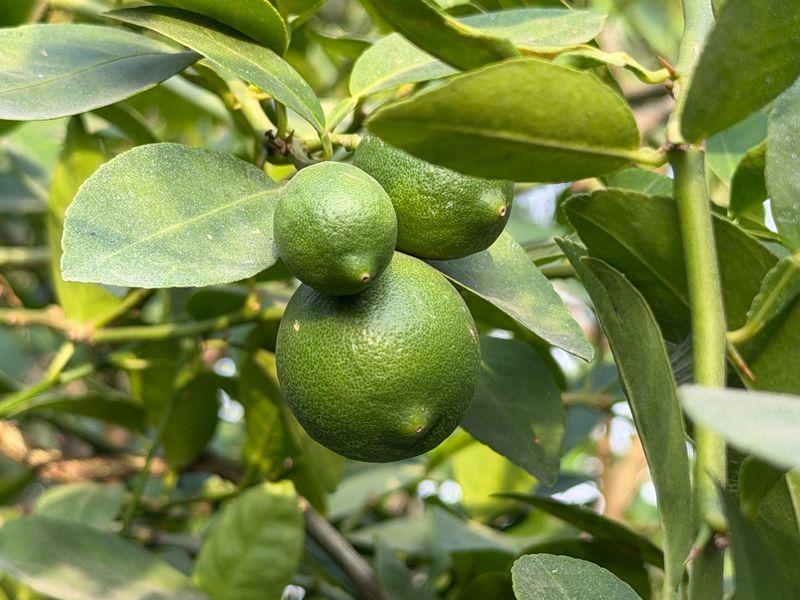
You walk out to your backyard tree and see lemons that are full-sized but still green. Many Arizona gardeners wonder if that fruit is ruined or just waiting.
Peel color tells only part of the story, and it can lead you to leave good fruit hanging for weeks. Here is how to read your tree and decide when a lemon is ready for your kitchen.
Why some Arizona lemons stay green
A lemon peel starts out green because of chlorophyll, the same pigment found in leaves. As fruit changes color, that green breaks down and yellow pigments that were hiding underneath become visible.
Citrus pigment research shows that cool temperatures help this change along, while high temperatures can hold it back.
That helps explain why some lemons in the Arizona low desert keep a green or greenish peel for a long time. Warm days and mild nights may slow the shift to yellow, so a fruit can look unfinished even when it has reached a good size.
The link between warmth and green peel is a reasonable explanation for the low desert, but it is not a promise about every tree or every season.
Heat is also not the only factor. The variety, the spot where the tree grows, and the weather in a given year all play a part.
Two lemons on neighboring trees can look quite different. Arizona low-desert citrus guidance notes that lemons can be harvested and used while the rind is still green.
Green peel alone cannot confirm maturity
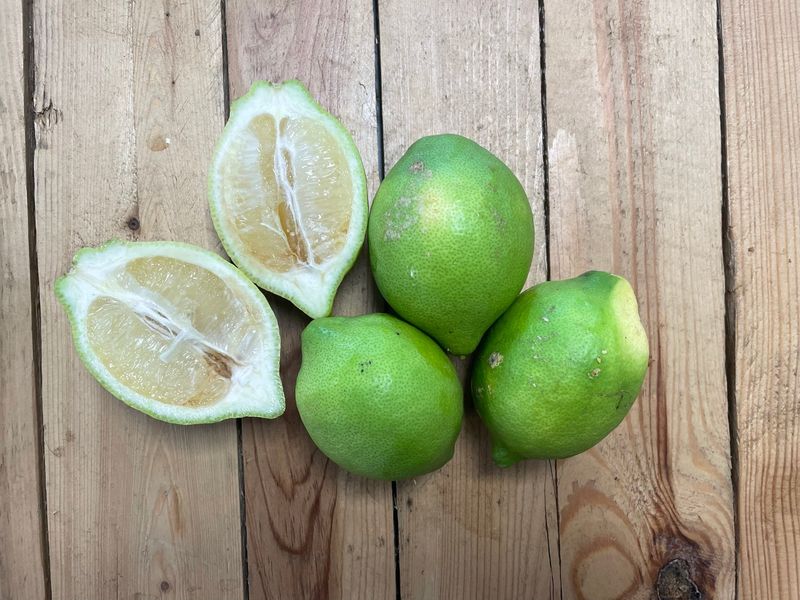
Peel color and what is happening inside the fruit are two separate things. Arizona guidance for the low desert says lemons may be picked green and used before the rind ever turns yellow.
So a green skin is not a reason to leave good fruit hanging.
The flip side matters too. A green lemon is not automatically ready.
Some fruit is green because it is simply too young, and color alone cannot tell you which case you have. Even yellow is a shaky signal, since growers can use treatments that make peel turn yellow sooner.
Rind color can be a poor guide to citrus maturity, which is why California citrus advice points gardeners toward taste instead. Think of color as a hint and not a verdict.
The better question is what the juice and flavor are like.
Test a full-sized lemon before harvesting more
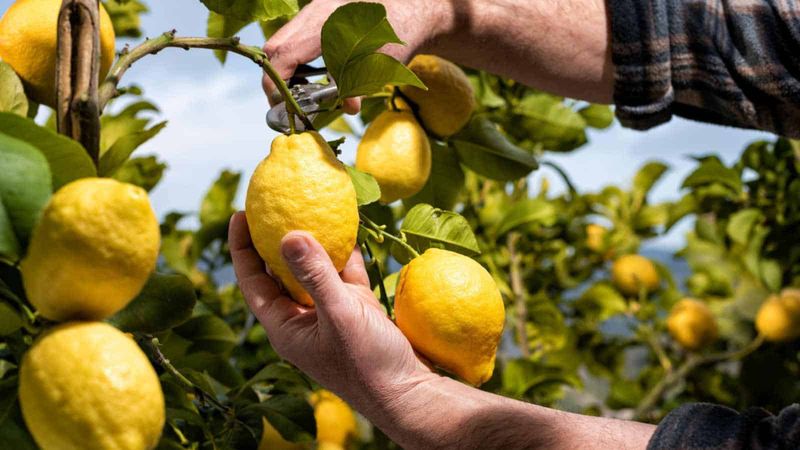
The most reliable tool you have is a quick taste test. Choose one lemon that has reached full size for its variety, pick it, and cut it open.
Squeeze a little juice and taste it, or try it in a glass of water or over a salad.
Ask yourself whether the juice is plentiful and whether the flavor fits what you plan to make. A tart, bright lemon may be exactly right for lemonade or fish, while you may want something a little rounder for another dish.
Tasting is the approach citrus harvest guidance recommends over relying on rind color.
Your Arizona Garden Changes Every Week. Your Plan Should Too.
Gardening in Arizona changes quickly throughout the season. Every Friday you’ll receive a simple weekly plan showing exactly what to plant, prune, fertilize, harvest, and protect so you never miss the right timing.
If the sample suits you, harvest more fruit of similar size as you need it. If it falls short, wait a week or two and sample another.
This is a homeowner check, not a laboratory test, and there is no single size that works for every tree.
Meyer lemons may call for a different flavor target
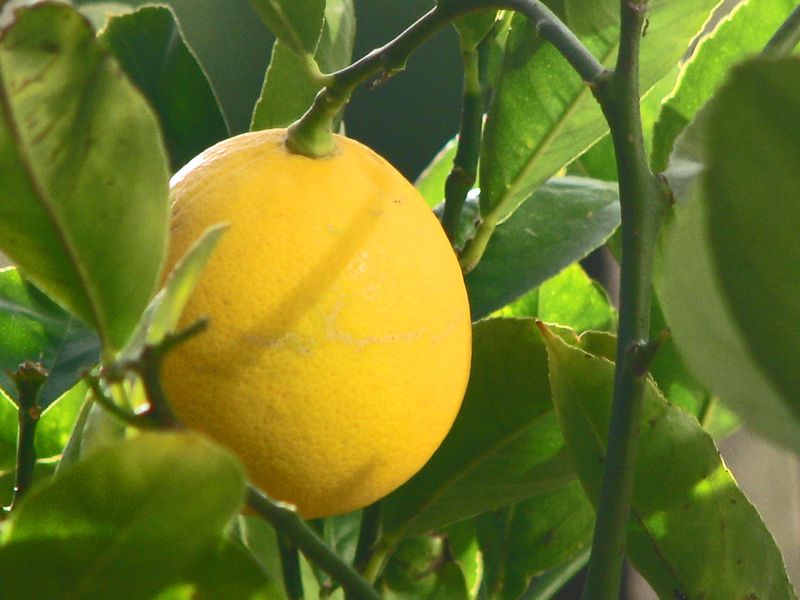
Meyer lemons are their own type, and they are not treated quite like ordinary lemons. They are known for a milder, slightly sweeter taste, and that signature flavor shows up when the fruit reaches a yellow to orange color.
Guidance on Meyer lemon harvest notes that fruit picked while green may taste more acidic than the characteristic ripe fruit. If that gentle flavor is what you want, waiting for color is a sensible choice for this variety.
That advice should stay with Meyers. It does not mean yellow lemons of every kind are sweeter.
If you grow a Eureka or Lisbon type for sharp, tangy juice, a green peel is no reason to hold back. Match the pick to the flavor you are after.
Harvest individual lemons as needed
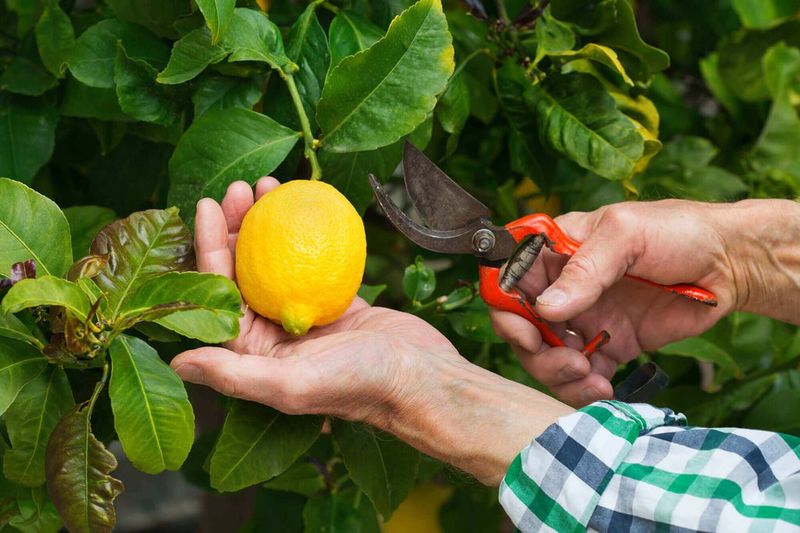
One tree rarely ripens all its fruit at the same pace. You may see small green lemons, full-sized green ones, and a few yellow ones on the same branch.
Lemon growing guidance describes this spread and advises letting fruit develop on the tree.
So pick as you go. Take a few lemons when you need them, using clippers or a gentle twist, and leave the rest for later.
This keeps your kitchen supplied over a longer stretch instead of overwhelming you with a single pile.
Cold is a separate matter from color. Lemons are among the least cold-tolerant citrus, and Arizona freeze protection advice says they can be damaged below 25°F.
If a freeze is forecast, do not leave full-sized fruit out just to wait for yellow. Check local forecasts and protect the tree.
A picked lemon may change color without ripening further
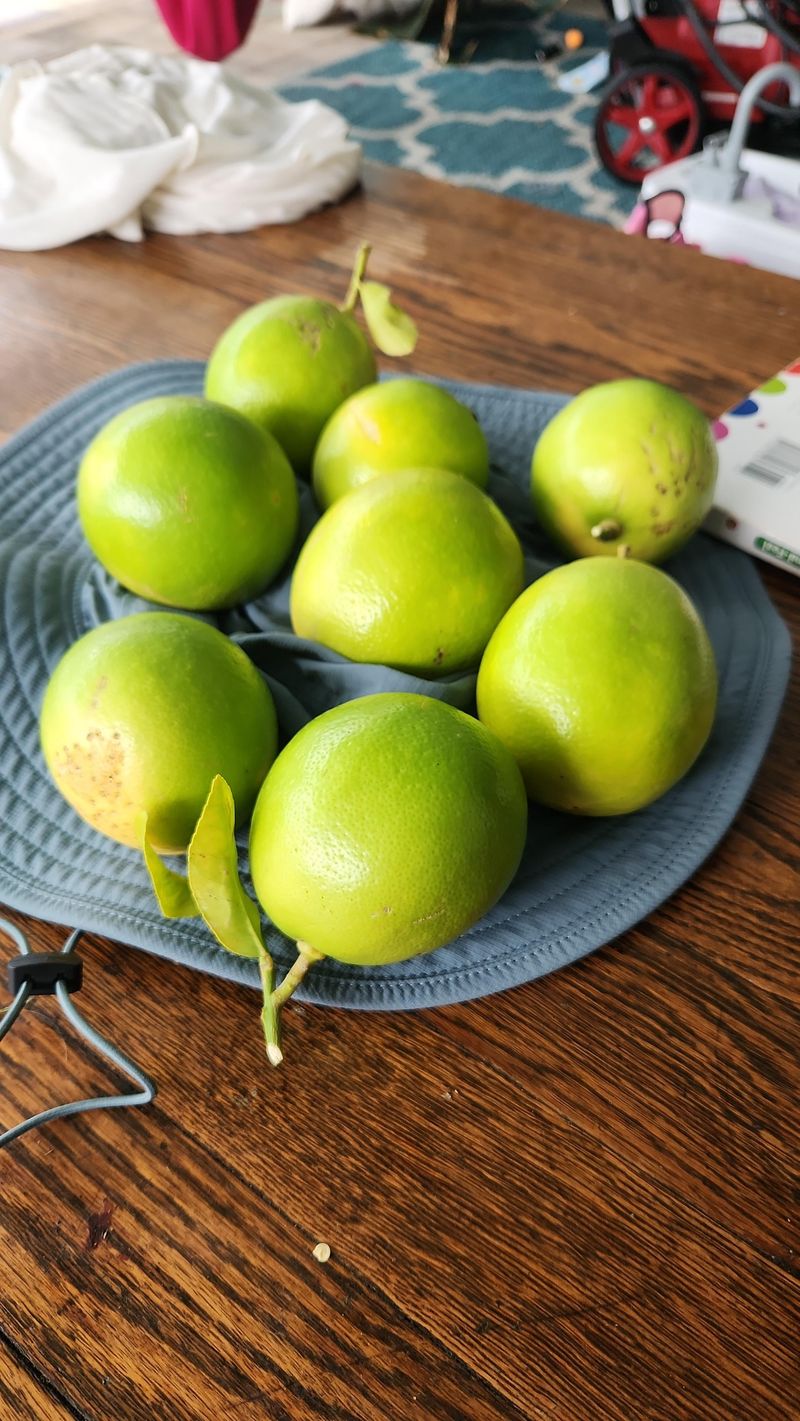
Some gardeners leave green lemons on the counter hoping they will finish ripening. The peel might lighten after a while, but the fruit inside does not keep maturing once it leaves the tree.
Citrus harvest guidance makes this point plainly.
Peel color and inner maturity are not the same. Citrus pigment information explains that ethylene can change peel color after harvest, with only minor effects on the juice sacs.
In practice, a lemon that yellows in your fruit bowl has not become sweeter or more developed. Pick it when the juice and flavor suit you, and treat any color shift as cosmetic.
Use flavor, not color, to make the harvest call
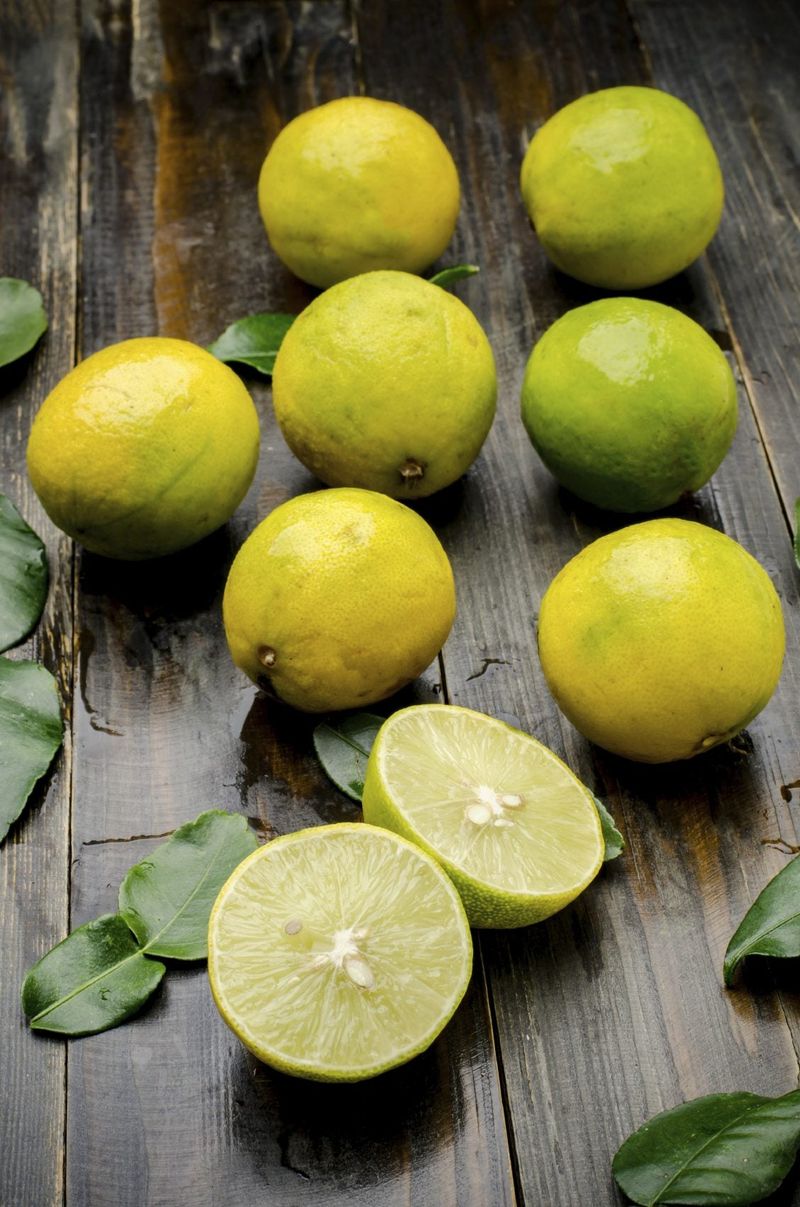
A green peel is not an automatic reason to wait, and it is not proof that a lemon is ready either. As Arizona low-desert guidance and taste-based harvest advice suggest, sample a full-sized fruit and choose by the flavor you want.
Your tongue knows more than the peel does.