The Mulch Volcano Mistake That’s Damaging Virginia Tree Roots Right Now
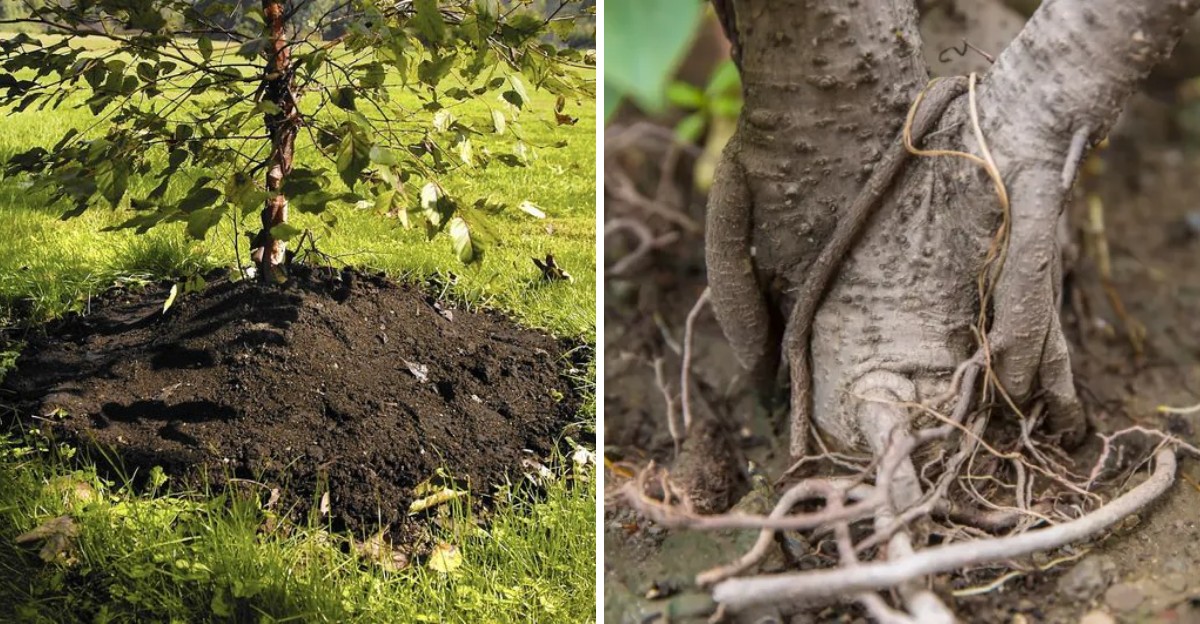
Some trees in neat, freshly landscaped yards are slowly being strangled by their own roots. The cause sits in plain sight, piled up like a tidy brown cone around the trunk.
I used to admire those perfect mounds outside banks and shopping centers. Then I learned what arborists see when they pull one apart. Soft, peeling bark, hungry voles, and roots wrapping around the trunk like a too-tight belt.
Spring is prime mulching season across Virginia, so fresh piles are popping up on every street right now.
You might notice them in your own yard, maybe even ones you built with love. I did, and it stung a little. Across Virginia, from Richmond to Roanoke, the same tidy cones keep appearing.
The tricky part is how quietly the trouble works. A tree can look fine for years while the damage builds underneath. So what is really happening inside that pile, and how hard is it to fix?
That Neat Mulch Cone Around Your Tree Trunk Is Hiding Something
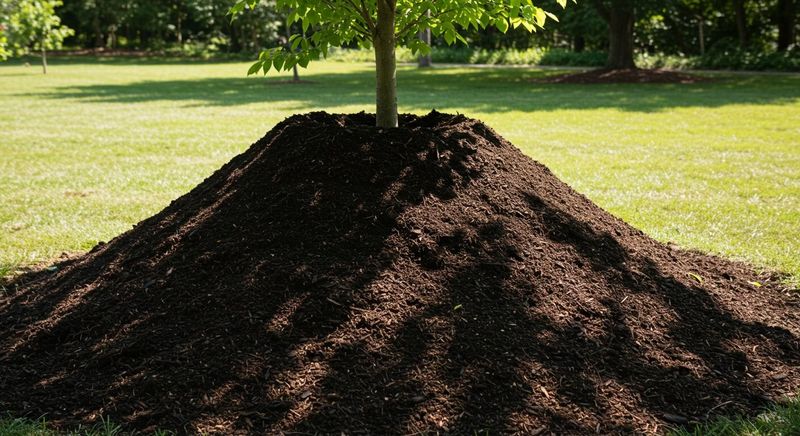
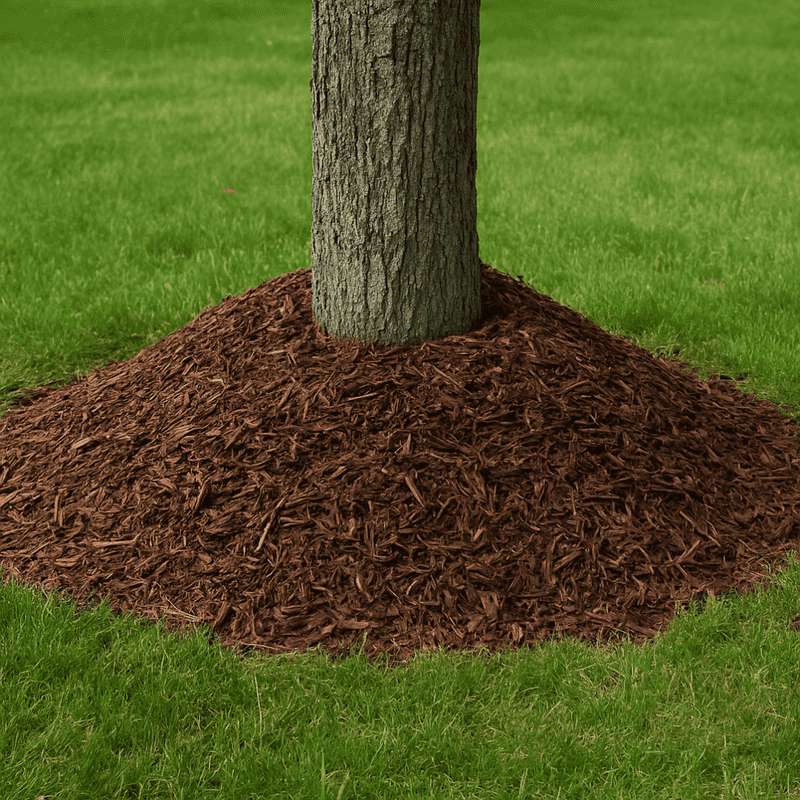
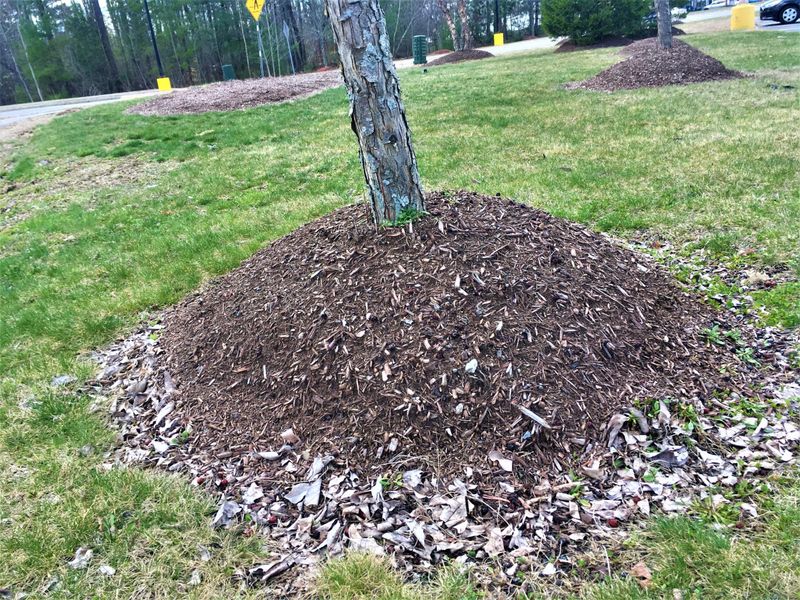
Landscapers call it a mulch volcano, and once you spot one, you start seeing them everywhere. Mulch gets heaped 8, 12, or even 18 inches high right up against the trunk.
It looks tidy and generous. The problem is that tree bark was not built to stay constantly damp. Bark acts like a raincoat, shielding the living tissue just beneath it from fungi, bacteria, and insects.
When damp mulch sits against that bark for months, the outer layer softens and starts to break down. Rot organisms move in.
Over time, the inner bark, called the phloem, can be damaged, and that is the tissue that carries sugars from the leaves down to the roots.
Virginia Cooperative Extension and many university programs warn against this practice for exactly that reason. The damage often starts low on the trunk, hidden right where the mulch covers it.
A quick check helps a lot. Gently pull the mulch away from the base of your tree with your hands or a rake.
If the bark underneath looks dark, mushy, or crumbly, the pile has been holding too much moisture. Healthy bark should look firm and much like the bark higher up on the trunk.
A Flat Mulch Donut Is What Your Tree Actually Wants
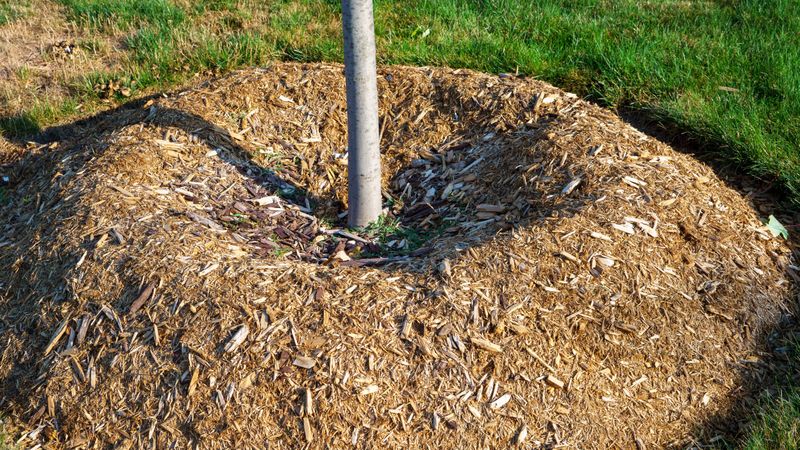
Fixing the problem is refreshingly simple. Arborists recommend a wide, flat ring of mulch, often called a mulch donut or saucer.
Aim for a layer 2 to 4 inches deep. Keep it pulled back a few inches from the trunk so the bark stays dry and you can see the base flare out into the roots.
Spread it wide rather than tall. Most of a tree’s feeding roots live in the top foot or so of soil and stretch well past the branches, so a broader ring does far more good than a tall pile. Going out toward the drip line is great if your yard allows it.
Shredded hardwood, pine bark, pine needles, and arborist wood chips all work well. Wood chips are often free from local tree services in Virginia, which makes this fix budget friendly.
I like to think of it as a doormat, not a pillow. The mulch should cover the ground, not climb the tree.
Done right, mulch holds moisture, cools roots in summer heat, suppresses weeds, and keeps mowers and string trimmers away from the trunk. Those are real benefits worth keeping, just in a flatter shape.
Buried Tree Roots Are Gasping For Air Under That Pile
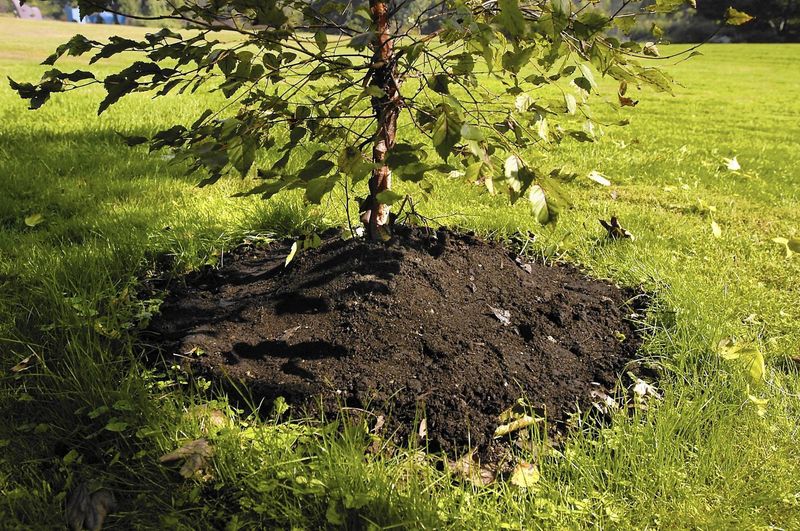
Roots breathe, and that surprises plenty of people. They need oxygen from tiny air pockets in the soil to grow and take up water and nutrients.
A thick, deep pile of mulch slows the air exchange between soil and atmosphere. Fine mulch that packs down, or old layers stacked year after year, can form a dense mat that sheds rain in some spots and stays soggy in others.
Much of Virginia sits on heavy clay, especially across the Piedmont. Clay already holds water and drains slowly, so adding a smothering mulch layer on top makes root conditions even tougher.
Stressed roots can mean thinner canopies, smaller leaves, and early fall color. These signs are easy to blame on drought or pests, which is why mulch problems often slip by unnoticed.
The root flare is the key landmark here. That gentle widening where trunk meets roots should sit at or just above the soil surface.
If your tree looks like a telephone pole going straight into the ground, the flare is probably buried. Carefully digging away excess mulch and soil, or hiring a certified arborist to do it, can bring back that natural shape.
Girdling Roots Can Wrap Around The Trunk Like A Tight Belt
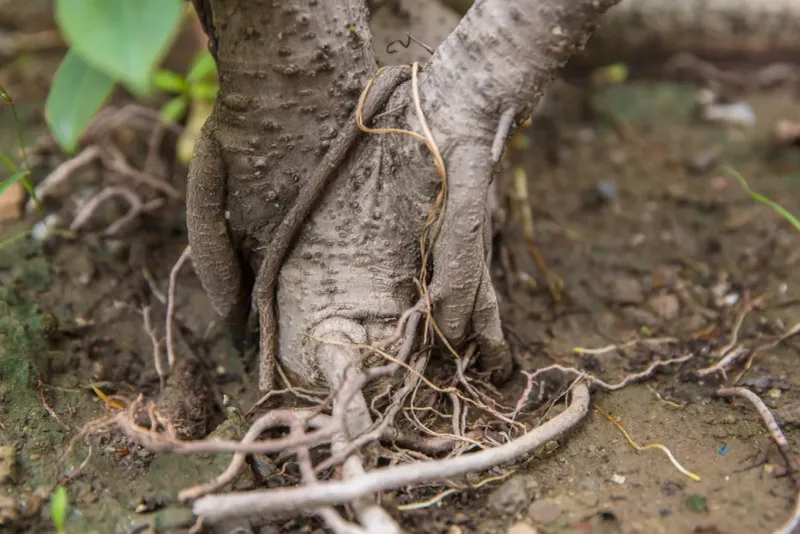
Some of the sneakiest tree trouble happens in slow motion. Roots can grow up into a deep mulch pile because it stays moist, then curve around the trunk instead of spreading outward.
Arborists call these stem girdling roots. As both the root and trunk thicken each year, the root squeezes the trunk and pinches off the tissue that moves water and sugars.
Deep planting and container-bound roots cause girdling too, so mulch is not the only culprit. Still, a volcano piled over a buried flare gives these roots an ideal place to wander.
Symptoms tend to appear years later. Watch for a trunk that looks flat on one side at ground level, a thin or sparse crown, or declining branches near the top. Maples, especially, are well known for girdling root issues.
Small girdling roots can sometimes be cut away safely. Larger ones are a different story, since removing them can wound the tree or reduce stability.
For anything thicker than a finger or two, call an ISA certified arborist. Many Virginia tree care companies offer root collar excavation, which uses air tools to clear soil and reveal hidden roots without tearing them.
Voles Love Hiding In Tall Mulch Mounds Around Young Trees
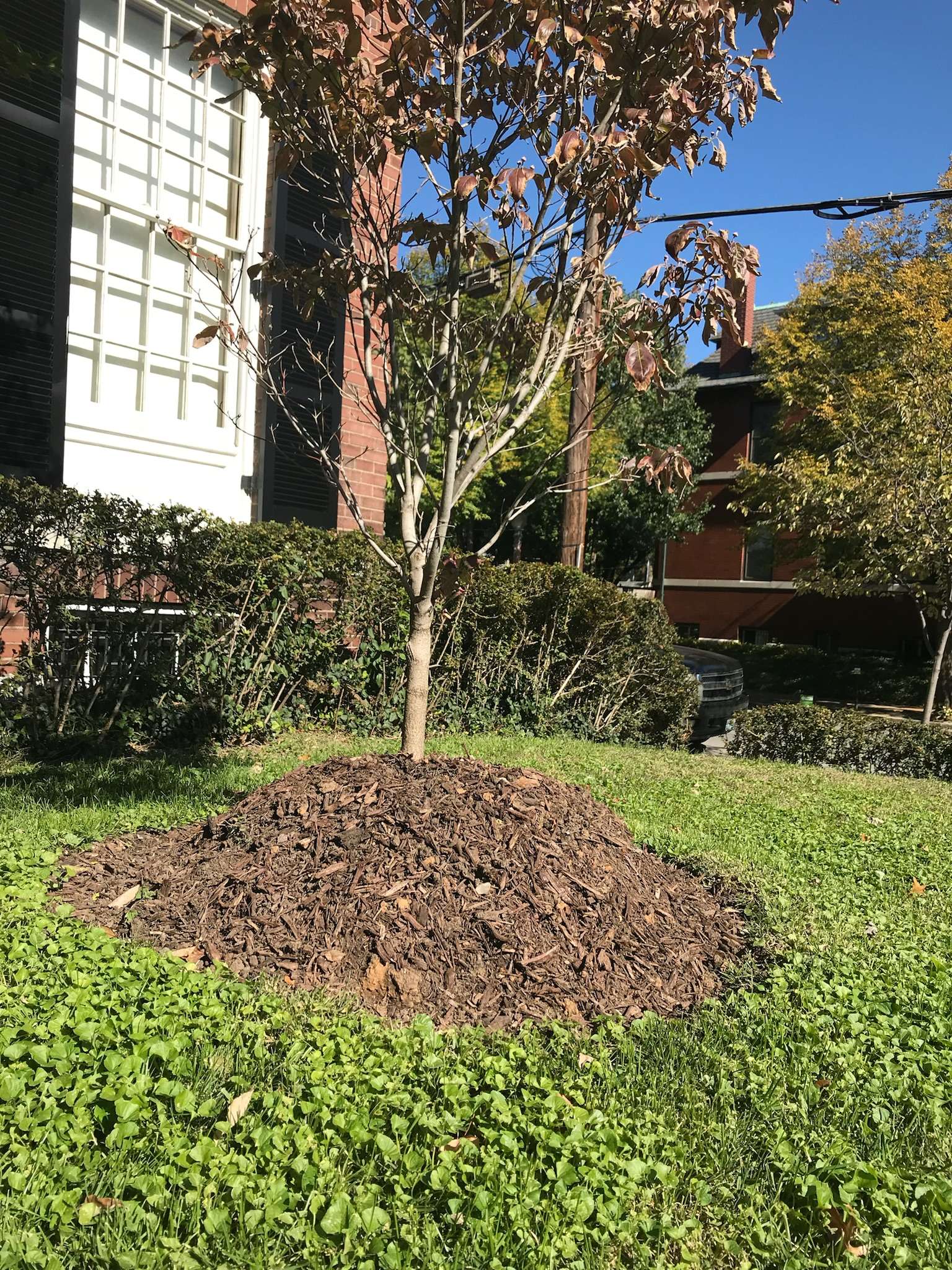
Picture yourself as a hungry vole in February. A cozy, deep pile of mulch pressed against tender bark is basically a hidden buffet with a roof.
Voles and mice tunnel through thick mulch where hawks, owls, and foxes cannot see them. From inside, they gnaw on bark at the base of the trunk, often through late fall and winter when other food runs low.
Pine voles and meadow voles are both common in Virginia. They are a familiar headache for orchard growers and home gardeners with young fruit trees, dogwoods, and ornamentals.
If they chew all the way around the trunk, called girdling, the tree can decline quickly because nutrients can no longer travel past the wound. Partial chewing leaves openings for decay.
Pulling mulch away from the trunk takes away their sheltered work zone. A few inches of bare space around the base makes voles much more exposed.
For young or valuable trees, a cylinder of quarter-inch hardware cloth around the lower trunk adds extra protection. Sink it a couple of inches into the soil and leave room for growth, then check it each spring.
Old Mulch Layers Stack Up Faster Than You Realize
Spring rolls around, the beds look faded, and out comes a fresh truckload of mulch. I have been guilty of this one myself.
Every new layer piles on top of last year’s, which may not have broken down yet. After a few seasons, that harmless 3 inches can quietly turn into 8 or 10 inches of matted material.
Many people top-dress mainly for color. Dyed mulch fades fast, so it tempts gardeners to add more each year even when roots do not need it.
Before adding anything, poke a finger or trowel into the existing mulch. If you still have 2 inches or more, skip the new layer or just rake the old material to fluff it up and refresh the look.
Matted mulch can also crust over and shed water. Raking breaks up that crust so rain soaks in again.
Thick piles of fresh mulch can heat up as they decompose, and soggy, airless piles sometimes turn sour and smell like vinegar. That sour mulch can scorch nearby plants. Spreading mulch thinly and letting it age helps you sidestep both problems.
Grab A Rake And Rescue Your Volcano Tree This Weekend
Turning a volcano into a donut takes about twenty minutes and some gloves. Your tree will thank you for years.
Start by pulling the mulch away from the trunk with your hands or a soft rake. Work gently so you do not scrape the bark.
Next, look for the root flare. If you find soil piled over it too, carefully remove that with a hand trowel until the flare shows.
Spread the extra mulch outward into a wide, flat ring about 2 to 4 inches deep. Leave a few inches of open space around the trunk.
Take a peek at the bark and roots while you are there. Note any soft spots, chew marks, or roots circling the trunk.
Small problems are often manageable. For girdling roots, large wounds, or a tree that keeps declining, reach out to an ISA certified arborist or your local Virginia Cooperative Extension office for advice.
Then share what you learned with a neighbor or two. Mulch volcanoes spread mostly because people copy what they see. Your yard can show everyone a better way, one flat ring at a time.