The Giant Weed Taking Over New York Roadsides Can Blister Your Skin When The Sun Touches It
A single smear of clear plant sap can leave blisters that look like a bad burn, and sunlight is the trigger.
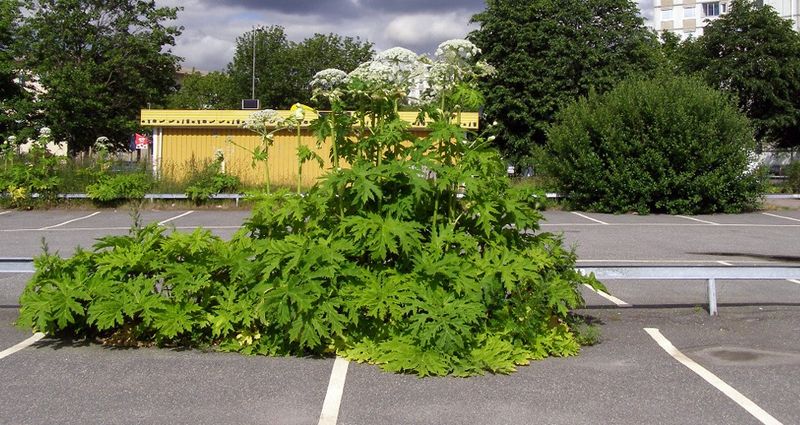
The plant behind it can tower 14 feet or taller along ditches and stream banks in New York, and many residents may not recognize it.
I admit my first reaction was disbelief. A weed that turns daylight against your own skin sounds like a campfire story.
Turns out the science is real, and the scars can linger for years. You might notice the leaves first. Some stretch five feet across, with deep jagged lobes.
The white flower heads can grow wider than a bicycle wheel. Most of us brush past roadside greenery without a second glance. I used to do the same.
Now I keep wondering how many hikers, kids, and weekend gardeners have walked right past this towering plant without a clue. Would you recognize it today?
That Towering Plant With Purple-Blotched Stems Has a Name
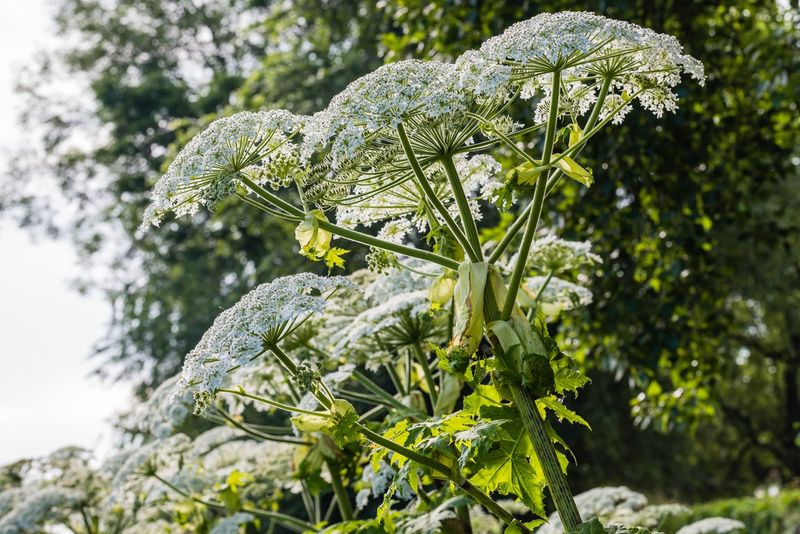
Standing next to a mature giant hogweed feels a little like meeting a plant from a fantasy movie.
The plant, scientifically named Heracleum mantegazzianum, comes from the Caucasus region between Europe and Asia. It reached North America in the early 1900s as a showy garden ornament.
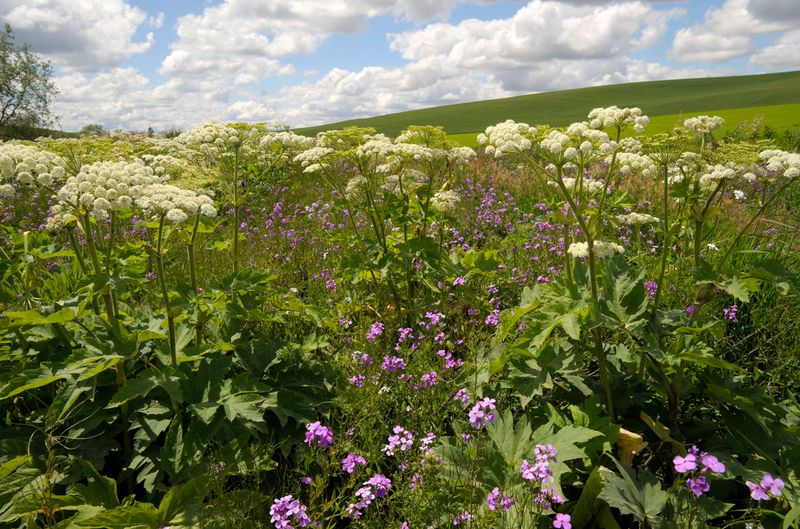
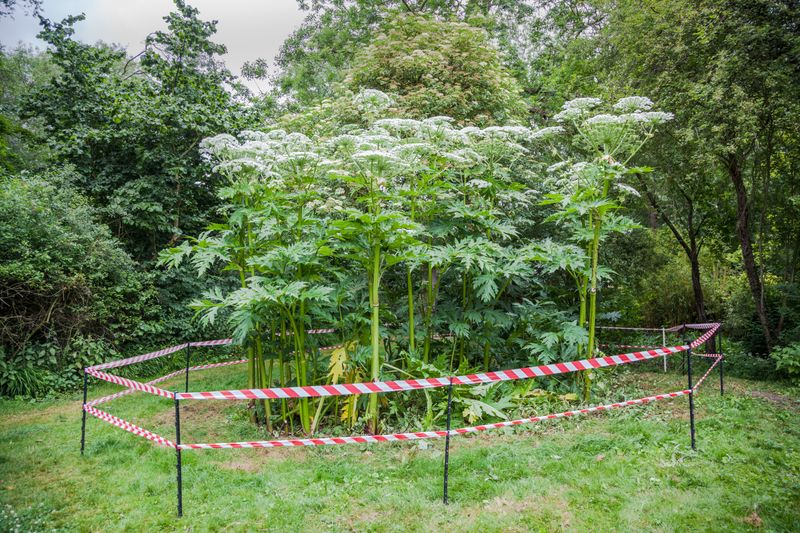
Flowering plants commonly reach 7 to 14 feet tall, and some push even higher. The hollow stems measure 2 to 4 inches wide and carry dark reddish-purple blotches plus coarse white hairs.
Leaves can span up to 5 feet, with deep, jagged lobes that look like they were cut with pinking shears.
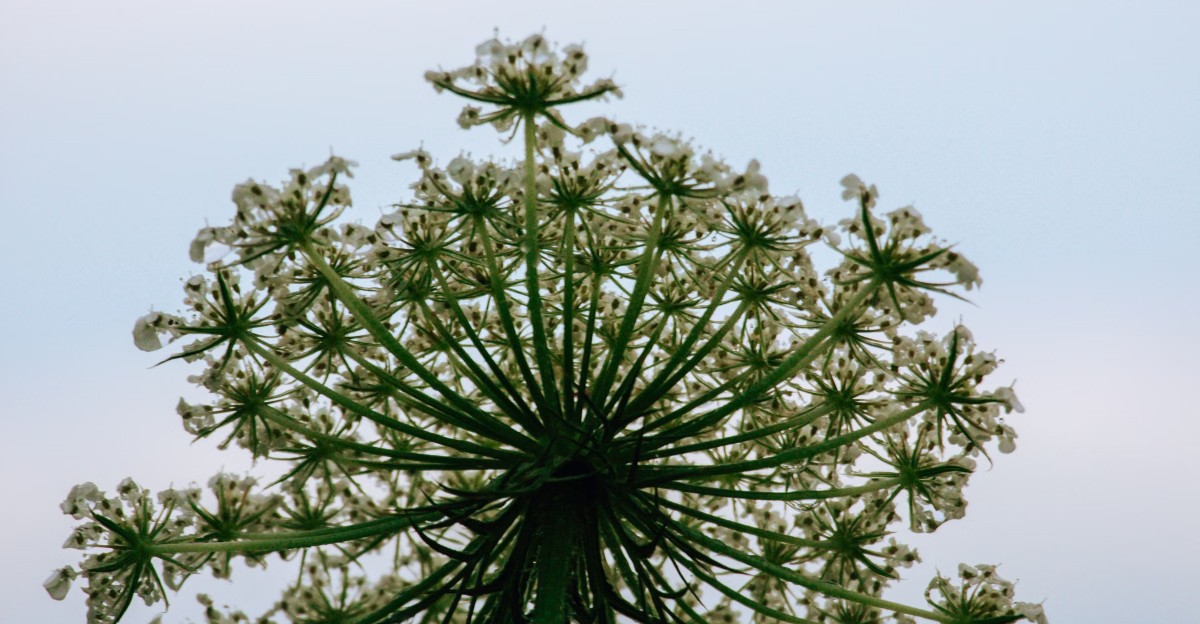
The flower heads are the showstoppers. Flat, white umbrella-shaped clusters can stretch about 2 1/2 feet across, blooming from late June into July. That size alone makes the plant hard to miss along ditches, stream banks, and field edges.
Height matters for safety, too. A tall plant puts its sap and flowers right at face and arm level, so passing too close carries real risk.
In New York, the DEC has tracked populations mostly across western and central counties, plus scattered spots elsewhere. A slow walk with your eyes open is the best first defense you have.
Clear Hogweed Sap Turns Sunlight Into a Skin Burn
Sunshine is usually the best part of a summer walk, but with this plant it becomes the problem. The clear, watery sap inside giant hogweed contains chemicals called furanocoumarins.
Leaves, stems, roots, flowers, and seeds can all carry it. On its own, the sap may not feel like much. Once ultraviolet light hits skin coated with it, a reaction called phytophotodermatitis kicks in.
The chemicals bind with skin cells under UV light and damage them, leaving the area unable to shield itself from the sun.
Doctors stress that this is not an allergy. Anyone can react, whether or not they have sensitive skin.
Moist, sweaty skin seems to pick up the sap more easily, which is why hot summer days are trickier.
Lime juice and wild parsnip can cause a similar reaction. Some bartenders and backyard cooks have learned that lesson the hard way after squeezing limes outdoors.
The key takeaway is simple. Brushing past the plant is less risky than breaking a stem or crushing leaves, because damage releases sap. Treat every broken piece of hogweed as if it is loaded with trouble, since it often is.
Got Hogweed Sap on Your Arm? Grab Soap and Find Shade
Speed is your best friend here. The New York State Department of Health and DEC both say to wash any skin that touched the sap with soap and cool water as soon as possible.
After washing, keep that area out of sunlight for at least 48 hours. Long sleeves, pants, or a loose bandage work well if you have to head outside.
The reaction can start within about 15 minutes of sun exposure, so do not wait to see if anything happens.
Eyes need special care. If sap splashes your face, rinse your eyes with clean water for at least 15 minutes and get medical help right away. Wearing sunglasses afterward adds extra protection from bright light.
I keep a small bottle of water and a bar of soap in my car during summer field trips. It sounds fussy, yet it costs almost nothing and buys peace of mind.
Clothes and gloves that touched the plant should be washed separately too. Sap on fabric can transfer to skin later, so toss anything questionable into the washer before wearing it again. Rinse tools with water while wearing gloves.
Hogweed Blisters Can Show Up a Day or Two Later
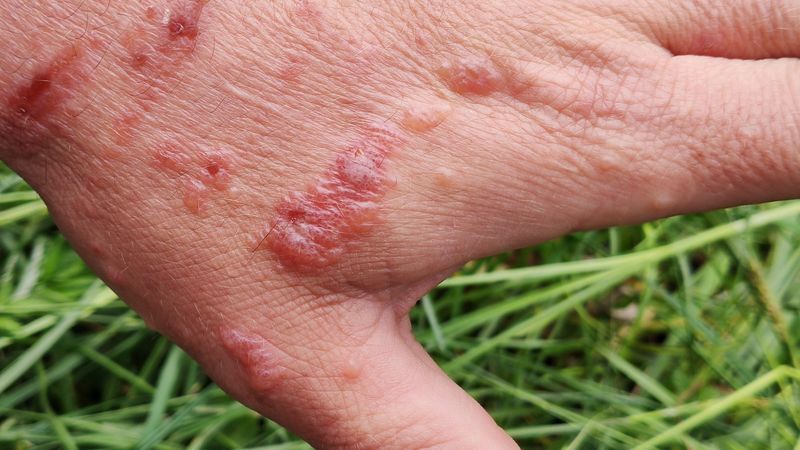
Plenty of people feel fine at first, which makes this reaction sneaky. Redness may appear within a day, and painful blisters often form within 24 to 48 hours of sap contact and sun exposure.
Reactions range from mild pink skin to large, fluid-filled blisters. Severe cases can look and behave like serious burns, sometimes needing care at a specialized burn center.
Blisters often appear in odd streaks or drips. That pattern matches where sap ran down an arm or splashed across a leg, which helps doctors recognize the cause.
Seek medical care for large blisters, intense pain, eye exposure, or any reaction on a child. Doctors may recommend cool compresses, pain relief, or prescription creams depending on how bad things look. Avoid popping blisters, since broken skin can get infected.
Tell your doctor exactly what plant you suspect. Giant hogweed burns are uncommon, and that detail helps them choose the right treatment faster.
Many people describe the burn as feeling hot long after leaving the sun. Patience helps, because healing takes time. Keep the area covered and clean while it recovers.
Dark Marks From Hogweed Burns Can Stick Around for Years
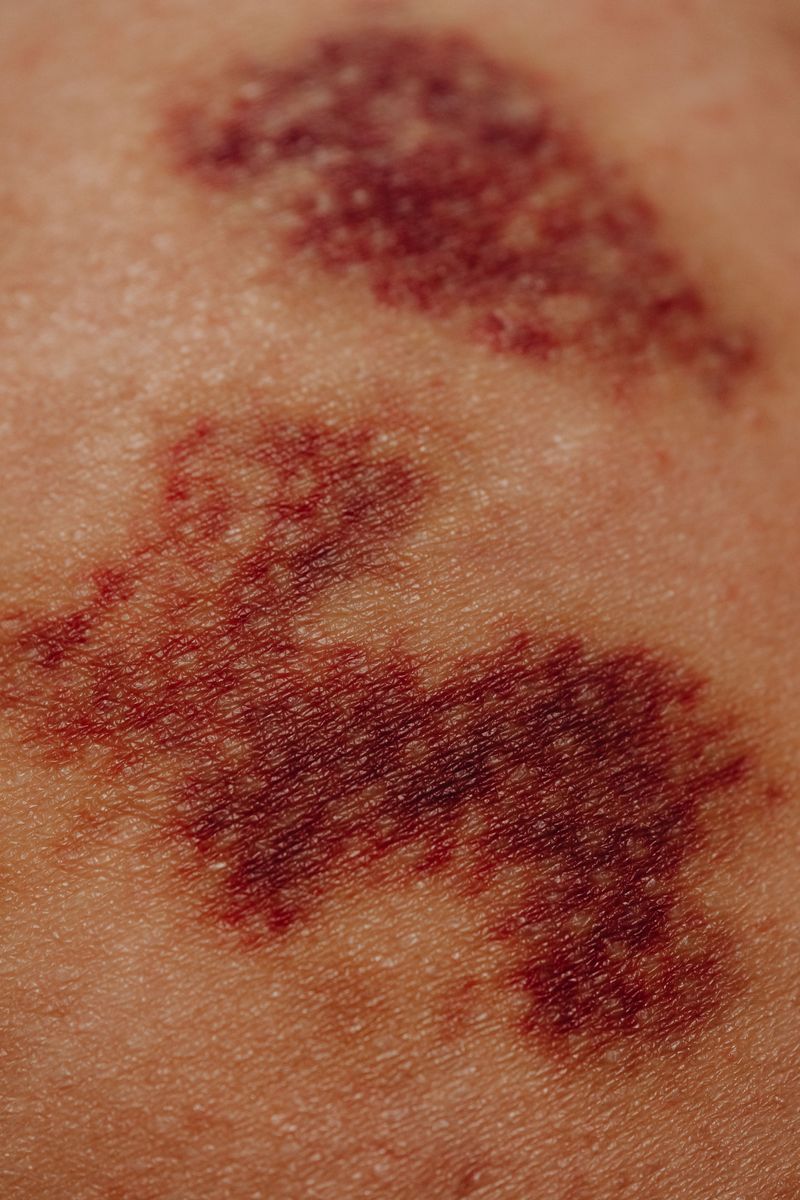
Long after the blisters fade, a reminder often remains. Burns from giant hogweed can leave dark purple or brown patches of skin that last for months, and sometimes for several years.
The New York DEC notes that skin affected by the sap may stay sensitive to sunlight for years. That means the same spot can redden or darken more easily during future summers.
Sunscreen becomes your new best buddy. A broad-spectrum product with a high SPF, reapplied often, helps protect healing skin.
Lightweight long sleeves and wide-brim hats add another layer of defense. I find this part surprising. Most plant rashes, like poison ivy, clear up in a couple of weeks. Hogweed leaves a much longer story on your skin.
Kids are especially at risk. The hollow stems look perfect for pretend telescopes, swords, or pea shooters, so children may handle them without fear. Teaching them to recognize the plant early can spare them a painful summer.
Pets usually avoid trouble thanks to their fur, but sap on their coats can transfer to your hands. Wash dogs with gloves on if they romp through a patch.
Cow Parsnip and Queen Anne’s Lace Often Get Mistaken for Giant Hogweed
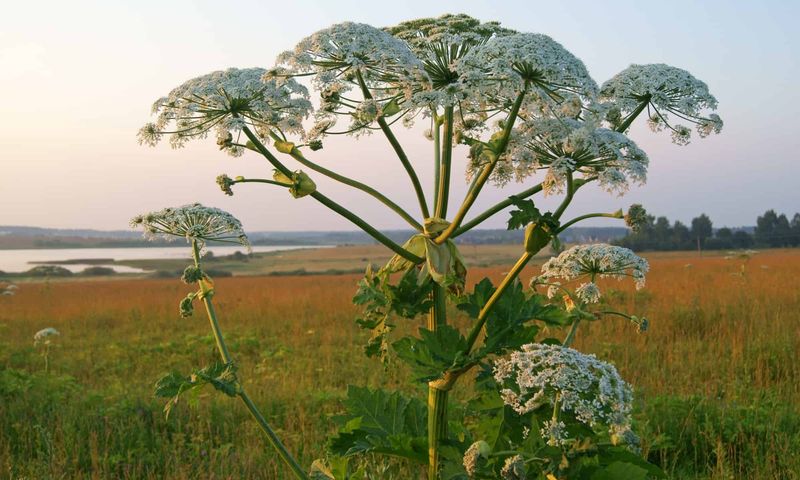
Fun fact for curious plant spotters: most reports of giant hogweed turn out to be something else. Several lookalikes share the same white umbrella-shaped flowers.
Cow parsnip is the most common mix-up. Native to New York, it reaches about 5 to 8 feet tall, with fuzzy green stems lacking bold purple blotches.
Its flower clusters are usually under a foot wide, and its sap can also cause milder skin reactions.
Queen Anne’s lace stays much smaller, typically 1 to 3 feet tall. Its lacy flowers often have a single tiny dark floret in the center, and it is not considered a major skin hazard for most people.
Wild parsnip has yellow flowers and grows a few feet tall. Its sap causes the same sun-triggered burns, so treat it with respect. Angelica is another lookalike, with smooth purple stems and rounder flower heads.
The quickest giant hogweed checks include sheer height, stems with purple splotches and stiff hairs, and huge deeply cut leaves. When in doubt, keep your distance and snap photos from a safe spot. Experts can confirm identity for you.
Skip the Weed Whacker When Hogweed Shows Up in Your Yard
Grabbing a string trimmer feels tempting when a giant weed pops up. Please resist that urge. Mowing and weed whacking fling sap into the air and onto your skin and eyes.
Protective gear comes first. Wear waterproof gloves, long sleeves, long pants, boots, and eye protection, ideally on a cloudy day. Synthetic, water-resistant fabric works better than cotton, which can soak up sap.
The DEC recommends root cutting for small numbers of plants. Use a sharp spade to slice through the root about 4 to 6 inches below the soil, then pull out the top. This works best in spring or early summer.
If flowers are present, cut off the heads before seeds form and bag them in heavy-duty plastic.
Let the bags sit in the sun to break down seed viability, then dispose of them as your local rules allow. Herbicides can help larger patches, though follow labels carefully.
Expect a long effort. A single plant can produce up to 100,000 seeds, and those seeds may survive in soil for years. Check the spot again every season and remove new seedlings promptly.
Snap a Photo of That Giant Umbrella Flower and Call the DEC
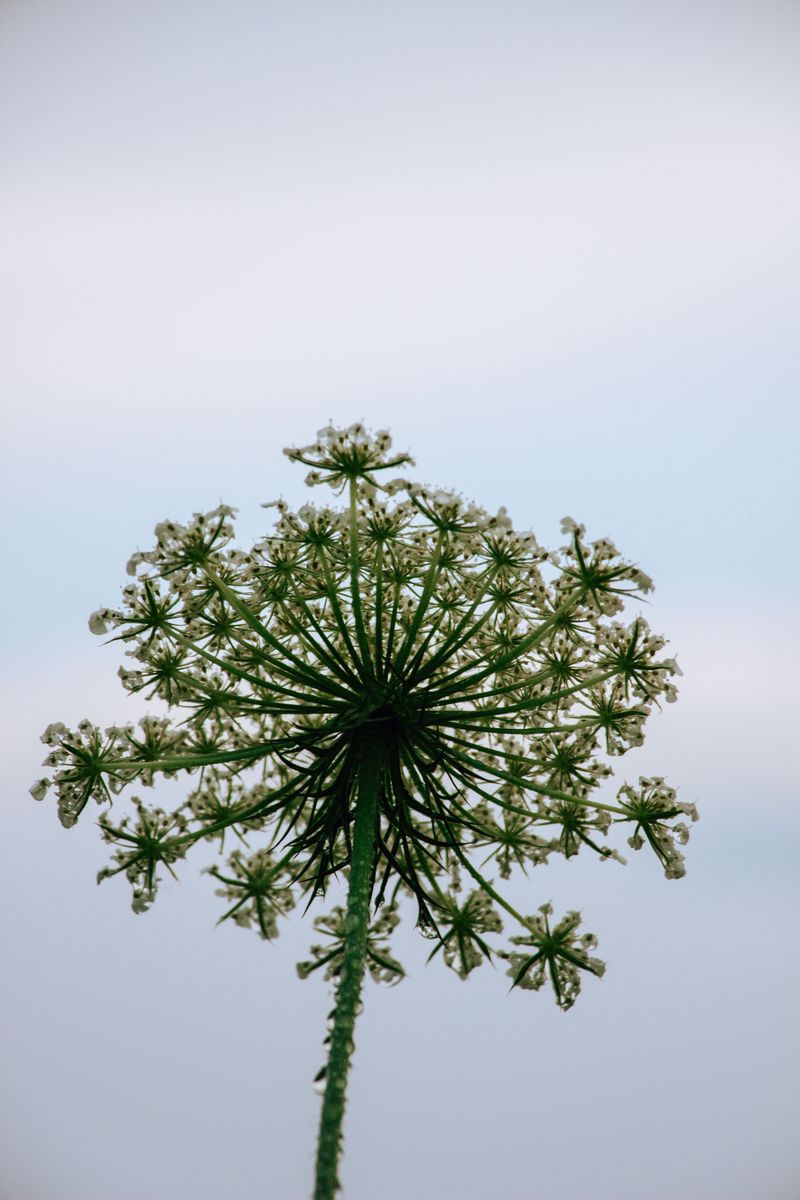
Reporting a suspicious plant might be the most helpful thing you do all summer. Giant hogweed is a federal noxious weed, and New York prohibits selling, buying, transporting, or planting it.
The New York State DEC runs a giant hogweed program that tracks sites and helps with control. Staff can confirm identity and often handle removal for landowners at no cost.
Take clear photos from a safe distance. Capture the whole plant, the stem, the leaves, and the flowers or seeds, and note the exact location. A coin or common object in the frame helps show size.
Send photos to [email protected] or call the DEC giant hogweed hotline at 845-256-3111. You can also check the iMapInvasives website to see where confirmed sites already exist.
Native plants like goldenrod, Joe-Pye weed, and New England aster make excellent replacements once hogweed is gone. They feed pollinators and help hold soil along stream banks.
I love that one quick phone photo can protect a neighbor, a hiking trail, or a child. Spreading the word matters just as much as pulling weeds. Share what you learn with friends.