Holiday Wreaths Hung Near Georgia Boxwoods Can Carry A Disease With No Cure
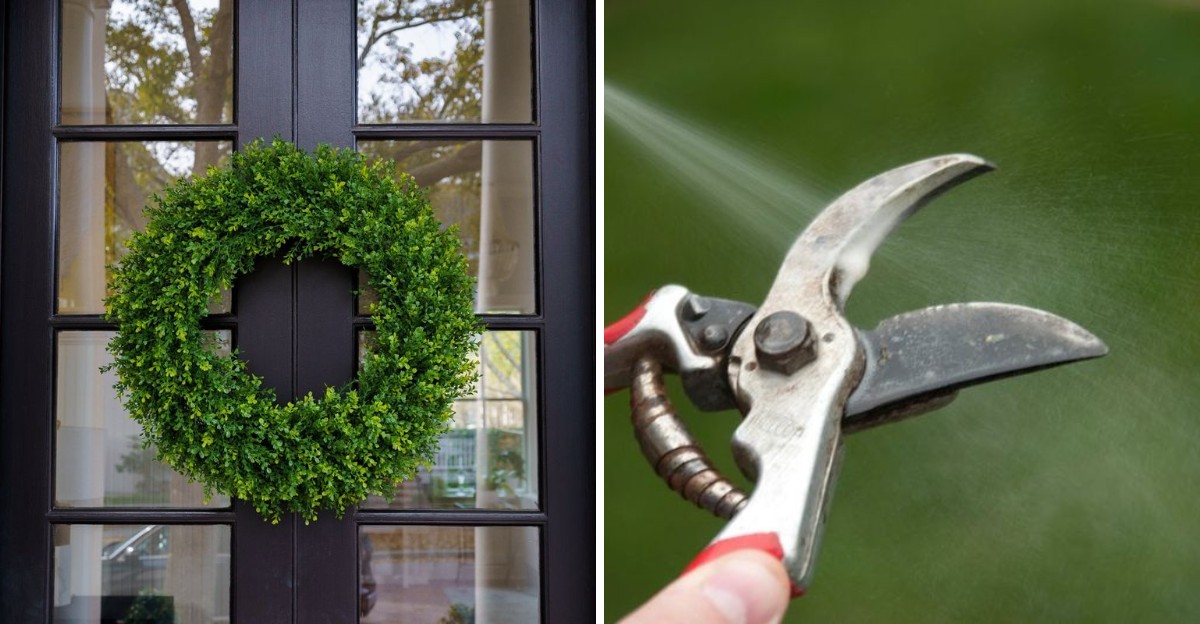
A pretty holiday wreath can carry sticky fungal spores that ride straight to your front-yard shrubs. That surprised me the first time I read it in an extension bulletin.
The spores are too small to see. Fresh greenery can look perfectly healthy while carrying them, and the trouble may not show up until weeks later.
In Georgia, plant scientists confirmed this problem in nursery stock years ago. Since then, they have urged gardeners to watch what they bring home in December.
I can’t imagine losing a hedge that took fifteen years to fill in.
That cheerful green wreath on your door might pose a bigger risk to nearby shrubs than you realize. The surprising part is how little contact it can take for trouble to spread.
1. Those Boxwood Sprigs In Your Door Wreath May Be Hitchhikers
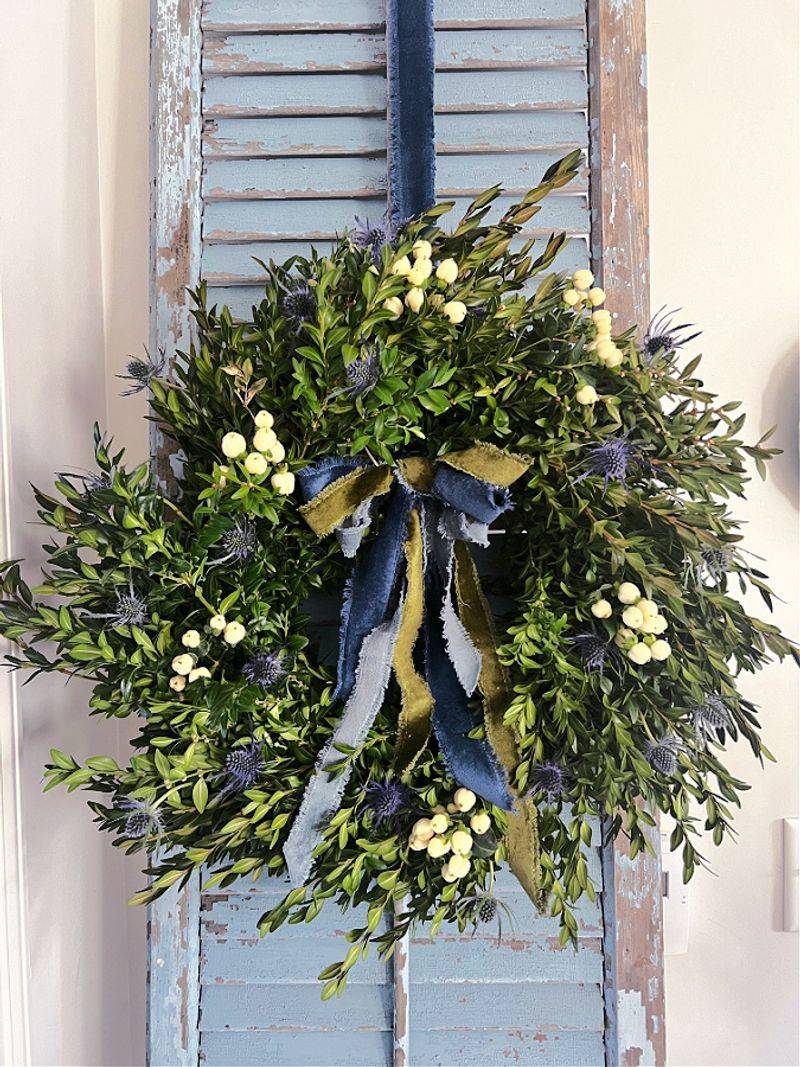
I love a wreath made from glossy boxwood clippings. It smells faintly woodsy, holds its color, and looks classic on almost any door.
Those same clippings, however, can come from shrubs or farms where a fungal disease is already present. Cut greenery often shows no spots when you buy it.
The spores simply ride along, tucked into the leaves and stems.
Plant health officials in several states have warned about this exact route. Virginia Tech and other extension programs have traced infections to holiday greenery and garlands made with boxwood.
The concern grows when a wreath hangs on a gate, porch rail, or door right beside living boxwoods.
Rain, a dripping roof edge, or a breeze that shakes the wreath can help move material onto nearby plants. Leaves that fall off during the season can also land in your beds.
Once there, they sit in mulch right where shrubs are most exposed.
You don’t need to panic about every wreath on your street. Most decorations cause no trouble at all.
Still, knowing the risk lets you make smart choices before you hang anything near your favorite hedge, especially in a yard full of mature shrubs.
2. Boxwood Blight Is The Disease Behind The Warning
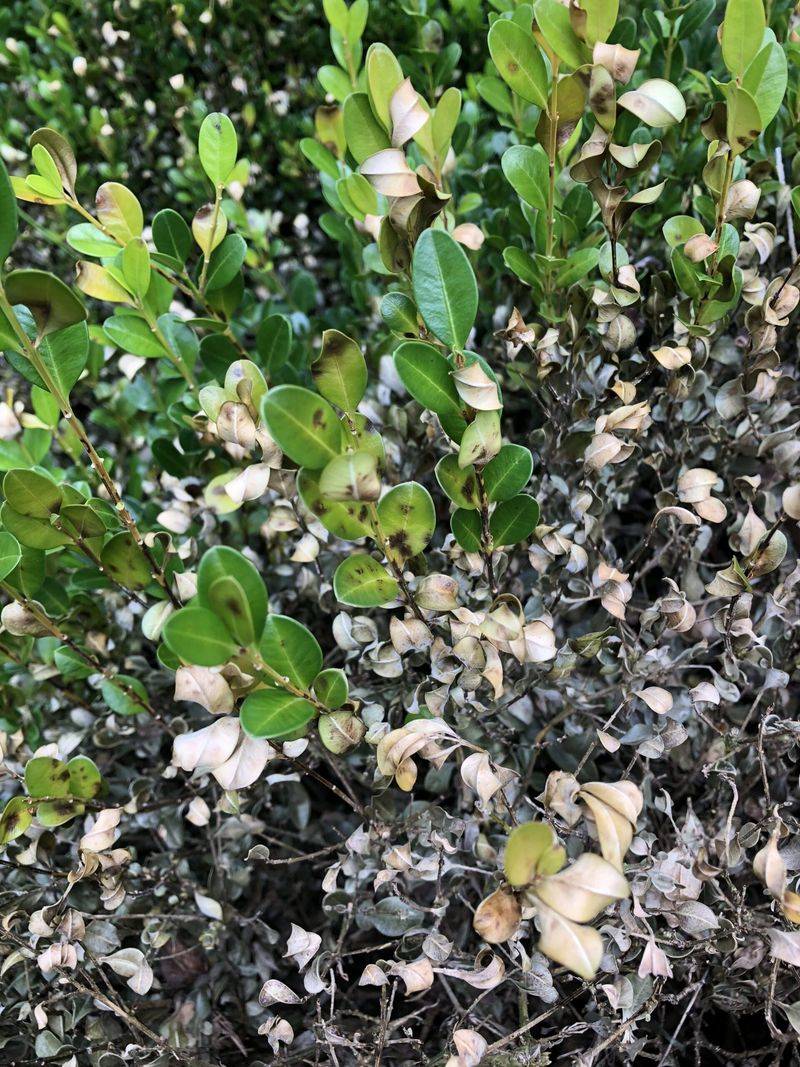
The culprit has a name that sounds like a tongue twister. Boxwood blight is caused by the fungus Calonectria pseudonaviculata, and it has no cure once a plant is infected.
Fungicides can help protect healthy shrubs, but they cannot reverse an infection. That is why University of Georgia specialists stress prevention above everything else.
The disease reached the United States around 2011 and was found in Georgia nursery stock not long after.
Boxwood blight is especially hard on popular types like American and English boxwood. Those are the tidy, slow-growing shrubs lining many older Georgia homes and historic gardens.
Losing them can leave big, expensive gaps that take years to fill.
Fun fact for plant lovers: the fungus can also infect pachysandra and sweet box, which are relatives in the same plant family. So if you grow those groundcovers near your hedges, keep an eye on them too.
Cool, humid weather helps this fungus thrive. Temperatures roughly between 60 and 80 degrees with wet leaves give it ideal conditions.
Spring and fall in the Piedmont and mountain counties often fit that description, while long, dry summer stretches tend to slow it down.
3. Black Streaks On Green Boxwood Stems Are The Big Giveaway
Grab a magnifying glass and get curious. Boxwood blight leaves clues, and the most telling one hides on the stems.
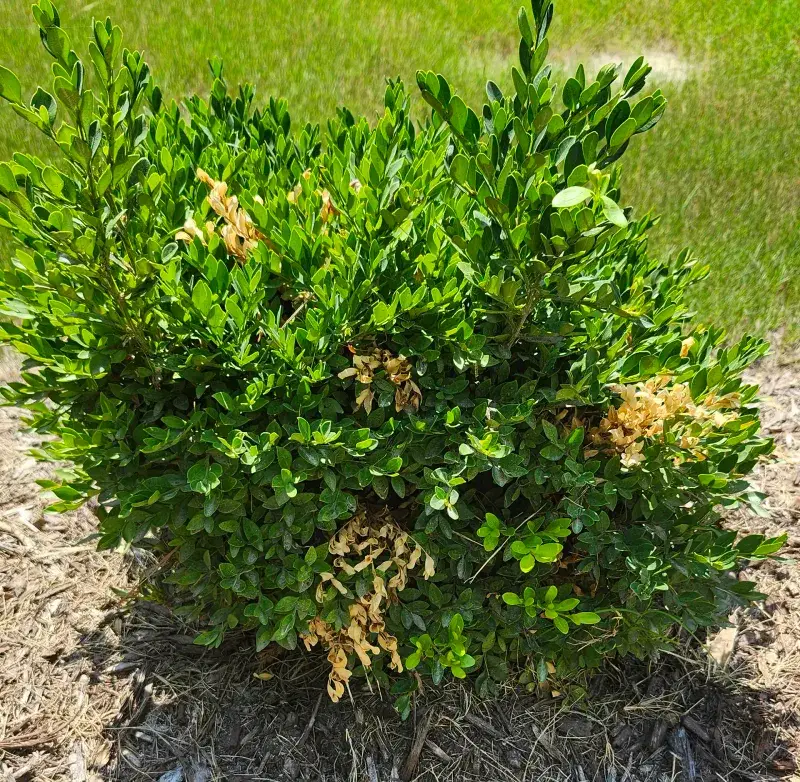
Early on, leaves develop dark or light brown spots, often with a darker border. These spots can merge until the whole leaf turns tan or brown.
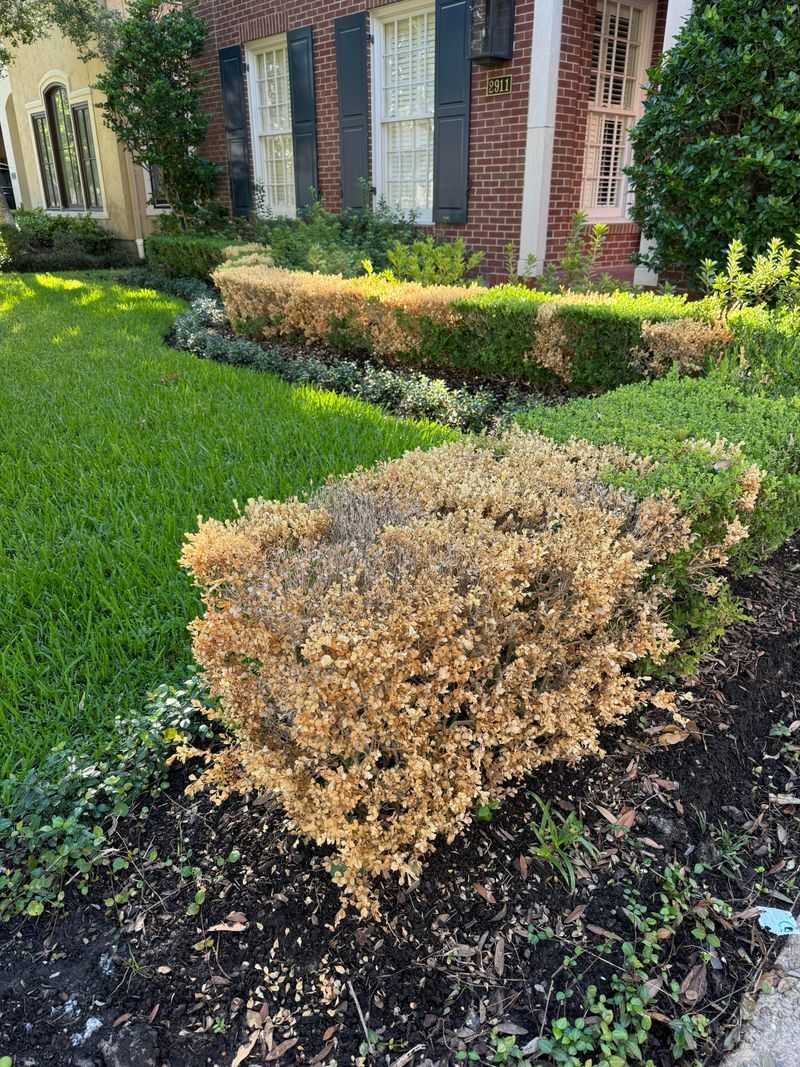
Then the leaves drop quickly, frequently starting on lower branches and moving upward.
The signature sign is narrow black streaks on young green stems. Few other boxwood problems create those dark lines, so they help separate blight from winter burn, root rot, or Volutella canker.
In humid weather, you may also spot fuzzy white spore clusters under the leaves.
Bare branches often stay green underneath for a while. That can make the shrub look strangely skeletal rather than brown all over.
Some infected plants push out new leaves, only to lose them again later.
Here is my advice: don’t guess. Snip a sample, bag it, and take it to your county Extension office.
UGA Extension can send it to the plant disease clinic for a real diagnosis, which matters because the cleanup steps for blight are much stricter than for other common issues.
4. Sticky Spores Travel On Shoes, Shears, And Splashing Rain
Unlike many fungi, this one is a poor flyer. Its spores are sticky and fairly heavy, so they rarely drift far on wind alone.
Instead, they hitch rides. Splashing water from rain or sprinklers can bounce them from plant to plant.
Pruning shears, gloves, boots, pant legs, and even a pet that squeezes through the hedge can carry them along.
That sticky nature explains why decorations matter. An infected wreath does not need to touch your shrubs directly.
Falling leaves, drips from wet greenery, or your own hands after hanging it can bridge the gap.
Landscape crews can unknowingly spread the fungus between yards too. If someone trims many boxwoods in one day without cleaning tools, the disease can move down a whole street.
Feel free to ask your crew how they sanitize equipment.
The fungus also forms tough survival structures in fallen leaves. Research suggests infected debris can stay a source of spores for five years or more.
So a pile of old leaves under a struggling shrub is more than a messy look, it is a reservoir worth removing and bagging carefully.
5. Choose Wreaths Made From Greenery Other Than Boxwood
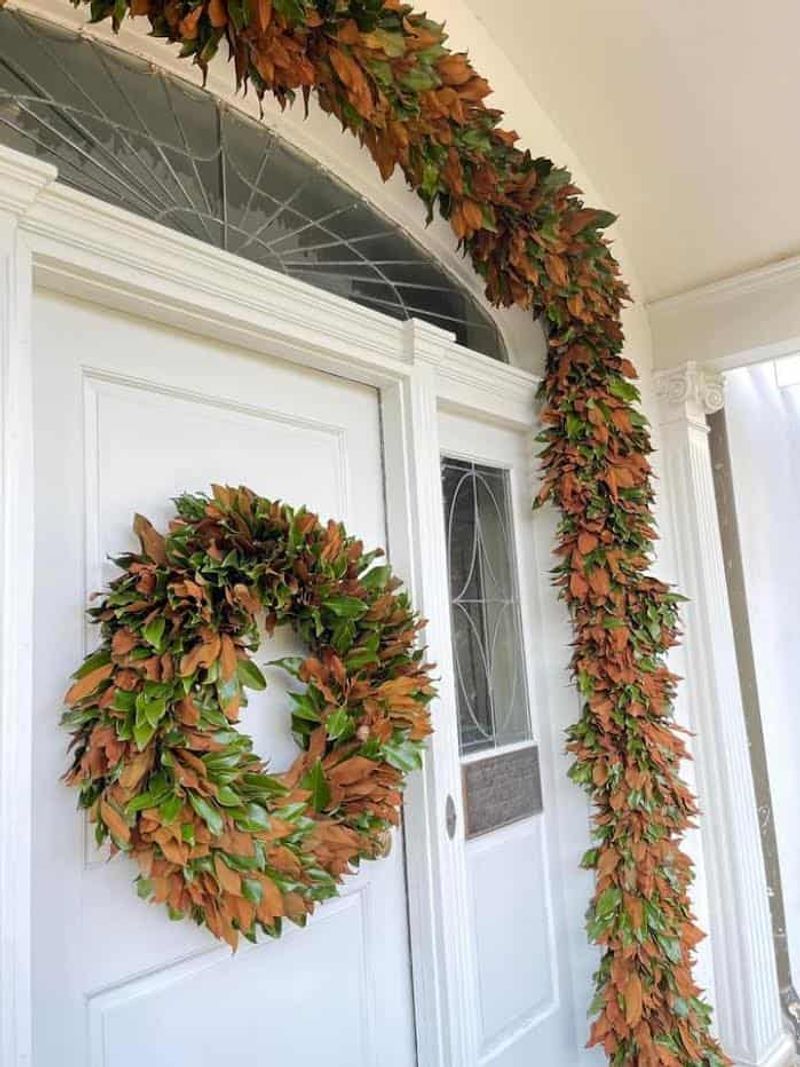
Southern decorators have plenty of gorgeous options. Magnolia leaves, cedar, pine, holly, and fir all make stunning holiday wreaths without the boxwood risk.
Magnolia is a Georgia classic for a reason. Its glossy green tops and fuzzy bronze undersides look rich and elegant on a front door.
Native eastern red cedar adds a fresh scent and soft texture, too.
If you really love the boxwood look, ask the seller where the clippings came from. Reputable growers in compliance programs follow strict cleaning and inspection rules.
Big-box mystery wreaths can be harder to trace.
Another easy fix is distance. Hang boxwood decorations on an indoor door or a spot well away from living shrubs.
Avoid draping garlands along railings that lean over your hedges.
Artificial wreaths also deserve a mention. A quality faux boxwood wreath gives you that crisp look for years with zero disease risk.
I like adding real pine cones or dried orange slices to make it feel fresh.
Whatever you pick, enjoy it. A little planning simply lets your outdoor shrubs stay as cheerful as your front door all winter.
6. Bag Up Old Wreaths Instead Of Tossing Them In The Compost
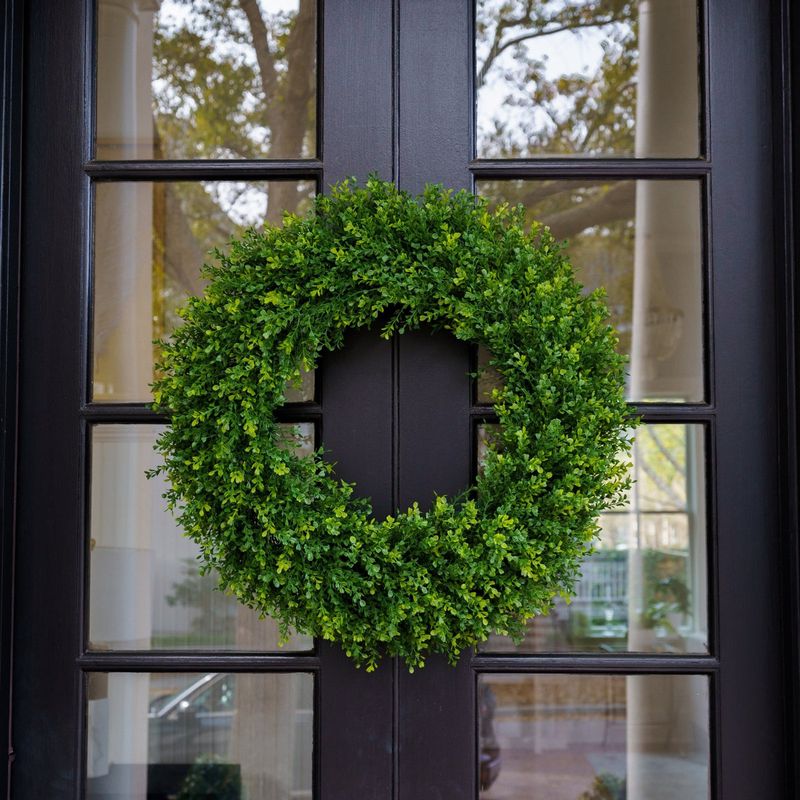
January cleanup is where many gardeners slip up. It feels natural to toss an old wreath on the brush pile or compost heap.
For boxwood greenery, that habit can backfire. Home compost piles rarely get hot enough to reliably eliminate the fungus.
Spreading that compost later could carry spores right back into your beds.
Extension experts recommend double-bagging boxwood wreaths and garlands, then sending them to the landfill with regular trash. Seal the bags well so leaves don’t scatter on the way to the curb.
Avoid leaving decorations lying near shrubs while you sort holiday boxes.
Some places allow burning yard debris, but rules vary by county and season. Georgia has burn permit requirements and seasonal restrictions in many areas, so check with the Georgia Forestry Commission before lighting anything.
Wipe down the door hook, gate latch, or wreath hanger too. A quick spray with disinfectant takes seconds.
Then wash any gloves you used.
It might seem like too much effort for one wreath. Think of it as the same care you would give a sick houseplant before letting it near healthy ones, a small routine that protects years of growth.
7. Clean Tools And Smarter Boxwood Choices Keep Your Hedges Safe
Prevention does the heavy lifting with this disease. A few steady habits can protect your hedges for years.
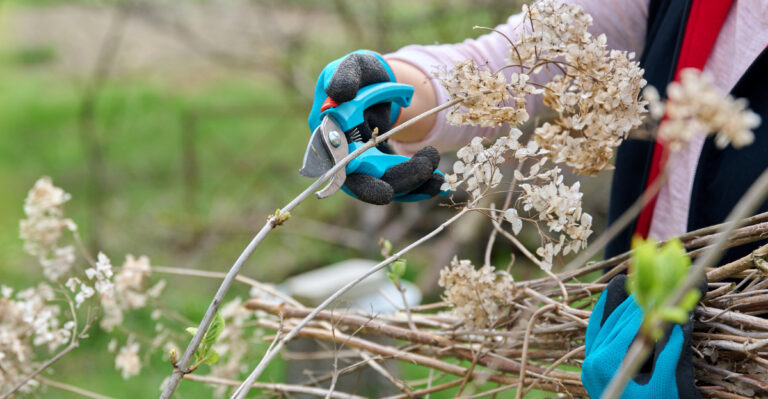
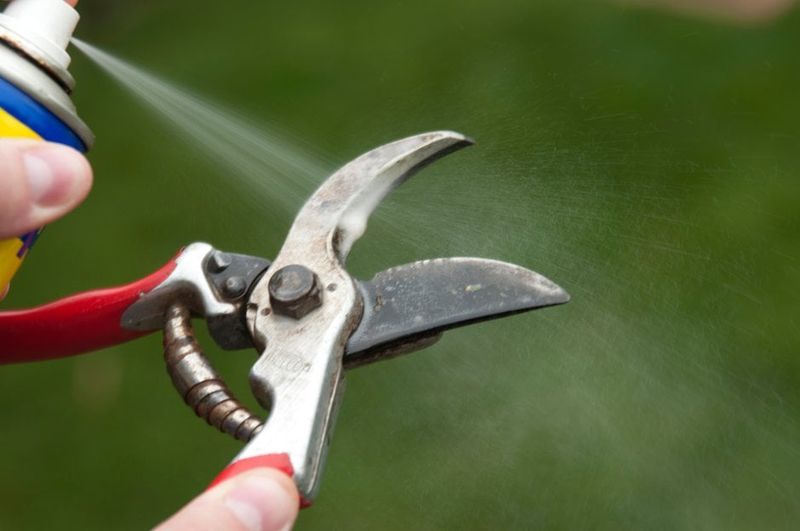
Start with your tools. Disinfect shears between plants using a household disinfectant labeled for tool use or a 10 percent bleach solution.
Rinse and oil them afterward, since bleach can corrode metal.
Water at the base with drip lines or soaker hoses rather than overhead sprinklers. Dry leaves give spores far fewer chances to spread.
Prune in dry weather, and thin dense shrubs a little to improve airflow.
When buying new boxwoods, choose nurseries that follow a blight cleanliness program. Keep new plants isolated for about a month and watch them closely before planting.
Planning a new hedge? Some cultivars show better tolerance, such as certain Sinica and Sempervirens hybrids tested by researchers.
Native alternatives like inkberry holly or dwarf yaupon give a similar tidy look and suit many Georgia yards.
Finally, stay connected with your county Extension office. They offer free advice and can confirm problems early.
That small step, paired with smart holiday decorating, keeps those classic green borders looking sharp season after season.