Georgia Gardeners May Still Spot Southern Black Racers On Warm November Days
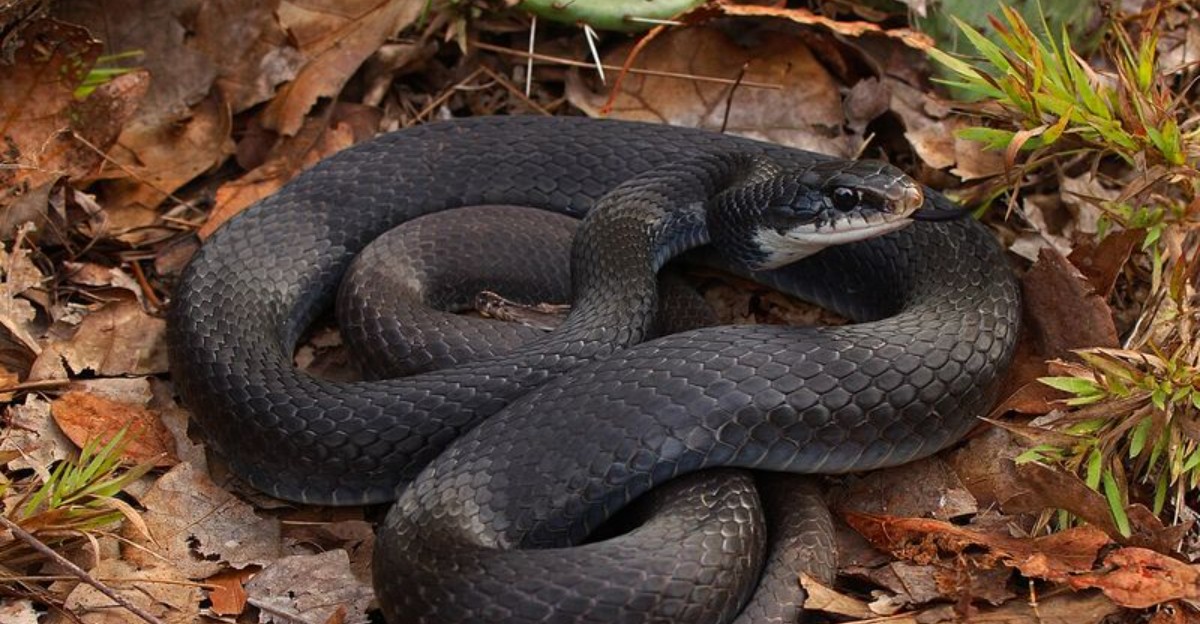
A snake named after squeezing its prey rarely bothers to squeeze anything at all. That odd little mix-up belongs to a sleek visitor that still zips through Georgia gardens when November turns unexpectedly mild.
I once leaned over a pile of fallen oak leaves to grab my trowel. Something glossy and dark shot past my boot faster than I could gasp.
My heart raced for a good minute afterward.
You may assume every reptile is asleep by now. Many are slowing down, but a sunny 70-degree afternoon can change the plan for a few.
I love how one warm spell can wake up a whole hidden side of the yard.
Something is still out there hunting while the tomato vines turn brown, and knowing who it is might make you a little more thankful for that rustle in the mulch.
1. That Glossy Black Snake Zipping Past Your Leaf Pile Has a Name
Most gardeners describe the moment the same way. There was a black streak, a rustle, and then nothing but swaying leaves.
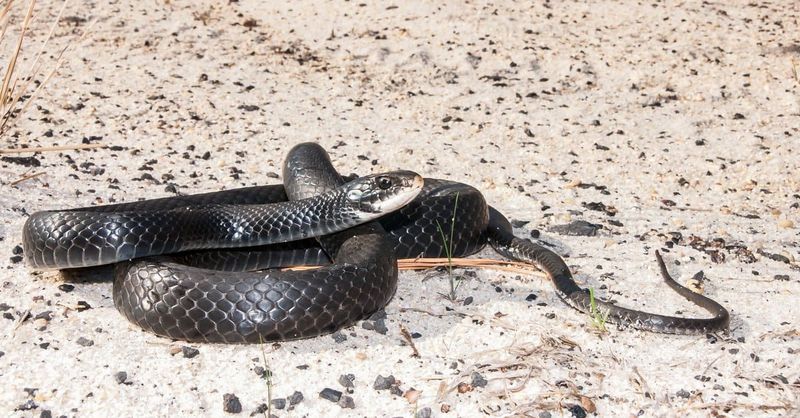
That speedy shadow is usually a southern black racer, known to scientists as Coluber constrictor priapus. It is one of the most common snakes in the Southeast, and it lives in every corner of Georgia, from mountain foothills to coastal yards.
Racers are nonvenomous. They have no fangs filled with venom and no interest in chasing people around the garden.
Their whole strategy is to see you first and leave fast.
I find it helpful to know what I am looking at before panic kicks in. A long, slim, shiny black snake that moves in a hurry is a strong clue you have met a racer.
Fun fact for your next garden club chat. The species name constrictor is a bit of a misnomer, since racers do not really wrap and squeeze their meals the way a rat snake does.
So when that dark flash crosses your path this fall, take a breath. You have just met one of the most common and least dangerous snakes in your neighborhood, and it was probably more startled than you.
2. Warm Afternoons Coax Black Racers Out Of Their Winter Hideouts
Snakes cannot make their own body heat. They rely on the sun and warm surfaces to get their muscles and digestion working.
Racers are active by day and love warmth. Across much of Georgia, snake activity runs strongest from spring through October, yet November often brings bright afternoons in the upper 60s and 70s.
On days like that, a racer may slip out of its shelter to bask, drink, or grab one more meal.
Where you live in the state matters too. South Georgia and coastal areas stay milder longer, so sightings there can stretch well into late fall.
North Georgia mountain gardens cool off sooner, and racer sightings usually taper earlier.
When a cold front rolls in, racers head back to shelter. They use old rodent burrows, rotting stumps, rock crevices, and thick brush piles to wait out chilly weather.
Personally, I watch the forecast as my snake calendar. A frosty morning followed by a sunny 72-degree afternoon is prime time to glance carefully before reaching into mulch or woodpiles.
This is normal seasonal behavior, not a sign of anything strange. Racers simply make use of every warm day they can get.
3. Rodents And Grubs Have A Fast Black Racer On Their Trail
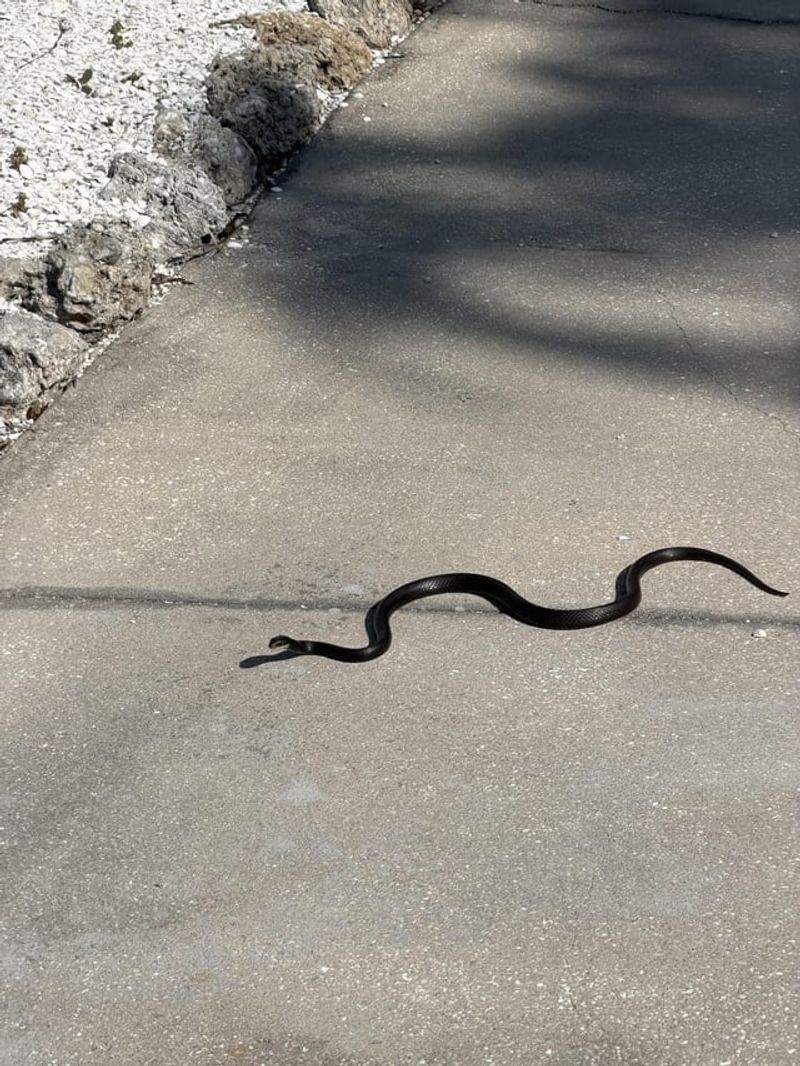
Ask any gardener who has lost sweet potatoes to voles. A natural helper that hunts rodents sounds pretty wonderful.
Black racers eat a long menu. They take mice, voles, young rats, lizards, frogs, toads, large insects like crickets and grasshoppers, and sometimes bird eggs or nestlings.
They also eat other snakes, and University of Florida wildlife experts note racers will even take small venomous species on occasion.
That variety makes them handy in a garden. A racer patrolling your beds helps keep rodent numbers in check without traps or poison baits.
I will admit one downside. Racers may raid a low songbird nest, so backyard bird lovers should mount nest boxes on smooth poles with baffles.
Here is my favorite way to see their value. A single rodent family can chew through bulbs, seedlings, and stored seed fast, while a racer quietly works the edges of your yard for free.
Avoid rodenticides if you can. Poisoned rodents can harm the very predators, like snakes, hawks, and owls, that help you most.
Leave the racer alone, and let it keep doing its job.
4. A White Chin And Smooth Black Scales Give This Racer Away
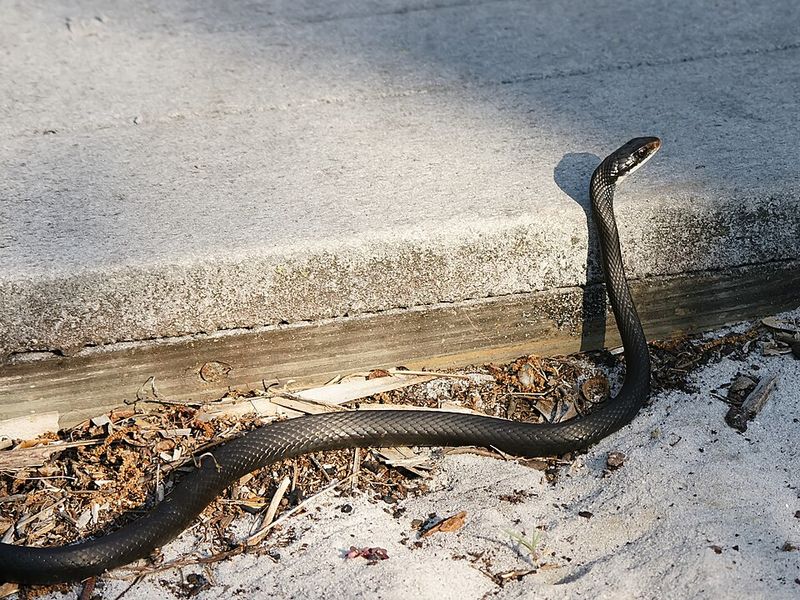
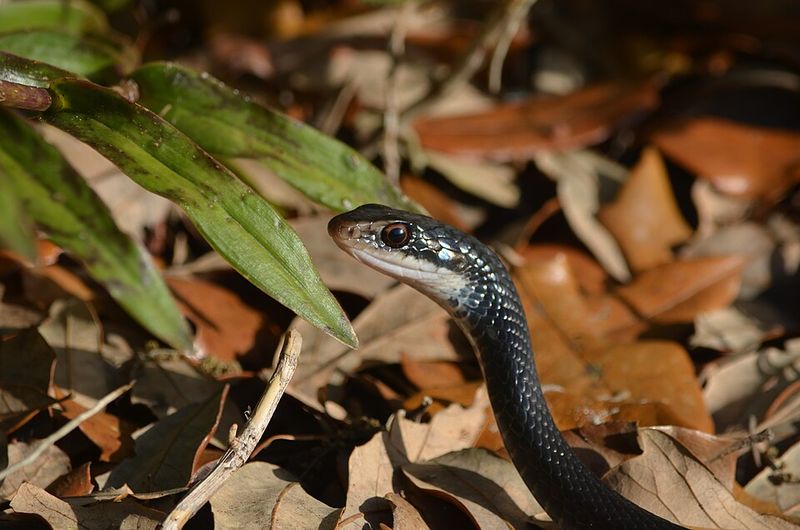
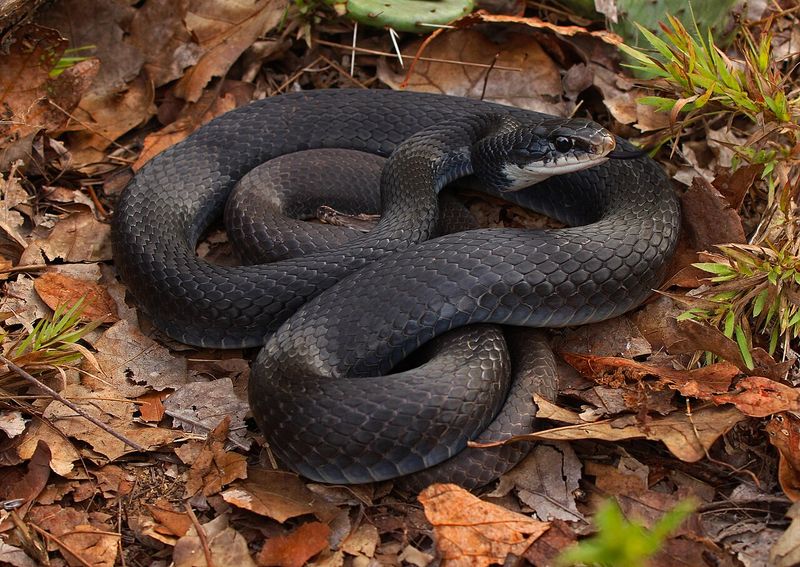
Good identification starts with the head. Look for a smooth, glossy black body paired with a white or pale gray chin and throat.
Adults commonly reach three to five feet long and stay slim. Their scales are smooth and shiny rather than ridged, and their eyes are large with round pupils, built for spotting movement.
Babies look very different. Young racers are gray or tan with reddish-brown blotches, and many people mistake them for another species altogether.
The pattern fades as they grow, and most turn solid black in their second or third year.
The eastern ratsnake is a common lookalike in Georgia. Ratsnakes are often bulkier, with slightly ridged scales and a body shaped a bit like a loaf of bread in cross-section, and they move far more slowly.
Behavior is your best clue. A racer bolts away at top speed, often raising its head to watch you, while a ratsnake tends to freeze or climb.
Snap a photo from a safe distance if you are unsure. Georgia Department of Natural Resources and local extension offices can help you confirm the species.
5. Watch How A Black Racer Lifts Its Head To Scan The Garden
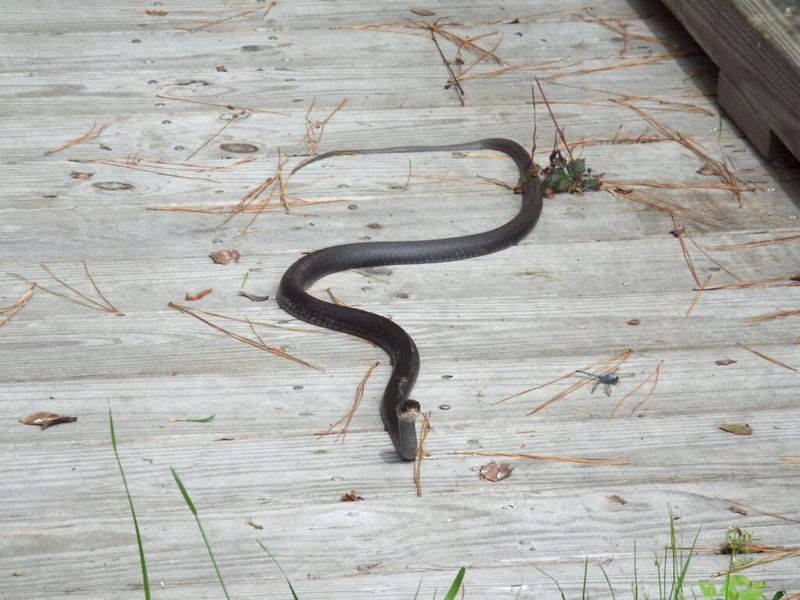
Have you ever seen a snake peek over the grass like a periscope? Racers do that often, and it is a joy to watch.
Unlike many snakes that wait in ambush, racers are active hunters. They cruise through grass, mulch, and garden edges using sharp eyesight to spot movement.
When a racer catches something, it grabs the prey with its jaws. It may press the animal against the ground with a loop of its body, then swallows it whole.
Real coiled squeezing is uncommon for this species.
Racers favor edge habitat. Think of the strip where your lawn meets a wooded lot, a fence line lined with shrubs, or the border of a meadow garden.
I like to sit still near those edges on a warm afternoon. Patience sometimes rewards me with a glimpse of a racer slowly lifting its head before it glides on.
Their speed is impressive, though not quite the legend some stories claim. Studies suggest racers top out around four miles per hour, which feels much faster when they vanish beside your feet.
6. Give That Startled Racer Space And Let It Slip Away
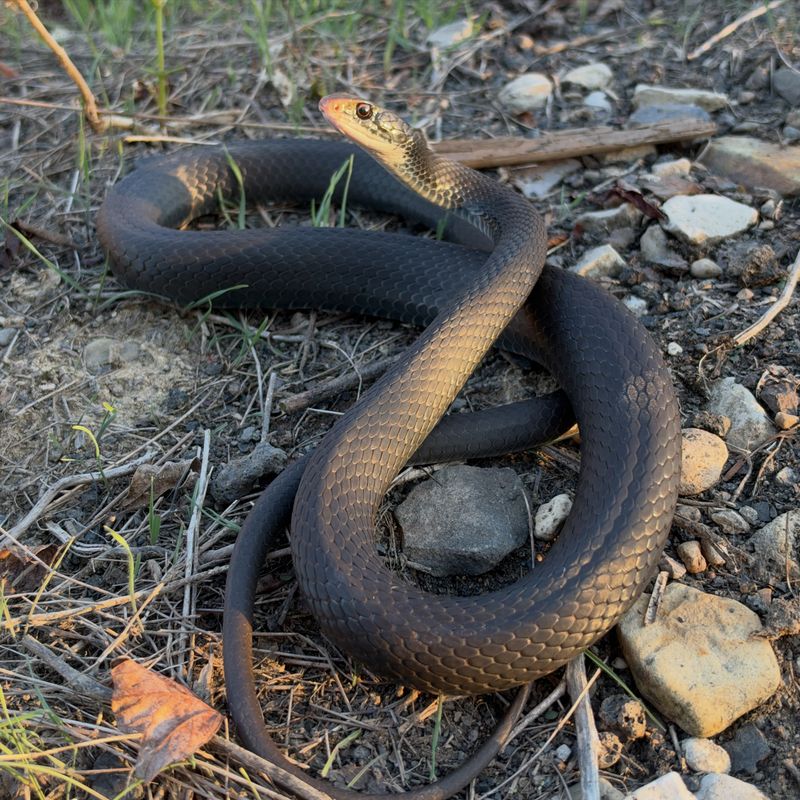
Stay calm and step back. That simple move solves nearly every racer encounter.
A racer’s first choice is escape. If it feels cornered or grabbed, it may vibrate its tail in dry leaves, which sounds a bit like a rattle, release a smelly musk, or strike in defense.
A bite can sting and bleed a little, but it is not venomous. Wash it with soap and water, and see a doctor if signs of infection appear.
Most bites happen when people try to catch, move, or harm a snake. Your safest plan is to watch from a few feet away and let it leave on its own.
Georgia law protects native nonvenomous snakes. Harming or keeping them without proper authorization is illegal, so reaching for a shovel can land you in trouble.
A few habits help this time of year. Wear gloves and sturdy shoes, use a rake to move leaf piles before reaching in, and check under tarps with care.
If you cannot tell whether a snake is venomous, keep your distance and contact a licensed wildlife professional.
7. A Brush Pile Corner Makes Your Yard Racer Friendly
My favorite fall project is the least tidy one in the yard. I stack pruned branches into a loose brush pile in a back corner and let nature move in.
Piles like that give racers, lizards, and toads shelter during cool snaps. Keep them away from doors, play areas, and walkways so surprise meetings stay rare.
Native plants help too. Shrubs like beautyberry and yaupon holly, plus native grasses along a border, create the edge habitat racers enjoy while feeding pollinators and birds.
Want fewer snakes near the house? Store firewood off the ground and away from walls, seal gaps under doors and foundations, and keep bird seed spills cleaned up so rodents do not gather.
Skip snake repellents and mothballs. Experts report little evidence they work, and mothballs used that way can harm pets, kids, and soil.
A racer in November reminds me that a garden keeps living after the harvest. Make room for it in the wilder corners, keep the busy spaces neat, and you get free pest patrol plus a thrilling flash of wildlife on those bright late-fall days.