7 November Rosemary Jobs to Do in Texas Before the First Freeze
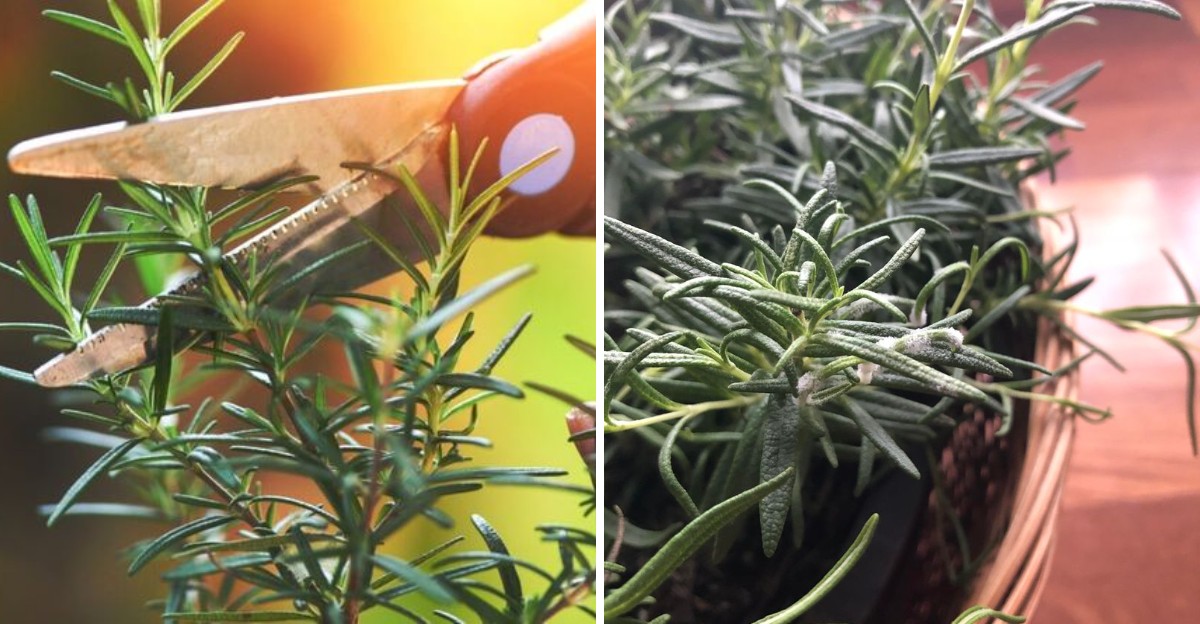
A small town in East Texas lent its name to a famous herb that shrugs off winters near ten below. Herb legend Madalene Hill spotted that tough plant there, and gardeners across the country still grow its descendants today.
Most of its relatives are far less brave, often struggling once temperatures dip into the upper teens for long. Across Texas, the first freeze can arrive in late October up north or skip the southern tip some years.
I find it fascinating how one fragrant shrub can thrive in Lubbock and Corpus Christi with very different care. You might be surprised by how much a few calm hours of work this month can protect it.
My own pots taught me that lesson the hard way after one sneaky November night turned their tips black.
So which simple jobs keep your favorite kitchen herb green and fragrant until the spring blooms return?
1. Bring Potted Rosemary Indoors Before Cold Nights
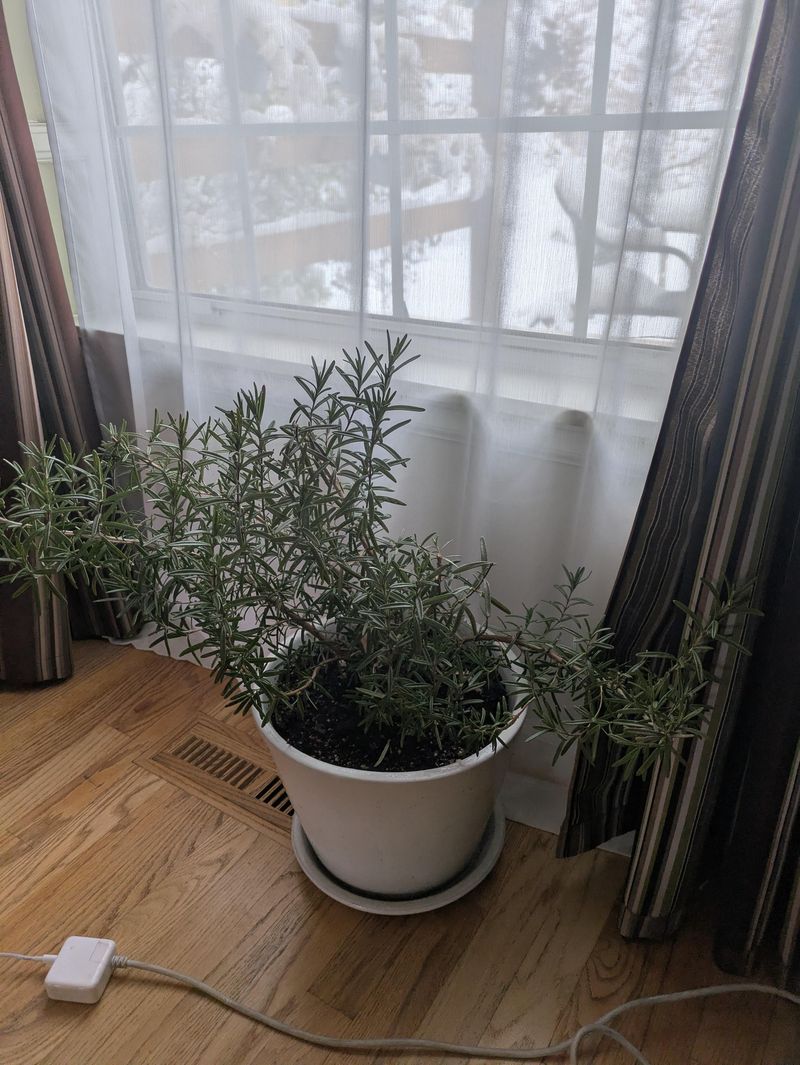
Rosemary in a pot feels the cold much faster than rosemary in the ground, since its roots lack soil insulation. Container roots can freeze on nights when garden plants nearby barely notice the chill at all.
I like to watch the forecast closely once lows start sliding toward the forties in the fall. That signal gives you time to move pots before a sudden north wind sweeps across the yard.
Shift your plant to a covered porch or garage for a few days before bringing it inside. That short pause helps the leaves adjust to lower light without dropping needles in a sulky protest.
Indoors, rosemary wants the sunniest window you own, ideally facing south with six or more hours of light. A dim corner near a heater often leads to weak stems and crispy, browning leaves.
Cool rooms suit this herb better than warm ones, so a spare bedroom with a bright window works nicely. Temperatures in the fifties and sixties keep it steady while it waits out the short days.
Before the move, rinse the foliage with water and check the undersides for tiny bugs hiding among the needles. A quick look now saves your other houseplants from uninvited guests later in the season.
Once warm spring weather returns and freeze danger passes, ease the pot back outside over another week or so. Your rosemary will reward that patience with a fresh flush of fragrant green growth.
2. Spread Pine Straw Mulch Around Garden Rosemary

Pine straw might be the coziest blanket you can tuck around rosemary, and it costs very little in most areas. Loose needles trap air near the soil, which helps keep root temperatures far more stable on frosty nights.
Gardeners in the Panhandle and other zone 7 spots benefit most from this job before the first hard freeze. Young plants in milder zone 8 areas appreciate the extra cover too, especially during their first winter.
Spread a layer about three or four inches deep, reaching out toward the edge of the branches. Keep a small gap around the main stem so moisture does not sit against the woody bark for weeks.
I prefer airy materials like pine straw or shredded leaves over heavy, soggy mulches that hold water. Rosemary hates sitting in cold, wet soil, and soggy roots tend to rot far faster than they freeze.
Here in my garden, a raised spot with gritty soil and light mulch works better than any fancy product. Good drainage and gentle insulation together give roots the best shot at a calm, steady winter.
Fun fact for history fans, rosemary’s name comes from Latin words often translated as dew of the sea. Its wild ancestors grow on rocky Mediterranean coasts, which explains its love for sharp drainage and sunshine.
Check the mulch after heavy rain or strong winds, since needles can scatter or pack down over time. A quick fluff with your fingers restores that airy layer in less than a minute or two.
3. Drape Frost Cloth Over Rosemary Bushes On Freezing Nights
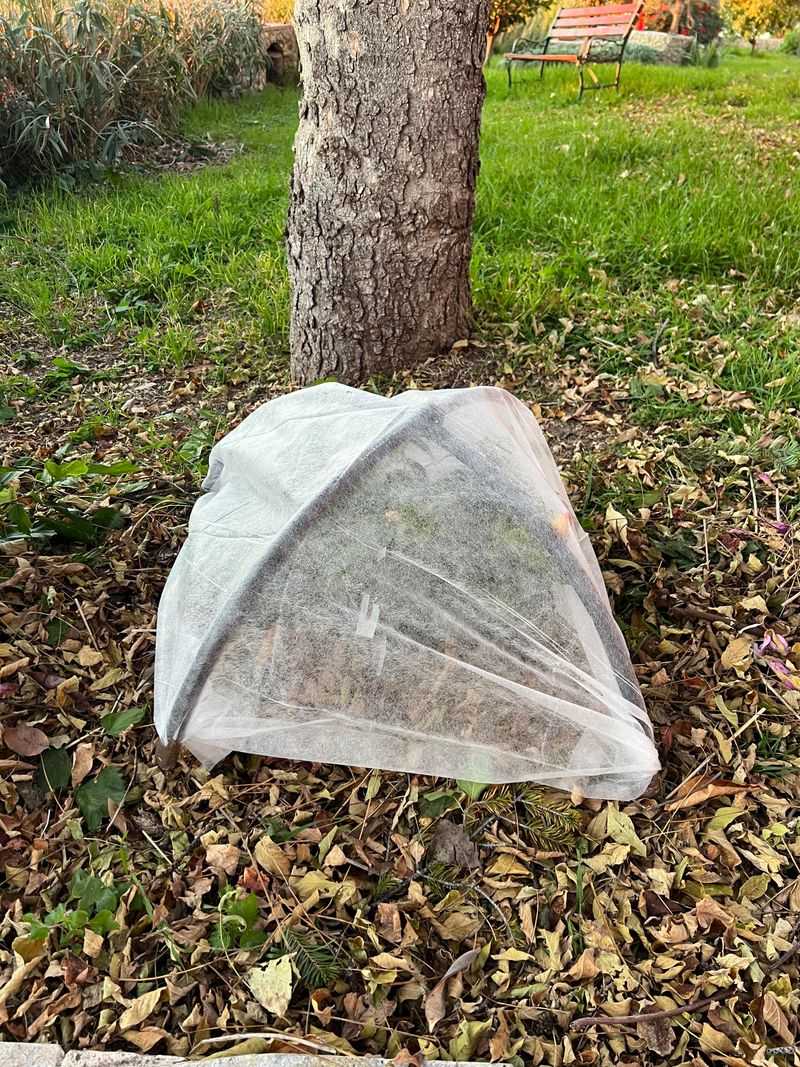
Frost cloth looks a bit like a ghost costume for shrubs, but it can save rosemary on a brutal night. That thin fabric holds warmth rising from the soil and blocks drying winds that scorch tender leaf tips.
Keep a roll ready in the garage before the first freeze warning arrives on your weather app. Scrambling for old sheets at ten o’clock at night is a stress I would rather you skip altogether.
Gently gather sprawling branches with soft garden twine so the cover fits snugly over the whole plant. Let the fabric reach the ground, then weigh the edges with bricks or stones to trap rising heat.
Old blankets and burlap work in a pinch, though they get heavy and soggy when freezing rain falls. Avoid plain plastic touching the leaves, since cold passes right through it and can damage the foliage underneath.
Small plants fit nicely under an upside-down bucket or a homemade cold frame for a night or two. Larger bushes along a fence often enjoy extra shelter from that wall on the coldest side of the yard.
Remove the covers on sunny mornings once temperatures climb above freezing again, so the plant can breathe. Trapped heat and moisture under fabric for days can invite mildew or soften the needles more than you expect.
Honestly, a few minutes of covering feels like a small price for fresh sprigs straight through winter. Your rosemary may look a little rumpled afterward, yet it usually bounces back quickly with a bit of sunshine.
4. Water Rosemary Less As Temperatures Drop

More rosemary plants suffer from too much love in winter than from too little water, which surprises plenty of people. Soggy roots in chilly soil can rot quickly, and that damage often shows up only after it is too late.
Cooler days and shorter sunlight mean the plant drinks far less than it did during the summer heat. Your old watering schedule from July can drown roots that now barely need a sip each week.
For pots, push your finger about two inches into the soil and check for dryness before watering. Lifting the container also helps, since a light pot usually means the mix has dried out enough.
Garden plants often get by on rainfall alone during cool months, especially across the wetter eastern half of the state. Water only during long dry spells, and do it in the morning so roots are not cold overnight.
I made the mistake of watering daily once, and my plant turned yellow at the base within two weeks. Lesson learned, rosemary prefers a good soak followed by a stretch of dry, airy soil between drinks.
Indoor pots may need water only every week or two, depending on how warm and sunny your room stays. Always empty the saucer underneath, because standing water lets roots sit in a puddle for hours.
One helpful exception exists before a hard freeze, when slightly moist soil holds heat better than dusty dry ground. A light drink a day ahead of the cold snap can give in-ground roots a little extra protection.
5. Snip Fresh Rosemary Sprigs For Winter Cooking
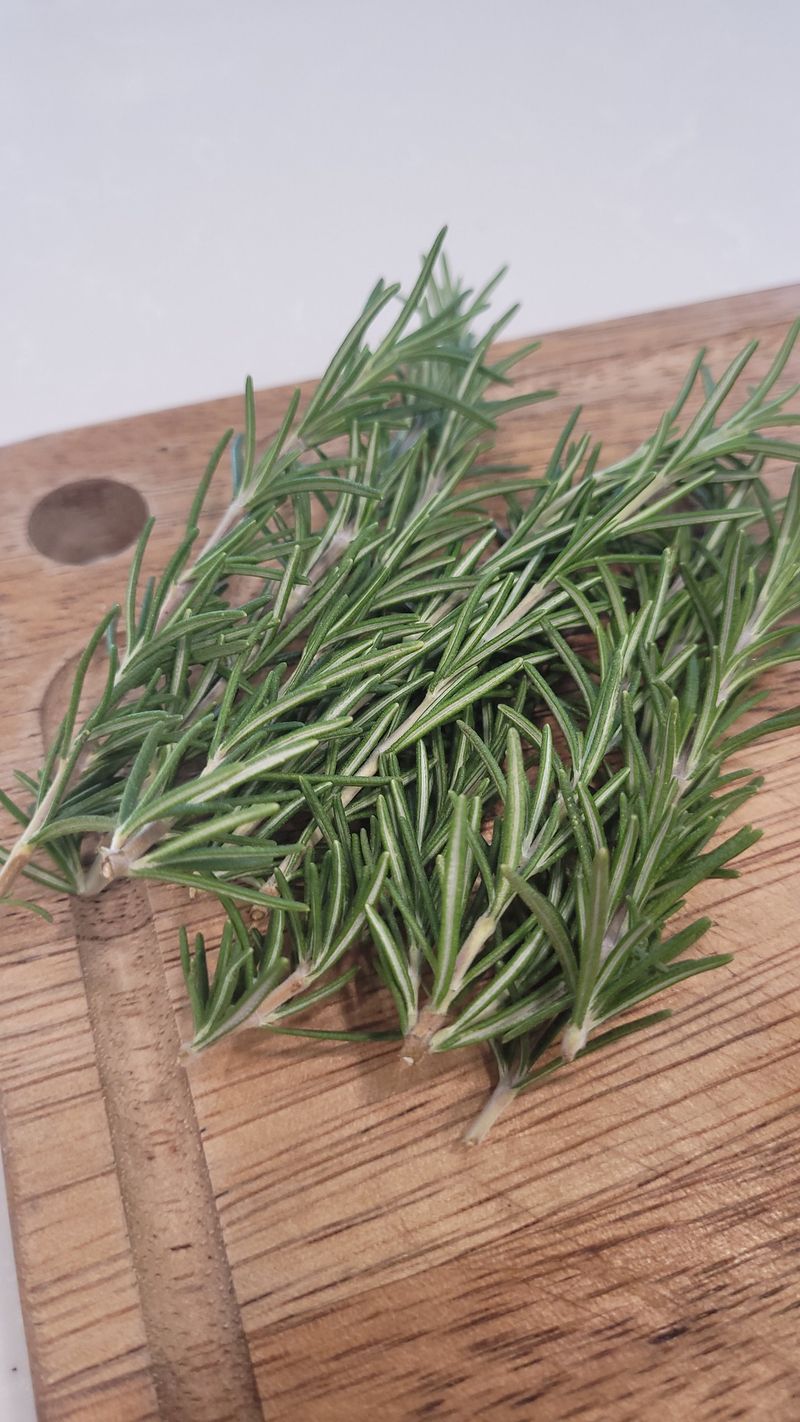
Few kitchen smells beat a handful of fresh rosemary hitting a warm skillet with garlic and olive oil. Harvesting a generous batch now means that cozy aroma can fill your home all season, even after a freeze.
Grab sharp pruners or clean scissors and snip soft, green tips about four to six inches long. Those young stems carry the best flavor, and clean cuts heal faster than ragged tears from dull blades.
Stay out of the old, woody parts of the plant, since bare brown stems rarely sprout new leaves. Taking no more than a third of the growth keeps the shrub full and strong for the colder weeks.
Drying works beautifully for rosemary because its tough, oily needles hold flavor well over many months. Tie small bundles with string and hang them upside down in a warm room with good airflow.
Freezing is my favorite shortcut when life gets busy and the forecast suddenly turns icy overnight. Lay whole sprigs on a tray until firm, then slide them into labeled bags for easy grabbing later.
Another fun trick involves packing chopped leaves into ice cube trays and topping them with olive oil. Those little flavor cubes drop straight into soups, roasted potatoes, or a pan of slow-cooked beans.
In milder parts of the state, you might keep harvesting lightly straight through winter without much trouble. Still, stocking a backup supply before the cold arrives feels like money in the bank for any home cook.
6. Trim Rosemary Lightly Instead Of Hard Pruning

Late fall is the worst possible moment to give rosemary a dramatic haircut, no matter how shaggy it looks. Heavy cuts wake up sleepy buds, and that soft new growth has little time to toughen before freezing weather.
Many extension experts suggest finishing major pruning several weeks before your expected first hard freeze. In much of the state, that window has already closed by November, so restraint becomes your best tool.
Light tidying is perfectly fine, though, and it helps the plant stay healthy through the dormant months. Snip out broken branches, brown tips, or any stems that look diseased or crossed over each other.
I keep a small pair of snips in my jacket pocket for quick touch-ups during morning garden walks. A few careful cuts each week feel far more relaxing than one big chopping session that stresses the plant.
Potted rosemary heading indoors can get a gentle shaping so it fits nicely on your windowsill. Removing a few long, leggy stems also improves airflow, which matters a lot inside a closed-up house.
Remember that harvesting for dinner counts as light pruning, so those kitchen snips pull double duty. Spread your cuts around the whole plant instead of stripping one side bare and leaving it lopsided.
Save serious shaping for late winter or early spring once freeze danger fades in your area. The plant will push fresh growth quickly then, filling any gaps with bright, fragrant shoots before summer.
7. Inspect Rosemary Leaves For Spider Mites And Mealybugs
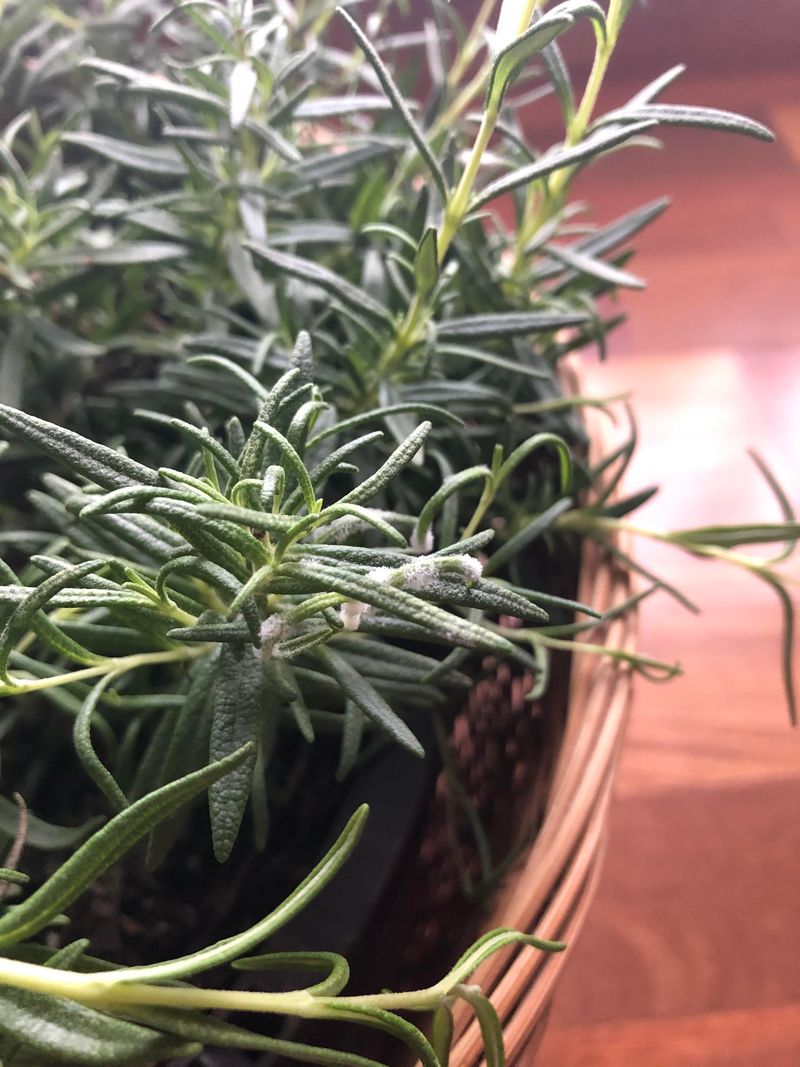
Spider mites are so tiny that you usually notice their fine webbing before you ever spot the bugs themselves. Rosemary resists most pests outdoors, yet dry indoor air can turn it into a cozy hotel for these critters.
Grab a magnifying glass or your phone camera and zoom in on the undersides of the needles. Look for speckled leaves, sticky residue, or white cottony clumps tucked where stems meet the main branches.
Mealybugs show up as fuzzy white dots, while aphids cluster on soft new tips in small green groups. Whiteflies flutter up like tiny snowflakes when you brush the plant, which is hard to miss once you look.
Treat problems outdoors before the plant comes inside, so nothing hitches a ride to your other houseplants. A strong spray of water or insecticidal soap handles most light infestations without harsh chemicals.
Powdery mildew can also appear as a dusty white coating, especially when air barely moves around crowded stems. Thinning a few branches and giving the plant more space often clears up mild cases on its own.
I like to keep newly moved pots a little apart from my other plants for two or three weeks. That quiet quarantine gives any hidden eggs time to reveal themselves before they spread around the room.
Repeat your inspection every week or so through winter, since indoor pests multiply quickly in warm rooms. Catching trouble early keeps your rosemary healthy and ready for a bright return outdoors next spring.