How to Make a Holiday Wreath From Virginia Garden Evergreens
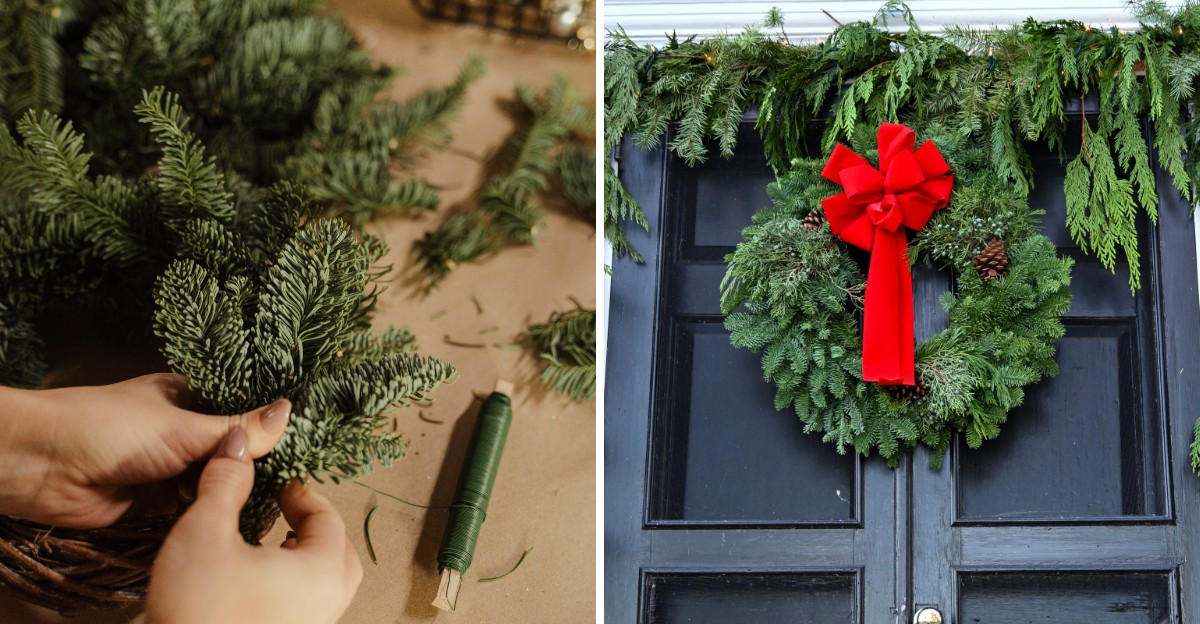
Female holly trees grow those famous red berries. The males don’t, so a berry-less holly in your yard might simply be a boy.
I’m always surprised by how much wreath material hides in an ordinary Virginia yard. Glossy leaves, blue-dusted berries, soft needles, and spicy-scented sprigs often sit a few steps from the back door.
The way I see it, a store wreath can’t compete with one that smells like your own garden. You also get a free excuse to do some light winter pruning.
Your shrubs get tidied, and your front door gets dressed up.
What I find fascinating is how little you need to pull this off. A wire frame, some thin wire, and a sharp pair of pruners do most of the work.
So what’s already growing out there, quietly waiting for its holiday moment?
1. Your Holly, Cedar, and Pine Shrubs Are Already a Wreath Kit
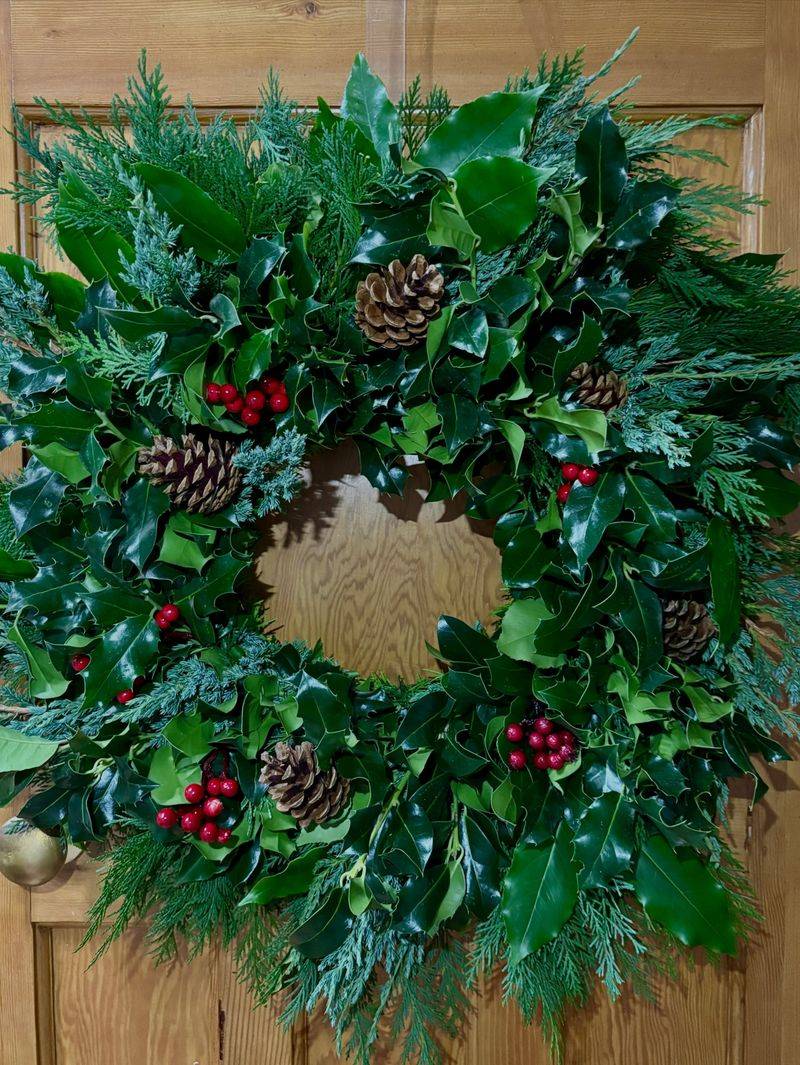
Walk your yard slowly with pruners in hand, and you might count six or seven wreath-worthy plants before you reach the mailbox. Virginia gardens are packed with evergreens that hold up well after cutting.
American holly is the classic pick, with spiny glossy leaves and bright berries on female plants. Eastern red cedar, actually a juniper, adds lacy foliage and frosty blue berries that birds adore.
Eastern white pine brings long, soft needles that feel like a feather duster in your hand.
Plenty of landscape shrubs join the party too. Southern magnolia leaves have a shiny green top and a fuzzy bronze underside, which looks stunning when you flip a few over.
Arborvitae, false cypress, and Leyland cypress give you flat, fan-like sprays that fill gaps fast.
Mixing textures is the real secret here. A wreath made from one plant can look flat, while three or four types create depth and movement.
I like pairing something soft, something glossy, and something with berries.
Fir and spruce hold their needles well if you happen to grow them. Hemlock, on the other hand, sheds needles quickly once cut, so skip it for long displays.
Take a quick inventory before you start snipping. Jot down what you have, how much you can spare, and which plants could use a little shaping anyway.
2. Snip Evergreen Branches After a Hard Frost for Longer-Lasting Greens
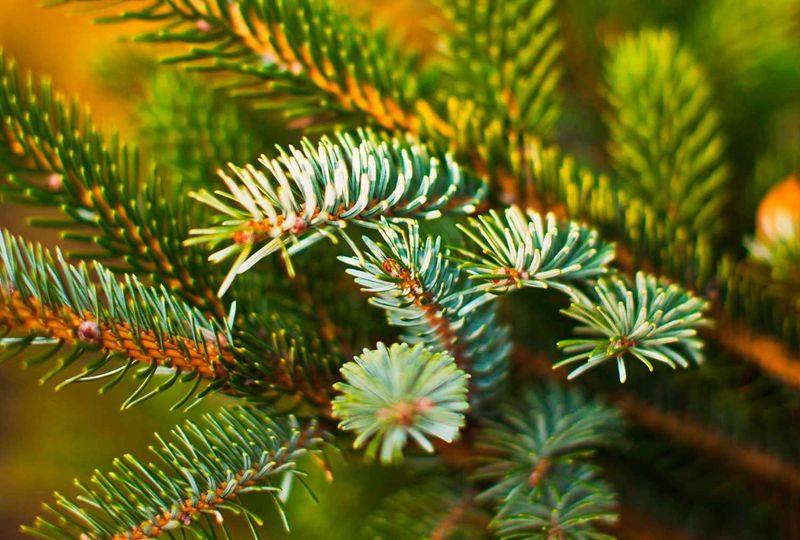
Cold weather does you a favor here. After a few hard frosts, evergreens settle into dormancy and hold moisture better once they’re cut.
In Virginia, that usually means late November through mid-December, a bit earlier in the mountains and later near the coast.
Cutting on a cool morning helps too. Branches are well hydrated then, and they won’t wilt as quickly while you gather the rest.
Smart pruning keeps your shrubs happy. Cut just above a side branch or bud so the plant can fill back in come spring.
Spread your cuts around the shrub instead of taking everything from one spot, and keep total removal light, well under a quarter of the plant.
Holiday pruning works as a gentle shaping job on hollies, cedars, and yews. Save any heavy pruning for late winter, before new growth starts.
Clean blades matter more than most folks realize. Wiping pruners with rubbing alcohol or a household disinfectant between plants helps reduce the spread of disease.
Bring your cuttings into a cool garage or shady porch right away. Pop them straight into a bucket of water so they start drinking before you build anything.
A little planning at this stage can add weeks to your finished wreath.
3. Grab a Wire Wreath Frame, Paddle Wire, and Sharp Pruners
Good news for your wallet: the supply list is short. Most of these items cost less than a single store-bought wreath, and you can reuse the frame next year.
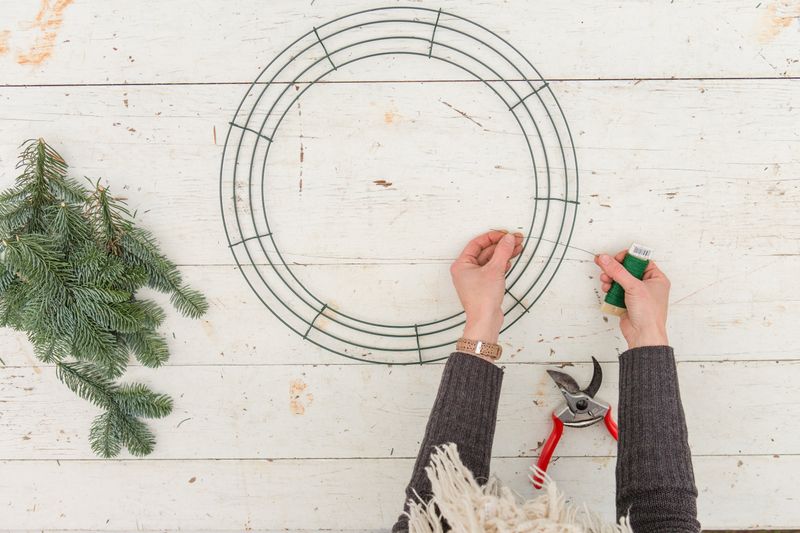
Start with a metal wreath frame. Box-style frames, with two or three wire rings joined together, grip greenery firmly.
A 14 to 16 inch frame fits most front doors nicely.
Next comes paddle wire, which is florist wire wound on a flat piece of wood or cardboard. A 22 or 24 gauge wire bends easily yet holds bundles tight.
Green wire blends right into the foliage.
You’ll also want sharp bypass pruners for clean cuts and separate wire cutters. Pruner blades dull quickly if you use them on metal, and nobody wants that.
Gloves are a must with holly around. Those spiny leaves can poke right through thin cotton, and pine sap sticks to skin like glue.
A little cooking oil removes sap from hands surprisingly well.
Prefer a more rustic base? Grapevine wreaths work beautifully, and you can twist your own from wild grapevine or other flexible vines.
Skip invasive vines like Oriental bittersweet, which spreads seeds when people toss old wreaths outdoors.
Lay everything out on a table covered with an old sheet. Cleanup gets much easier that way.
4. Wire Small Evergreen Bundles Onto the Frame in One Direction
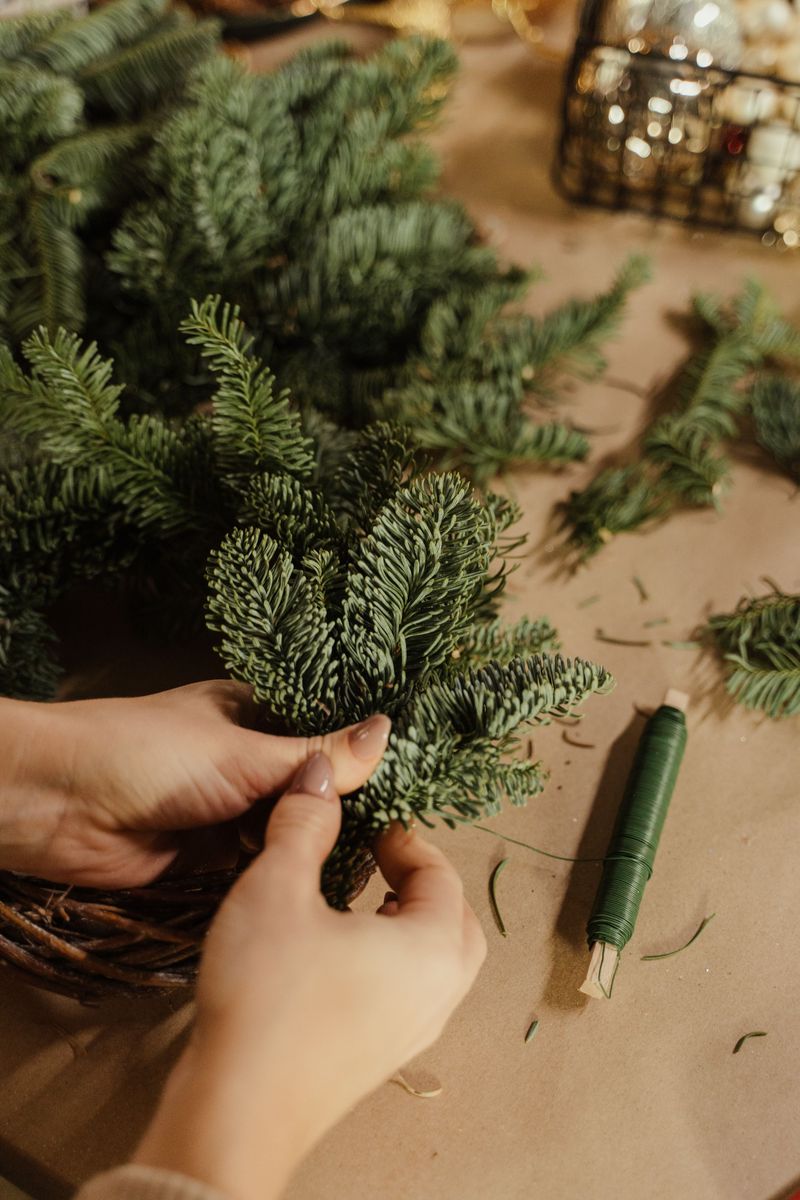
Once you get the rhythm, this part feels almost relaxing. You’ll repeat one simple motion all the way around the circle.
Trim your branches into pieces about six to ten inches long. Then gather three or four pieces into a small bundle, placing fuller sprigs in back and finer ones in front.
Mixing plants in each bundle keeps the color even.
Tie the end of your paddle wire to the frame first. Lay a bundle on the frame and wrap the wire tightly around the stems three or four times.
Keep the wire attached to the spool.
Set the next bundle so its leaves cover the stems of the first. Wrap again, and keep going in the same direction.
That overlap hides the wire and makes the wreath look full.
Try to keep bundles about the same size. Uneven bundles create lumpy spots that show from across the yard.
As you near the start, lift the first bundle’s tips gently and tuck the last stems underneath. Wrap a few final times, cut the wire, and twist the end into the back.
Hold the wreath up and look for thin areas. You can slip extra sprigs into gaps and secure them with short wire pieces.
Add a wire loop on the back for hanging.
5. Pine Cones, Dogwood Twigs, and Dried Hydrangeas Add Garden Flair

Decorating is where your wreath starts to look like it belongs to you. A little walk around the yard often turns up more trimmings than any craft store aisle.
Pine cones are easy winners. Wrap a short piece of wire around the lower scales, then twist the ends through the frame.
White pine cones are long and slender, while loblolly cones are chunkier.
Red twig dogwood and yellow twig dogwood stems give bold color against green. Just poke them in at an angle so they follow the wreath’s curve.
Dried hydrangea heads look lovely too. Oakleaf hydrangea, a native shrub, turns rich burgundy in fall and dries beautifully.
Berries from your holly or winterberry add sparkle. Winterberry is a deciduous native holly that loses its leaves but keeps loads of red fruit.
Seed pods from coneflowers or sweetgum balls bring fun texture.
Designers often group items in odd numbers, like three cones or five berry clusters. Odd groupings look more natural to our eyes.
Hold back a bit, though. A few well-placed accents usually beat a crowded look.
Finish with a ribbon bow if you like, choosing a weatherproof ribbon for outdoor doors.
6. Shade and a Quick Misting Keep Your Evergreen Wreath Green for Weeks
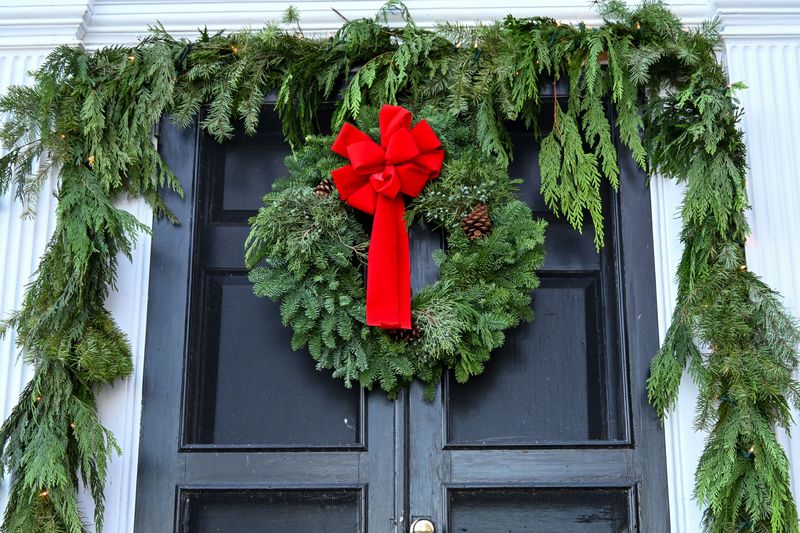
Sun and dry heat are a fresh wreath’s biggest troublemakers. A little care before and after building can stretch its life well into the new year.
Start by soaking your cut greens overnight in a tub of cool water. Many gardeners call this conditioning, and it lets branches drink up before they go on the frame.
Placement matters most. A north-facing or covered door stays shaded and cool, which slows drying.
A south-facing door in full sun warms up fast, even in December.
Indoor wreaths fade quicker because heated air pulls moisture from needles. Keep them away from fireplaces, heat vents, and sunny windows.
Misting the wreath every few days helps, especially the back where stems are exposed. Some people lay outdoor wreaths flat on a damp towel overnight for an extra drink.
Anti-transpirant sprays can coat leaves and slow water loss. Read the label first, since some products can dull the blue coating on cedar berries or blue spruce needles.
A well-placed outdoor wreath in cool weather often stays nice for a month or more. Indoors, plan on about two weeks.
When the needles snap instead of bend, it’s time for a refresh.
7. Holly Berries, Yew, and Boxwood Need a Little Extra Caution
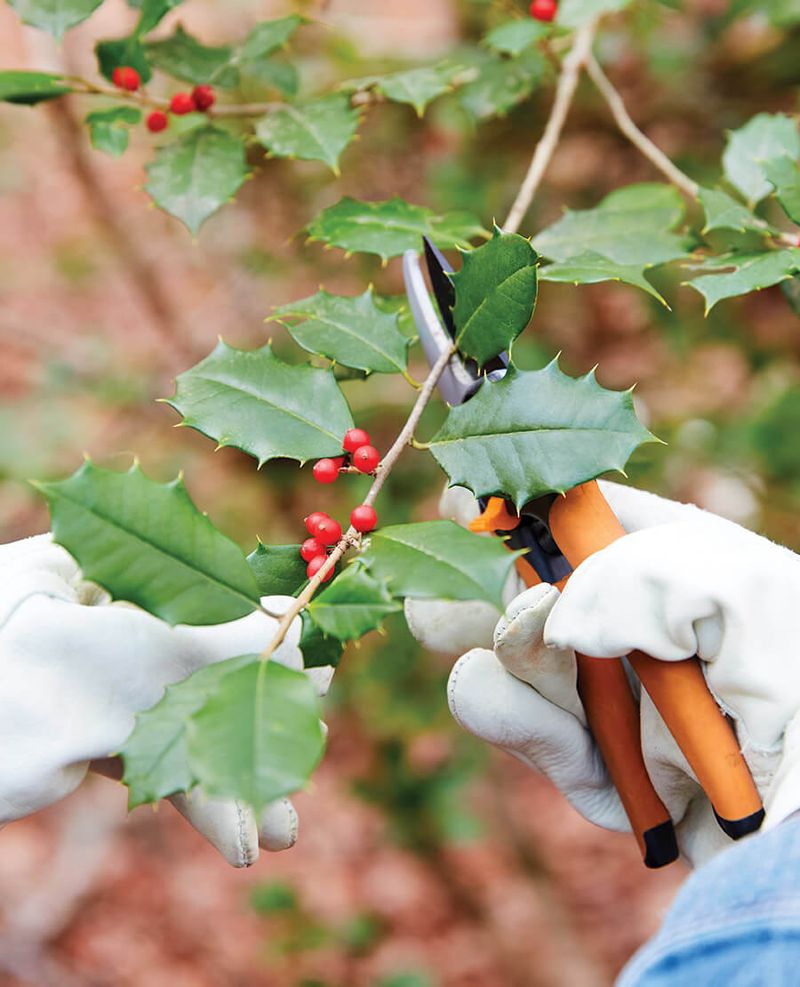
Some of the prettiest wreath plants come with a few strings attached. Knowing them ahead of time keeps the holidays relaxed.
Holly berries can cause stomach upset if kids or pets eat them. Mistletoe berries are a similar concern.
Hang wreaths with these plants where curious hands and noses can’t reach.
Yew deserves more respect. Its needles and seeds are highly toxic to people, dogs, cats, and especially horses and livestock.
I’d skip yew for any wreath placed low or near animals.
Boxwood is a classic in old Virginia gardens, but boxwood blight has become a real worry. This fungal disease causes dark leaf spots, black streaks on stems, and fast leaf drop.
Virginia Cooperative Extension asks gardeners to inspect boxwood before cutting and to bag used boxwood wreaths for the trash instead of the compost pile.
Store-bought boxwood greens can carry the disease too. Keep them away from your landscape shrubs.
Foraging rules matter as well. Ask permission before cutting on someone else’s land.
Collecting plants in state parks and state forests generally isn’t allowed without approval. Your own yard, plus a friendly neighbor’s extra holly, is the easiest source.
8. Planting More Native Hollies and Cedars Means Better Wreaths Next Year
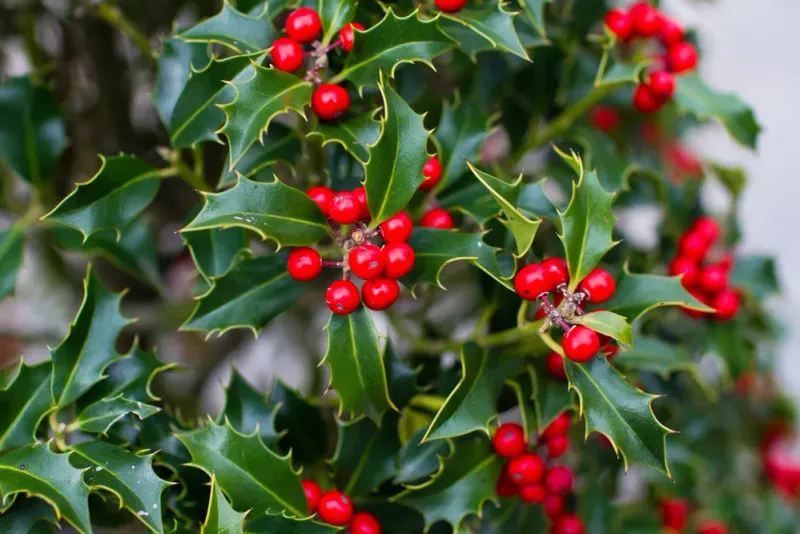
After one wreath, many people are hooked. The smartest next step is planting a few shrubs that double as future wreath supplies.
American holly is a top choice. Plant at least one male nearby so your female hollies set berries.
Winterberry offers the same berry show and suits wet spots in the yard.
Eastern red cedar handles heat, drought, and poor soil like a champ. Cedar waxwings and other birds feast on its berries in winter.
Inkberry is a native evergreen holly with small, neat leaves. Southern magnolia gives huge glossy foliage, though it needs plenty of space as it matures.
Fall is a great planting season across much of Virginia, since cooler air and warm soil help roots settle in. Early spring works well too, especially in the colder western mountains.
Avoid invasive plants like English ivy, Japanese barberry, and Oriental bittersweet, even if they look festive. Discarded wreaths can spread their seeds into woods and streams.
When the season wraps up, strip off wire and decorations. Untreated greens can go into the compost, unless they include boxwood.
Your frame goes back in the closet, ready for another round of garden cuttings next December.