The Watering Mistake That Makes Orchids Drop Their Buds In Pennsylvania
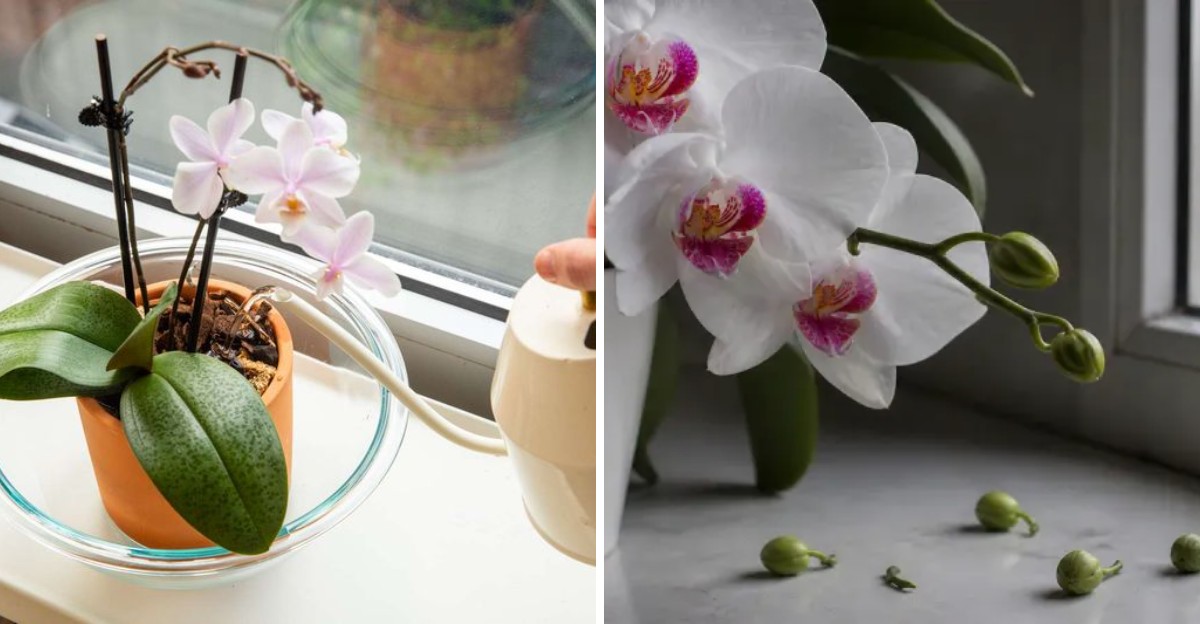
Orchid growers have a name for buds that turn yellow and fall off before opening. They call it bud blast, and it sounds about as fun as it feels.
I learned this the hard way one February. My plant had eight fat buds lined up like pearls, and within a week, five were lying on the windowsill.
Nobody warned me that a watering can could cause that much heartbreak. Our long Pennsylvania winters pile on dry furnace air, chilly windows, and short gray days, so a stressed plant has very little wiggle room.
To my surprise, the problem was not neglect at all. It was kindness, poured out a little too often. Could your own good intentions be the reason those buds keep falling?
Those Shriveling Orchid Buds Are Sending You A Message
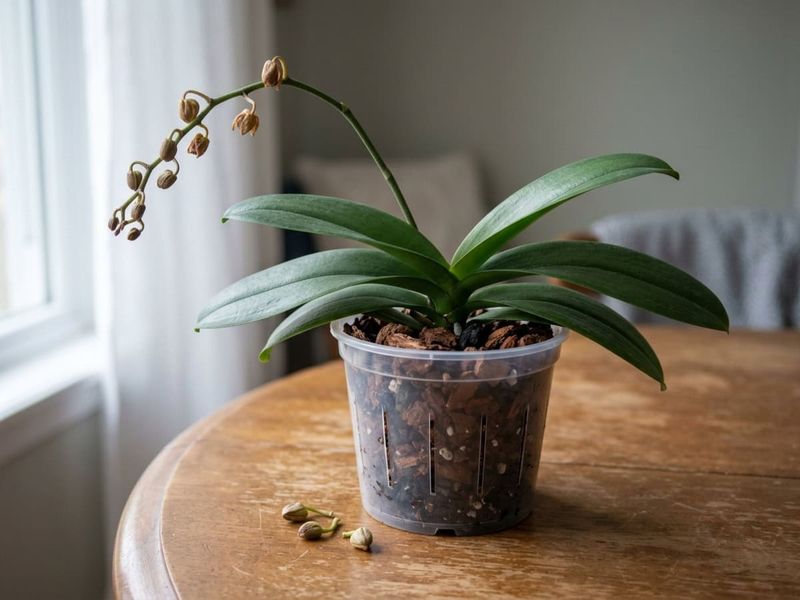
Bud blast is the plant’s way of saying something in its world changed too fast. An orchid in bud is spending a lot of energy, so when stress hits, it saves itself first and lets the buds go.
The American Orchid Society lists several common triggers. These include sudden temperature swings, very dry air, drafts, ethylene gas from ripening fruit, and roots that cannot take up water properly.
Here is where watering sneaks in. Roots are the plant’s only supply line, and both soggy and bone-dry potting mix can damage them.
When roots fail, the buds feel it first, because they are the newest and most delicate tissue on the plant.
Watch for the clues. Buds that turn yellow, go soft, or wrinkle before dropping usually point to a water or root problem. Buds that drop suddenly while still green often hint at a cold draft or a big temperature shift.
Personally, I keep a tiny notebook beside my orchids during bloom season. Jotting down watering days, room temperature, and when buds started yellowing helps me spot patterns I would otherwise miss.
Once you see the link between roots and buds, the rest of the puzzle starts falling into place quickly.
Too Much Water Smothers Orchid Roots Under The Bark
Overwatering is the big one. Most grocery store orchids are Phalaenopsis, and in the wild they cling to tree branches with their roots hanging in open air.
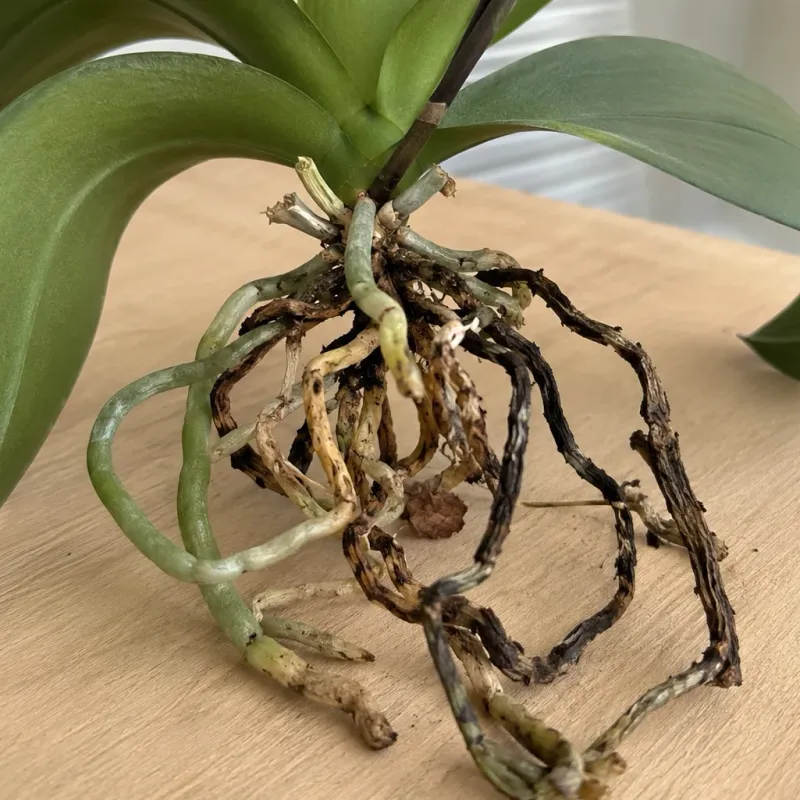
Those roots are covered in a spongy layer called velamen. It soaks up water fast, but it also needs to breathe. When bark or moss stays wet for days, air gets pushed out, and roots begin to rot.
Rotting roots turn brown or black and feel mushy when you squeeze them. The cruel twist is that a waterlogged plant can end up thirsty, since damaged roots cannot move water up to the leaves and buds.
Pennsylvania homes make this mistake easier in winter. Shorter days and cooler rooms slow the plant down, so the mix dries more slowly than it did in summer. A weekly schedule that worked in July can drown roots in January.
Sphagnum moss is a common culprit too. Many store orchids arrive packed tightly in moss, which holds water like a sponge.
If you suspect rot, slide the plant out and check. Trim soft roots with clean scissors and repot in fresh bark after the plant finishes blooming, or sooner if most roots look bad.
Let The Silvery Roots Tell You When To Water
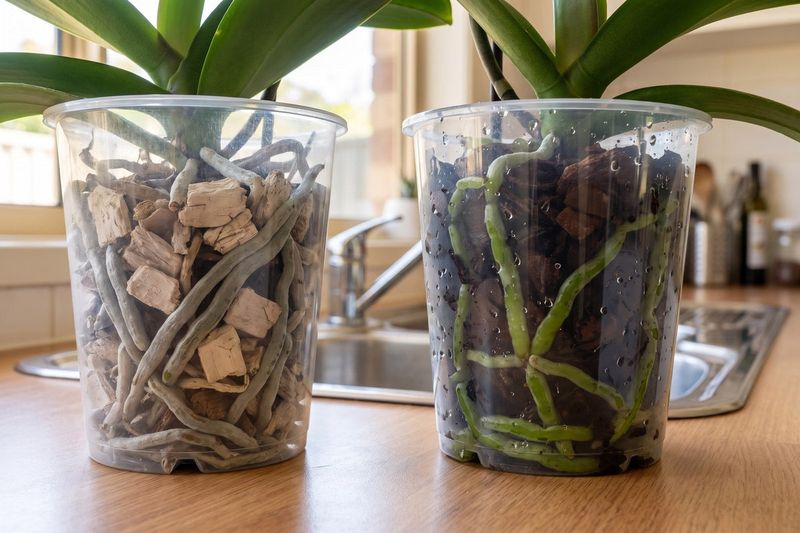
My favorite watering tool costs nothing. It is a clear plastic pot. Healthy orchid roots change color with moisture.
Wet roots look bright green, while thirsty roots turn silvery gray or white. Once most of the roots inside the pot look silvery, it is time to water.
No clear pot? Push a finger or a wooden skewer an inch or two into the mix. If it comes out damp or dark, wait. Lifting the pot works as well, because a dry orchid feels noticeably lighter.
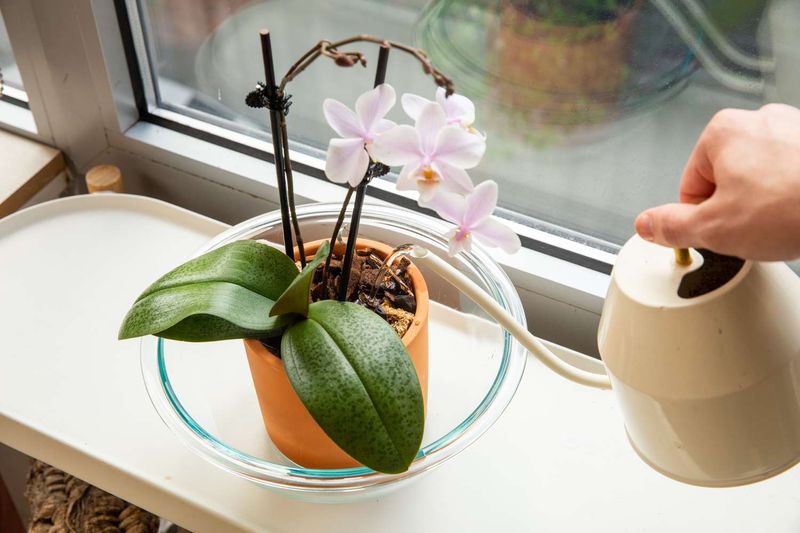
When you do water, be generous. Run lukewarm water through the pot for about 30 seconds so the bark soaks it up, then let every drop drain away. A good soak followed by a dry-down mimics the rain-and-sun rhythm of the tropics.
For many Pennsylvania homes, this works out to roughly every 7 to 10 days in winter. Your timing may differ, and that is fine. Light, room temperature, pot size, and bark type all shift the schedule.
Water in the morning so moisture on the leaves can dry by evening. Water left in the crown overnight can lead to crown rot.
A Pot Sitting In A Puddle Spells Trouble For Orchid Roots
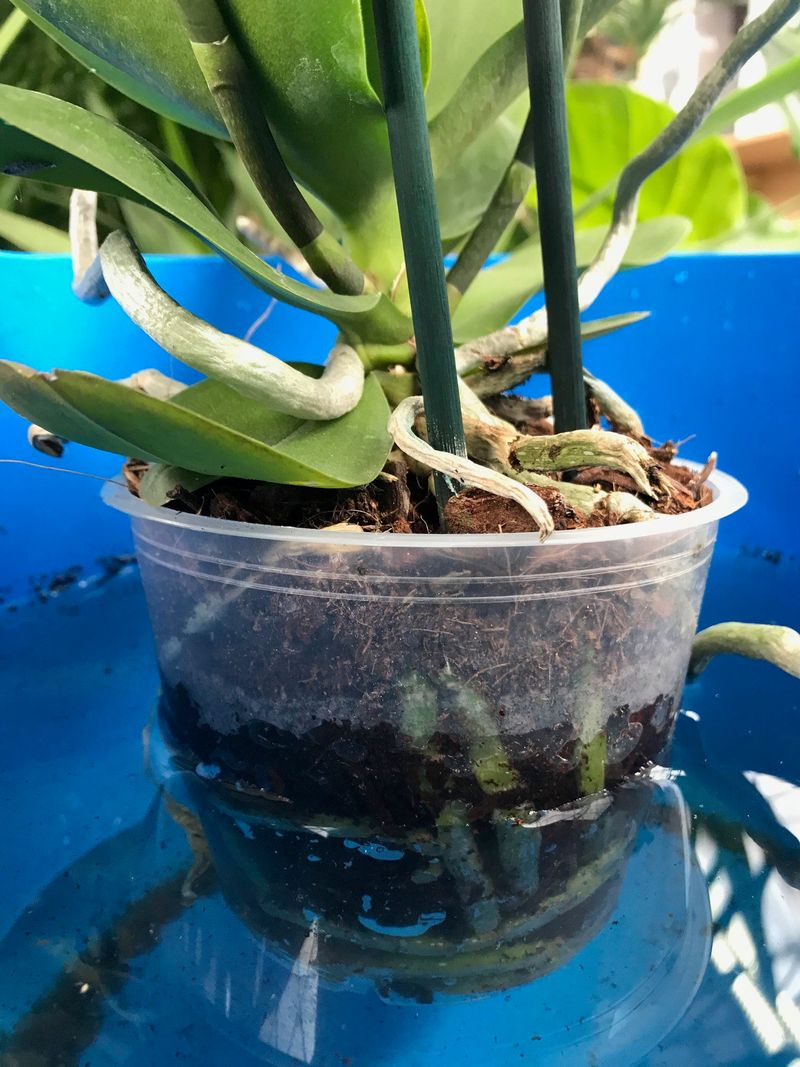
Ever peeked inside a pretty ceramic cover pot after watering? I did once and found an inch of murky water sitting under my orchid.
Decorative cachepots are lovely, but they usually have no drainage holes. Water pours out of the inner pot and collects at the bottom, where the lowest roots sit soaking day after day.
Wet feet like that create the airless conditions that lead to rot. Fungus gnats and other problems often follow soon after.
The fix is simple. Water your orchid in the sink, let it drain for 10 to 15 minutes, then return it to the cover pot. Some growers place a layer of pebbles under the inner pot so it stays above any stray water.
Gift orchids are the worst offenders. Many come wrapped in foil or plastic sleeves that trap water like a bathtub, so remove those wrappers right away.
Saucers deserve a quick check as well. Empty them after every watering unless you are using pebbles to raise the pot.
Small habits like these protect the roots, and healthy roots keep a steady flow of water reaching those swelling buds.
Ice Cubes Give Tropical Orchids A Chilly Jolt
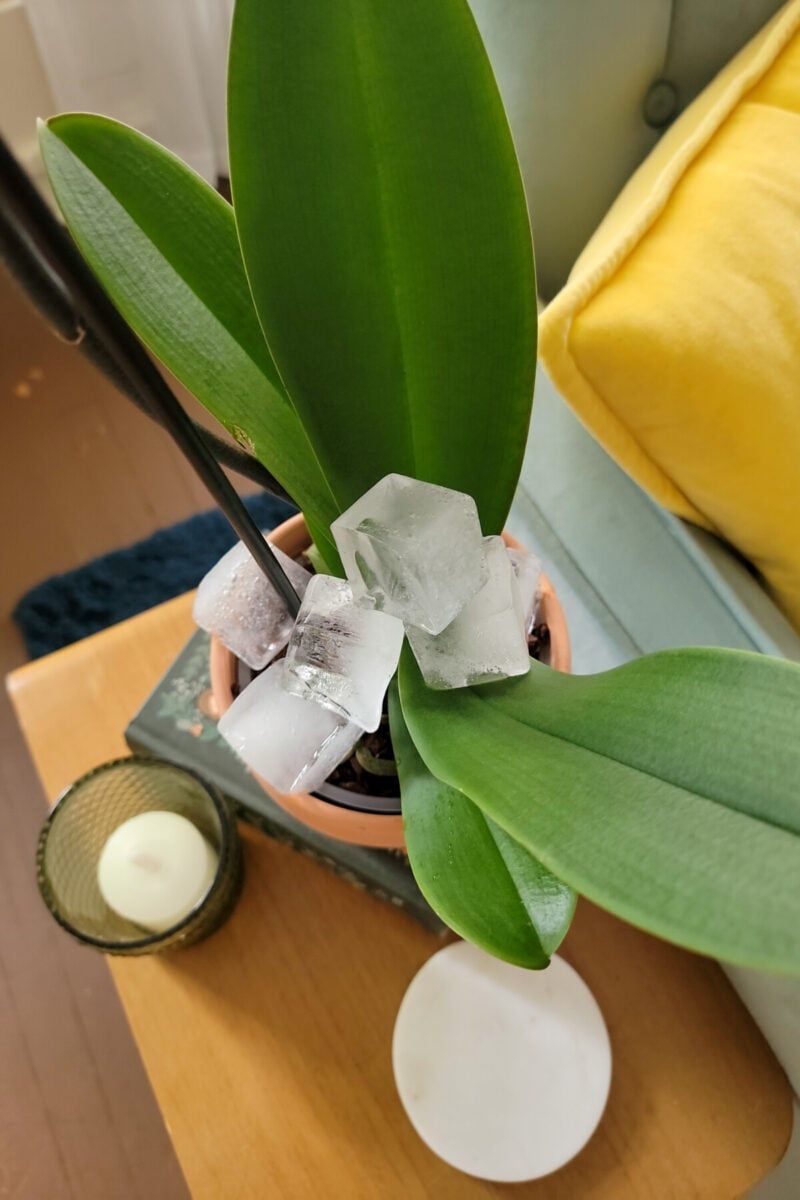
Social media loves the ice cube trick. Drop three cubes on the bark once a week and call it done.
Plenty of experts are not fans, including Penn State Extension, which advises against it. Phalaenopsis grow naturally in warm tropical forests, and a slow trickle of icy water is far from what their roots expect.
To be fair, a study from Ohio State University found that ice-watered plants did fine in their trial. The bigger issue may be volume. Three melting cubes wet only a small patch of mix, so some roots stay parched while others get chilled.
Uneven moisture during budding is exactly the kind of stress that can push buds to drop. Cold water close to the crown can also invite rot.
I take the simple route. A pitcher of tap water left on the counter overnight reaches room temperature, and that is what my orchids get.
Pennsylvania tap water is usually fine for Phalaenopsis. If your home has a water softener, though, skip softened water because of the added salt.
Rainwater or filtered water works nicely instead. Room-temperature soaking keeps the roots comfortable and evenly moist.
Dry Furnace Air Can Undo Your Careful Orchid Watering
Indoor air in a heated Pennsylvania home can drop to around 20 to 30 percent humidity in January. That is drier than many deserts.
Orchids prefer roughly 50 to 70 percent. Phalaenopsis tolerate lower levels better than most, but very dry air pulls moisture out of buds quickly, especially if the plant sits near a heat vent or radiator.
Here is a sneaky trap. When buds shrivel in dry air, many of us reach for the watering can. More water in the pot does not fix dry air, and it may lead straight to rotting roots.
Try raising humidity around the plant instead. A tray of pebbles and water underneath works well, as long as the pot sits above the waterline. Grouping plants together helps, and a small room humidifier makes the biggest difference.
Misting gets mixed reviews. It raises humidity for only a few minutes, and water lingering in the crown can cause trouble.
Move orchids away from heat registers, fireplaces, and drafty doors too. Buds dislike blasts of hot air as much as cold ones. A cheap digital hygrometer shows you exactly what your orchid is living with.
Cold Windowsills And Fruit Bowls Also Trigger Orchid Bud Drop
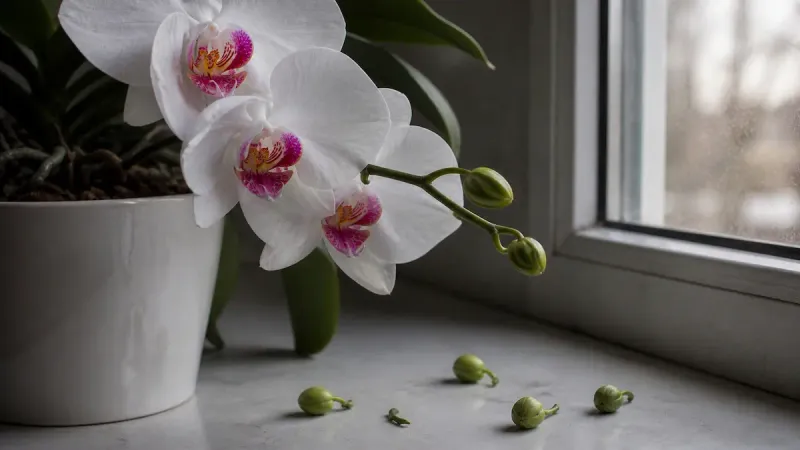
Not every dropped bud traces back to water. Sometimes the cause is sitting right next to the plant.
Orchids actually need a cool spell to start blooming. Phalaenopsis often set flower spikes after a few weeks of nights around 55 to 60 degrees, which is why many Pennsylvania orchids rebloom in late winter.
Once buds form, though, steady conditions matter. Leaves pressed against icy glass, a door opening onto a 20-degree porch, or a car ride home from the store in January can chill buds enough to make them fall. Wrap new plants well before carrying them outside.
Ripening fruit is another quiet troublemaker. Apples, bananas, and tomatoes release ethylene gas, which speeds up aging in flowers. Gas leaks from older stoves can do the same.
Moving a budding orchid around the house can upset it too. Buds turn toward the light, and a sudden change of direction or brightness adds stress.
So check the full picture before blaming the watering can. A plant with firm roots, no drafts, and no fruit bowl nearby is usually a plant whose problem is moisture-related.
A Steady Watering Rhythm Keeps Orchid Buds Opening
Consistency is the quiet secret behind a spike full of open flowers. Orchids handle a lot, but they dislike surprises while they bloom.
Try this simple routine. Check the roots or mix every few days, water only when it is nearly dry, soak thoroughly, and drain fully.
Feed with a diluted orchid fertilizer, often described as weakly weekly, but skip feeding a very dry plant until after watering.
Bright, indirect light helps buds develop strong. An east window is ideal in many Pennsylvania homes, while a south window may need a sheer curtain once spring sun gets intense.
Keep days around 70 to 80 degrees and nights no lower than about 60 while buds are forming. Avoid repotting until flowering ends, since disturbed roots often lead to dropped buds.
If you still lose a bud or two, take heart. Losing one or two buds happens even to experienced growers, and the remaining flowers can last two or three months.
I truly believe patience beats panic with these plants. Give your orchid steady moisture, soft light, and a calm spot, and those plump buds stand a far better chance of opening.