The Strange Wooden “Tents” Popping Up Over New York Shrubs This Month, and Why They Work
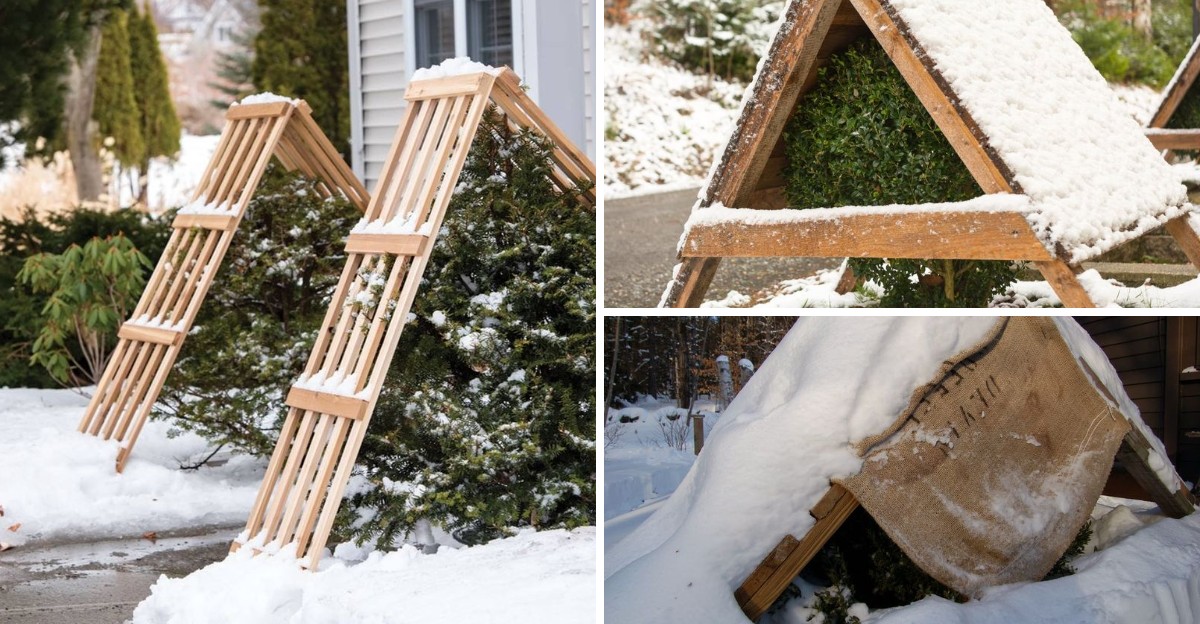
Some of the most careful gardeners in my area are building little wooden roofs over plants that can’t feel a thing. Rows of slanted boards now sit over boxwoods and yews like tiny camping trips.
The first one I spotted, I assumed a kid had built a fort and abandoned it. Then I saw three more on the same block in New York, each one tucked neatly over a foundation shrub.
These A-frames have a long history in snowy towns. Public gardens and old estates have used similar covers for generations, and the idea is far older than any big-box store kit.
Take it from someone who once lost half a hedge to one icy February. Those plain boards are solving a problem most of us never notice until spring.
So what exactly are they guarding against, and does your yard need a few?
Those Little Wooden A-Frames Over Shrubs Are Doing More Than You’d Guess
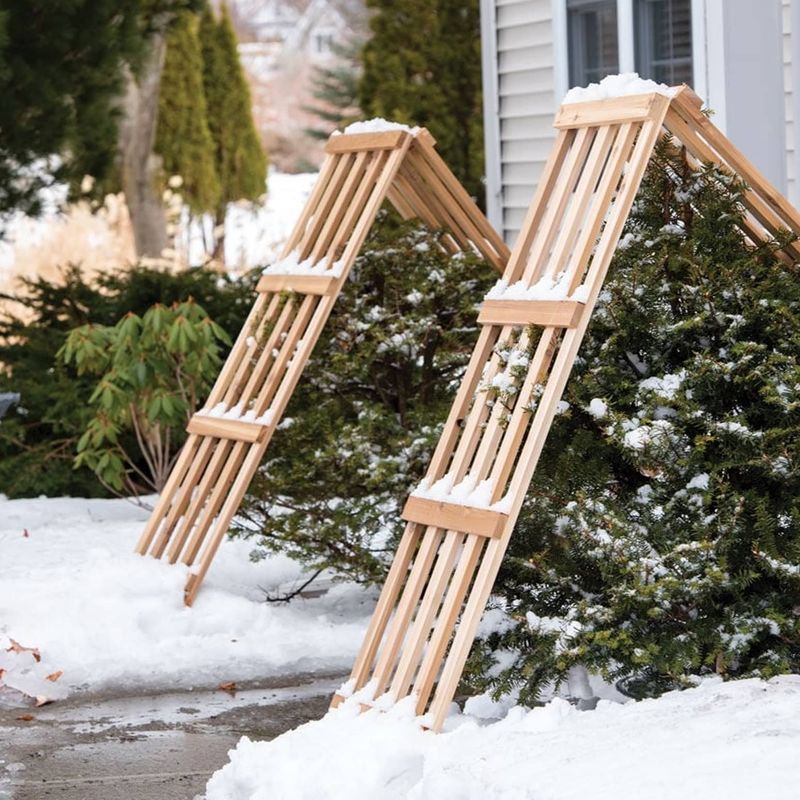
Walk any older neighborhood in late fall and you will spot them. Two boards leaning together, sometimes three, parked right over a shrub near the front steps.
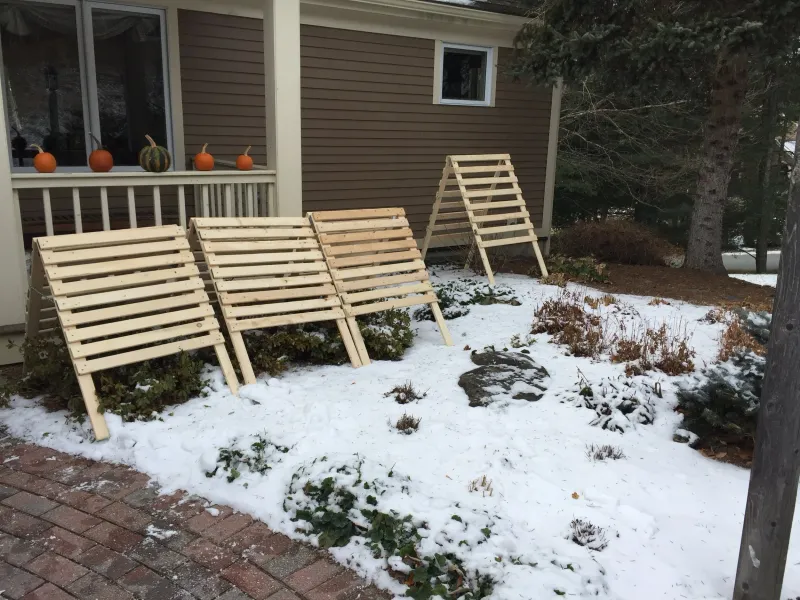
Gardeners call them A-frame shelters, shrub guards, or snow shields. The shape is the clever part.
A steep, pitched roof lets snow and ice slide off the sides instead of piling straight onto the branches below.
Most shelters go over plants growing close to the house. That spot matters, because foundation shrubs sit right under roof edges, gutters, and walkways where shoveled snow lands.
A boxwood in the middle of the lawn gets ordinary snowfall, while one under the eaves can get buried by a small avalanche.
For what it’s worth, the covers rarely aim to keep plants warm. Cornell Cooperative Extension and other experts point out that hardy shrubs handle cold just fine on their own.
The real job is physical protection from weight, wind, and harsh winter sun.
So when you see these boxy little roofs appear in November, think of them as umbrellas, not blankets. Once that clicks, the whole idea makes a lot more sense, and you can decide which of your own plants might benefit.
Roof Snow Sliding Onto Boxwoods Is the Biggest Reason They Go Up
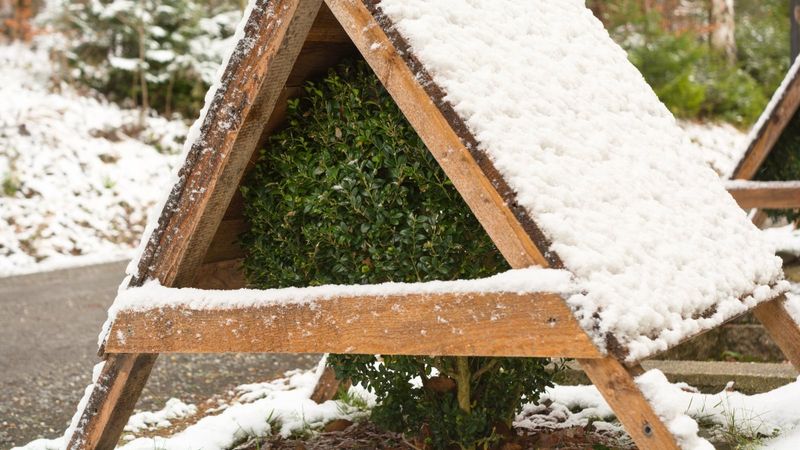
Let’s just say a metal roof and a row of yews make a rough pairing. When warm sun loosens a heavy snowpack, it can drop several feet in one rush, and whatever sits below takes the hit.
Wet snow is surprisingly heavy. A single cubic foot can weigh well over ten pounds, and ice is far denser.
That load lands on upright shrubs like arborvitae and boxwood, pushing branches outward until they split at the base.
Splayed shrubs often recover poorly. A broken main stem leaves a gap that may take years to fill, and some plants never regain their tidy shape.
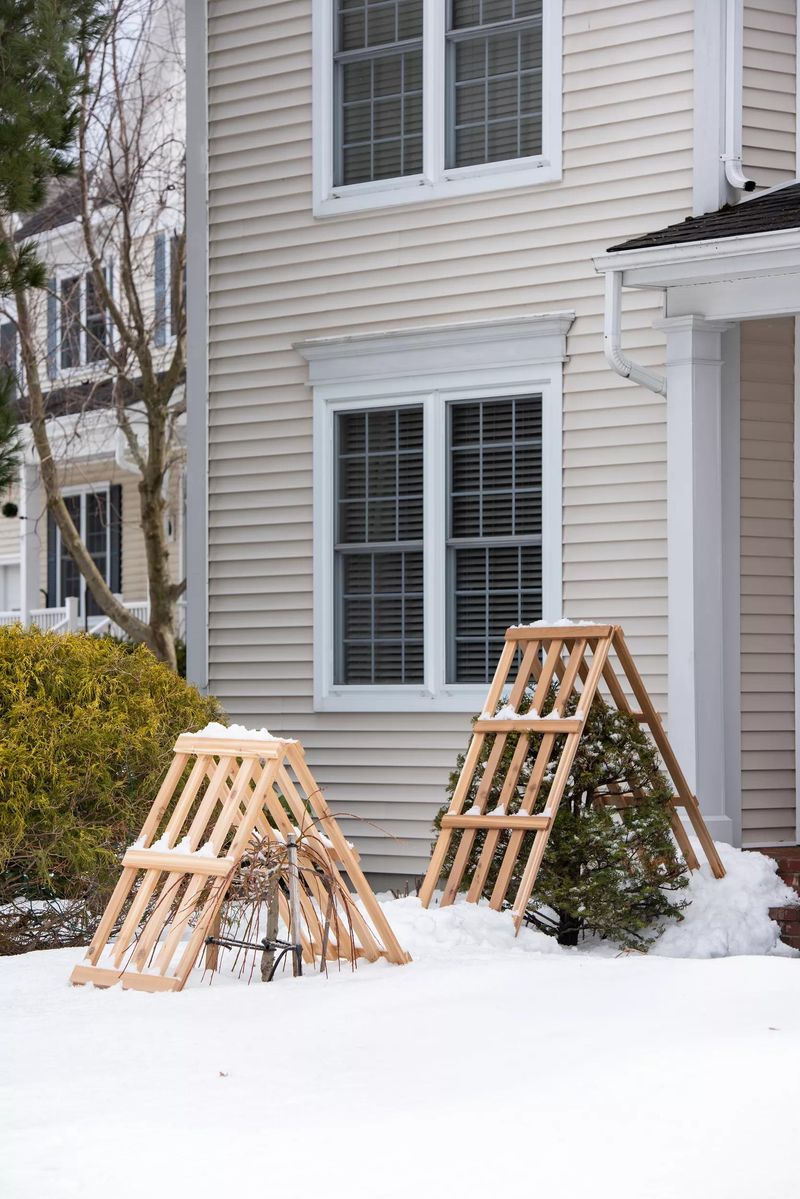
The wooden tent handles this neatly. Snow hits the slanted boards and slides off to either side, leaving the plant underneath upright and untouched.
If you only build one shelter this year, put it where snow falls from a roof or gets tossed by a shovel or plow. Driveway edges count too, since plowed snow is often packed with ice and grit.
Those high-risk spots get far more benefit than shrubs out in the open yard, where a gentle shake of the branches after a storm usually does the trick.
Rhododendrons and Hollies Lose Water All Winter Long
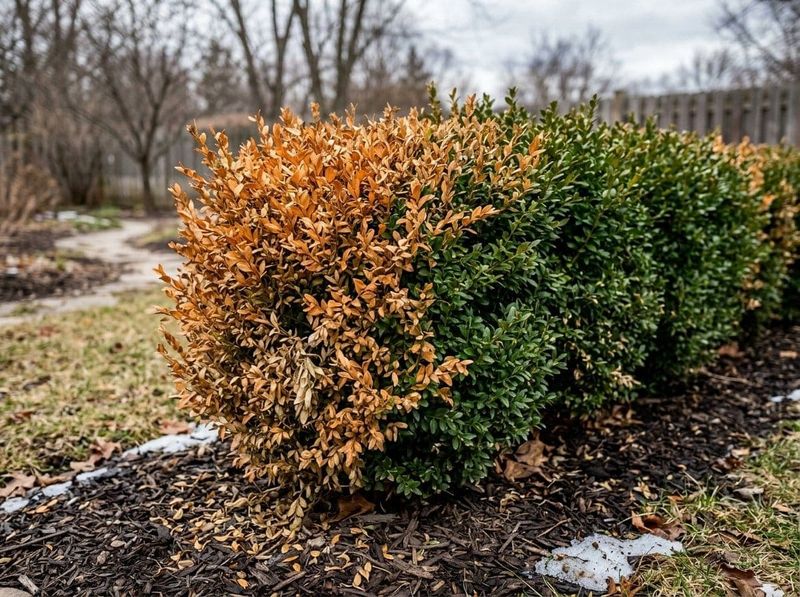
Here’s a strange fact that changed how I garden. Broadleaf evergreens keep losing moisture through their leaves all winter, even when the ground is frozen solid.
Rhododendrons, hollies, boxwoods, and mountain laurel are the usual sufferers. Their roots can’t pull water from icy soil, but wind and sun keep drawing water out of the foliage.
The result is winter burn, those crispy brown leaf edges and tips you find in March.
Extension specialists across the Northeast list winter burn as one of the most common evergreen problems. Plants on the south or west side of a house get hit hardest, since sunshine bounces off snow and walls there.
A wooden shelter helps in two ways. It blocks drying wind, and it casts shade during the brightest part of the day.
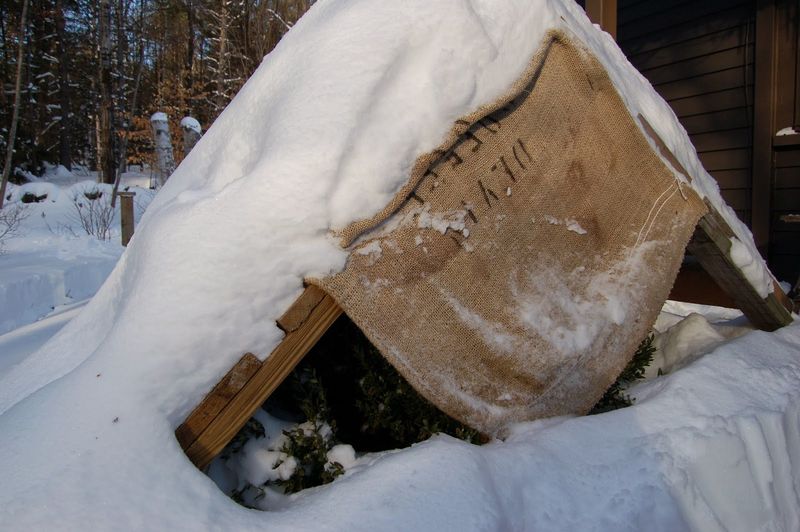
Some gardeners staple burlap to the open ends for extra screening.
Don’t make my mistake of wrapping plants tightly in plastic, though. Plastic traps heat during sunny spells and can cook foliage.
Wood and burlap breathe, which is exactly what a plant needs. Watering deeply in fall before the ground freezes gives your shrubs a head start too.
Burlap Screens and Wooden Frames Make a Smart Team
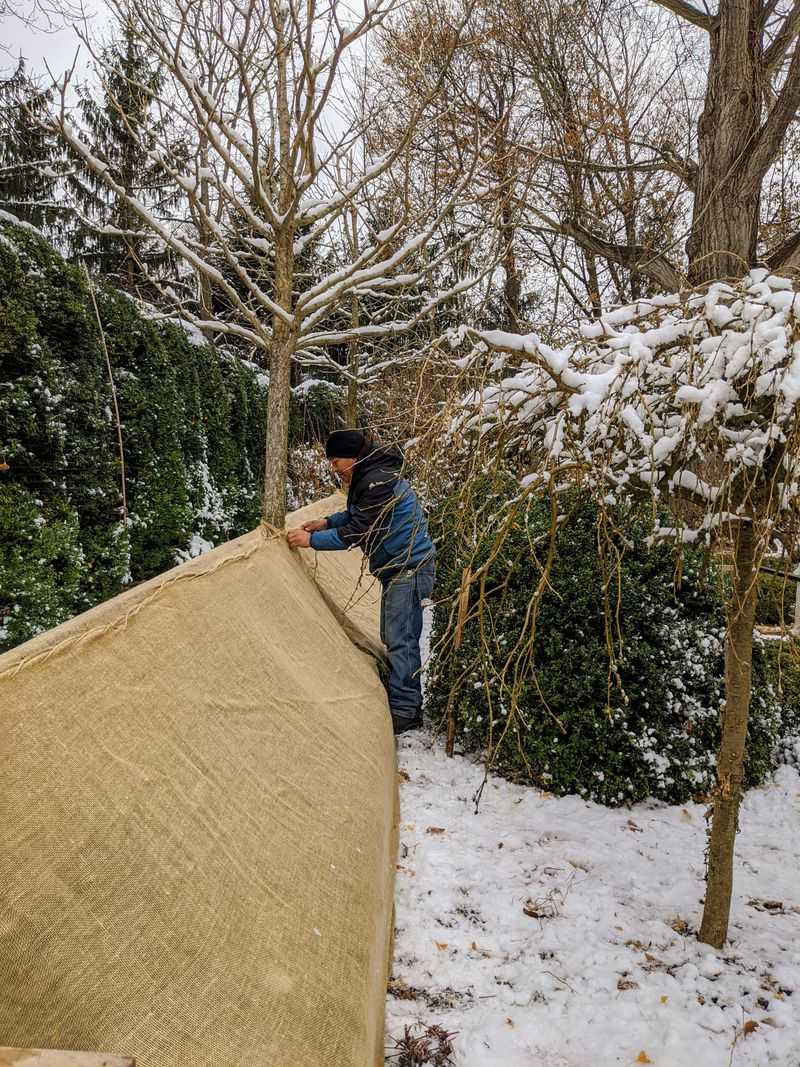
Ask ten gardeners how they protect shrubs and you will hear about burlap at least nine times. It pairs beautifully with a wooden frame.
The best setup puts burlap on stakes or framing, a few inches away from the plant. Wrapping burlap directly around branches can hold moisture against the foliage and add weight once snow sticks to it.
Spacing it out keeps air moving.
A common combo looks like this. An A-frame roof sits on top for snow, and burlap hangs on the windward side, usually facing west or northwest where winter gusts come from.
Open sides let light and air in.
Natural, untreated burlap is the usual pick because it lets some light through. Synthetic landscape fabric made for winter protection works too, and it often lasts more seasons.
If you ask me, the burlap-only screen is the better choice for big, wide shrubs where a wooden roof would be awkward. The wooden tent wins for small, rounded plants near the house.
Many yards end up using both, matched to each plant’s spot and risk, and that mix is often the most practical approach of all.
Building a Simple Shrub Tent Takes One Afternoon
My first homemade shelter was crooked, and it still worked. That’s the charm of these things.
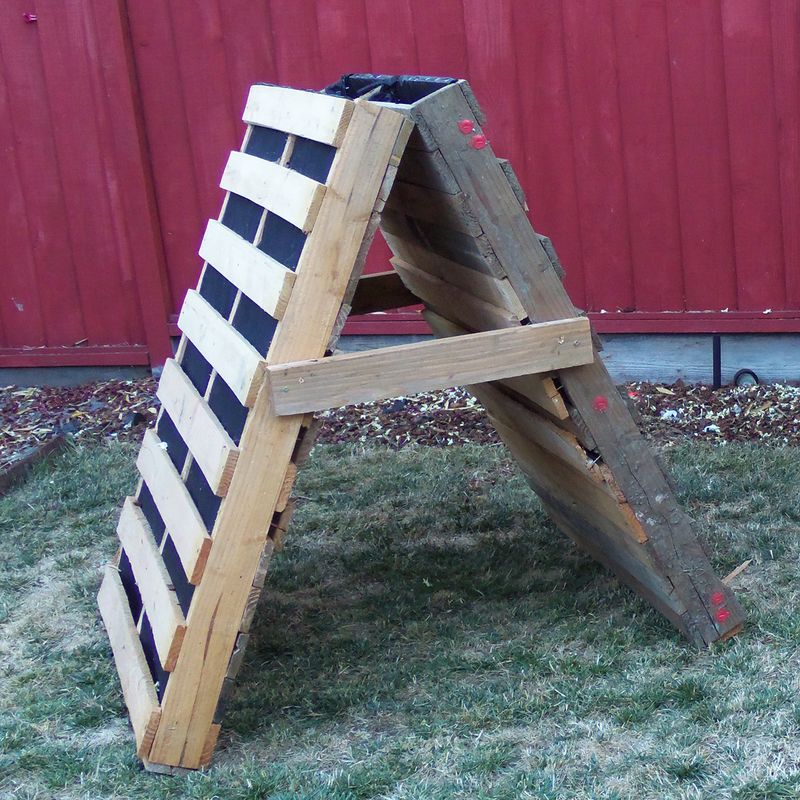
A basic version uses two boards or plywood panels joined at the top with hinges or screws. Many people add a crosspiece or two near the bottom so it can’t spread open under snow.
Slatted versions, with gaps between boards, let in light and shed snow nicely.
Size matters most. The frame should clear the plant by several inches on all sides, so branches don’t touch the wood.
Make it a bit taller than the shrub, and give it a steep pitch so snow slides off easily.
Anchor the legs well. Short stakes or a bit of soil packed around the base stop wind from tipping it over.
Exterior screws hold up better than nails through freeze and thaw.
Scrap lumber, old fence pickets, and leftover deck boards all make good material. Hinged frames fold flat for summer storage, which is a nice bonus in a small garage.
Paint them a soft green or brown if you want them to blend in, or let the wood weather naturally to a silvery gray.
Late November Is Prime Time Across Most of New York
Timing these covers is a bit like timing snow tires. Too early feels silly, and too late means scrambling in a storm.
Most gardeners in New York set shelters up in November, after shrubs have gone dormant and before the ground freezes hard. Putting them out too early, during mild fall weather, can trap warmth and humidity around plants that are still active.
Regional differences matter here. Buffalo, Rochester, and the Tug Hill area get heavy lake-effect snow, sometimes starting in November, so gardeners there often finish earlier.
The Adirondacks and higher spots in USDA zones 3 and 4 also run ahead of the calendar.
Down in New York City and on Long Island, zones 7a and 7b, winters are milder and snow loads lighter. Shelters there are mostly about roof snow, wind, and salt spray near roads.
Hudson Valley gardens fall somewhere in between. A handy rule is to watch your own yard.
Once the leaves are off the maples and nights stay near freezing, it’s time to haul the frames out of the shed, before the first real snowfall arrives.
Hungry Deer and Rabbits Find Covered Shrubs Harder to Reach
Anyone who has found a yew chewed down to bare stems in March knows the feeling. Winter is lean for wildlife, and our foundation plants look like a salad bar.
White-tailed deer browse heavily once natural food runs short, and arborvitae and yews rank high on their menu. Rabbits gnaw bark and low twigs, especially when deep snow lets them reach higher than usual.
A wooden tent offers some help. Branches tucked under boards are harder for deer to grab, and enclosed ends slow rabbits down.
Honestly though, an A-frame alone isn’t a true deer fence.
For heavy browsing areas, many gardeners add a layer of chicken wire or hardware cloth around the bottom of the frame. Wrapping the open ends with burlap or mesh also helps.
In places with large deer herds, taller fencing or repellent sprays may be needed.
Repellents work best when applied before animals form a habit, and they need reapplying after heavy rain or snow. Rotating between products can keep wildlife from getting used to one smell.
Think of the shelter as one useful piece of a bigger plan rather than a cure-all.
Pull the Wooden Covers Off Once Spring Sun Returns
Spring cleanup is half the fun. Lifting a shelter and finding a green, perfectly shaped boxwood underneath feels like opening a present.
Remove covers once heavy snow is mostly behind you, often in late March or April depending on your region. Leaving them on too long can shade new growth and keep things damp, which invites fungal trouble.
Pick a cloudy day so plants adjust gently to brighter light.
Look over each shrub afterward. Trim any broken stems with clean pruners, and wait a few weeks before cutting back brown foliage, since some buds may still push new leaves.
Store the frames somewhere dry and check for loose screws or rot before next fall. A little care lets one shelter last many winters.
My garden taught me that the plants worth protecting most are the ones near your door, the ones you see every day. Start with your most exposed shrub, the one under the roofline or beside the driveway.
Build one shelter this month, watch how it performs, and you may find yourself adding a few more of those odd little tents next year.