How to Keep an Amaryllis Blooming Longer by Managing Heat in an Arizona Home
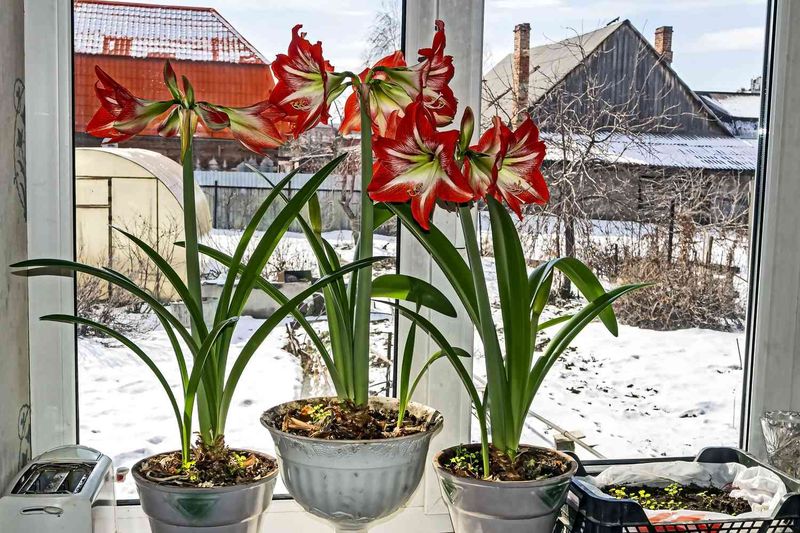
A bulb the size of a softball can push up a stalk loaded with flowers in a few weeks. Then the show can fade faster than you hoped.
In a warm Arizona house, the biggest lever you hold is probably heat. Here is how to give your potted amaryllis its best shot at a long, tidy display.
What the Evidence Says About Dry Air
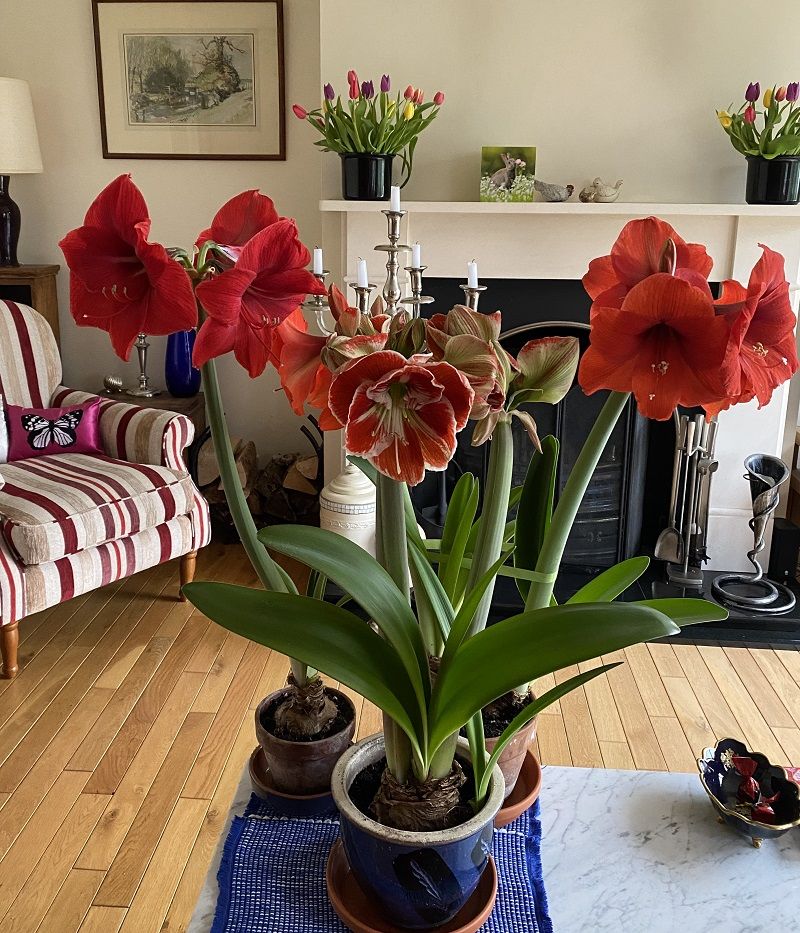
Arizona air is dry, so it is natural to blame it when flowers fade. I wish I could hand you a neat humidity fix, but the research I found does not back one up for this plant.
Arizona Cooperative Extension explains how low humidity can affect indoor plants, including bud problems in certain species. That is general advice.
It does not show that dry air shortens the bloom life of the holiday plant we call amaryllis.
Quick side note on names. The big-flowered bulbs sold each winter are generally Hippeastrum, not the separate genus Amaryllis, and the Maryland guidance on caring for the commonly sold plant uses that name.
So humidity is not irrelevant in every case, and I will not claim it is. But the plant-specific advice points much more clearly at temperature, which is why the rest of this article focuses on keeping your plant cool and comfortable rather than promising a humidity trick.
Move Open Blooms to a Cooler Spot
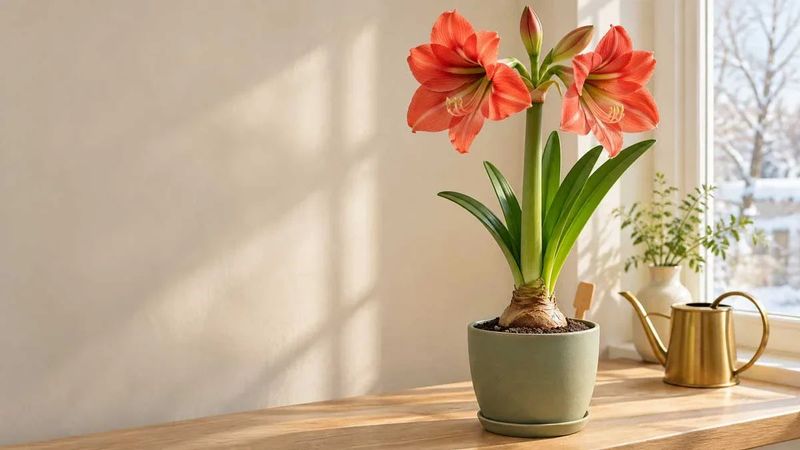
Once the flowers open, relocate the pot to a cooler spot. Extension guidance from South Dakota State suggests a place near 65°F, which is a real change from many warm Arizona rooms.
A cheap thermometer makes the hunt easy. Set it in a few places for an hour or so, such as a north-facing room, an entryway, or a spare bedroom, and see which one runs coolest and steadiest.
Stable matters as much as cool. A spot that swings from chilly mornings to a hot afternoon is less helpful than a calm, even one.
Bright light still counts, and Clemson Extension also advises keeping blooming plants cool. Cooling is better supported than humidity tweaks or a strict watering calendar.
I cannot promise a set number of extra days, but this is the best bet.
Keep Bright Light Away From Heat
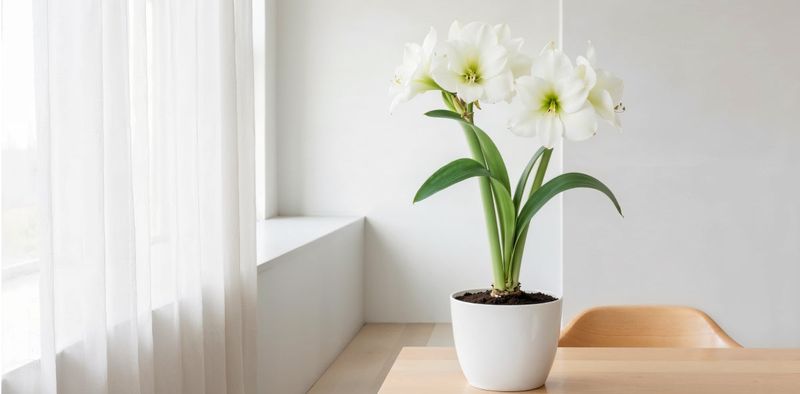
Bright light and cool air can go together if you choose the spot well. Think of a room with big windows that stays shaded from harsh midday sun, or a table set back from the glass.
Hot direct sun can overheat the pot and flowers, especially through an Arizona window. Maryland Extension advises keeping the blooming plant out of direct sun.
Heaters and air vents are the other trouble spots. Moving the pot a few feet from a vent can matter, and Clemson’s factsheet says the same.
One distinction helps here. A sunny window is great for growth and future reblooming, but that is a different goal.
While the flowers are open, your job is protecting the display, so favor bright but gentle light.
Water According to Soil Moisture
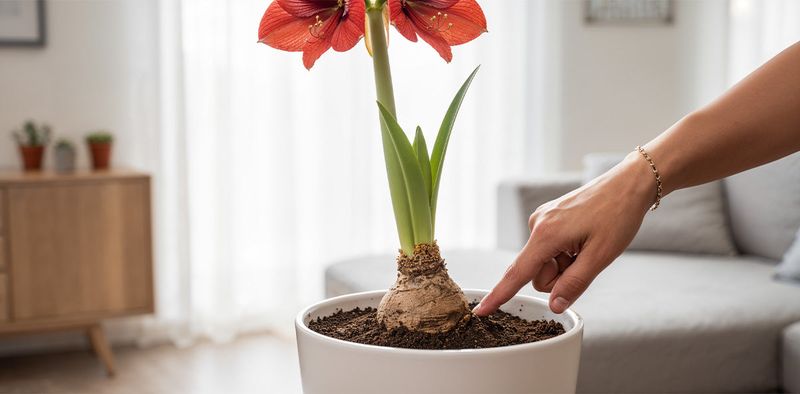
Forget the calendar and use your finger. Press into the potting mix, and water only when the top layer feels dry.
Maryland Extension suggests letting the top half inch dry between waterings, and Clemson says to water when the surface feels dry.
A warm, dry room may dry the soil faster, so check often. Checking is not the same as watering more, though, and I would not follow advice to water extra just because Arizona is dry.
Keep the mix moist but not soggy. Soaked soil risks root trouble, so empty the saucer after watering and never leave the pot standing in water.
If you use a pebble tray for general humidity, keep the pot above the water line. It has not been shown to extend amaryllis blooms.
Remove Individual Flowers as They Fade
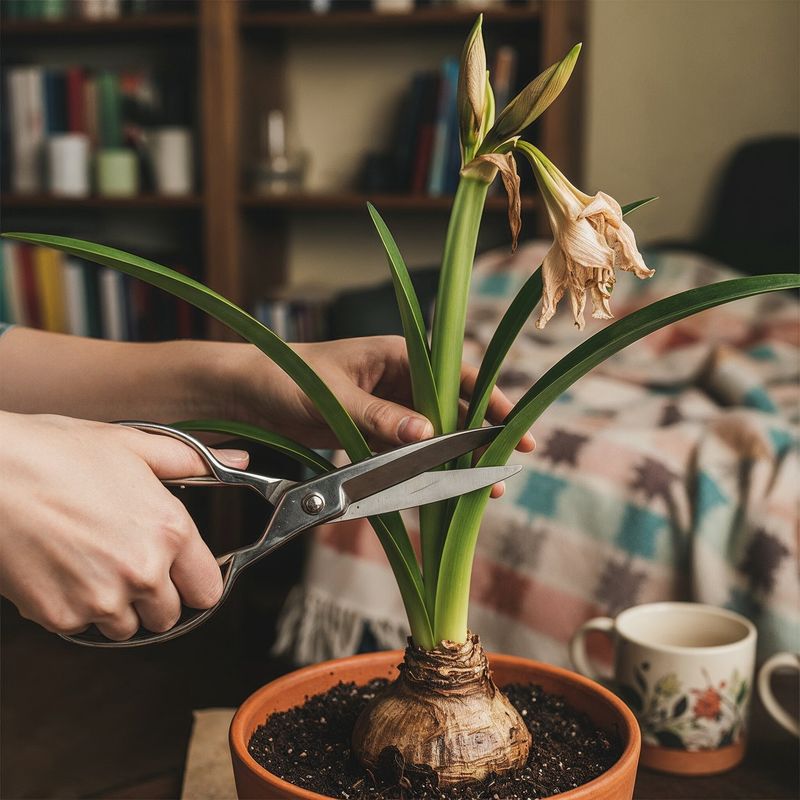
When one flower on the stalk turns limp, snip it off. It makes the display look fresher, and the next bloom gets the spotlight.
Clemson Extension describes removing spent flowers, which also prevents seed formation.
Be realistic about what this does. Removing a faded flower will not make any single bloom last longer, and it does not guarantee extra days of color.
Use clean scissors and cut close to the flower base, leaving the stalk in place while other buds are still opening. Guidance from South Dakota State covers the stalk after flowering ends.
Think of it as housekeeping. A tidy plant is simply nicer to look at.
Set Realistic Expectations for Bloom Time
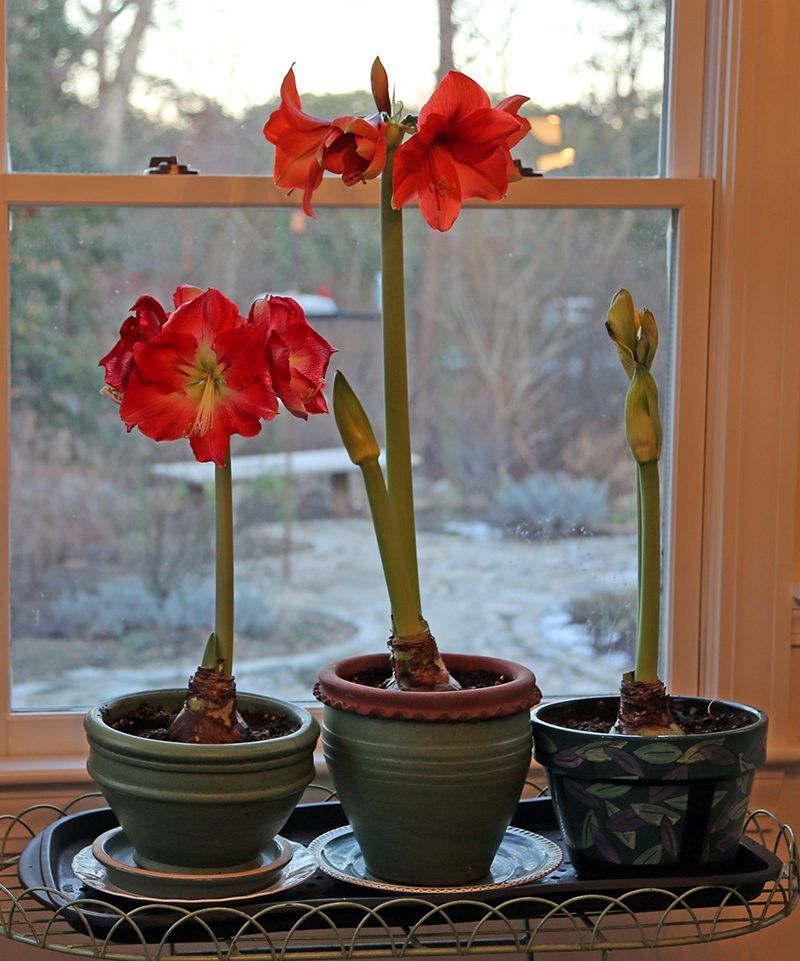
Plan on roughly two to three weeks of color under suitable conditions. That is an estimate, not a promise.
South Dakota State describes average bloom time as two to three weeks, while Maryland Extension says each flower can last two weeks or longer. Those may not measure the same thing.
One flower and a whole stalk are different. A stalk opens its flowers in a sequence, so the show can outlast any single blossom.
Cultivar and holding conditions change the result too. Some varieties simply run shorter, and a warm room may speed things up.
So cool placement is your best tool, but treat the calendar loosely and enjoy whatever you get.
Keep the Leaves for the Bulb’s Next Cycle
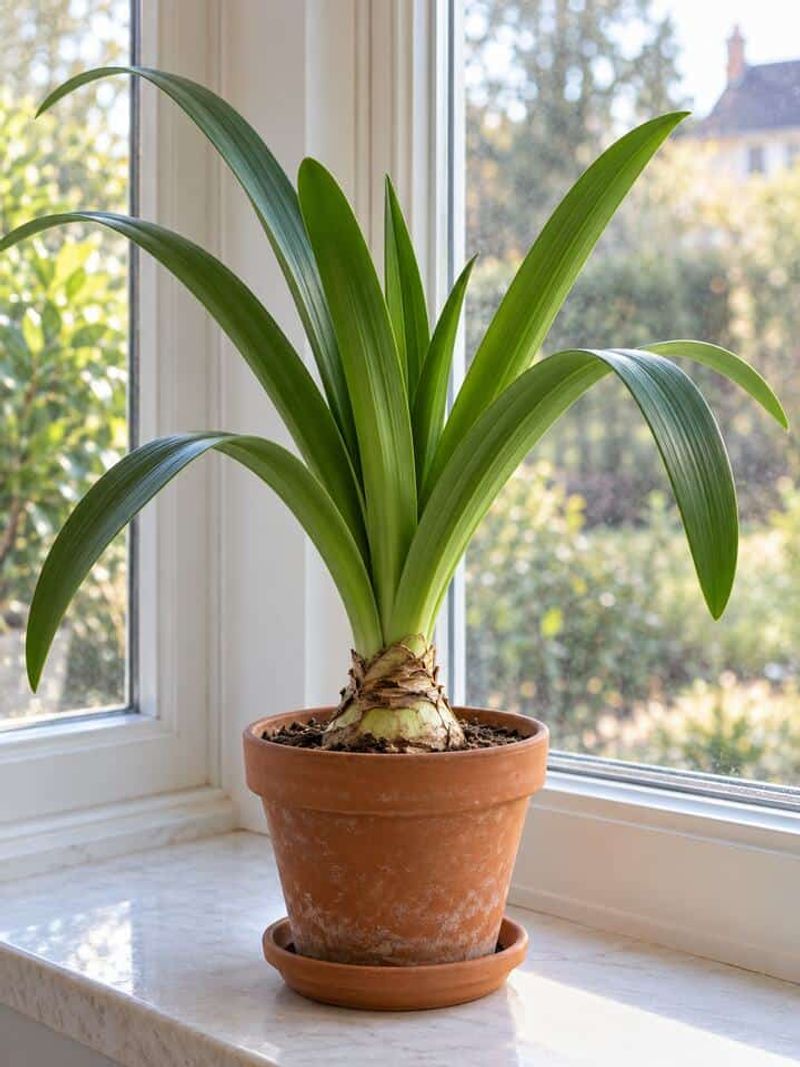
After the show ends, your focus shifts. Leaves do nothing for the flowers you already enjoyed, so this is about next year.
If you want another flowering cycle, keep the leaves. Clemson Extension and South Dakota State both describe keeping the foliage after bloom to maintain the bulb.
Here the sunny window finally earns its place. Bright light supports leaf growth, which is the opposite of what you wanted during bloom.
If pets share your home, keep the pot out of reach. The ASPCA lists amaryllis as toxic to dogs and cats.
Cool for the flowers, sunny for the leaves, and the bulb gets a fair shot at another round.