Cotton-White Mouth Snake In Louisiana Is Not Ready To Slow Down for Winter
A venomous snake can sit stiff and chilly on a January morning, then bask beside a ditch by lunchtime. I learned that the hard way while raking leaves near a soggy corner of my Louisiana yard.
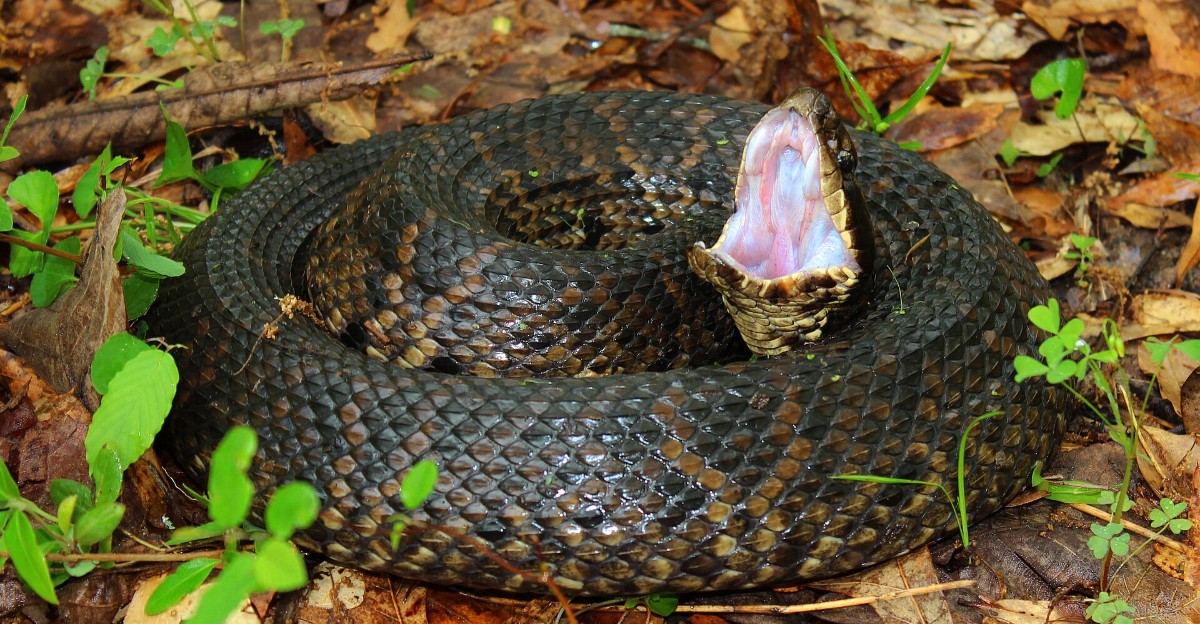
The snake in question has a mouth lined with bright, cotton-white tissue. It flashes that pale interior as a warning, and once you see it, the image stays with you.
In Louisiana, mild winters change the usual cold-season script for reptiles. These snakes do not sleep straight through until spring. They slow down, tuck into shelters, and slip back out whenever the sun warms things up.
You might notice one on a sunny log or a warm stretch of ditch bank. I sure did, and it made me rethink every leaf pile and culvert near my garden.
Winter doesn’t shut these snakes down; it just slows them, and a warm day wakes them right back up.
Sunny Winter Afternoons Can Coax a Cottonmouth Out of Hiding
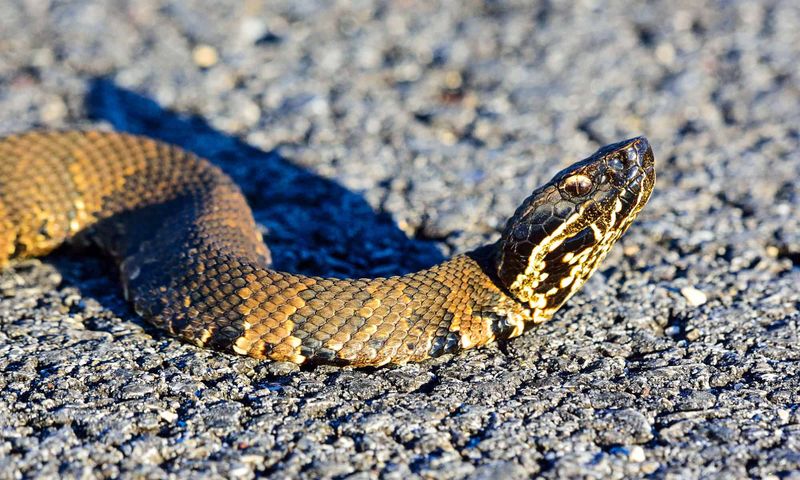
A sixty-degree day in December feels like a gift to people. Cottonmouths seem to agree, because sunshine is their heater.
Snakes are ectotherms, which means their body temperature follows the world around them. When the air and ground warm up, so do they. That warmth lets their muscles and digestion work again, even in the middle of winter.
Across much of Louisiana, winter brings plenty of mild afternoons between cold fronts. Wildlife experts note that cottonmouths here may come out to bask on those days.
They often pick sunny logs, stumps, rocks, or the dry edges of ditches and pond banks. The pattern is easy to follow once you know it. Cold, gray mornings keep them tucked away. Bright, calm afternoons after a few warm days are the times to stay alert.
Southern parishes near the coast stay milder, so snakes there may surface more often than those up north near Arkansas. A hard freeze sends them back under cover quickly.
My simple rule is to watch the forecast. If a warm spell follows a chilly week, I wear boots and keep my eyes on the ground near water before I start any winter yard chores.
Brumation Keeps Water Moccasins Drowsy but Not Asleep
Bears get all the credit for winter naps. Snakes do something different, and the word for it is brumation.
During brumation, a cottonmouth slows its heartbeat, breathing, and appetite. It does not fall into a deep, unbroken sleep. Instead, it rests in a sheltered spot and stays somewhat aware of its surroundings.
Researchers have found that brumating snakes still need water. On warmer days, they may leave their shelter to drink or bask, then crawl back when temperatures drop. That stop-and-start rhythm is why winter sightings happen in the Deep South.
Here is a fun fact for your next family dinner. The name cottonmouth comes from the pale lining of its mouth, while water moccasin is an older nickname used across the South.
Scientists call it Agkistrodon piscivorus, which roughly means hook-toothed fish eater. A drowsy snake is not a harmless snake. Cold reptiles may move slowly, yet they can still strike if stepped on or grabbed.
Their venom works just as well in January as in July. So treat a quiet, still snake with the same respect as a busy summer one. Slow does not mean safe.
Brush Piles and Crayfish Burrows Make Cozy Snake Hideouts
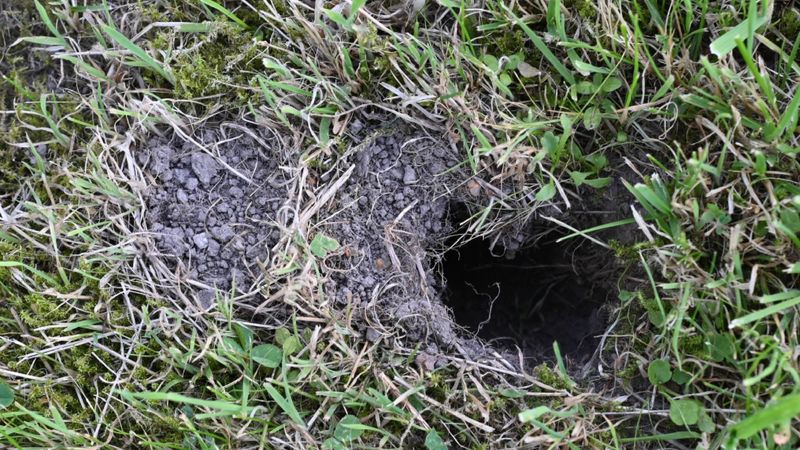
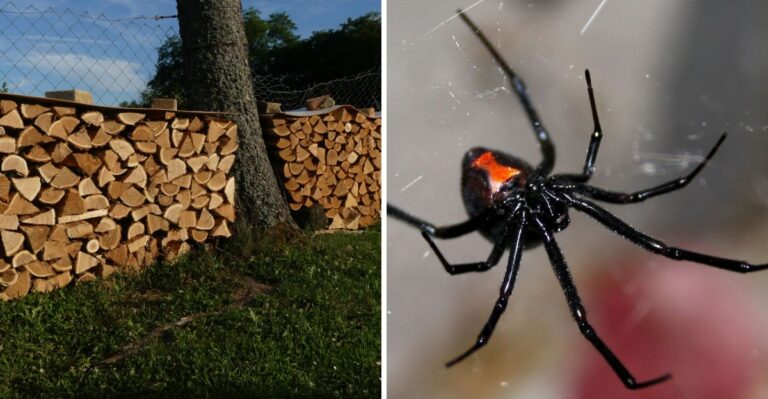
Last winter I moved an old stack of firewood and found a crayfish chimney right beneath it. That little mud tower suddenly made sense of everything I had read.
Cottonmouths often leave open water in winter and look for frost-free shelter on land. Favorite spots include hollow logs, stumps, leaf piles, brush heaps, and old animal burrows.
Crayfish burrows are a common choice in wet Louisiana soils. Drainage ditches and culverts also draw them in. These spots hold moisture, block wind, and sit close to homes.
That puts winter snakes nearer to gardens and driveways than many folks expect. Gardeners create plenty of hiding places without meaning to. Compost corners, stacked pots, lumber scraps, and thick ground covers near water can all serve as shelter.
A few habits help a lot. Wear sturdy boots and gloves when you clean out these areas. Use a rake or long tool to lift debris instead of reaching in with bare hands.
Store firewood off the ground and away from the house. Keep grass short around ditches. With fewer hiding spots near your busy areas, surprise meetings become much less likely.
That Wide-Open White Mouth Is a Warning, Not a Threat
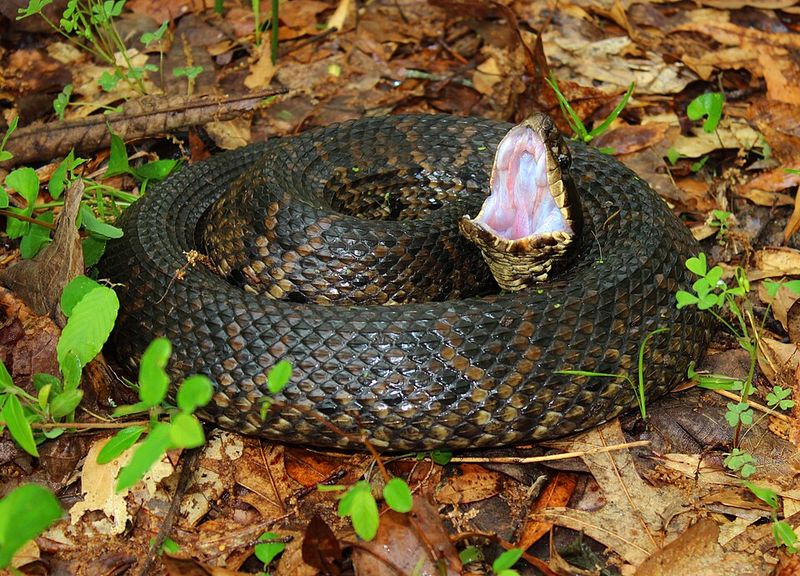
Few sights in nature get the message across faster. A cottonmouth coils, tilts its head up, and opens its mouth wide to show bright white tissue.
That display is a bluff meant to say back off. Many cottonmouths will also vibrate their tails and release a musky smell when bothered. Studies of their behavior show they usually try to escape or warn before biting.
Their reputation for chasing people is mostly myth. Most bites happen when someone steps on one, picks one up, or tries to swat at it. Giving the snake space is the safest choice.
To spot one, look for a heavy body and a broad, blocky head. Adults are often dark brown, olive, or nearly black, sometimes with faint crossbands.
Young cottonmouths look quite different. They show bold, coppery bands and a yellowish tail tip that fades with age.
If you see the white gape, stop moving toward it. Back away slowly, keep pets and kids close, and let the snake leave on its own terms. It wants the encounter to end just as much as you do.
Juvenile Cottonmouths Wiggle Yellow Tail Tips to Lure Prey
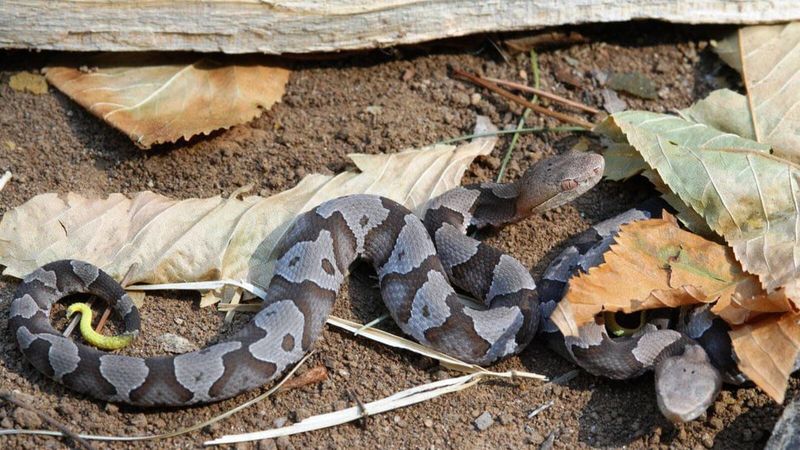
Talk about a clever fishing trick. Baby cottonmouths wave their bright yellowish tail tips like tiny worms to fool hungry frogs.
Scientists call this caudal luring. A curious frog or lizard creeps closer to grab the wiggling bait, and the young snake strikes. Copperheads, close cousins of the cottonmouth, use the same trick.
Adults have a wide menu. They eat fish, frogs, salamanders, small mammals, birds, eggs, and even other snakes, including smaller cottonmouths. They will also scavenge, which surprises many people.
Winter feeding slows way down because a cold snake digests food poorly. Still, on warm stretches, an active cottonmouth may grab an easy meal near water if one comes along.
For gardeners, food supply matters. Ponds stocked with fish and loud with frogs naturally draw these snakes. So can rodents attracted by spilled birdseed or pet food left outdoors.
You can manage this without harming wildlife. Clean up fallen seed, store feed in sealed bins, and keep pond edges trimmed so you can see what is resting there. Fewer easy meals near the house means fewer reasons for a snake to linger.
Harmless Water Snakes Often Get Mistaken for Cottonmouths
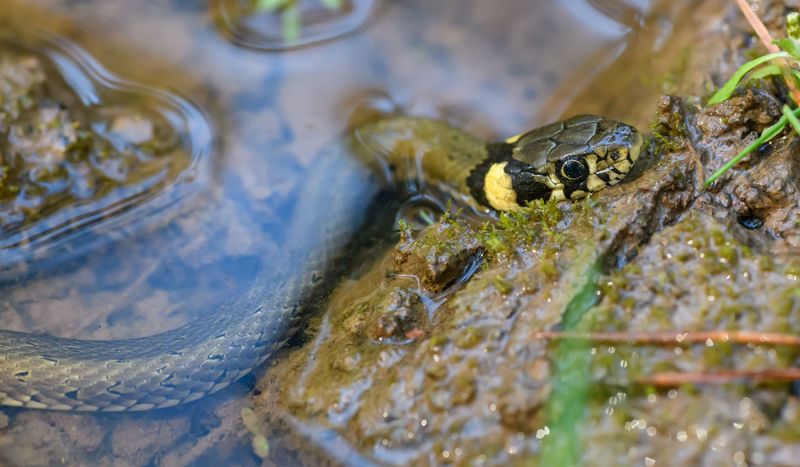
Ask around any bait shop and you will hear plenty of moccasin stories. Many of those snakes were actually harmless water snakes.
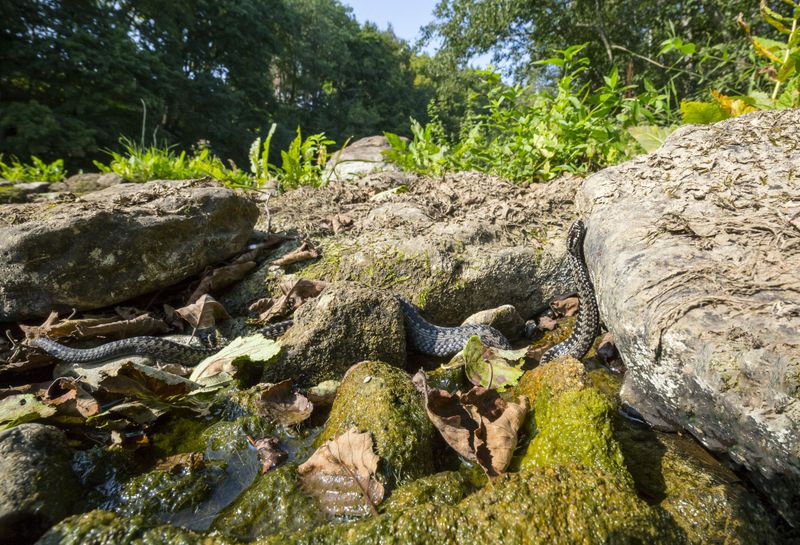
Louisiana has several nonvenomous water snakes, such as the banded, diamondback, and broad-banded types. They share the same ponds and bayous, and they can look dark and chunky when wet. Sadly, they are often harmed because of mistaken identity.
Swimming style offers a helpful clue. Cottonmouths tend to float high on the surface with much of the body showing. Water snakes usually swim with most of the body below the water line.
Up close, cottonmouths have vertical, cat-like pupils and heat-sensing pits between the eye and nostril. Water snakes have round pupils and no pits. Still, checking these details means getting too close, so admire from a distance.
Behavior differs too. Water snakes usually flee fast or flatten and bite if handled, but they lack venom.
The Louisiana Department of Wildlife and Fisheries offers snake guides with photos. Learning a few local species pays off, since most snakes you see near water pose no venom risk and help keep rodent and fish populations in balance.
Tidy Yard Edges Help You Share Space With Cottonmouths

After a few winters of snake sightings, I stopped seeing cottonmouths as villains. They are native neighbors that eat rodents and fit into healthy wetlands.
Sharing space works best with a few habits. Keep grass short near ditches, ponds, and paths.
Clear brush piles and junk from areas you use often, and move compost bins away from doorways.
Seal gaps under sheds, porches, and foundations. Rodent control matters too, since fewer mice mean fewer hungry visitors.
When you spot a cottonmouth, stay calm and step back about six feet or more. Do not try to catch or harm it, since many bites happen that way. If one is inside a garage or high-traffic spot, call a licensed wildlife removal service.
If a bite happens, call 911 and get to a hospital quickly. Stay still, remove rings or tight items, and skip ice, cutting, or suction.
Winter in Louisiana still has snake days, so keep your boots handy all season. A little awareness lets you enjoy mild afternoons outside while respecting the wildlife that calls those soggy edges home.