When Crows and Blue Jays Mob One Tree in Your Ohio Yard, There’s Probably an Owl in It
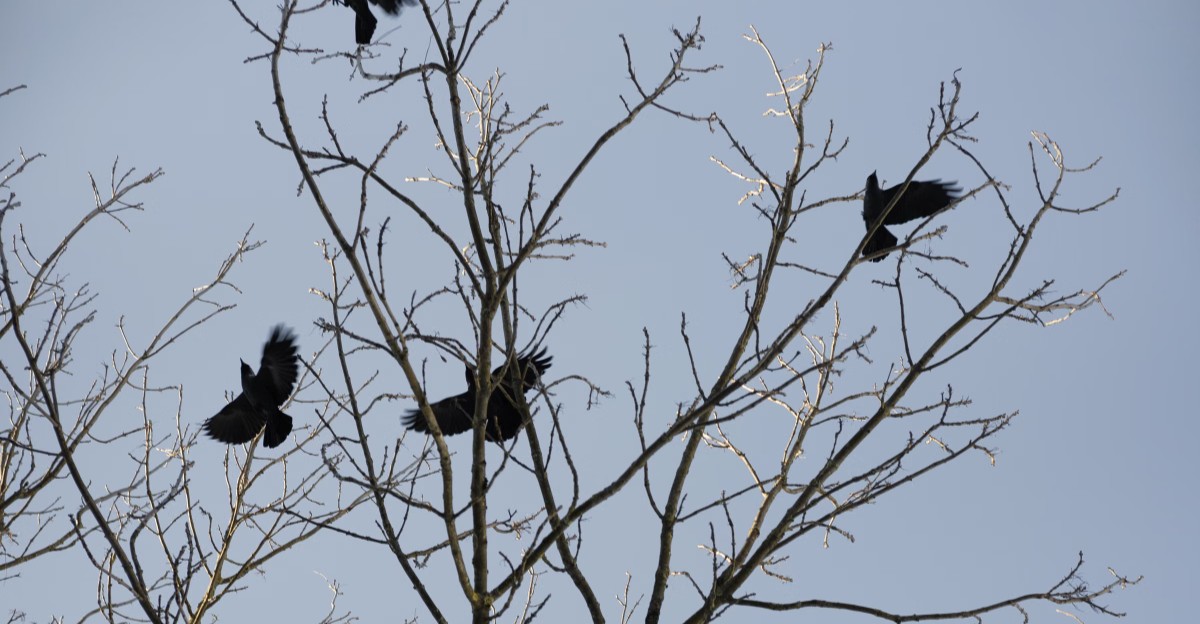
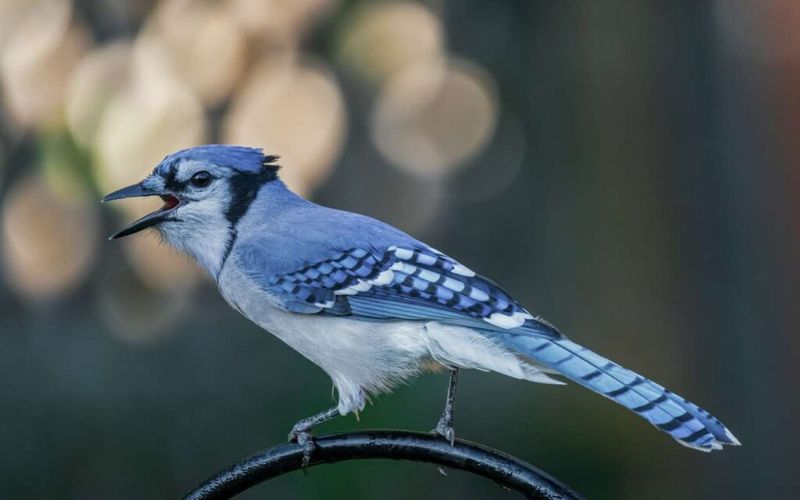
Blue jays can copy the scream of a Red-shouldered Hawk so well that even seasoned birders get fooled. That talent is only one trick in a much bigger backyard drama.
Some mornings, my quiet Ohio yard turns into a shouting match. Crows caw nonstop, jays shriek, and every bird seems to circle the same tree.
Chickadees and titmice often pile in too, scolding from the lower branches.
I used to blame squirrels or a stray cat. Then I learned that small birds treat certain daytime sleepers like a wanted poster come to life.
They gather, dive, and yell until the visitor gives up and flies off.
You need sharp eyes and a little patience to spot what they spotted first. The guest is often sitting perfectly still, wearing bark-colored feathers.
Whoever is perched up there has clearly landed on the neighborhood’s most-wanted list, and the reason makes perfect sense once you know it.
1. That Noisy Crowd of Crows Around One Tree Is Pointing at Something
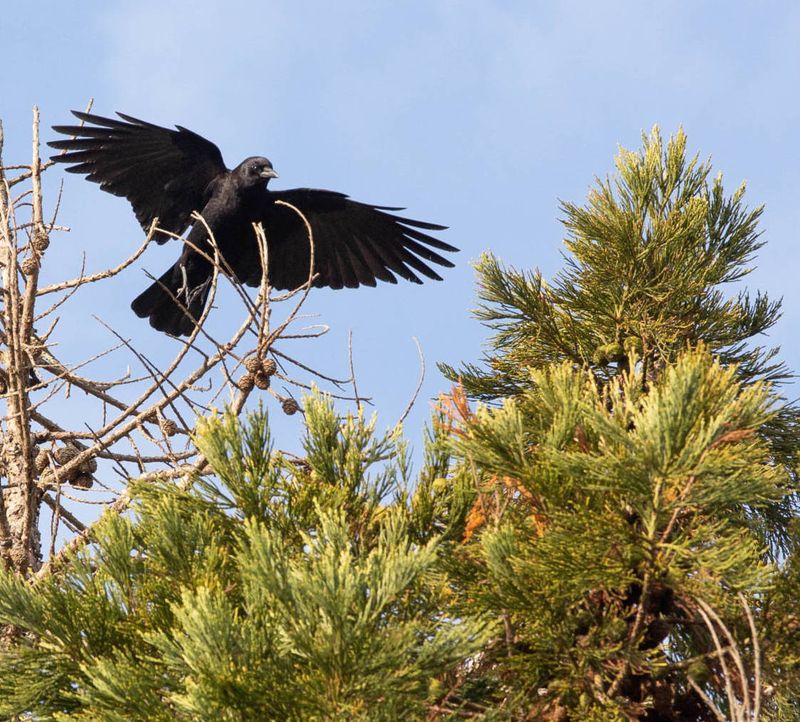
Loud birds are rarely random. When a dozen crows and a few blue jays lock onto a single tree and refuse to leave, they are usually telling you exactly where to look.
Scientists call this behavior mobbing. Birds gather near a predator, call loudly, flick their wings, and sometimes swoop close.
Crows may even dive within a few feet of the target. The goal is to make the hunter feel spotted and unwelcome.
In Ohio, the most common reason for an all-day uproar like this is a roosting owl. Owls hunt mostly at night and rest during the day, often tucked against a trunk or hidden in thick evergreen branches.
Songbirds know owls are a real threat, so a sleeping one still sparks a protest.
Hawks get mobbed too, so keep an open mind. A Cooper’s Hawk or Red-tailed Hawk perched in your yard can trigger the same racket.
Cats, snakes, and foxes sometimes earn a scolding as well.
A few clues tip the odds toward an owl. The noise lasts a long time, the birds stay focused on one spot, and the predator barely moves.
Hawks usually fly off sooner. A stubborn, motionless target is classic owl behavior.
2. Why a Sleepy Owl Makes Blue Jays So Furious
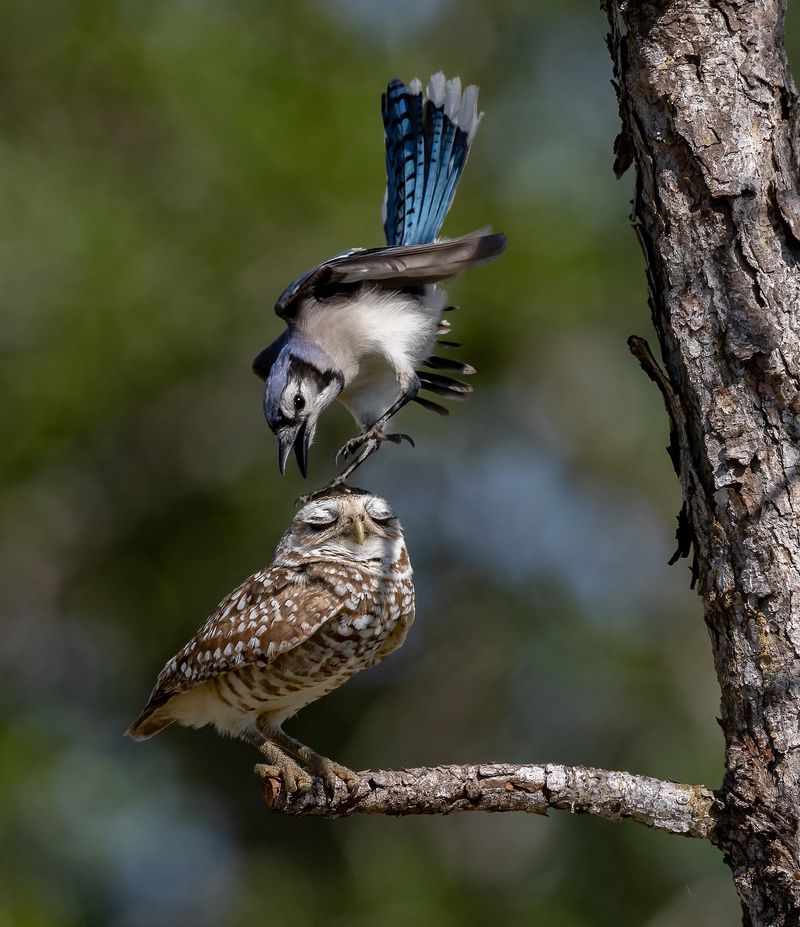
Owls have a reputation among small birds, and it is well earned. Great Horned Owls will take crows, and Eastern Screech-Owls hunt sleeping songbirds at night.
To a jay, an owl in daylight is a dangerous neighbor caught napping.
Mobbing pays off in several ways. First, it pushes the owl to leave the area, often to a quieter roost far from nests.
Second, it warns every other bird nearby that danger is close. A hunter that has been noticed loses its biggest advantage, which is surprise.
Research also suggests young birds learn from these events. By joining a mob, they figure out what a predator looks like and how to respond.
Crows are especially good at this, and studies show they can remember threats for years.
The owl rarely fights back during the day. It may puff up, glare, or snap its bill, but it usually waits or flies away.
That explains why the commotion can drag on for an hour or more.
Honestly, I find it oddly heartwarming. Different species that normally ignore each other suddenly cooperate.
Crows, jays, chickadees, and robins all join the same neighborhood watch, at least until the owl moves on.
3. Meet the Great Horned, Barred, and Screech Owls Behind the Fuss
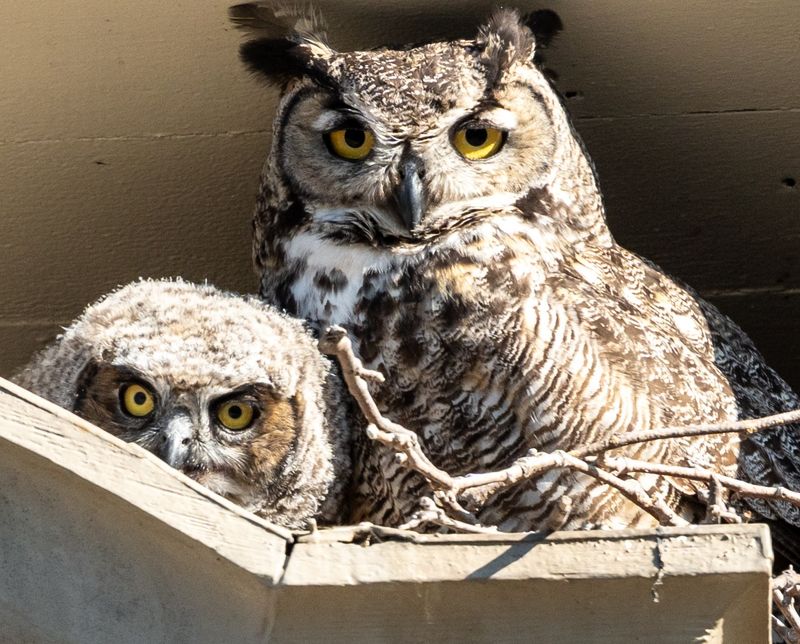
Ohio has three owls that most often stir up backyard drama. Knowing them helps you guess what the crows found.
The Great Horned Owl is the big one, with feathery ear tufts and bright yellow eyes. It lives across the whole state, from farm woodlots to city parks.
Crows especially dislike it, since it is one of their main predators. A huge, angry crow mob often means one of these is around.
The Barred Owl is round-headed with dark brown eyes and striped belly feathers. It prefers mature woods, river corridors, and wet forests, which are common in southern and eastern Ohio.
You may know its famous call, which sounds like “Who cooks for you?”
The Eastern Screech-Owl is only about the size of a soda can. It comes in gray or reddish-brown forms and thrives in suburbs with old shade trees.
Jays and chickadees love to scold these little owls, often while they sit in a tree cavity opening.
Other owls pass through too. Long-eared and Northern Saw-whet Owls show up in winter, often hiding in pines.
They are less common, but a mob in a dense evergreen during cold months could reveal one.
4. Follow the Birds’ Gaze to Find the Hidden Owl
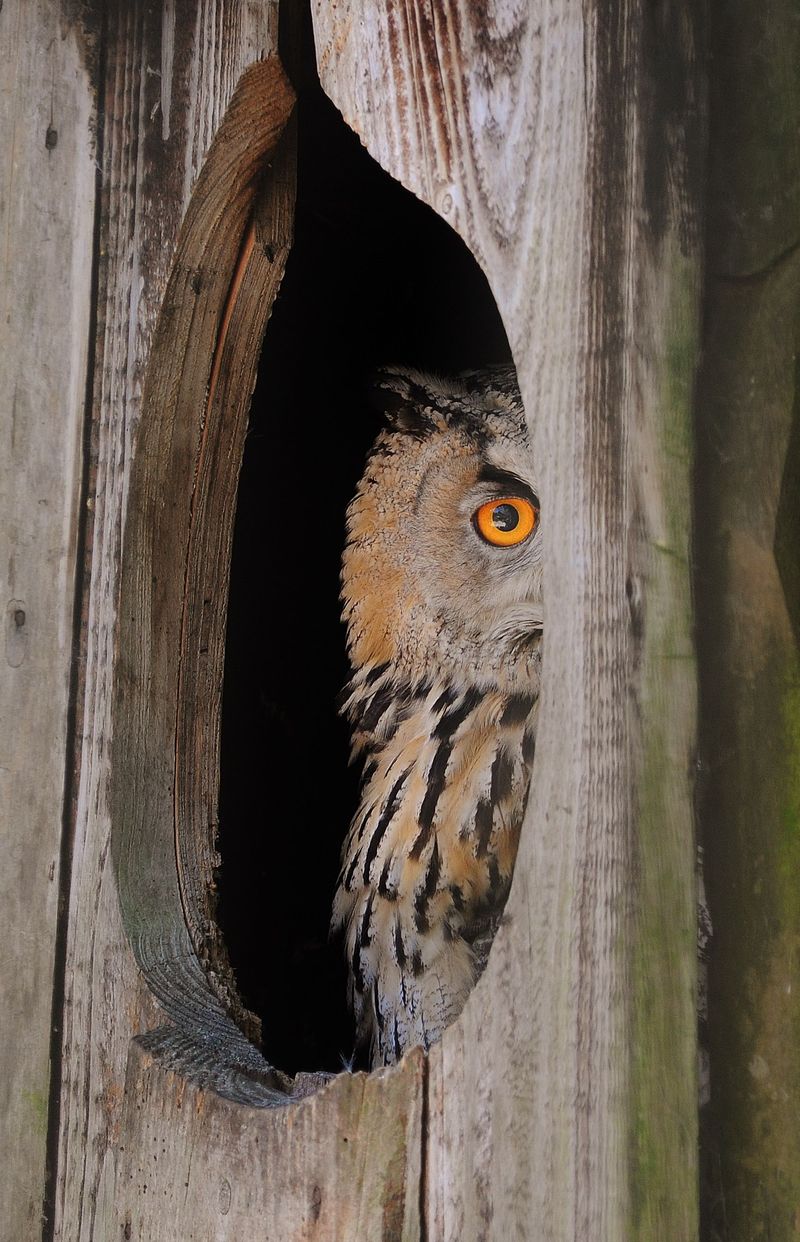
Here is my favorite trick. Watch where the angry birds are looking, not where they are flying.
Their heads and beaks usually point straight at the hidden guest.
Start by scanning close to the trunk. Owls like to sit right against the bark, where their feathers blend in.
Check thick branch forks, ivy-covered trunks, tree holes, and dense evergreens like spruce, pine, and hemlock.
Binoculars make a huge difference. Look for a shape that seems too round or too still for a branch.
Ear tufts, a pale face disk, or two dark eyes are clear giveaways, well, more like telltale clues.
Keep your distance once you find it. Owls need daytime rest, and a crowd of people adds more stress.
Stay back at least 50 feet if you can, speak quietly, and avoid flash photography.
Do not try to chase away the mobbing birds either. The owl will usually move when it feels ready.
Your job is simply to enjoy the moment.
Check the ground below favorite roost trees too. Whitewash droppings and gray pellets full of fur and bones are strong signs an owl visits regularly.
Kids love pulling these pellets apart, using gloves, of course.
5. Fall and Winter Crow Mobs Get Louder in Bare Ohio Trees
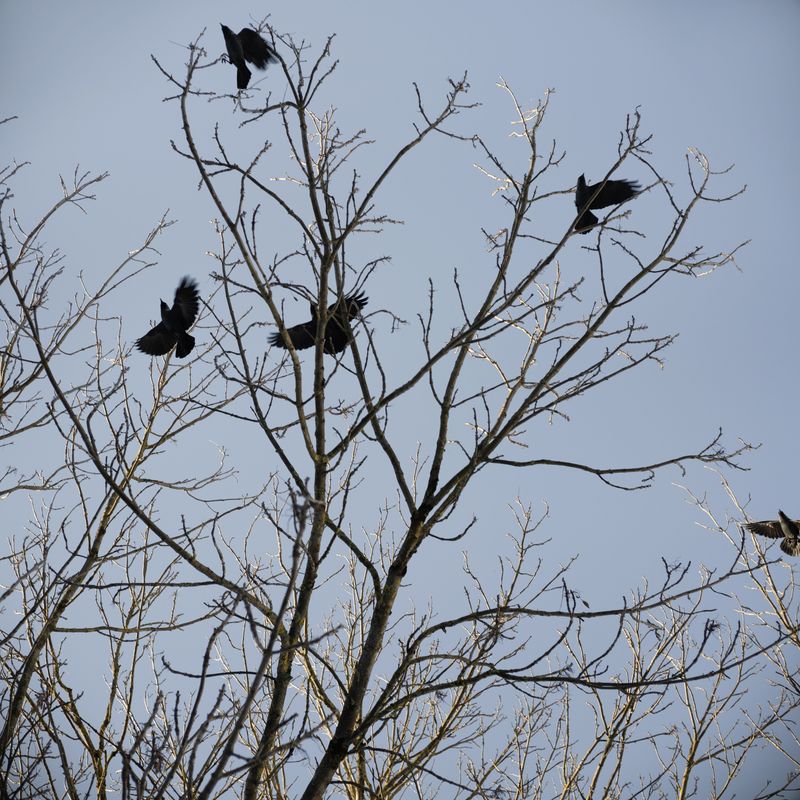
Mobbing happens all year, but the season changes the show. Many Ohio birders notice the loudest crow mobs in late fall and winter.
Part of the reason is simple visibility. Once leaves drop, owls lose their cover and roost in plainer view.
Crows gather in larger groups during colder months, so more birds can join the protest.
Timing with owl life matters too. Great Horned Owls start courting in December and January, and many nest in late winter.
Those deep hooting duets at dusk mean the big owls are claiming territory, making them easier to notice.
Spring and summer bring a different kind of urgency. Songbirds have eggs and chicks to protect, so they react sharply to any predator near nests.
Jays can get extra bold during nesting season.
Late summer offers its own fun. Young owls leave their nests and wander, sometimes ending up in yards where they have never been before.
Clumsy youngsters often draw plenty of scolding.
So there is no single mobbing season. Still, if you hear a winter crow riot in an Ohio maple or oak, I would bet on an owl before anything else.
Grab a coat and take a look.
6. An Owl Box on a Mature Tree Might Bring Screech Owls Closer
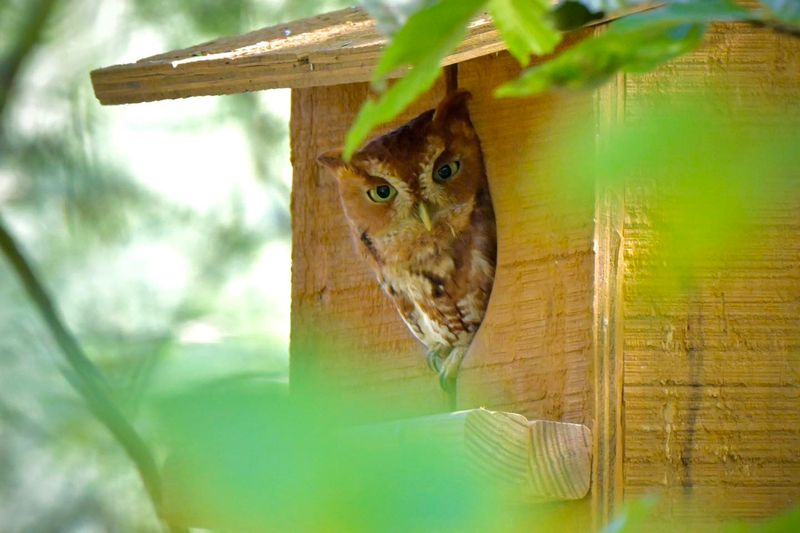
Want regular owl visits? A nest box could do the trick, especially for Eastern Screech-Owls.
These small owls nest in tree cavities, and suburbs rarely have enough old hollow trees.
Choose a box about 8 by 8 inches wide and 12 to 15 inches tall, with a 3-inch entrance hole. Add a couple of inches of wood shavings inside, since owls do not bring nesting material.
Skip the outside perch, which can help predators.
Mount it 10 to 30 feet high on a sturdy tree trunk near the woods edge. Late winter is a good time to hang it before the spring nesting season starts.
Barred Owls need a much larger box, so check plans from the Ohio Division of Wildlife or Cornell Lab of Ornithology.
Leave mature trees standing whenever it is safe. Old oaks, sycamores, and maples with natural cavities are prime owl real estate.
A safely located snag with no risk to people or buildings is a wildlife jackpot.
Fair warning, though. Jays and crows may scold any owl that moves in.
To me, that free alarm system is part of the charm.
7. Rodent Poison in the Garden Puts Owls at Real Risk
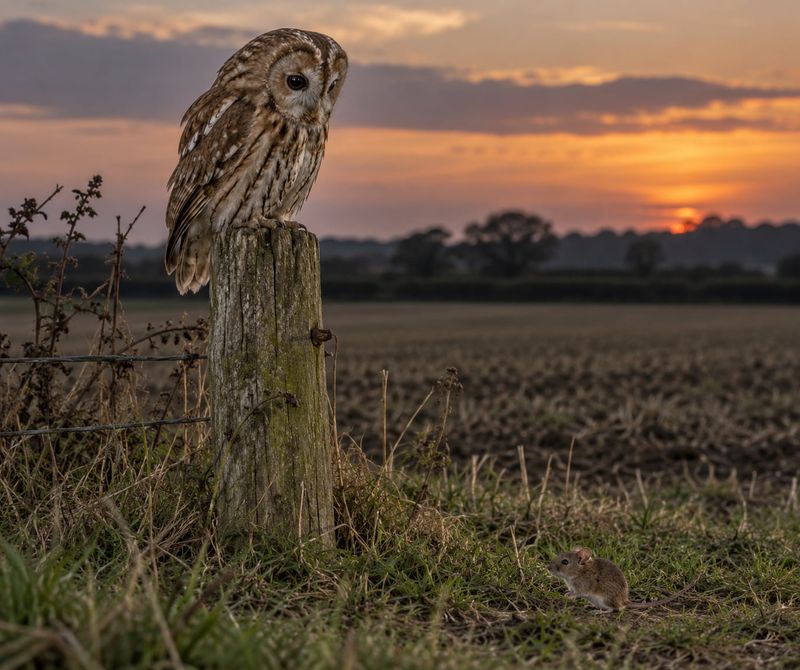
Owls do serious pest patrol for gardeners. A single Barn Owl family can eat hundreds of rodents in a season, and Great Horned Owls take mice, voles, and rabbits that munch vegetables.
Rat and mouse poison can turn that help into harm. An owl that eats a poisoned rodent can get sick itself, a problem called secondary poisoning.
Wildlife rehab centers across the country regularly treat raptors affected by these baits.
Safer choices exist. Use snap traps inside enclosed boxes, seal gaps in sheds and garages, and store birdseed and pet food in tight containers.
Clean up spilled seed under feeders to avoid drawing extra mice.
Go easy on insecticides too. Screech-Owls eat plenty of beetles, moths, and crickets, so a healthy bug population feeds them.
Native plants support the whole food chain. Ohio natives such as oaks, black cherry, goldenrod, and asters feed the insects and small animals owls rely on.
A small brush pile or a patch of unmowed grass along the edge helps too.
Light matters as well. Use motion sensors or shielded bulbs outdoors, since dark nights help owls hunt.
Your garden gets a natural pest crew in return.
8. Your Next Crow and Jay Alarm Is an Invitation to Look Up
Every backyard has a soundtrack, and mobbing calls are the plot twist. Learning to recognize them turns ordinary yard work into a treasure hunt.
Get to know the voices. Crows give harsh, repeated caws that grow faster when agitated.
Blue jays add loud jeer calls and sometimes that hawk imitation. Chickadees speed up their chick-a-dee notes, adding extra dee sounds when danger feels serious.
Keep binoculars near the back door. When the racket starts, step outside quietly and scan the tree the birds are circling.
Even if you miss the owl, you will learn which trees predators favor.
Record what you see. Free apps like Merlin can help identify calls, and eBird lets you share sightings with researchers.
Ohio birders contribute thousands of reports, which helps scientists track owl populations.
Remember that owls in Ohio are protected under the federal Migratory Bird Treaty Act. Watching is wonderful, but never handle, feed, or keep one.
If you find an injured owl, call a licensed wildlife rehabilitator.
Personally, I now cheer when the crows start yelling. It usually means something wild and beautiful is sitting quietly nearby, waiting for you to notice.