Don’t Top Your Georgia Crape Myrtles – Do This One Thing Instead
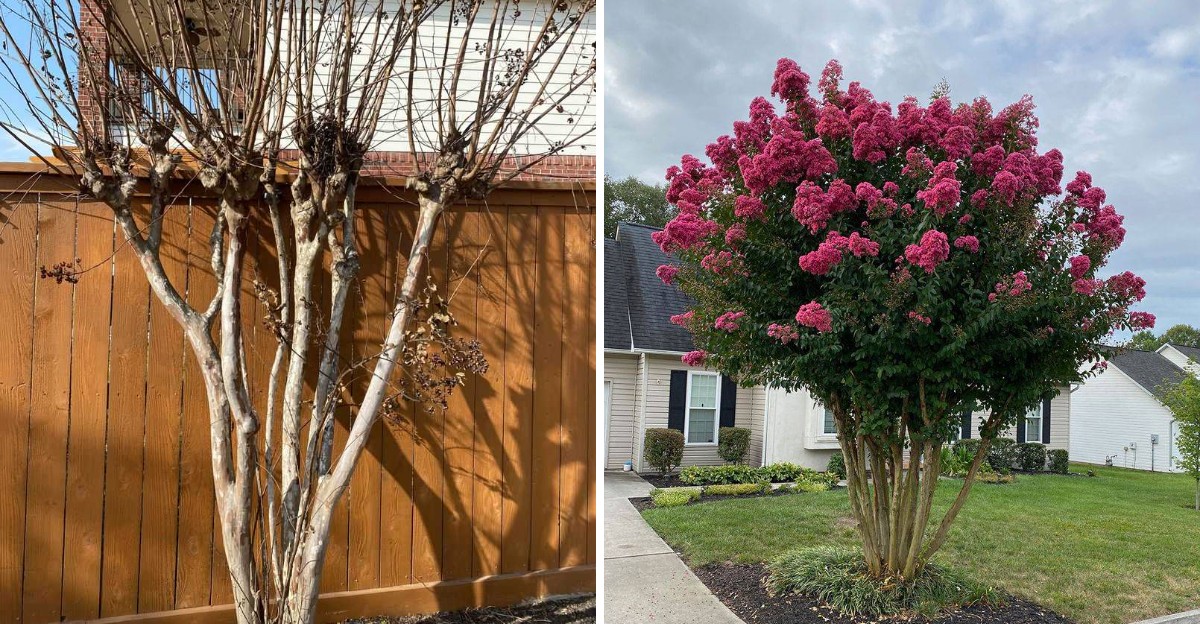
Every winter, perfectly healthy flowering trees across Georgia get sawed down to knobby stumps that look like giant clenched fists. Gardeners even gave this habit a nickname borrowed from a crime show.
The strange part is that the trees often bloom anyway. They also grow back thin, floppy shoots that bend under heavy flower clusters after a summer rain.
Those swollen knobs stay put for years.
I can’t drive past a row of chopped trunks without wincing a little. I think the smooth, peeling bark on these trees is one of the prettiest sights in a winter yard.
You lose most of that charm when every branch ends in a stub.
There is a better way to use those loppers, and it doesn’t involve chopping off every branch. A few thoughtful cuts can help your trees develop stronger limbs while keeping their natural shape and summer blooms.
1. Those Knobby Crape Myrtle Knuckles Are Telling a Story
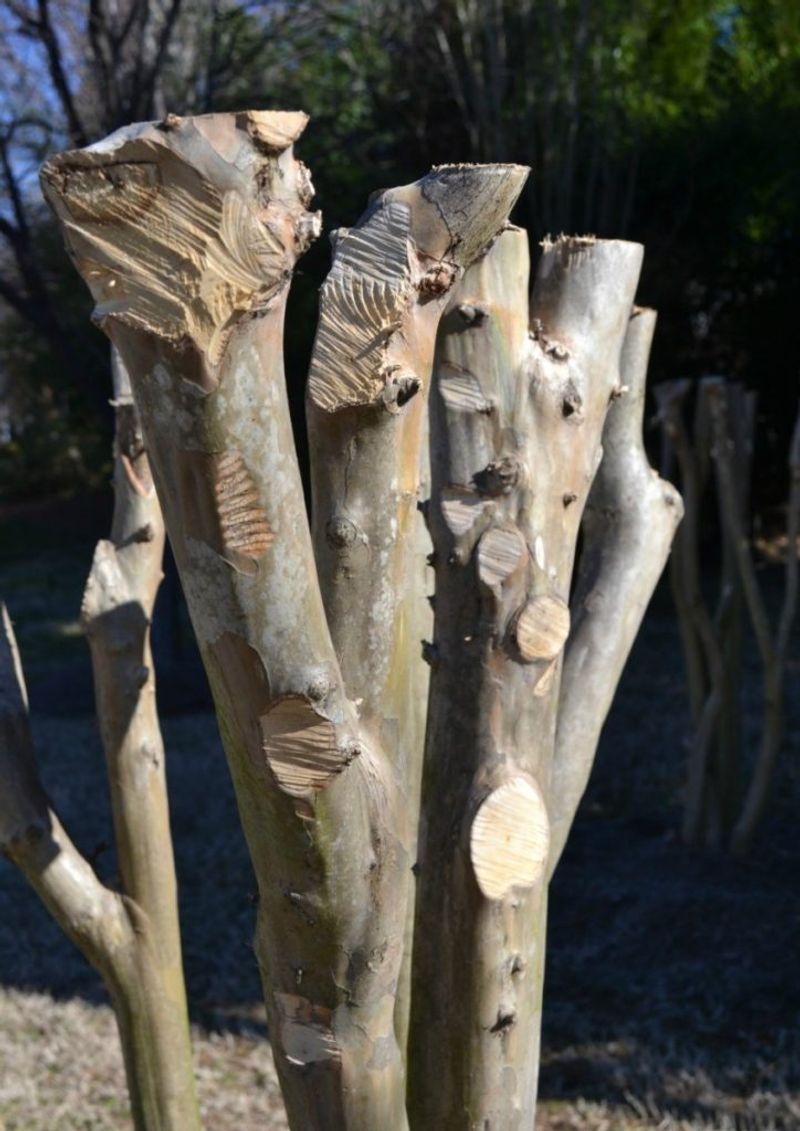
Walk through almost any Georgia neighborhood in March and you will spot them. Thick, swollen knobs sit at the top of crape myrtle trunks like fists raised to the sky.
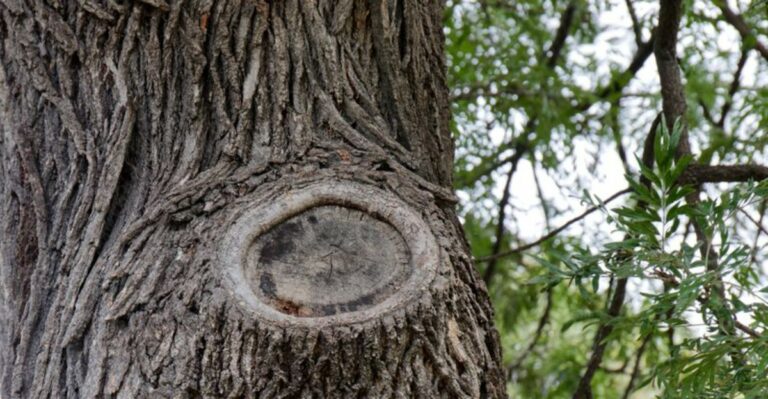
Those lumps are called knuckles, and they form when a tree gets cut back to the same spot year after year. The tree packs wound tissue and dormant buds into that one area.
Each spring, a crowd of skinny sprouts bursts out of the knob all at once.
Gardeners nicknamed this habit ‘crape murder,’ and UGA Extension experts have warned against it for decades. The cuts are not just a style problem.
Large, flat wounds on thick wood seal slowly, which leaves the tree open to decay for a long time.
I find it fascinating that a tree this tough puts up with such rough treatment and still flowers. That stubbornness fools many people into thinking topping works.
In reality, the tree is spending extra energy to recover instead of building a strong frame.
So when you see those knuckles, read them as a warning sign. The tree is showing you a history of repeated stress, and you have the power to change the next chapter.
2. Selective Pruning Is the One Thing Your Crape Myrtle Wants
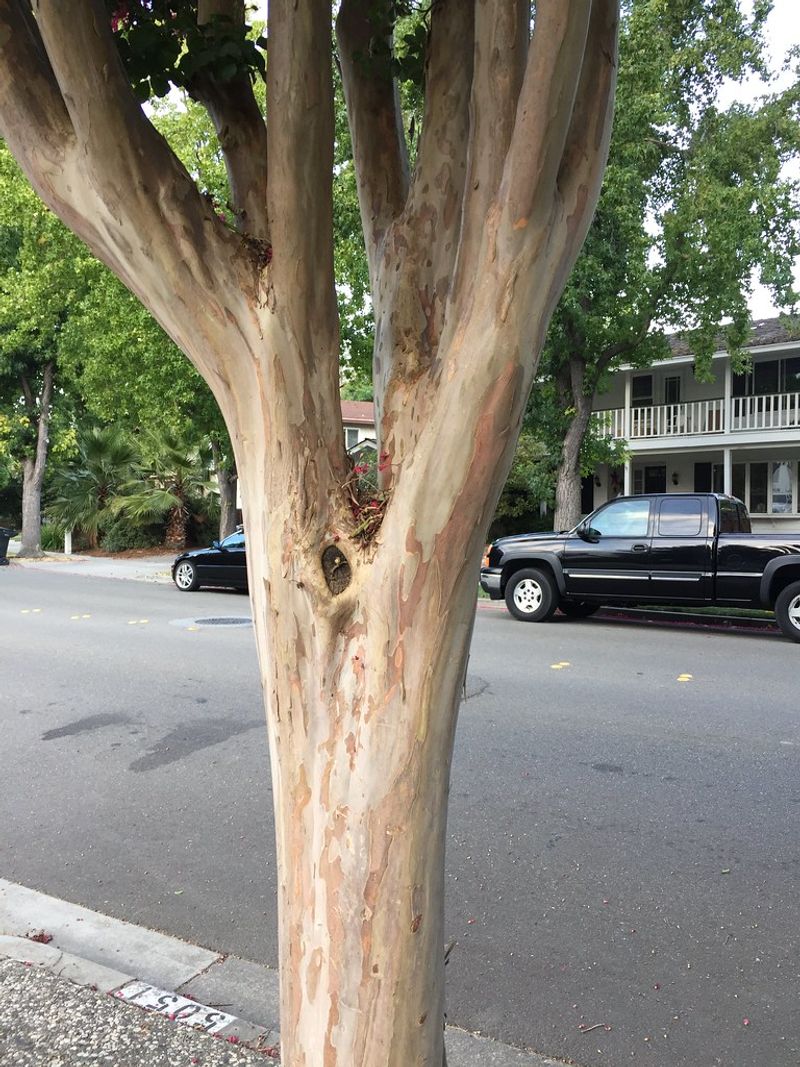
Fewer cuts, smarter cuts. That simple swap is the one thing that turns an ordinary crape myrtle into the star of your yard.
Selective pruning means you remove whole branches back to where they start, instead of chopping every stem to the same height. Arborists call these thinning cuts.
You keep the tree’s natural vase shape while clearing out anything that crowds, rubs, or points the wrong way.
Crape myrtles bloom on new growth from the current season. That fact matters, because it means the tree does not need a hard haircut to make flowers.
Healthy, well-spaced branches will push out fresh shoots and bloom just fine on their own.
I like to think of it as editing a story rather than tearing out chapters. You step back, look at the overall shape, and only trim what clearly doesn’t belong.
Some years, a mature tree barely needs anything at all.
The payoff shows up quickly. You get sturdy limbs that hold flower clusters upright, better airflow through the canopy, and that gorgeous peeling bark on full display.
Your neighbors may even start asking what you did differently, and the honest answer is that you did less.
3. Late Winter Is Prime Time for Crape Myrtle Pruning in Georgia
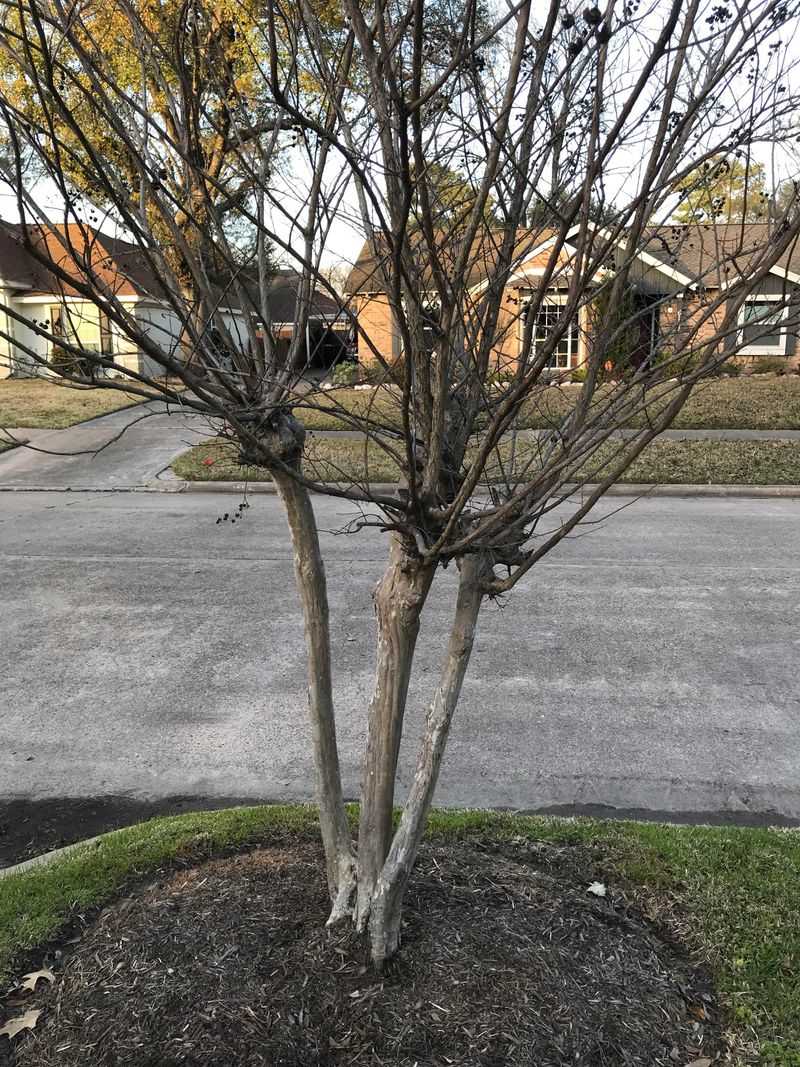
Timing can make or break your pruning plans. For crape myrtles, the sweet spot in Georgia falls in late winter, usually around February, before buds start to swell.
The tree is dormant then, so it isn’t wasting energy on leaves. Bare branches also make it easy to see the whole structure.
You can spot crossing limbs, weak forks, and crowded centers in a way that’s impossible once the canopy fills in.
Regional differences matter a bit. Gardeners near Valdosta or Savannah may see buds break a few weeks earlier than folks up in the northern mountains.
Watch your own tree rather than a calendar, and finish before new growth appears.
Skip heavy pruning in late summer or fall. Cuts made then can trigger tender shoots that don’t have time to harden before the first frost.
That soft growth often gets damaged by cold snaps.
Summer still has one small job for you, though. Snipping off spent flower clusters right after the first flush can sometimes encourage a smaller second round of blooms.
It’s optional, but on young or small trees it’s an easy way to stretch the color show a little longer.
4. Thin, Lift, and Clean Up Crape Myrtle Branches Like a Pro
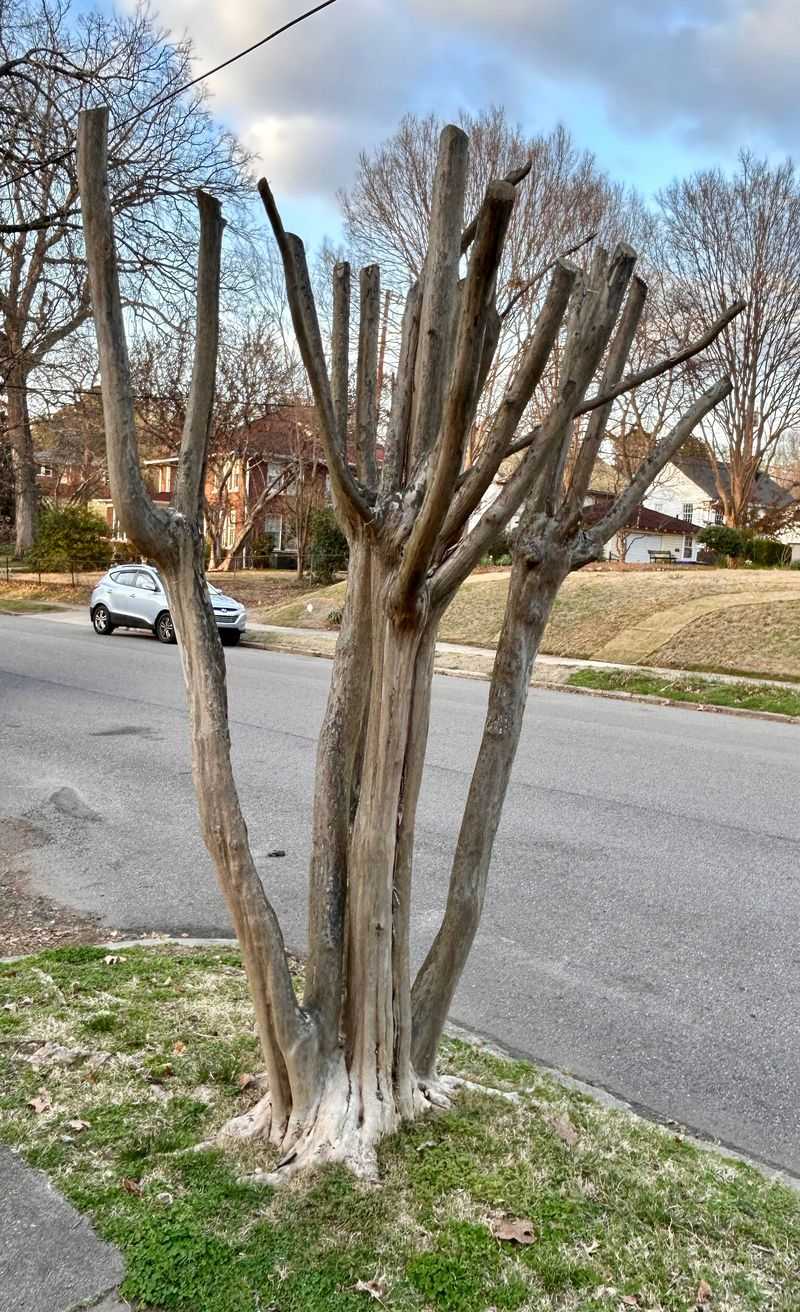
A good pruning session starts in the garage, not the yard. Grab sharp hand pruners for twigs, loppers for branches up to about an inch and a half, and a pruning saw for anything thicker.
Wipe blades with a household disinfectant between trees to avoid spreading disease.
Begin at the ground. Pull or cut off the suckers sprouting around the base, since they steal energy and clutter the trunks.
Next, lift the canopy by removing side branches along the lower third of the tree. This step shows off the smooth, mottled bark that makes crape myrtles so striking in winter.
Most trees look best with three to five main trunks.
Then move inward. Remove lifeless or damaged wood, branches growing toward the center, and any limbs that cross or rub against each other.
Rubbing spots create wounds that invite trouble later.
Finally, thin crowded areas so light and air can move through. Cut each branch back to its point of origin or to a larger limb, just outside the slightly swollen collar.
Leaving that collar intact helps the wound seal properly.
Step back often while you work. A few careful cuts usually beat a dozen hasty ones.
5. Floppy Crape Myrtle Shoots Can’t Hold Up Heavy Blooms
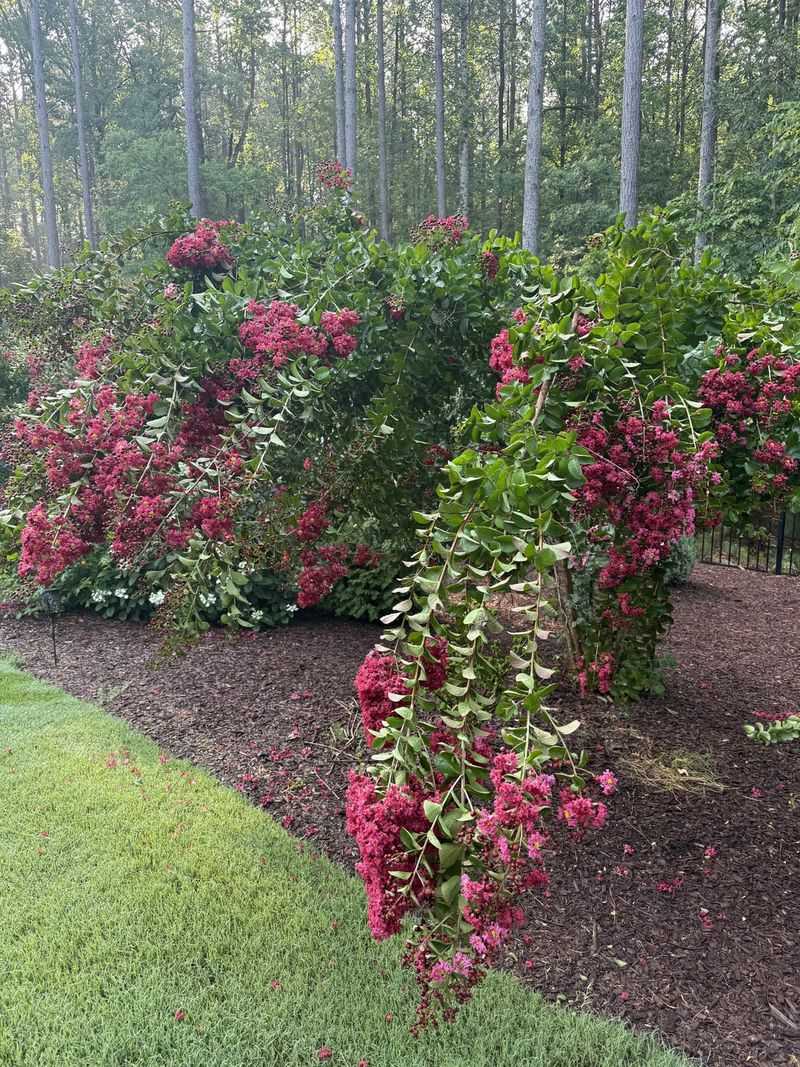
After a summer thunderstorm, topped crape myrtles often look like they’ve been through a wrestling match. Long, whippy stems flop sideways, bowed under soaked flower clusters.
That droop has a simple cause. When a branch gets cut back hard, the tree responds with a burst of many thin shoots from just below the cut.
Each one grows fast but stays weak, and the attachment point at the knuckle is not as sturdy as a naturally formed branch.
Crape myrtle blooms are heavy panicles that can hold a surprising amount of water. Put that weight at the end of a pencil-thin stem and gravity wins.
The result is a messy, lopsided tree right when it should look its best.
Topping can also push bloom time later in the season, since the tree has to grow all that new wood first. Some gardeners notice fewer, larger flower heads instead of an even spread across the canopy.
Naturally shaped trees handle storms much better. Their branches thicken gradually over the years, building strength from the trunk outward.
You end up with a graceful umbrella of color that stays upright even after a soaking afternoon shower.
6. Crowded Crape Myrtle Canopies Invite Bark Scale and Mildew
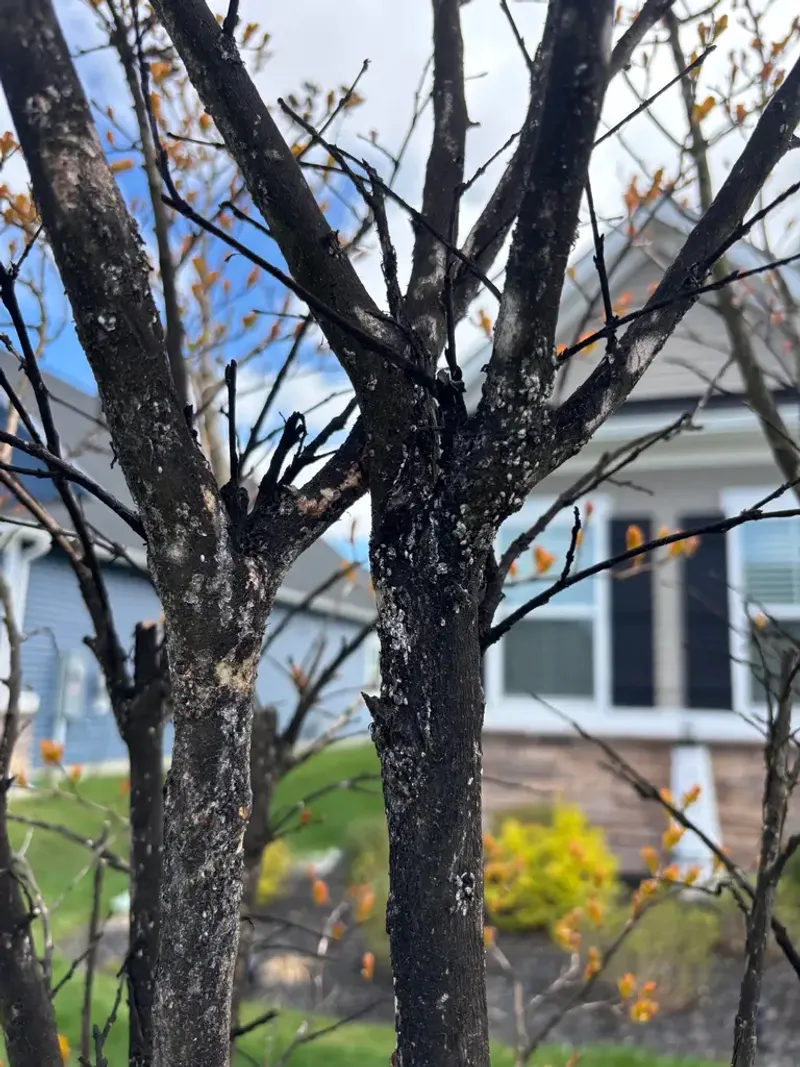
Did you know a tiny scale insect has been turning crape myrtle trunks black across the Southeast? Crape myrtle bark scale was first spotted in Texas in 2004 and has since been found in Georgia.
The insects leave white, felt-like patches on bark, and their sticky honeydew feeds a dark sooty mold.
Stressed trees tend to struggle more with pests like this. Large topping wounds and a flush of soft new shoots both add stress.
Crowded canopies also trap humidity, which helps powdery mildew coat leaves and flower buds in a dusty white film.
Aphids love that tender, fast-growing tissue too. Their honeydew drips onto cars, patios, and lower leaves, inviting even more sooty mold.
Opening the canopy with thinning cuts improves airflow and sunlight, which helps leaves dry quickly after rain or dew. That one change makes the tree less welcoming to fungal problems.
Keep an eye on the trunks during winter, when scale patches are easy to see on bare bark. Gentle scrubbing with a soft brush and soapy water can reduce light infestations.
For heavier cases, check with your county Extension office for current, research-based treatment advice.
7. Picking the Right Size Crape Myrtle Saves Your Loppers a Lot of Work
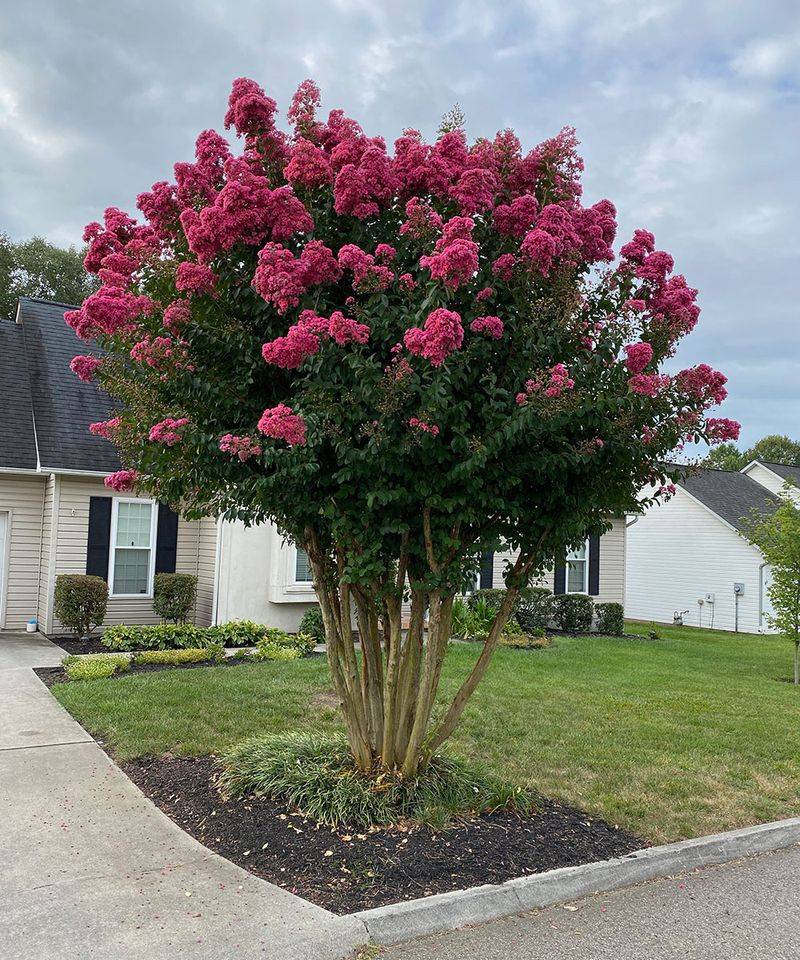
Plenty of topping starts with an honest mistake at the garden center. Someone plants a cute nursery tree under a window, and five years later it’s swallowing the roofline.
Crape myrtles come in a huge range of sizes. Dwarf types may stay under 3 feet, semi-dwarf types often reach 5 to 12 feet, and tree forms like ‘Natchez’ can top 25 feet.
Matching the mature height to your space removes most of the urge to chop.
A fun bit of history: ‘Natchez’ came from a U.S. National Arboretum breeding program led by Dr. Donald Egolf.
Many of his cultivars carry Native American tribal names, like ‘Muskogee’ and ‘Tuscarora’. Several were bred to resist powdery mildew, too.
Read the plant tag closely and trust the mature size, not the size in the pot. Check spacing from sidewalks, power lines, and house walls before digging.
Sun matters as well. Crape myrtles need at least six hours of direct sun to bloom well, and they prefer well-drained soil.
A mildew-resistant variety in a sunny, roomy spot can go years with only light touch-up pruning.
8. Already Topped Crape Myrtles Can Bounce Back With Patience
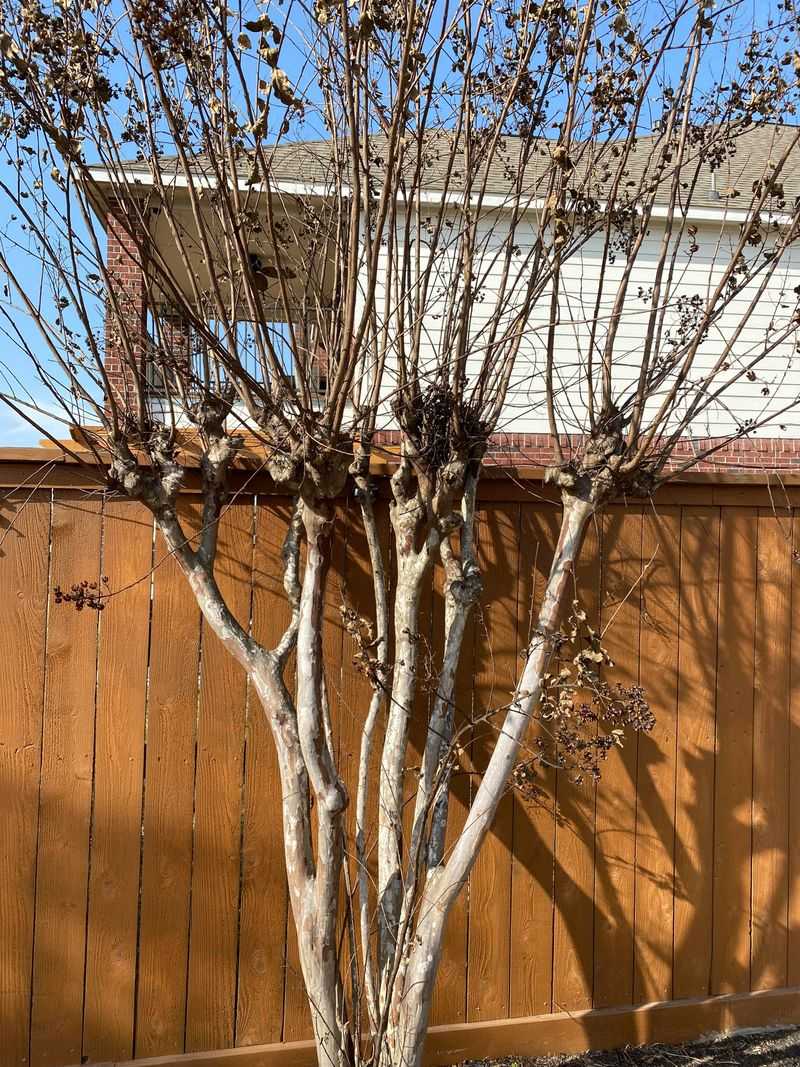
So your tree already has knuckles. Don’t panic, because crape myrtles are remarkably forgiving and can grow back into a graceful shape over a few seasons.
Start in late winter. Look at each knuckle and choose three to five of the strongest, best-spaced shoots growing outward.
Remove the rest of the sprouts at their base.
Over the next year or two, those chosen shoots will thicken into real branches. Keep thinning out new sprouts that pop up around the old cut.
Gradually the knob becomes less noticeable as the new limbs take over.
For a badly misshapen tree, another option is cutting the trunks back near the ground and training new stems from scratch. It sounds drastic, yet many Extension specialists suggest it as a fresh start.
You select a few vigorous sprouts and let them become the new trunks.
Personally, I love watching a rescued tree fill out. It feels like a small victory every summer.
Your big takeaway is simple. Put the loppers down, prune with purpose in late winter, and let your crape myrtle show off the shape nature gave it.
Your Georgia yard will look better for it.