Whiskered Squatters Quietly Moving Into Minnesota Garages Are Looking For The Warmest Spot

A house mouse can slip through a gap about the width of a pencil. That fact still makes me look twice at my own garage door every November.
In Minnesota, the first hard freezes push small furry visitors toward any shelter they can find.
A cozy garage with birdseed, grass seed, and cardboard boxes looks like a luxury hotel to them, and every Minnesota homeowner knows the seasonal scramble that follows.
I found my first clue last winter. A neat little hole appeared in a bag of sunflower seed, with tiny dark pellets lined up nearby like breadcrumbs.
You might notice a faint musky smell or a shredded corner of an old seed packet. Those small hints usually mean someone with whiskers has already picked a favorite corner.
The intruder is most likely a house mouse, and it has probably claimed the warmest, darkest, most cluttered spot in your garage.
Those Tiny Garage Mice Have Very Specific Taste in Real Estate
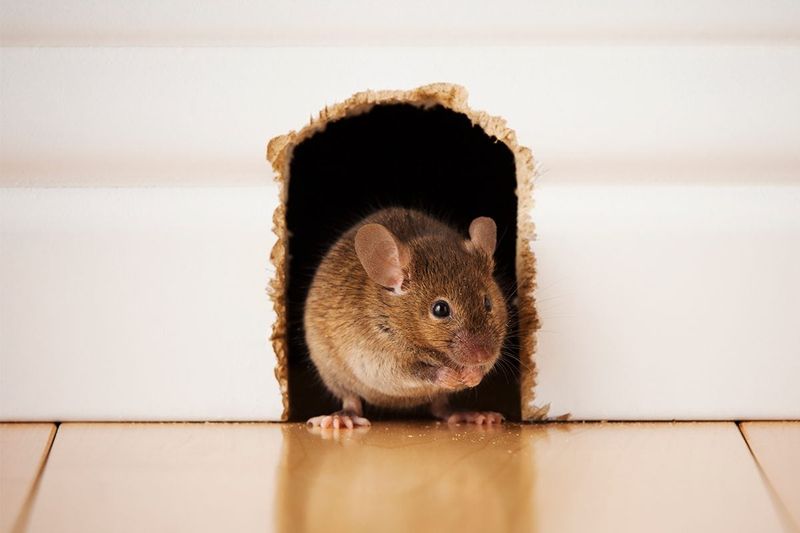
Mice are picky tenants, in their own way. They skip the open middle of the garage and head straight for the edges, corners, and anything soft or hidden.
The house mouse is the most common winter guest in Minnesota garages. Deer mice, with their white bellies and bicolored tails, also move in, especially in garages near fields or woods.
What are they after? Shelter from wind and snow, a safe place to raise young, and food that does not require digging through drifts. A garage checks all three boxes.
Their favorite spots tend to be surprisingly predictable. Look behind shelving units, under workbenches, inside stacks of flowerpots, and in boxes of old towels or rags.
Many garages also hold a hidden treasure for mice. Warm engine compartments of recently parked cars can attract them, and some mice build nests near air filters or under the hood.
The key takeaway is simple. Mice do not wander randomly, so you can focus your checks on dark, cluttered, sheltered zones first.
Once you know their habits, you stop guessing and start finding clues fast. That alone makes a cold Saturday garage cleanup feel a lot more productive.
Sealing Gaps Around the Garage Door Stops Most Mice Cold
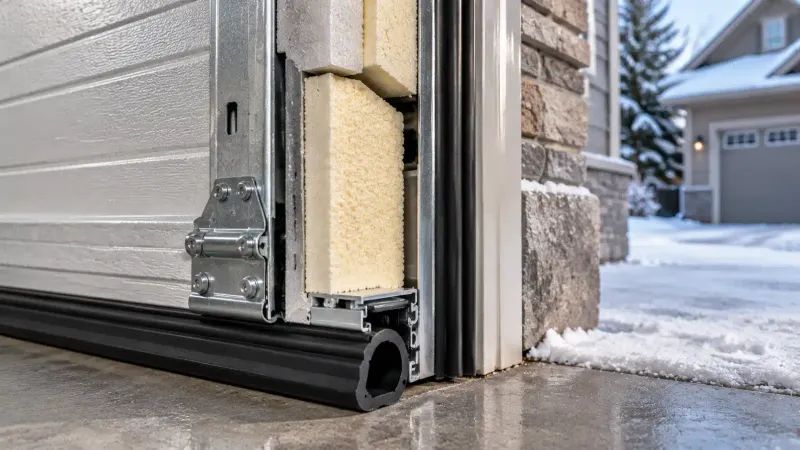
Sealing entry points matters more than any trap or gadget. University of Minnesota Extension stresses exclusion as the most reliable long-term rodent control.
Start at the garage door. Worn bottom seals and gaps at the corners are a common doorway for mice, since they need only about a quarter inch to squeeze inside.
Run your hand along the bottom seal on a sunny day. If you see daylight from inside with the door closed, a mouse sees an invitation.
Standard vinyl seals can be chewed. Many homeowners switch to rodent-resistant seals or add metal-reinforced corner pieces where the door meets the frame.
Next, walk the outside perimeter. Check where pipes, cables, and dryer vents enter the walls, along with cracks in the foundation and gaps around side doors.
Pack small holes with copper mesh or steel wool, then cover with caulk so it stays put. For bigger openings, hardware cloth and sealant hold up better.
Late summer and early fall are ideal for this work. Still, sealing in winter helps too, especially on milder days when caulk can cure properly.
Birdseed and Pet Food Bags Are Basically a Mouse Buffet
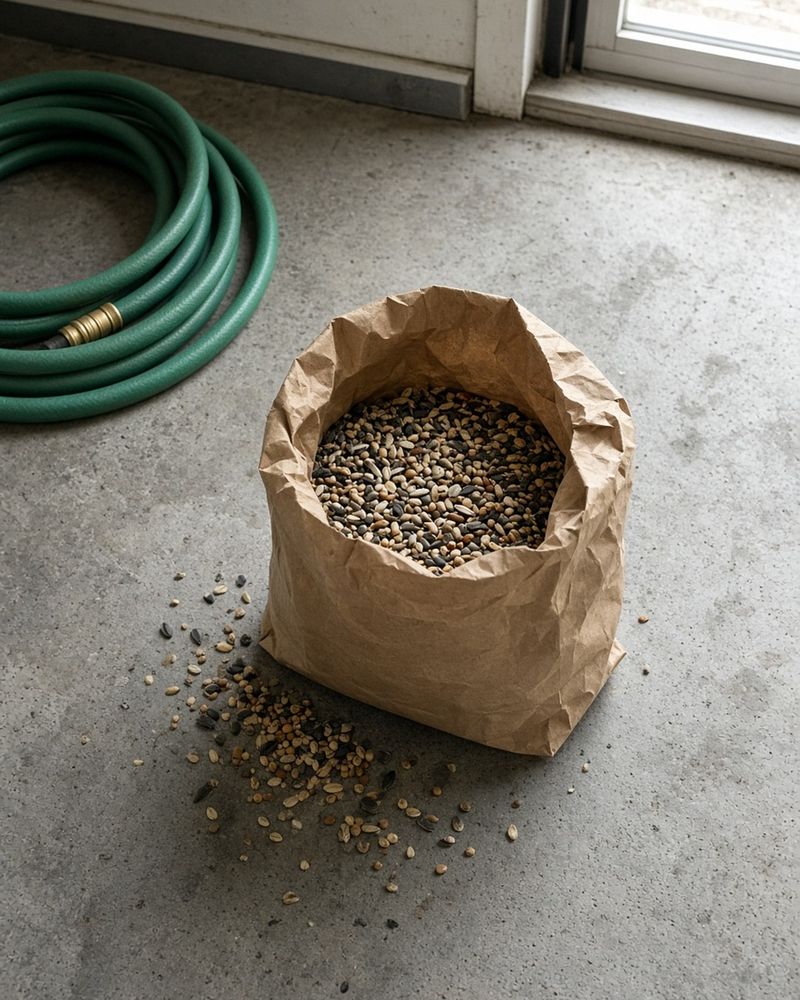
Ask any gardener who stores birdseed in the garage. Sooner or later, a bag turns up with a tidy chewed hole and a trail of hulls nearby.
Food is the second big draw after warmth. Birdseed, grass seed, dog food, cat food, and even saved vegetable seeds are easy calories for a hungry mouse.
Paper and plastic bags offer almost no protection. Mice chew through them in minutes, and a single bag can feed a family through much of the winter.
The fix costs very little. Move food into metal cans with tight lids or heavy-duty plastic bins with locking tops.
Galvanized trash cans work great for big bags of seed. They also keep moisture out, which helps your spring seed stay fresh.
Do not forget the sneaky snacks. Fallen seed under feeders near the garage, old snack wrappers in the car, and spilled kibble near pet bowls all count.
Clean the floor every few weeks during cold months, but never dry-sweep droppings if you find them. A clean floor also makes new droppings easier to spot, so you get an early warning sign for free.
Tiny Droppings and Chewed Cardboard Tell the Whole Story

Mice are shy, but they are messy. You rarely spot one in daylight, yet they leave a trail that is easy to read once you know what to look for.
Droppings are the classic giveaway. Mouse pellets are small, dark, and about the size of a grain of rice, usually found along walls and near food.
Chew marks come next. Look at cardboard box corners, seed packets, garden gloves, and the edges of plastic containers.
Nests are often hidden in plain sight. Shredded paper, insulation, fabric scraps, and dried grass bundled together in a corner are strong evidence.
Your nose can help too. A stale, musky odor in a closed garage often points to an active population.
Here is a safety point worth taking seriously. Deer mouse droppings can carry hantavirus, so the Minnesota Department of Health advises against sweeping or vacuuming them dry.
Instead, open doors to air out the space, wear gloves, and spray droppings with a bleach and water solution. Let it soak for several minutes, then wipe up with paper towels and bag them.
Your Parked Car Engine Might Be the Coziest Spot Around
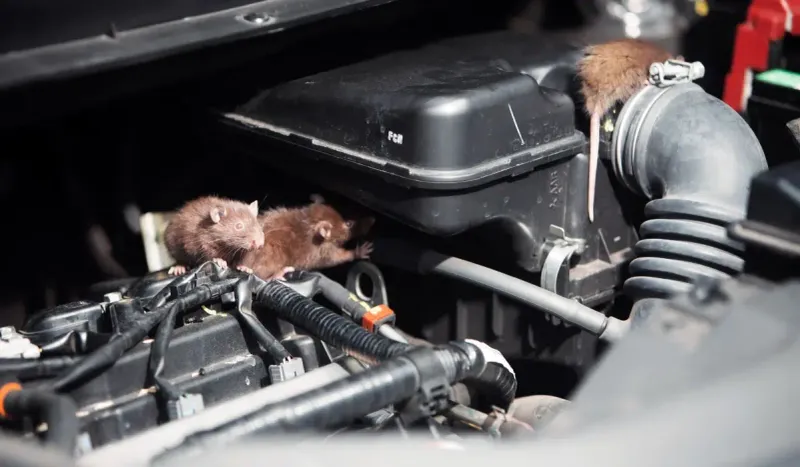
Few surprises sting like a check-engine light caused by mice. A warm engine after a drive feels like a heated room to a chilly rodent.
Mice and squirrels sometimes nest in air filter boxes, cabin air intakes, and tucked spaces around the engine. Some even chew wiring, which can lead to costly repairs.
Pop the hood every couple of weeks in winter. Look for stuffed grass, shredded insulation, seeds, or droppings near the battery and filter housing.
Check the cabin air filter too. A musty smell from the vents when the heat kicks on can be a clue.
Driving the car regularly helps. Mice prefer quiet, undisturbed spots, so a vehicle that sits for weeks is more inviting.
Keep the area around the car clean as well. Do not store open seed bags, pet food, or snacks inside the vehicle or right beside it.
If you find damage, take photos before cleaning. Some insurance policies cover rodent damage, and a mechanic can check for chewed wires you might miss.
Not Every Little Furry Visitor Is a House Mouse

Some winter guests surprise people. Knowing who moved in helps you choose the right response.
House mice are slender and grayish brown, with big ears and a tail about as long as the body. They are the most frequent garage invaders.
Deer mice look cuter, with big dark eyes, white bellies, and a tail that is dark on top and white below. They show up more in rural and edge-of-town garages, and they are the main hantavirus carrier in the region.
Voles are chunkier with short tails and tiny ears. They mostly stay outdoors, tunneling under snow through lawns, but sometimes wander into garages near gardens.
Shrews have pointy snouts, tiny eyes, and velvety fur. Northern short-tailed shrews eat insects and earthworms, and they occasionally slip inside during cold snaps.
Red squirrels and flying squirrels can also enter garages in Minnesota, especially near wooded lots. They usually leave larger chew marks and noisier evidence.
A clear photo of droppings or the animal itself makes identification much easier. Local extension offices and wildlife professionals can help confirm what you are dealing with.
Clearing Out Clutter Takes Away Their Favorite Hiding Places

Clutter is a mouse magnet. Every pile of boxes and stack of pots is a potential apartment complex.
Swap cardboard boxes for lidded plastic bins. Cardboard is both shelter and nesting material, so it does double duty for rodents.
Store items on metal shelving with space below. Keeping things a few inches off the floor and away from walls makes hiding harder and inspections easier.
Firewood belongs outside, ideally raised and away from the house. Woodpiles shelter mice and can carry them right through your door.
Gardeners often stash flowerpots, potting soil, burlap, and bags of mulch in the garage. Nest them tightly, close soil bags, and bin loose fabric.
Old newspapers, insulation scraps, and rag piles deserve a hard look. If you do not need them, toss or recycle them before winter settles in.
Outside, trim shrubs and tall grass near the garage walls. A clear strip of gravel or bare ground gives mice less cover as they approach.
Tidy spaces are easier to monitor. When something moves or gets chewed, you will notice right away.
Snap Traps and a Spring Checkup Keep the Garage Mouse-Free
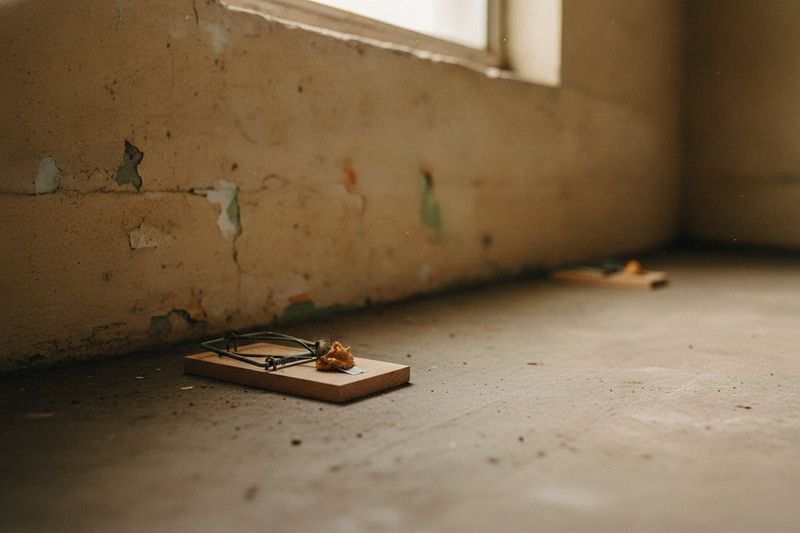
Even careful gardeners end up with a stubborn visitor or two. When prevention falls short, a simple plan works best.
University extension experts often recommend snap traps for small garage populations. They are inexpensive, work fast, and let you confirm results.
Place traps along walls with the trigger end facing the wall. Mice travel along edges, so that is where they will find the bait.
Peanut butter, a few seeds, or a bit of cotton for nesting make good lures. Set several traps at once instead of just one.
Keep traps away from pets and kids, or use covered trap stations. Poison baits can harm pets and wildlife like owls and foxes, so many Minnesota households avoid them in garages.
If activity continues for weeks or you find chewed wiring, call a licensed pest or wildlife professional. They can locate hidden entry points and handle larger problems.
Come spring, do a full walkaround. Repair new gaps, replace worn door seals, and clean any droppings safely.
A garage that stays sealed, clean, and organized makes next winter far quieter. Your tools and seed will thank you.