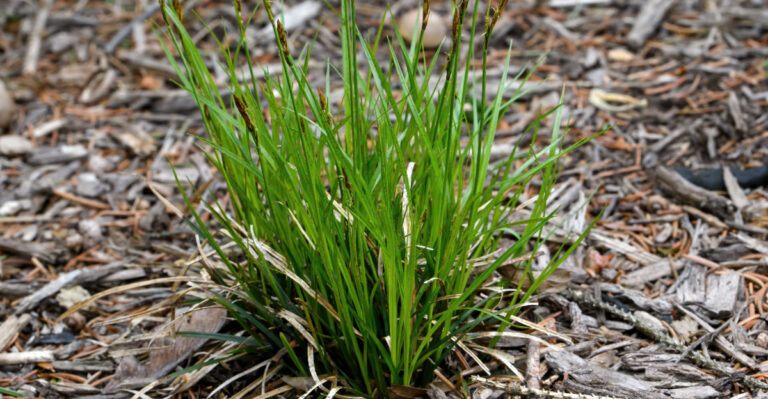
The Reason A Mourning Dove Keeps Coming Back To Your Indiana Yard
A mourning dove can swallow a crop full of seeds in minutes, then fly off to digest the whole meal somewhere safe. One study counted over 17,000 bluegrass seeds in a single bird’s crop. That is a lot of snacking for such a quiet little visitor.
Not going to lie, I used to think the soft gray bird on my fence was a different one every morning. Then I noticed the same bird landing on the same branch at nearly the same time each day. It felt less like a coincidence and more like a schedule.
Here in Indiana, plenty of these birds skip the long trip south and stay put all winter. That means your yard could be part of a daily routine that runs all year long.
What exactly makes one backyard worth coming back to, again and again, when the neighbors have yards too?
That Gray Dove On Your Fence Has Picked You On Purpose
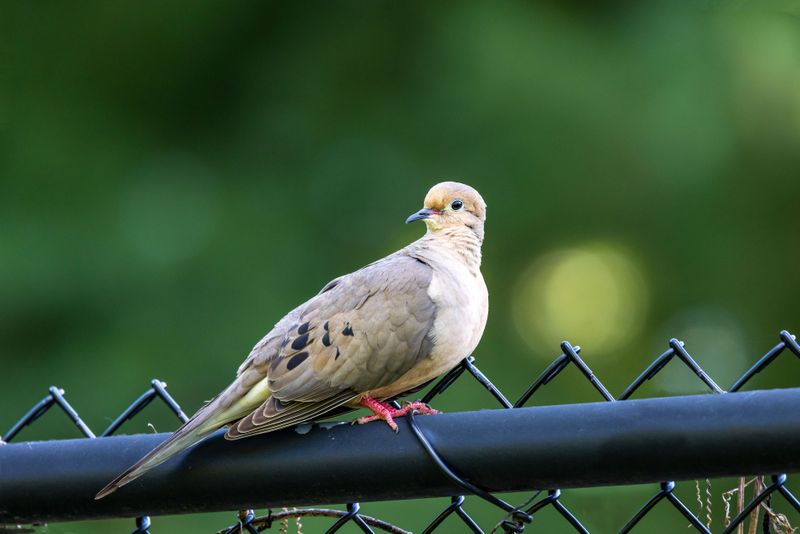
Call it loyalty or just good sense, but that dove keeps showing up because your yard checks its boxes. Mourning doves learn where food, water, and cover can be found, and they return to places that work. A bird that finds a dependable spot tends to build its day around it.
Indiana sits in the heart of this bird’s year-round range. Many doves here stay through winter, while some northern birds drift south and others pass through in spring and fall. The Indiana Department of Natural Resources lists the mourning dove as one of the most widespread birds in the state.
So the bird on your fence may be a local resident that never left. It may also be a migrant stopping by on the way somewhere else. Either way, it chose your space for practical reasons.
Doves also keep fairly tight routines. They often feed early in the morning and again in the late afternoon. If you see one at the same time each day, you are watching a creature of habit at work.
Once you understand what pulls them in, you can make your yard even more inviting. The next few sections break down each piece of that puzzle.
Seeds Scattered On The Ground Are A Dove Magnet
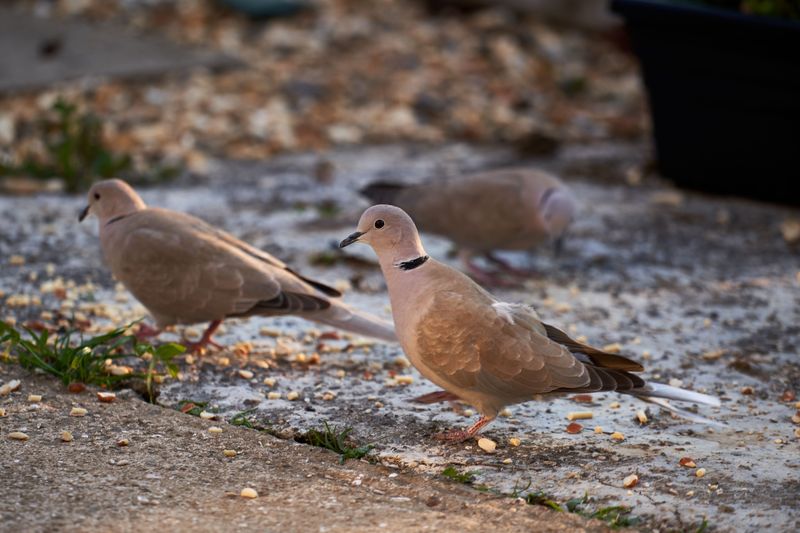
Food is the biggest reason by far. Mourning doves eat almost nothing but seeds, which make up roughly 99 percent of their diet according to Cornell Lab of Ornithology. They are not picky about where those seeds come from, either.
Here is a fun fact. Doves stuff seeds into a pouch called a crop, then fly off to a safe perch to digest. That habit lets them grab a big meal fast and leave before danger shows up.
Doves prefer to feed on the ground or on wide, flat surfaces. Tube feeders with tiny perches frustrate them, so they wait below for spills instead. Every seed your chickadees drop becomes a dove buffet.
Want to help them out on purpose? Try these favorites on a platform feeder or a clean patch of ground:
White proso millet, black oil sunflower seeds, cracked corn, and safflower all get gobbled up quickly. Spread small amounts so seed does not pile up and spoil after rain.
Weedy edges help too. Wild seeds from plants like foxtail grass and native sunflowers keep doves foraging naturally, even when your feeder sits empty for a day.
A Shallow Birdbath Keeps Thirsty Doves Coming Back
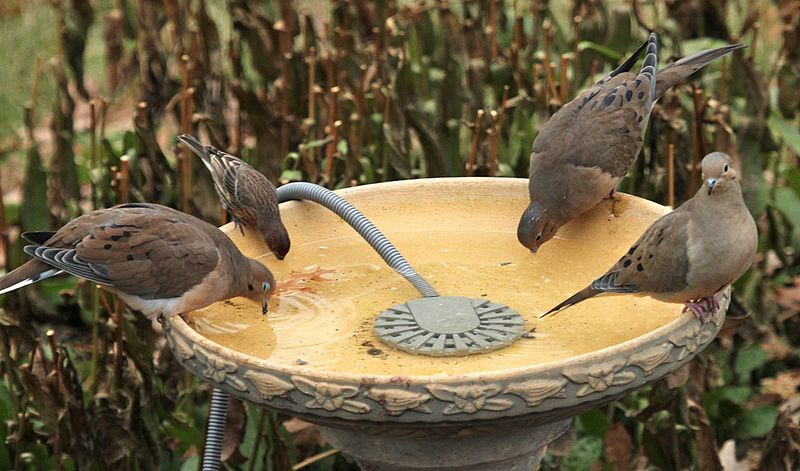
I learned this the hard way after setting out a deep, fancy birdbath that doves ignored for weeks. They want shallow water they can wade into without fuss. An inch or two deep is plenty.
A dry seed diet makes these birds thirsty, so they need water every single day. Doves also drink in an unusual way. Most birds sip and tip their heads back, but doves suck water up like a straw, keeping their heads down the whole time.
Placement matters as much as depth. Set your bath in a fairly open spot where doves can spot a hawk or cat coming. A shrub about ten feet away gives them a quick escape route without hiding predators right beside the water.
Keep it clean, too. Scrub the basin and refill it every two or three days to discourage algae and mosquito larvae. A few flat stones in the middle give smaller birds safe footing.
Indiana winters can freeze water solid for days. A heated birdbath helps a lot from December through February, when open water is hard to find. Doves that know your yard has drinkable water will put it high on their list.
Those Flimsy Twig Nests In Your Evergreens Mean Something
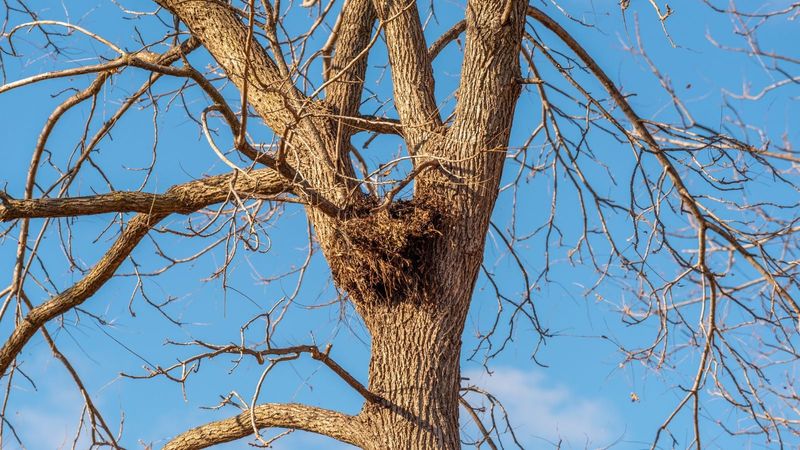
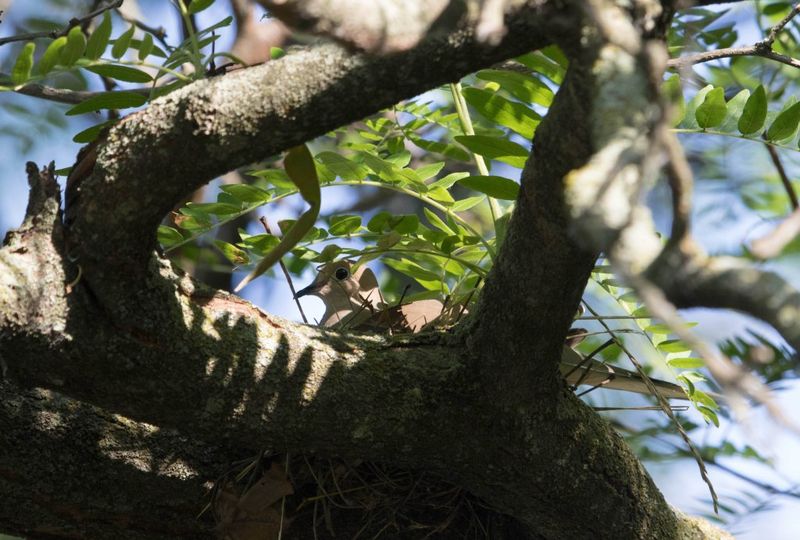
Guilty as charged, I once mistook a dove nest for a pile of storm debris. These nests are famously loose platforms of twigs and grass, sometimes so thin you can see the eggs from below. Yet doves raise family after family in them.
Nesting is a huge reason for repeat visits. In Indiana, the breeding season can stretch from early spring well into late summer. A pair may raise several broods in one year, usually laying two eggs at a time.
Doves like spruces, pines, dense shrubs, and sturdy tree forks. They will also use gutters, porch ledges, and hanging planters. Some pairs reuse an old nest or even borrow one built by a robin.
Both parents take turns on the eggs. The male usually sits during the day, and the female takes the night shift. Babies grow fast on crop milk, a rich food both parents produce.
If you find a nest, give it space. Mourning doves are protected under the federal Migratory Bird Treaty Act, so active nests should be left alone. A good nest site often brings a pair back next spring, too.
A Cooing Pair Of Doves Often Claims Your Yard Together
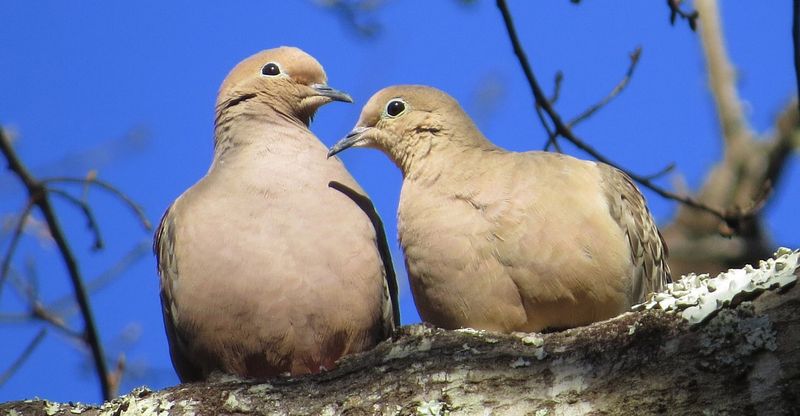
That soft, sad-sounding coo at dawn is usually a male talking. He calls from a favorite perch to attract a mate and announce his spot. The song carries surprisingly far on a still morning.
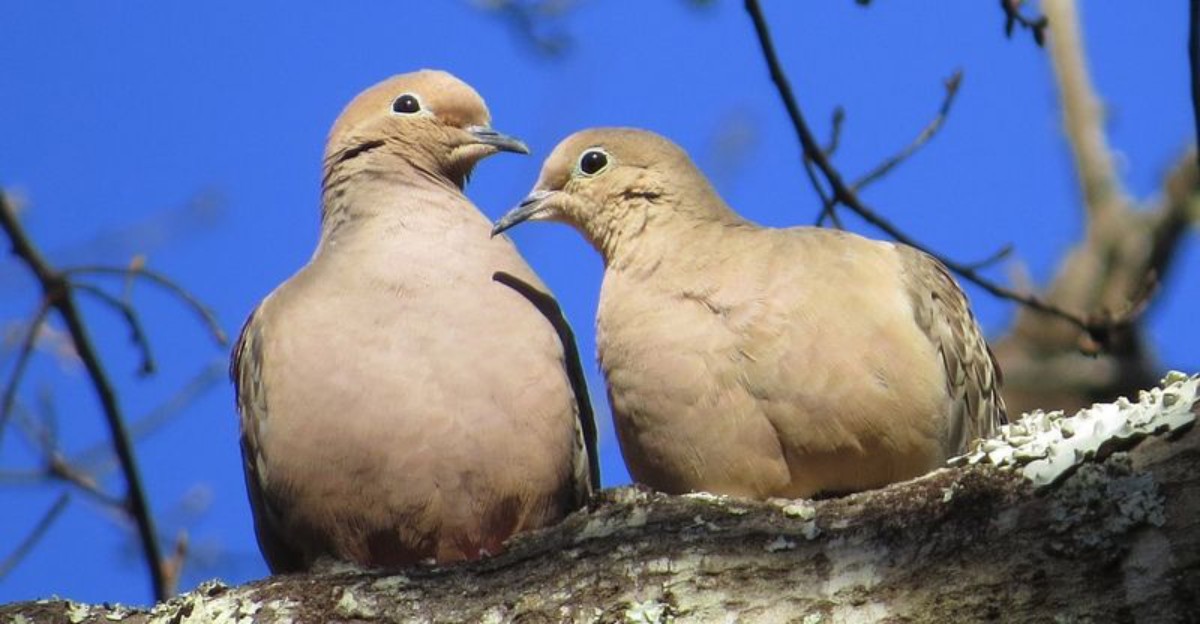
Mourning doves form strong pairs. Many couples stay together through the breeding season, and some reunite in following years. You may catch them preening each other’s necks, a sweet bit of bonding that looks a lot like cuddling.
So if you keep spotting doves, you might be seeing a couple, not a solo bird. A bonded pair treats a good yard like part of its home turf. They feed together, nest nearby, and return to the same perches.
Males also guard their cooing posts. You might see one puff up or chase off a rival with a short, flapping flight. Sometimes he does a dramatic display flight, clapping his wings, rising high, then gliding down in a wide circle.
Watching these routines is half the fun. Grab your coffee, sit quietly by a window, and pay attention to which branches they pick each day.
Thick Shrubs And Quiet Corners Help Doves Feel Safe
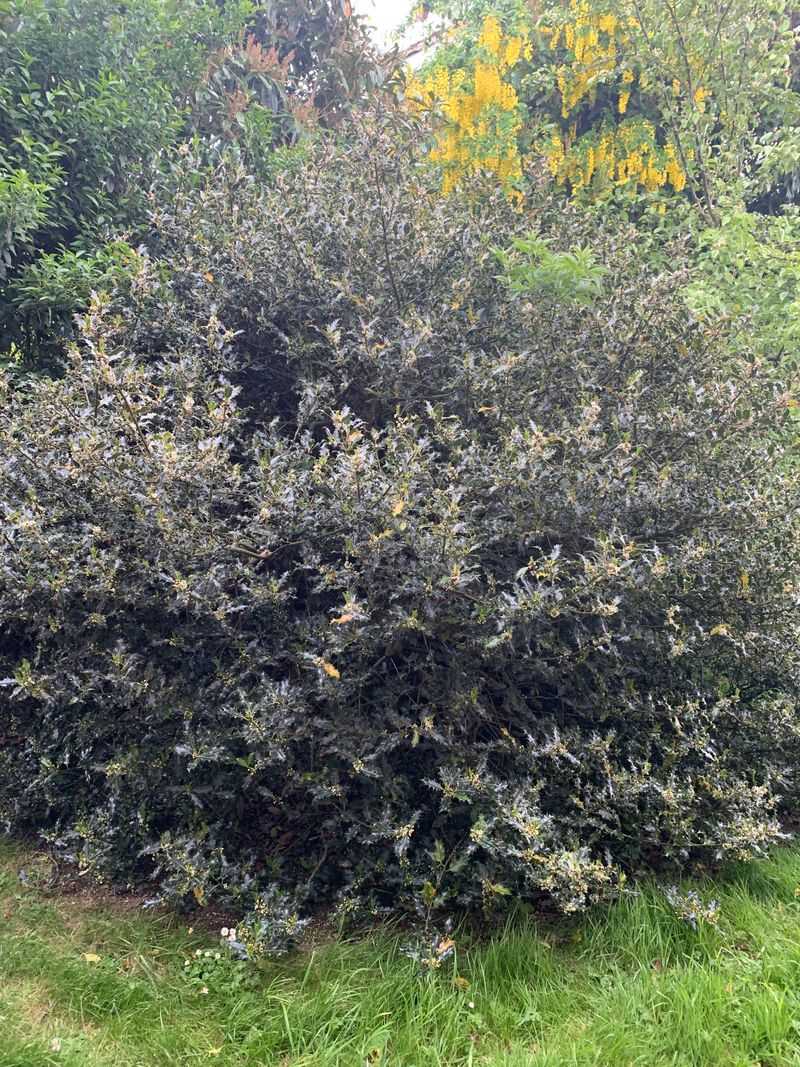
Safety might be the quiet secret behind all of this. Doves are easy targets for hawks, cats, and other predators. A yard where they can eat in peace earns their trust fast.
Cooper’s hawks hunt backyard feeders across Indiana, and doves are frequent prey. Nearby cover gives them a place to dash when trouble swoops in. Dense native shrubs like American holly, viburnum, or eastern red cedar work beautifully.
Outdoor cats are a serious threat too. The American Bird Conservancy estimates cats take billions of birds each year in the United States. Keeping pet cats indoors is one of the kindest moves you can make for ground-feeding birds.
Calm matters as well. Doves startle easily, bursting into flight with a loud whistling of wings. A yard without constant leaf blowers, barking dogs, or kids chasing them helps birds settle into a routine.
Window strikes are another risk around feeders. Place feeders either very close to glass, within three feet, or farther than thirty feet away. Decals or screens help too.
When a dove feels secure, it lingers longer and returns more often. That relaxed bird on your patio is paying you a compliment.
Native Seed Plants Can Keep Mourning Doves Around All Year
Every fall, I resist the urge to tidy up my flower beds too early. Seed heads left standing feed doves and plenty of other birds well into winter. A slightly messy garden is a generous one.
Native plants are the smart long-term move. Purple coneflower, black-eyed Susan, native sunflowers, switchgrass, and little bluestem all produce seeds doves enjoy. Purdue Extension encourages Indiana gardeners to choose natives because they support local wildlife and handle our climate well.
Skip invasive options, even if they look pretty. Plants like Japanese barberry and burning bush are restricted in Indiana under the state’s invasive plant rule. Stick with natives from a trusted nursery.
Pair those plants with a few habits. Keep a shallow birdbath filled, offer millet or sunflower seed on a platform, and leave some open ground for foraging. Clean feeders every couple of weeks to prevent disease spread, especially trichomonosis, which can affect doves.
Consider planting an evergreen or two for winter shelter and spring nesting. Over time, your yard becomes a full package of food, water, and cover. That combination is exactly why one gentle gray bird keeps choosing your place, season after season.