The Right Way To Water A Christmas Cactus Without Risking Root Rot
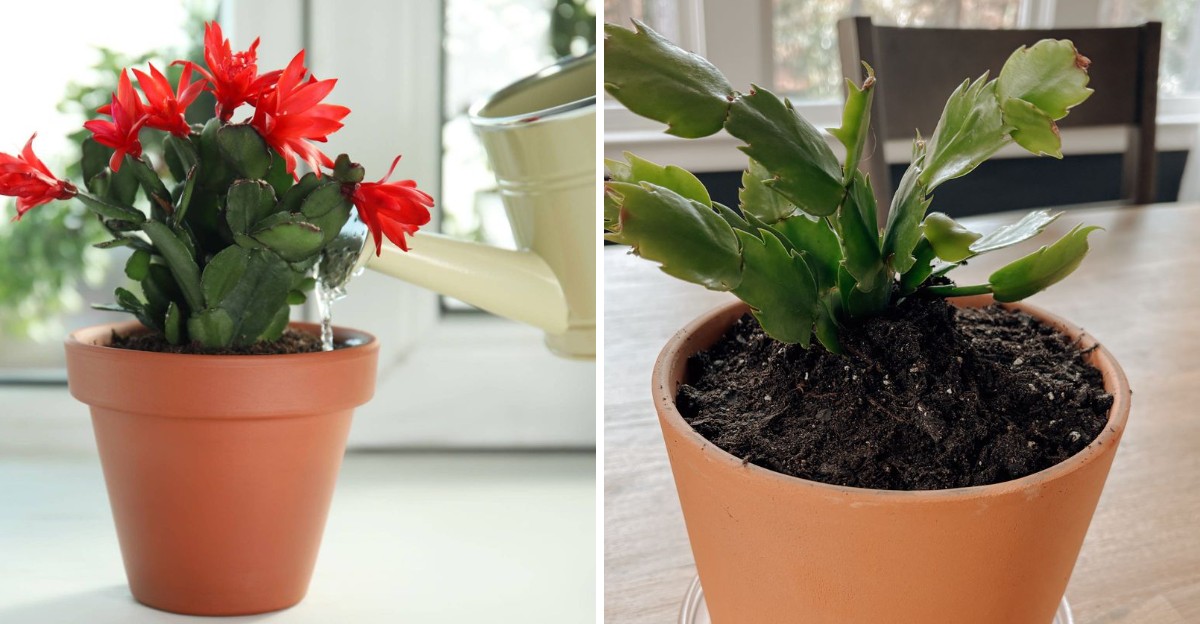
Truth is, this holiday favorite has never lived in a desert. In the wild, it grows high in the trees of Brazil’s coastal mountain forests, clinging to branches and mossy rock with almost no soil at all.
That one fact changed how I care for mine. Cool mist, frequent rain, and fast-draining bark pockets shaped its roots over countless generations. Those roots want moisture, but they also crave air.
I learned the hard way that a soggy pot can do more harm than a dry one. My first plant looked thirsty, so I gave it more water. The limp, wrinkled stems only got worse, and I had no idea why.
Now, how do you give a rainforest plant the drink it loves without drowning its roots?The answer sits somewhere between your fingertip and the bottom of the pot.
Limp Christmas Cactus Stems Can Mean Two Opposite Things
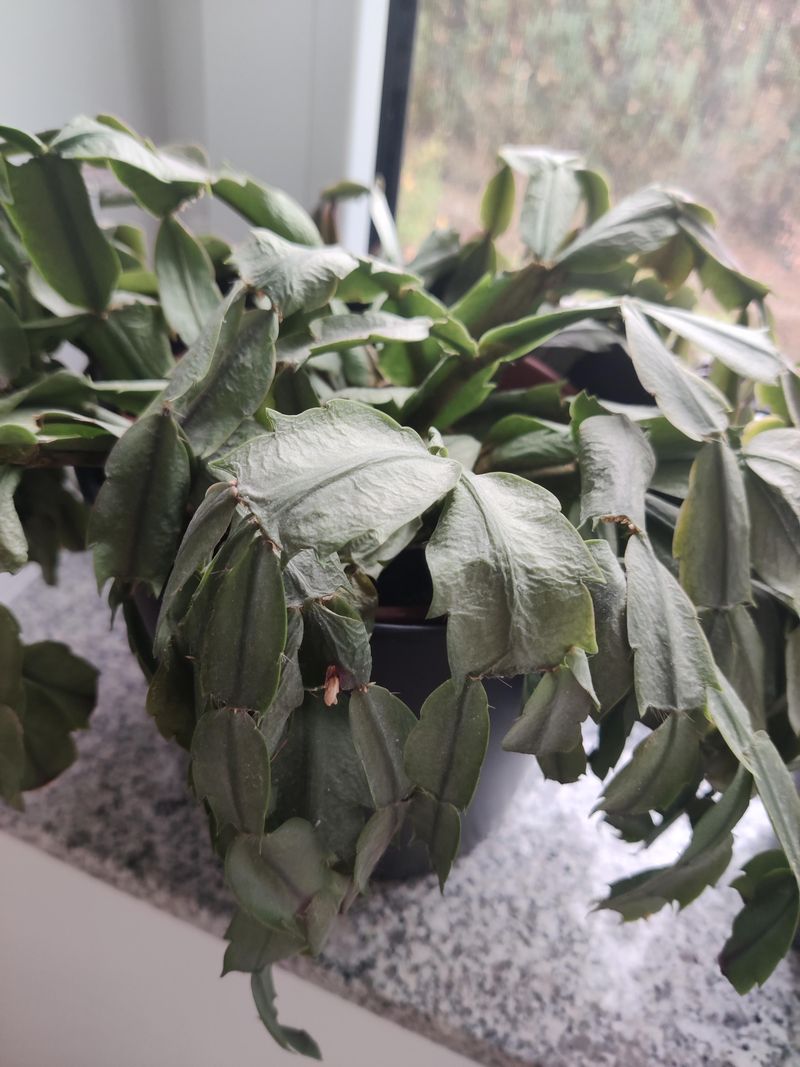
Here is a twist that fools plenty of plant lovers. A Christmas cactus with droopy, wrinkled segments might be thirsty, or it might be sitting in soil that has stayed wet far too long.
Root rot is usually caused by fungi and water molds like Pythium and Phytophthora. They thrive in waterlogged soil where roots run short on oxygen. Once roots turn soft, they stop pulling up water, so the plant wilts even in damp soil.
That is why your first move should be a soil check, not a watering can. Push a finger into the mix. If it feels dry an inch or two down, thirst is the likely culprit. If it feels wet or smells sour, stop and look closer.
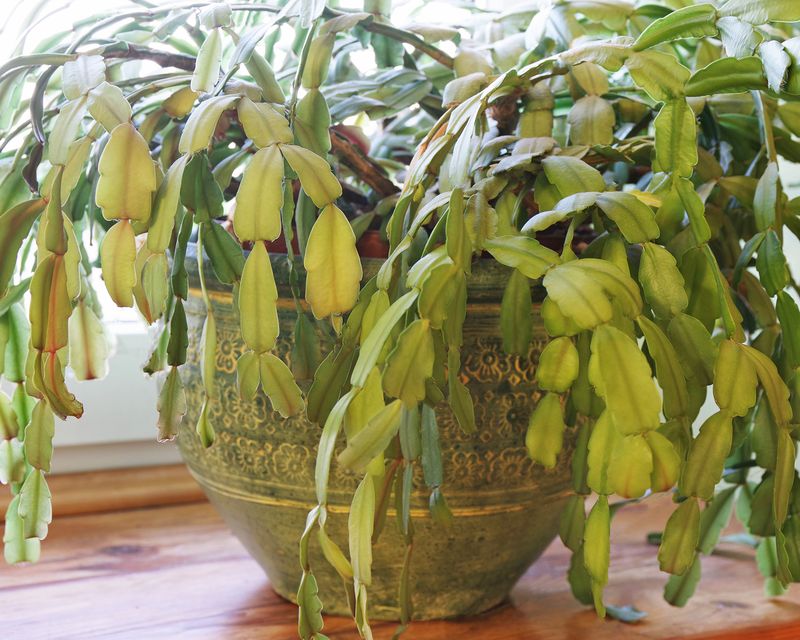
Other warning signs include stems that look darker or mushy near the soil line. Segments may drop off with a light touch. Some plants also turn yellow or show a reddish-purple tint, though red tones can come from strong sun or cool temperatures too.
Healthy roots look firm and white or light tan. Rotting roots are brown, slimy, and pull apart easily. Spotting the difference early gives you the best shot at saving your plant.
Your Fingertip Is The Best Christmas Cactus Watering Tool
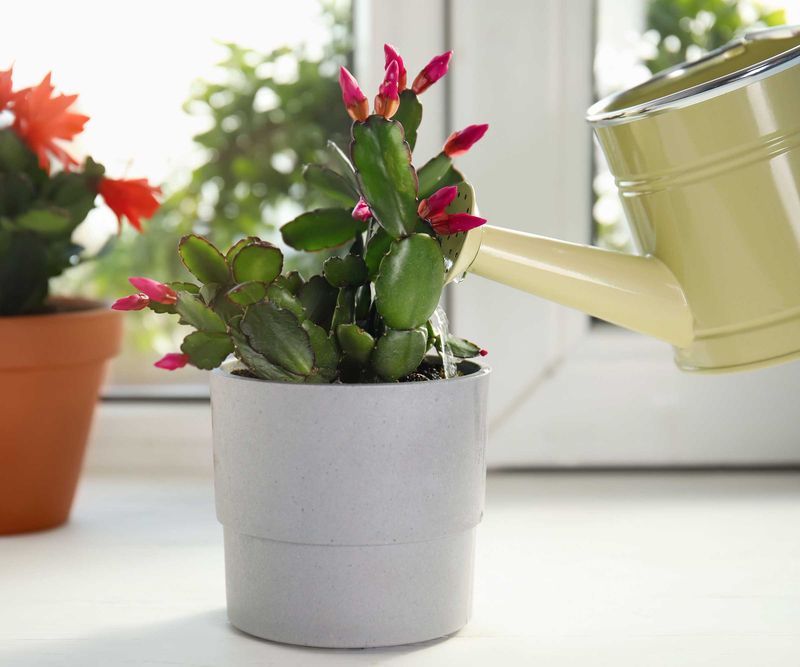
Calendars make terrible gardeners. I used to water every Sunday, rain or shine, and my Christmas cactus paid the price.
A better rule comes straight from university extension advice. Water when the top inch or so of soil feels dry to the touch. Your plant’s needs change with the season, the pot size, the room temperature, and even the weather outside.
During spring and summer, when new segments are growing fast, that dry-top check might come around every week or so. In a cool room during fall, it could stretch much longer. Watching the soil instead of the date lets your plant set the pace.
Not sure your finger is telling the truth? Try lifting the pot. A freshly watered pot feels heavy, while a dry one feels surprisingly light. After a few weeks, you will learn that weight by feel.
A cheap wooden chopstick works well too. Slide it into the soil, wait a minute, and pull it out. Dark, damp soil clinging to the wood means you can wait. A clean, dry stick means it is time for a drink. Simple tools like these beat guesswork every time.
Soak The Pot Thoroughly Then Let Every Drop Drain Away
Small sips sound gentle, but they often leave the lower roots dry and the top layer soggy. A deep, thorough watering works much better for a Christmas cactus.
When the soil is ready, pour room-temperature water slowly over the mix until it runs out of the drainage holes. Doing this over a sink makes life easy. The goal is to wet the whole root zone evenly, from top to bottom.
Now comes the step most people skip. Let the pot drain fully, then empty the saucer or decorative sleeve within about 15 to 30 minutes. Water left sitting in a saucer seeps back up and keeps the roots wet, which is exactly how rot gets started.
Bottom watering is another handy option. Set the pot in a shallow tray of water for 15 to 20 minutes, and the mix will soak up moisture through the holes. Once the surface feels slightly damp, lift it out and let it drain.
Every few waterings, finish with a top-down soak anyway. Running water through the pot helps flush out fertilizer salts that build up over time. Your plant gets a refreshing drink and a clean slate in one easy step.
Chunky, Airy Soil Keeps Christmas Cactus Roots Breathing
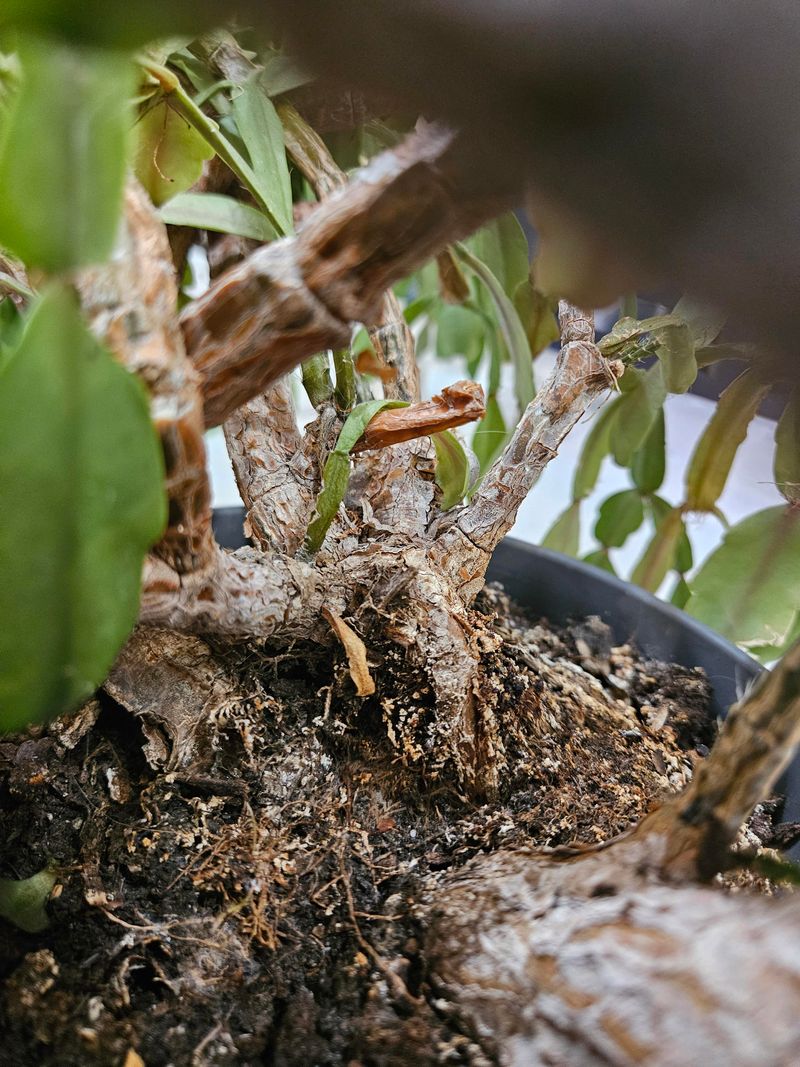
Picture a branch in a misty Brazilian forest, and you will understand what Christmas cactus roots expect. They are used to clinging to bark, moss, and leaf litter, where water passes through quickly and air stays close.
Heavy, dense potting soil feels nothing like that home. It holds water for days, squeezes out air pockets, and sets the stage for rot.
A loose, chunky mix makes a world of difference. Many growers blend a quality potting mix with perlite or pumice and a handful of orchid bark. A rough recipe of two parts potting mix to one part perlite and one part bark works well for most homes.
Straight cactus mix can work, but it sometimes dries out faster than this rainforest plant likes. Adding a little bark or coco coir helps it hold just enough moisture without turning soggy.
Old soil breaks down over time and packs tighter, so refreshing it every two to three years helps. The best time to repot is in spring after flowering ends. Gently loosen the roots, trim any mushy pieces with clean scissors, and settle the plant into fresh mix. Your next watering will drain faster right away.
A Snug Terracotta Pot With Drainage Holes Helps More Than You Expect
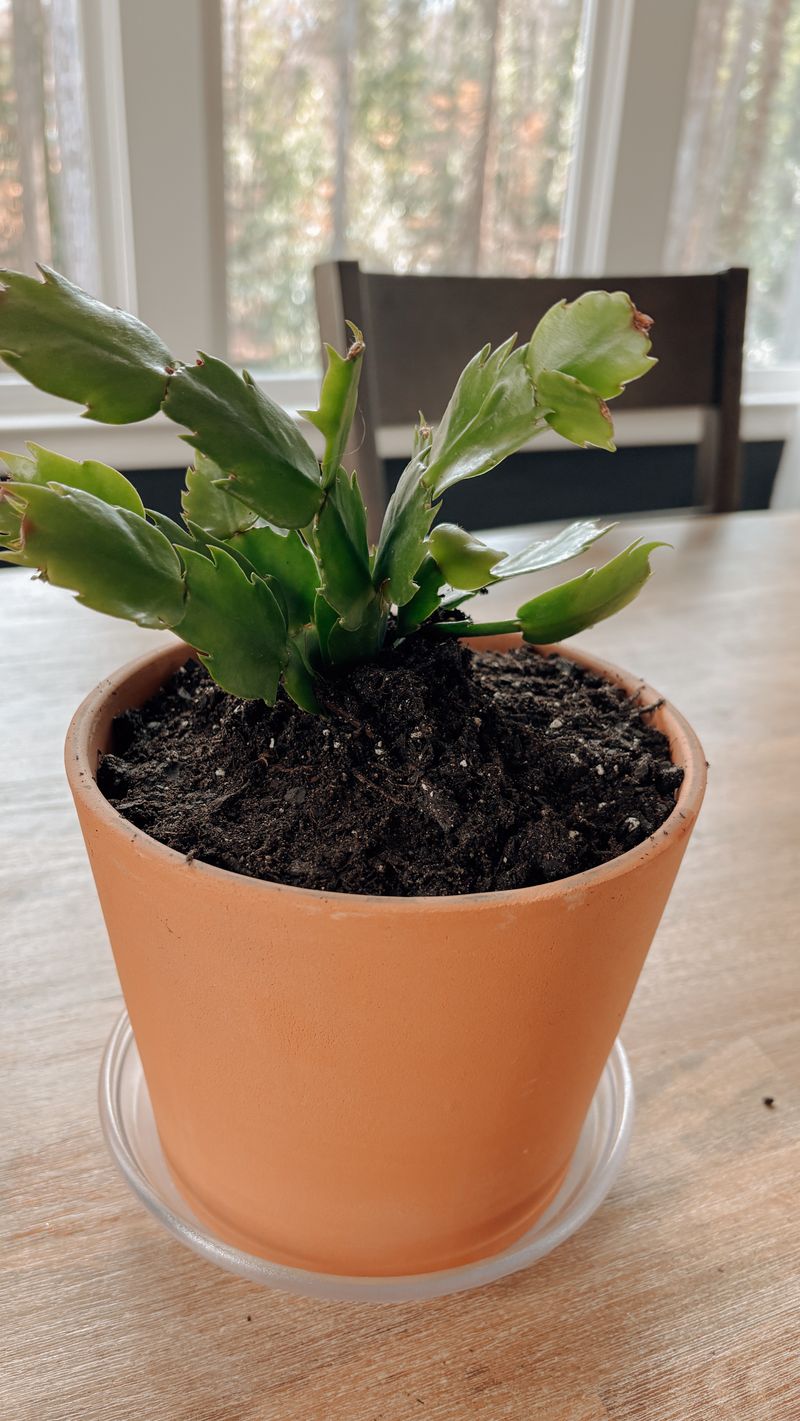
Pretty pots without holes are sneaky troublemakers. I own a gorgeous glazed one that now holds pens instead of plants, because water had nowhere to go.
Drainage holes are a must for a Christmas cactus. Without them, extra water pools at the bottom and the lowest roots sit in a soggy puddle. If you love a decorative pot without holes, keep your plant in a plain nursery pot inside it and lift it out to drain after watering.
Unglazed terracotta is a favorite for good reason. Clay is porous, so it lets some moisture escape through the sides and helps the soil dry evenly. Plastic holds water longer, which is fine if you water a little less often.
Size matters just as much as material. Christmas cacti like a slightly snug fit, and a big pot holds far more wet soil than the roots can use. That extra soggy mix is where rot loves to start.
When it is time to move up, choose a pot only one to two inches wider than the current one. A modest step keeps soil moisture in balance and your plant comfortably settled.
Christmas Cactus Thirst Changes From Summer Growth To Winter Blooms
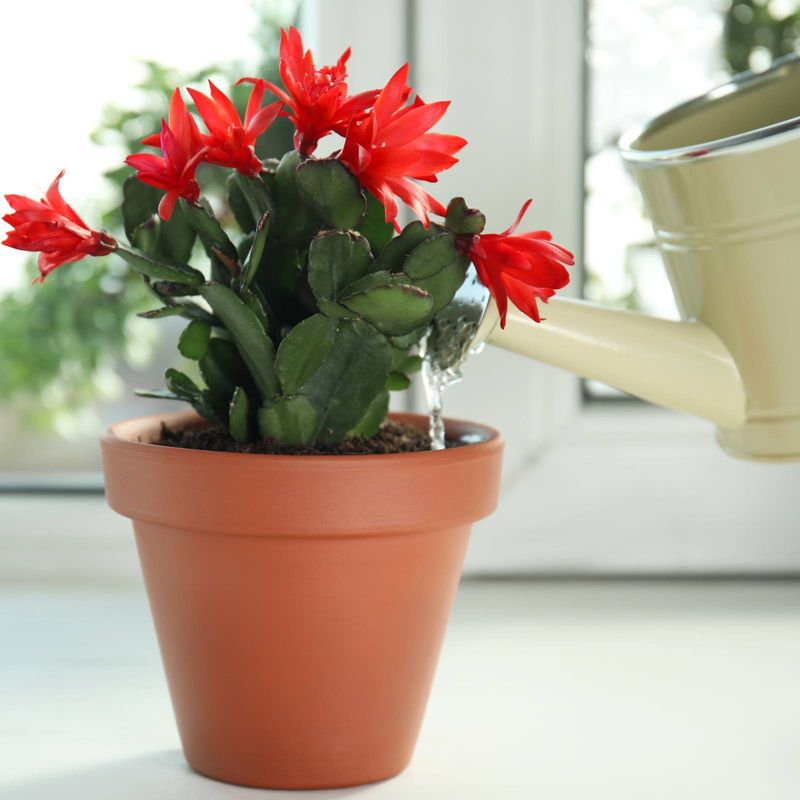
Seasons shape this plant’s thirst more than most people realize. A watering routine that works in July can cause trouble in January.
Spring and summer are the busy months. New stem segments are growing, rooms are warmer, and soil dries faster, so you will likely water more often. This is also the season for light feeding with a balanced houseplant fertilizer, following label directions.
In early fall, many growers ease up on water a bit. Slightly drier soil, cool nights around 50 to 55 degrees, and long, dark nights help trigger flower buds. University extension guides note that about six weeks of these conditions often sets the stage for blooms.
Once buds appear, keep the soil evenly moist but not wet. Letting it swing from bone dry to soaked can cause buds to drop, which is a heartbreaking sight right before the holidays.
After flowering ends in late winter, the plant takes a short rest. Water less often and let more of the soil dry between drinks for several weeks. When fresh green growth appears in spring, return to your regular routine. Matching water to these rhythms keeps roots healthy all year.
Bright Windows And Dry Indoor Air Change How Fast The Soil Dries
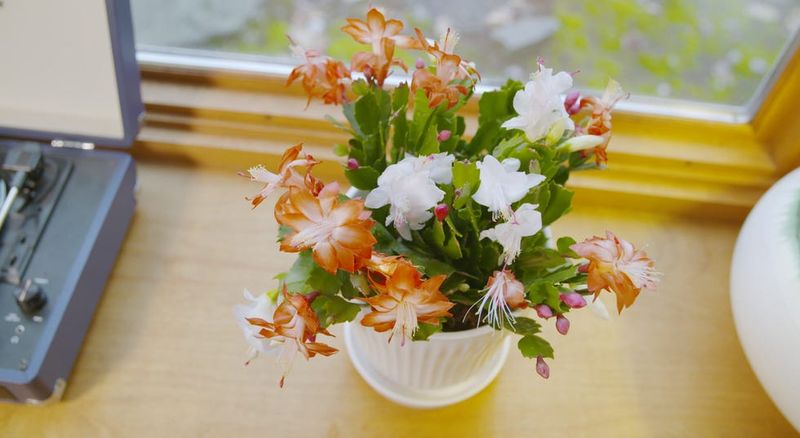
Your living room plays a bigger role in watering than you might expect. Light, warmth, and humidity all change how quickly the soil dries out.
Christmas cacti grow best in bright, indirect light. An east-facing window or a spot near a sheer-curtained south window works nicely. A plant in strong light and warm air uses water faster than one tucked in a dim corner, so check the soil more often in sunnier spots.
Winter heating brings its own challenge. Furnace air is dry, and it can pull moisture from both the plant and the top layer of soil. That dry surface may tempt you to water before the deeper mix actually needs it, so poke a little deeper before deciding.
To add humidity without soaking the roots, set the pot on a tray of pebbles and water. Make sure the pot sits on top of the stones, not in the water. Grouping plants together also creates a slightly moister pocket of air.
Keep your plant away from heat vents, fireplaces, and drafty doors. Sudden temperature swings stress it and can trigger bud drop. Steady conditions make your watering routine far more predictable.
Healthy Christmas Cactus Cuttings Can Rescue A Rotting Plant
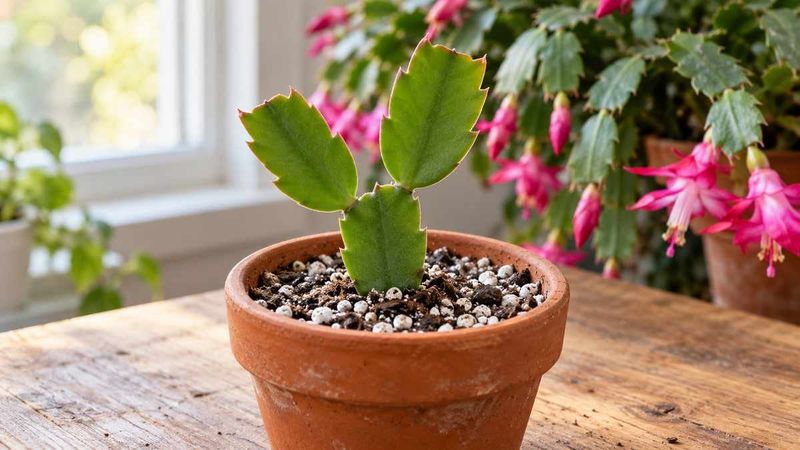
Sometimes the roots are too far gone, and that stings. I have been there, holding a pot of mushy roots and wondering what went wrong.
Thankfully, Christmas cacti are easy to start again from cuttings. Look for firm, plump, green stems far from the rotted area. Gently twist off pieces with two to three segments each, and let them sit out for a day or two so the ends dry and form a callus.
Plant the cuttings about a quarter to half inch deep in fresh, well-draining mix. Water lightly and keep the soil barely moist, not wet. Bright, indirect light and a warm room help roots form, often within a few weeks.
If the original plant still has some firm white roots, you can try saving it too. Trim away every soft, brown root with clean scissors, then repot in a clean container with fresh mix. Hold off on watering for a few days.
Many of these plants live for decades and get passed down through families. A little care with your watering, plus a backup cutting or two, can keep that tradition blooming for years.