Why North Carolina Cauliflower Heads Turn Purple or Yellow Before Harvest
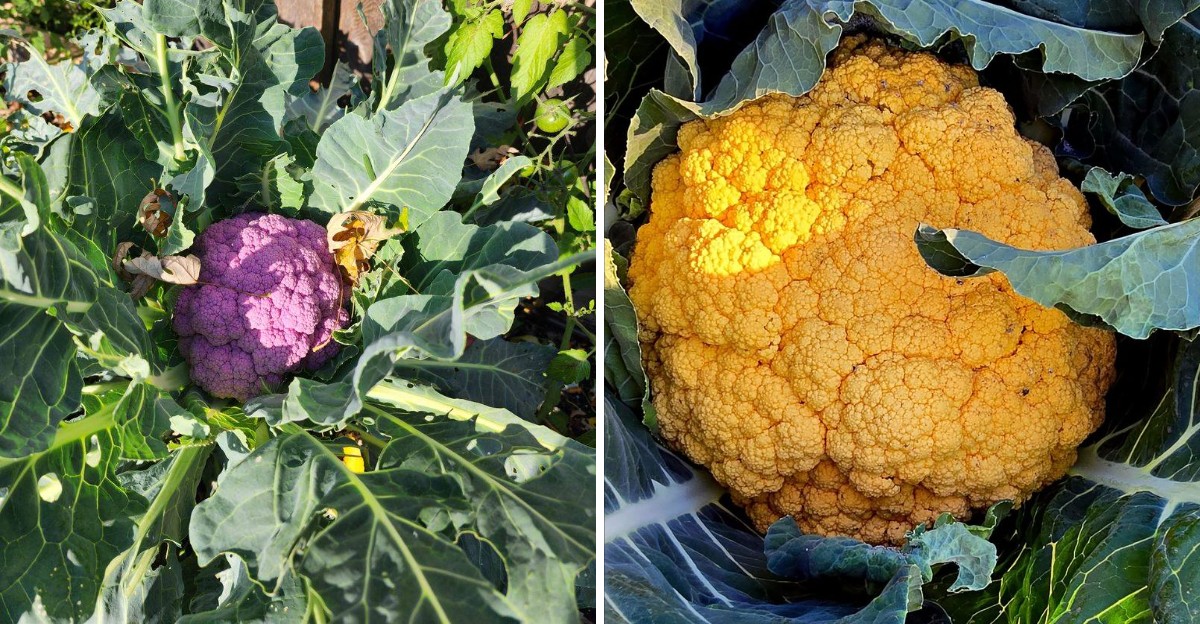
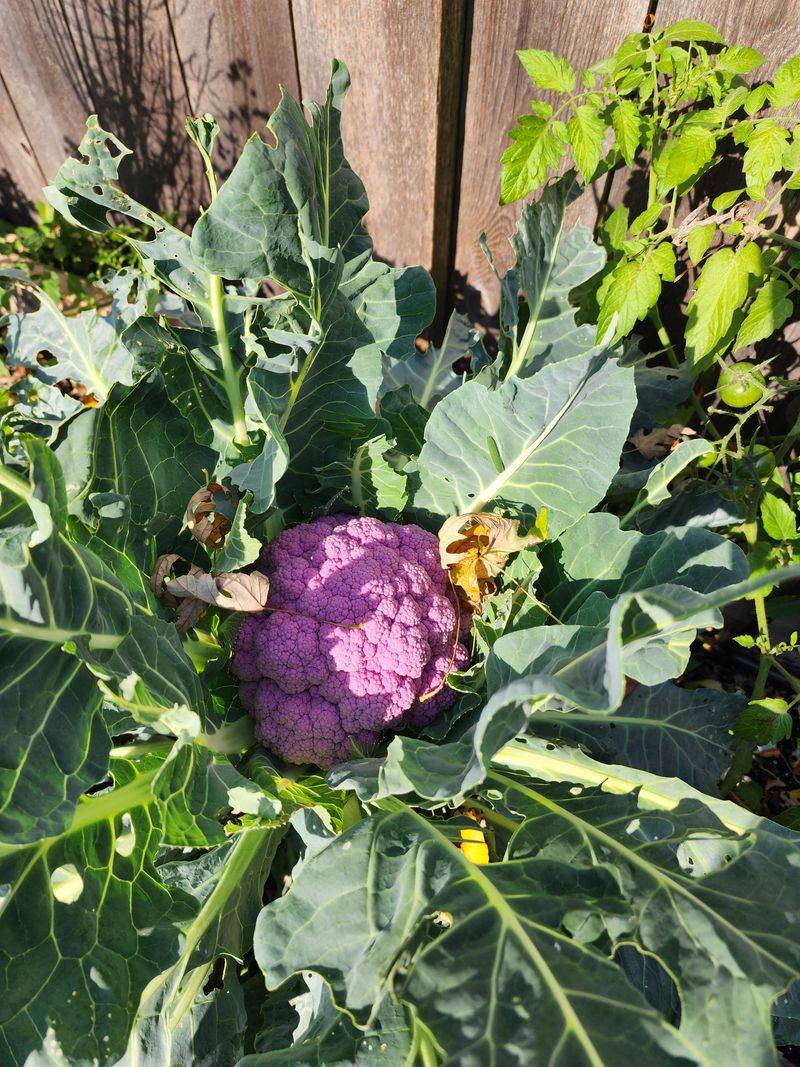
A snowy white vegetable can blush the same purple found in blueberries and red cabbage. The color shows up right in the garden, sometimes over just a few warm, bright days.
The good news is that it’s usually harmless. The pigment is the same natural compound found in many fruits, and the change is mostly cosmetic.
The flavor stays close to normal, though the texture can suffer if the head sits too long.
In North Carolina, spring crops often run straight into early heat, while fall crops can face warm, sunny spells in October.
Both seasons give the plant plenty of chances to react to sunshine, so don’t be surprised if one plant stays pale while its neighbor turns a little violet.
Is your garden telling you something, or just showing off? The answer comes down to a few leaves, a little shade, and good timing.
1. Those Purple Cauliflower Curds Are Reacting To Something Overhead
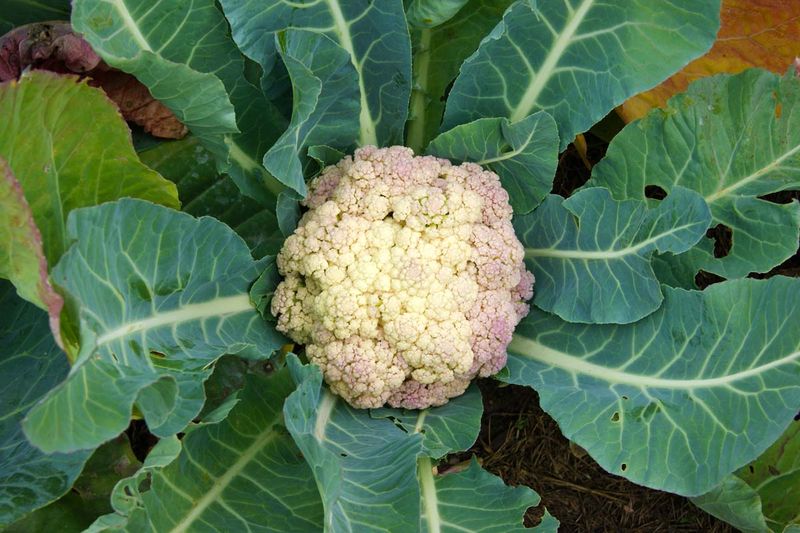
Sunlight is the main trigger behind most purple tinges on white cauliflower. When the young curd sits uncovered, it starts making anthocyanin, the same pigment that colors blueberries and red cabbage.
I like to think of it as a mild sunburn response. The curd is producing a natural sunscreen, and the purple shade is the visible result.
Warm days and long daylight hours tend to make the reaction stronger.
Extension specialists describe this purple tinge as a physiological issue, not a disease or a pest problem. That means you won’t find fungus, insects, or rot behind it.
The plant is just reacting to its surroundings.
Some white varieties color up more easily than others. Older reports often mention types like Snow Crown showing a pinkish or purple blush when weather turns warm.
Self-blanching varieties, by contrast, curl their leaves inward and protect the curd better.
Here’s a quick way to tell harmless blushing from trouble. Purple caused by sunlight shows up evenly on the top of the curd, and the head still feels firm and smells fresh.
Mushy spots, slimy patches, or a bad odor point to rot instead.
In most North Carolina gardens, the timing makes sense. Spring heads mature in May as temperatures climb, and fall heads can still catch strong afternoon sun.
Once you know the pattern, a purple surprise becomes a lot less worrying.
2. Yellow Cauliflower Heads Usually Mean Too Much Sun And Heat
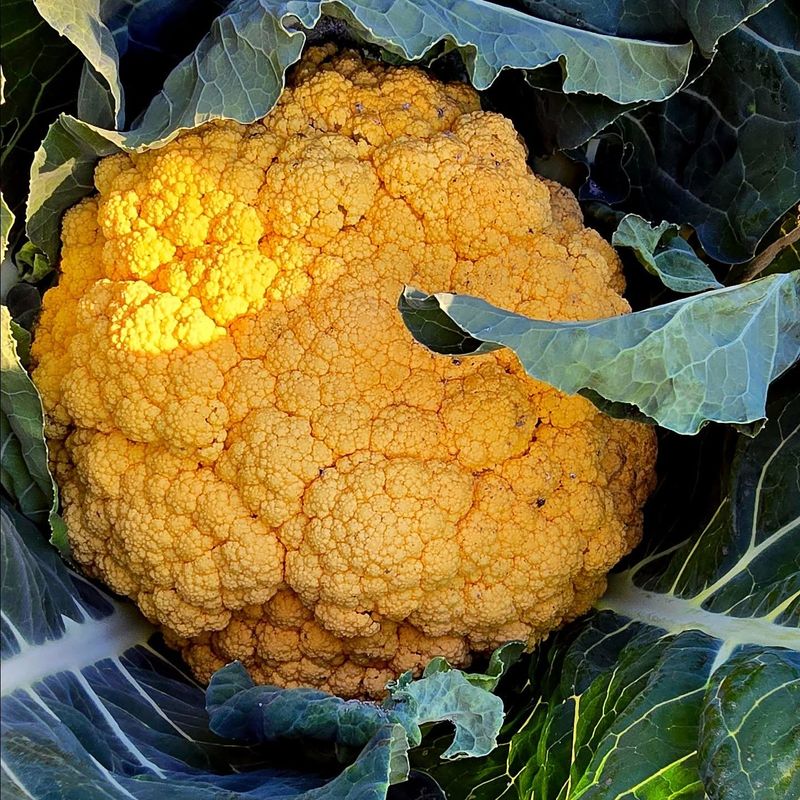
Cream-colored or yellow curds tell a similar story with a different pigment response. Direct sun on the exposed head can turn bright white into a dull yellow, sometimes in less than a week.
Heat makes it worse. Cauliflower grows best when days stay roughly between 60 and 70 degrees, and it gets cranky when temperatures climb past the 80s during head formation.
Warm stress can also make the curd loose, fuzzy, or grainy.
Yellowing on the curd itself is different from yellowing on the leaves. Lower leaves turning yellow can point to nitrogen shortage, age, or watering problems.
A yellow curd under open sun is usually a light and temperature issue.
Many gardeners ask whether yellow heads lose their flavor. Mostly, the taste stays pleasant, though some people notice a slightly stronger cabbage-like bite.
Farmers worry more because shoppers expect snowy white produce.
One fun twist is that some cauliflower is bred to be orange or yellow on purpose. Varieties like Cheddar carry extra beta-carotene, the pigment found in carrots.
Those colors are expected, not a sign of sunburn.
So if a white variety turns creamy, look up at the sky before reaching for any spray. Shade and cooler timing will help far more than fertilizer or fungicide.
Your next crop can stay brighter with a few small changes.
3. Tying Cauliflower Leaves Over The Head Keeps It Snowy White
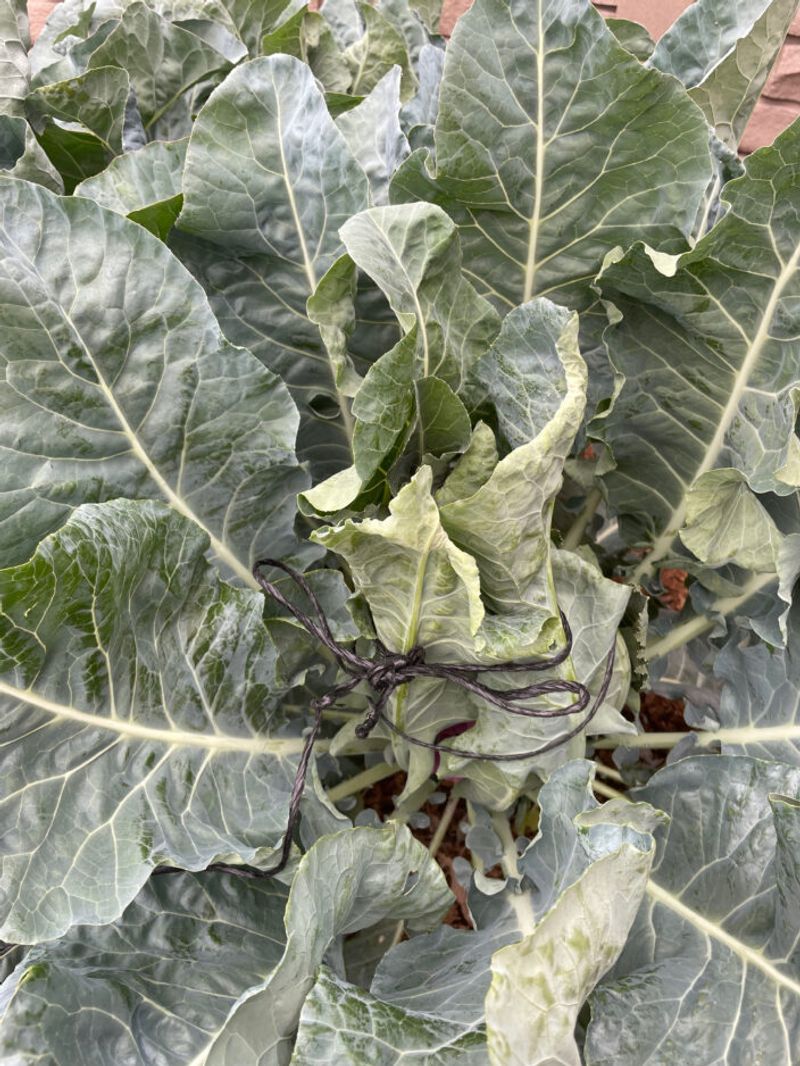
Old-time gardeners figured out a simple trick long ago, and it still works beautifully. Blanching means covering the developing curd with its own outer leaves so sunlight can’t reach it.
Start when the head is about the size of an egg, roughly 2 to 3 inches across. Gather several large outer leaves, fold them over the curd, and secure them loosely with twine, a rubber band, or a clothespin.
Leave a little room for air and growth.
Do this on a dry afternoon if possible. Wet leaves tied tightly over a curd can trap moisture and invite rot.
A quick check every couple of days lets you peek for pests and moisture.
Timing after tying moves fast in warm weather. Many heads reach harvest size within one to two weeks, while cool fall weather may stretch that closer to three weeks.
Mark tie dates with colored string if you have several plants.
You can also skip some work by choosing self-blanching varieties. Their inner leaves wrap naturally around the curd, though hot spells can still loosen that covering.
A quick tie gives extra insurance.
If leaves are too short, a breathable cloth or a large broken leaf from another plant can serve as a cover. Just keep it light and airy.
That small bit of shade does most of the heavy lifting.
4. Spring Heat Waves Push Your Cauliflower Plants Off Schedule
Timing is everything with this crop. Cauliflower is fussier than broccoli or cabbage, and a sudden warm spell during head formation can bring color changes, loose curds, or tiny heads called buttons.
NC State Extension recommends planting spring transplants early, often from late February into March in the Piedmont and Coastal Plain. Mountain gardeners usually plant later because of lingering frost.
The goal is a harvest before steady heat arrives.
That window can feel short. A warm May can push temperatures into the upper 80s, and curds forming then are more likely to blush purple, fade yellow, or spread out like rice.
Even well-tended plants feel the stress.
Big swings matter too. A chilly stretch followed by sudden warmth can confuse young plants, especially if transplants were stressed or root-bound before planting.
Stunted transplants often make small, early heads.
I could be wrong about every garden, but many of us have better luck with fall cauliflower. Days start warm and then cool down as heads mature, which is close to what this vegetable loves.
Transplants set out in late July through August often work well, depending on your region.
Watch your local forecast during heading. If a hot week is coming, cover heads early and keep soil evenly moist.
Those two steps can ease a lot of heat stress.
5. Brown Or Off-Color Spots Could Point To Boron Trouble
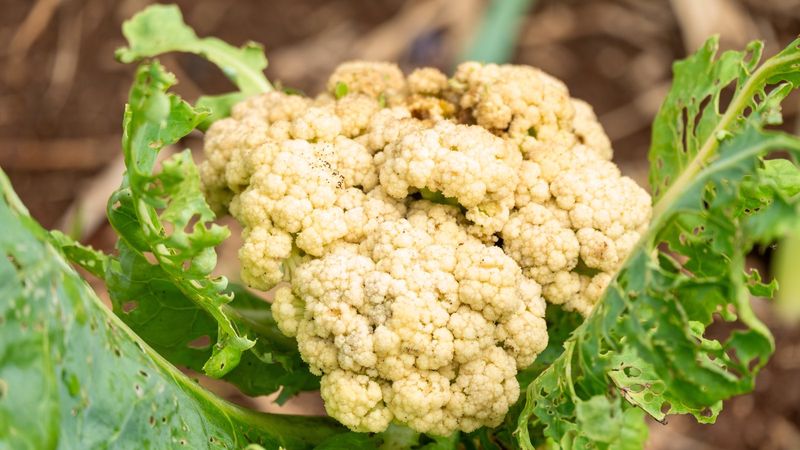
Not every color change comes from sunshine. Boron deficiency can cause brownish, rusty, or water-soaked patches on the curd, and sometimes a hollow stem with brown tissue inside.
Brassicas need more boron than many vegetables. Sandy soils, common in parts of the Coastal Plain, can lose boron through leaching after heavy rain.
Very high soil pH or dry spells can also make it harder for roots to take up.
The key difference is pattern. Sun-related purple or yellow color sits mostly on the exposed top of the curd and looks fairly even.
Boron trouble tends to show uneven browning, bitter taste, and sometimes cracked or thickened stems.
Please don’t guess and dump boron on your bed. The gap between enough and too much is narrow, and extra boron can harm crops.
A soil test is the smartest first move.
North Carolina residents can submit soil samples through the NC Department of Agriculture and Consumer Services. Samples are free for most of the year, with a small fee during the busy season from about late November through March.
The report gives specific lime and nutrient advice.
If the lab recommends boron, follow the label amounts exactly. Steady watering and decent organic matter help roots take up nutrients evenly.
Healthy soil makes every other cauliflower fix easier.
6. Narrow Strappy Cauliflower Leaves Signal A Different Problem
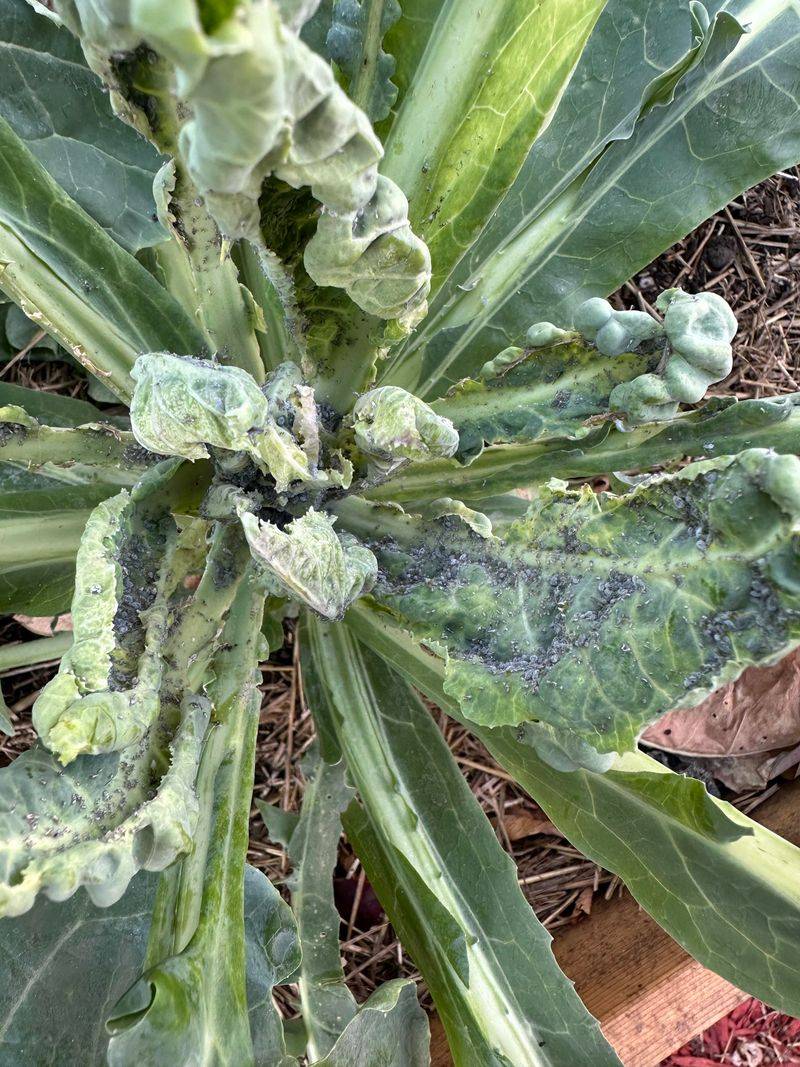
Odd leaves deserve a closer look. Whiptail is a disorder where cauliflower leaves grow narrow, twisted, and strap-like, often with yellow or pale edges.
The cause is molybdenum deficiency, a micronutrient plants need in tiny amounts. Molybdenum becomes hard to access in acidic soil, usually below a pH of about 5.5.
Plenty of North Carolina soils lean naturally acidic, so this one is worth knowing.
Whiptail differs sharply from sun discoloration. The leaves change shape, the growing point can be damaged, and plants may fail to form a usable head.
A purple curd on otherwise normal leaves is a much milder situation.
Correcting soil pH is usually the best fix. Lime, applied according to soil test results, raises pH and frees up molybdenum already in the soil.
Cauliflower generally grows best between pH 6.0 and 7.0.
Lime works slowly, so plan ahead. Applying it a few months before planting gives it time to react with the soil.
Fall soil testing makes it easy to prepare beds for a spring crop.
Severely affected plants rarely recover enough to produce good heads. It’s often smarter to pull them and focus on the next planting.
One season of whiptail teaches a lot about what’s happening underground.
7. Go Ahead And Cook That Purple Tinged Cauliflower
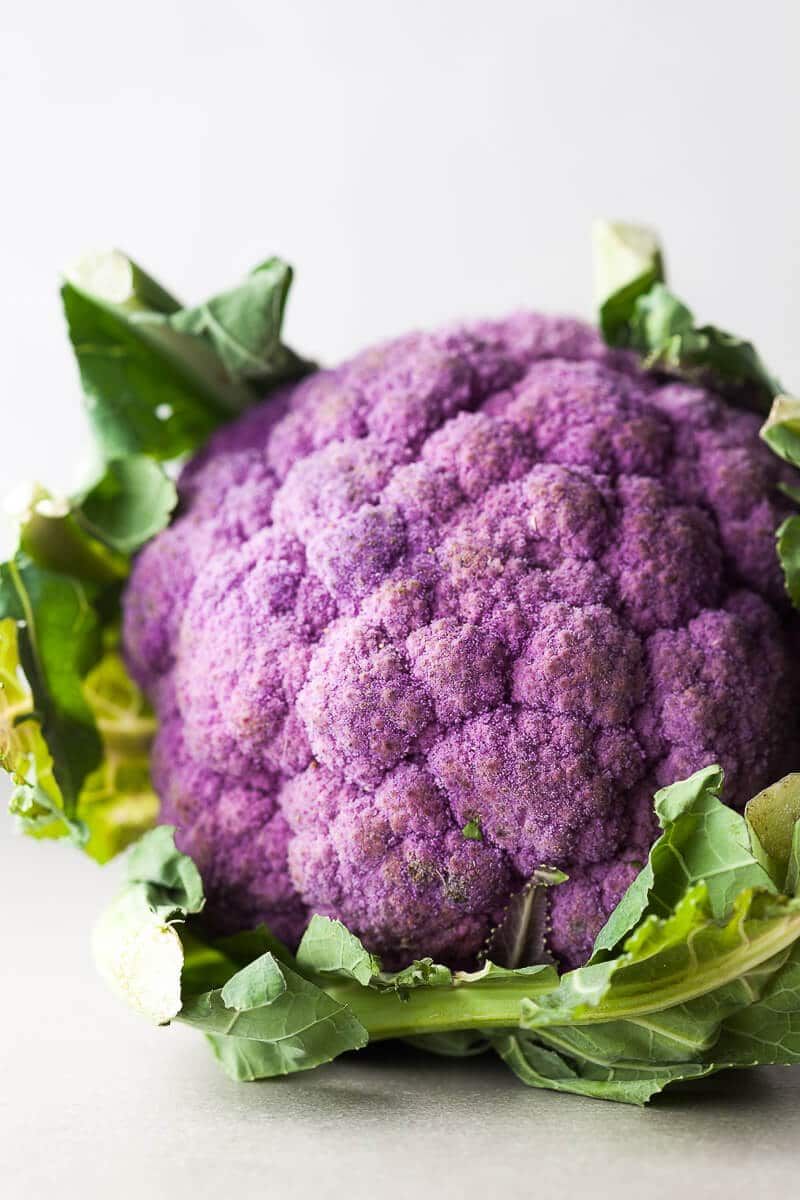
Kitchen time brings the best part of this story. A cauliflower head with a sun-triggered purple or yellow tint is safe to eat, as long as it’s firm and smells fresh.
Anthocyanin is the same family of pigments found in berries, grapes, and red onions. It carries antioxidant properties, so a little blush isn’t taking anything away.
Some gardeners even claim tinted heads taste slightly sweeter, though flavor varies with weather and harvest timing.
Expect a color shift during cooking. Anthocyanin reacts to pH, so purple florets can turn grayish, bluish, or greenish when boiled, especially in hard or alkaline water.
A splash of lemon juice or vinegar helps hold a brighter shade.
Roasting is my favorite fix. High heat browns the edges, and nobody notices pale tints once the florets turn golden and crispy.
Soups, curries, and mashed cauliflower also hide color easily.
Yellow curds work well in the same dishes. If the texture turned a little loose or ricey, use those heads for cauliflower rice, puree, or soup instead of raw veggie trays.
Skip any head with soft dark spots, slime, or a sour smell. Those signs point to rot, not sunlight.
Trim small blemishes away and enjoy the rest.
8. Harvest Firm Cauliflower Heads Before They Loosen And Fade
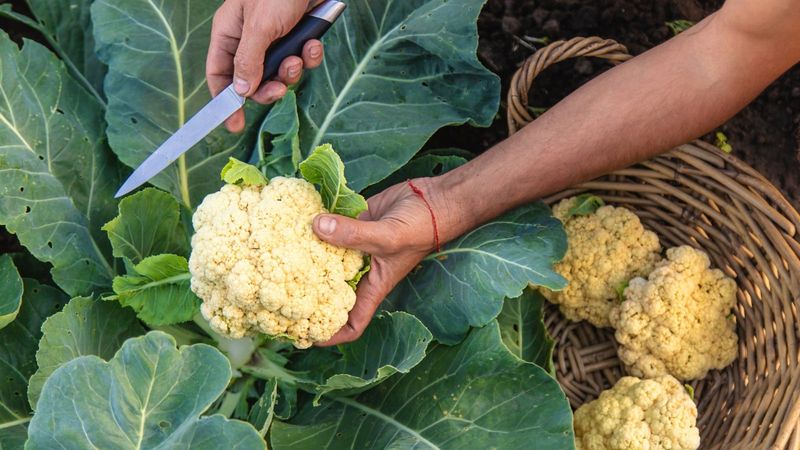
Patience helps with many crops, yet cauliflower rewards a quick hand. Once the head reaches full size, it can shift from tight and creamy white to loose and discolored within days during warm weather.
Look for curds that are compact, smooth, and firm when pressed lightly. Many garden heads finish between 6 and 8 inches across, though smaller heads are fine if they’re dense.
Separating florets or a fuzzy surface means it’s time right now.
Cut the stem below the head with a sharp knife, leaving a few wrapper leaves attached. Those leaves protect the curd during the trip to your kitchen.
Morning harvest keeps heads cooler and crisper.
Store cauliflower in the refrigerator soon after picking. Unwashed heads in a loose bag usually keep about a week.
Rinse right before cooking.
For your next round, a short checklist covers most color problems. Plant on time for your region, keep soil evenly moist, test your soil, cover heads early, and check plants every few days once curds appear.
Consider growing purple, orange, or green varieties too, since their colors are planned.
Each season in North Carolina teaches something new about this picky crop. A few tinted heads simply mean the weather left a mark.
With good timing, the next harvest can look as bright as it tastes.