The Simple Ways to Raise Humidity for Houseplants in a Dry Michigan Home
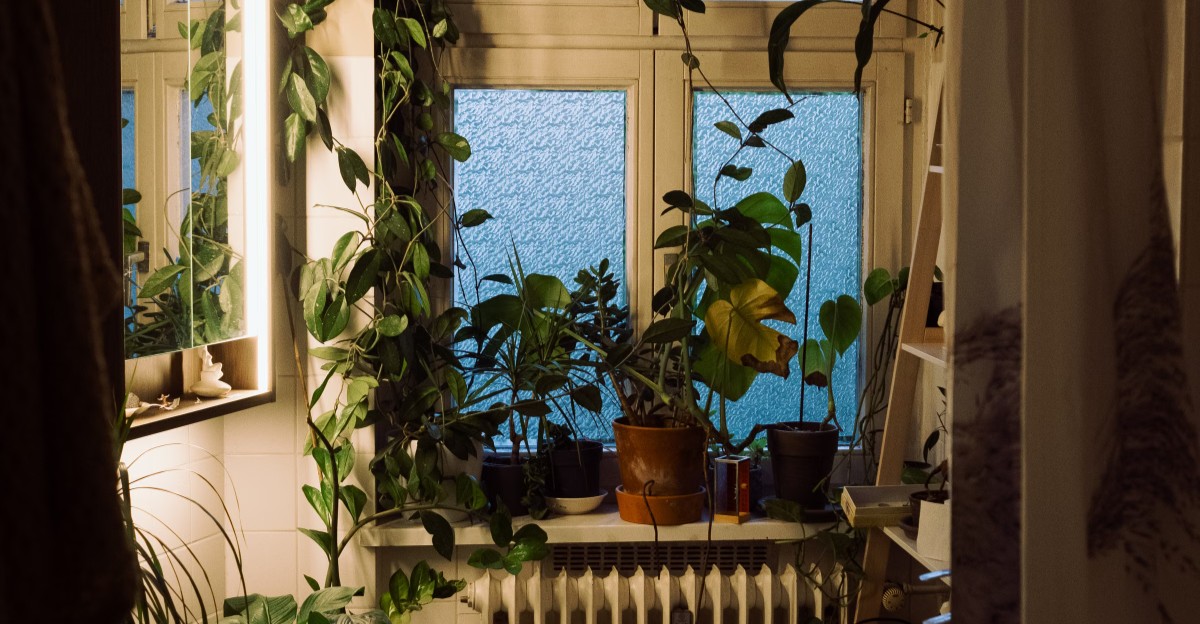
Heated indoor air in a northern winter can drop to around 10 to 20 percent relative humidity. That is drier than many desert afternoons, and it happens right inside your cozy living room.
When cold outdoor air sneaks indoors and gets warmed by the furnace, it can hold much more water than it actually contains. So the air starts pulling moisture from anything it can find, including your skin, your lips, and the leaves of your favorite plants.
I know how frustrating it can be when a fern that looked lush in October turns crunchy by January. Many of our leafy friends come from rainforest floors where the air feels like a warm, damp towel. A Michigan furnace season is a big shock for them.
So what actually works, and which popular tricks are mostly wishful thinking? A few answers surprised me.
1. Those Crispy Brown Leaf Tips Are Sending You a Message
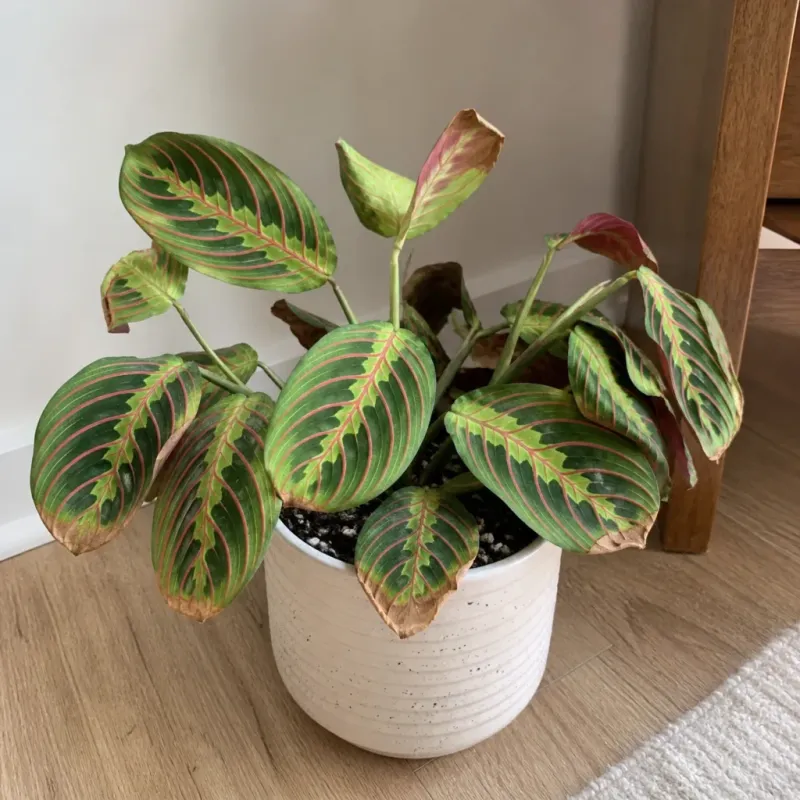
Brown, papery leaf tips are one of the clearest clues that your indoor air has turned thirsty. Leaves release water vapor all day long, and dry air speeds that up. When roots can’t keep pace, the thinnest parts of the leaf, the tips and edges, dry out first.
Calatheas, ferns, peace lilies, and many orchids tend to complain early. You might also see new leaves that curl, stick together as they unfurl, or open with brown spots. Flower buds can drop before they ever bloom.
Still, dry air isn’t the only suspect. Florida’s extension service and many others point out that salt buildup from fertilizer, fluoride in tap water, and uneven watering can cause similar crispy tips.
If a plant sits in soggy soil, the roots may be struggling, which also shows up as brown edges. A quick checklist helps sort it out.
Check whether the soil feels bone dry or soaked, and look for white crust on the pot rim. Notice whether the damage shows up mostly in winter.
If the trouble starts when the furnace kicks on and fades by late spring, low humidity is very likely the main cause. Once you know that, the fixes get much easier.
2. A Cool-Mist Humidifier Does the Heavy Lifting
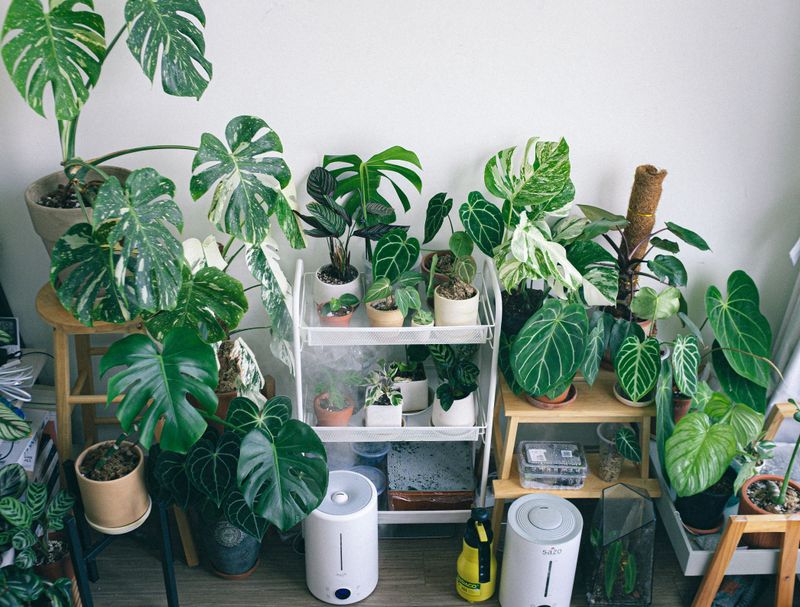
Honestly, nothing beats a humidifier for raising moisture across a whole room. Pebble trays and grouping help a little, but a running humidifier can lift the air by many percentage points within hours.
Most tropical houseplants are happiest around 40 to 60 percent humidity. Your home won’t safely reach the top of that range in a Michigan January, but even getting a plant corner from 20 percent up to 40 percent makes a real difference in leaf health.
Cool-mist models are a smart pick around kids and pets because there is no hot water involved. Ultrasonic units are quiet, but they can spread fine white dust if you fill them with hard tap water. Distilled water or an evaporative wick-style unit helps solve that.
Place the humidifier a few feet from your plants rather than aiming the mist straight at the leaves. Wet foliage that stays damp invites leaf spot problems.
Cleaning matters too. The EPA recommends emptying, drying, and cleaning room humidifiers often so bacteria and mold don’t grow in the tank. I give mine a rinse every few days and a good scrub weekly, and the plants seem grateful.
3. Cluster Your Ferns and Calatheas Into a Leafy Huddle
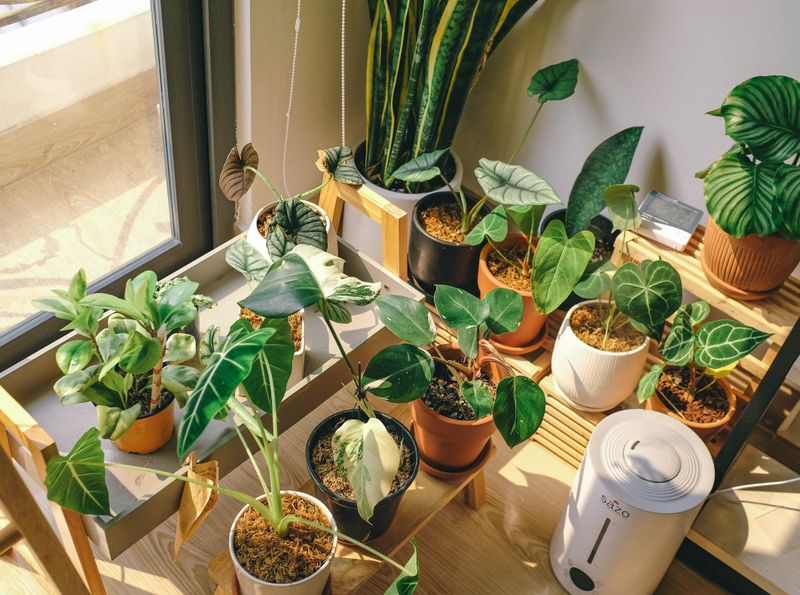
Plants are tiny humidifiers in their own right. Through a process called transpiration, they release water vapor from small pores on their leaves. Put several together, and that vapor lingers in the shared space instead of drifting away.
The boost is modest, usually just a few percentage points right around the group. That small bump, though, can be enough to keep a fussy fern from getting crispy edges.
I like building plant neighborhoods. Bigger, leafier plants can go on the outside, with the delicate ones tucked in the middle where the air stays a bit softer.
Choose companions with similar needs. A sun-loving croton and a shade-loving fern won’t both be happy on the same shelf, so group by light first and humidity second.
Leave a little breathing room between pots. Crowded leaves that touch and stay damp can encourage fungal spots, and tight clusters make it easier for pests like spider mites to hop from plant to plant.
Speaking of mites, they love dry indoor air. Check leaf undersides for fine webbing every week or two, since a crowded group means a problem can spread quietly if you miss it.
4. Pebble Trays Under Your Pots Help More Than You Expect
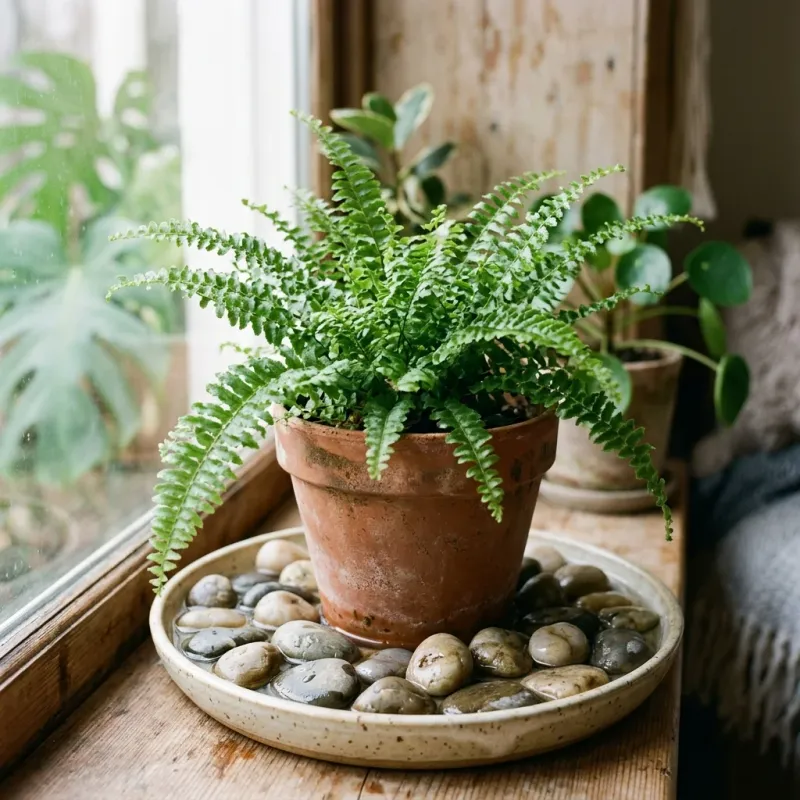
Simple, cheap, and kind of satisfying to set up, pebble trays have been a houseplant trick for generations. Fill a shallow tray with gravel or smooth stones, add water just below the top of the pebbles, and set your pot on top.
As water evaporates, it adds a little moisture to the air right around the plant. Studies and extension experts agree the effect is small and local. It won’t change the feel of your whole room.
So why bother? Paired with grouping or a humidifier, a tray gives your plant a steady extra cushion. It also catches drainage water, keeping your windowsill or furniture dry.
The most important rule is keeping the pot above the waterline. If the drainage hole sits in water, the soil can wick it up and stay soggy, which leads to root rot.
Refill the tray every few days, since winter air pulls water out fast. Every month or so, rinse the pebbles to clear away mineral crust and algae.
Wide, shallow trays work better than small saucers. More water surface means more evaporation, and that is the whole point.
5. That Spray Bottle Misting Habit Isn’t Doing Much
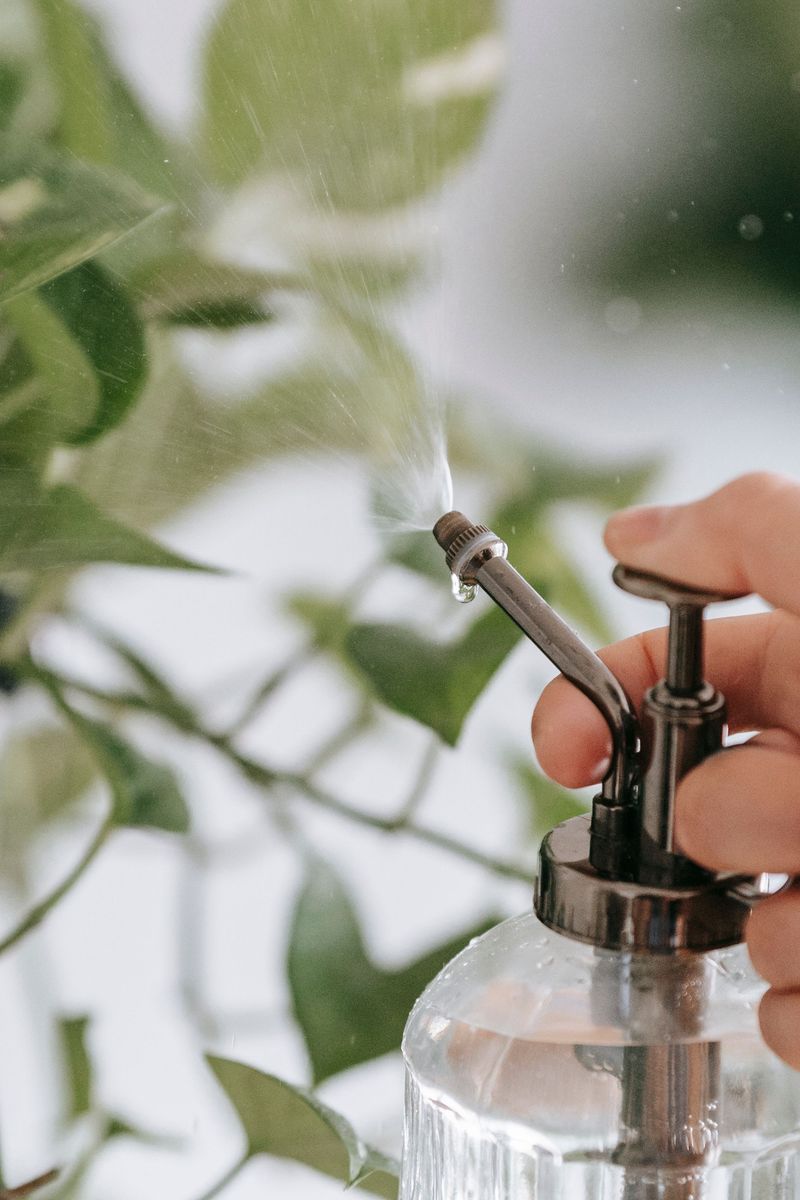
Misting feels so helpful. You spray, the leaves glisten, and the plant looks refreshed. Sadly, research and many university extension services agree the humidity boost fades in minutes.
Tiny droplets evaporate quickly in dry winter air. Within about fifteen minutes, the space around the plant is back to where it started, so you would need to mist constantly to make any lasting change.
There is also a downside. Leaves that stay wet, especially in a cool room with little air movement, can develop fungal or bacterial leaf spots. African violets and other fuzzy-leaved plants are especially sensitive, and cold water can leave pale marks on them.
That doesn’t mean your spray bottle has to go in a drawer forever. Misting is handy for air plants, for cleaning light dust, and for keeping fresh cuttings perky while they root.
If you enjoy the ritual, mist in the morning so leaves dry by evening. Use room-temperature water, and skip the fuzzy plants.
For real humidity, though, put your energy into the steadier methods. Your plants will notice the difference far more than a quick shower of droplets.
6. Bathroom Windowsills Make a Cozy Home for Humidity Lovers
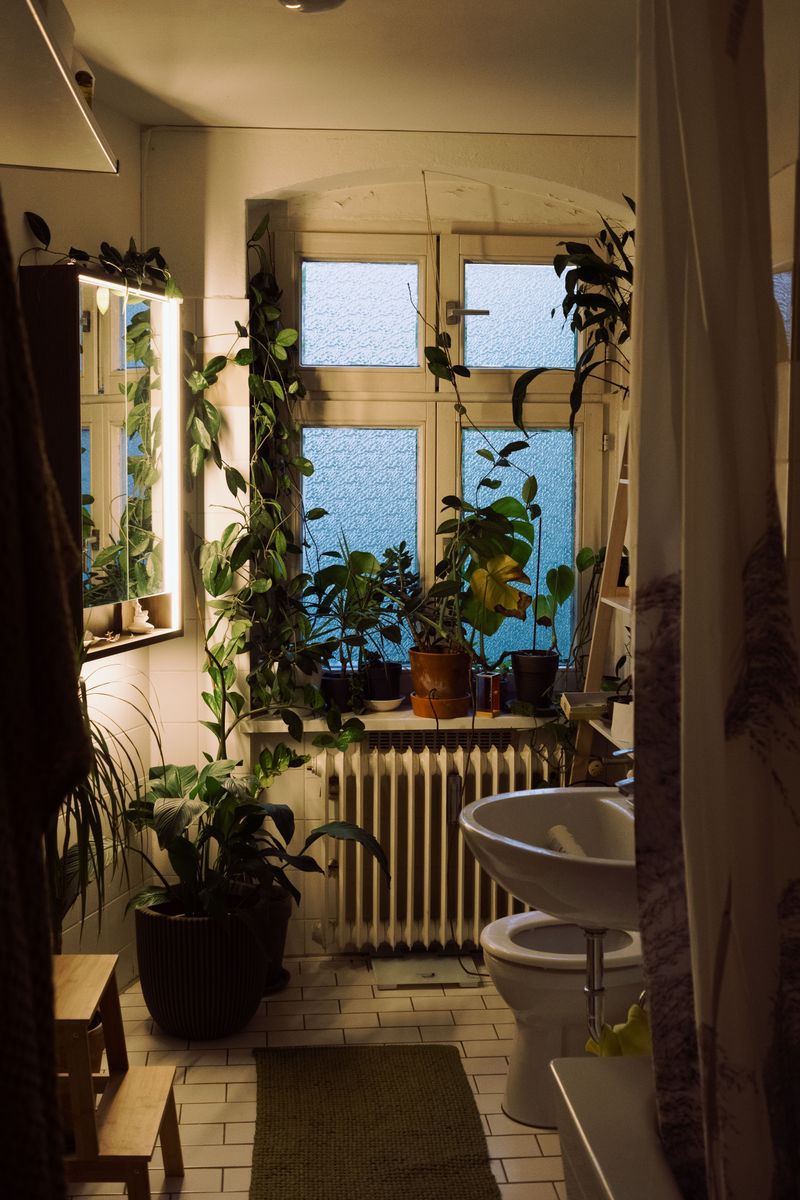
My bathroom fern looks happier than any plant in my living room, and steam is the reason. Daily showers release a burst of moisture that lingers for a while, giving tropical plants a regular treat.
Kitchens offer a similar boost from boiling pasta water and the dishwasher. A bright kitchen windowsill can be a great spot for herbs, pothos, or a small fern.
Light is the catch. A bathroom with no window or only a tiny frosted one may not offer enough brightness through dark Michigan winters. In that case, a small LED grow light can fill the gap.
Where you place plants elsewhere matters just as much. Keep them away from heating vents, radiators, space heaters, and fireplaces, because warm blowing air dries leaves fast.
Watch out for cold glass too. Leaves pressed against a single-pane window on a frigid night can get chilled and damaged, so pull plants back a few inches when temperatures plunge.
Drafty exterior doors are another trouble spot. Each blast of icy air drops both temperature and moisture, which stresses sensitive plants like calatheas and fiddle leaf figs.
7. Glass Terrariums and Cloches Rescue Fussy Maidenhair Ferns
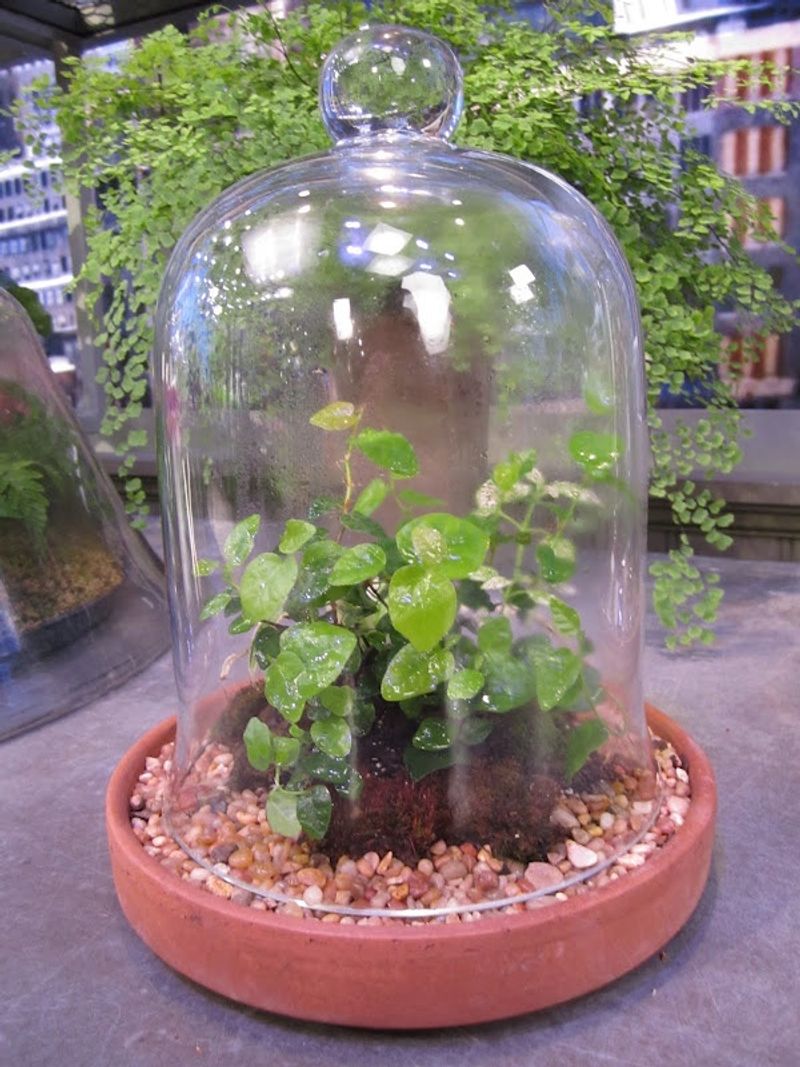
Some plants simply refuse to cooperate with normal household air. Maidenhair ferns, nerve plants, many small begonias, and jewel orchids often sulk no matter how many trays you set out.
For these divas, a glass enclosure works wonders. Terrariums, glass cloches, and even repurposed aquariums trap the moisture that plants release, so humidity inside can stay high while the rest of your house stays dry.
Inside a closed case, water evaporates from soil and leaves, beads up on the glass, and drips back down. That little water cycle needs very little help once it gets going.
Pick compact plants that stay small, since big ones quickly outgrow the space. Use bright, indirect light rather than direct sun, because a glass box in a sunny window can overheat fast.
Ventilation keeps things healthy. If the glass stays fogged all day or you spot fuzzy mold, crack the lid open for a few hours.
A clear plastic storage bin with a few holes works as a budget version for propagation or plant rescue. I have revived a crispy fern this way, and it pushed out fresh fronds within a few weeks.
8. A Digital Hygrometer Keeps Your Plants and Windows Happy
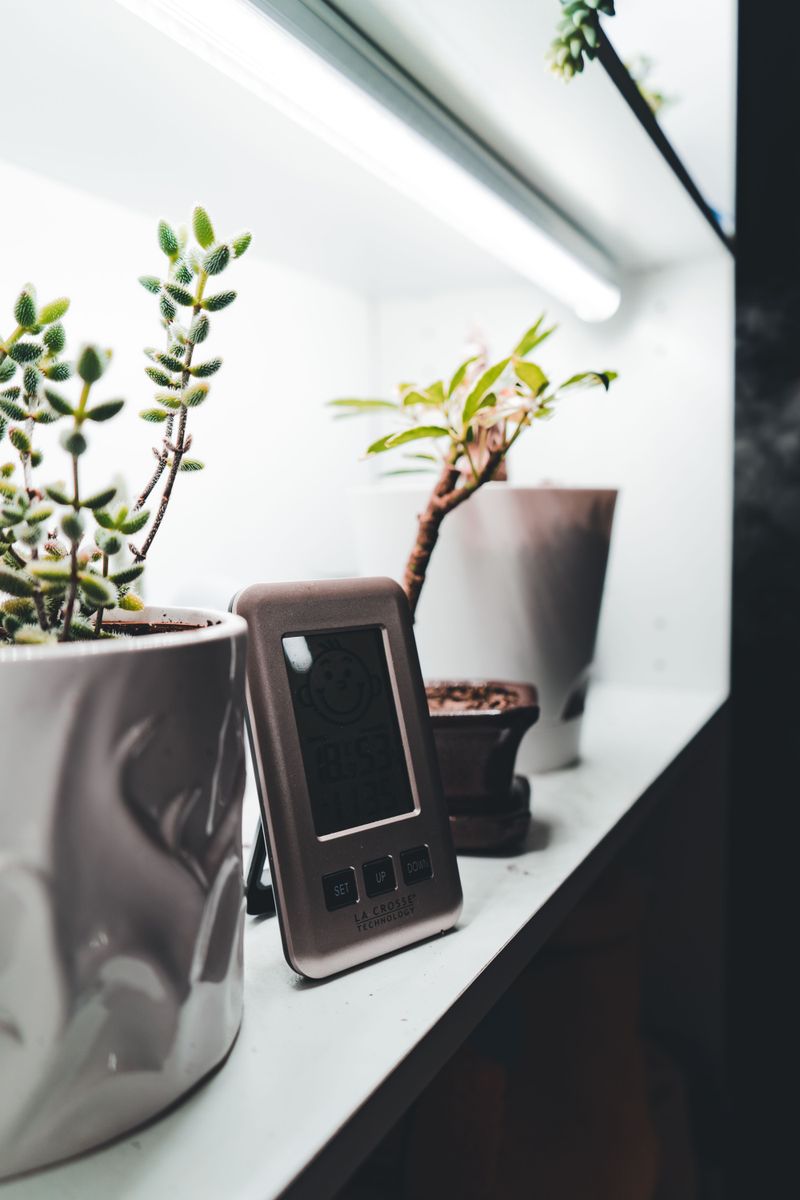
Guessing at humidity is like watering without checking the soil. A small digital hygrometer costs only a few dollars and shows exactly what your plants are living in.
Place one near your plant group and another in a main room. You might be surprised how much readings swing on a frigid night when the furnace runs nonstop.
Here is the balancing act. Building experts often suggest keeping winter indoor humidity around 30 to 40 percent, and lower during very cold snaps. Too much moisture can condense on windows, soak into frames, and encourage mold inside walls.
A good warning sign is water or frost collecting on the inside of your windows. If that happens, dial back your humidifier a bit.
That is why targeted help works best in a Michigan winter. Focus extra moisture around the plants with grouping, trays, enclosures, and a nearby humidifier, rather than pushing the whole house to rainforest levels.
Spring brings relief as the furnace quiets down. Until then, check your hygrometer every few days and watch new leaves for clues. Healthy, unfurling growth tells you that your plan is working.