7 Plants With Red Berries That Brighten Pennsylvania Gardens All Winter
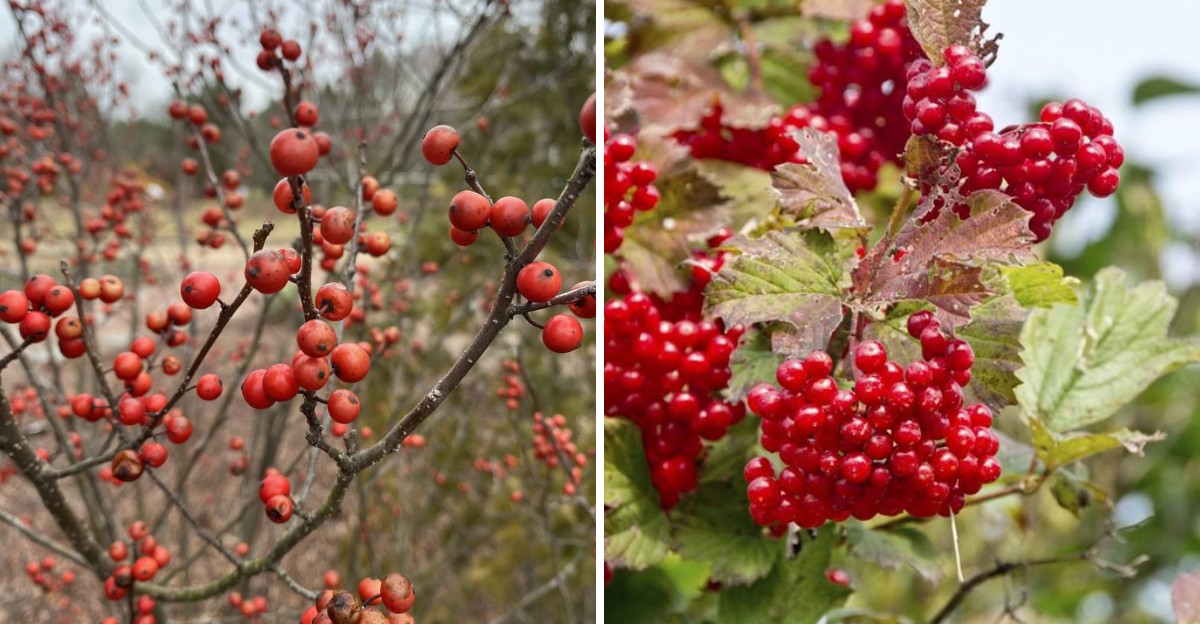
Some red berries taste so sour that hungry birds ignore them until late winter, leaving branches glowing for months. That bitter delay is a clever survival trick, because the fruit stays ready when food grows truly scarce.
Other winter berries hide close to the forest floor, tucked under glossy leaves that stay green through snow. Believe it or not, one tiny native berry forms from two flowers joined together, leaving two little dimples.
I used to think my Pennsylvania yard simply went to sleep after November, until the robins proved me wrong. Now I plant for winter color on purpose, and you might find the habit surprisingly addictive too.
Pennsylvania gardens have plenty of native options that handle cold winters and feed local birds at the same time. Which berry-covered plants deserve a spot near your kitchen window this year, where you can admire them daily?
1. American Holly
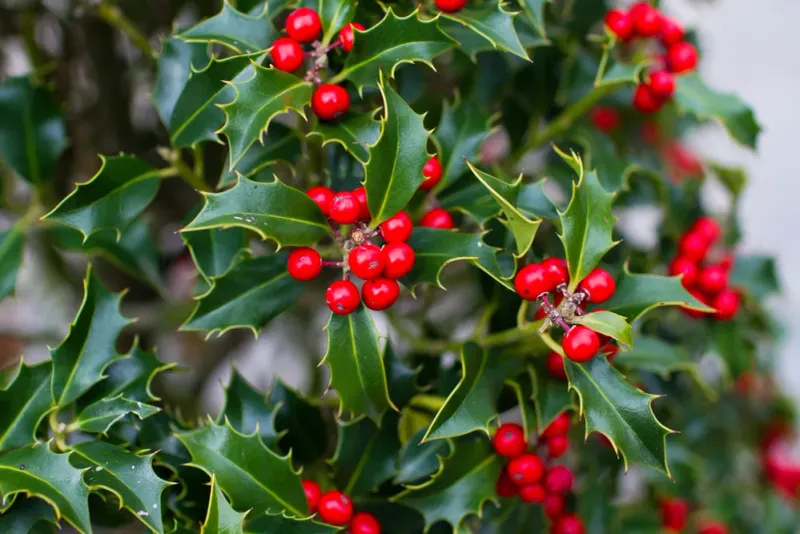
Long before plastic decorations filled stores, people cut American holly branches to brighten homes during the darkest weeks.
Those glossy, prickly leaves and scarlet berries still look like a holiday card come to life outdoors.
Ilex opaca is a native evergreen tree found wild in southeastern Pennsylvania, and it handles zones 5 through 9. In home landscapes, expect a slow-growing pyramid that usually reaches 15 to 30 feet tall over many years.
I have to admit, my first holly gave me zero berries, and I blamed the weather for months. The real problem was surprisingly simple, because hollies grow as separate male and female plants in nature.
Only females carry berries, so you need a male holly growing nearby to handle pollination for them. Bees do the matchmaking in late spring, carrying pollen between the small, creamy white flowers on each tree.
Plant your holly in moist, well-drained, slightly acidic soil with full sun or light shade for the best berries. Shelter from harsh winter wind helps too, since exposed leaves can scorch and turn brown by March.
Birds like robins and cedar waxwings feast on the fruit, often saving it for later in the cold season. The dense, spiny branches also give songbirds a safe hiding spot when hawks are cruising overhead.
Keep curious kids and pets away from the berries, since they can upset stomachs when swallowed. Light pruning in December gives you fresh greenery for wreaths and keeps the tree looking tidy.
2. Winterberry
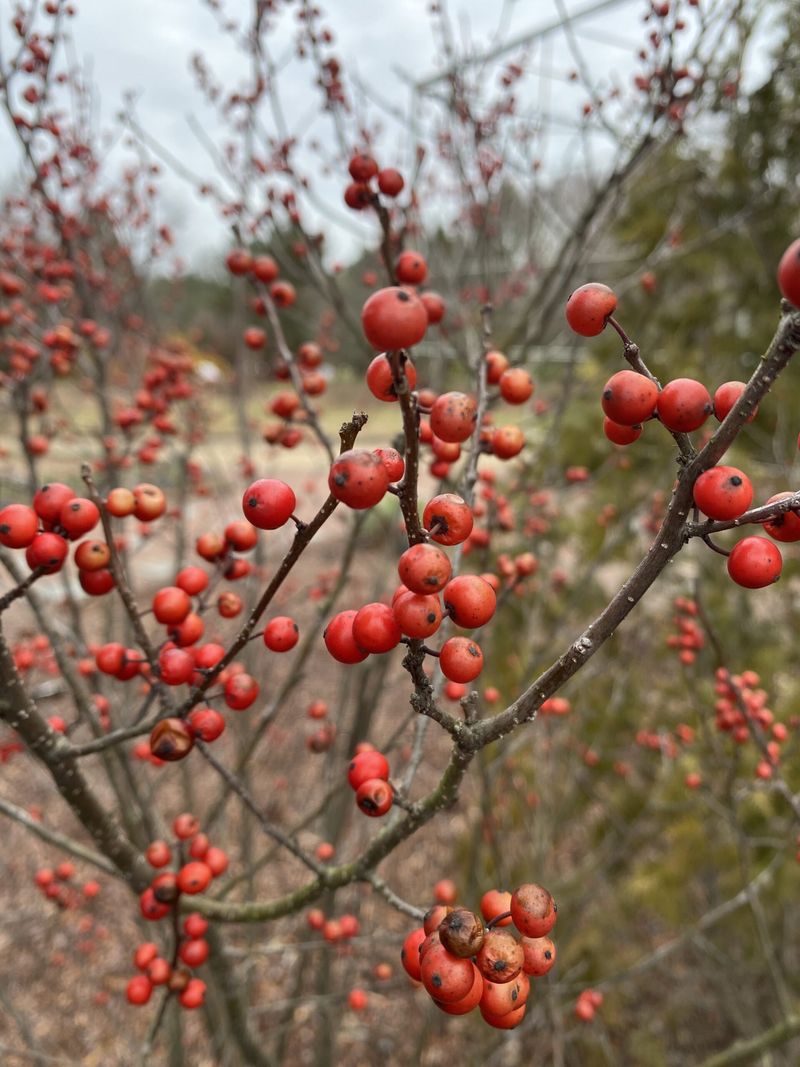
Once the leaves drop in fall, winterberry turns into a firework of red that looks almost unreal against snow. Bare gray stems end up packed with berries, and I catch myself staring at them from the driveway.
Ilex verticillata is a native deciduous holly hardy in zones 3 through 9, so it suits the whole state. Most plants grow 6 to 10 feet tall and spread slowly into a full, rounded clump.
Soggy spots that drown other shrubs are where winterberry feels right at home, since it grows naturally in swamps.
Rain gardens and soggy pond edges make excellent homes for this thirsty plant, though average garden soil works too.
Like its evergreen cousin, winterberry needs a male partner, and one male can usually serve several females nearby. Match bloom times carefully, pairing Jim Dandy with early females or Southern Gentleman with later ones.
Full sun gives you the heaviest berry crop, though plants still fruit decently in partial shade during summer. Acidic soil keeps the leaves green, while very alkaline ground can cause yellowing between the leaf veins.
Robins and bluebirds often clean off the branches in late winter, which makes for great window watching. Cut a few stems for indoor vases in December, and they hold their color for weeks without water.
Prune lightly in early spring if needed, because winterberry flowers on fresh growth that appears each season. Personally, I think a winter garden without winterberry feels like a party missing its best guest.
3. Red Chokeberry
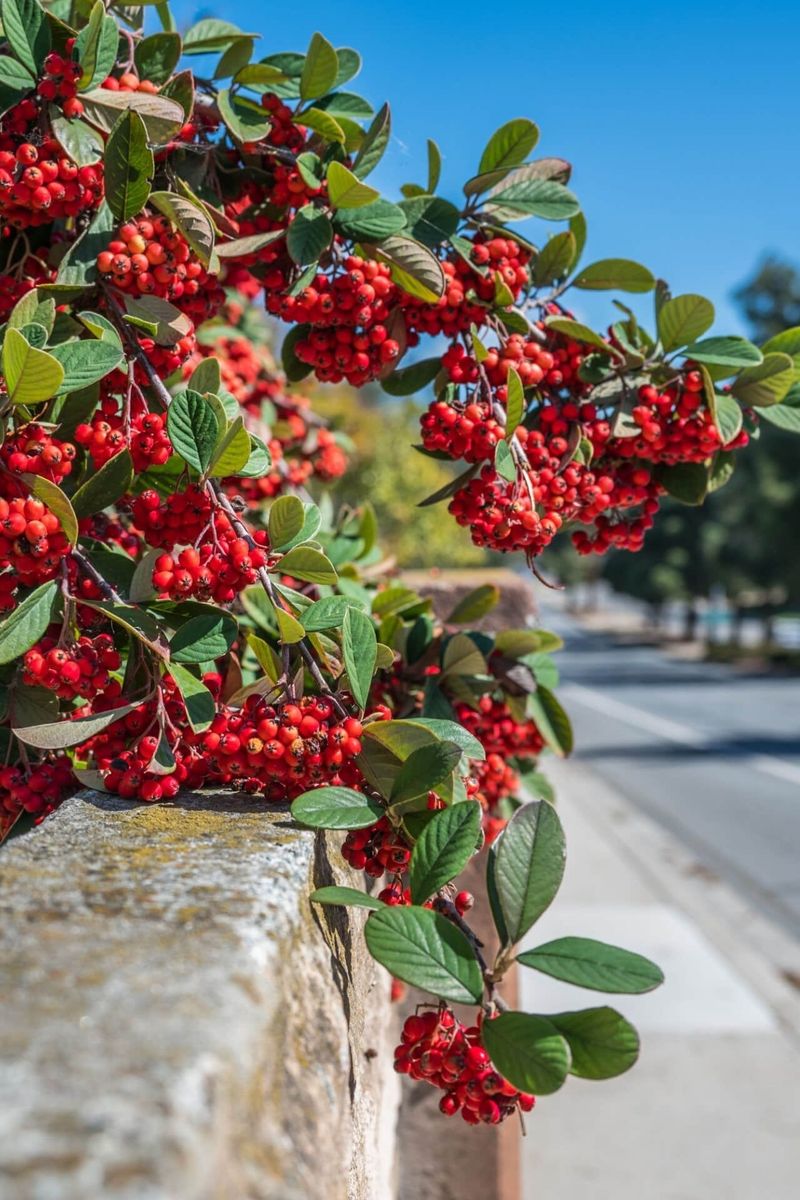
Few shrubs taste so sharp that the birds politely wait months before eating, but red chokeberry pulls it off. Its puckery fruit hangs on well into winter, glowing like tiny cherries along the slender stems.
Aronia arbutifolia, also listed as Photinia pyrifolia by some botanists, is native across much of the eastern United States. It grows happily in zones 4 through 9 and usually reaches 6 to 10 feet tall.
Spring brings small white flowers with pink centers, and pollinators like native bees visit them eagerly. Fall is the real showstopper, when the leaves turn a fiery red that matches the berries beautifully.
You’ll love how easy this shrub is, since it handles wet clay and drier spots once established. Full sun gives the best fruit and the brightest autumn color, so skip the deep shade.
Red chokeberry spreads slowly by suckers, forming a loose colony over time if you let it roam. That habit makes it handy for slopes and rain gardens, but trim stray shoots in tight borders.
The berries are edible but quite astringent, so most people cook them into jams rather than snacking raw. Birds eventually find them in late winter, when tastier foods have mostly disappeared from the landscape.
Look for the cultivar Brilliantissima if you want extra glossy fruit and especially vivid fall leaves. I truly believe it is one of the most underrated native shrubs you can plant for winter color.
4. Partridgeberry
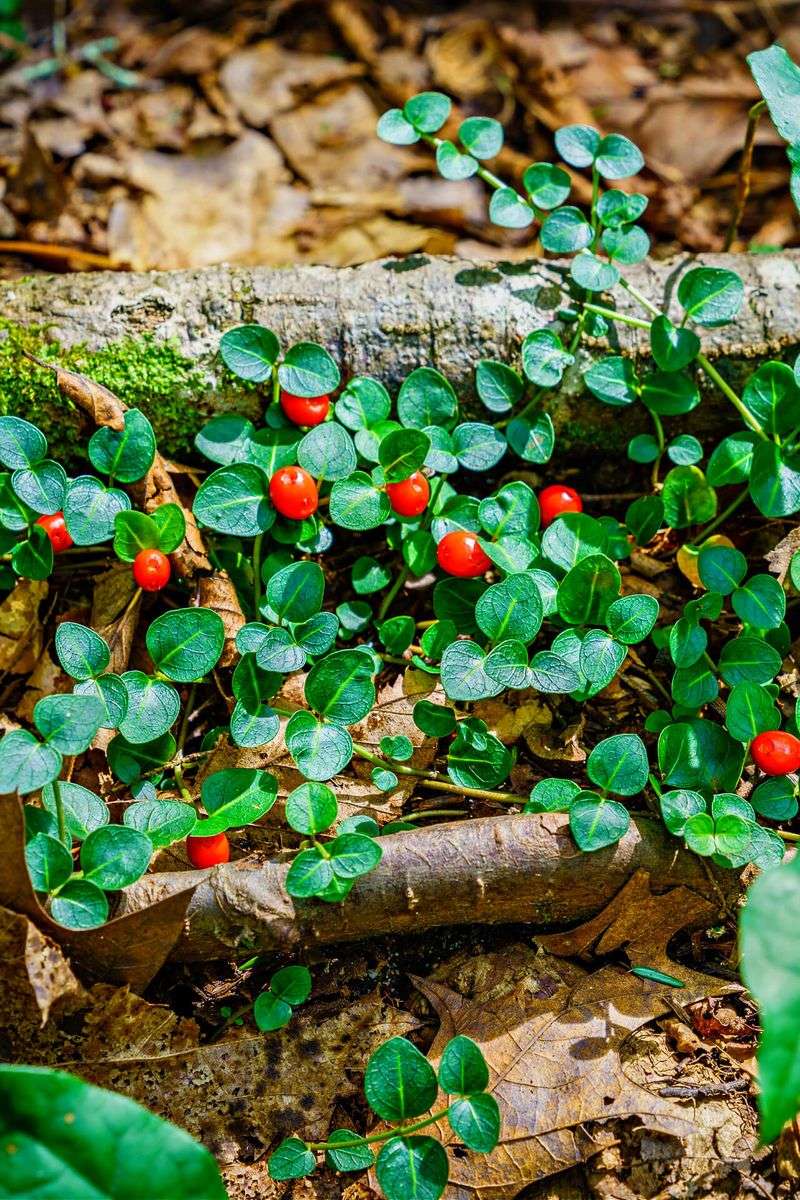
Kneel down in a shady woodland patch this winter, and you might spot red dots peeking through tiny evergreen leaves. Partridgeberry is so small that I walked past it for years before finally noticing its cheerful berries.
Mitchella repens is a native creeping groundcover that rarely grows taller than two inches, hugging the soil like a rug. It is hardy in zones 3 through 9 and grows wild in forests across the state.
The most interesting part is how each berry forms from a pair of fragrant white flowers joined at the base. Look closely and you will see two tiny dimples on every berry, a quirky reminder of its double start.
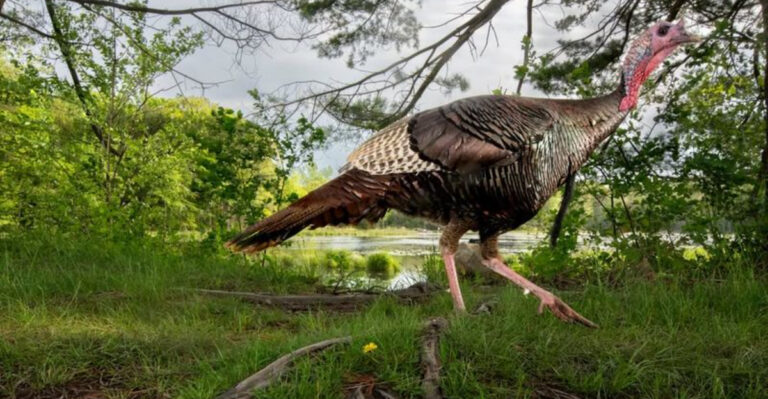
Those berries can hang on through winter and sometimes linger until the plant blooms again the following summer. Ruffed grouse and wild turkeys nibble them, though the fruit tastes rather bland to most people who try it.
Give partridgeberry part to full shade with moist, acidic soil rich in leaf litter and organic matter. It looks lovely beneath rhododendrons or along a shaded path, where its glossy leaves stay green all year.
Patience matters here, because this little creeper spreads slowly and dislikes being disturbed once it settles in.
Buy nursery-grown plants instead of digging from the wild, which harms native colonies and is often prohibited.
Gardeners also love it in terrariums, where the shiny leaves and red berries create a tiny forest scene. I can’t imagine a shade garden without this charming little plant tucked somewhere along the edges.
5. Wintergreen
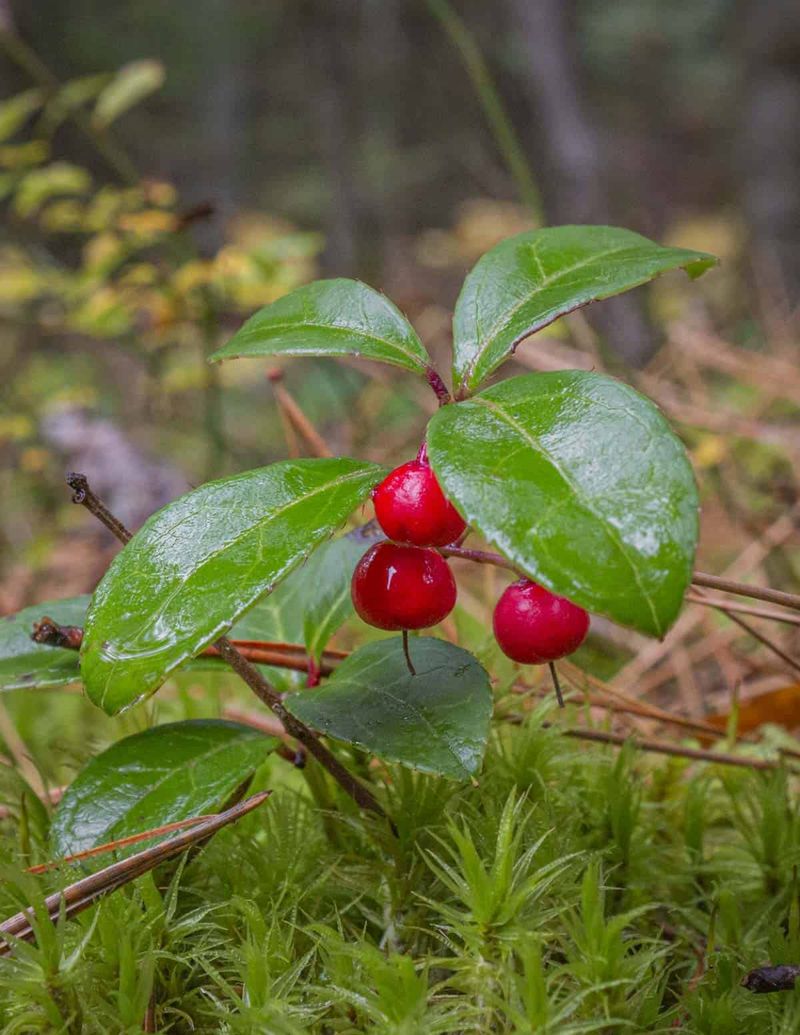
Crush a single leaf between your fingers, and a cool minty scent instantly fills the air around you. That familiar smell comes from wintergreen, a tiny native plant that also carries bright red berries through winter.
Many Pennsylvanians call it teaberry, the flavor behind a famous pink gum and a classic regional ice cream. Gaultheria procumbens grows in zones 3 through 8 and stays only about 3 to 6 inches tall.
In summer, small white bell-shaped flowers dangle beneath the leaves, easy to miss unless you look closely. By fall those blooms become round red berries that often cling to the plant until spring arrives.
Cold weather adds a bonus, since the glossy leaves often blush a handsome reddish purple in winter. That color shift makes wintergreen look extra cozy under oaks and pines on a frosty morning.
Success depends on acidic, well-drained soil that stays evenly moist, plus shade from harsh afternoon sun. Mix in pine needles or shredded leaves as mulch to mimic the forest floor it naturally loves.
The berries taste minty and are safe to nibble in small amounts, though concentrated wintergreen oil is toxic. Keep bottled oil away from children and pets, since even a small spoonful can cause serious poisoning.
Chipmunks and white-tailed deer nibble the fruit, especially when deeper snow hides other winter food sources. Personally, I tuck a few plants near my front steps so I can sniff a leaf on the way inside.
6. Washington Hawthorn
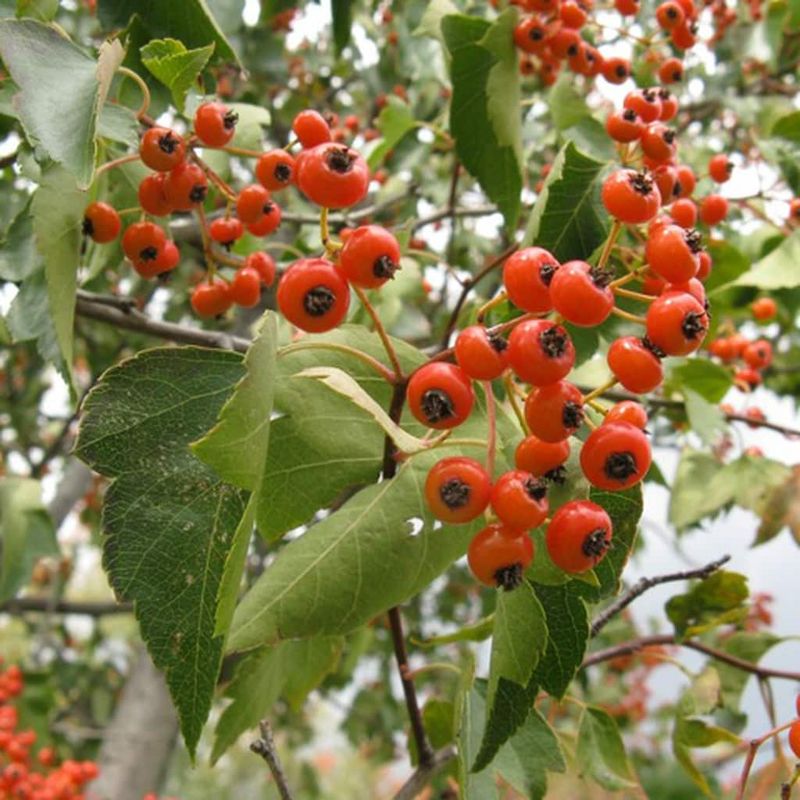
Thorns up to three inches long might sound unfriendly, yet Washington hawthorn wins hearts with its glowing winter fruit. Clusters of shiny red haws dangle from the branches long after the leaves fall, like beads on a necklace.
Crataegus phaenopyrum is native to the eastern United States and handles zones 4 through 8 with ease. Expect a small tree around 25 to 30 feet tall, with a rounded crown and dense branching.
In late spring, it puts on a fluffy display of white flowers that bees and other pollinators happily visit. Autumn follows with orange to scarlet leaves, giving this tree plenty of reasons to earn its spot.
Full sun brings the heaviest fruit set, and the tree adapts to many soils as long as drainage is decent. Once established, it handles dry summers and city conditions better than many other small flowering trees.
Plant it away from walkways and play areas, because those sharp thorns can snag sleeves and skin. Along a property line, though, the spiny branches make a fantastic living fence that birds love for nesting.
Cedar waxwings and robins gobble the haws in late winter, often arriving in noisy flocks to strip whole branches. Keep an eye out for rust diseases, especially if eastern red cedars grow nearby in your neighborhood.
For a gentler option, many nurseries sell Princeton Sentry, a cultivar with few thorns and an upright shape. You’ll wonder why you didn’t try this sooner once those berries light up a snowy February afternoon.
7. American Cranberrybush
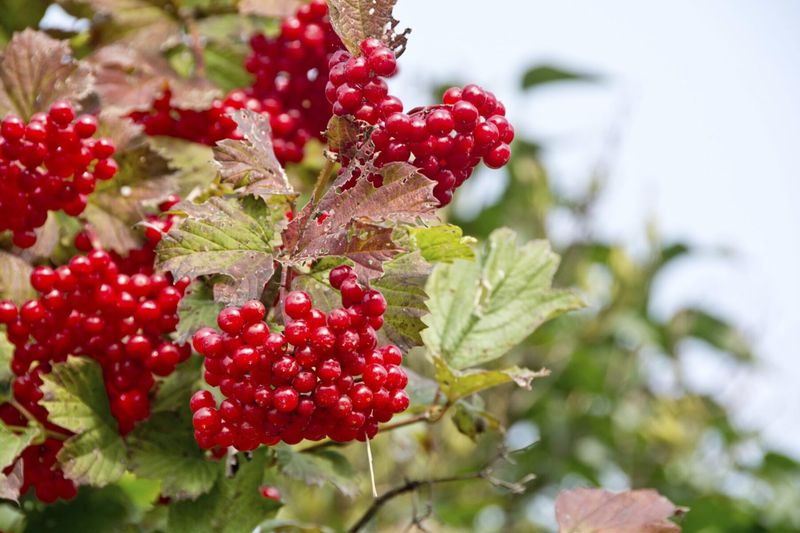
Translucent red fruit that glows like stained glass in morning sun makes American cranberrybush a winter favorite of mine.
The clusters often hang on until late winter, because birds tend to eat them only after better options run out.
Despite the name, this shrub is a viburnum, not a true cranberry, though the tart fruit looks remarkably similar. Viburnum trilobum is native to northern regions, including parts of Pennsylvania, and thrives in zones 2 through 7.
Plants usually grow 8 to 12 feet tall and wide, forming a rounded shrub with maple-shaped leaves. Flat clusters of white lacecap flowers appear in late spring, drawing in a steady stream of busy pollinators.
Fall color ranges from yellow to reddish purple, giving the bright fruit a lovely backdrop before the leaves drop. Moist, well-drained soil and full sun to part shade keep this adaptable shrub looking its best.
Shopping takes a little care, because the European cranberrybush looks nearly identical and has become invasive in some areas.
Check plant tags for Viburnum trilobum or Viburnum opulus var. americanum before you bring one home.
The berries are edible once cooked, and people have long turned them into tangy jelly and sauces. Raw fruit tastes sour, so leave most of it on the shrub for the birds and your winter view.
Watch for viburnum leaf beetle, a pest that chews leaves into lace, and prune out egg-filled twigs during winter. Grab your gloves, because a quick check in January helps keep this cheerful shrub healthy for years.