Sandhill Cranes Are Flying Over Ohio Now, and Their Migration Has Been Shifting Later Over Time
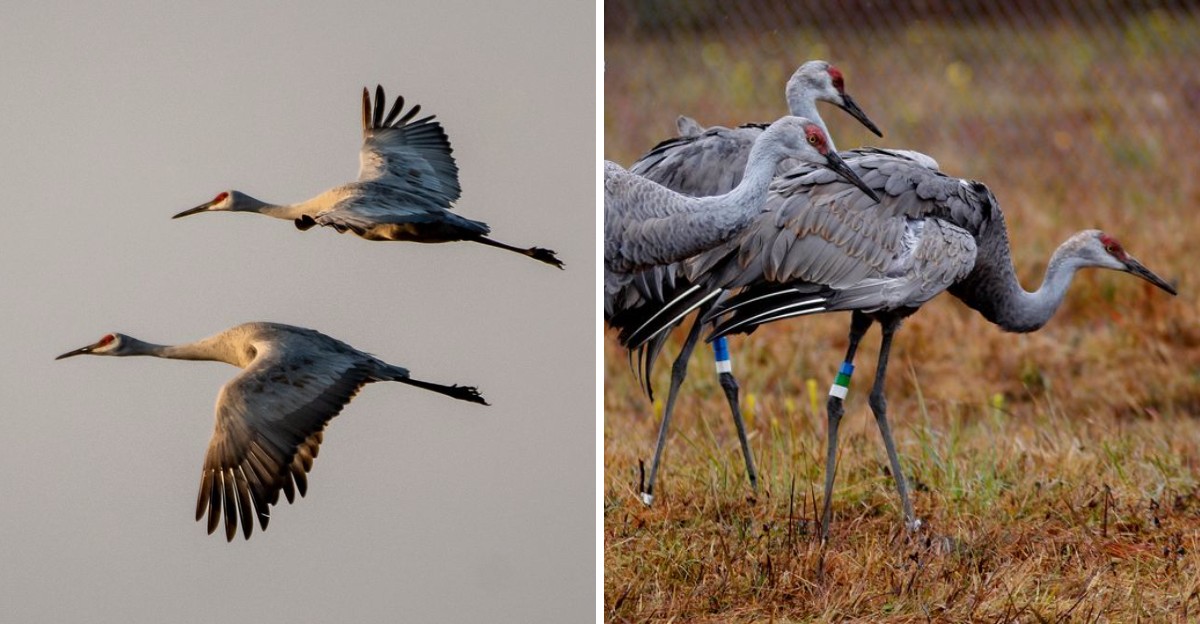
A bird that stands as tall as a second grader is calling down to you from a mile up, and its voice carries farther than you can see.
I heard that rolling, wooden rattle last fall while pulling frosty, spent tomato vines. I dropped my pruners and stared at the clouds like a kid at a parade.
These gray travelers have been crossing North America for a very long time, with fossils of their kind dating back millions of years. Lately, though, their schedule over Ohio seems to be sliding.
Researchers have found that many flocks now leave the north later and spend winter closer to home than they did decades ago.
What changed, and what does it mean for the rest of us who keep one eye on the garden and one on the sky? I have a few ideas, and the science has even better ones.
Those Rattling Crane Calls Over Ohio Are Showing Up on a New Schedule
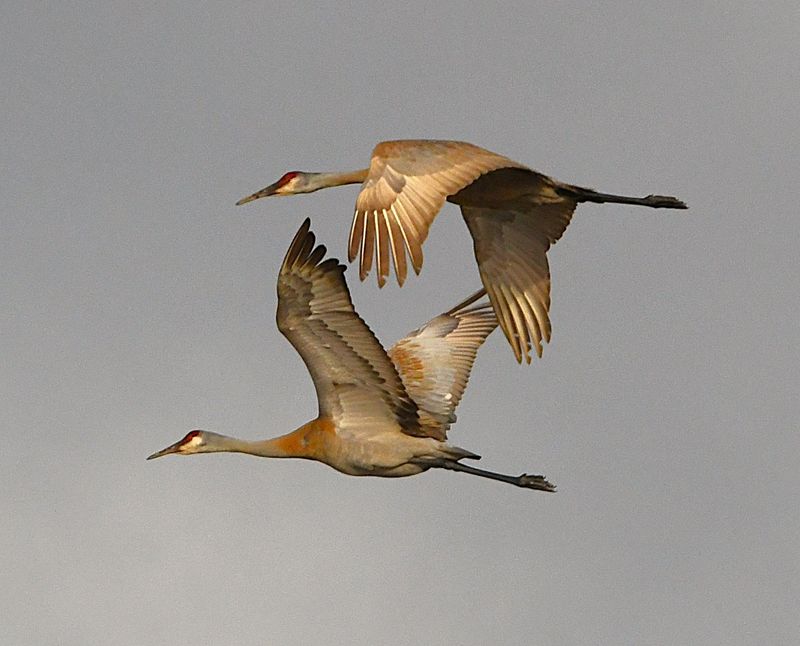
Late October through early December is prime time for hearing sandhill cranes overhead in Ohio. Most of them belong to the Eastern Population, a group of roughly 90,000 or more birds that nests around the Great Lakes and heads south each fall.
What has birders talking is timing. Studies of this population over several decades show cranes leaving later in fall and stopping farther north for winter than they once did.
Big flocks now hang around northern staging areas into December, and thousands spend winter in states like Indiana, Kentucky, and Tennessee instead of pushing on to Florida and Georgia.
I want to be honest about the headline, though. The shift is a long-term trend, not a neat step later every single year.
Some autumns run early, some run late, and a cold snap can send flocks south in a hurry.
So if you hear cranes in mid-December and think it seems odd, you are not imagining things. Your grandparents probably would have heard them earlier, and fewer of those birds would have stayed so close to the Midwest.
That gradual change is the real story hiding behind those wild, rolling calls.
Milder Falls and Open Wetlands Give Sandhill Cranes a Reason to Linger
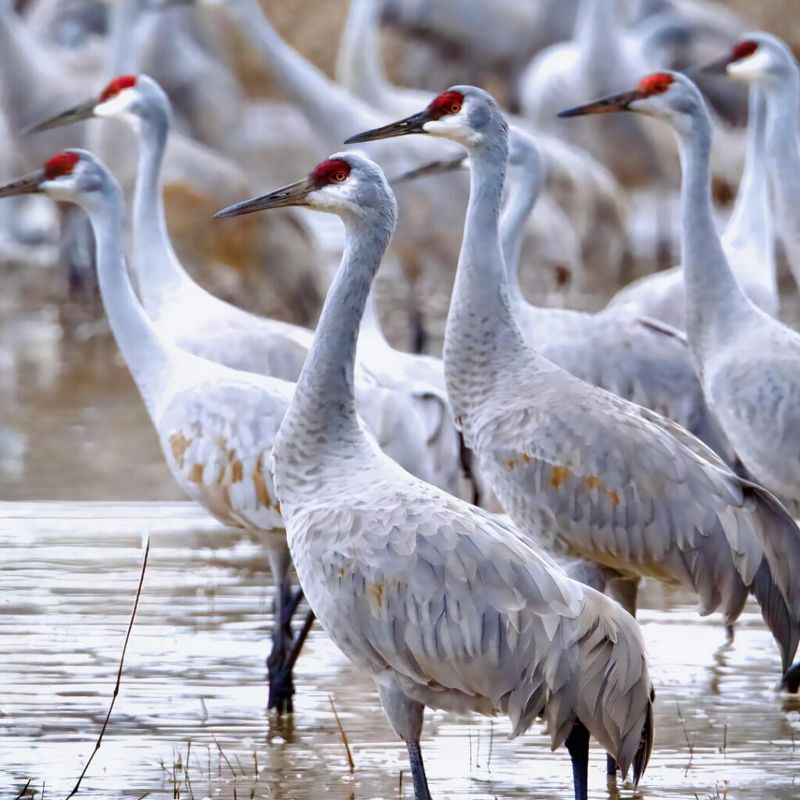
Cranes are tougher than they look. A little frost does not bother them much, but they need two things to stay put: shallow open water for safe nighttime roosting and food they can reach.
Researchers point to a few connected reasons for the later departures. Milder autumns keep marshes from freezing as early, and snow cover arrives later in many years.
When roosting water stays open and fields stay bare, a crane has little reason to burn energy flying hundreds of extra miles.
Farming plays a big part too. Modern harvests leave plenty of waste corn in the fields, giving cranes a steady snack bar well into winter.
Many scientists think this food supply matters as much as temperature.
Protected wetlands help as well. Restored marshes across the Great Lakes region give flocks more safe places to rest along the way.
I find it fascinating that a bird can read the landscape this well. Cranes do not check a calendar.
They check whether the water is open and the grain is easy to find, then decide whether staying one more week is worth it. In many recent falls, the answer has been yes.
Indiana Crane Counts Reveal Just How Much the Flocks Have Shifted
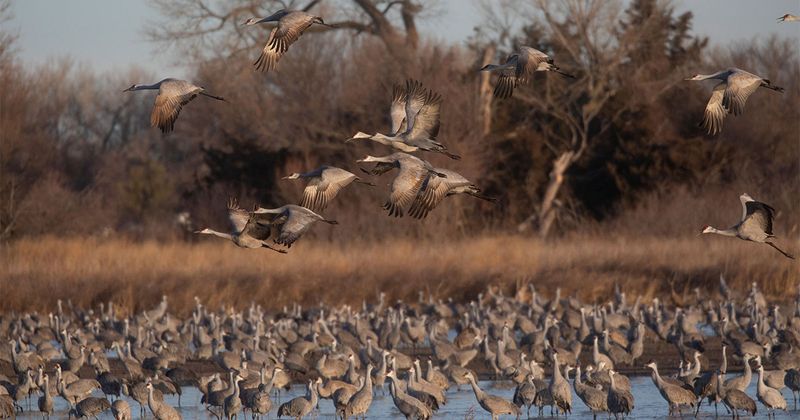
Just one state west of us sits one of the best crane-watching spots in the country. Jasper-Pulaski Fish and Wildlife Area in northwest Indiana has counted tens of thousands of sandhill cranes on a single fall day.
Wildlife staff there have tracked crane numbers for decades, and those counts reveal a clear change. Peak numbers that once came in late October or early November now often arrive in mid-November or later.
In some years, big crowds of cranes are still present when Christmas decorations go up.
Why does Indiana matter for Ohio readers? Many of the cranes passing over our state are heading to or from that staging area, or they follow similar routes toward Tennessee.
When the main gathering spot shifts later, the birds flying over us tend to shift too.
Fun fact: Hiwassee Wildlife Refuge in Tennessee now hosts thousands of wintering cranes, a sight that was rare there several decades ago. That growth is one more sign the whole population is wintering farther north.
If you ever get the chance, a dawn visit to one of these gathering spots is worth the drive. The noise alone is something you will remember for years.
Look for Long Necks Stretched Straight Out in the November Sky
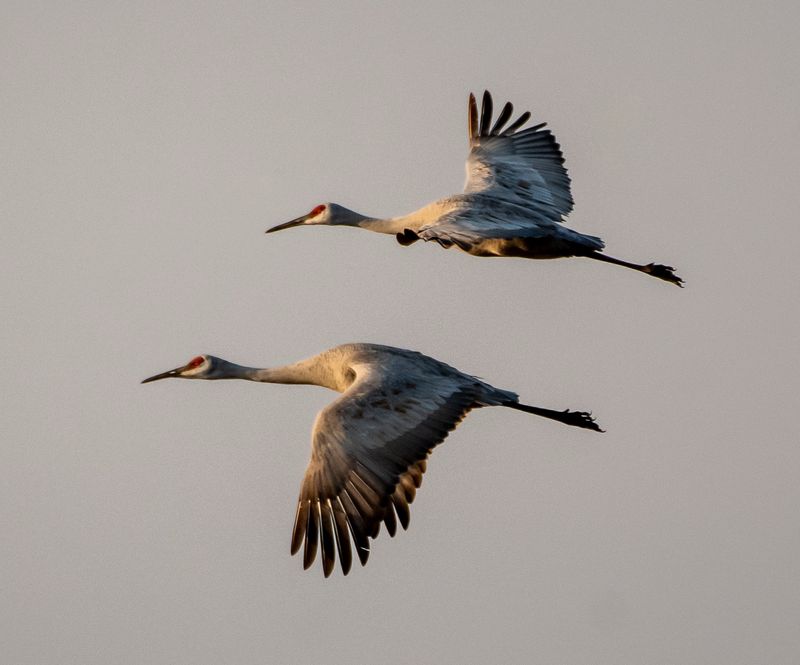
Honestly, your ears will find cranes before your eyes do. Their call is a loud, rolling rattle that can carry more than two miles, so look up whenever that sound drifts over the yard.
Adults stand about three to four feet tall, with wingspans that can reach six to seven feet. Their bodies are mostly gray, though some look rusty brown from iron-rich mud they rub into their feathers.
Up close, you will see a bright red patch of bare skin on the forehead.
Flight shape is the easiest clue. Cranes fly with their necks stretched straight out and their legs trailing behind.
Great blue herons, which people confuse with cranes all the time, tuck their necks into an S curve.
Flocks often look messy at first, then form loose lines or wobbly V shapes. On warm afternoons, they may circle on rising air like hawks before gliding off again.
Keep binoculars near the back door this time of year. I keep mine on a hook by my garden gloves, and it has paid off more than once.
A quick look can turn a mystery noise into a highlight of your week.
Ohio Marshes Where You Can Watch Sandhill Cranes Up Close
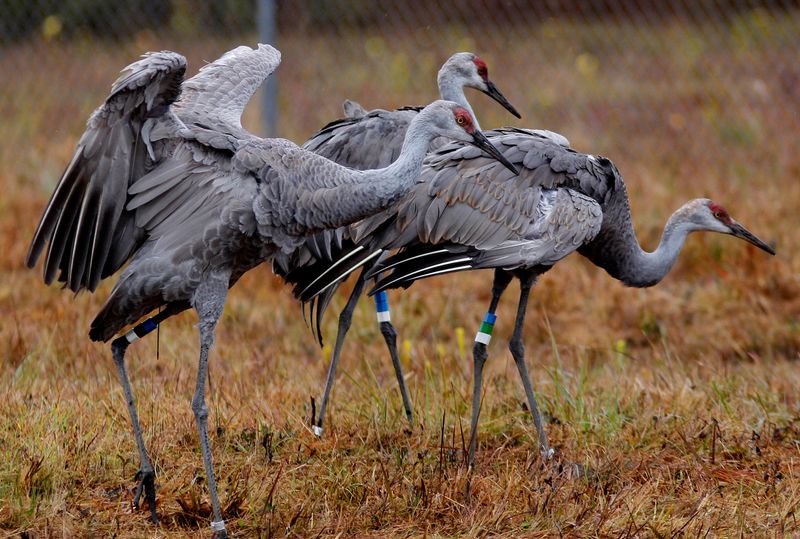
Want more than a fly-by? Several Ohio wildlife areas give you a real shot at seeing cranes on the ground.
The Killbuck Marsh and Funk Bottoms wildlife areas in Wayne and Holmes counties are well known for crane sightings, and the state wildlife division has recorded flocks there during fall surveys. Up north, Ottawa National Wildlife Refuge near Lake Erie and nearby marshes are reliable spots too.
Here is a little history worth sharing. Sandhill cranes disappeared as nesting birds in Ohio for many decades after wetlands were drained.
They returned to nest in the 1980s, and their numbers have grown slowly since, thanks in large part to wetland protection.
A few tips make your visit better. Go early in the morning or near sunset, when cranes move between roosts and feeding fields.
Stay in your car or on marked trails, since cranes spook easily when people walk toward them.
Check refuge websites before you go, because some areas have seasonal closures during waterfowl hunting. Pack a thermos of hot cocoa and a warm hat.
Waiting in a cold marsh is easier when your fingers still work for focusing those binoculars.
Crane Colts Stay With Their Parents for Almost a Year
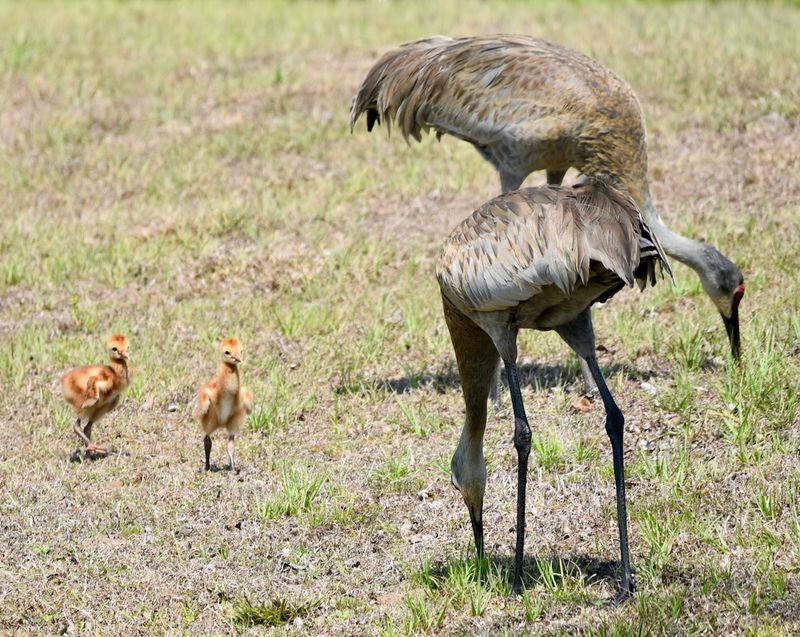
Family life is a big deal for cranes. Pairs often stay together for many years, and their chicks, called colts, travel with their parents for about nine to ten months.
That means the cranes flying over your house this fall are not random strangers. Many flocks are made of family groups, with young birds learning the route by following mom and dad.
You can often spot a colt by its brownish head, which lacks the bright red cap adults wear.
Learned routes may help explain the migration shift. Because young cranes copy their parents, new habits like stopping farther north can spread through a population over generations.
Then there is the dancing. Cranes bow, flap, toss grass, and leap several feet into the air.
It is a big part of courtship, but they dance in every season, and young birds join in too.
I love watching a family group feeding in a stubble field. The adults keep their heads up for danger while the colt pokes around for corn.
It feels a lot like watching parents at a playground, and it makes those long journeys seem a little more personal.
Harvested Cornfields and Wet Meadows Keep Hungry Cranes Going
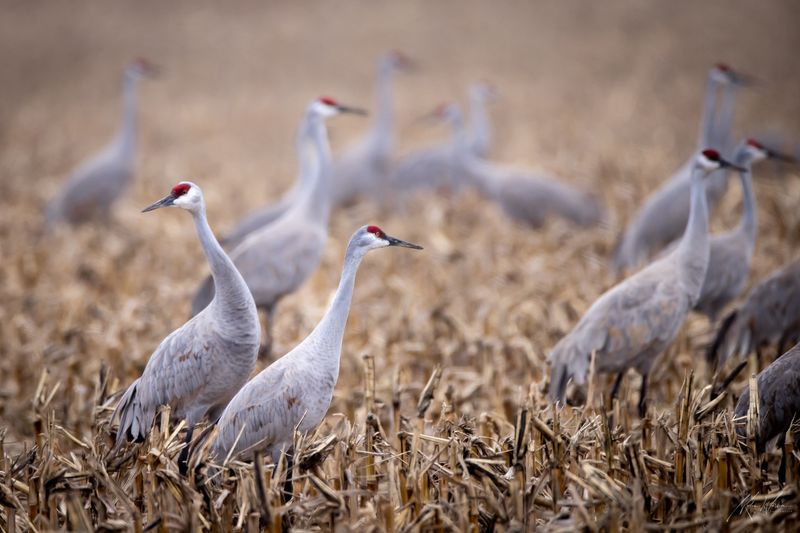
Those leftover kernels in a picked cornfield are crane fuel. During migration, sandhill cranes spend much of the day walking through harvested fields, gobbling waste grain, insects, worms, and even small critters.
Wet meadows and marsh edges matter just as much. Cranes use them for roosting, drinking, and nesting in spring, and they need room to see predators coming.
Most of us will not host a crane flock in the backyard, but gardeners can still help. If you have a low, soggy corner, consider planting native wetland species like blue flag iris, swamp milkweed, and sedges instead of fighting the water.
These plants support insects and other wildlife that share crane habitat.
A few manners go a long way too. Please do not feed cranes, since birds that get used to handouts can become pests near roads and homes.
Give them plenty of space, and keep dogs leashed near marshes.
Supporting local wetland projects or land trusts is another simple step. Every acre of protected marsh gives cranes, frogs, and dragonflies a better place to rest.
I think of it as gardening on a much bigger scale.
Your Sandhill Crane Sightings Can Help Scientists Track the Change
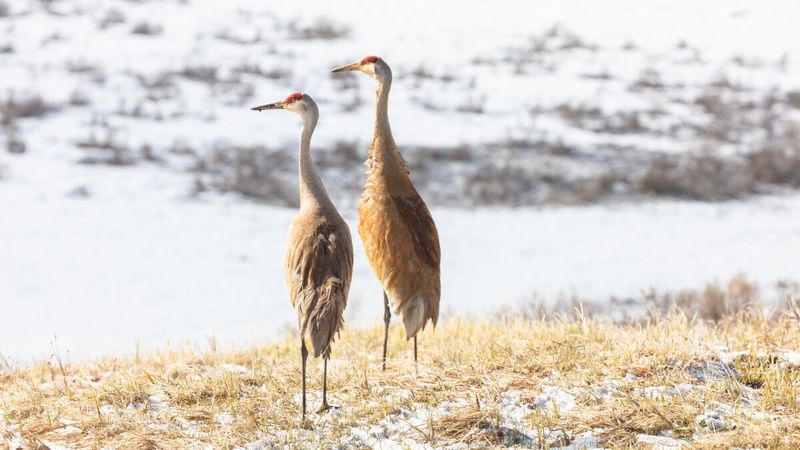
Every time you jot down a crane sighting, you add a puzzle piece. Much of what we know about later migration comes from regular people reporting what they see.
Free apps like eBird from the Cornell Lab of Ornithology let you log the date, place, and number of cranes in under a minute. Scientists use these records to map how timing changes from year to year.
Your mid-December sighting could become useful data.
The Audubon Christmas Bird Count runs from mid-December into early January, and Ohio has dozens of count circles. Beginners are welcome, and groups often pair new folks with experienced birders.
Keep a simple garden journal too. I write my first fall crane date right next to my first frost date, and comparing them over a few years is surprisingly fun.
The bigger takeaway is this. Cranes are telling us something about warmer seasons, open water, and changing farm landscapes.
Paying attention costs nothing and connects your backyard to a journey that spans half a continent. So next time that rattling call rolls overhead, grab your binoculars, count the birds, and share what you saw.