The Native Ohio Plant Most Homeowners Pull As A Weed That Bees Need Most In September
September has a strange way of making Ohio yards look quiet before anyone is ready.
The zinnias slow down. Coneflowers turn tired. Vegetable beds start looking patchy, and the lawn begins dropping hints that fall is close.
Right when the garden feels like it is wrapping up, bees are still working hard. They need nectar, pollen, and enough fuel to make it through the season’s final push.
That is where one much-maligned native plant becomes priceless.
Goldenrod gets blamed for sneezing, judged as messy, and pulled from fence lines before its yellow flowers ever open fully.
Meanwhile, the real pollen troublemaker is usually ragweed, which blooms at the same time and sends lightweight pollen through the air.
Goldenrod’s pollen is heavier and carried by insects.
So what happens when you stop treating every golden stem like a weed?
Your September yard can become a last-chance dining room for bees.
Keep Common Goldenrod For September Bees
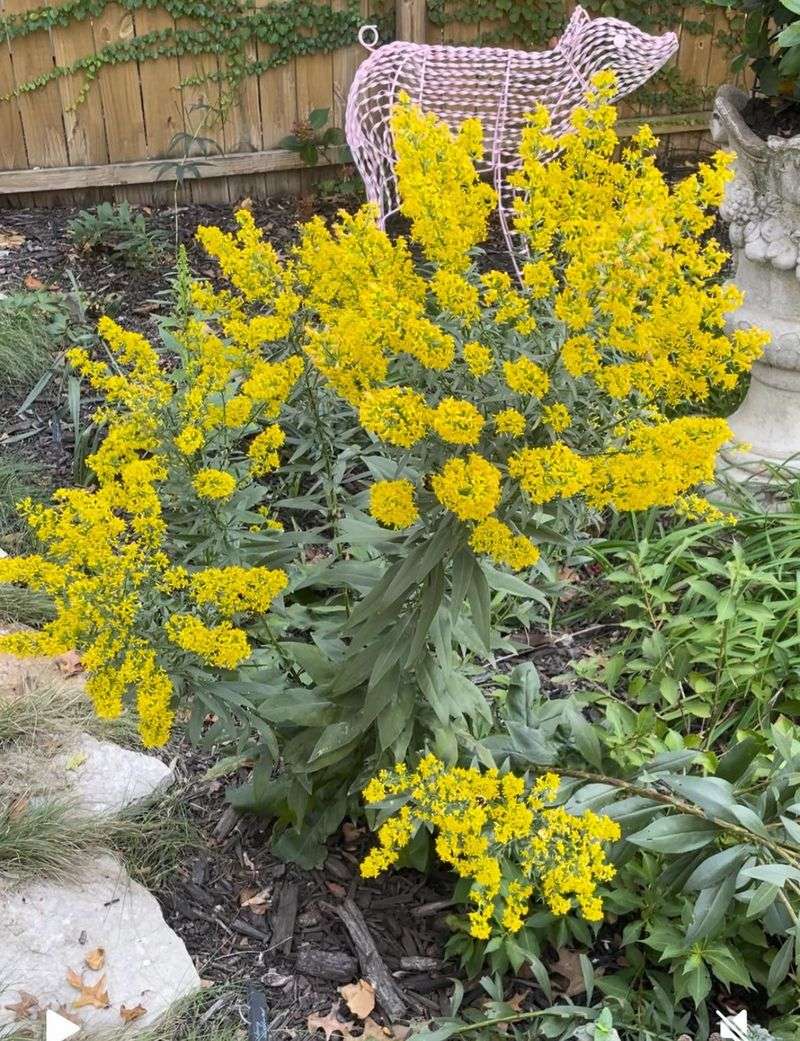
Common goldenrod is not just yellow filler along roadsides.
In an Ohio yard, it can become one of the most important late-season food sources left standing when many garden flowers are fading out.
By September, bees are not casually browsing for decoration. They are collecting nectar and pollen at a critical time, and goldenrod offers both in a generous, highly visible package.
The flowers are made of many tiny florets packed into plume-like clusters. That means one stem can hold dozens of small feeding sites.
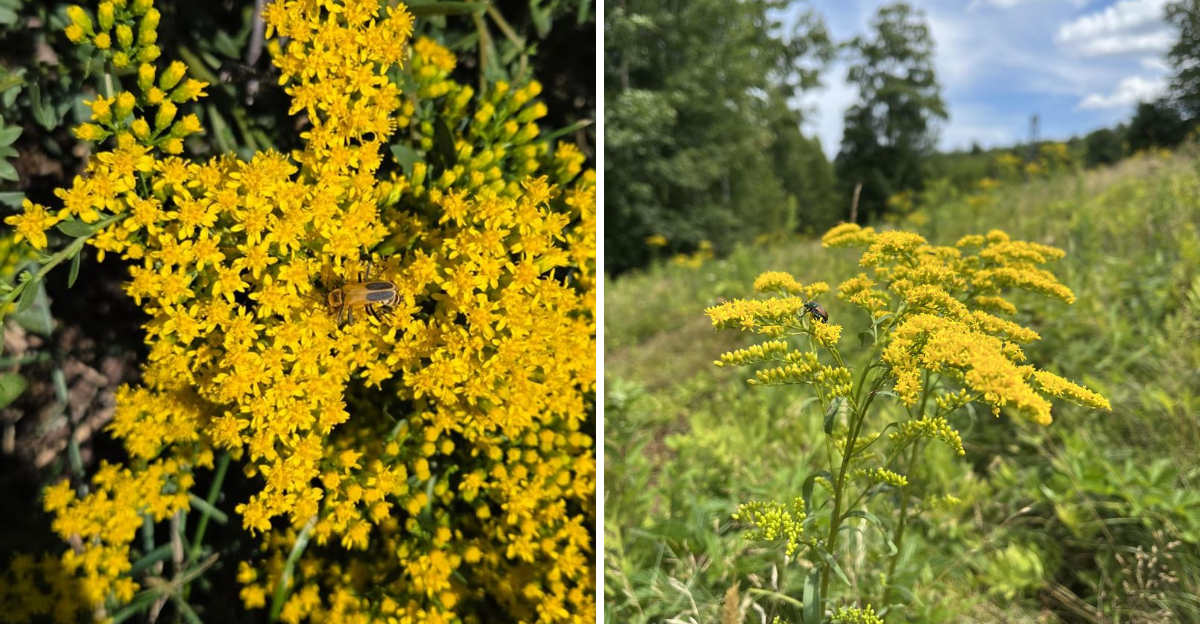
Bumble bees, sweat bees, mining bees, small wasps, honeybees, hoverflies, and butterflies may all work the blooms when the sun warms the patch.
The sound alone can change how you see the plant. A good goldenrod stand hums.
The allergy confusion gives goldenrod a bad reputation it usually does not deserve. Its pollen is sticky and insect-carried, not built to float through the neighborhood like ragweed pollen.
If people understood that difference, far fewer stems would get yanked in late summer.
Keep at least a small patch where it already grows well. A sunny back corner, fence line, meadow strip, or edge bed can all work.
You do not need to hand over the whole yard. Even a managed cluster can help fill the September gap.
Let the flowers open fully before you decide anything looks too wild.
Bees are not asking for perfection. They are asking for food when the season is running short.
Thin The Patch Instead Of Clearing It
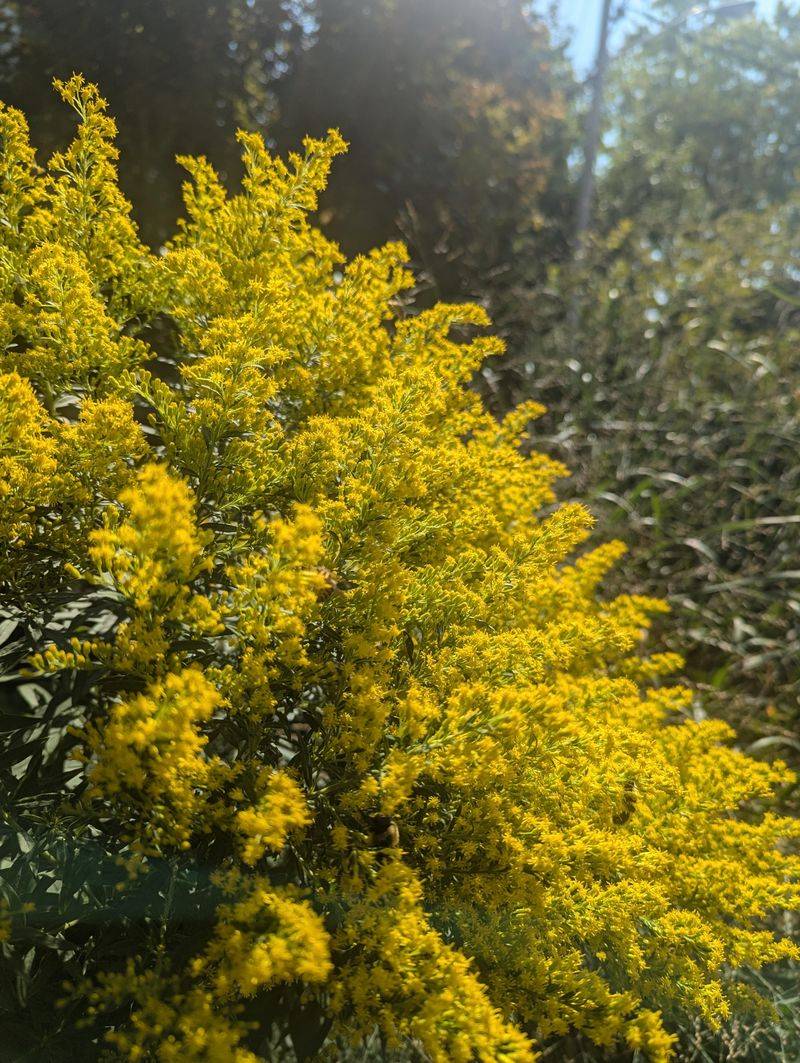
A goldenrod patch can go from charming to bossy if nobody manages it.
That is where many homeowners lose patience and pull everything. The problem is that clearing the whole patch removes the very food source bees need most in September.
A better approach is thinning, which keeps the habitat value while making the planting look intentional.
Start in late spring or early summer, when stems are tall enough to judge but before flower buds form. Remove weak stems, crowded stems, and shoots that are leaning into paths, beds, or lawn areas where you do not want them.
Your Ohio Garden Changes Every Week. Your Plan Should Too.
Gardening in Ohio changes quickly throughout the season. Every Friday you’ll receive a simple weekly plan showing exactly what to plant, prune, fertilize, harvest, and protect so you never miss the right timing.
Leave the strongest stems with good spacing around them. Those will usually produce fuller flower clusters and stand better later in the season.
Aim for air and order, not emptiness. A patch with breathing room looks much more like a planned native planting than a forgotten corner.
Thinning also reduces flop. When goldenrod grows too densely, stems compete for light and can stretch tall, then collapse after rain. Giving the best stems room helps the whole patch stay upright.
Do not thin heavily once buds appear. At that point, you are cutting away the September flowers bees are waiting for.
Use sharp pruners or pull young shoots when the soil is moist. If you remove stems with roots attached, shake soil back into the bed and dispose of the plant material where it cannot re-root.
A managed patch says something different than a neglected one.
It tells neighbors, pollinators, and yourself that this plant is here on purpose.
Cut Runners Before They Roam
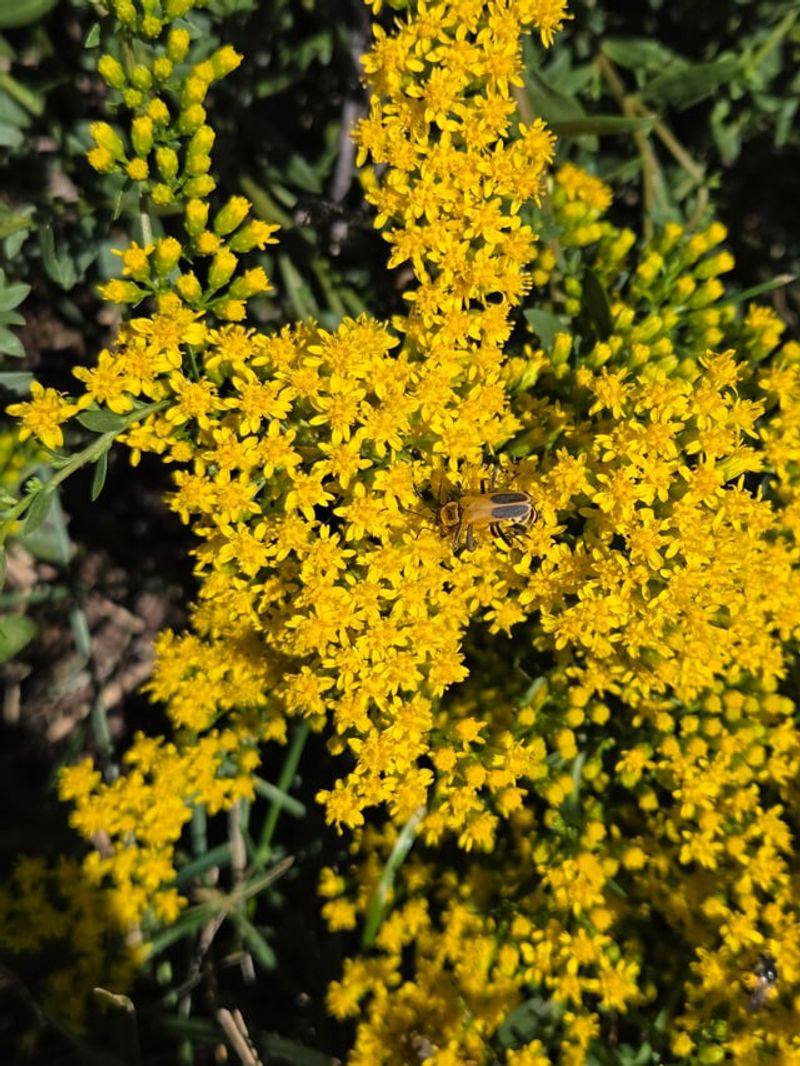
Goldenrod spreads because it is good at being goldenrod.
That is not a character flaw. It is a survival strategy. Common goldenrod can move through underground rhizomes, sending up new shoots beyond the original clump.
In a meadow, that is useful. In a narrow suburban bed, it can become a little too enthusiastic.
The best time to control runners is early spring, when new shoots are just emerging and the patch boundary is easy to see.
Use a flat spade and push straight down around the edge of the colony. You are not digging up the whole plant. You are cutting the underground runners that are trying to move into the lawn, path, or neighboring perennials.
Work around the perimeter, not through the center. The middle of the patch can stay stable and productive while you keep the edges in line.
Remove any severed rhizome sections that have traveled beyond the boundary. Larger pieces can re-root if tossed into a casual compost pile, so send those to yard waste or trash if your compost does not heat reliably.
Metal edging can help in tight spaces. Install it several inches deep around the area where you want the colony to stay, then check each spring for runners that slipped underneath or around the ends.
Do not wait until August to fight the spread. By then, stems are tall, roots are tougher, and flower buds may already be forming.
A few minutes of spring edge work protects the September bloom.
That is the bargain: contain the plant early, then let the bees enjoy it later.
Move Extras Into A Meadow Corner
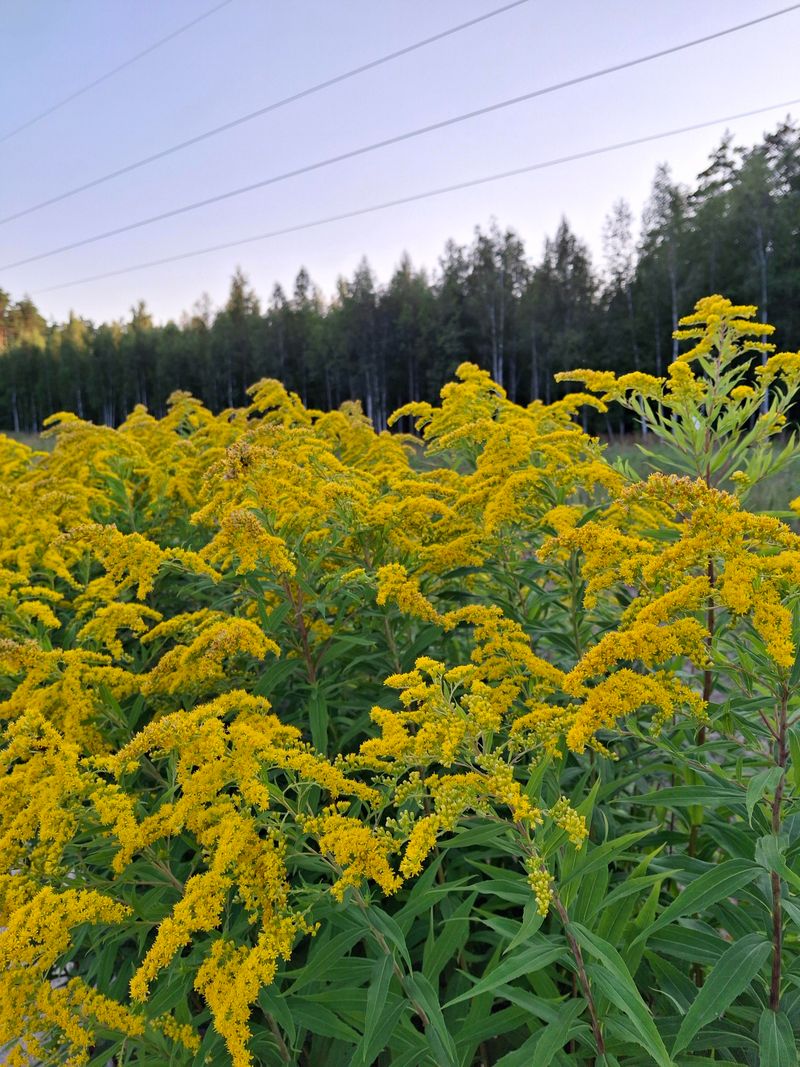
Extra goldenrod does not have to become garden waste.
When you thin or edge a patch, healthy divisions can move to a better spot in your own yard. A sunny meadow corner, back fence line, rain-garden edge, or rough patch near a shed may become the perfect place for a plant that wants room and light.
Choose the location carefully. Goldenrod does best in full sun, though it can tolerate some light shade with fewer flowers. Lean soil is fine. In fact, rich garden beds can push too much leafy growth and make the plant taller than you wanted.
Dig divisions in spring when shoots are still young, or move small clumps after flowering when temperatures are cooler. Keep roots moist while you work.
Plant at the same depth they were growing before. Firm the soil around the roots and water deeply.
For the first few weeks, water during dry spells so the divisions settle in. Once established, common goldenrod usually needs very little help in a typical Ohio season.
Keep these moves inside managed areas of your own landscape. Do not transplant goldenrod into preserves, parks, roadside natural areas, or remnant prairies. Even native plants can disrupt a site when moved without a plan.
Your yard is the right place to experiment.
Moving extras lets you keep pollinator value without letting the original patch crowd a favorite bed.
The goal is not to punish goldenrod for spreading. The goal is to give it a place where spreading makes sense.
A meadow corner can turn one unwanted clump into a September feature.
Choose Better Behaved Goldenrod Selections
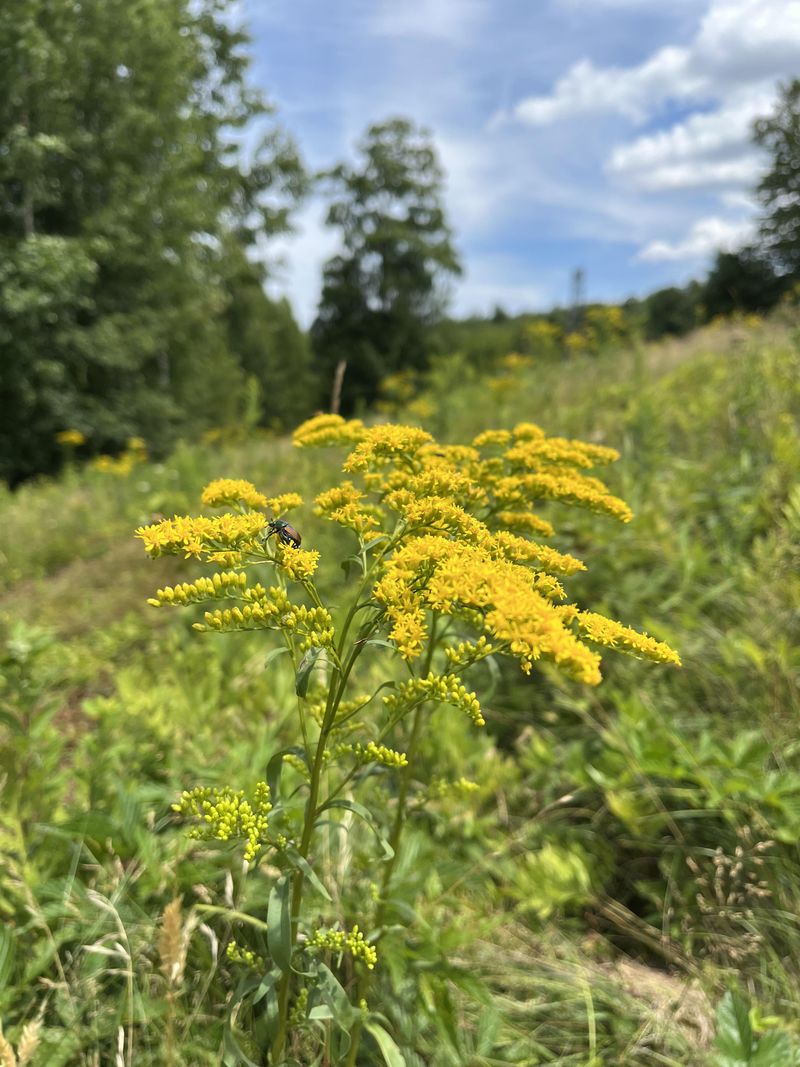
Common goldenrod is useful, but it is not the only option.
Homeowners who want bee value without constant boundary patrol can choose goldenrods with tidier habits. That small decision can make the difference between a plant you appreciate and a plant you quietly resent by year three.
Look for plants labeled with a specific species or cultivar, not just a vague nursery tag that says goldenrod. Names matter because growth habits differ widely.
Stiff goldenrod tends to grow more upright and clump-forming. Wrinkleleaf goldenrod can be beautiful in garden settings, especially selections with arching flower sprays.
Compact forms such as ‘Golden Fleece’ can fit smaller borders where common goldenrod would be too tall or too eager.
Check mature height before buying. A plant that reaches five feet belongs in a different spot than one that stays near two feet.
Local or regional sourcing is worth asking about. Plants grown from stock adapted to Ohio or nearby regions may fit the climate and wildlife web better than mystery material shipped from far away.
Even better-behaved goldenrods still need sun, drainage, and some maintenance. Cut back old stems at the right time, watch for unwanted seedlings, and divide clumps if they outgrow the space.
Compact selections are especially useful near walkways, mailboxes, front borders, and other places where neighbors judge your gardening choices at walking speed.
You can still feed September bees without growing a five-foot patch beside the front steps.
Choosing the right goldenrod lets the plant do its ecological job while the yard keeps its manners.
Pair Golden Blooms With Native Asters
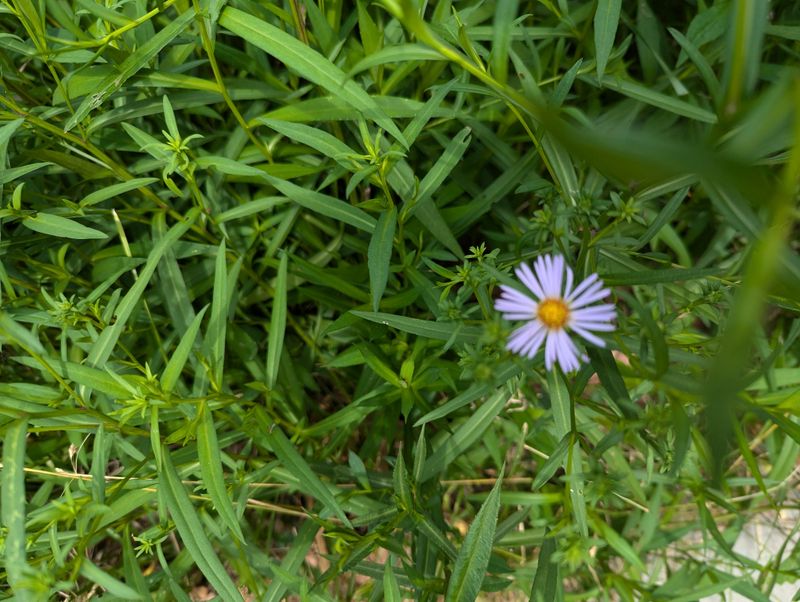
Goldenrod and asters look like they planned the whole season together.
The yellow plumes of goldenrod and the purple, blue, or lavender blooms of native asters create one of the best late-season combinations in an Ohio garden. The colors make each other brighter, but the real value goes beyond looks.
They bloom at about the same time, giving pollinators a richer menu when food is getting scarce.
Goldenrod offers dense clusters of tiny florets. Asters offer broader flower faces with different landing spots and pollen access. Together, they serve more kinds of bees than either plant can support alone.
Bumble bees may work both. Smaller native bees may move from aster discs to goldenrod sprays. Monarch butterflies may stop at either bloom during migration when nectar matters.
Good choices for Ohio yards include New England aster and smooth blue aster, depending on your site and space. Both can handle full sun and pair well with goldenrod in a naturalized border.
Give them room. Planting too tightly leads to floppy stems and poor airflow. Spacing plants about 18 to 24 inches apart gives each clump enough light while still creating a full look.
Asters can also help goldenrod look more intentional. A mixed patch reads like a designed native planting, not a weed colony someone forgot to mow.
Add grasses if you want even more structure. Little bluestem or prairie dropseed can hold the planting together visually after flowers fade.
The combination is simple, tough, and generous. By September, that is exactly what bees need.