What It Means When White-Throated Sparrows Show Up In Your Virginia Yard
A tiny bird with a yellow eyebrow spot can carry a song learned in the Canadian north. I heard it last week in Virginia, a clear whistle drifting out of my brush pile on a frosty morning.
Turns out that tune often arrives from far away. Some of these singers spend summer in spruce forests near Hudson Bay, then fly hundreds of miles south when the cold sets in.
Many land right here in Virginia, under our hollies and forsythia-free hedges. You might notice the leaves moving before you see a single feather.
Something small is kicking them backward with both feet at once, like a busy little gardener raking in reverse.
I never get tired of that sound or that shuffle. Leave the leaves, keep the brush pile, and let the north keep wintering in your yard.
That Whistled Oh Sweet Canada Song Means Winter Visitors Have Arrived
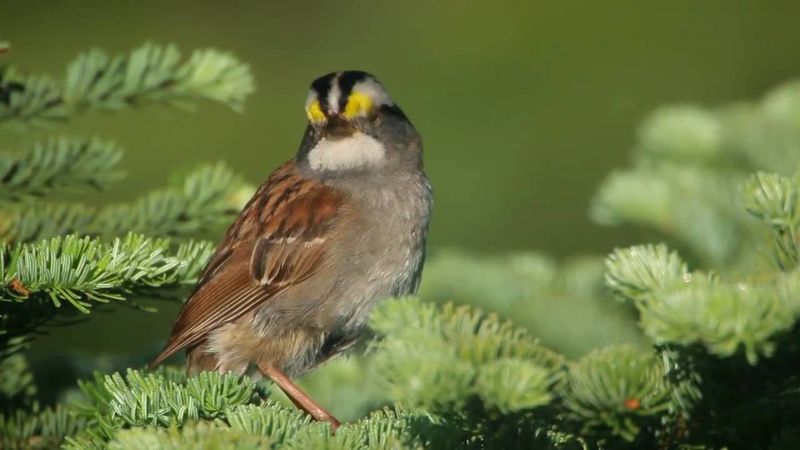
Hearing that clear, sad-sounding whistle in November feels a little like getting a postcard from Canada. The singer is a white-throated sparrow, and its arrival is one of the most dependable signs that the cold season has started.
These sparrows nest mostly in Canada and the far northeastern United States. In fall they head south, and much of Virginia sits right in their main winter range.
Most birds show up in October, with numbers building through November. So what does it mean when they appear in your yard? Mainly, it means the calendar has turned.
The birds are not lost, sick, or warning you about harsh weather. They are doing what their species has done for thousands of years.
Many will stay through the whole winter, and some return to the same wintering spots year after year. That means the sparrow under your holly could be a familiar face from last season.
Expect them to linger until spring. Most leave Virginia by late April or early May, often singing more as departure gets close.
Treat their first song as a friendly seasonal alarm clock. It is a great moment to check your feeders and leave some leaves on the ground.
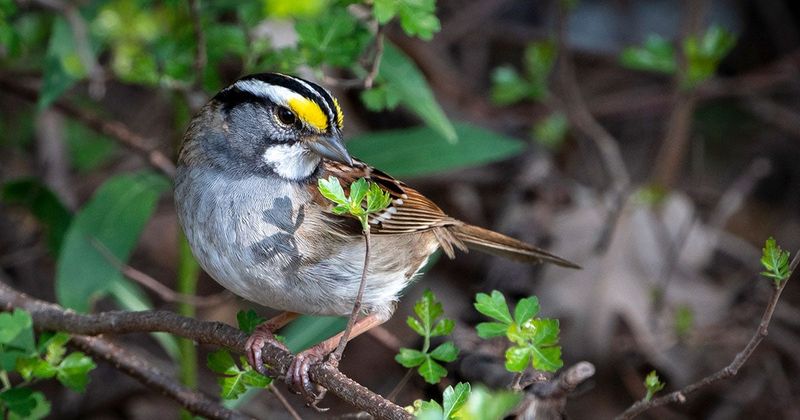
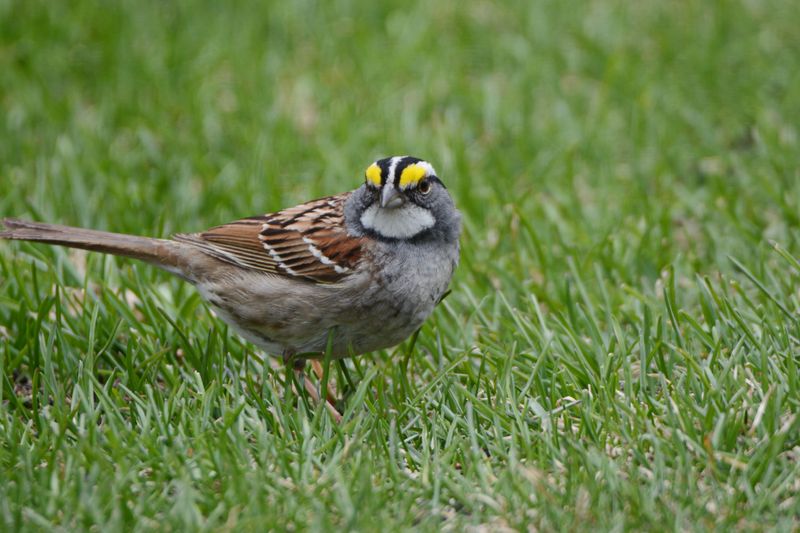
A White Throat Patch and Yellow Eye Spot Make Identification Easy
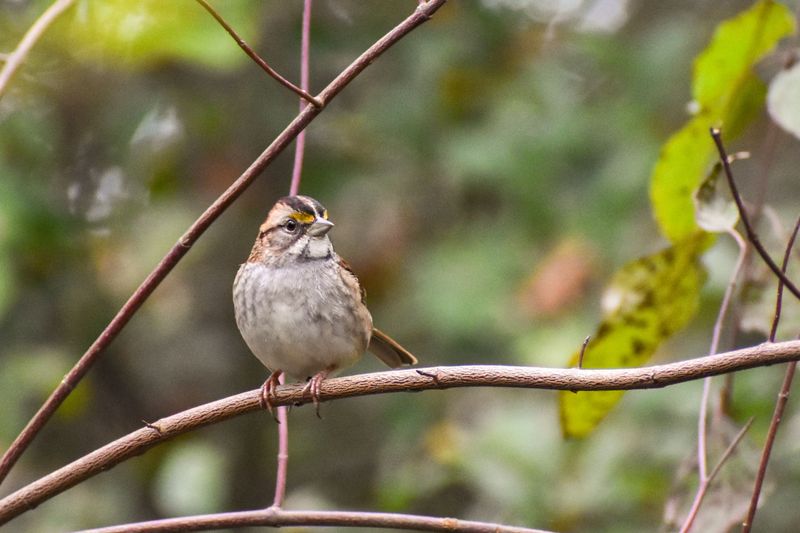
Plenty of sparrows look like brown blurs, and I used to give up on all of them. This one changed my mind fast because its face practically introduces itself.
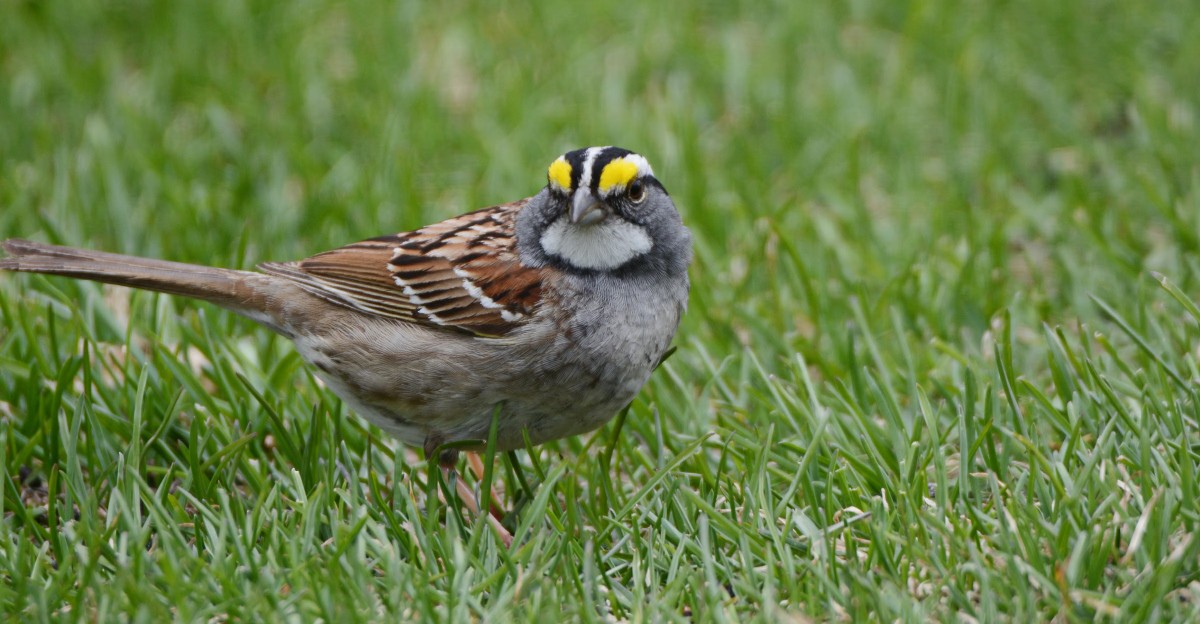
Look for a chunky bird about six to seven inches long. The throat is a crisp white square outlined in gray.
Right between the eye and the bill sits a small yellow patch, called the lore, which most other sparrows lack.
The crown has bold stripes. Some birds show black and white stripes, while others show brown and tan ones. Both are the same species, so do not count them as two different birds.
The back is a warm rusty brown with dark streaks. The chest is plain gray and soft-looking, without the heavy spotting you see on song sparrows.
A quick tip for beginners helps a lot. Watch the bird’s posture too, since white-throats often hop low and stay near cover instead of perching in the open for long.
Grab binoculars and a free app like Merlin from the Cornell Lab of Ornithology. Once you match that yellow spot and white bib, you will recognize these guests in seconds all winter.
Scratching Sparrows Love Your Fallen Leaves More Than You Think
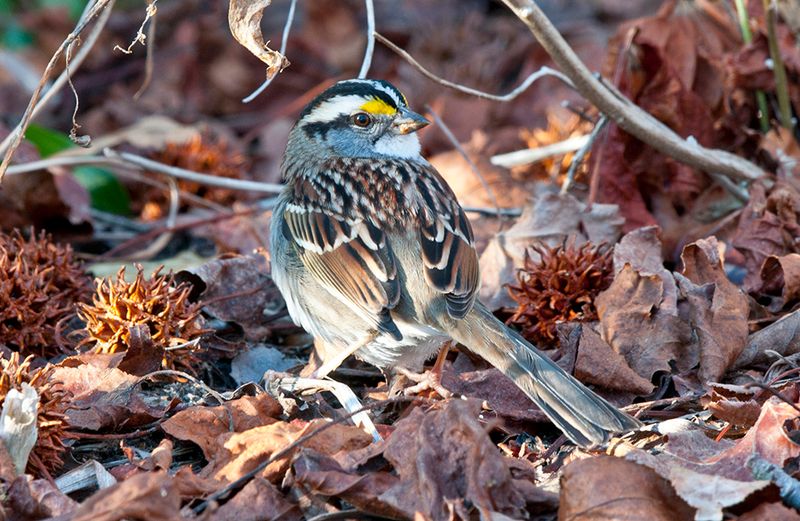
My messiest garden bed is the most popular spot in the yard each winter. The reason is simple, because white-throated sparrows are ground feeders that dig through leaves for food.
Watch closely and you will see a funny move. The bird hops forward, then kicks back with both feet together, flipping leaves aside.
That double scratch uncovers seeds, berries, spiders, and dormant insects hiding underneath.
In winter, their menu leans heavily on weed and grass seeds plus small fruits. Native options like dogwood, sumac, and wild grape berries are welcome finds.
Insects matter more in spring and summer, but they will grab one whenever it turns up. This habit offers a clear gardening lesson. If you rake every leaf and bag it, you remove their pantry.
Leaving a layer of leaves under shrubs and along bed edges gives them a reason to stay. Leaf litter also protects soil, holds moisture, and shelters pollinators like overwintering bumblebee queens and moth caterpillars.
Virginia Cooperative Extension encourages keeping leaves on site as mulch. Try a compromise if neatness matters to you. Clear the lawn and paths, then blow the leaves into planting beds, where the sparrows will happily do the rest.
Millet on the Ground Brings These Striped Sparrows Closer
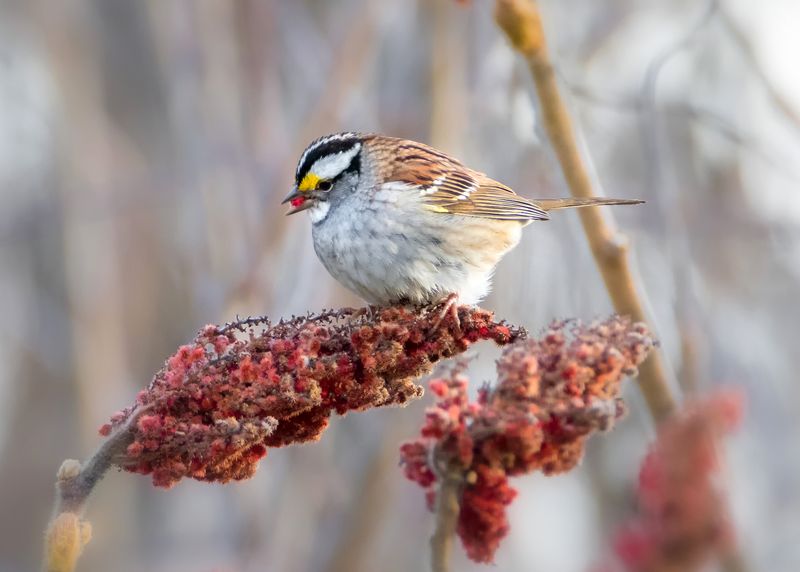
Hanging tube feeders rarely tempt these birds, and I learned that the hard way. White-throated sparrows prefer to eat low, so your feeding setup should come down to their level.
White proso millet is their top pick. They also enjoy hulled sunflower chips, black oil sunflower seed, cracked corn, and finely chopped peanuts. A tray or platform feeder a foot or less off the ground works well.
Some people simply sprinkle seed on the ground under feeders. That works, but rake old seed and hulls away often, because wet piles can grow mold and spread disease.
Placement makes a big difference. Set food within a short dash of thick shrubs, evergreens, or a brush pile so the birds can bolt for safety when a hawk passes over.
Native shrubs give food and cover together. American holly, inkberry, eastern red cedar, and arrowwood viburnum are good Virginia choices.
Skip invasive plants such as Bradford pear, nandina, and burning bush, even if birds eat their fruit.
Do not forget water. A shallow birdbath with fresh water, kept open during freezes, may draw sparrows just as well as any seed mix.
Tan Stripes and White Stripes Reveal a Surprising Bird Love Story
Here is a fact that made me grin when I first read it. Those two head-stripe styles are tied to some of the strangest mating habits in North American birds.
White-striped and tan-striped forms exist in both males and females. The difference comes from a large rearrangement on one chromosome, studied for decades by scientists.
The personalities differ too. White-striped birds tend to sing more and act bolder, defending territory with energy. Tan-striped birds usually sing less and put more effort into feeding chicks.
The real twist is about pairing. Nearly every breeding pair matches one white-striped bird with one tan-striped bird.
Because of this, researchers sometimes describe the species as having four sexes in a practical sense.
That partnership keeps both forms common across the population. It is a rare example of a bird species with such a tidy built-in balance.
You can enjoy this mystery from your kitchen window. During winter, note how many of each type visit your yard, and see whether the bright-striped ones chase others away more often.
Keep in mind that young birds look duller in their first winter, so some tan-looking birds may simply be youngsters.
Soft Seep Calls From the Shrubs Give Away a Hidden Sparrow Flock
Close your eyes on a quiet winter afternoon and listen. A thin, high seep or a sharp pink note from the bushes often means a small sparrow flock is nearby.
White-throated sparrows travel in loose groups during winter. They call constantly to stay in touch while hidden in thick cover, and they get extra chatty around dusk before settling down to roost.
The famous whistle sounds like Old Sam Peabody to some ears and Oh sweet Canada to others. Northern songs sometimes differ by region, and that is part of the fun.
Something new is spreading, too. Researchers found that a two-note ending, called the doublet song, spread east from western Canada over roughly two decades and took over much of the population.
Winter flocks may help young birds pick it up. You may also hear young birds practicing. Their first-winter songs can sound wobbly or cut short, like a kid working through scales on a recorder.
Record a few calls on your phone and check them in the Merlin app. Over time you will match sounds to sights and learn how many sparrows really hide in your hedges.
Window Strikes Hit White-Throated Sparrows Hard, So Mark Your Glass
Few things hurt like hearing a soft thump against the patio door. Sadly, white-throated sparrows rank among the species most often found after window collisions.
They migrate at night and feed low around houses, so glass near shrubs and feeders poses a real threat. Bird monitoring groups in cities count them in high numbers every spring and fall.
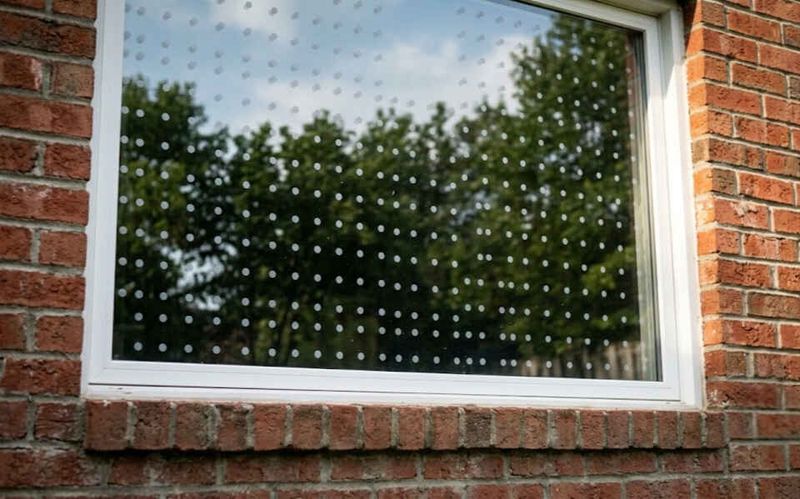
You can reduce the risk with a few simple steps. Add dot patterns, tape strips, or screens to the outside of large windows, spacing marks about two inches apart. Single hawk silhouettes do not work very well.
Feeder placement matters too. Put feeders either within three feet of a window, so birds cannot build up speed, or more than thirty feet away.
Lights matter for migrants. Turning off unneeded outdoor lighting and closing blinds at night during spring and fall migration helps birds stay on course. Programs like Lights Out encourage this nationwide.
If a stunned bird lands on your deck, place it in a ventilated paper box in a dark, quiet spot. Release it outdoors once it seems alert, or contact a licensed Virginia wildlife rehabilitator for help.
A Messy Brush Pile Turns Your Yard Into a Sparrow Winter Home
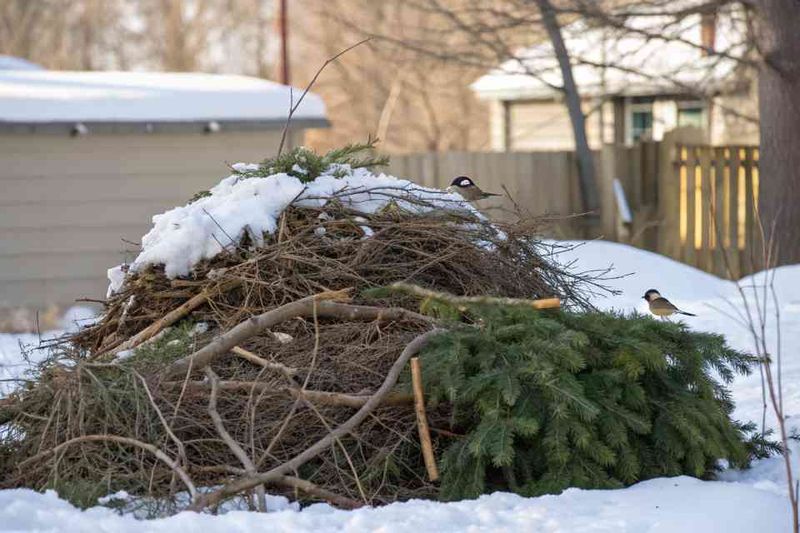
My favorite winter project costs nothing and takes one afternoon. I stack pruned branches into a loose brush pile, and within days the white-throats move in.
Brush piles copy the tangled woodland edges these sparrows prefer. Thick twigs block hawks and cats, block cold wind, and offer a safe base close to food.
Build one with larger logs at the bottom and smaller branches on top. Leave gaps so birds can slip inside. A corner near shrubs and a feeder works nicely.
Pair that pile with native plants for the long term. Virginia’s Plant Virginia Natives program lists regional choices, from coastal wax myrtle in the Tidewater to mountain laurel and serviceberry in the western hills.
Hold off on cutting back perennials until spring. Seed heads of goldenrod, asters, and native grasses feed sparrows through the coldest weeks.
Keep cats indoors, since outdoor cats take a heavy toll on ground-feeding birds. When these birds show up, your yard is passing a quiet test. It offers food, cover, and calm.
Keep those three things going, and those sweet whistles should greet you every fall for years.