Why Italian Cypress Trees Turn Brown in Arizona Yards and What to Do
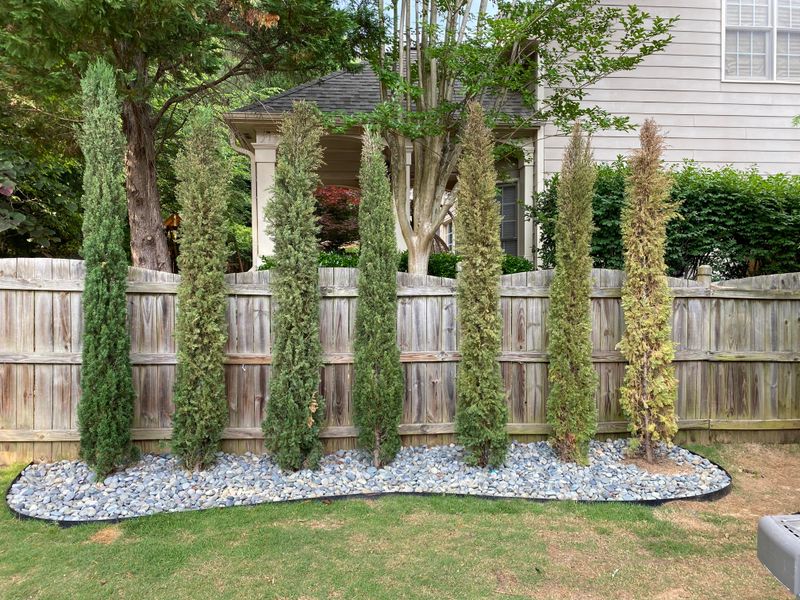
Brown foliage on an Italian cypress is a warning sign, and it can come from several different causes. In Arizona yards, the usual suspects include canker, water trouble, spider mites, and salty soil.
The pattern of browning and a few simple clues can help you narrow things down. A little checking now can save you from the wrong fix later.
Brown Patterns Offer Clues, Not a Diagnosis
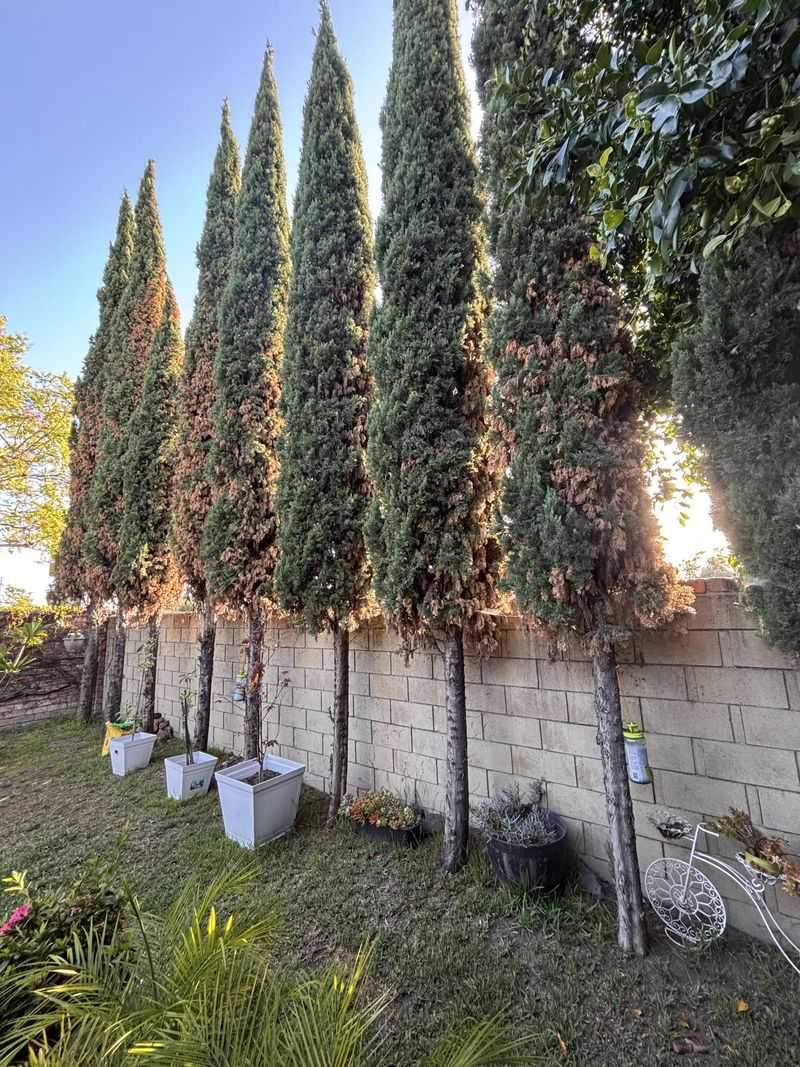
Walk around the tree before you touch a hose or pruners. Note whether the browning shows up as scattered tips, one or a few whole branches, or across much of the tree.
That pattern will not name the cause, but it tells you where to look first.
One distinct branch that turns yellow and then reddish-brown while the rest stays green can fit University of Arizona guidance on Seiridium canker. Widespread or uneven browning points you toward other checks, such as soil moisture, fine webbing, or a white crust on the ground.
Many stresses can look alike from a distance.
Even experts are careful here. An Ask Extension answer about a drooping Italian cypress notes that a photo may miss root, planting-depth, drainage, or trunk problems.
So treat the pattern as a clue, gather a few more, and hold off on big changes until the picture sharpens.
Could One Brown Branch Signal Canker?
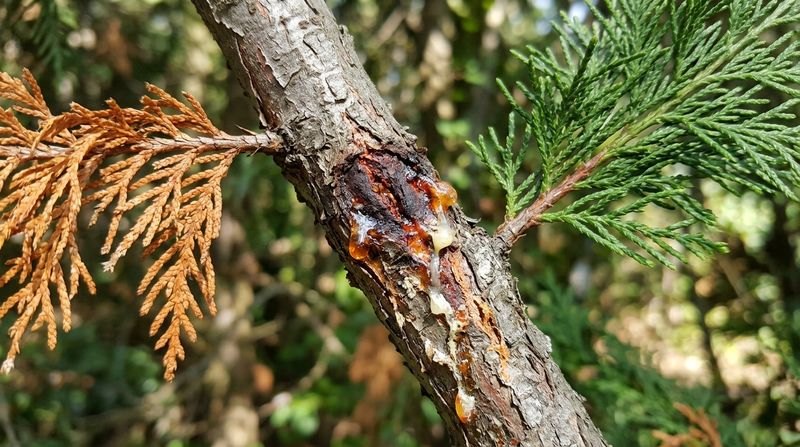
A single branch that fades from yellow to reddish-brown while its neighbors stay green is a classic canker warning. Follow that branch back toward its base and look for a canker on the bark.
In Arizona these can be subtle, so look closely.
Resin alone proves nothing, because healthy cypress can also ooze resin. Treat one or a few brown branches as a clue that fits canker, not as proof.
Other stresses can leave a similar mark.
The Arizona record is narrower than many people assume. The 2012 University of Arizona publication reports canker confirmed in Prescott in 2011 on Leyland cypress, and calls Italian cypress highly susceptible.
It says occurrence elsewhere in the state was suspected, not confirmed.
A 2022 detection report also concerns Leyland cypress and calls for more research on Italian cypress susceptibility. So there is no confirmed statewide outbreak in Italian cypress.
Your tree needs its own check.
Check Root-Zone Moisture Before Changing Irrigation
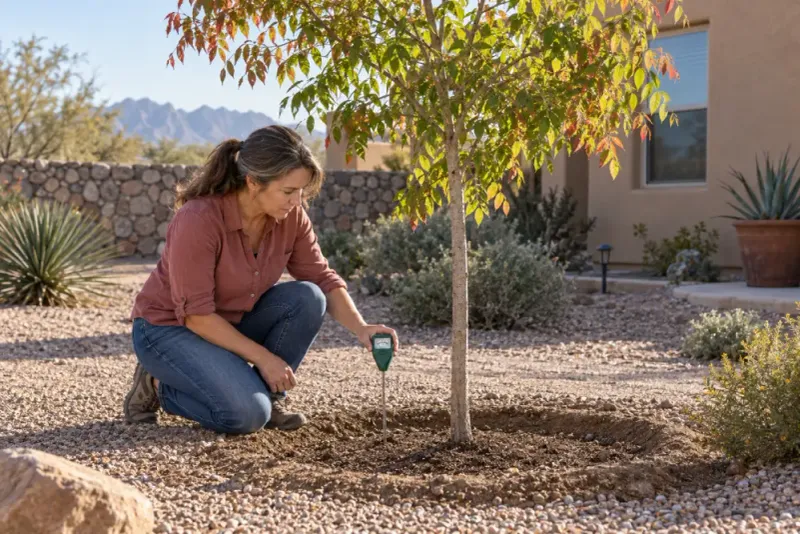
Before you water more or less, find out what the soil is doing at root depth. Push a soil probe or long screwdriver into the ground near the drip line and see how far it slides in.
Dry, hard soil and soggy, smelly soil call for opposite fixes.
Arizona Extension watering advice favors deep, slow watering that reaches the root zone. Timing depends on soil type, weather, tree age, and how your irrigation delivers water.
There is no single schedule that suits every yard.
Age matters too. A newly planted tree has a small root ball and needs different care than an established one, as the container tree planting guidelines explain.
Hot, dry spells also change what plants need, covered in guidance on drought and extreme heat.
Fine Webbing Can Point Toward Spider Mites
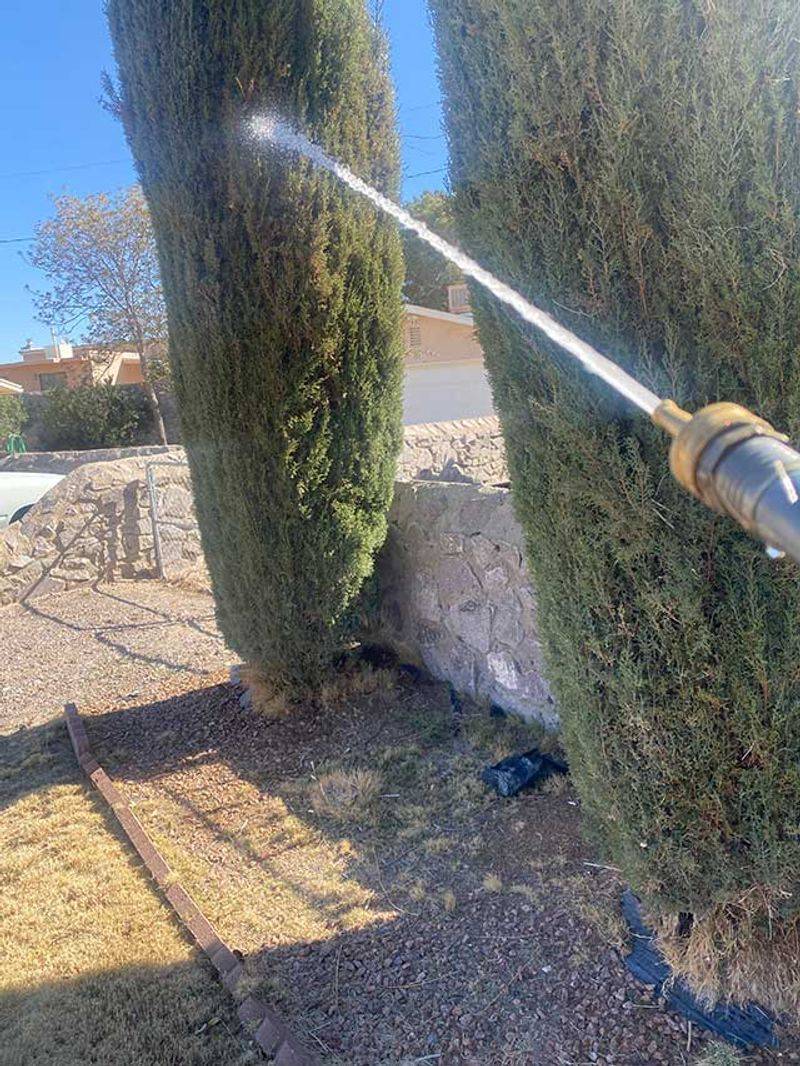
Spider mites are tiny, so look for their handiwork instead. Yellowing foliage and fine webbing are the signs University of Arizona gardening guidance lists.
Hold a white sheet of paper under a branch and tap it to see what falls.
Browning by itself does not prove mites. You want supporting signs before you treat anything.
If the webbing is missing and the foliage looks otherwise normal, look elsewhere.
When mites are confirmed, the University of Arizona May gardening guidance suggests a strong water spray on Italian cypress and other evergreens. It is a simple, low-cost step.
Keep checking the tree afterward to see whether the signs fade.
White Soil Crust Raises a Salt Question
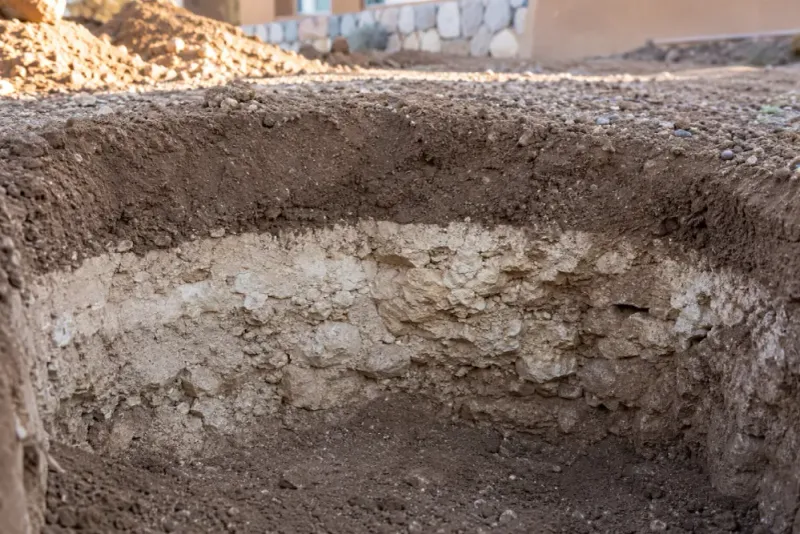
Salty irrigation water or soil can stress a tree over time. Check the ground under the canopy for a white crust on dry soil.
Also look at the foliage for brown or yellow margins.
Arizona Extension tree care guidance lists these as possible clues. They are hints, not a diagnosis, since other problems can leave similar marks.
A crust alone does not settle the question.
Watering habits can play a part. Frequent shallow irrigation can let salts build up near the surface instead of moving them down past the roots.
If your checks point this way, deeper, slower watering fits the same root-zone approach described earlier.
Prune Suspected Canker With Care
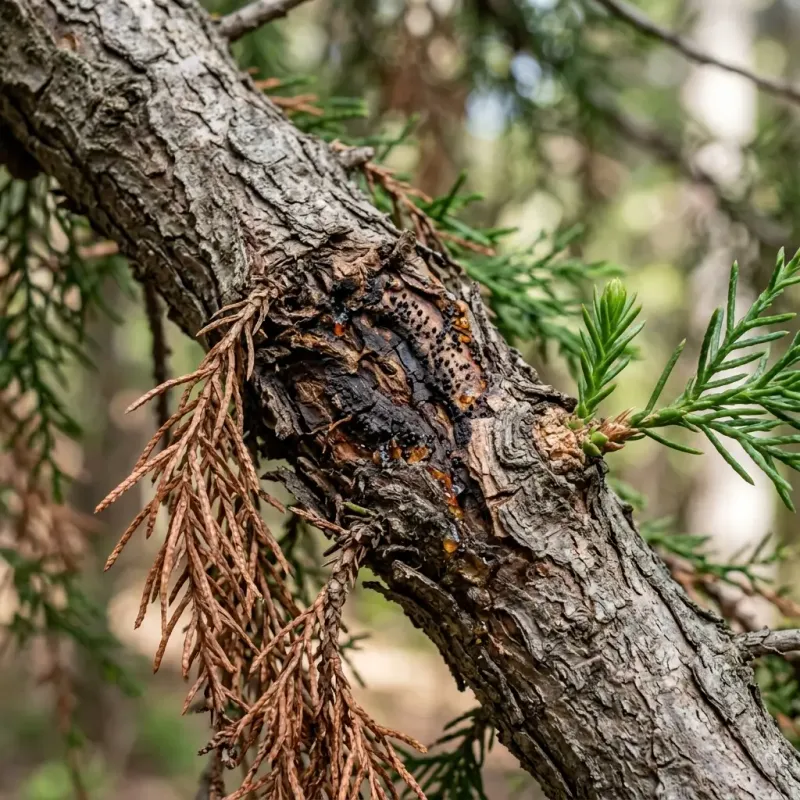
If you suspect canker, careful pruning is the main tool. University of Arizona guidance says to remove affected branches at least one inch below the canker.
Sanitize your tools between cuts so you do not carry the problem along.
Avoid moving potentially infected material among trees. Bag the cuttings and keep them away from other cypress.
A little care here protects nearby plants.
Keep expectations realistic. According to the University of Arizona canker publication, pruning may prolong a tree’s life but is no guarantee the disease will stop.
The same guidance reports no chemical control, so a fungicide is not a cure.
When Should an Arborist Inspect the Tree?
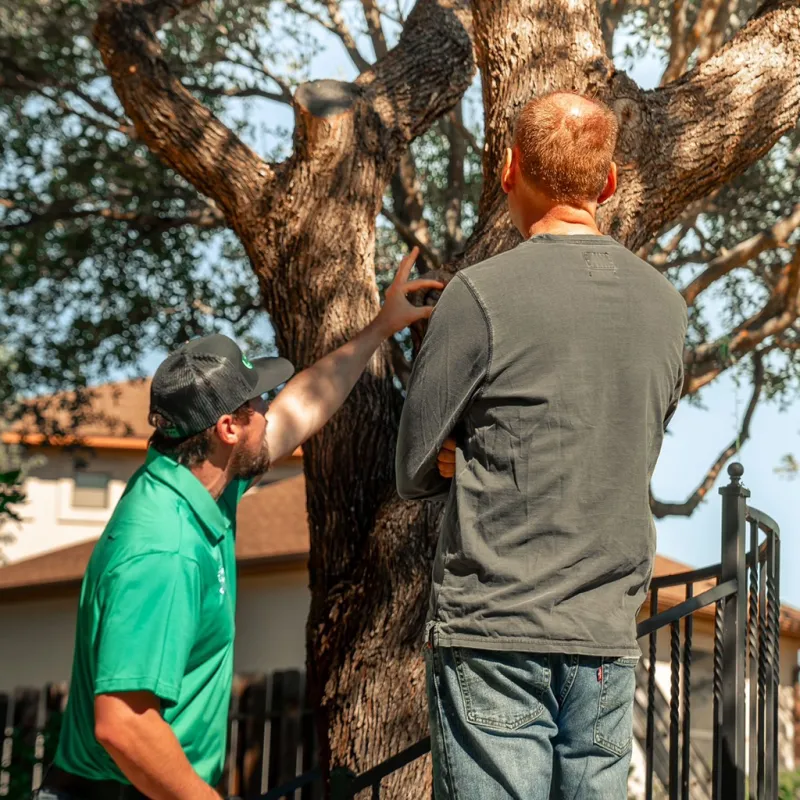
Call in a pro when decline is severe, spreading, or unexplained. An in-person visit can check things a photo cannot, such as roots, planting depth, drainage, and the trunk.
An Ask Extension response recommends a certified arborist for a high-value tree when the cause is uncertain.
If you are planning new trees, local guidance may help. The 2026 Prescott Area Plant List advises against Italian cypress there because of susceptibility to canker and cypress bark beetle.
That is local planting advice, not a statewide rule, and not a reason to remove every tree you already have.
Brown needles are only the starting clue, so let what you actually find guide your next move.