This Easy Watering Tip Keeps Your Poinsettia Thriving All Christmas Long
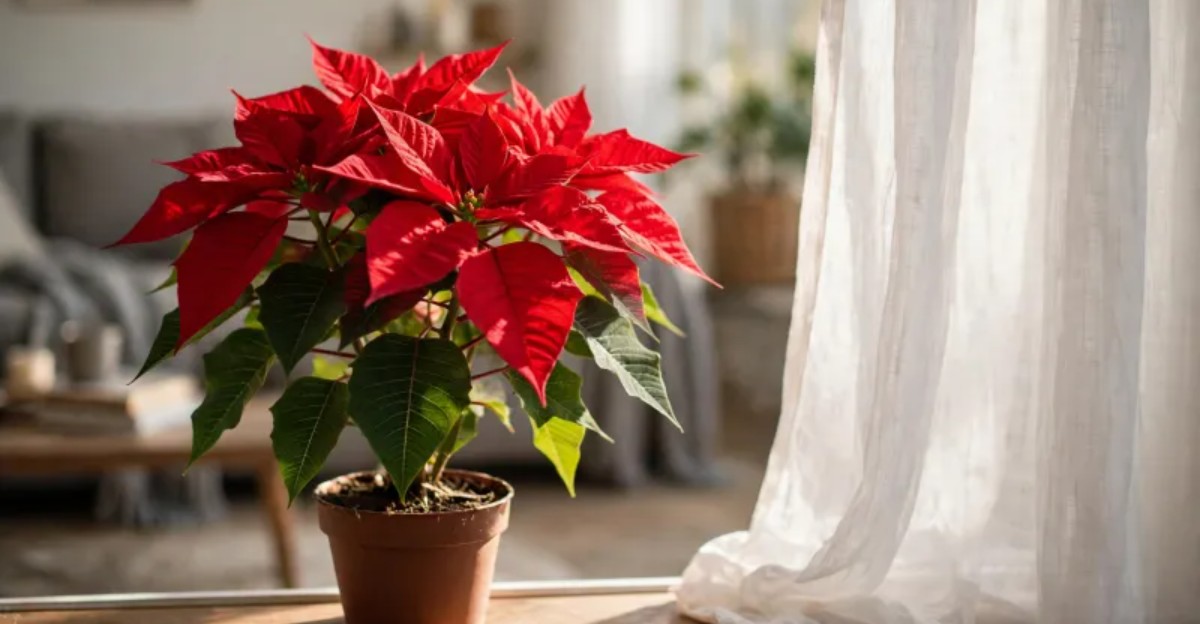
Those famous red petals on the season’s most popular potted plant are not petals at all. They are colorful leaves called bracts, and the real flowers are the tiny yellow buttons in the center.
I learned that fact the same year I watched my first holiday beauty slump over by mid-December. Not going to lie, I blamed the plant, the store, and even my drafty window.
Funny thing is, the culprit was hiding under a shiny sleeve of gold foil. Water had been pooling at the bottom for days, and I had no clue.
Growers in the United States sell tens of millions of these plants every winter, yet many end up on the curb before New Year’s Day. Imagine one small change at the kitchen sink keeping yours glowing until the last ornament comes down.
That Drooping Poinsettia Might Be Sitting In A Puddle
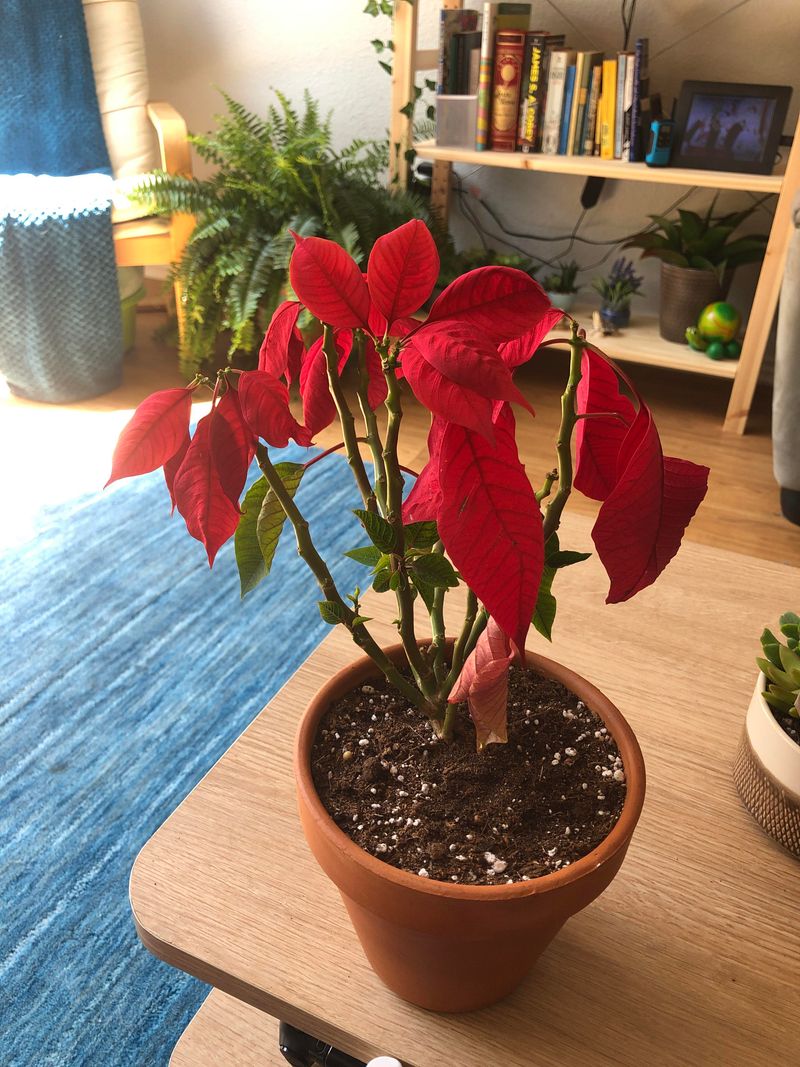
Droopy leaves send most of us running for the watering can. I did that for years, and my plants only slumped lower.
The twist is that a sagging poinsettia is often drowning, not thirsty. Extension specialists at several universities point to soggy soil and root rot as a leading reason these holiday plants decline indoors. Roots need air as much as water, and soil that stays wet pushes the air out.
Once roots begin to rot, they cannot pull moisture up into the stems. So the plant wilts even while its pot feels heavy and damp. It looks thirsty, yet it is struggling with too much of a good thing.
Poinsettias come from the Pacific slopes of Mexico, where they grow as shrubs in a climate with distinct wet and dry periods. Their roots are built for a rhythm of soaking and drying, not a constant bath.
The hidden puddle usually sits in a place you rarely check. That spot is the bottom of the decorative wrapper or outer pot.
Before you add a single drop, lift the plant and peek underneath. That one glance can explain a lot about a sad-looking poinsettia and point you toward the simple fix.
Water Your Poinsettia In The Sink And Let Every Drop Drain
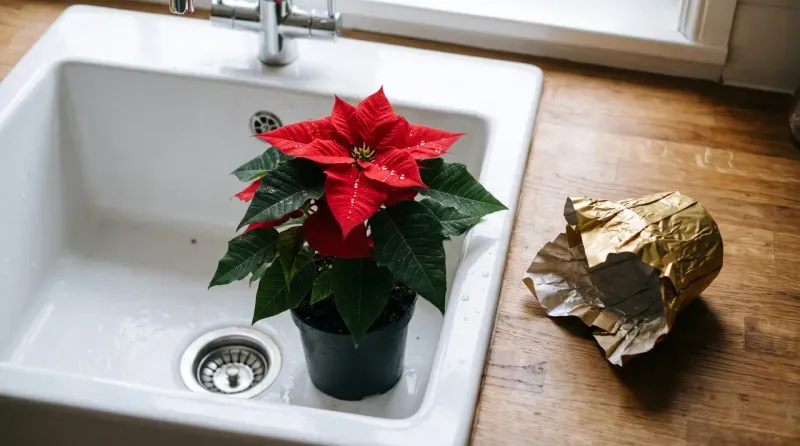
Here is the trick that changed everything for me. Take the poinsettia out of its foil sleeve, carry it to the sink, and water it there.
Pour room-temperature water slowly over the soil until it flows out the drainage holes. That steady soak wets the whole root ball instead of just the top inch. University of Minnesota Extension and other experts recommend this kind of thorough watering, followed by full drainage.
Let the pot sit in the sink for ten to fifteen minutes. Gravity pulls the extra water out, so the roots get a deep drink without sitting in a pool.
Then dry the bottom with a towel and slip the plant back into its wrapper. If you notice water collecting later, simply pour it out.
I like doing this in the morning while the coffee brews. It takes almost no effort, and the routine quickly becomes habit.
Some folks prefer poking a few holes in the foil and setting the plant on a saucer. That works too, as long as you empty the saucer after watering. The key rule stays the same: soak well, drain fully, and keep those roots out of standing water.
A Quick Finger Test In The Potting Soil Tells You When
Calendars are terrible plant sitters. Your poinsettia has no idea it is Wednesday, and it does not drink on a schedule.
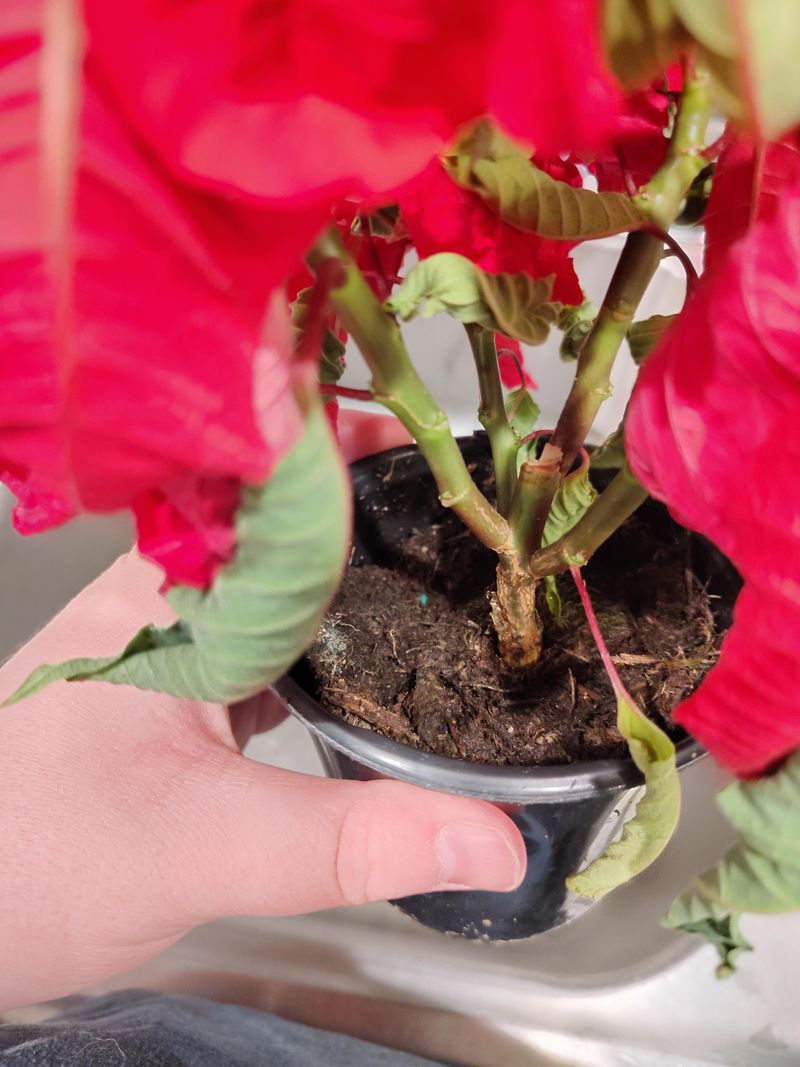
Your index finger makes a better tool than any app. Push it about an inch into the soil. If that layer feels dry, it is time to water. If it still feels cool and damp, wait a day and check again.
Many extension guides suggest watering when the soil surface feels dry to the touch. In a warm, heated home, that might be every few days. In a cooler room, it could stretch to a week.
Another handy clue is weight. Lift the pot right after a good soak, then lift it again a few days later. A dry pot feels surprisingly light, and you will learn the difference fast.
I keep my poinsettia near the spot where I fill my water glass. Every time I pass by, I give the soil a quick poke.
Small plants in tiny pots dry faster than large ones, so check them more often. Bigger plants hold moisture longer. Pay attention for the first week, and you will soon know your plant’s personal rhythm.
Those Shiny Foil Sleeves Trap More Water Than You Expect
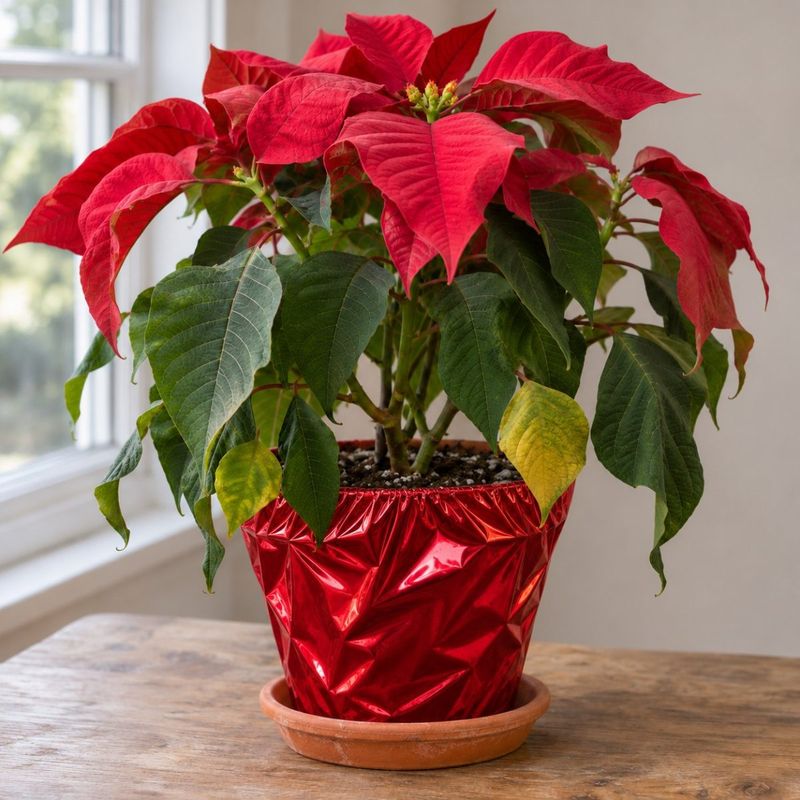
Guilty as charged, I adore the sparkle of a gold foil wrapper. It makes a grocery store plant look ready for a party.
Sadly, those sleeves act like little bathtubs. They catch every drop that runs out of the drainage holes and hold it right against the roots. Water can sit there unnoticed for days.
Extension specialists, including those at the University of Delaware, often warn about this exact problem. Their advice is simple: remove the wrapper or poke holes in the bottom so water can escape.
If you love the festive look, try a compromise. Set the plastic nursery pot on a layer of pebbles inside a decorative bowl. The pebbles lift the roots above any runoff.
You could also cut the foil open along the bottom and set it on a waterproof saucer. That keeps the shine while letting water drain away.
Ceramic cachepots with no holes cause the same trouble, so treat them like foil. Check them after each watering and tip out any extra.
A little peek under the wrapper might feel fussy at first. Trust me, it beats watching a gorgeous plant collapse halfway through December.
Room-Temperature Water Keeps Poinsettia Roots From A Cold Shock
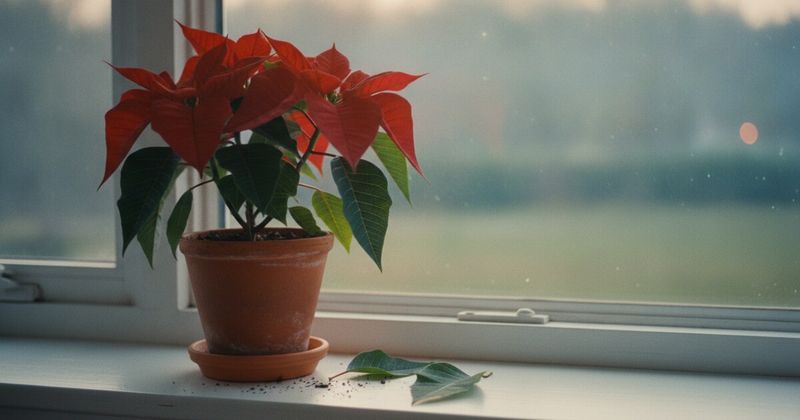
Brr. Tap water in January can run surprisingly chilly, especially in northern states where pipes stay cold all season.
Poinsettias are tropical at heart, and they dislike cold of any kind. Experts suggest room-temperature water to avoid stressing the roots. A sudden chill can add to leaf yellowing and drop on a plant already adjusting to a new home.
The easy fix is to fill a watering can the night before. By morning, the water matches the air in your house. That small habit also lets some chlorine escape, which does not hurt.
Cold air matters too. Poinsettias do best at roughly 65 to 70 degrees during the day, with slightly cooler nights. Keep them away from drafty doors, frosty windows, and heat vents.
Leaves touching a cold window pane can get damaged quickly. Even a short ride home from the store in freezing weather can cause harm, so ask for a plant sleeve or bag.
I once lost half the leaves on a plant after parking it next to the front door. Lesson learned. Steady warmth, gentle water, and bright indirect light keep those red bracts looking fresh for weeks.
Yellow Leaves And Crispy Edges Tell Different Poinsettia Stories
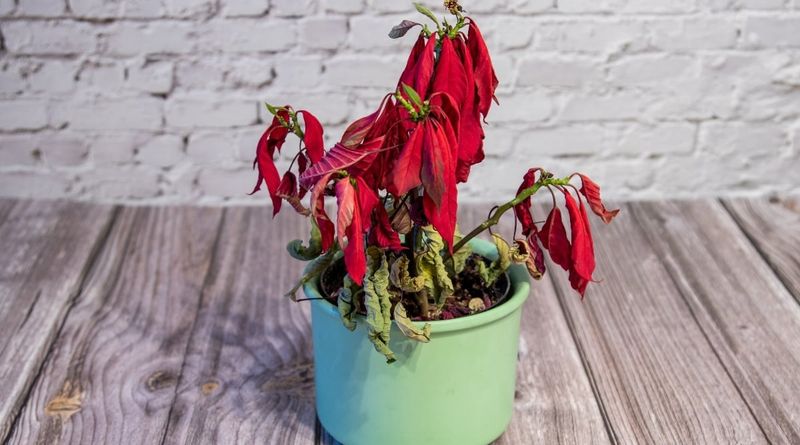
Your poinsettia talks, just not out loud. Its leaves drop hints about how the watering is going.
Yellow lower leaves that fall off easily often point to soggy soil. Add a pot that feels heavy and a sour smell from the soil, and root rot may be starting. Cut back on water and check that drainage right away.
Underwatering looks different. The plant wilts, the soil feels bone dry, and leaf edges may turn crisp and brown. A thorough soak usually perks it up within a few hours.
Sudden leaf drop can also come from cold drafts, low light, or a big change in location. So look at the soil first, then think about the room.
Here is a quick guide I keep in mind. Wilting with wet soil means too much water. Wilting with dry soil means too little.
Losing a few leaves after the trip home is fairly normal. Plants move from a bright greenhouse into a dimmer house, and they need time to settle. Watch for steady patterns rather than panicking over one fallen leaf, and adjust your care slowly.
A Pot With Drainage Holes Gives Poinsettia Roots Room To Breathe
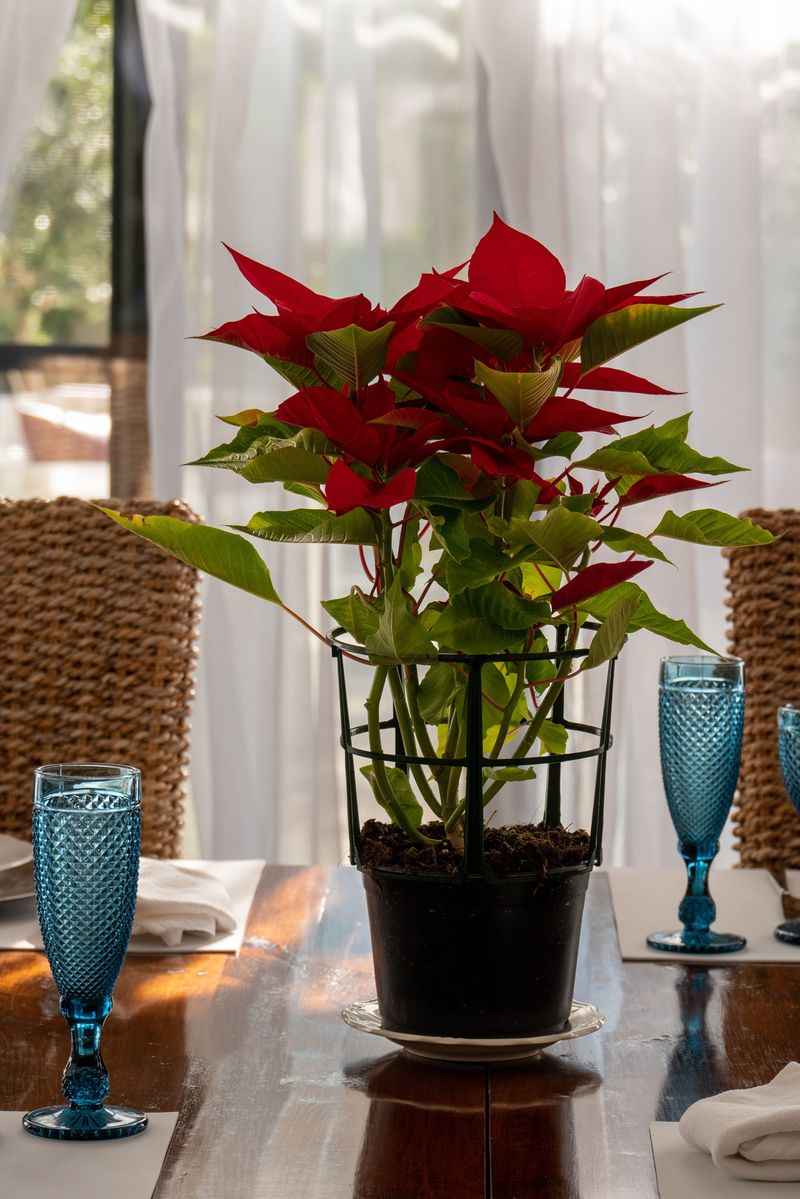
Healthy roots start with the right home. Most poinsettias arrive in plastic nursery pots with holes in the bottom, and that is exactly what they need.
Growers usually plant them in a light, airy mix. It often contains peat moss or coir plus perlite or bark. That blend holds some moisture yet lets excess water run through quickly.
If you repot for display, skip heavy garden soil. It packs down in containers and stays wet far too long. A quality indoor potting mix works fine.
Honestly, most people do not need to repot at all during the holidays. The plant is busy showing off color, and moving it can add stress. Waiting until spring makes more sense.
Check the drainage holes now and then. Sometimes roots or packed soil block them, and water starts backing up.
Fun fact for your next dinner party: Joel Roberts Poinsett, the first U.S. minister to Mexico, brought the plant to South Carolina in the 1820s. December 12 is National Poinsettia Day, marking the date he passed. Nearly two centuries later, the plant he introduced remains a holiday favorite, and a pot with good drainage is still the key to keeping it healthy.
Keep That Poinsettia Glowing Well Past The New Year
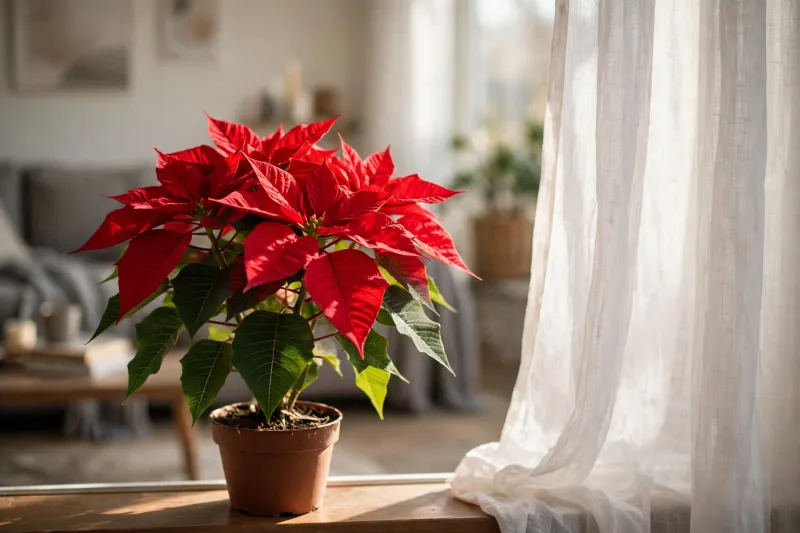
Every January, I feel a little thrill when my poinsettia still looks bright after the tree comes down. Good watering habits make that possible.
Keep the same routine after Christmas. Water when the top inch dries, drain well, and keep the plant in bright, indirect light. Many well-tended poinsettias hold their color into February or even March.
When the bracts finally fade, you get to choose. Some folks compost the plant and pick up a fresh one next year. Others treat it as a houseplant and try for a repeat show.
Reblooming takes patience. In late winter or spring, cut stems back and let the soil dry a bit more between waterings. Once warm weather arrives, the plant can summer outdoors in light shade.
In fall, poinsettias need long nights of uninterrupted darkness, about 14 hours, for roughly eight weeks to color up again. Gardeners in frost-free spots like South Florida and coastal California can even grow them outdoors in the ground.
Whatever you decide, the biggest takeaway stays simple. Soak, drain, and check before you pour. That habit keeps your holiday star shining long after the wrapping paper is gone.