Native Georgia Shrubs That Handle Root Competition Under Mature Trees
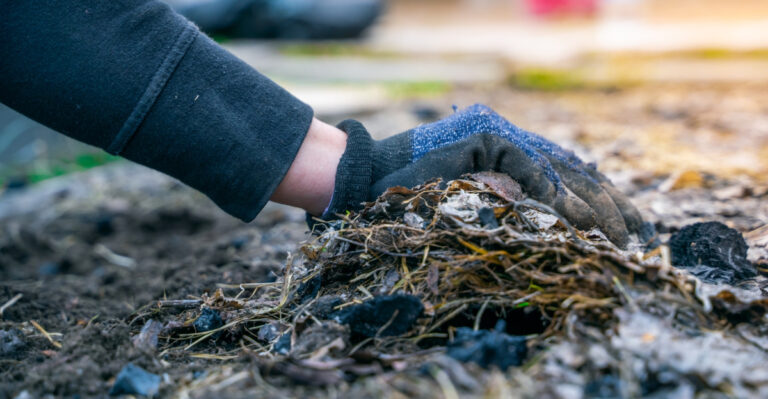
Most of a big oak’s feeding roots crowd into the top foot of soil, reaching far past its branches.
That hidden tangle drinks rain before your shrubs get a sip, which explains so many sad shady beds.
Researchers often say tree roots can spread two or three times wider than the canopy above them. The bare patch under your maple is no accident, and digging deep holes there can harm the tree.
I have to admit, I wasted years planting fussy shrubs in my Georgia shade before learning my lesson. You need tough plants that grew up in forest understories, sharing water and space with big trees.
Luckily, local woodlands already hold a whole crew of shrubs that shrug off dry shade and crowded roots.
Which of these quiet survivors could finally fill that stubborn gap beneath your favorite shade tree?
1. Piedmont Azalea
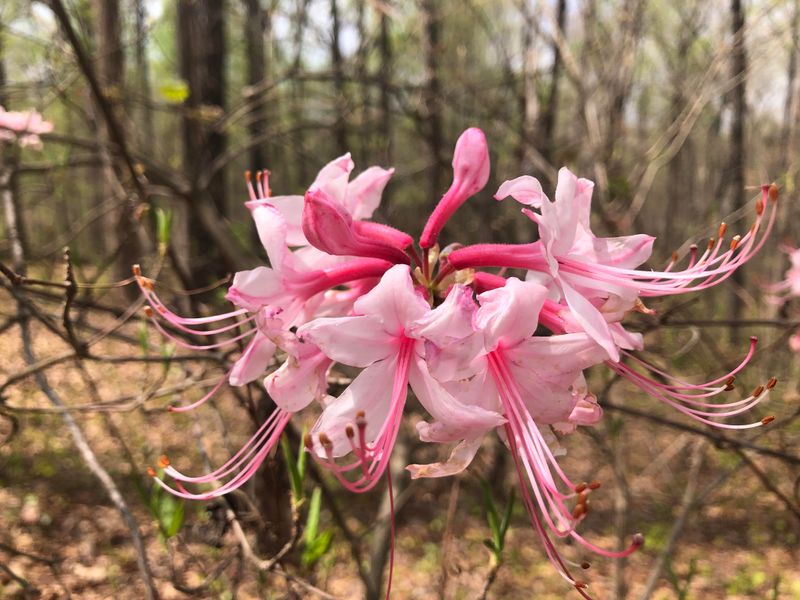
Early spring smells sweeter under the oaks when this wild azalea opens its pink and white trumpets.
The flowers carry a light honeysuckle scent, and they often arrive before the leaves fully unfold.
Locals sometimes call it wild honeysuckle, though it belongs to the heath family and grows as a shrub rather than a vine.
You might spot it blooming along creek banks in March and April across much of the state.
Its shallow, spreading roots help it slip between tree roots instead of fighting them for deep space. Over time it can form loose colonies, growing roughly six to fifteen feet tall in happy spots.
Personally, I think the tall, airy shape looks best tucked under high pines or mature oaks with dappled light.
Bright morning sun with afternoon shade usually brings the heaviest flower show without scorching the tender leaves.
Plant it in fall so cool weather and winter rain help roots settle before summer heat arrives. Dig a wide, shallow hole and slice through only small tree roots, leaving the big ones alone.
Acidic soil rich in leaf litter suits it well, so let fallen oak leaves stay as natural mulch. Water deeply every week or two during the first two summers while the young roots spread out.
Hummingbirds and large swallowtail butterflies visit this shrub’s long-stamened blooms in Georgia, so keep sprays far away. After a few years, it mostly takes care of itself and rewards you with soft fall color.
2. Oakleaf Hydrangea
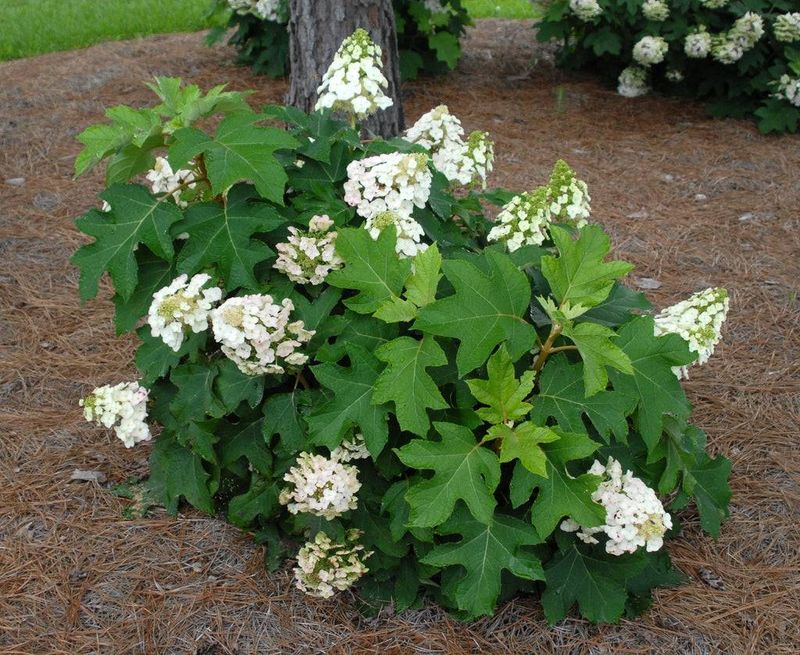
Big leaves shaped like oversized oak leaves make this shrub look right at home beneath real oak trees.
I love how the foliage seems to echo the canopy overhead, like the woods planned the match themselves.
Cone-shaped white flower clusters open in late spring and slowly blush pink as summer rolls along. Many gardeners leave the dried blooms standing because they still look lovely through fall and winter.
Wild plants grow on wooded bluffs and stream slopes, where tree roots fill nearly every inch of soil. That background explains why established shrubs handle shade and dry spells better than most hydrangeas do.
Expect a mature size around four to eight feet, though some named varieties stay much more compact.
Smaller selections like Pee Wee or Ruby Slippers fit nicely along paths under crowded tree canopies.
Good drainage matters more than rich soil here, since soggy roots often lead to rot in heavy clay. Mix some compost into the planting area and top it with a few inches of shredded leaves.
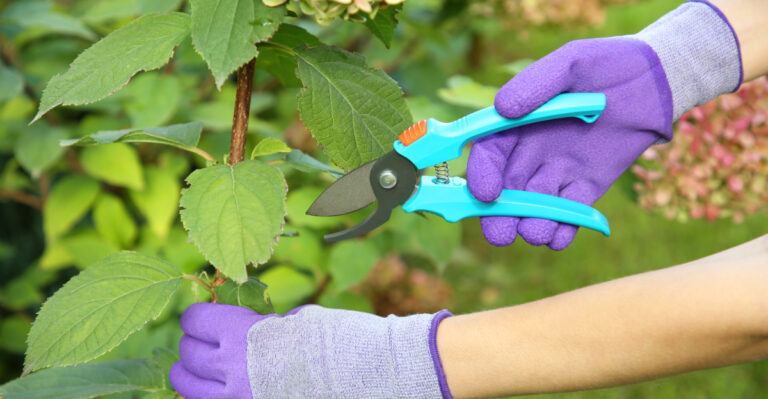
Georgia gardeners rarely need to prune this shrub, but should trim it right after flowering because next year’s buds form on old wood. Cutting stems in winter or early spring usually removes the flowers they were hoping to see.
Fall brings leaves in shades of burgundy and bronze, while peeling cinnamon bark shows up after leaf drop. You get something worth looking at in every season, even in the shadiest corner of the yard.
3. Virginia Sweetspire
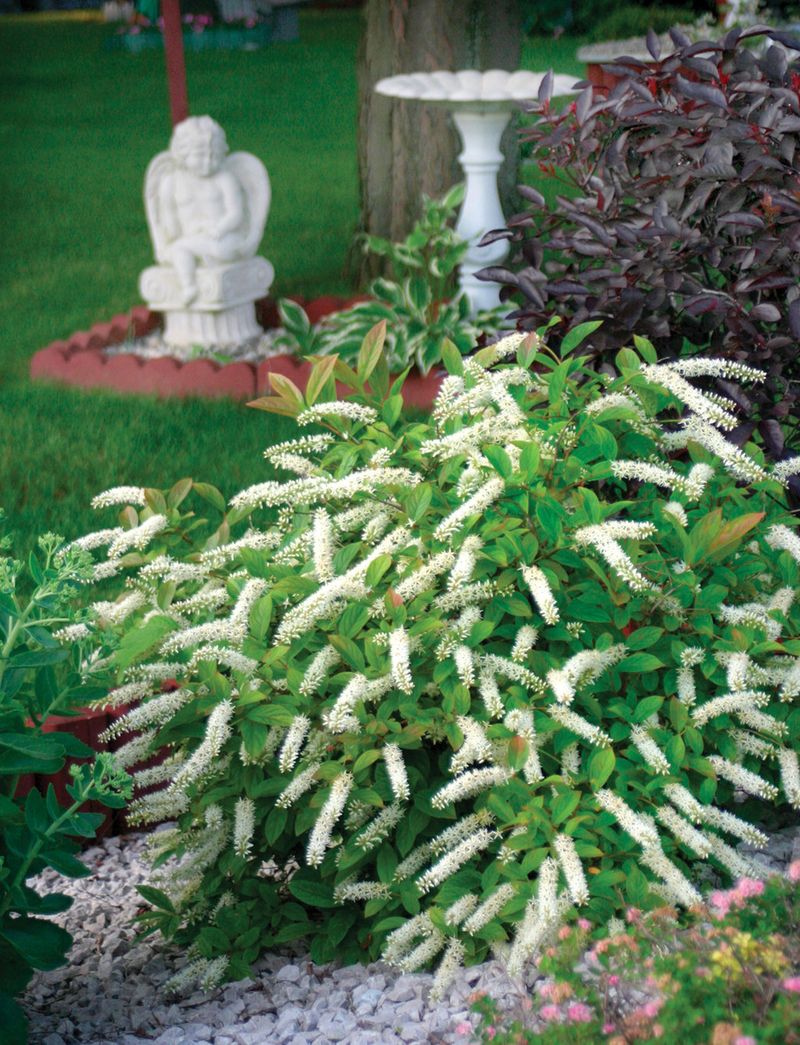
Fragrant white flower spikes droop from arching stems in late spring, like tiny bottle brushes bending in the breeze.
Bees crowd around them, and you can often hear the buzzing before you even notice the blooms.
Most people underestimate how tough this shrub is, because it naturally grows in wet swamps and stream edges. Once its roots settle, though, it handles drier shade under trees far better than its soggy background suggests.
Underground runners help it spread slowly into small thickets, slipping around tree roots rather than competing head-on. That habit makes it handy for covering bare slopes where grass struggles and rain keeps washing soil away.
Georgia gardeners should allow for plants to reach three to six feet tall, with an equal or slightly wider spread over time. Compact choices like Little Henry stay closer to two or three feet, which suits small shady beds.
Clay soil rarely bothers it, so you can skip heavy soil amendments and simply mulch the planting area.
Water weekly during its first summer, then cut back once new growth looks steady and strong.
More light means more flowers, so place it where some sun slips through the branches during the day. Deep shade still works for foliage, though you might see a thinner shape and fewer white spikes.
Fall is my favorite season for this plant, when leaves turn rich red and burgundy shades. In milder winters around the state, that color can hang on for weeks after other shrubs go bare.
4. Hearts-A-Burstin
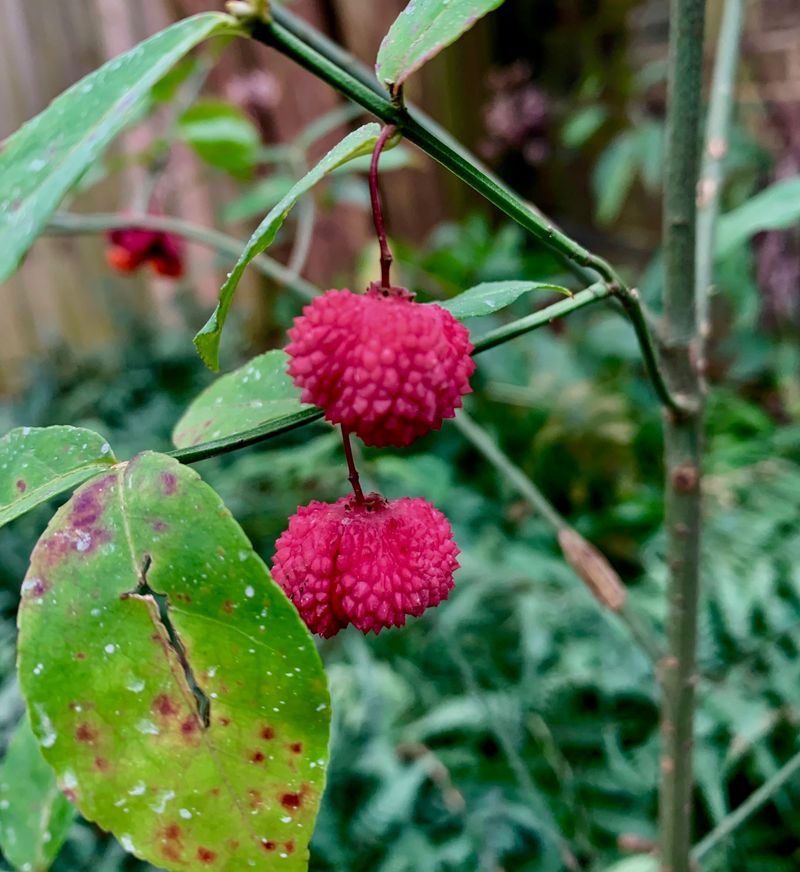
Warty pink capsules split open each fall to reveal glowing orange seeds that dangle like tiny jewels. No wonder folks named it hearts-a-burstin, since the ripe fruit looks like a heart cracking wide open.
Another common name is strawberry bush, which comes from the bumpy red fruit hanging on slender stems.
Please treat those berries as decoration only, because the plant’s parts are considered toxic to people.
Green stems stay bright all winter, so the shrub still catches your eye after the leaves fall away. I can’t imagine a bare woodland edge without those little green twigs standing out against brown leaf litter.
Wild plants grow in the shady understory of moist forests, quietly sharing space with towering hardwoods. Its rhizomes spread slowly into loose colonies, filling gaps between tree roots without needing much help from you.
Expect a loose, open shape around four to six feet tall, which fits nicely under mature trees. Partial to full shade suits it, and established plants handle dry spells better than you might expect.
Deer adore this shrub, often nibbling it down to bare stems in neighborhoods with heavy browsing pressure.
A simple wire cage around young plants gives them time to grow before hungry visitors find them.
Mix leaf compost into the planting area and keep the soil slightly acidic and well drained. Birds and other wildlife across Georgia eat the seeds in fall, helping the colony pop up in surprising new places.
5. Inkberry Holly
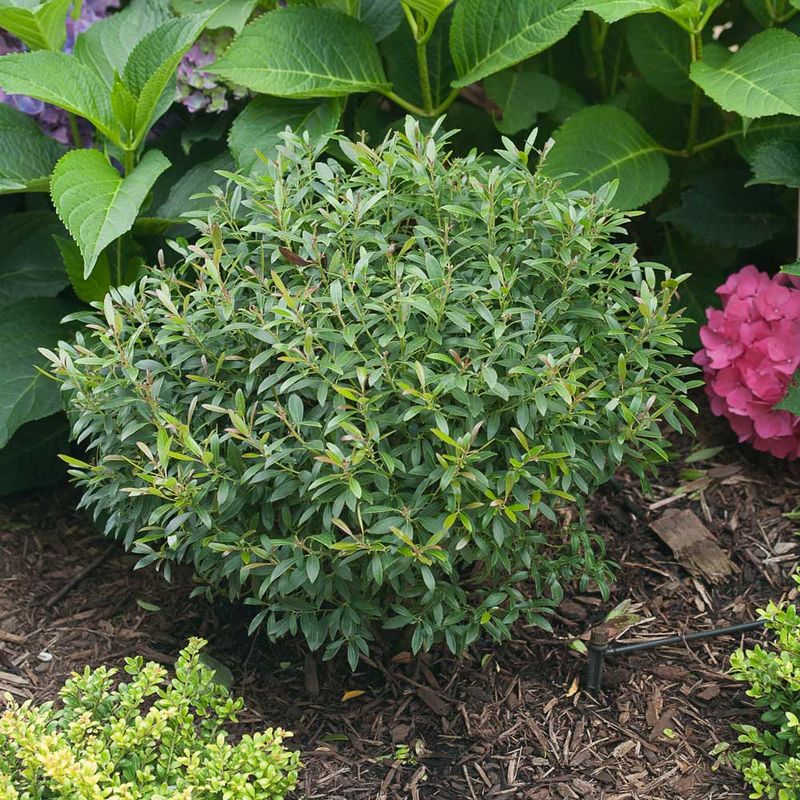
Tiny black berries the size of peas give this evergreen holly its name and a slightly mysterious look. Unlike many hollies, its glossy leaves feel smooth, so you can weed nearby without getting poked.
Wild inkberry thrives in sandy coastal plain soils, where pine roots spread wide and water drains quickly.
It also shows up in boggy spots, so it handles both soggy and dry conditions once established.
Root suckers slowly widen the clump, which helps it fill space between tree roots over several years. Wild plants can reach five to ten feet tall, though garden varieties like Shamrock stay much shorter.
Light shade from tall pines suits it better than deep shade beneath thick maples or dense magnolias.
Too little sun can make the shrub leggy, so plant where some bright light filters through the branches.
Remember that only female plants produce berries, and they need a male plant somewhere nearby for pollination. Birds snack on the fruit through winter, and bees visit the small spring flowers you might overlook.
Acidic soil keeps the leaves dark green, so Georgia gardeners should skip lime and watch for yellowing on alkaline sites. Plant in fall or early spring, then water deeply each week until the shrub shows strong new growth.
I believe inkberry makes a smart native swap for boxwood under trees, offering evergreen structure all year. Trim lightly in late winter if needed, since the plant often sends up fresh shoots from the base.
6. Dwarf Fothergilla
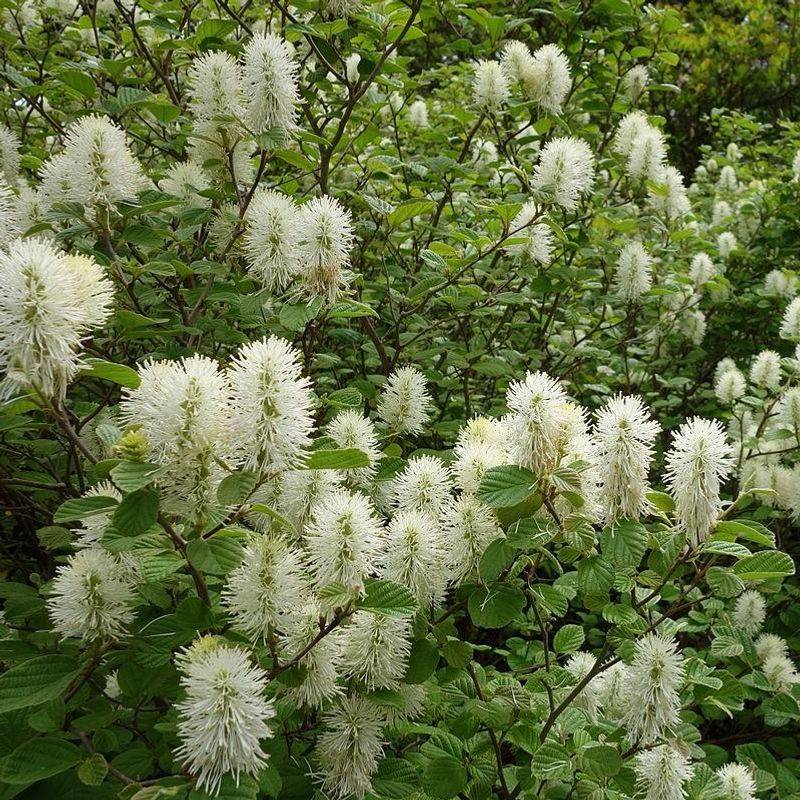
Fuzzy white bottlebrush blooms appear in early spring before the leaves, smelling faintly of honey on warm days.
I have to admit, I bent down to sniff them the first time and stayed there far too long.
The flowers have no petals, and their puffy look comes from dense clusters of creamy white stamens. That quirky design makes each bloom look like a tiny cotton swab perched on a bare twig.
Wild plants grow in the coastal plain of the Southeast, including the southern part of Georgia. Compact size makes it easy to tuck between tree roots, since it usually stays around two to three feet.
A fibrous root system helps it hold soil on slopes, and it slowly spreads through root suckers. That shallow, fine root network shares space with tree roots more peacefully than many deep-rooted shrubs.
Fall color is the real showstopper, with leaves glowing orange and scarlet, sometimes on the very same branch.
More sun brings brighter colors, so place it near the edge of the canopy where light reaches through.
Moist, acidic soil with plenty of organic matter keeps it happiest, though it adapts to drier spots. Under thirsty trees, give it extra water during summer dry spells for the first couple of years.
Pruning is rarely needed because the shrub naturally forms a tidy, rounded mound with very little fuss. Pair it with ferns or native ginger for a woodland bed that looks good from spring to fall.
7. American Beautyberry
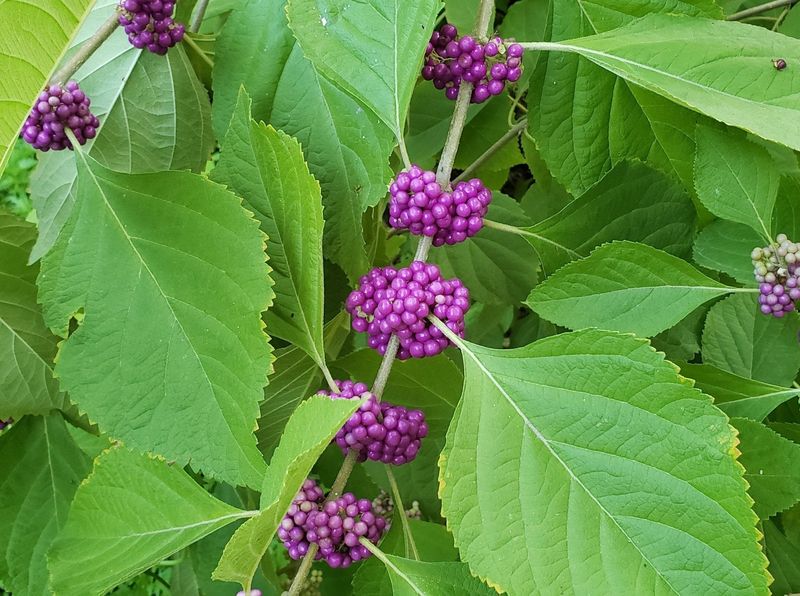
Clusters of bright purple berries wrap around the stems in late summer, looking almost too vivid to be real. Every visitor to my yard asks about them, and most guess the color must come from a paint can.
American beautyberry grows wild in open woods across the Southeast, often thriving beneath pines and hardwoods.
Its tough nature lets it handle dry soil and crowded roots once it settles in for a season or two.
Most plants reach three to six feet tall with a loose, arching shape that softens shady corners. Tiny pink flowers appear in early summer along the stems, and bees visit them throughout the season.
Light shade works well, but deeper shade means fewer berries, so aim for dappled sun under tall branches.
You might notice the stems stretch a little toward the light, which is perfectly normal for this shrub.
Georgia gardeners can cut the whole plant back hard in late winter because flowers form on new growth. That keeps it compact and bushy, and the berries still show up right on schedule.
Mockingbirds and catbirds eat the fruit in fall and winter, along with other birds when food runs low. Some people make jelly from the berries, but they taste fairly bland when eaten fresh off the shrub.
Water young plants regularly during their first summer, especially during long stretches without rain in July and August. Once roots settle, rainfall usually keeps it going, making it one of the easiest shrubs for tricky shade.
8. Sparkleberry
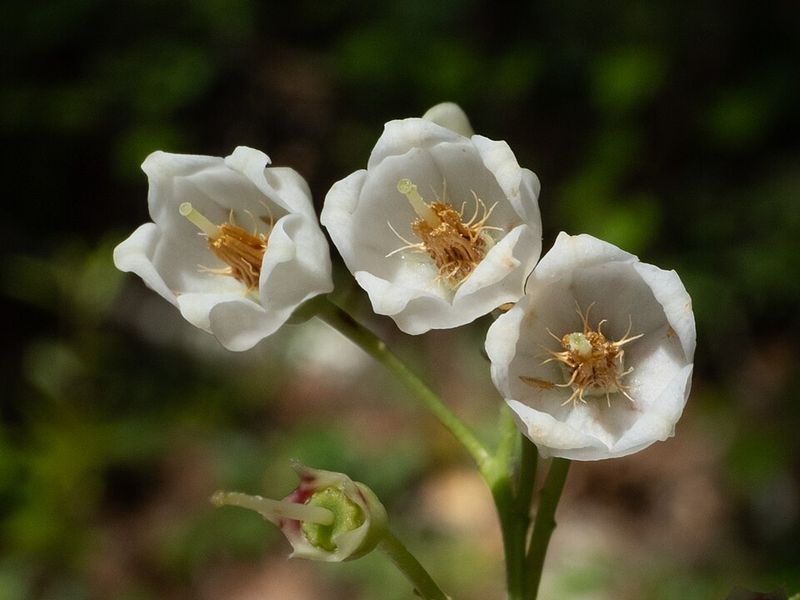
Glossy leaves catch the light so well that it is easy to see where the sparkleberry name might come from. Some folks call it farkleberry or tree huckleberry, and it ranks as the tallest native blueberry relative in North America.
Wild plants grow on dry sandy ridges and rocky bluffs across much of Georgia, often beneath oaks and pines.
That rugged background gives it serious drought tolerance, which matters a lot under thirsty mature trees.
It can reach ten to twenty-five feet tall, so think of it as a large shrub or small tree. Multiple twisting trunks give it a sculptural look, especially once the reddish bark begins peeling in thin strips.
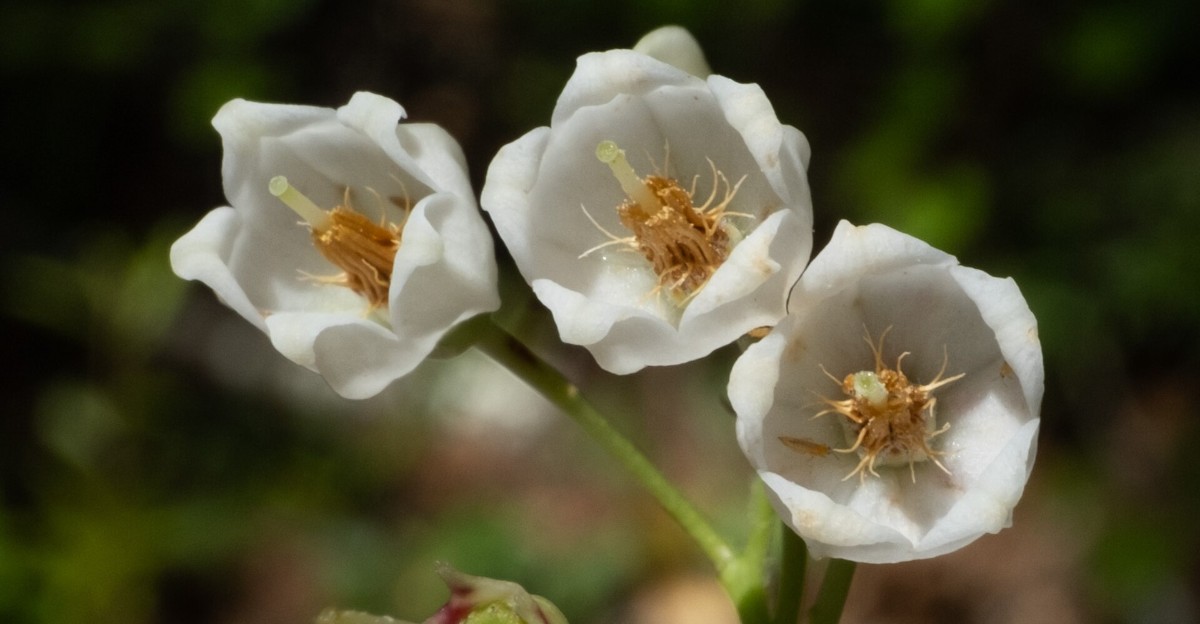
Small white bell-shaped flowers dangle in late spring, drawing native bees that happily visit blueberry-type blossoms. Dark berries follow and often hang on into winter, feeding birds when other food sources run thin.
The berries are edible but dry and gritty, so I leave them for the mockingbirds and thrushes. Personally, I think the birds appreciate them far more than any human taster in my family ever could.
Plant it in well-drained soil, because soggy ground causes far more trouble than drought for this shrub.
Unlike many blueberries, it tolerates a wider pH range, so you rarely need to fuss with soil acidity.
Partial shade under high branches suits it well, though more sun encourages fuller growth and more fruit. Give it room to stretch, and in a few years you might have a true native showpiece.