Why a Warm November Day Can Still Bring Out Copperheads in North Carolina
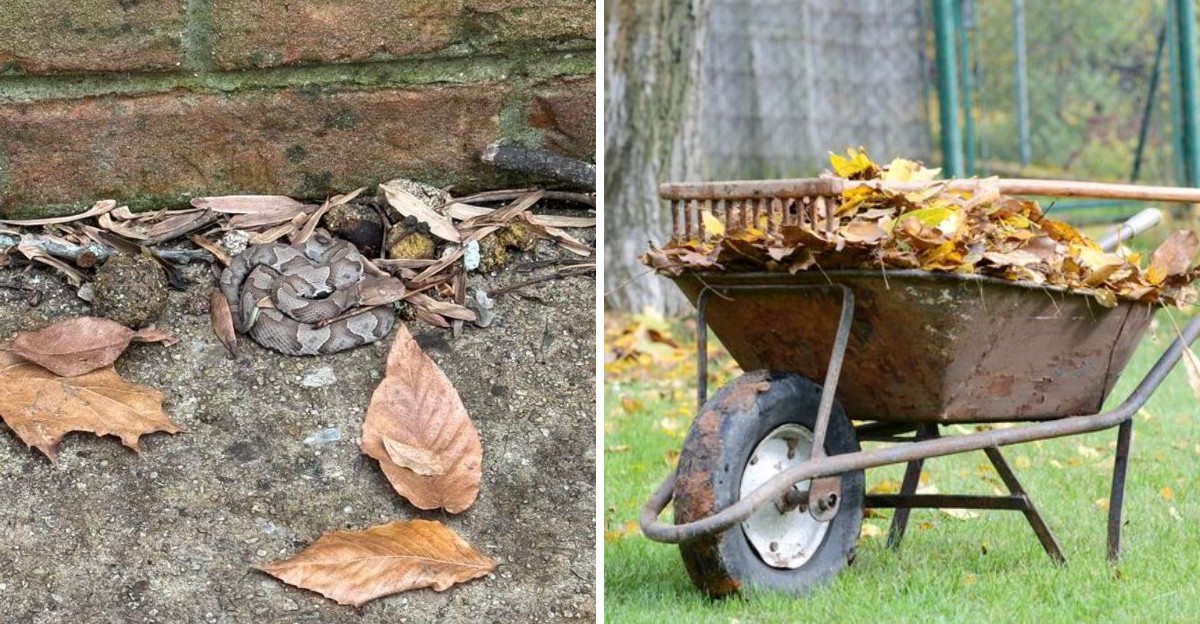
Frost on the pumpkins Tuesday, a venomous snake sunning on the patio Thursday. That odd swing happens more often than most folks realize in North Carolina.
Cold-blooded animals don’t check the calendar. They check the thermometer, and a sunny 70-degree afternoon in November can feel like a fresh invitation to move.
I’ll admit my first late-fall sighting made me drop a bag of mulch. I didn’t expect company that late in the year. The snake was calm, slow, and soaking up heat on a flat stone near my raised beds, right where I’d been kneeling an hour earlier.
One thing I’ve learned since then is that these quiet neighbors follow a fairly predictable rhythm.
Once you understand what pulls them out of hiding, you start seeing your fall yard a little differently. So what exactly is a bright late-autumn afternoon telling them?
1. That Copperhead on Your Sunny Patio Is Chasing Heat
Sunshine is the whole story here, or at least most of it. Copperheads are ectotherms, which means their body temperature rises and falls with the air, ground, and rocks around them.
On a chilly November morning, a copperhead tucked into a crevice barely moves. Its heart rate slows, digestion crawls, and its muscles stay stiff.
When a warm front pushes afternoon temperatures into the 60s or 70s, though, the snake can warm up enough to crawl out and bask.
The NC Wildlife Resources Commission notes that copperheads may appear on warm days even during the cooler months. That makes a sunny November afternoon less of a fluke and more of a normal part of their year.
What surprises many gardeners is how close to home these basking spots can be. Concrete patios, stone steps, and dark mulch soak up heat quickly. A snake looking for a quick warm-up might choose your garden path over a shady forest floor.
Most of these late-season appearances are short. The snake soaks up warmth for a few hours, maybe grabs a meal if one wanders by, then slips back into shelter as the sun drops.
So if you spot one stretched out on your walkway, it isn’t lost or confused. It’s simply making the most of free heat before winter returns in earnest.
2. Copperheads Rest Through Winter Without Truly Sleeping
Bears hibernate, but snakes do something a little different. Reptiles go through brumation, a slowed-down state where their metabolism drops way down, yet they can still respond to the world around them.
I like to compare it to a phone on low-power mode. Everything runs slower, but the screen still lights up when something changes. For a copperhead, that something is usually temperature.
In much of the state, copperheads begin heading toward winter shelter in October and stay mostly tucked away until spring, often around late March or April. That timing shifts with location, though.
Mountain snakes generally settle in earlier, while those along the warmer coastal plain may stay active a bit longer into fall.
During brumation, copperheads don’t eat much, if at all. They rely on fat stored from summer and early fall meals. Moving around on a warm day costs energy, so most snakes don’t wander far from their shelter even when they do emerge.
Brumating snakes also need water, which is another reason they may poke out on a mild day. A sip from a puddle or damp leaves can help them get through the long rest.
Knowing this changes how you think about winter. Copperheads aren’t gone from November to March. They’re simply waiting nearby, ready to stir whenever the sun gives them a good reason.
3. South-Facing Rocks and Woodpiles Turn Into Snake Sunbeds
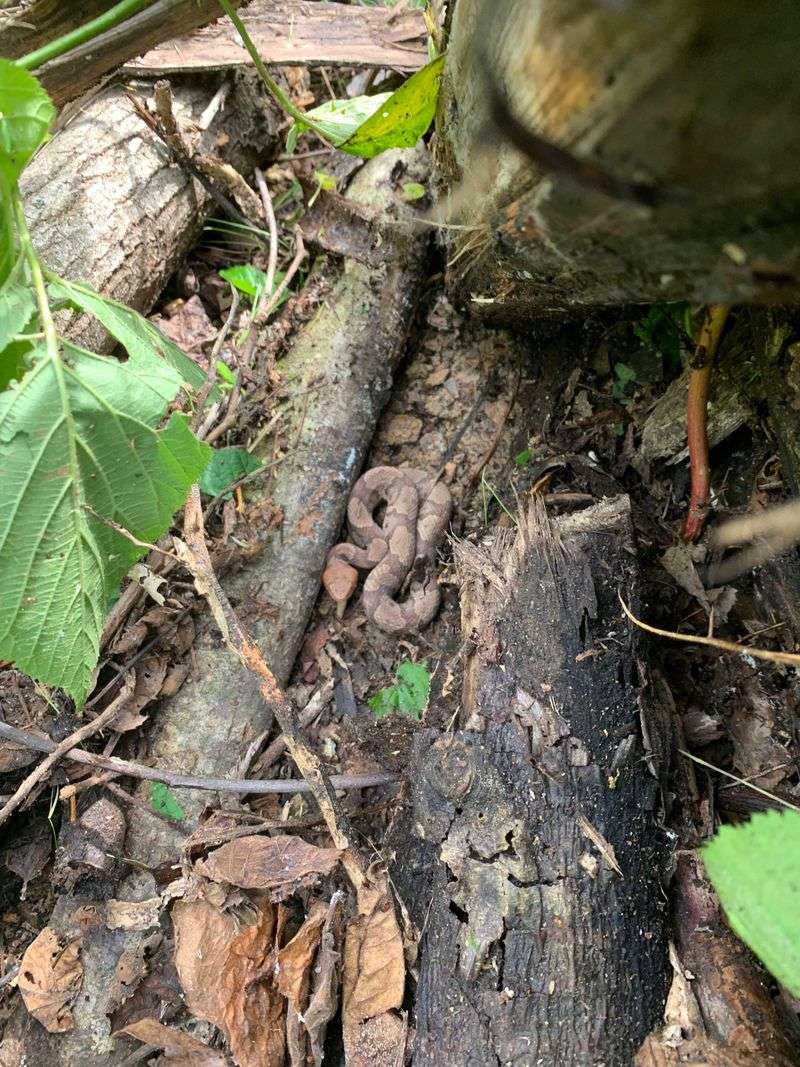
Ever notice how one corner of your yard warms up first on a frosty morning? Copperheads notice too, and they pick winter shelters with that kind of sunny exposure in mind.
Researchers and wildlife biologists often find copperhead dens on south-facing rocky slopes, stump holes, old rock walls, and spaces under logs.
These places hold heat during the day and stay protected below the frost line at night. In some areas, copperheads even share winter dens with other snakes, including timber rattlesnakes and black ratsnakes.
Around homes, the list gets more familiar. Firewood stacks, stone retaining walls, rotting landscape timbers, crawl space openings, and piles of old lumber can all work as substitute dens.
A woodpile against the sunny side of a shed is basically a five-star hotel for a cold snake. It offers cover, warmth, and often a steady supply of mice.
That’s why a warm November afternoon can bring a copperhead out right next to the very spot you visit for firewood. The snake isn’t coming toward you. It’s sitting at the doorstep of its winter home, warming up.
If you stack wood, keep it on a rack at least a foot off the ground and away from the house. That small change makes the pile far less cozy for anything looking to move in.
4. Baby Copperheads With Yellow Tails Are Still Looking for Shelter
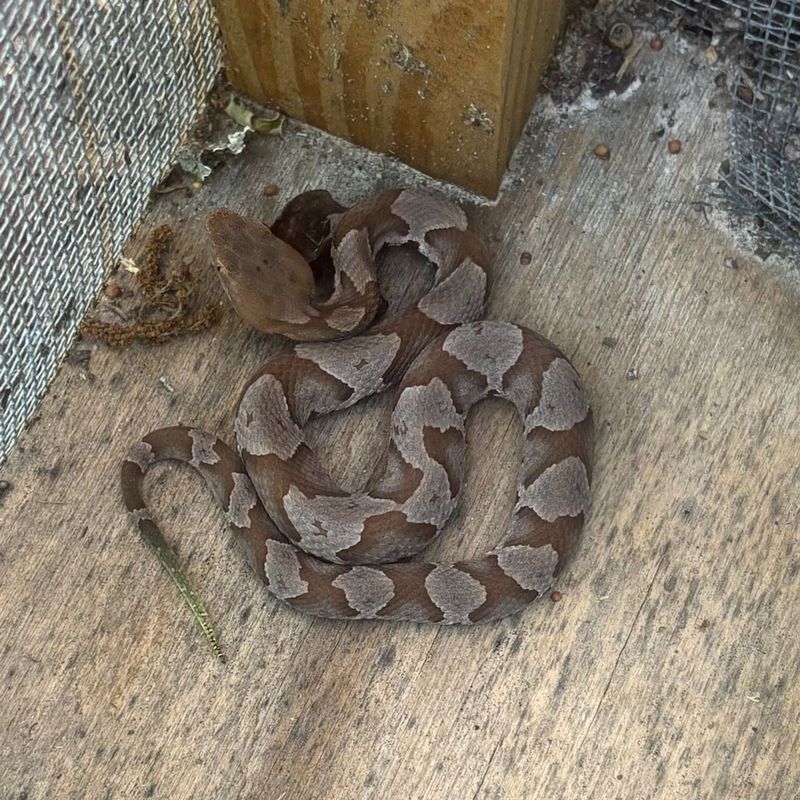
Here’s a fun detail most people miss. Copperheads don’t lay eggs; mothers give birth to live young, usually from late August into October across the state.
Each litter often holds somewhere between three and fourteen babies, each about seven to ten inches long. They arrive fully equipped with venom and a bright yellow or greenish tail tip.
That colorful tail has a clever job. Young copperheads wiggle it like a tiny caterpillar to lure frogs and lizards close enough to grab, a trick called caudal luring. The yellow fades as the snakes grow, usually by their third or fourth year.
By November, these youngsters face a tough task. They need to find a safe spot to spend winter, and many follow scent trails left by adults toward established dens.
Others squeeze into whatever small gap they can find, including cracks in foundations or the edges of garden beds.
Because they’re small and newly independent, juveniles may be more likely to show up in odd places on a warm day. A pencil-thin snake under a flowerpot or near the back steps could easily be a young copperhead.
Treat them with the same respect as adults. Their bites are still medically serious, so admire that striking tail from a safe distance and let the little one move along.
5. Fallen Leaves Make the Hourglass Pattern Nearly Invisible
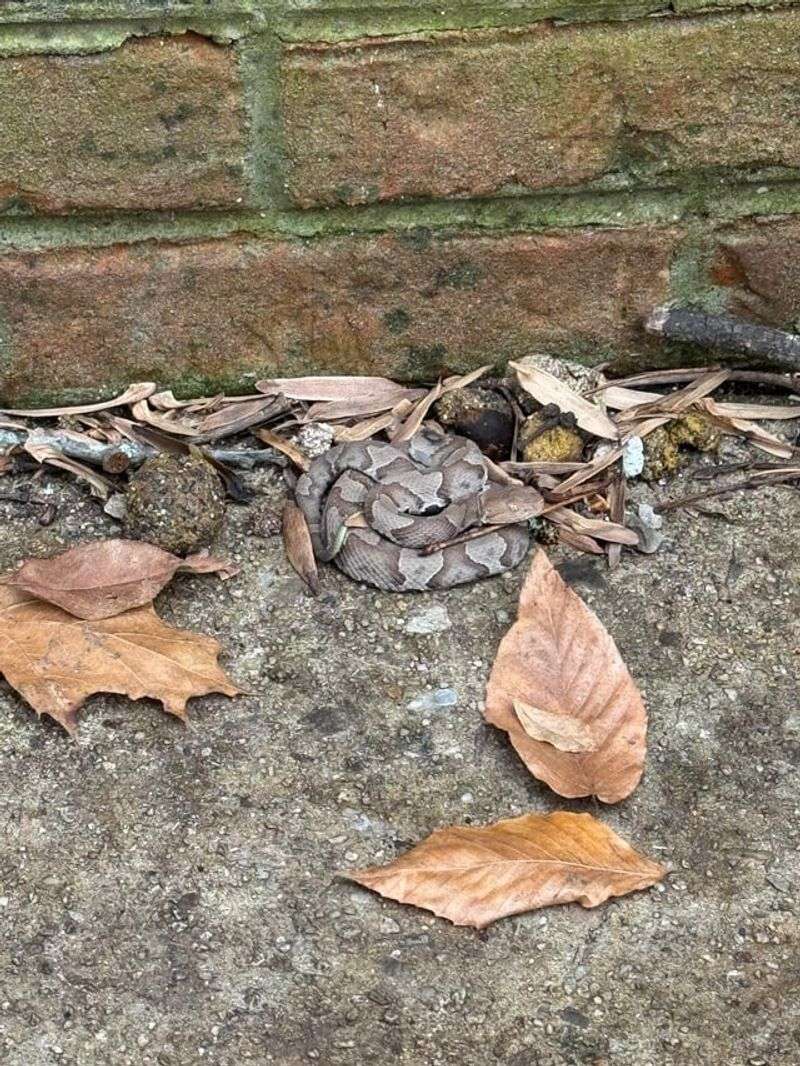
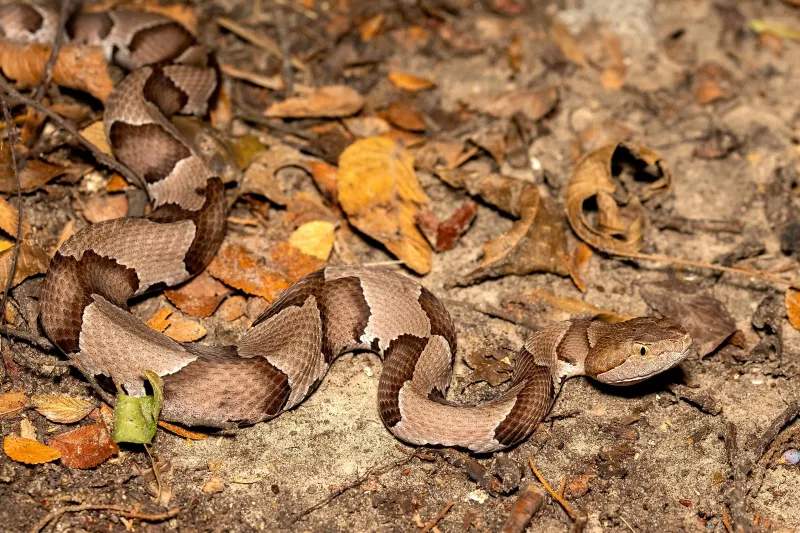
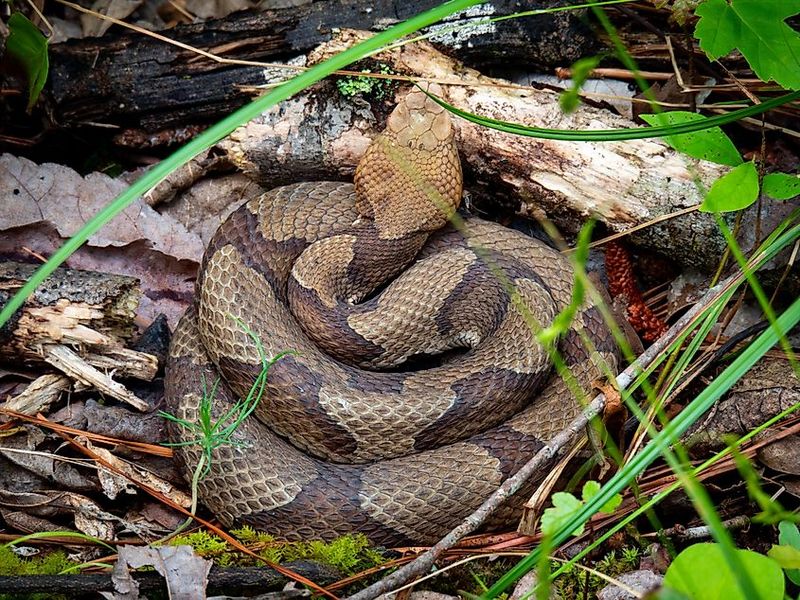
Nature designed copperheads for autumn. Their tan to pinkish base color, crossed with chestnut bands shaped like hourglasses, looks almost exactly like a carpet of fallen oak and hickory leaves.
I once spent a full minute staring at a leaf pile before realizing part of it was breathing. That’s how good their camouflage is, especially in November when the ground is buried in brown. To pick one out, look for the hourglass shape.
The bands are wide along the sides and pinched narrow along the spine, a bit like a row of Hershey’s Kisses viewed from the side. Copperheads also have a coppery, unmarked head and a fairly thick body for their length.
Plenty of harmless snakes get mistaken for copperheads. Juvenile black ratsnakes, northern watersnakes, and corn snakes all have blotchy patterns that confuse people. The hourglass bands are the clearest clue.
Since copperheads tend to freeze rather than flee, people often step close before noticing them. Many bites happen exactly this way, when someone reaches or steps into leaf litter without looking.
Make it a habit to scan before you reach. A long-handled rake or garden fork gives you a buffer zone when clearing leaves, and a flashlight helps if you’re working near shady beds late in the afternoon.
6. Wear Boots and Gloves When You Rake Leaves on Warm Days
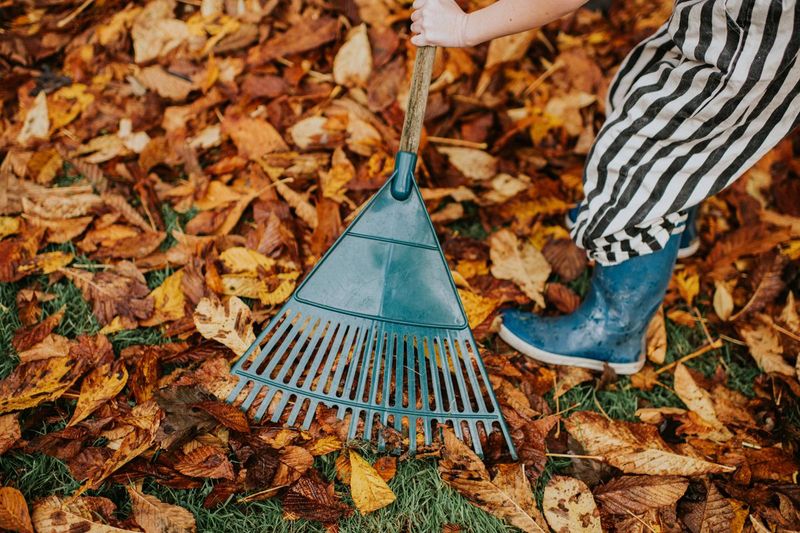
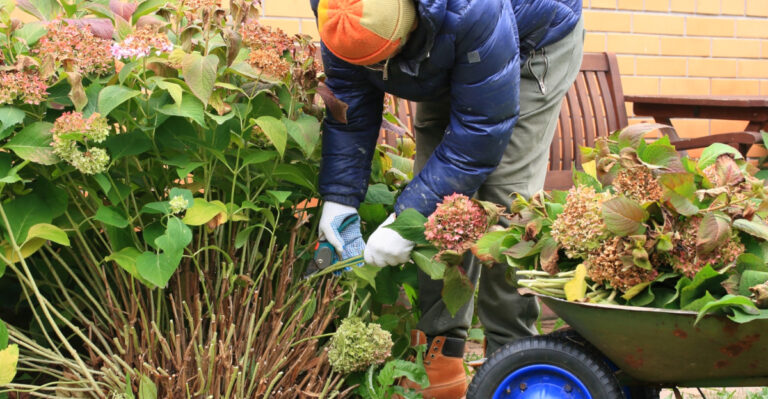
Fall chores pull us right into copperhead territory. Raking, pulling spent tomato vines, moving firewood, and tucking mulch around shrubs all put our hands and ankles near the places snakes hide.
My simple rule is this. If the afternoon feels warm enough for short sleeves, it’s warm enough for a basking snake, so I gear up accordingly.
Sturdy leather boots that cover the ankle are your best friend. Most copperhead bites land on the hands, feet, or lower legs, so long pants and thick work gloves add another layer of protection.
A few habits help too: Use a rake or stick to move leaf piles before grabbing them by hand. Lift boards, stones, and flowerpots by tipping them away from you, so anything underneath has an escape route that isn’t toward your fingers.
Watch where you sit. Stone walls and log edges look like great resting spots, but they’re also favorite basking spots.
Keep kids and pets in mind as well. Dogs are curious and often get bitten on the face or paws when they poke at a snake. Leashing your pup on warm fall walks near wooded edges is a smart move.
None of this means skipping your garden work. It just means approaching those cozy, cluttered corners with a little extra awareness.
7. What to Do If a Copperhead Bite Happens in the Garden

Copperheads cause more venomous snakebites in North Carolina than any other species. The reassuring part is that their venom is milder than a rattlesnake’s, and serious outcomes are rare with prompt medical care.
Even so, every bite deserves a trip to the hospital. Swelling, pain, and tissue damage can be significant, and doctors may decide antivenom is needed.
If a bite happens, stay calm and move away from the snake. Call 911 or Carolinas Poison Center at 1-800-222-1222 for guidance on the way to care.
Remove rings, watches, and tight clothing near the bite before swelling starts. Keep the bitten limb still and roughly level with your heart.
Skip the old movie tricks. Medical experts warn against cutting the wound, sucking out venom, using ice, or tying a tourniquet, since these steps can make injuries worse.
Don’t try to catch the snake or bring it along. A quick photo from a safe distance is plenty if you have one, but your safety matters far more than identification.
Pets need the same urgency. If your dog shows sudden swelling on the face or leg after sniffing around a woodpile, call your veterinarian or an emergency animal clinic right away.
Saving that poison center number in your phone today takes ten seconds and could help a lot later.
8. A Tidier Fall Yard Gives Copperheads Fewer Reasons to Linger
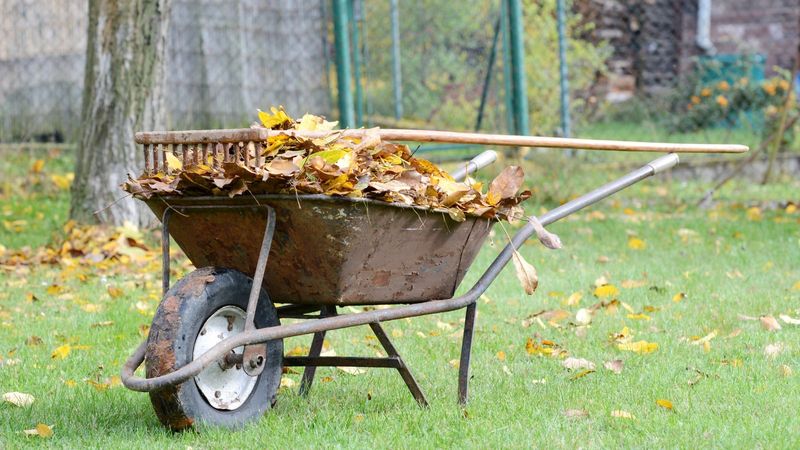
Copperheads go where the food and shelter are. Take away those two things, and your yard becomes a pass-through spot instead of a home base.
Start with the hiding places. Clear brush piles, scrap lumber, and old tarps, especially along fence lines and near the house. Keep grass trimmed short near walkways and patios so basking snakes have less cover.
Next, think about mice. Copperheads mostly eat rodents, along with frogs, lizards, and even cicadas in summer. Spilled birdseed, open trash cans, and pet food left outside can draw rodents, which then draw snakes.
Seal gaps around foundations, crawl space vents, and garage doors with hardware cloth or weatherstripping. A snake looking for winter shelter will happily slip through a half-inch opening.
You don’t have to rake every last leaf, though. Leaving some leaves in back beds helps pollinators and soil life, so just keep the cozy piles away from doors, paths, and play areas.
Skip the snake repellents and mothballs. Wildlife experts report little evidence they work, and mothballs used outdoors can harm soil and pets.
Copperheads also play a role in the yard by keeping rodent numbers down. If one shows up and you’d like it gone, a licensed wildlife control professional can relocate it safely. Otherwise, give it room, and it will likely retreat once the warm spell passes.