Signs of Boxwood Blight in North Carolina Gardens
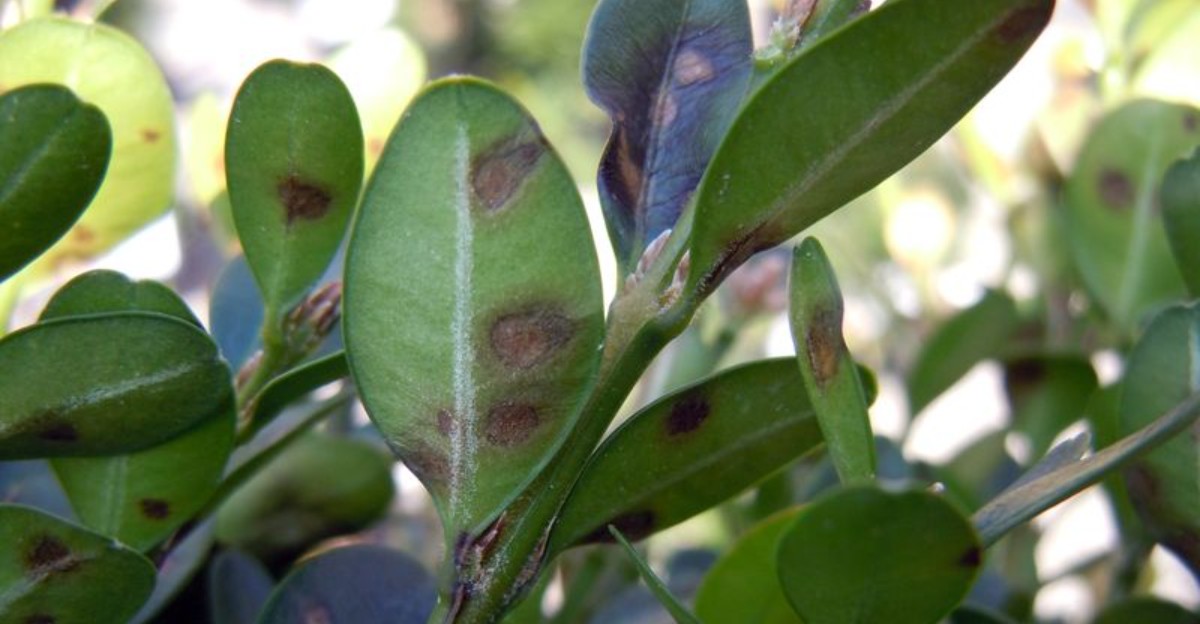
One of the first American cases of a sneaky shrub fungus showed up in a North Carolina nursery in 2011. Since then, it has hitched rides on nursery plants and muddy pruning shears into gardens across many states.
Its spores are sticky, so wind rarely carries them far, but splashing rain moves them around with ease. Even stranger, tiny resting structures can linger in fallen leaves for several years before sparking new trouble.
In my garden, those tidy evergreen hedges are the backbone that holds every flower bed together. I suspect losing one would feel like misplacing a favorite old sweater you wore for decades.
You may be surprised how quietly the trouble begins, often hiding low inside a shrub where almost nobody looks.
1. Dark Brown Leaf Spots With Darker Borders
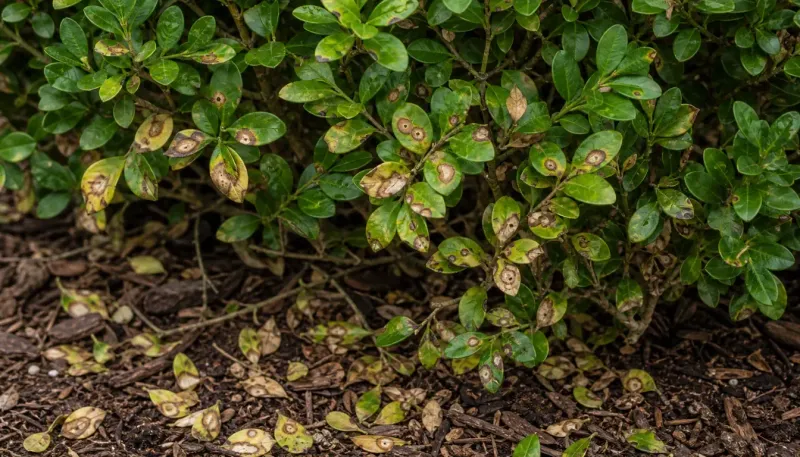
Tiny brown circles with darker rims look almost decorative, like someone stamped little targets across your boxwood leaves. I nearly missed them my first time looking, because they blend in with ordinary leaf flecks and scuffs.
Extension specialists describe these spots as light or dark brown, often circular, with a noticeably darker border around them. Over time the spots grow larger and merge, until a single leaf looks blotchy and tired.
The culprit is a fungus called Calonectria pseudonaviculata, which loves warm weather paired with long stretches of wet leaves. Research shows it grows best when temperatures sit roughly between the mid-60s and low 80s Fahrenheit.
That range describes plenty of muggy spring and early fall days across North Carolina, so keep your eyes open. A cheap hand lens makes the dark border much easier to see against the paler center.
Don’t confuse these marks with boxwood leafminer damage, which shows up as puffy blisters on the leaf underside instead. Volutella blight is another lookalike, but it usually brings salmon-pink spore pads rather than ringed brown spots.
When I spot suspicious circles, I snap a clear photo and bag a few leaves for closer study. Your county Extension office can help confirm what you found, which beats guessing and treating the wrong problem.
Leaf spots alone rarely prove anything, so treat them as an early nudge to look closer. Pair this clue with the stem and leaf drop signs ahead, and your diagnosis gets much stronger.
2. Boxwood Leaves Turning Straw Brown Fast
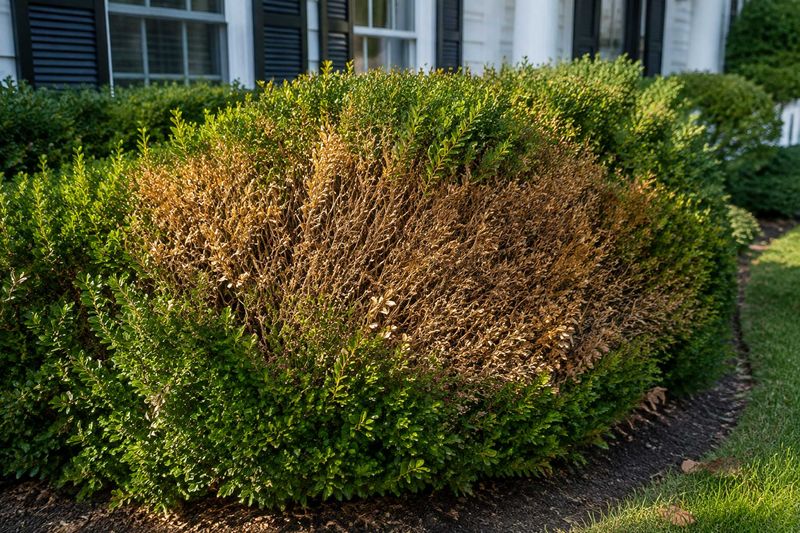
A boxwood that turns the color of old straw in a week feels like a magic trick nobody asked for. Infected leaves often shift from green to tan or brown quickly, sometimes across whole patches at once.
Speed is the real giveaway with this symptom, since many other boxwood troubles creep along much more slowly. Winter burn, for example, tends to bronze the sunny, wind-exposed side of a shrub after cold snaps.
Root rot from soggy clay soil can also brown a boxwood, but it usually starts with dull, yellowing foliage overall. Blight tends to brown individual leaves that then fall, while root problems leave the plant looking evenly sickly.
In my experience, walking around the whole shrub tells you more than staring at one sad branch. Note where the browning sits and how fast it spreads between your weekly visits to the shrub.
Dates matter too, so jot them on your phone calendar along with recent weather and rainfall totals. A burst of browning after several warm, rainy days fits the fungus pattern far better than drought stress.
Brown leaves from blight often feel papery and loose, and they tend to drop rather than cling for months. Leaves browned by winter burn, on the other hand, frequently stay attached until spring growth pushes them out.
Gently shake a branch over a white sheet of paper to see how readily the discolored leaves let go. A shower of brown leaves deserves a closer look at the stems, which we’ll cover shortly.
3. Boxwood Leaves Dropping From The Bottom Up
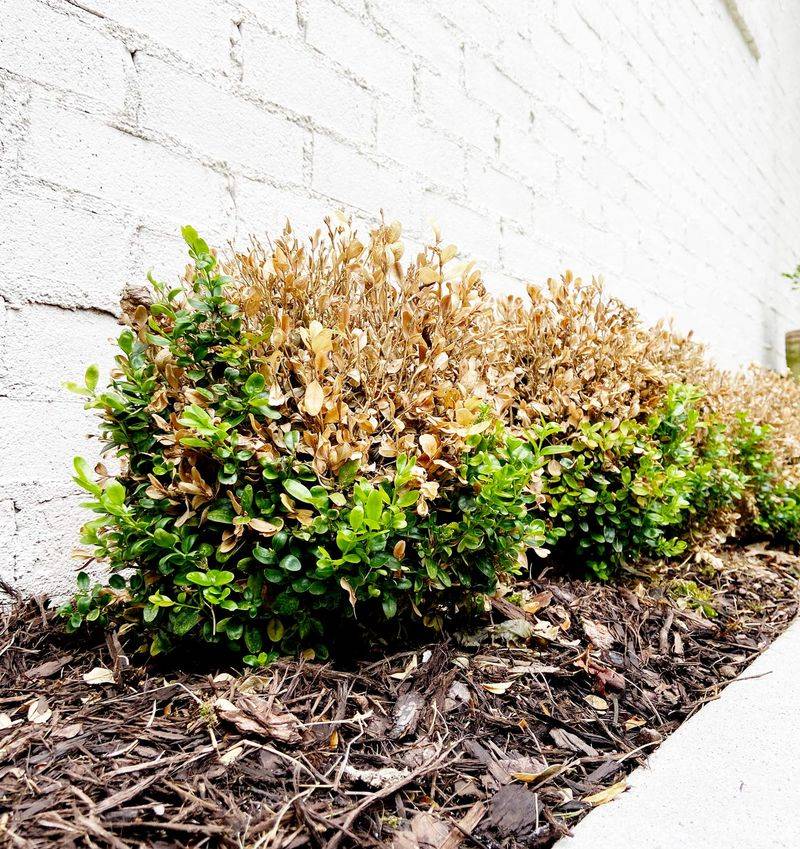
Few garden sights sting quite like finding a neat carpet of boxwood leaves where a full shrub stood last month. Rapid leaf drop is one of the signature symptoms extension experts list for this fungal disease.
Defoliation usually begins on the lower branches, then works its way upward through the plant over time. Under warm, humid conditions, a heavily infected shrub can lose much of its foliage within a few weeks.
That bottom-up pattern makes sense once you know how the spores travel around your garden beds. They are sticky and move mostly by splashing water, so raindrops bouncing off mulch hit low leaves first.
I like to crouch down and check under my hedges after a stormy stretch, flashlight in hand. Your knees may complain, but that low angle reveals thinning long before it shows from the sidewalk.
Those fallen leaves are more than a mess, because the fungus can survive in leaf litter for years. Researchers have found its tough resting structures can persist in debris for five years or longer.
Rake up fallen leaves carefully and seal them in plastic bags for the trash rather than the compost pile. Home compost rarely gets hot enough to reliably break down those durable fungal structures hiding inside.
Avoid blowing or raking infected debris into neighboring beds, since that simply hands the problem a new address. Clean your rake afterward too, because spores can cling to tools and garden shoes surprisingly well.
4. Black Streaks On Green Boxwood Stems
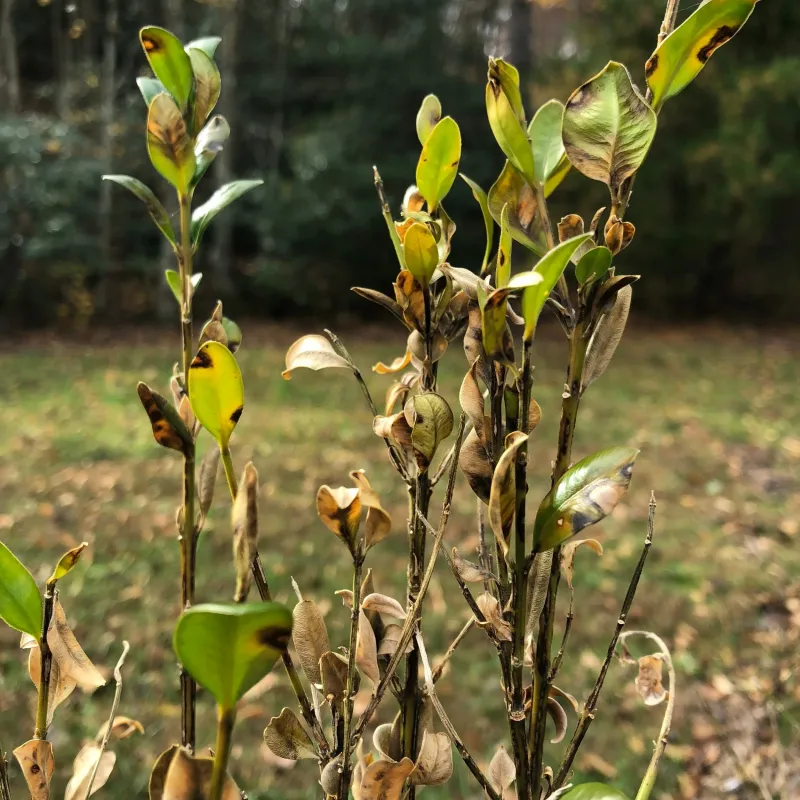
Of all the clues, those skinny black streaks on green stems are the one that makes plant pathologists nod knowingly. They look a bit like someone dragged a fine-tipped marker along the young twigs of your shrub.
Extension sources describe these as dark brown to black lesions, often narrow and elongated, sometimes forming diamond shapes. Very few other common boxwood problems create this particular marking, which is why it matters so much.
I find them easiest to spot by parting the outer leaves and looking toward the center. Bright sunlight helps, though a phone flashlight works fine on cloudy afternoons when shadows hide everything.
Stem lesions can be seen even when leaf symptoms are hard to find, which makes them handy year-round. Infected stems can also keep producing spores, so they are worth taking seriously in any season.
Be careful not to mistake natural bark changes on older wood for these streaks on younger growth. Healthy mature stems turn tan and woody, while blight lesions appear as distinct dark marks on green tissue.
If you find streaks, resist the urge to start pruning, since your shears could carry spores to healthy plants. Get a diagnosis first through the NC State Plant Disease and Insect Clinic or your local Extension agent.
When you do cut, disinfect blades between plants with a household disinfectant or diluted bleach solution. Pruning only during dry weather also helps, since wet leaves give spores a perfect ride to fresh wood.
5. White Fuzzy Spores Under Boxwood Leaves
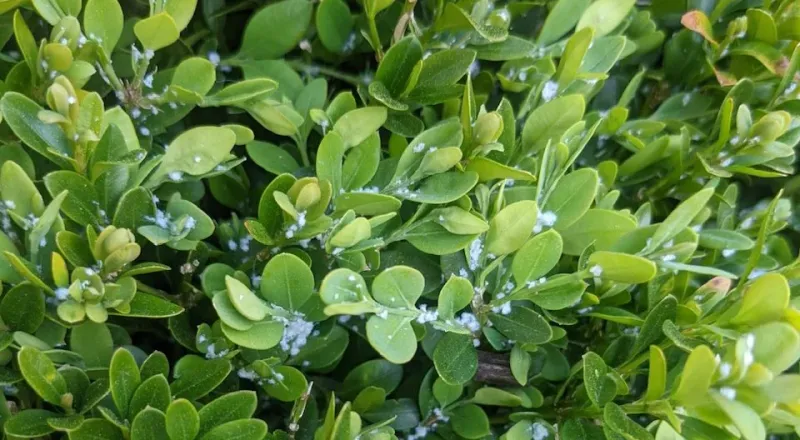
On a muggy morning, a flipped-over leaf might reveal fuzz that looks like a dusting of powdered sugar. Those white tufts are masses of spores, and they are a strong sign the fungus is actively reproducing right now.
Extension guides note that these spore masses mostly appear on leaf undersides during periods of high humidity. Dry spells can make them vanish, so missing them does not mean your shrub is in the clear.
I keep a small magnifying lens in my garden apron for moments exactly like this one. Ten times magnification turns a faint haze into clearly visible clusters, which makes reporting much easier.
Lab specialists sometimes use a simple trick, placing suspect leaves in a sealed bag with damp paper towel. After a few days in that humid pocket, infected leaves frequently grow the telltale white fuzz.
Pinkish or salmon-colored tufts point toward Volutella instead, which is a different and generally less aggressive disease. Color really matters here, so take photos in natural daylight rather than under a yellow porch bulb.
Handle suspicious leaves gently and wash your hands afterward, since sticky spores happily hitch rides on skin. Gloves you can toss or launder are a smart choice when checking several shrubs in one afternoon.
Spotting this fuzz feels unsettling, yet it gives you clear evidence to act on quickly and with confidence. Bring a bagged sample to your Extension office, and they can point you toward sensible next steps.
6. Trouble Starting Low Inside The Shrub
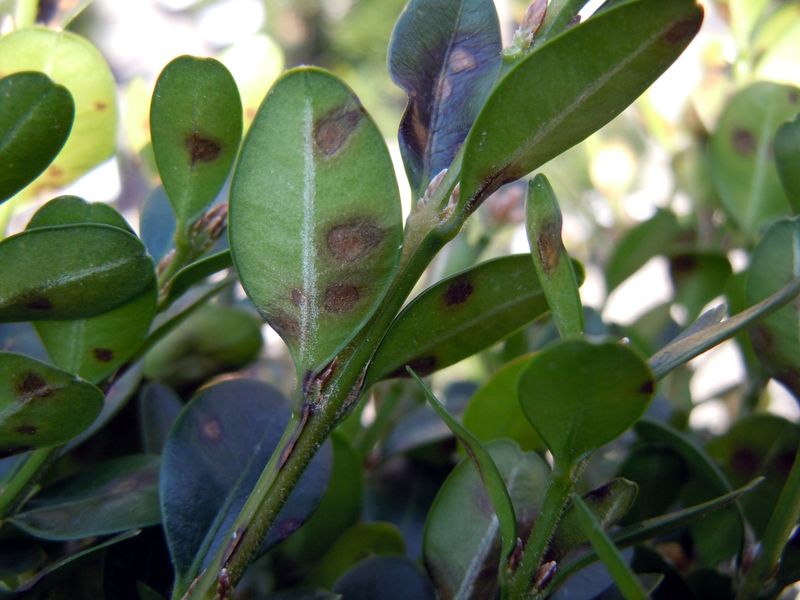
Boxwoods are basically tiny rainforests on the inside, with damp, shady pockets the morning sun barely reaches. Those sheltered spots near the ground are where blight symptoms often appear first, according to extension researchers.
Dense foliage traps moisture after rain or watering, giving spores the long wet period they need to infect. Meanwhile, the outer shell of leaves dries quickly and stays looking healthy for quite a while.
That sneaky combination explains why a hedge can seem perfectly fine from your kitchen window all summer. I learned to part the branches like curtains and peer inside, and now it is a weekly habit.
Overhead sprinklers make the problem worse, because they splash spores upward and keep leaves wet for hours. Switching to drip lines or soaker hoses waters the roots while leaving the foliage nice and dry.
If overhead watering is your only option, run it early in the morning so leaves dry by midday. Thinning crowded plantings and pruning for airflow also helps, especially during our long humid North Carolina summers.
Fresh mulch can act as a buffer, reducing the soil splash that launches spores onto low leaves. Some experts suggest a light layer around boxwoods, kept a few inches away from the main stems.
Spacing new shrubs farther apart than you think they need also keeps air moving between them. Your future self will appreciate that breathing room when a rainy week settles in over your garden beds.
7. Bare Boxwood Branches That Try To Regrow
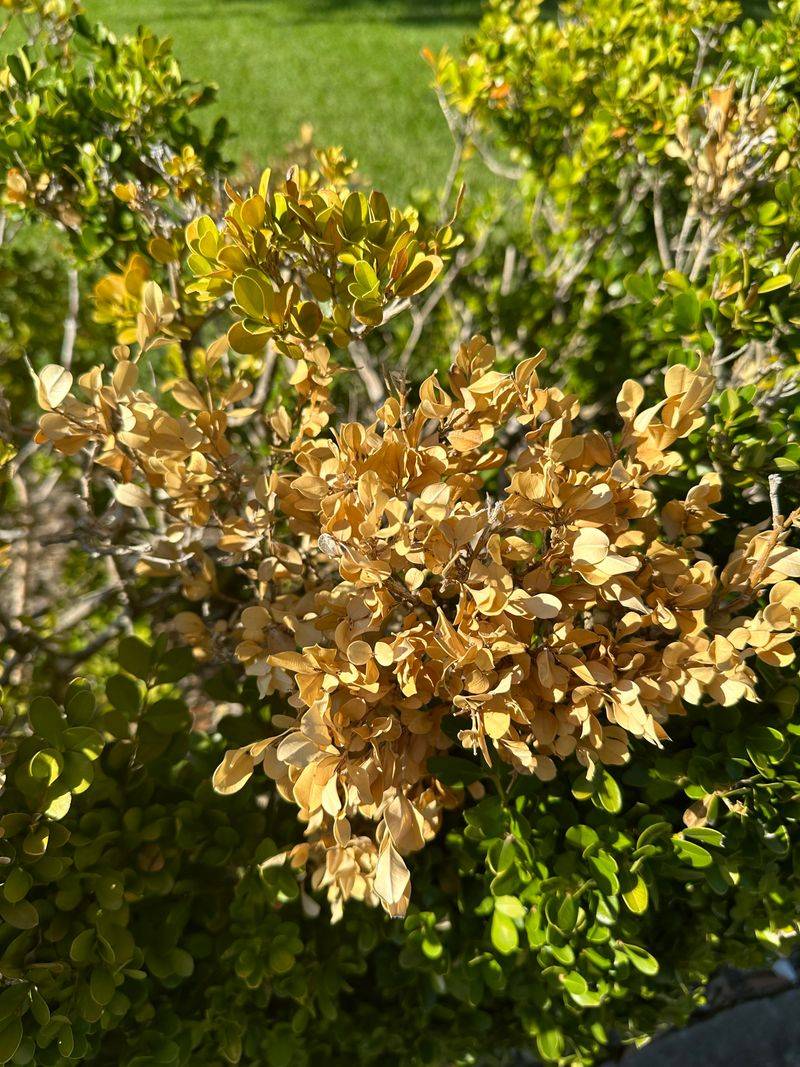
Strangely enough, a boxwood stripped bare by blight may push out fresh green leaves a few weeks later. That hopeful flush happens because the fungus attacks leaves and stems but leaves the roots underground alone.
Unfortunately, the new growth is often reinfected when warm, wet weather returns, starting the cycle again. Each round of leaf loss drains stored energy, and repeated rounds can leave a shrub badly weakened.
Young plants and small cuttings have fewer reserves, so they tend to decline much faster than mature hedges. Older shrubs can limp along for years, looking patchy and sparse where they once looked full and lush.
Honestly, I find this stage the hardest emotionally, because the plant keeps trying and you want to cheer. Sometimes the kindest choice is removing a badly infected shrub before it spreads spores to healthy neighbors.
Extension specialists recommend bagging the whole plant in plastic, including fallen leaves, and sending it off with household trash. Check local rules first, since some North Carolina towns handle yard waste pickup in their own way.
When replanting, consider boxwood cultivars bred for better blight tolerance, such as NewGen Independence or NewGen Freedom. Classic English boxwood, by contrast, ranks among the most susceptible types, so it deserves extra caution.
Swapping in a different evergreen, like native inkberry holly, is another option many gardeners find satisfying. Inkberry handles our moist acidic soils well and is not known to host the boxwood blight fungus.
8. Pachysandra And Sweetbox Carrying The Fungus
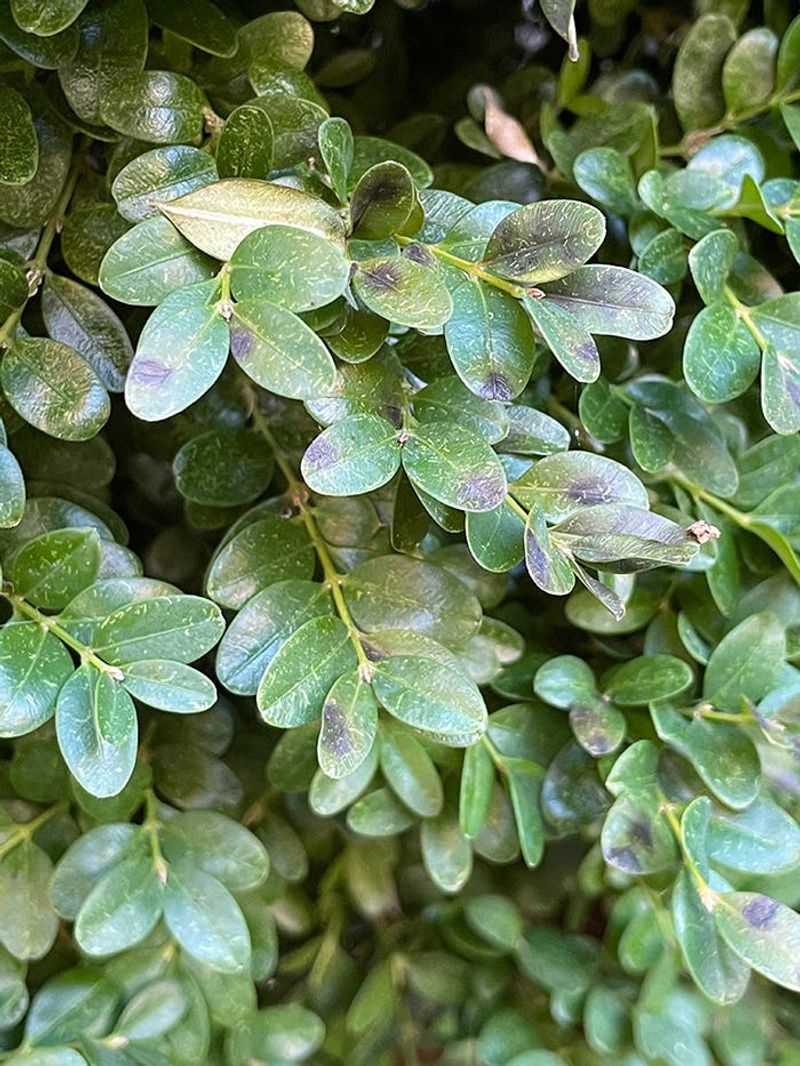
Your boxwood might not be the only plant in the yard quietly sharing this fungus with its relatives. Members of the same plant family, called Buxaceae, can also pick up the infection and pass it along.
Japanese pachysandra, the glossy groundcover beneath so many old foundation plantings, is a well-documented host of this disease.
Native Allegheny spurge and the fragrant winter-blooming sweetbox, Sarcococca, can carry it as well, according to plant pathologists.
On pachysandra, look for brown or dark leaf spots and blackish lesions creeping along the stems. Symptoms can be milder than on boxwood, so an infected patch may hide in plain sight for a while.
That quiet role matters, because a sick groundcover sitting under your hedge can keep splashing spores upward. I check my pachysandra edges every time I inspect the boxwoods, since they share the same damp corners.
Japanese pachysandra also spreads aggressively and can escape into woodlands, earning invasive listings in some eastern states. Pulling out an infected patch gives you a perfect excuse to replace it with something better behaved.
Buying new plants deserves caution too, because nursery stock has moved this fungus across states before. Ask suppliers whether they follow the national Boxwood Blight Cleanliness Program for boxwoods and their relatives.
Keep new arrivals in a separate spot for about a month and watch them closely before planting. That small dose of patience protects your existing hedges, and honestly, it feels like cheap insurance.