8 Tricks North Carolina Gardeners Use To Keep Zinnias Blooming Through Summer
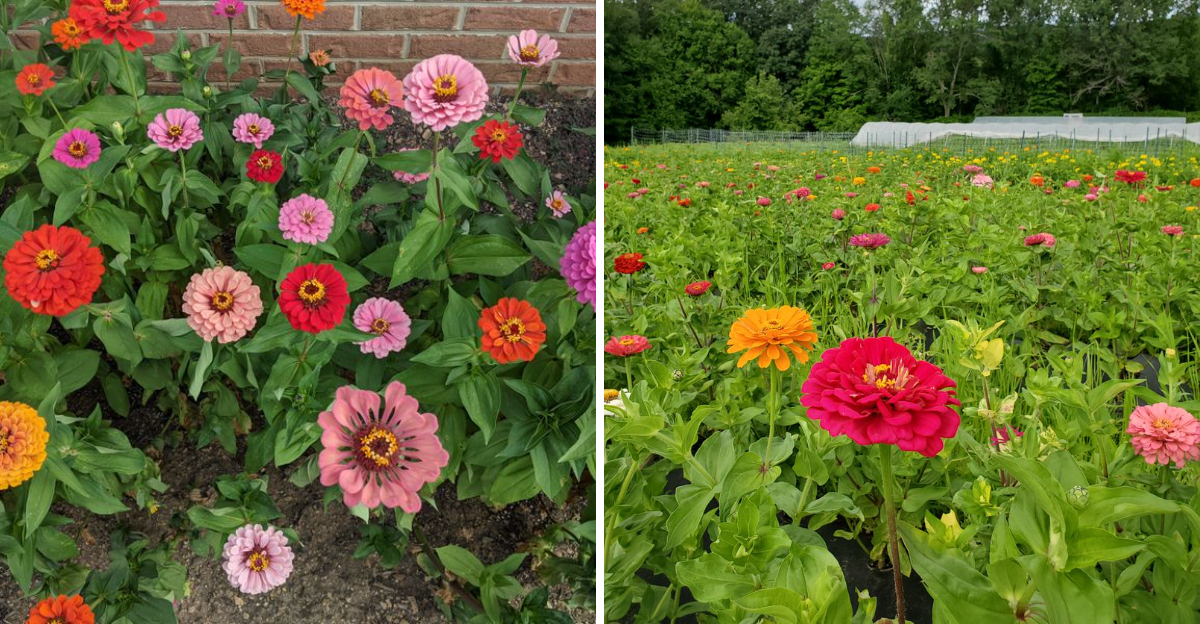
Two North Carolina gardeners plant zinnias the same week. Same seeds, same neighborhood, same summer heat.
By August, one of them has armloads of blooms going into vases every few days. The other has faded, spotted plants that stopped performing sometime in July and have been coasting on stubbornness ever since.
Same flowers. Completely different outcomes.
Zinnias have a reputation for being tough, and that reputation is mostly deserved. But North Carolina summers test everything.
The humidity alone creates conditions that turn minor planting oversights into season-long problems that no amount of remedial watering can fix.
Have you ever had a zinnia bed that looked great in June and disappointing by the middle of July?
The gap between a zinnia bed that peaks in August and one that quits in July almost always comes down to the same handful of habits.
Not exotic techniques. Not expensive products. Specific, repeatable decisions made consistently from planting day forward. Eight of them change what the bed looks like by September.
1. Plant Zinnias In Full Sun
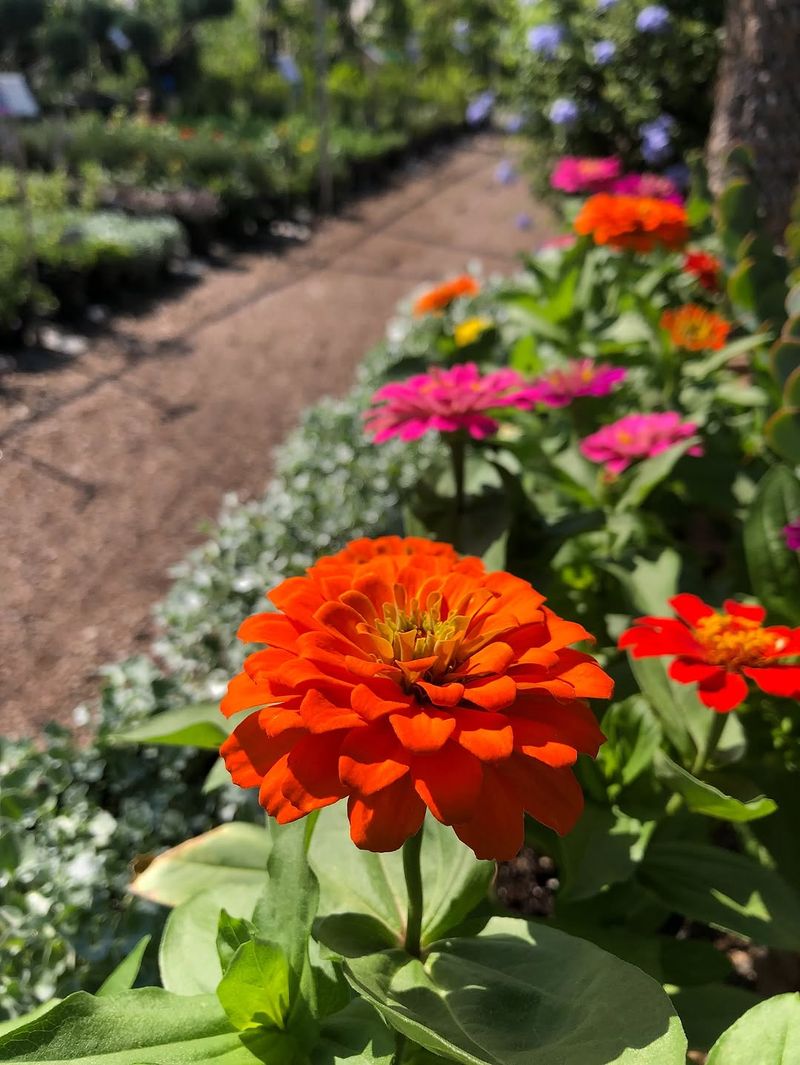
Sunlight is the engine behind every bloom a zinnia produces. Without enough of it, stems weaken, plants stretch toward whatever light they can find, and flower production slows before summer even peaks.
North Carolina offers long, generous summer days and zinnias are built to use every hour of them. A spot receiving ten hours of direct sun produces noticeably more blooms than one receiving six. That difference is visible and consistent, not marginal.
Shade creates a second problem beyond reduced flowering. When foliage stays shaded for part of the day, it stays damp longer after rain or dew.
In North Carolina’s humid climate, that lingering moisture is exactly the environment fungal diseases need to establish. A sun placement issue quietly becomes a disease pressure issue by midsummer.
Walk the yard at different times before deciding where to plant. The same spot looks different at nine in the morning, noon, and four in the afternoon. Look for where the sun hits hardest and longest across the whole day.
South-facing beds along fences or walls hold heat and direct light well into the evening. Positions near tall shrubs or under tree canopies that cast afternoon shade consistently underperform regardless of how well everything else is managed.
Getting sun placement right at the start is the foundation every other habit on this list builds on. Get this one wrong and nothing else fully compensates.
2. Choose Disease Resistant Varieties
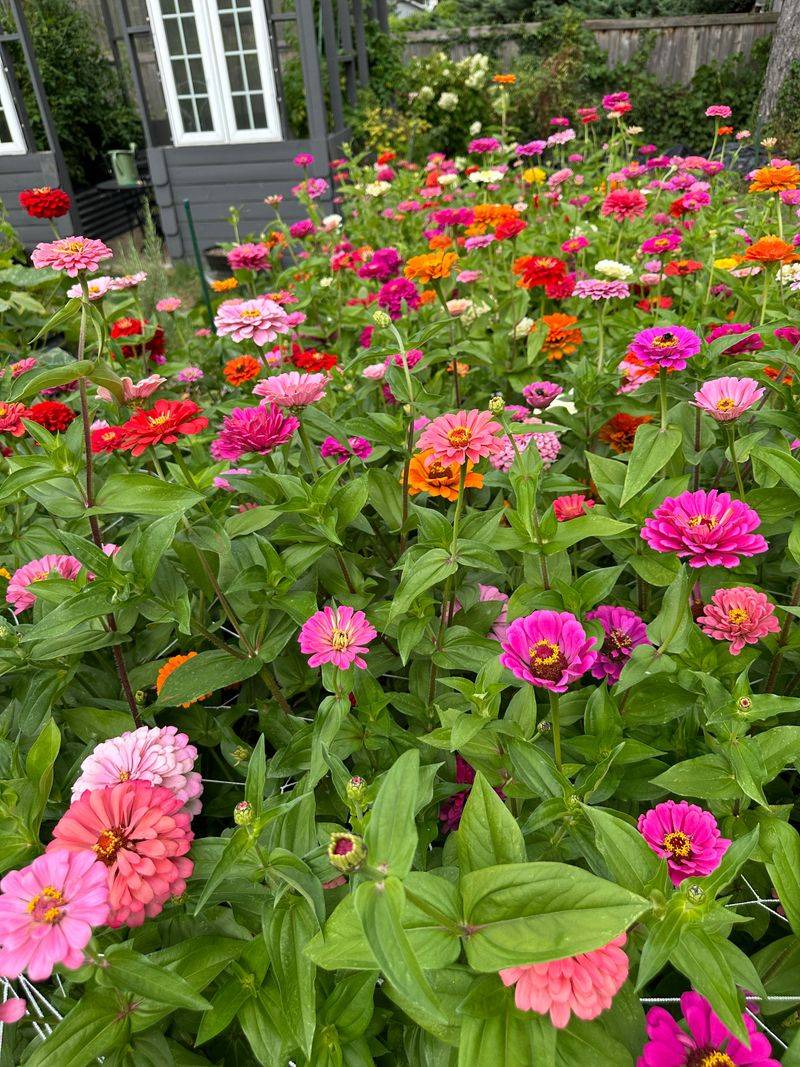
North Carolina summer humidity is not a background condition. From late June through August, warm nights and sticky air create conditions that certain zinnia varieties handle confidently and others struggle through visibly.
The variety decision happens before a single seed goes into the ground, and it determines how much work the rest of the season requires.
Benary’s Giant series and Profusion zinnias perform consistently well across the Carolinas. Profusion in particular was developed with disease resistance as a specific priority rather than an afterthought.
Plants stay cleaner, keep producing blooms, and hold their appearance through wet stretches that leave older varieties looking rough and spotted by comparison.
Your North Carolina Garden Changes Every Week. Your Plan Should Too.
Gardening in North Carolina changes quickly throughout the season. Every Friday you’ll receive a simple weekly plan showing exactly what to plant, prune, fertilize, harvest, and protect so you never miss the right timing.
Narrowleaf zinnias, sometimes called Mexican zinnias, add another strong option for humid regions. Their smaller leaf surface reduces the moisture buildup that feeds fungal growth.
They compensate for the smaller individual flower with sheer volume, often covered in blooms from early summer through first frost.
Reading the seed packet label before purchasing is worth the thirty seconds it takes. Phrases like disease tolerant or mildew resistant are meaningful descriptions, not marketing language.
Starting with genetics built for these conditions means less spraying, less frustration, and more time actually enjoying the bed rather than managing its problems.
The variety decision costs nothing extra. The wrong variety costs most of the summer.
3. Space Plants For Better Airflow
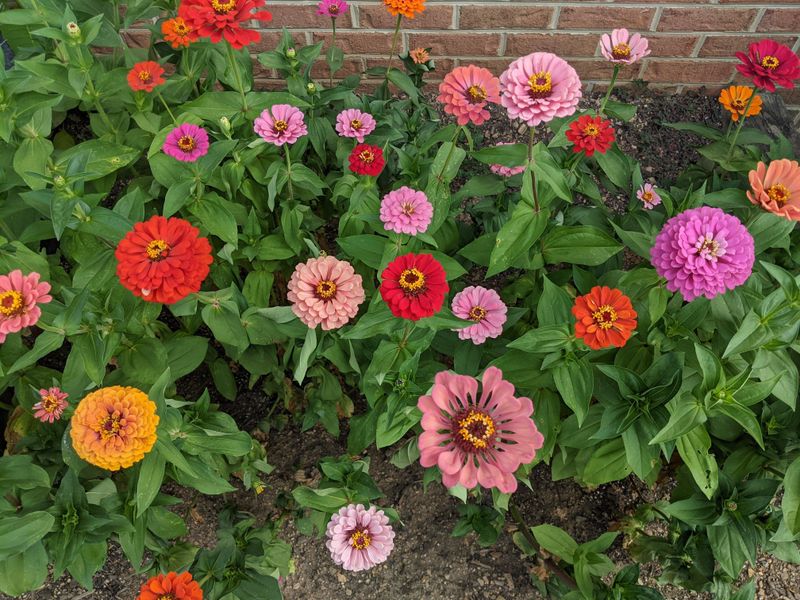
Crowded zinnias struggle in ways that are not always immediately obvious. The damage accumulates quietly through June and becomes visible by July when fungal spots appear on leaves and stems that were never given room to breathe.
Air movement between plants keeps foliage drier after rain and morning dew. In North Carolina summers, that drying time matters considerably.
Trapped moisture sitting on packed-in foliage is precisely the condition powdery mildew and other fungal problems require to establish.
Standard zinnia varieties perform best with around twelve inches between plants. Taller, larger-flowered types like Benary’s Giants benefit from eighteen inches.
That spacing feels generous when seedlings look small in late May. By July, those same plants are full-sized and the spacing reveals itself as necessary rather than excessive.
Adequate spacing does more than fight disease. Plants not competing with neighbors for light, water, and root space develop stronger stems, more consistent flower production, and better overall structure through the season.
Are your seedlings currently closer together than twelve inches? Thinning them now produces better results than leaving them crowded and managing the consequences later.
Direct-sown seeds need thinning once seedlings reach about three inches tall. It feels counterproductive to remove healthy seedlings. The plants left behind will demonstrate why that decision was correct within a few weeks.
Personal space is not a luxury for zinnias. It is load-bearing infrastructure for the whole summer.
4. Water Soil Instead Of Leaves
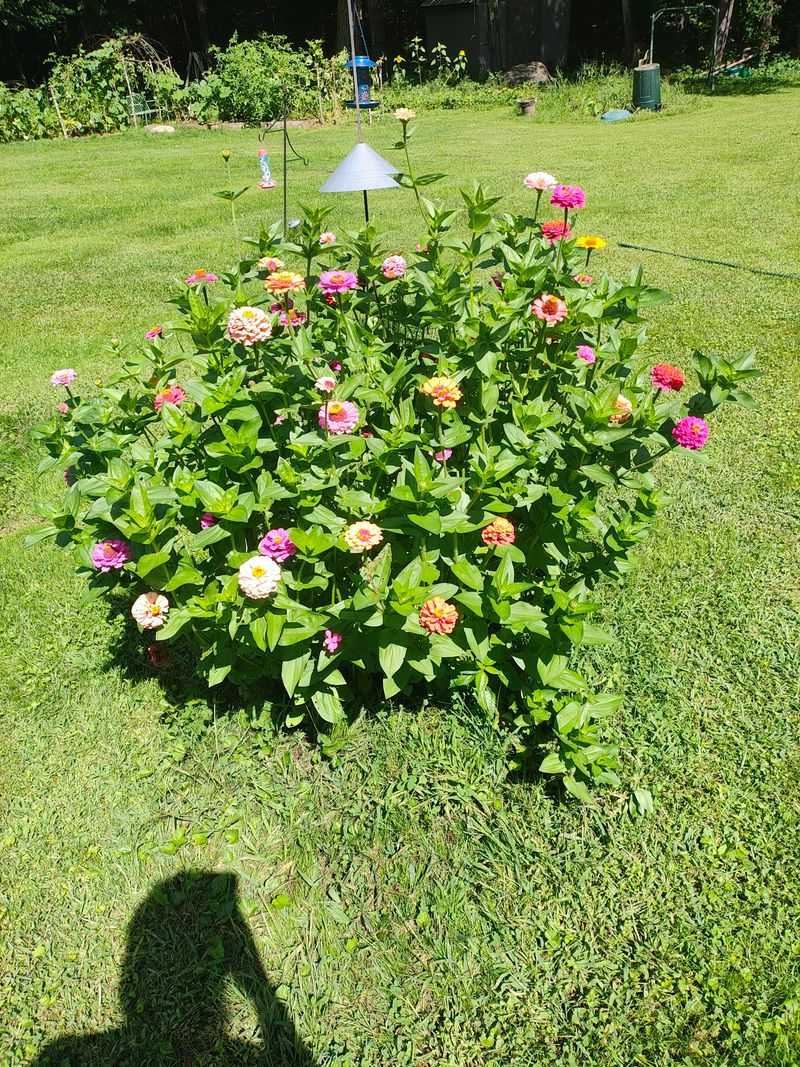
How water gets delivered to a zinnia bed matters as much as how frequently it arrives. Wet leaves in North Carolina’s humid climate are not a neutral condition.
They are an active invitation for the fungal problems that compromise zinnia performance through the second half of summer.
The fix is directing water to the root zone and keeping it away from foliage entirely.
Soaker hoses and drip irrigation handle this precisely. Water moves directly to where roots need it, and the rest of the plant stays dry.
Even a basic soaker hose arrangement through a bed changes how plants look by midsummer compared to overhead watering in the same conditions.
Overhead sprinklers are the least suitable option for zinnias in a humid climate. They wet the entire plant uniformly, and when used in the evening, that moisture sits on foliage overnight. Fungal spores require exactly that situation.
Morning watering is the right timing when overhead application is unavoidable. The full heat of the day dries foliage before evening arrives.
Zinnias handle moderate dry periods once established, but consistent moisture produces the best bloom output. About one inch of water per week, adjusted for rainfall, keeps plants productive without creating the saturated soil conditions that cause root problems.
Consistent, targeted watering is one of the least glamorous zinnia habits. It is also one of the ones that separates July bloomers from July strugglers most reliably.
5. Cut Blooms Before They Fade
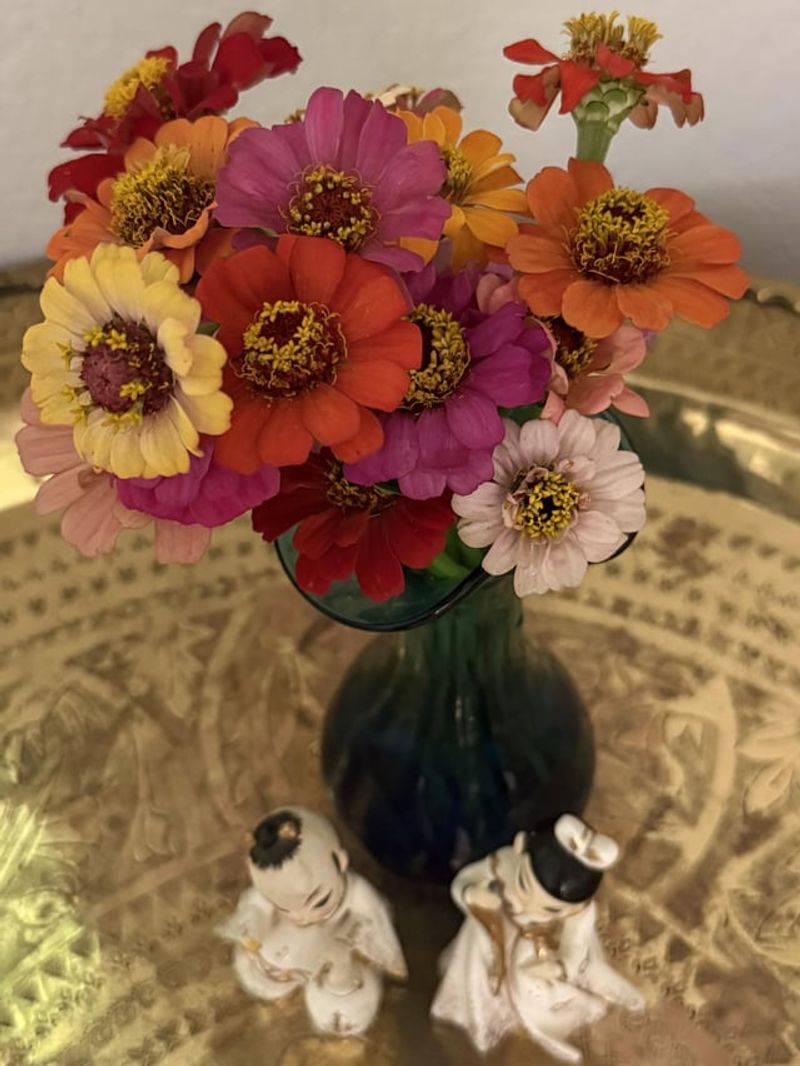
Zinnias operate on a biological directive: produce seeds and complete the reproductive cycle.
The moment a bloom matures fully and seeds begin developing, the plant interprets its primary job as largely finished and shifts energy accordingly.
Cutting blooms before that signal fires keeps the plant continuously convinced that it has not yet accomplished its goal.
The timing of the cut determines how effective this is. Cut flowers when they are at or just before peak rather than after petals begin to look papery or faded.
Look for blooms with tight centers and vivid petal color. Those are at the right stage for cutting and send the clearest signal for the plant to produce replacements.
Use clean, sharp scissors and cut stems long, going down to just above a set of leaves or a visible side shoot.
That cut point encourages branching below it, which creates additional flowering stems carrying the production potential into the rest of the season.
Cutting every two to three days maintains the continuous production signal more effectively than cutting once a week.
It also keeps the bed looking intentional and well-maintained rather than declining into a mix of fresh blooms and spent heads.
Bring the flowers inside. Share them with neighbors. Drop them at a local food bank if the volume gets ahead of you.
The plant does not mind. It will simply make more.
6. Remove Weak Growth Early
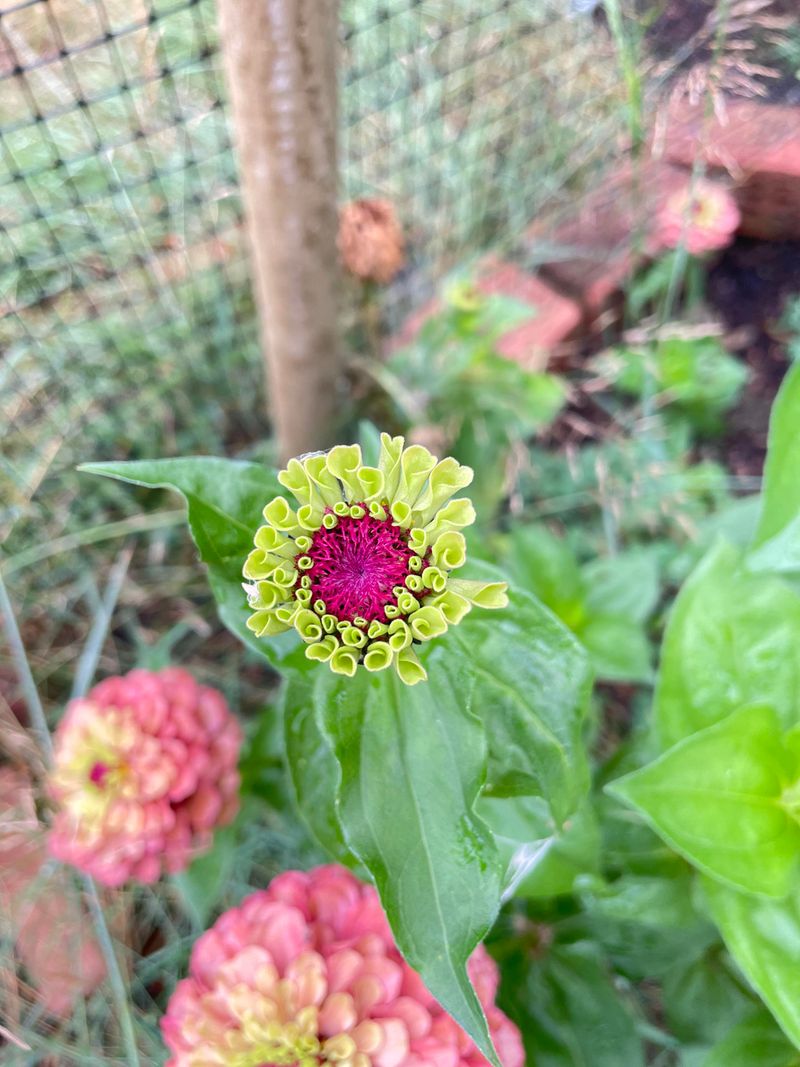
Every zinnia plant manages a daily energy budget. Stems that are thin, pale, crossing over others without productive purpose, or foliage showing early disease signs all draw from that budget without contributing to it.
Removing them redirects available resources toward the stems and blooms that are actually performing.
Walk through the zinnia bed weekly and assess what is present with honest eyes. Thin stems that produce small flowers and crowd the interior of the plant are candidates for removal.
Yellowing or spotted leaves should come off before whatever affected them spreads to adjacent tissue.
Spent flower heads are worth removing before seed development begins. Once a bloom has passed its prime and petals are loosening, the plant starts allocating energy toward seed production.
Removing spent heads before seeds develop extends the flowering period by keeping the plant oriented toward new bud production rather than reproduction completion.
Thinning the interior of a dense plant also improves airflow, which connects directly to the disease pressure management that North Carolina humidity makes necessary throughout summer.
The grooming process takes fifteen to twenty minutes per week for an average bed. The return on that time is weeks of additional bloom production that a neglected plant cannot sustain regardless of how good everything else looks.
A zinnia bed that gets regular attention in June and July looks significantly different from one that gets occasional attention in September.
There is no catching up. There is only staying current.
7. Feed Lightly For Steady Flowers
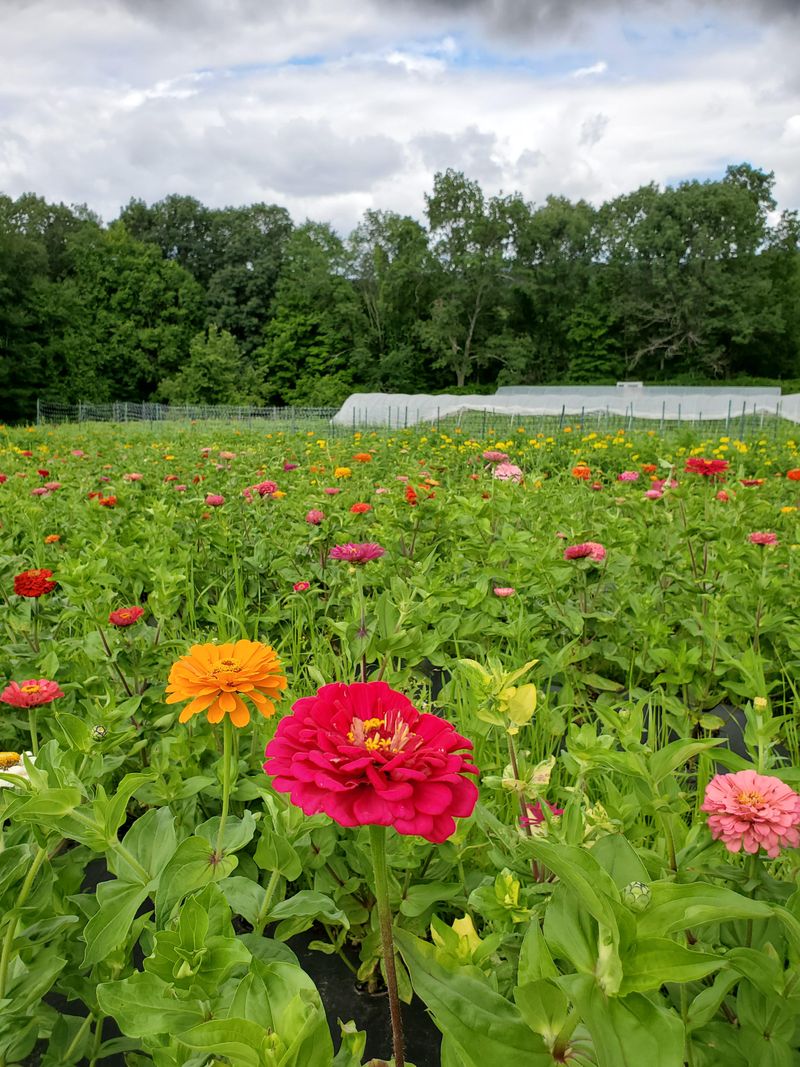
Zinnias and fertilizer have a specific relationship worth understanding before reaching for the highest-nitrogen product available.
Too much nitrogen pushes lush green foliage at the direct expense of flower production. Too little and plants run out of productive energy before summer ends.
The balance point is light, consistent feeding with a formula that supports both foliage health and flower output without overweighting either.
A balanced granular fertilizer with roughly equal nitrogen, phosphorus, and potassium numbers applied once monthly through the growing season gives plants steady nutrition without the surge response that heavy nitrogen feeding triggers.
A 10-10-10 formulation or similar suits this application well. Slow-release granular types feed gradually over several weeks, which reduces the reapplication burden considerably.
Liquid fertilizers applied at half strength every two to three weeks work equally well for gardeners who prefer that approach.
The dilution is not optional. Full-strength liquid applications push leafy growth in a direction that reduces bloom density.
Compost-amended soil reduces how much supplemental fertilizer zinnias actually need. Working finished compost into beds before planting provides a slow nutritional foundation that carries plants through a substantial portion of the season independently.
Mid-season top-dressing with compost keeps that foundation active without requiring additional purchased inputs.
The zinnia fed moderately and consistently outperforms the one fed heavily and irregularly by September almost without exception.
Moderation in fertilizer is not restraint. It is strategy.
8. Sow Fresh Seeds For Later Color
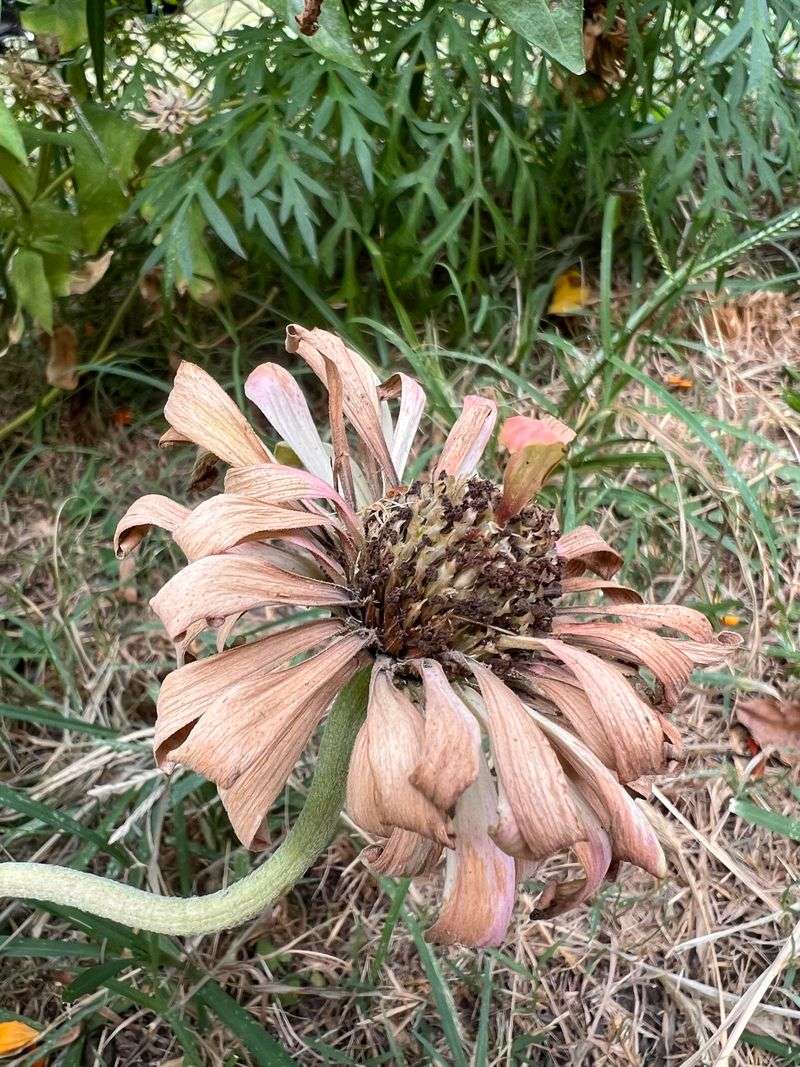
Planting zinnias once in spring and expecting continuous peak performance through September is optimistic in a way that North Carolina summers rarely honor.
A more reliable strategy involves staggering planting dates so fresh, vigorous plants are entering bloom just as earlier ones begin losing momentum.
Zinnias move from seed to first bloom in roughly fifty to sixty days under warm conditions. Seeds sown in late June or early July produce flowering plants by late August and September.
Staggering plantings by four to six weeks creates a continuous production pipeline rather than a single peak followed by gradual decline.
Direct sowing works well in warm summer soil. Scatter seeds, cover lightly with about a quarter inch of soil, water gently, and maintain consistent moisture until seedlings emerge.
Germination typically arrives within a week during warm weather. Thin to proper spacing once seedlings reach a few inches tall.
Fast-maturing varieties suit succession sowings particularly well. Profusion and Zahara series zinnias are compact, quick to bloom, and handle late-summer heat in North Carolina without significant performance loss.
The investment per succession sowing is a seed packet and twenty minutes of effort.
The return is a zinnia bed that looks genuinely better in September than it did in July, which is not something most gardeners expect is possible until they try it once. After that, it becomes the only approach that makes sense.