A Long-Absent Alabama Animal Is Turning Up In Backyards Again
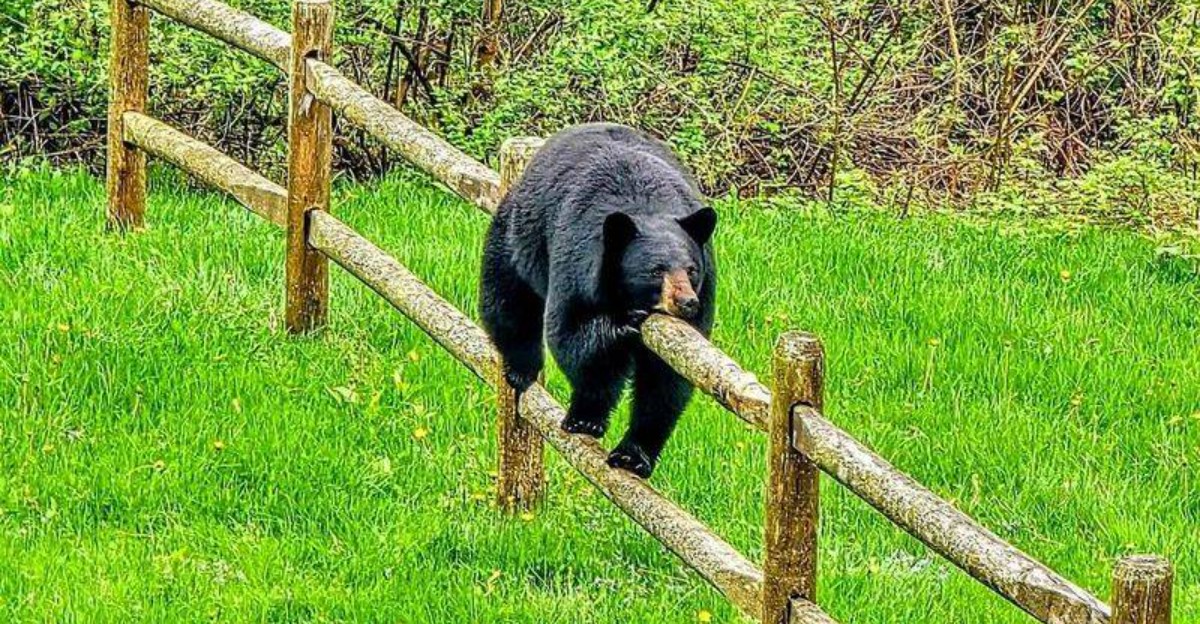
Something enormous is slowly moving through your neighborhood after dark. Paw prints wider than your palm turn up near fences. Alabama neighbors keep finding tipped cans and bent feeders.
Grandparents once told you stories about this shy creature. Now your doorbell camera might catch it crossing the driveway. Warm nights and restless appetites pull it toward your porch.
Pecans and persimmons ripen while hunger pushes toward you. Creek bottoms and tall pine stands hide more movement than you’d guess. Even your subdivision isn’t spared from these late visits.
Trash left uncovered becomes an open invitation for you. Understanding this visitor changes how you protect your property. Fear won’t help you, but knowledge will.
You live closer to this animal than you think, especially across Alabama. Sightings keep multiplying because autumn pushes hungry animals toward you. What happens next explains why your quiet street may already be under close watch tonight.
Alabama’s Largest Land Mammal Is Back In Town
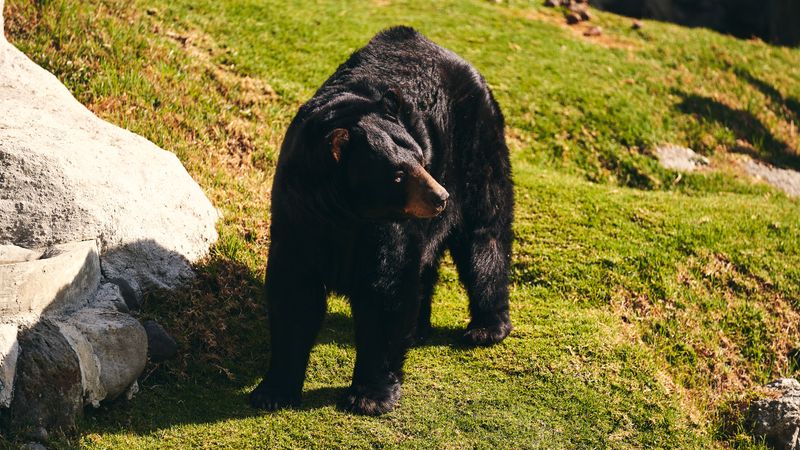
Picture a shaggy, barrel-shaped animal that can weigh as much as a refrigerator yet moves through brush without a sound. That is the American black bear, Alabama’s largest native land mammal.
Once common across the state, black bears faded from much of Alabama after heavy logging and unregulated hunting shrank their habitat. By the middle of the last century, only a small pocket remained, mostly in Mobile and Washington counties.
Wildlife biologists call that remnant group the Mobile River Basin bears, and it hung on quietly for generations. Genetic studies suggest those bears are among the more distinct black bear populations in the Southeast.
Today, sightings stretch into north Alabama counties like DeKalb, Jackson, Cherokee, and Madison. Many of those bears wandered south from Georgia and Tennessee, following ridgelines and river corridors.
Color can confuse people. Alabama black bears are usually true black with a tan muzzle, and some carry a white chest patch shaped like a blaze.
Adults typically run 150 to 350 pounds, though a heavy male in fall can push higher. Females are noticeably smaller and often travel with cubs.
Despite their size, these animals are naturally cautious and prefer avoiding people. Their diet leans heavily on plants, including berries, acorns, grasses, and insects.
Fun fact: black bears can move quickly over short distances and climb trees with surprising speed despite their size. Knowing your neighbor helps you react calmly instead of panicking.
Why September Brings Bears Closer To Porches
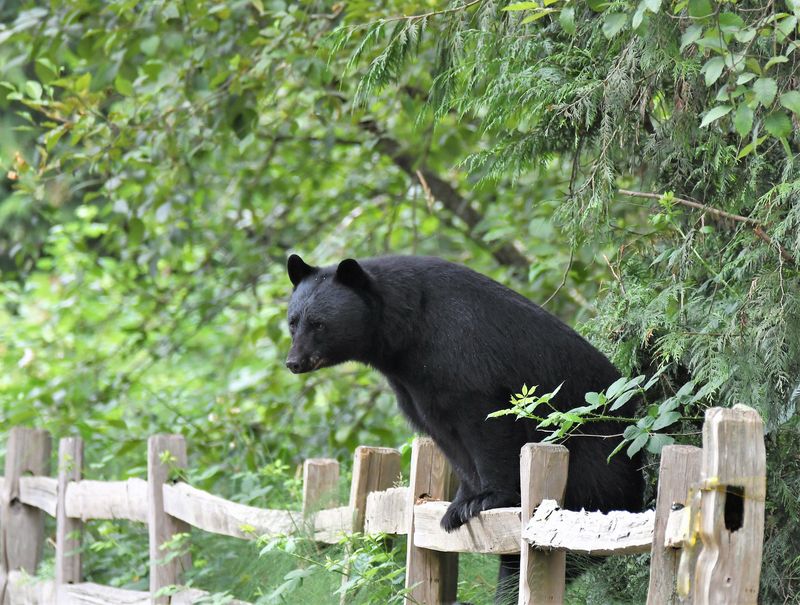
Early fall flips a switch in a bear’s brain. Biologists call it hyperphagia, a stretch of weeks when bears eat almost around the clock to build fat before winter denning.
During that period, a bear may take in a dramatically higher number of calories than usual. Acorns, hickory nuts, muscadines, persimmons, and pecans become the main menu across Alabama.
When the natural crop is thin, hungry bears widen their search. A neighborhood with fruit trees, garbage, and pet bowls becomes a reliable, ongoing food source.
Your Alabama Garden Changes Every Week. Your Plan Should Too.
Gardening in Alabama changes quickly throughout the season. Every Friday you’ll receive a simple weekly plan showing exactly what to plant, prune, fertilize, harvest, and protect so you never miss the right timing.
September also overlaps with young male dispersal. Two-year-old bears leave their mother’s territory and go looking for new ground, sometimes traveling long distances.
Those teenage wanderers cause a big share of backyard reports. They are inexperienced, bold, and unusually curious about anything that smells like food.
Add drought years, and the picture sharpens. Dry summers reduce berry production, which sends bears down from ridges into creek bottoms and yards where water and food still exist.
Practical move for this month: bring feeders in until winter, pick up fallen fruit and nuts a few times a week, and store garbage indoors until pickup morning.
Grills deserve attention too. Burning off the grate for ten minutes and wiping the grease tray removes a scent trail that carries surprisingly far.
A bear that finds no reward usually keeps moving within a night or two. Consistency from the whole street works better than one careful household.
How To Recognize Bear Signs Around Your Property
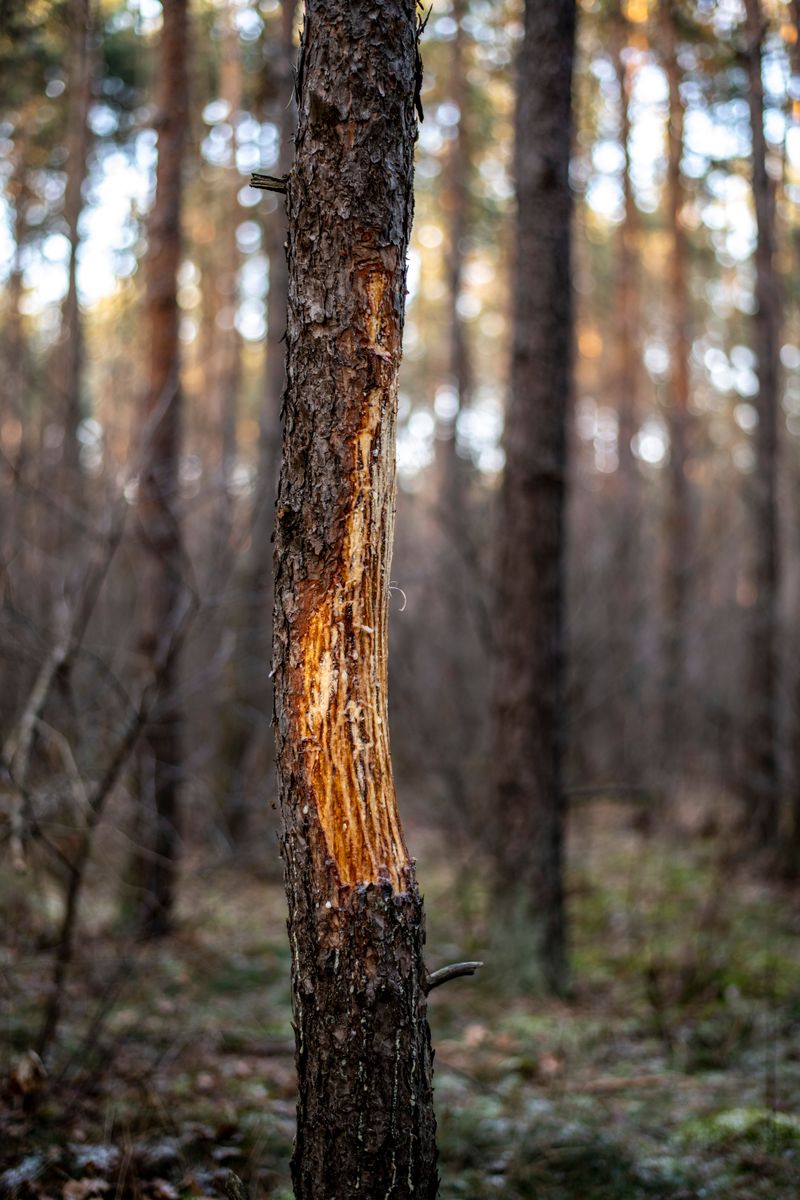
You will often find evidence before you find the animal. Bears leave clear calling cards, and learning them turns guesswork into confidence.
Front tracks look short and wide, roughly the size of a human palm, almost like a small human handprint with claw dots above the toes. Hind tracks are longer and narrower, resembling a barefoot human print.
Scat is another giveaway. It is tubular, several inches long, and usually stuffed with seeds, berry skins, corn hulls, or insect parts.
Check trees along property lines and trail edges. Bears rub their backs on rough bark and bite or claw at trunks, leaving vertical scrapes and tufts of black hair stuck in the sap.
Damaged bird feeders tell a story too. A raccoon nibbles and spills, while a bear bends the pole, snaps the hook, or carries the whole feeder into the woods.
Trash cans offer clues as well. Puncture holes from canine teeth in a thick plastic lid point strongly toward a bear rather than a dog or coyote.
Snap a photo with something for scale, like a phone or a dollar bill, before the print dries out. Clear images help wildlife officers confirm what visited.
Report sightings to the Alabama Division of Wildlife and Freshwater Fisheries through their online bear sighting form. Their data helps biologists map this expanding population.
The Backyard Magnet Checklist

Wildlife managers across the Southeast generally agree: a bear in your yard is usually a bear that found something to eat there. Remove the reward and the visits fade.
Garbage tops the list. Store cans in a garage or shed, and roll them out the morning of pickup instead of the night before.
Bear-resistant containers exist and work well in hot spots. Some communities also use simple bungee locking systems that cost very little.
Bird feeders are the second big draw. Seed and suet are calorie bombs, and a single hanging feeder can pull a bear from a half mile away.
Pet food belongs indoors. Feeding dogs or outdoor cats on the porch creates a nightly scent invitation that lasts for weeks.
Grills need a quick routine after cooking. Burn the grate clean, empty the grease cup, and roll the grill closer to the house.
Compost piles with meat scraps or melon rinds send strong signals. Stick to yard clippings, or use an enclosed tumbler well away from the door.
Fruit and nut trees deserve a rake. Fallen pears, figs, and pecans ferment and smell sweet, which is exactly the aroma bears track.
Chicken coops and beehives benefit from electric fencing. A properly grounded two-strand setup keeps curious noses at a respectful distance.
Talk to neighbors, because one messy carport can undo an entire street’s effort. Shared habits produce far better results than solo attempts.
Staying Calm When A Bear Shows Up
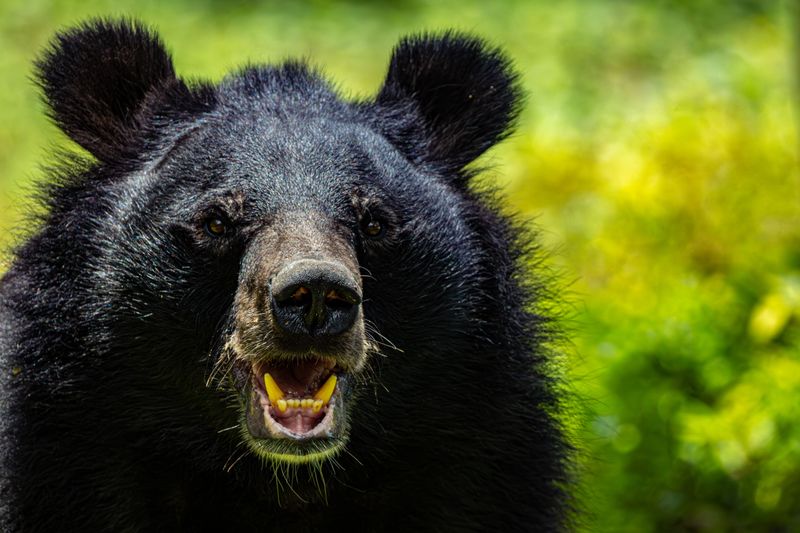
Imagine stepping onto the deck with coffee and spotting a big black shape near the fence. Your heart jumps, and what you do next matters more than how fast you move.
Stop and stay upright. Bears read posture, and a standing human looks large and unfamiliar. Do not run. Running can trigger a chase instinct, and no person outruns a bear over open ground.
Give the animal a clear exit. Back away slowly toward a door or vehicle while keeping the bear in sight.
Talk in a firm, steady voice so it knows you are human. Many bears leave the moment they realize a person is present.
Make yourself bigger if it lingers. Raise your arms, open a jacket, and clap or bang a pot from a safe spot.
Bring pets inside immediately. A barking dog off leash is one of the most common triggers for a tense encounter.
A bear standing on its hind legs is usually sniffing and looking, not threatening. Huffing, jaw popping, and swatting the ground mean you are too close, so increase distance.
If a black bear ever makes contact, fight back aggressively with anything available, aiming for the face and nose. Playing still is advice for a different species entirely.
Keep bear spray on the porch during active months and know how to use it. Incidents in Alabama are rare, and calm behavior further reduces the risk.
Where Alabama Bears Are Popping Up Now
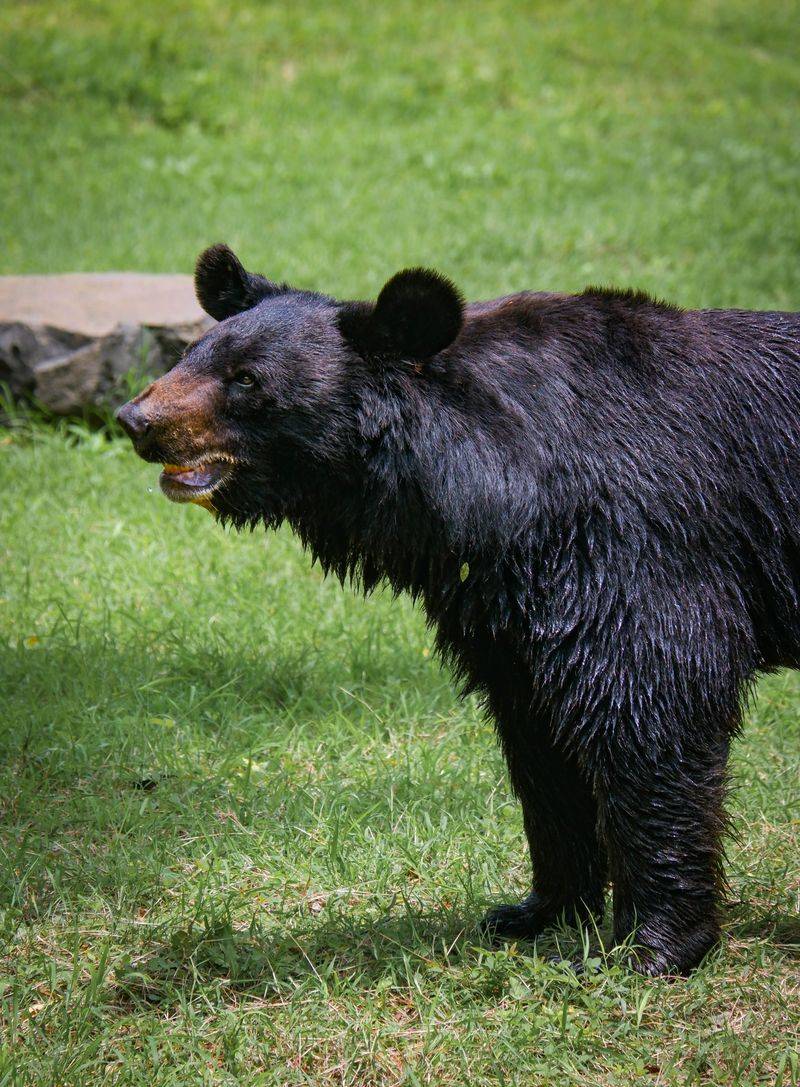
Three separate stories are unfolding in Alabama, one in the southwest, one near the Florida border, and one in the north.
Down in the southwest, the Mobile River Basin population has held on in swampy bottomlands of Mobile, Washington, and Clarke counties. A separate population near the Florida border spans Baldwin, Covington, and Escambia counties.
Up north, bears from northwest Georgia began moving across the line in recent decades. Cherokee, DeKalb, and Jackson counties now support a small breeding population, with cubs documented in the wild.
Statewide estimates remain modest compared to historical population levels. Even so, the trend points upward.
Sightings have also been logged in nearly every county statewide, including Madison, Marshall, Etowah, Blount, St. Clair, Tuscaloosa, and suburbs near Birmingham and Huntsville.
Rivers and ridgelines act as highways. The Tennessee River corridor, Lookout Mountain, and Sand Mountain funnel bears through areas people assume are too developed.
Black bears are protected in Alabama, and there is no open hunting season. Harming one carries serious legal penalties.
Report what you see through the state’s bear sighting page or by contacting a district wildlife office. Photos with dates and locations make the record stronger.
Think of these sightings as a conservation success with homework attached. Alabama gets its bears back, and residents get to practice being thoughtful neighbors.
According to WFF officials, there has never been a recorded black bear incident involving a human in Alabama.