A Long-Lost Tree Is Slowly Returning And Your New Jersey Yard Could Be Part Of The Story
In 1904, a forester at the Bronx Zoo noticed odd orange cankers on a few big trees. That tiny warning sign grew into one of the biggest plant disasters in American history.
Within about 50 years, billions of towering trees across the East had collapsed, from the hills of New Jersey to the ridges of Georgia.
I am still amazed that their roots kept going underground. Stubby sprouts still pop up in New Jersey woods, often reaching shrub size before the same fungus knocks them back.
You might have walked right past one on a hiking trail. Scientists, park crews, and backyard growers have spent decades plotting a comeback.
Their tools include patient breeding, careful pollen collecting, and plain old shovels. Some of the new trees are already dropping spiny burrs full of sweet nuts.
A piece of that history can grow in your own backyard, and it is far more doable than I ever expected.
The Towering Chestnut That Ruled Eastern Forests Is Still Hiding in the Woods
An old saying claimed a squirrel could travel from Maine to Georgia hopping only on chestnut branches. That story stretches the truth, but the trees really were giants.
Some topped 100 feet tall and measured up to 10 feet across. Then chestnut blight arrived. The fungus, Cryphonectria parasitica, came from Asia on imported trees and was first spotted in New York City in 1904.
It slips into cracks in the bark and forms cankers that circle the trunk, cutting off the flow of water and food.
By 1950, mature American chestnuts had mostly disappeared from eastern forests. Experts estimate billions of trees were lost.
The twist is that the fungus targets bark, not roots. Many old root systems survived and kept sending up fresh shoots. Those sprouts often grow for years before blight girdles them, and then the roots try again.
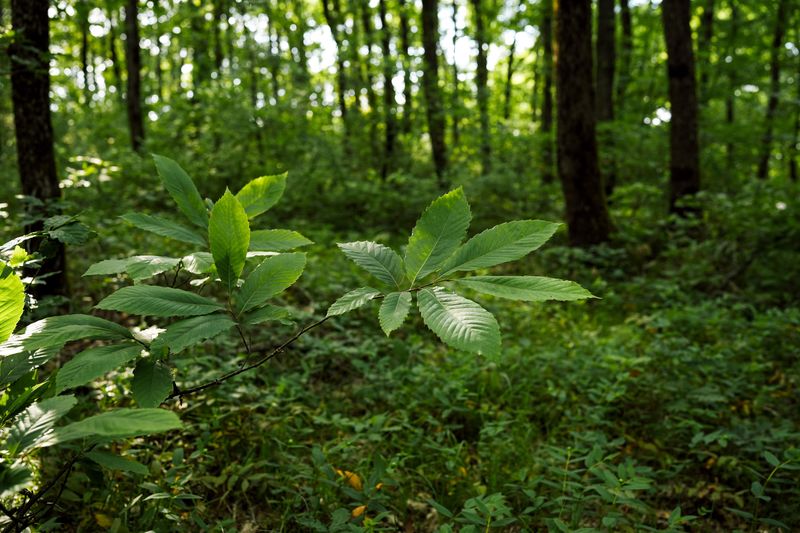
You can spot them by their long, narrow leaves with sharp, hooked teeth along the edges. They show up often in dry, rocky woods across the northern half of the state.
Finding one feels a bit like meeting a living fossil. That stubborn survival is a big reason scientists believe a real comeback is possible.
Chestnut Seedlings Need Full Sun and Soil That Drains Fast
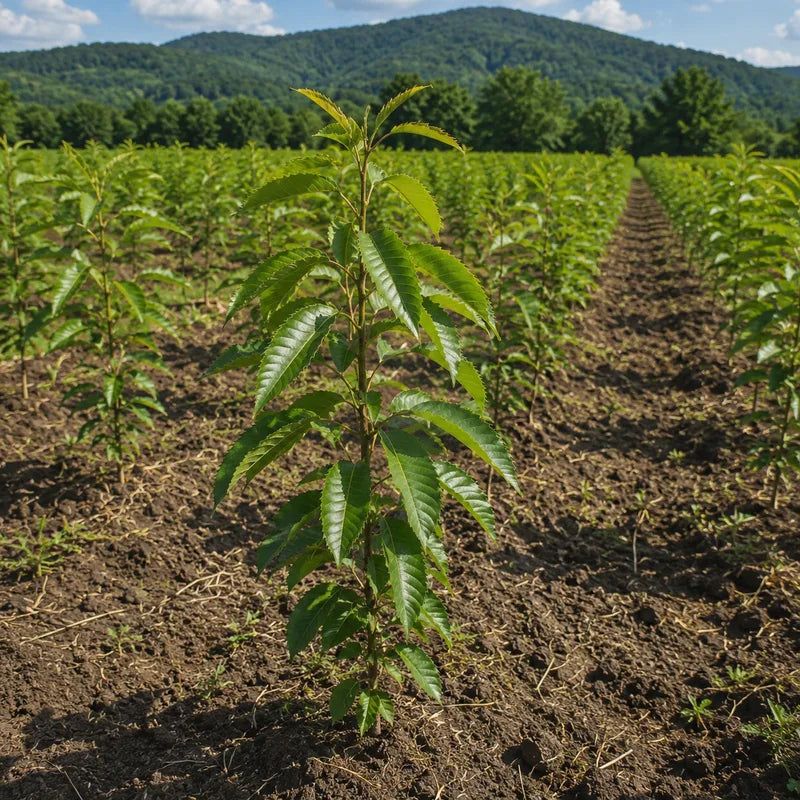
I learned the hard way that chestnuts sulk in soggy ground. Their roots are prone to rot in wet, heavy soil, and they struggle in clay that holds water after a rain.
Aim for a spot with full sun, at least six to eight hours a day. Chestnuts like loose, sandy or loamy soil that is somewhat acidic, with a pH between about 4.5 and 6.5. A gentle slope helps extra water run off.
Much of the state leans acidic, especially the sandy Pine Barrens region in the south. Northern and central yards with heavy clay or limestone-influenced soil may need a closer look.
A soil test from Rutgers Cooperative Extension costs little and tells you exactly what you have.
Planting time matters too. Set out container-grown or grafted trees in spring after frost danger passes, or in early autumn. Stratified nuts can go straight into the ground in fall or early spring.
Water young trees regularly during their first couple of years, especially in dry summer spells.
Spread two to four inches of mulch in a wide ring, keeping it a few inches away from the trunk. Those simple steps help roots settle in before the tree takes off.
Blight-Resistant Chestnut Hybrids Are the Trees You Can Actually Plant
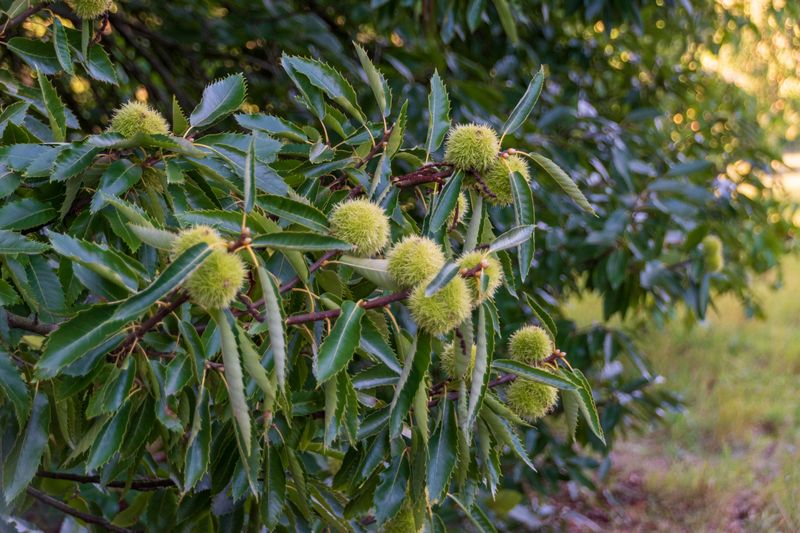
Planting a pure American chestnut today is a lot like sending a kid into a snowstorm without a coat. The blight fungus still lingers on sprouts and other trees in local woods, so an unprotected seedling will likely get infected.
That is why hybrids are the smart pick for home growers. Breeders cross American chestnuts with Chinese chestnuts, which evolved alongside the fungus and handle it well. Then they cross the offspring back to American trees again and again.
The goal is a tree that looks and grows mostly like the American species but carries enough resistance to thrive. Results vary from tree to tree, so a few cankers may still appear.
Several nurseries and farms sell blight-resistant hybrid seedlings. Ask sellers about the parentage and how much resistance their trees have shown. A reputable grower will gladly explain.
Pure, fully resistant American chestnut seed is not yet widely available to the public. The American Chestnut Foundation keeps testing its trees, and a genetically engineered line from SUNY ESF has not yet received federal approval.
For now, a hybrid gives you the best shot at a healthy tree that lives long enough to produce nuts. It also lets you join the comeback today instead of waiting.
Plant Two Chestnut Trees or You Might Wait Forever for Nuts
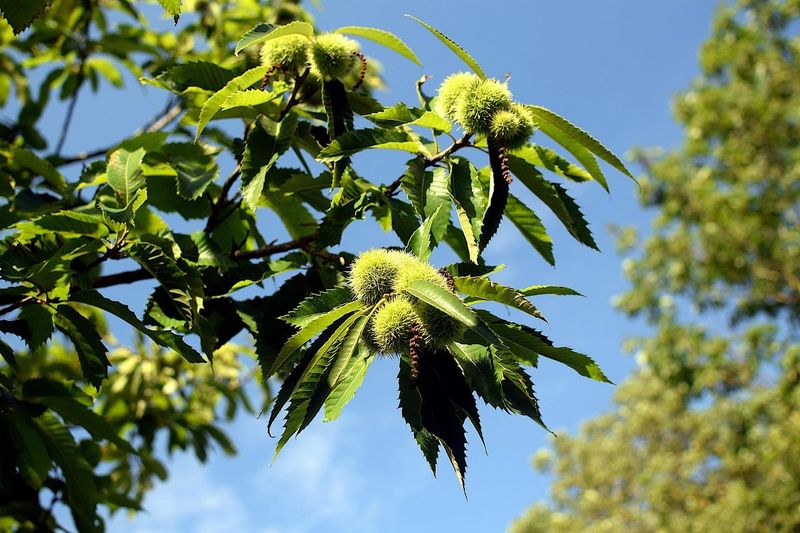
One lonely chestnut tree is mostly a pretty shade tree. Chestnuts are largely self-incompatible, which means a single tree rarely sets a good crop by itself. You need at least two genetically different trees to fill those spiny burrs.
Wind carries most of the pollen from long, creamy catkins that bloom in early summer. Bees visit too, though many folks notice the flowers have a strong, funky smell.
Spacing gets tricky. Most guides suggest 20 to 40 feet between trees, which keeps them close enough for pollen to reach. Some growers give them more room so each crown soaks up full sun.
Plan big when you sketch your layout. Mature hybrid trees can reach 40 to 60 feet tall and about 40 feet wide. That is not a tree for a narrow side yard or a spot under power lines.
Growth can surprise you. Healthy young hybrids may add several feet a year once established.
Grafted trees often begin producing in three to seven years, while seedlings may take seven to ten.
Small lot? Team up with a neighbor so each yard holds one tree within pollinating distance. You both get nuts, and the block gets a story worth sharing.
Deer Love Young Chestnut Saplings More Than You Do

White-tailed deer treat a fresh chestnut sapling like a salad bar. They nibble tender buds and leaves, and bucks rub their antlers on thin trunks in fall. One night visit can set a young tree back a full season.
Deer numbers run high across much of New Jersey, so protection is worth it from day one. A tree tube or a cylinder of welded wire fencing, at least five feet tall, keeps browsers away until the trunk thickens. Stake it firmly so wind does not tip it over.
Rodents cause trouble too. Voles chew bark near the soil line, especially under thick mulch in winter. A small hardware cloth collar around the base helps a lot.
Squirrels and chipmunks adore planted nuts. If you start trees from seed, cover each spot with wire mesh until the seedling pops up.
Watch young bark for sunken orange or tan patches, which can signal blight cankers. Photos help you track changes over time.
Prune in late winter to remove crossing or damaged branches, and clean tools between cuts if you suspect blight. Remove tubes once the trunk outgrows them so bark does not rub.
Restoration Chestnut Groves Are Growing in New Jersey Parks
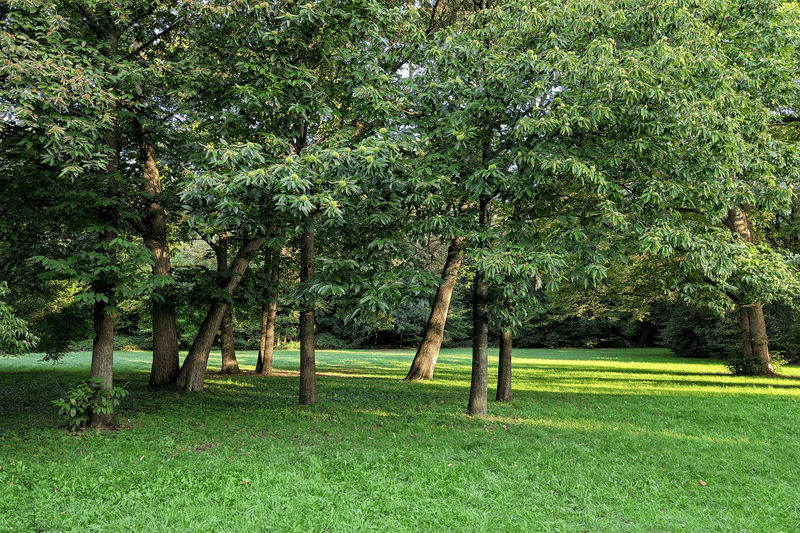
Somerset County is quietly hosting a chestnut experiment. At Lord Stirling Park in Basking Ridge, the Somerset County Park Commission partnered with The American Chestnut Foundation and Penn State to plant a Restoration 1.0 chestnut grove.
Plantings like this test how hybrid trees grow in real local conditions. Researchers track survival, growth, and blight resistance so breeders can pick the strongest parents for the next generation.
Central Jersey groups are pitching in too. The Hopewell Township Environmental Commission and Friends of Hopewell Valley Open Space, known as FoHVOS, have worked on chestnut plantings in their area.
Farmers are getting involved as well. New Jersey Nut Farms in Burlington County has planted blight-resistant Chinese-American hybrid chestnuts.
Visiting a grove is a fun way to see these trees up close before you plant your own. Check park websites for events or volunteer days, since some groups welcome help with planting, mulching, and caging.
The Pennsylvania and New Jersey Chapter of TACF also offers membership, newsletters, and chances to learn from people who have grown chestnuts for years. Swapping tips with them could save you plenty of trial and error.
Spiny Chestnut Burrs Split Open in Fall and the Squirrels Are Watching
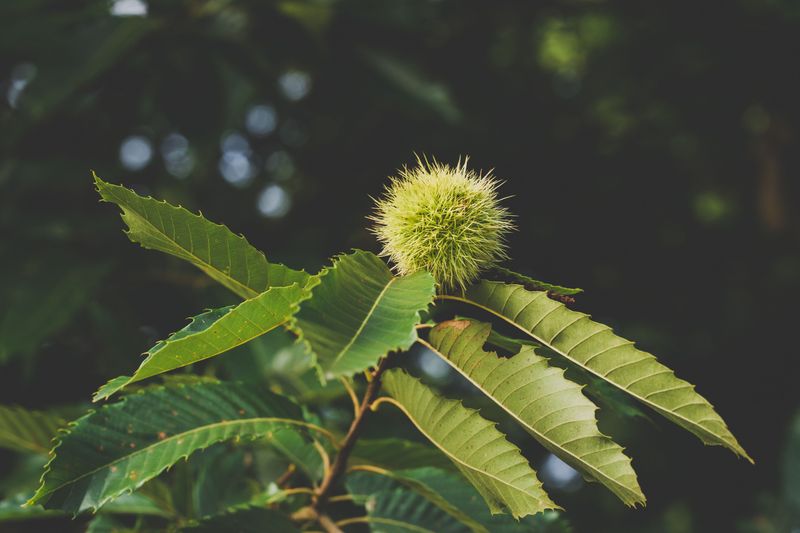
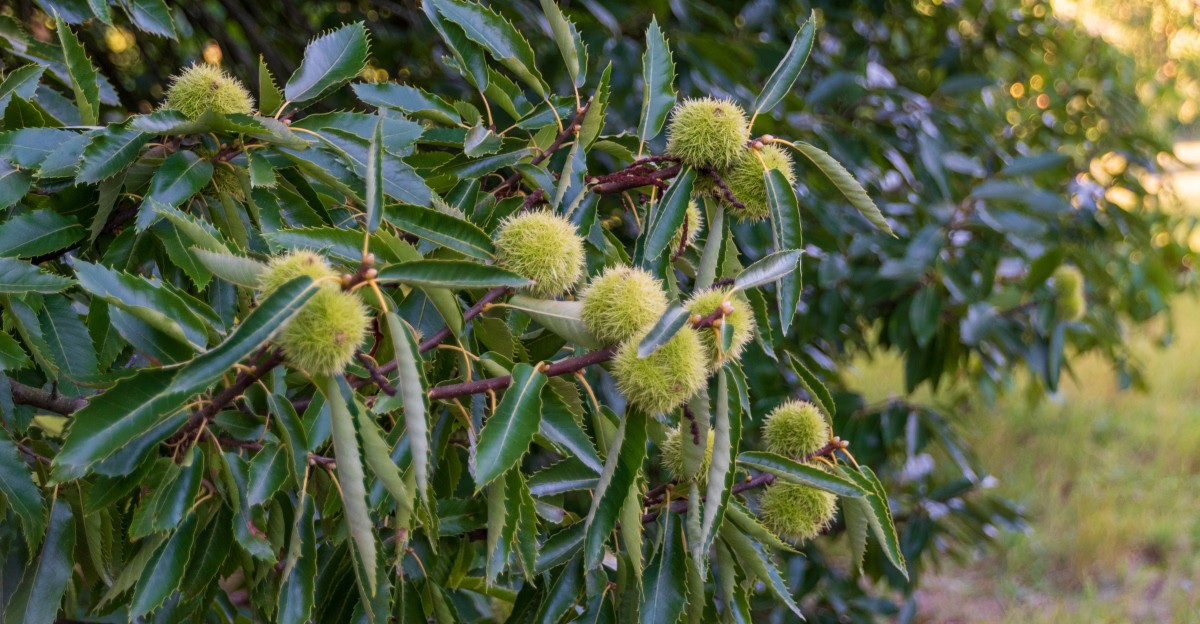
Autumn turns a chestnut tree into a treasure chest wrapped in porcupine armor. The spiny burrs ripen and split from late September through early November, dropping glossy brown nuts onto the ground.
Wear thick gloves and sturdy shoes, because those spines poke right through thin fabric. Many growers roll burrs under a boot heel to pop the nuts free.
Gather nuts every day once they start falling. Squirrels, blue jays, chipmunks, and deer know the schedule well, and they can clear a lawn fast.
Fresh chestnuts hold a lot of moisture, unlike most nuts. They mold quickly at room temperature, so process them within a few days or refrigerate them in a breathable bag right away.
Before roasting, cut an X in each shell so steam can escape. Skip that step and you may hear a loud pop in the oven.
Roasted, boiled, candied, or mashed into stuffing, they taste sweet and a little starchy, a bit like a cross between a sweet potato and a nut.
Fun fact: American chestnuts are often described as sweeter than larger European and Chinese types. Hybrids vary, so every tree may surprise your taste buds a little.
Your Chestnut Tree Can Help Scientists and Feed Wildlife for Generations
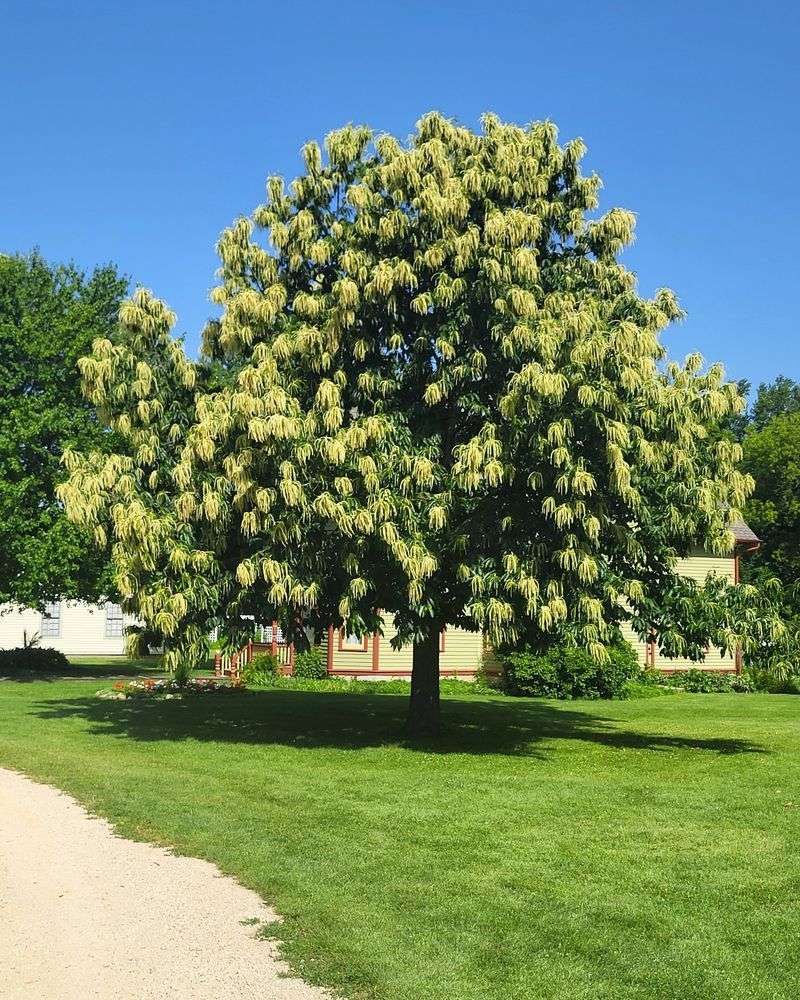
Every chestnut planted in a backyard adds another chapter to a comeback that started over a century ago. Your tree may feel small today, but it links you to a long chain of growers, breeders, and wildlife.
Before the blight, chestnuts fed bears, deer, turkeys, squirrels, and countless birds each fall. They bloomed in early summer, dodging most frosts, so the nut crop stayed fairly dependable from year to year.
Indigenous Peoples and rural families relied on the nuts too. The strong, rot-resistant wood built barns, fence posts, and furniture that still stand in some places.
Want to help beyond your own yard? Report wild American chestnuts you find to The American Chestnut Foundation, since surviving trees may carry useful genes. Volunteering at a grove or joining the regional chapter helps too.
Start simple this winter. Order two hybrid seedlings, test your soil, pick a sunny, well-drained spot, and plan for spring planting. Gather tree tubes, mulch, and a watering routine before the trees arrive.
Keep your hopes realistic, since some cankers may still show up and growth depends on your site. Still, you are helping bring back a tree that shaped eastern forests, and that feels pretty special every time a burr cracks open.