A Wild Fruit Growing Along Colorado’s Front Range Is Ripe For Foraging Right Now
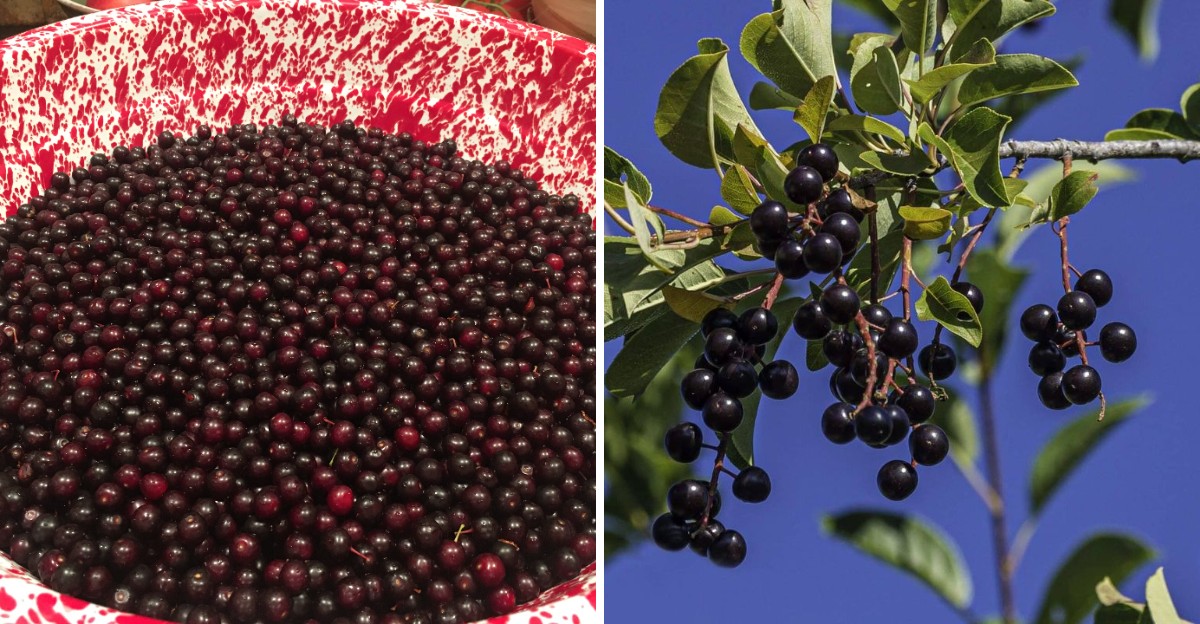
Dark berries glint along Colorado creek trails as you walk past. Birds notice before you do, swarming shrubs in loud, hungry clusters. Front Range foothills hide entire thickets, if you know exactly where to look.
Color shifts from red to black while you watch September wind down. Taste it raw and you will pucker instantly, sharp and dry. That reaction earned the fruit its blunt, honest name.
Colorado families have simmered it into jelly, syrup, and wine for generations. Sugar tames the sharpness, and you get something bold and sweet. Timing matters now, since you have only weeks before it passes.
Shrubs cluster near water, and you can spot them fast once you know the shape. Speed counts, because birds strip branches quickly once they start feeding.
Picking early beats losing the whole cluster entirely to a hungry flock. Grab a basket, because this harvest will not wait for you.
Getting To Know Colorado’s Native Chokecherry
Prunus virginiana has been feeding people and wildlife across the Front Range for thousands of years.
Colorado’s state legislature never crowned it an official symbol, though many foragers consider it one of the more versatile wild shrubs in the region.
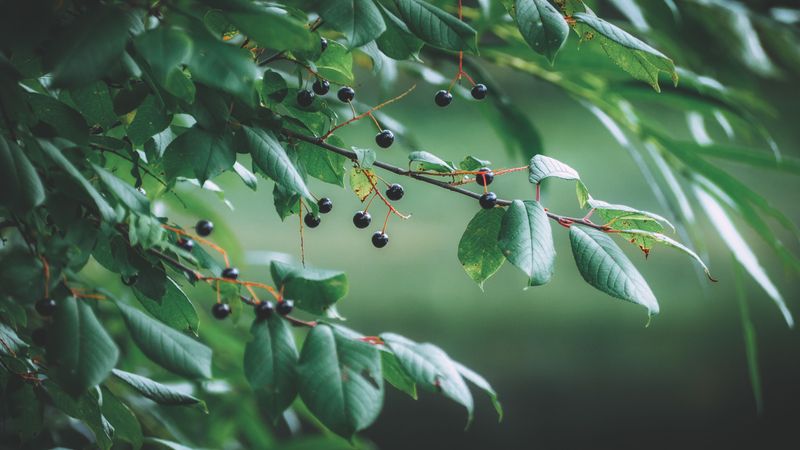
Picture a large bush or small tree, usually six to twenty feet tall, often growing in thickets along creeks and gulches. The leaves are oval, finely toothed along the edges, and a shiny dark green on top with a paler underside.
In late spring the shrub covers itself in long white flower spikes that smell faintly sweet. Those spikes turn into hanging clusters of pea-sized fruit, which is what you are hunting for now.
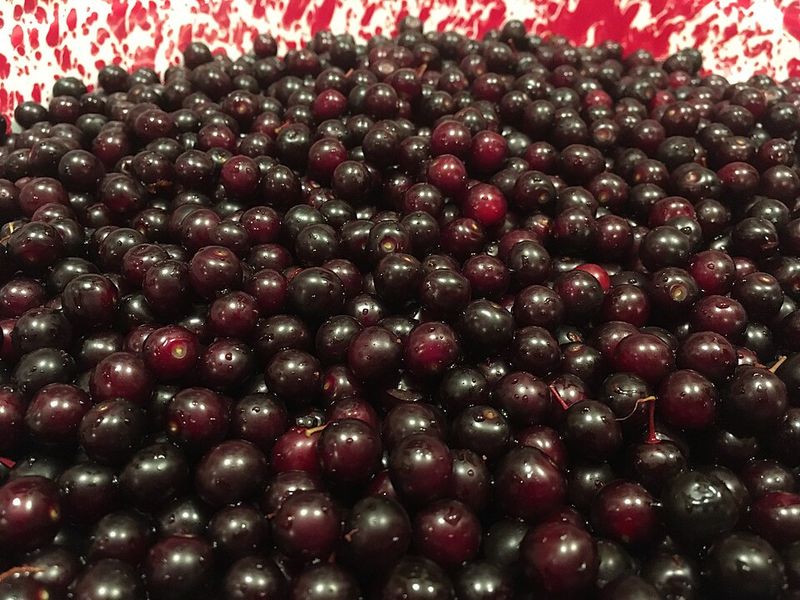
Ripeness shows up as a color shift from bright red to deep purple or near-black. Squeeze one gently and it should feel soft, with juice that stains your fingers a startling shade of magenta.
The name comes from the mouth-puckering tannins in the skin and flesh. Bite one raw and your tongue feels like it shrank two sizes, which is exactly why cooks add sugar.
Indigenous peoples of the plains pounded the whole fruit, pits included, into cakes and mixed it with fat and meat for pemmican. Grinding broke down the pits safely during drying, a technique built on generations of careful knowledge.
Modern foragers usually skip the pits entirely and strain the juice instead. Either way, you are tasting a piece of Colorado history that still grows wild within city limits.
Where The Best Picking Spots Hide Along The Front Range
Water is the biggest clue. Chokecherry likes moisture, so trace the drainages: Clear Creek, Boulder Creek, Bear Creek, Cherry Creek, and the countless unnamed gulches that spill out of the foothills.
Elevation-wise, the sweet zone runs roughly from 5,000 to 9,000 feet. That covers everything from Fort Collins neighborhoods up through Golden, Morrison, and the canyons above Colorado Springs.
Shrubs also thrive on north-facing slopes where snow lingers longer and soil stays damp. Look at the edges of open meadows, fence lines, and the transition strip where grassland meets scrub oak.
Your Colorado Garden Changes Every Week. Your Plan Should Too.
Gardening in Colorado changes quickly throughout the season. Every Friday you’ll receive a simple weekly plan showing exactly what to plant, prune, fertilize, harvest, and protect so you never miss the right timing.
Roadside ditches hold plenty of fruit, but skip those. Vehicle exhaust, road salt, and herbicide spraying make anything within thirty feet of pavement a poor choice for the kitchen.
Rules matter here. Rocky Mountain National Park permits visitors to gather chokecherries and several other berries by hand.
The limit is one quart per person per day for personal consumption. City and county open space districts set their own separate rules, so check the specific rules for wherever you plan to pick.
City open space programs around Boulder and Jefferson County post foraging guidelines online, and they change from year to year. Five minutes of reading saves you an awkward conversation with a ranger.
Private land needs permission, plain and simple. Plenty of ranchers will say yes if you ask politely and offer a jar of jelly in return.
Bears feed on these same thickets in September. Make noise, travel with a friend, and back away quietly if a bush starts rustling on its own.
Reading The Signs That Say Pick Me Now
Timing separates a decent harvest from a frustrating one. Along the Front Range, the window generally opens in mid-August and stretches into late September, with elevation shifting things by a couple of weeks.
Lower foothills near Denver ripen first. Shrubs up in the canyons above 8,000 feet often lag behind by ten days or more, which gives patient pickers a second chance.
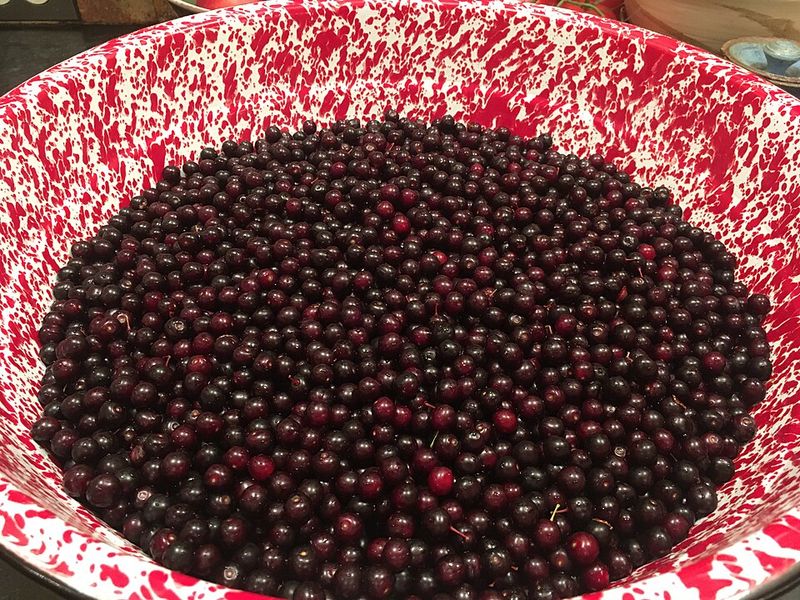
Color tells most of the story. Green means wait, bright red means almost, and a deep purple-black with a slight dusty sheen means go.
Texture backs up what your eyes see. Ripe fruit gives slightly under thumb pressure and releases from the stem with a light tug rather than a yank.
Taste one, spit out the pit, and pay attention to the aftertaste. Fully ripe chokecherry still puckers, but underneath there is a real cherry sweetness that unripe fruit generally lacks.
Birds are your early warning system. When robins, waxwings, and magpies start working a thicket hard, you have maybe a week before the branches are stripped bare.
Watch the weather too. A hard frost softens the fruit and concentrates sugars, though it also speeds up spoilage on the branch.
Fruit that has shriveled into tiny raisins is past prime for jelly but still works fine for syrup. Anything with white fuzz or a sour fermented smell goes back to the ground.
Check the same bushes twice a week once things start turning. Clusters ripen unevenly, so a return visit usually pays off.
Telling Chokecherry Apart From Its Look-Alikes
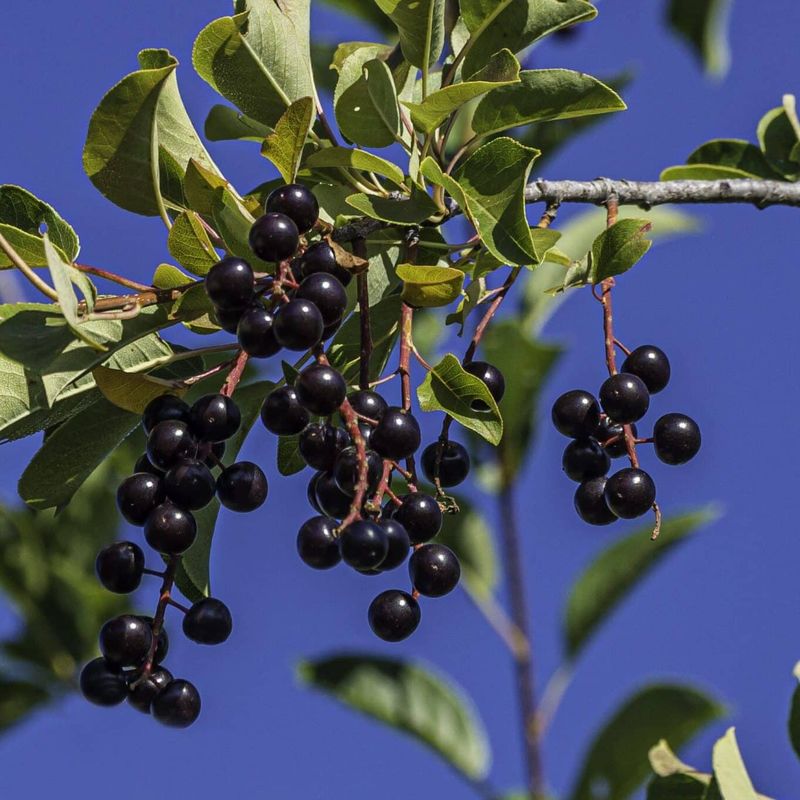
Confidence in identification keeps foraging fun. Luckily, chokecherry gives you several features that line up neatly once you know the checklist.
Start with how the fruit hangs. Chokecherries grow in elongated clusters called racemes, with twenty to forty fruits strung along a central stem like tiny grapes.
Each fruit holds one single hard pit, not several small seeds. Slice one open and you should see a smooth stone about the size of an apple seed.
Leaf edges carry fine, sharp teeth all the way around, and there are usually two small bumps called glands where the leaf stalk meets the blade. Those glands are a handy confirming detail.
Scratch a young twig and sniff. A faint bitter-almond or cherry-pit smell is typical of the Prunus family and helps rule out imposters.
Common buckthorn causes the most mix-ups in Front Range neighborhoods. Its berries sit in small clumps close to the twig rather than long hanging strings, each holding three or four seeds, and eating them causes serious stomach trouble.
Wild currants and gooseberries also share creek-side habitat. Currants show star-shaped remnants on the bottom of each berry and grow on shrubs with lobed, maple-like leaves.
Skip anything you cannot confirm with at least three matching features. A field guide, a local plant walk, or the CSU Extension office can settle doubts fast.
When uncertainty lingers, photograph the shrub and ask before you eat. In wild foraging, caution matters more than speed.
Handling The Pits And Leaves With Respect
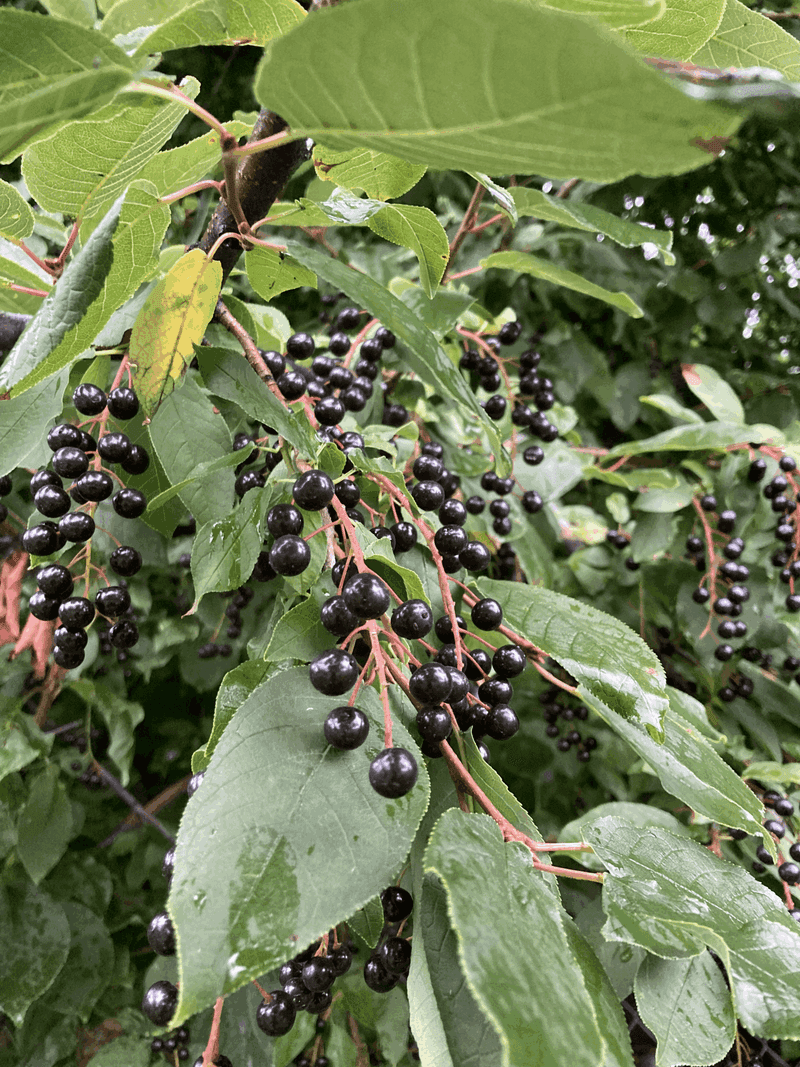
Here’s the safety detail worth understanding clearly. Chokecherry pits, leaves, and twigs contain compounds that release cyanide when chewed or damaged.
The flesh and juice are the safe, edible parts. Generations of Colorado cooks have made jelly and syrup without trouble by simply keeping the pits intact.
Practical rule: do not crush, blend, or grind the pits. A food processor or blender cracks them open and pulls those compounds straight into your batch.
Simmer whole fruit gently in water instead, then strain through a jelly bag or several layers of cheesecloth. The pits stay whole and get discarded with the pulp.
A food mill with a coarse plate also works, since it separates flesh from stone without cracking. Many old Front Range recipes call for exactly that tool.
Swallowing one or two pits accidentally is not a crisis, because intact pits pass through without releasing much. Chewing a handful is a different story, so keep kids from snacking straight off the bush unsupervised.
Wilted leaves pose the bigger risk to livestock. Ranchers along the foothills know to keep horses and cattle away from branches that have been broken off and left to wilt in the sun.
Dogs should skip the thickets too. A little caution turns a reputation for being risky into a manageable detail. Follow those steps and you get all the flavor with much less of the risk.
Turning A Bucket Of Puckery Fruit Into Something Delicious
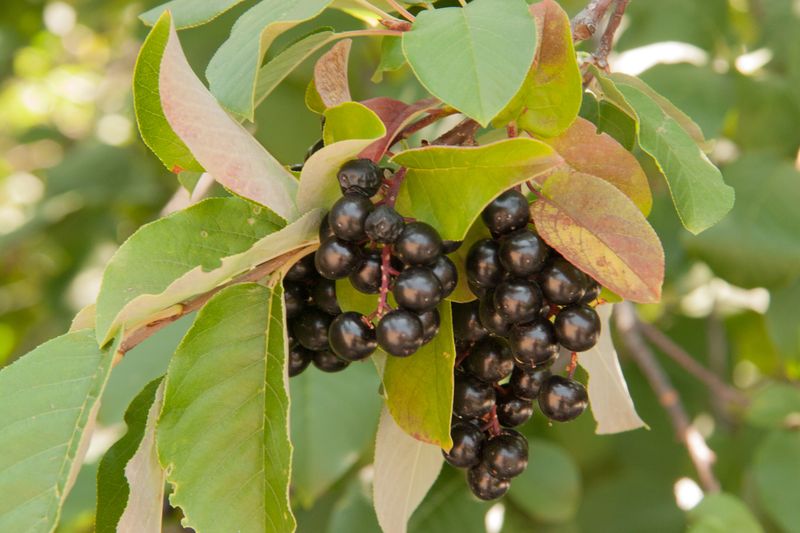
Ask anyone who grew up in a Colorado mountain town and they will describe a grandmother’s pantry lined with ruby-red jars. Chokecherry jelly is the classic, and for good reason.
Basic method: rinse the fruit, cover with water, simmer about fifteen minutes until soft, then strain overnight for the clearest juice. Resist squeezing the bag if you want jelly that sparkles.
Because the fruit runs low in natural pectin once fully ripe, most recipes add commercial pectin plus a generous amount of sugar. Roughly equal parts juice and sugar is the traditional starting point.
Syrup skips the pectin and cooks down to a pourable consistency, which is wonderful over pancakes or stirred into sparkling water. Some folks reduce it further into a tangy glaze for pork or venison.
Wine and cordials have a long history here as well, especially in the old mining communities of Clear Creek and Gilpin counties. The tannins that make the raw fruit harsh give homemade wine surprising structure.
Freezing works beautifully if you run out of time. Toss whole clusters into bags, stash them, and process during a snowy January weekend.
Expect roughly four cups of juice from twelve cups of fruit, so plan your picking accordingly. A five-gallon bucket sounds ambitious until you see how fast clusters fill it.
Leave plenty on the branch for the birds and bears. Sharing the harvest keeps the thickets producing year after year.