7 April Tasks That Keep Arizona Citrus Trees Productive All Summer
April is where citrus success in Arizona quietly gets decided, even though everything still looks healthy on the surface. Trees carry fresh growth, small fruit starts forming, and it feels like the hard part is already done.
Then summer arrives, and problems show up fast when earlier steps were missed.
Small details during this window shape how well trees handle extreme heat later. Watering habits, soil condition, and timing all play a bigger role than most people expect.
Waiting too long to adjust anything usually leads to stress, fruit drop, or weak growth once temperatures climb.
Getting a few key things right now sets trees up to stay steady instead of struggling through summer.
1. Deep Water To Prepare Trees For Rising Heat
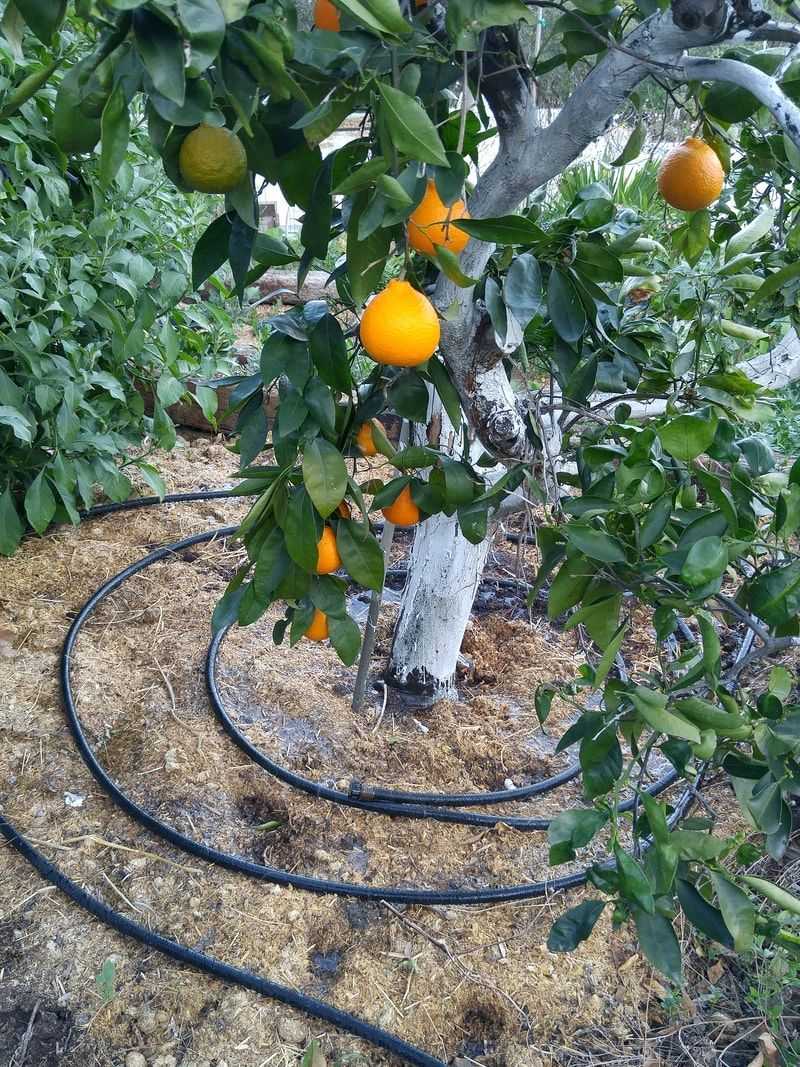
Long, slow watering sessions are one of the best gifts you can give citrus trees before Arizona summers kick into full gear. Most people water too quickly and too often, which keeps moisture near the surface instead of pushing it deep into the root zone.
Deep watering encourages roots to grow downward, where the soil stays cooler and holds moisture longer.
In Arizona, soil temperatures can climb dramatically by June, and roots sitting near the surface struggle when extreme heat arrives. The goal in April is to soak the ground slowly so water reaches about 18 to 24 inches below the surface.
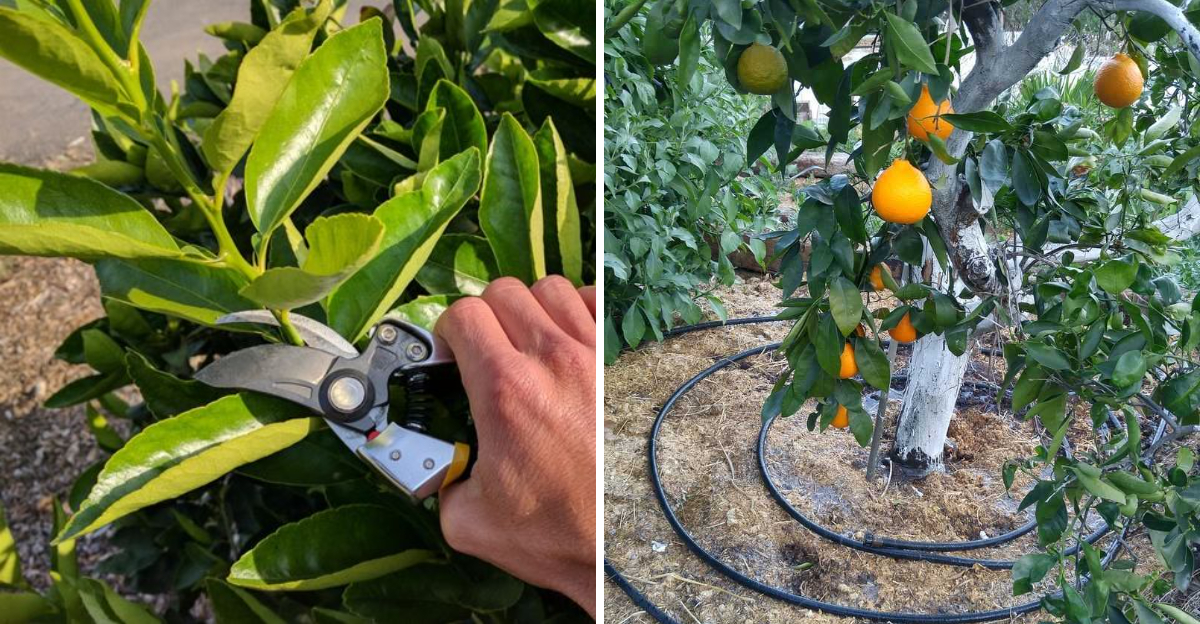
A slow drip or flood irrigation method works much better than a quick sprinkler pass. Watering deeply once or twice a week in April is usually enough, depending on soil type and tree size.
Sandy soils found in many parts of Arizona drain faster, so watering may need to happen more often than in clay-heavy ground. Checking soil moisture by inserting a finger or a wooden dowel several inches into the soil near the drip line helps confirm when watering is needed.
Early morning watering is ideal in Arizona because it reduces evaporation and allows moisture to soak in before daytime temperatures rise.
2. Check Irrigation Systems Before Summer Demand Increases
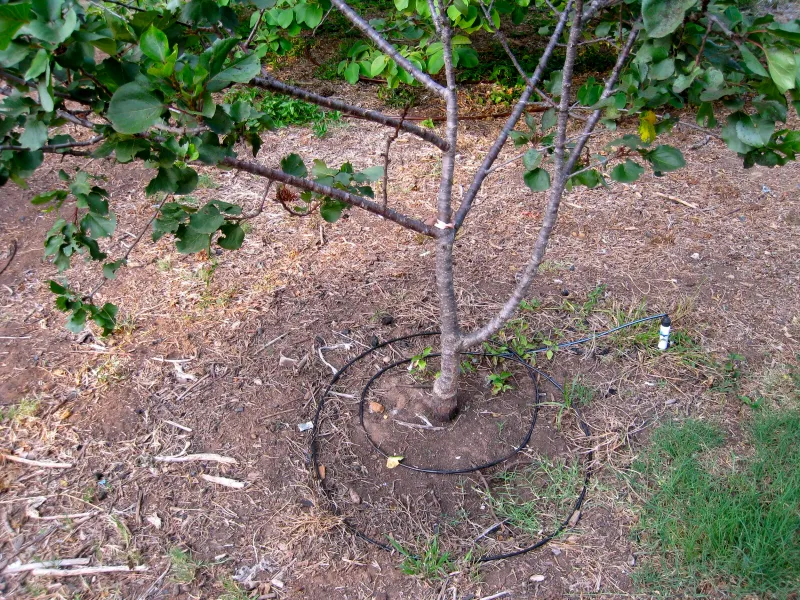
Nothing is worse than realizing your irrigation system has a clog or a broken emitter right in the middle of a 110-degree Arizona summer day. April is the perfect time to walk your entire irrigation setup and check every emitter, valve, and line for problems.
Catching small issues now means your trees will never go without water when they need it most. Start by running your system manually and watching each emitter closely to make sure water is actually flowing.
Some emitters get clogged with mineral deposits, which are very common in Arizona due to the hard water found throughout much of the state. A simple soak in white vinegar overnight can clear most mineral buildup without replacing the part entirely.
Check your timer settings too, because what worked in February will not be enough once May and June arrive. As temperatures climb, citrus trees need significantly more water to stay productive and keep their fruit from dropping early.
Adjusting your run times now gives you peace of mind before the real heat pressure begins.
Your Arizona Garden Changes Every Week. Your Plan Should Too.
Gardening in Arizona changes quickly throughout the season. Every Friday you’ll receive a simple weekly plan showing exactly what to plant, prune, fertilize, harvest, and protect so you never miss the right timing.
Replacing any cracked or sun-damaged tubing now helps prevent sudden failures once extreme heat puts extra pressure on the system.
3. Apply Mulch To Keep Soil Moisture Stable
Spreading a fresh layer of mulch around your citrus trees in April is one of the simplest ways to protect them from what is coming. Arizona summers are relentless, and bare soil heats up incredibly fast under direct sun, which stresses roots and causes moisture to evaporate quickly.
A good layer of mulch acts like a blanket that keeps the soil cooler and holds water in place much longer. Organic mulches like wood chips, shredded bark, or straw work especially well for citrus trees in Arizona.
Aim for a layer that is about three to four inches thick, spreading it out to the drip line of the tree. Keep the mulch a few inches away from the trunk itself, since direct contact with the bark can trap moisture and lead to rot over time.
Beyond moisture retention, mulch also improves soil health as it slowly breaks down and adds organic matter to Arizona’s often nutrient-poor desert soils. Earthworms and beneficial microbes love mulched soil, and their activity helps loosen compacted ground so water and nutrients can reach roots more easily.
You will likely notice healthier, greener foliage within a few weeks of mulching. Refreshing your mulch every spring is a habit that pays off big throughout the summer.
4. Feed Trees With A Balanced Citrus Fertilizer
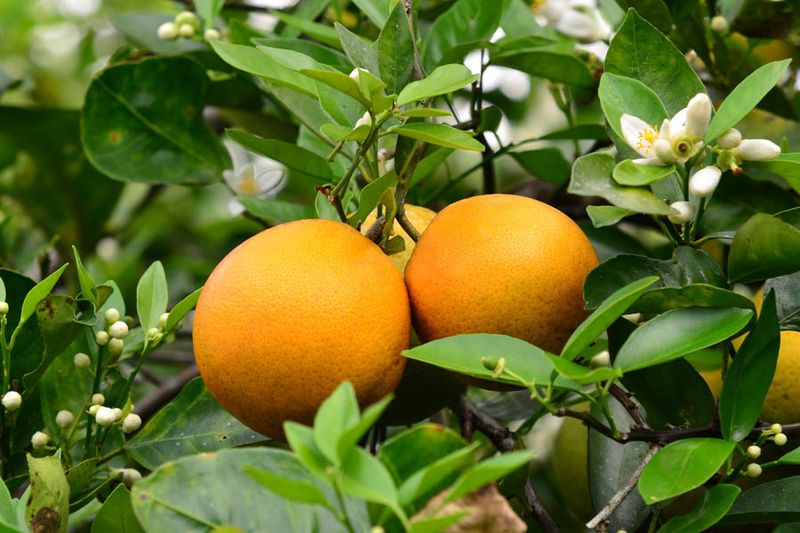
Citrus trees in Arizona are heavy feeders, and April is one of the best times of year to give them a solid nutritional boost. Spring is when trees are actively pushing out new leaves, flowers, and young fruit, which means they are using nutrients at a fast rate.
Feeding them now supports that growth and helps set the stage for a productive summer harvest. Look for a fertilizer labeled for citrus, since these blends provide the right balance of nitrogen, phosphorus, potassium, and trace minerals.
Nitrogen is especially important in spring because it fuels leafy green growth and keeps the canopy full. Iron, zinc, and manganese are also important for Arizona citrus, since desert soils are often low in these micronutrients.
Granular fertilizers are a common choice because they release nutrients slowly over several weeks, giving trees a steady supply instead of a quick spike. Always water deeply after applying granular fertilizer so it moves into the root zone.
Avoid fertilizing when the soil is completely dry, since this can stress roots and limit nutrient uptake.
Applying fertilizer evenly around the drip line rather than close to the trunk helps roots absorb nutrients more effectively.
Splitting applications into smaller doses through spring and early summer can also improve nutrient uptake and reduce the risk of waste or salt buildup in Arizona soils.
5. Remove Damaged Or Weak Growth Early
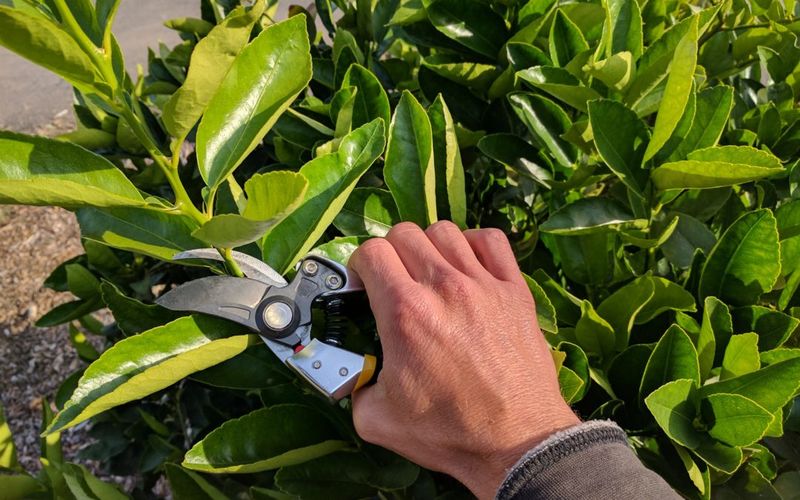
April is a smart time to walk around your citrus trees and take a careful look at what survived the winter. Arizona winters are usually mild, but even a light frost can leave behind damaged twigs, brown foliage, and weak branches that will never recover fully.
Removing that struggling growth early frees up energy the tree can put toward healthy new shoots and developing fruit instead. Start by looking for branches that are visibly brown, brittle, or have no signs of new budding while surrounding branches are leafing out.
These are the ones worth removing, since they are essentially just weight the tree is carrying without any benefit. Use clean, sharp pruning shears and make cuts just above a healthy bud or branch junction for the cleanest result.
Crossing branches that rub against each other are also worth taking out, since that friction creates wounds where pests and disease can enter.
Opening up the canopy a bit improves airflow, which is helpful in Arizona where humidity can spike during the summer monsoon season.
Better airflow means fewer fungal problems and a healthier overall tree structure.
Avoid removing more than about 20 percent of the canopy at once, since heavy pruning can stress citrus trees and reduce fruit production.
Always wait until after the risk of frost has passed before pruning, because fresh cuts can be more vulnerable to cold damage if temperatures suddenly drop again.
6. Protect Developing Fruit From Sudden Heat Spikes
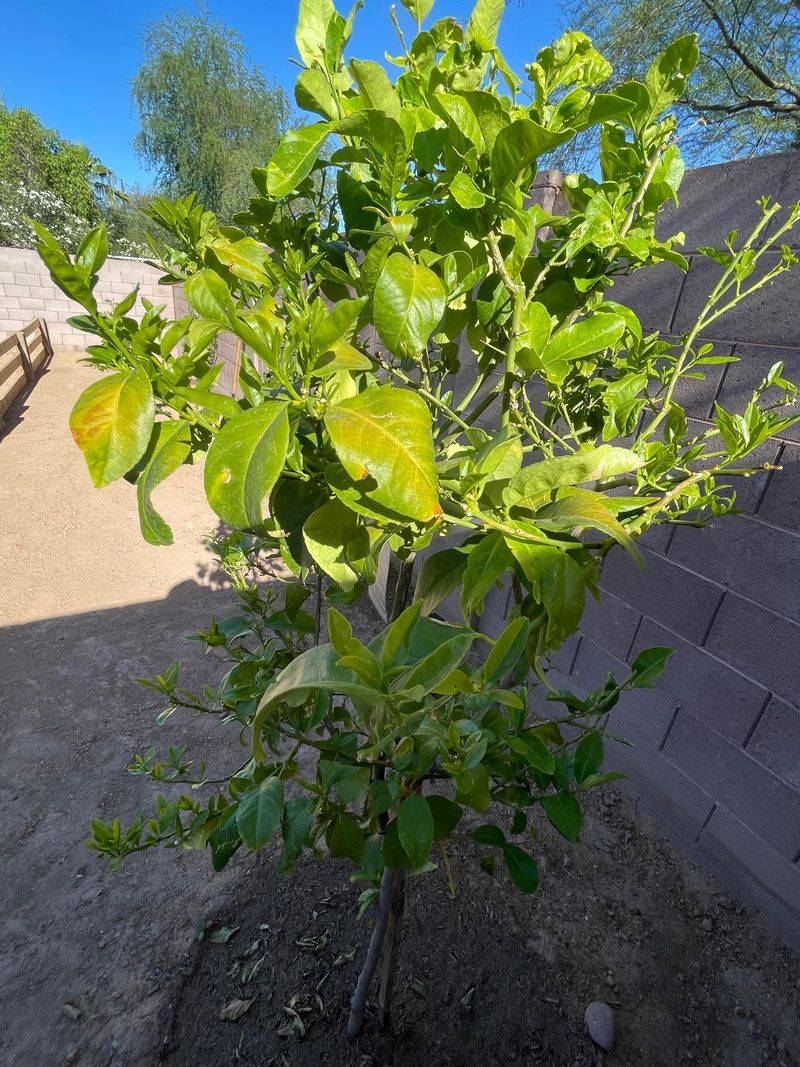
Young citrus fruit is surprisingly vulnerable in April, especially during early heat waves that can move through Arizona before expected. Small developing fruit, often called fruitlets, can drop or suffer sunburn damage if temperatures spike before the tree has time to adjust.
Keeping an eye on the forecast and having a plan ready can help protect a large portion of the crop. One practical option is using shade cloth over exposed trees or sections of the canopy during extreme early heat events.
A 30 to 40 percent shade cloth allows enough light for photosynthesis while reducing the intensity that can damage tender fruit. Temporary shade structures are easy to set up and remove as conditions change through spring in Arizona.
Ensuring trees are well-watered before a heat spike is just as important as physical protection. A tree already stressed from dry soil is more likely to drop fruit when temperatures rise quickly.
Applying a layer of organic mulch around the base of the tree helps regulate soil temperature and retain moisture during sudden heat spikes.
Avoid heavy pruning in April, since removing too much canopy can expose developing fruit to direct sun and increase the risk of sunburn.
7. Monitor For Pests As Temperatures Begin To Rise
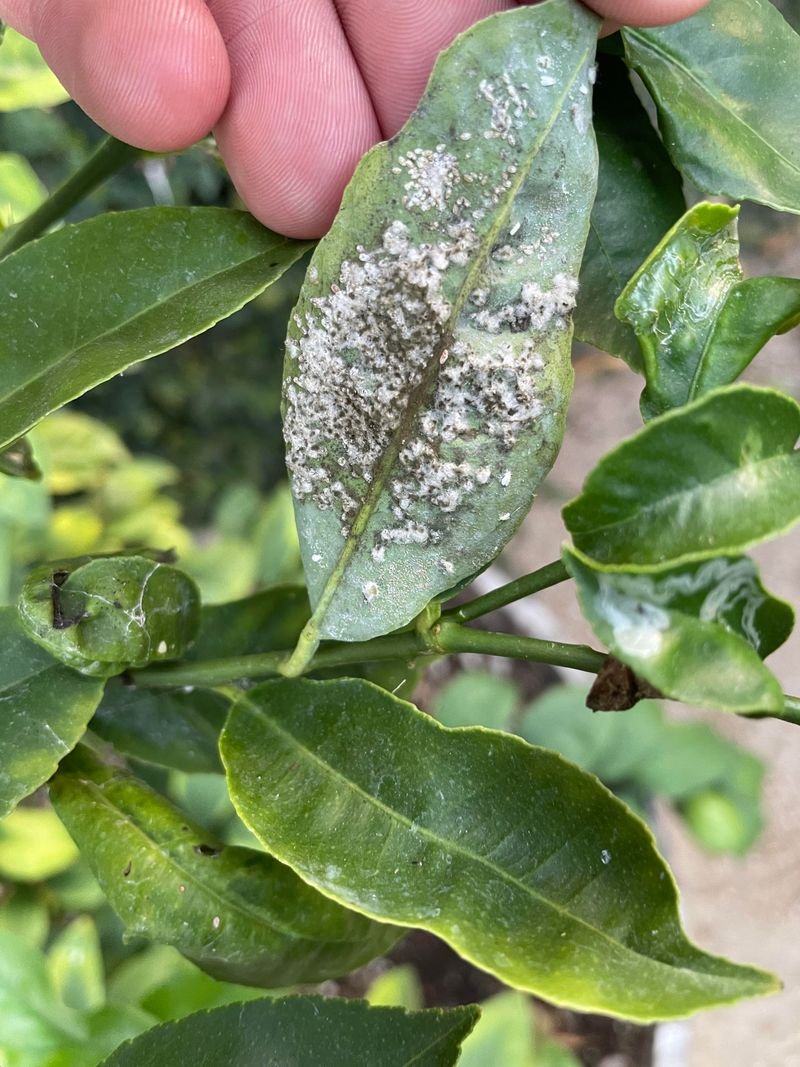
Warm April days in Arizona are a wake-up call for all kinds of insects, and not all of them are welcome in your citrus grove. Aphids, citrus leafminers, scale insects, and spider mites all become more active as temperatures climb, and catching them early makes management much easier.
By the time summer heat is fully established, pest populations can explode quickly if they get a head start in spring. Make it a habit to check your trees at least once a week during April, paying close attention to new growth where pests tend to gather first.
Flip leaves over and look at the undersides, since that is where many insects prefer to feed and lay their eggs out of direct sunlight. Sticky residue on leaves or a sooty black coating on the surface is often a sign that aphids or scale are already active.
Horticultural oil sprays are a safe and effective first line of defense for most common citrus pests in Arizona. They work by smothering soft-bodied insects and their eggs without leaving harmful residues that affect beneficial insects like bees.
Apply sprays in the early morning or evening to avoid leaf burn under intense Arizona sun.