Arizona Plants Gardeners Regret Growing Too Close To Stucco Walls
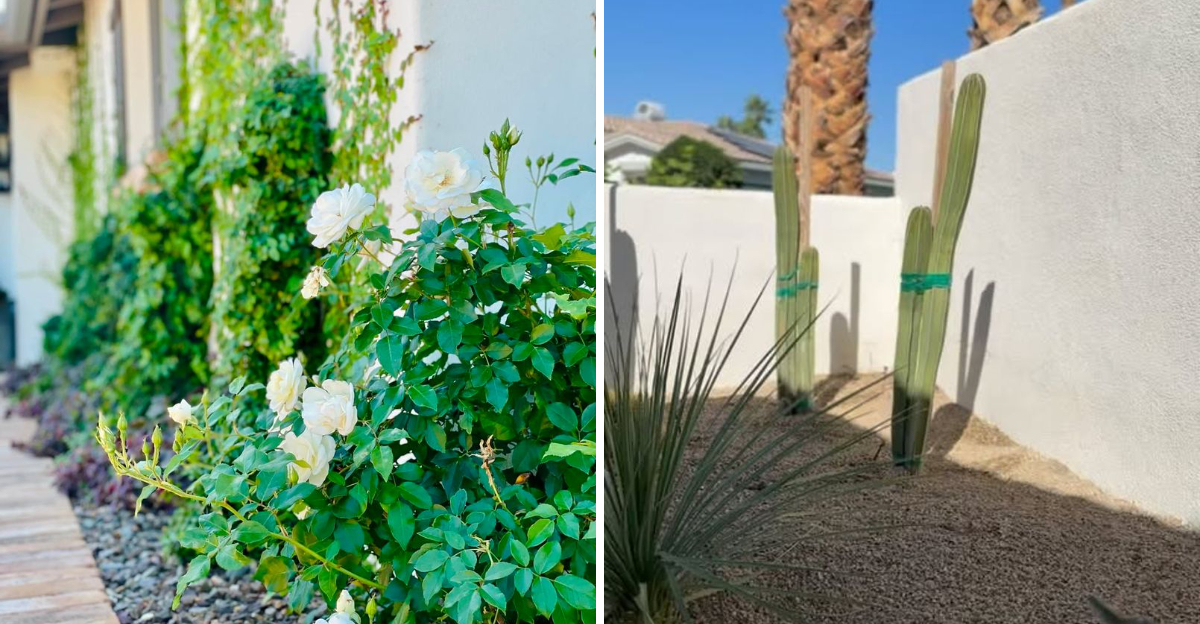
Arizona yards look perfect right up until they do not. The wall looked fine last season. The plant looked manageable at the nursery.
Two summers later, the stucco is scratched, the roots are somewhere they should not be, and the pruning situation has become a genuine project. It happens quietly. A vine finds a rough patch of wall and decides to stay.
A shrub outgrows its strip. A tree that looked modest at three feet starts making plans nobody approved. By the time the problem is obvious, it is already expensive and inconvenient to fix.
Stucco walls in Arizona are not passive surfaces. They absorb heat all day, radiate it back at night, and create microclimates that push certain plants to grow faster, wider, and wilder than expected.
That combination of reflected heat, tight planting strips, and fast desert growth is where most wall regrets are born.
Some plants are genuinely beautiful in the right location. Right next to a stucco wall, just happens to be the wrong one.
1. Creeping Fig Leaves Stubborn Marks On Stucco
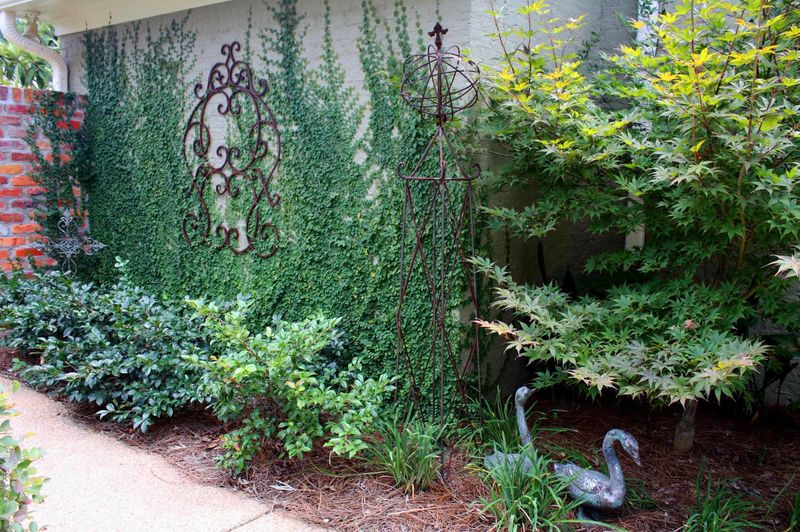
A blank stucco wall and a creeping fig plant is a combination that tends to end with regret. Ficus pumila is a charming vine with a serious attachment problem.
It clings using tiny aerial rootlets that press directly into rough masonry surfaces. Once those rootlets find a grip, they tend to stay even after the vine is long gone.
What remains are marks, patches, and rough spots that show up most clearly when you need to repaint or refinish the wall. That is usually the moment Arizona homeowners realize what they signed up for.
The vine itself grows quickly in warm climates and spreads beyond its original planting zone with little encouragement. A patch near a corner can expand across an entire wall, finding its way into roof eaves and around window frames before anyone notices the migration happening.
The evergreen coverage looks lush and appealing right up until maintenance season arrives. Then the attachment residue, the wall prep work, and the sheer stubbornness of removal all become very real.
A sturdy freestanding trellis or a fence gives creeping fig something to cling to that can be repaired and repainted without the vine still attached. That separation changes the whole equation.
Keep at least a foot of clearance between the plant and any stucco surface. It is a small detail that saves a large headache later.
2. Cat Claw Vine Grabs Walls And Demands Control
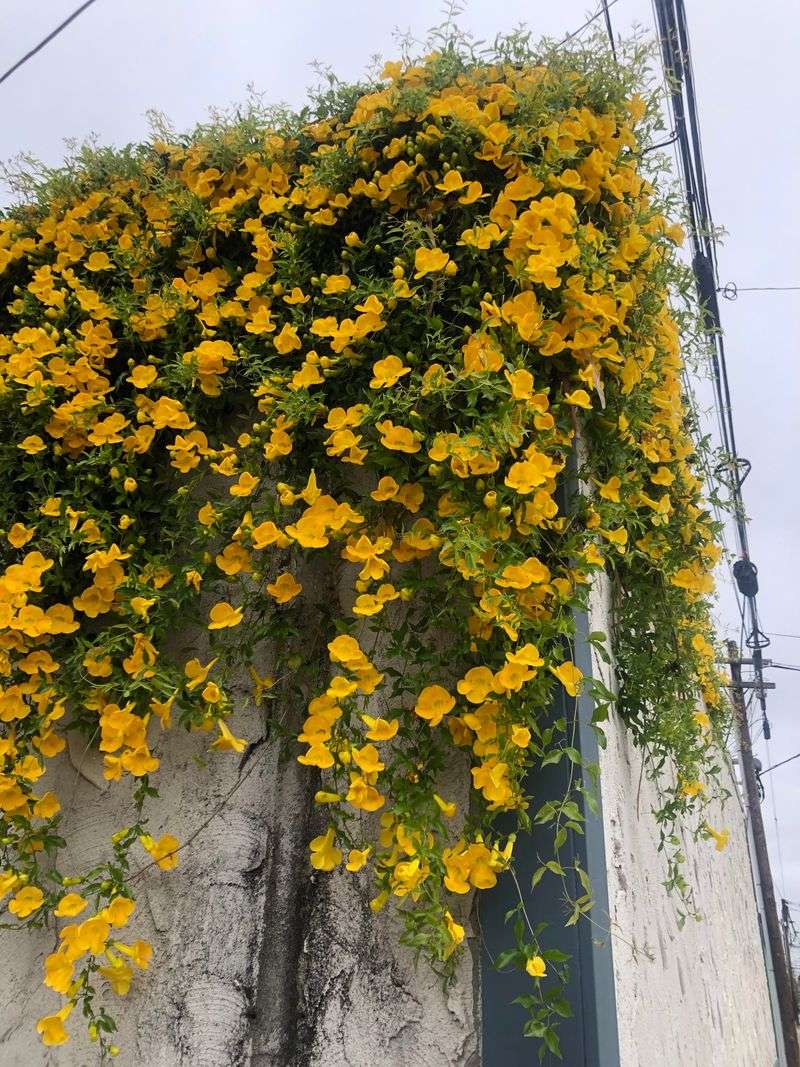
The name is not an exaggeration. Cat claw vine earns it. Dolichandra unguis-cati uses tiny hooked tendrils that curl around any rough surface they contact. And stucco gives those tendrils plenty to work with.
Once the vine establishes a grip on a wall, it climbs fast and spreads wide. Warm exposures tend to push that growth into high gear.
The real trouble starts at removal time. The tendrils work into small cracks and rough patches, and pulling the vine away can bring chunks of stucco surface along for the ride.
Your Arizona Garden Changes Every Week. Your Plan Should Too.
Gardening in Arizona changes quickly throughout the season. Every Friday you’ll receive a simple weekly plan showing exactly what to plant, prune, fertilize, harvest, and protect so you never miss the right timing.
Gardeners who plant it directly against a wall may find themselves facing a pruning and repair situation that grows more complicated every season they let it continue.
The root system compounds the problem. Cat claw vine spreads underground through tubers, which means the plant extends well beyond what you can see above ground.
Removing it completely once it is established near a wall takes consistent effort across multiple seasons, not just one thorough afternoon with gloves and a shovel.
The yellow trumpet flowers in spring are genuinely attractive. That part is not in dispute. The wall maintenance trade-off is what tends to shift opinions over time.
A sturdy metal or wood trellis positioned a comfortable distance from the wall is a smarter arrangement.
It lets you enjoy the flowering display while keeping those tendrils away from the stucco. Check occasionally that the vine has not decided the trellis was just a suggestion.
3. Bougainvillea Turns Tight Walls Into Thorny Work
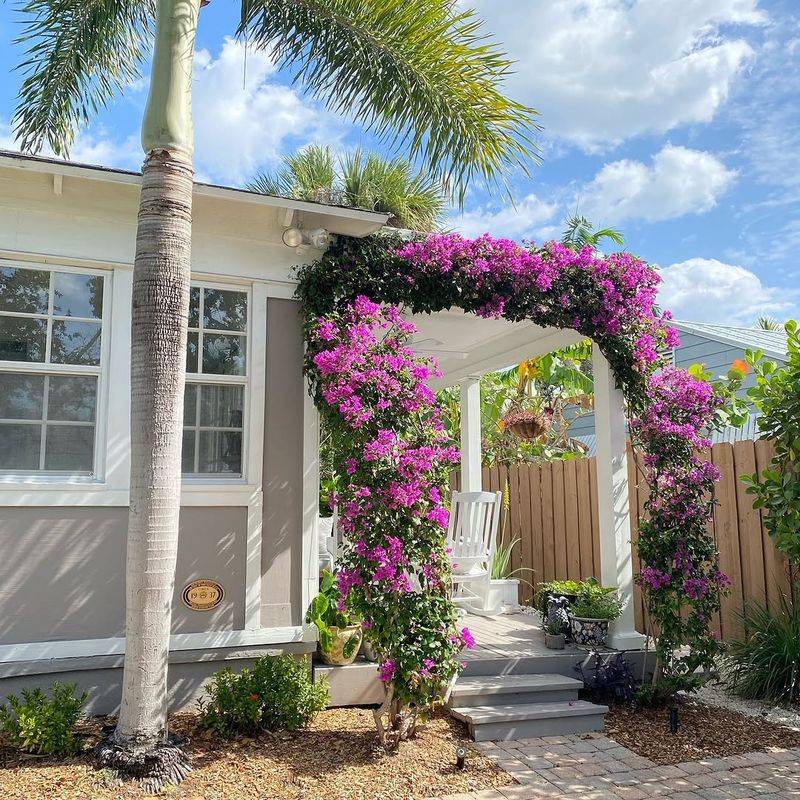
Bougainvillea next to a stucco wall is a beautiful idea right up until pruning day. The color is hard to argue with.
The drought tolerance is impressive. A well-trained specimen can genuinely be the most eye-catching thing in the yard.
The problem is not the plant. It is the location, and a tight wall strip tends to bring out the worst logistical side of a plant that already demands respect.
Bougainvillea does not cling to walls the way a true vine does. It needs to be trained and tied to a support, and some varieties use hooked thorns to anchor canes in place.
Those thorny canes can press against, scrape across, and scratch up a stucco surface as the plant grows and moves in the wind. The wall gets marked up, the plant keeps growing, and the situation compounds itself.
However, access is the other persistent issue. Pruning bougainvillea under normal circumstances already calls for thick gloves and long sleeves.
Add a rough stucco wall right behind the plant, and the angles become genuinely awkward. Canes can put on six feet or more in a single Arizona season, so the workload in a tight wall space adds up fast.
A sturdy trellis or pergola with at least two feet of clearance from the wall changes the dynamic entirely. The plant still gets to perform.
The stucco stays scratch-free. And pruning becomes something manageable rather than something to put off.
4. Climbing Roses Bring Reflected Heat Trouble Near Stucco
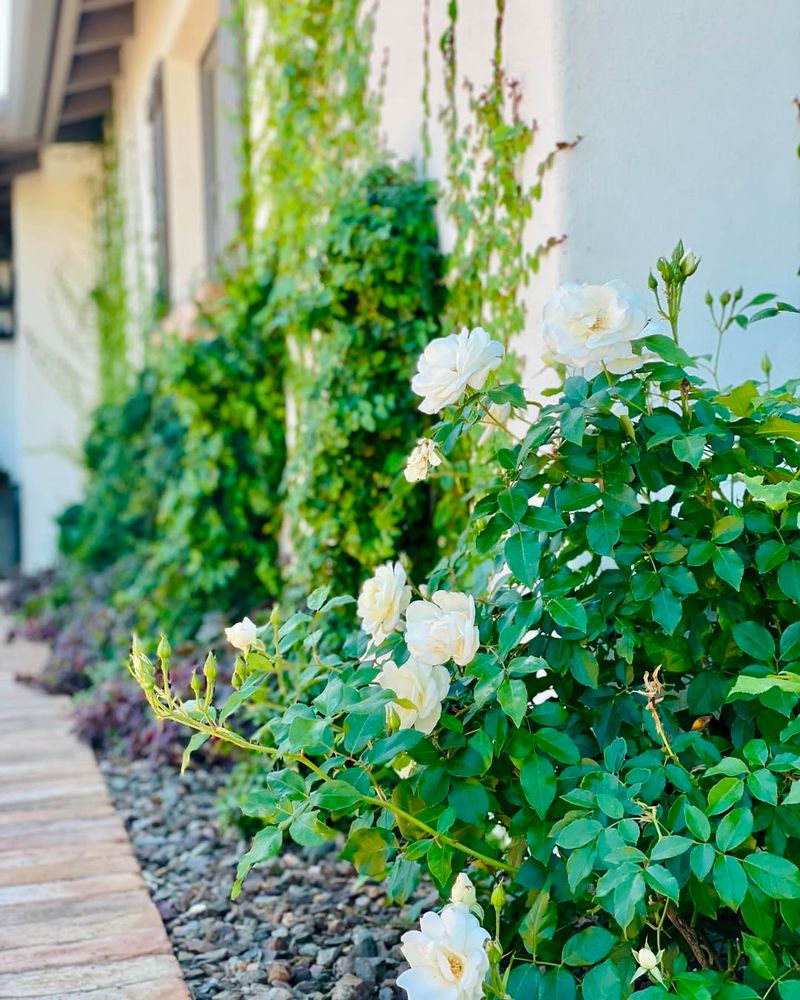
A rose-covered stucco wall sounds romantic. Arizona’s south-facing afternoon sun tends to revise that vision fairly quickly.
Stucco walls absorb heat through the day and radiate it back directly onto whatever is planted nearby.
On a south or west-facing wall, that reflected heat creates a microclimate that can run significantly hotter than the surrounding yard. For climbing roses, that situation is a poor fit.
Leaf bleaching, edge burn, and reduced flower production during the hottest months are fairly common outcomes when roses are pressed against a wall. The wall that looked like a beautiful backdrop in spring becomes a stress factor by July.
Maintenance access also makes the situation more complicated. Roses need regular pruning, tying, pest monitoring, and fungal treatment through the season.
Doing that work in the narrow gap between a rose and a wall is usually uncomfortable and quite dangerous.
The romance of the setup tends to fade noticeably when the pruning ladder comes out for the third time in a season.
A sturdy trellis or arbor away from intense wall reflections is a more practical setup for climbing roses in Arizona. East-facing exposures tend to be considerably gentler.
Good air movement around the plant also reduces fungal pressure, which is a persistent concern in a tight-wall situation.
5. Saguaro Arms Need Room Away From Walls
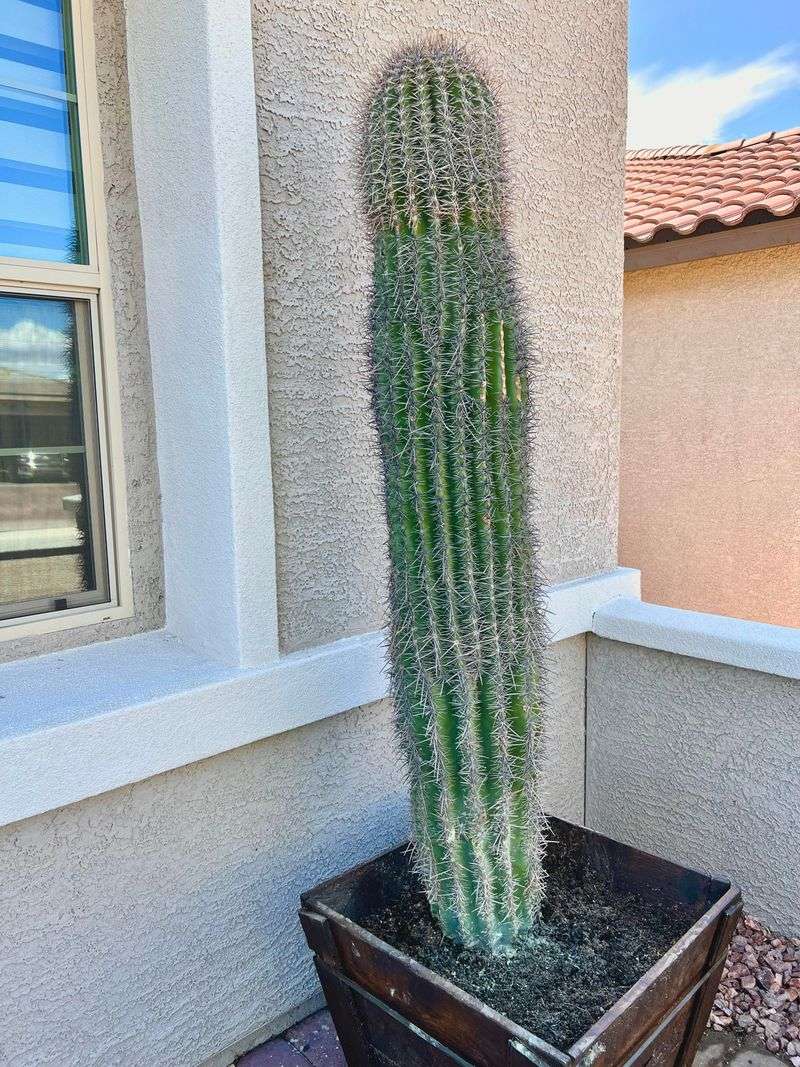
A young saguaro near a stucco wall may look Arizonan. However, the problem is the timeline. Saguaros are playing a very long game. What fits neatly in a corner at five years old may be pressing hard against the wall at twenty.
The cactus is not doing anything wrong. It simply needs more room than a tight wall strip can provide over the course of a decades-long life.
As arms develop, they can extend several feet from the main trunk. An arm growing toward a wall tends to keep growing in that direction.
The spines scratch and gouge the stucco surface regularly, and there is not a practical way to redirect a mature saguaro arm that already has a path.
Structural clearance becomes a concern as the plant grows larger. A mature saguaro near a wall creates real complications if the wall ever needs repair work or the cactus itself needs professional attention. Access is limited in both directions.
So, generous clearance from walls, utility lines, and roof overhangs from day one is the straightforward answer. Open yard space suits a saguaro far better than a wall corner ever will.
6. Mesquite Roots Need Space Beyond The Stucco Line
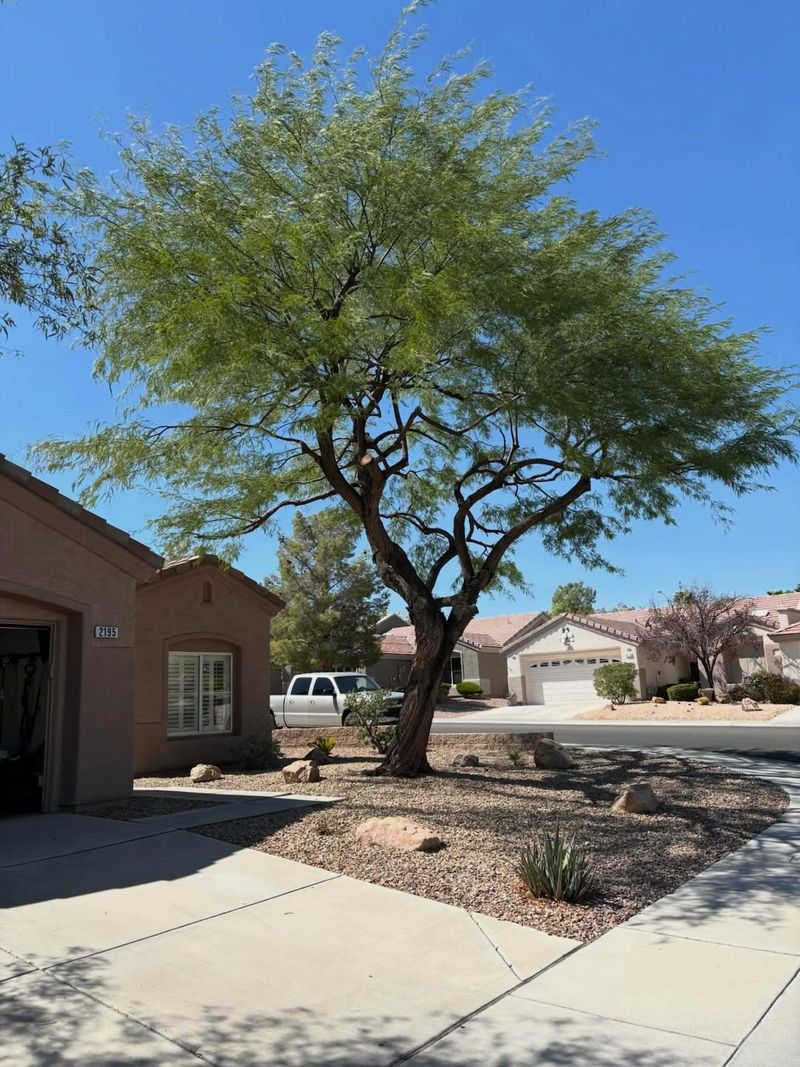
That small mesquite from the nursery had a plan from the beginning. Your stucco wall just did not know it yet.
Mesquites are genuinely valuable desert trees. Shade, wildlife support, and serious heat tolerance make them a strong choice for Arizona landscapes.
The complications arise when they go into the ground too close to walls, foundations, or structures that can’t accommodate an expanding root system over time.
Mesquite roots can extend well beyond the canopy drip line, searching for water and finding their way into any available gap near a footing. A stucco wall sitting over a concrete foundation is an obstacle course that roots will navigate around over the years.
Canopy spread adds another layer to the problem. Mature mesquites can reach twenty to thirty feet wide, depending on variety and conditions.
A tree planted in a narrow strip between a wall and a walkway will run out of room within a few seasons.
Fifteen to twenty feet of clearance from any structure is a reasonable starting point for most mesquite varieties. Though the right number depends on the specific cultivar and site.
Smaller desert trees like Blue Palo Verde tend to be better candidates for tighter spaces near walls. The size on that nursery tag is worth taking seriously. It is not aspirational. It is a preview.
7. Palo Verde Crowds Walls With Canopy And Roots
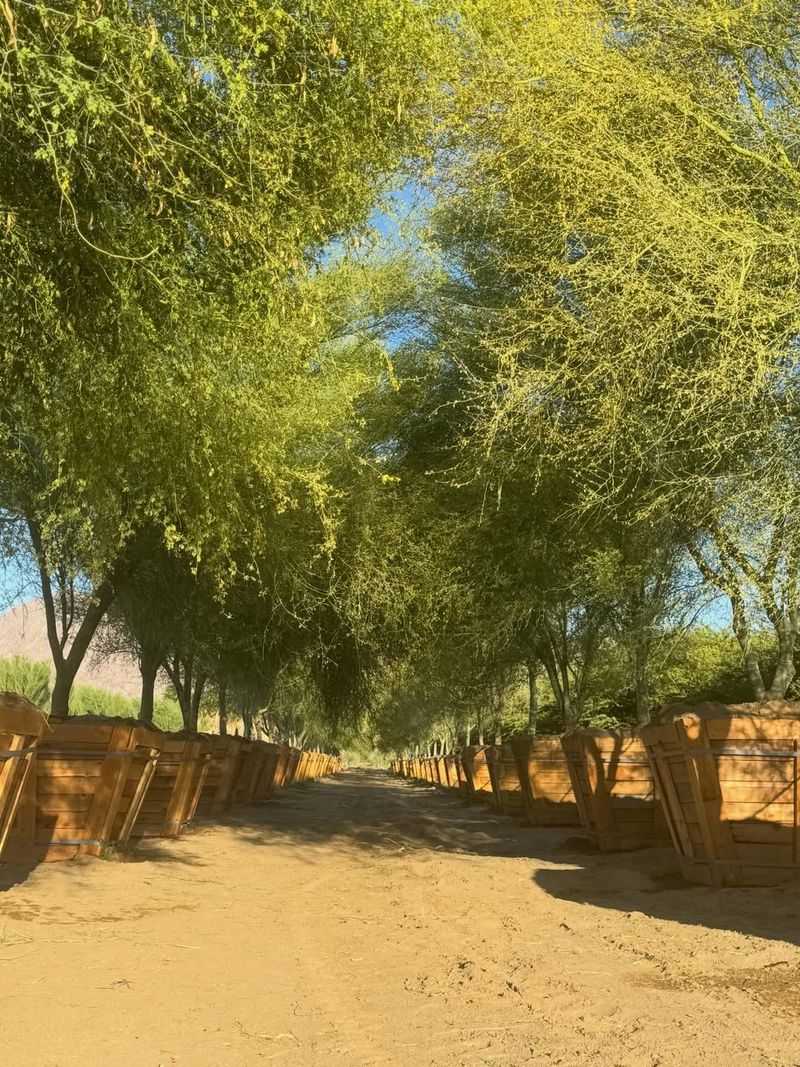
Palo verde is one of Arizona’s signature landscape trees. It also might be one of the easier ways to create a long-term wall problem.
The bright yellow spring blooms and distinctive green bark make palo verde a standout choice, and the tree handles Arizona heat with complete indifference. The challenge is not toughness. It’s the size, and what that size means when a wall is nearby.
The Desert Museum hybrid, one of the most popular palo verde selections, can reach twenty to thirty feet tall and equally wide.
A tree planted within five or ten feet of a stucco wall will eventually push its canopy over the wall surface, drop seed pods, and debris along the base. That combination tends to compound over several seasons before the full scope of the situation becomes clear.
Also, pruning near a wall becomes a regular obligation. Lower branches need trimming for access, and some palo verde varieties have thorns that make close-quarters work uncomfortable.
Debris accumulation along the wall base can trap moisture against the stucco over time, which creates its own set of concerns.
An open area of the yard with room to spread naturally is where palo verde performs best and causes the fewest complications. Tight wall strips tend to undersell the tree and overwork the homeowner.
Smaller accent plants or low-growing shrubs tend to serve confined wall spaces considerably better.
8. Large Shrubs Turn Wall Gaps Into Pruning Chores
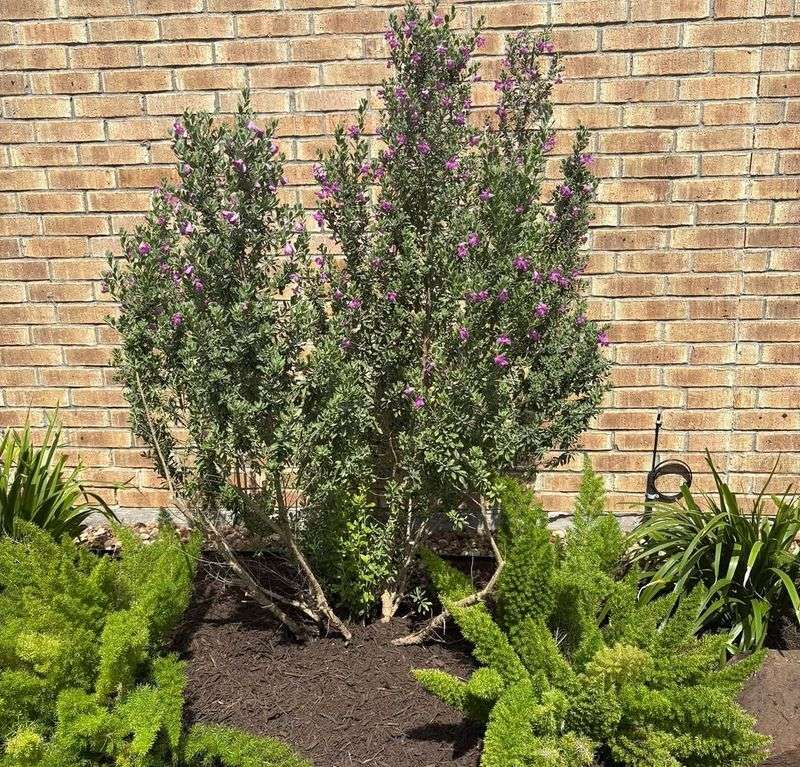
Maybe the nursery tag said compact. But the shrub had other ideas. Two Arizona summers later, it is pressing against the stucco, blocking the gate latch, and growing directly into the drip system.
Large shrubs in tight foundation strips near stucco walls are one of the more common sources of ongoing yard frustration. The gap looks plentiful at planting time.
Arizona growing conditions are generous, and a shrub that needs six to eight feet of width at maturity will claim that space regardless of what the strip actually offers.
Texas sage, desert spoon, and various Salvia species can all look modest and manageable at first. However, regular irrigation and warm temperatures change that picture fairly quickly.
Once branches are pressing against the stucco, they trap moisture and make it almost impossible to maintain the wall section behind them. So, pruning access becomes a frustrating puzzle with no clean solution.
Matching shrub selection to the actual available width of the planting strip is the straightforward fix. Low-growing, narrow-form plants tend to serve tight wall gaps far better than many shrubs.
For shrubs already in place, consistent pruning to maintain wall clearance is the practical path forward. Checking mature width before planting rather than after is a habit worth developing.