The Best Backyard Privacy Plants That Thrive In Arizona Heat
One bad privacy plant can make an entire backyard feel unfinished. Everything starts out looking full and green, then summer hits hard and suddenly the screen looks patchy, dry, and half empty by July.
A lot of homeowners end up frustrated because the plants sold as “perfect privacy options” often struggle once real desert heat settles in.
Gravel holds extra heat, block walls stay warm into the evening, and weaker plants start struggling fast.
Good privacy plants should make life easier, not harder. Thick coverage and strong heat tolerance matter much more than fast spring growth.
Arizona yards usually look far more comfortable once the right plants fill in properly. Patios feel more private, and the backyard feels much calmer during summer.
1. Hop Bush Fills Out Fast In Full Desert Sun
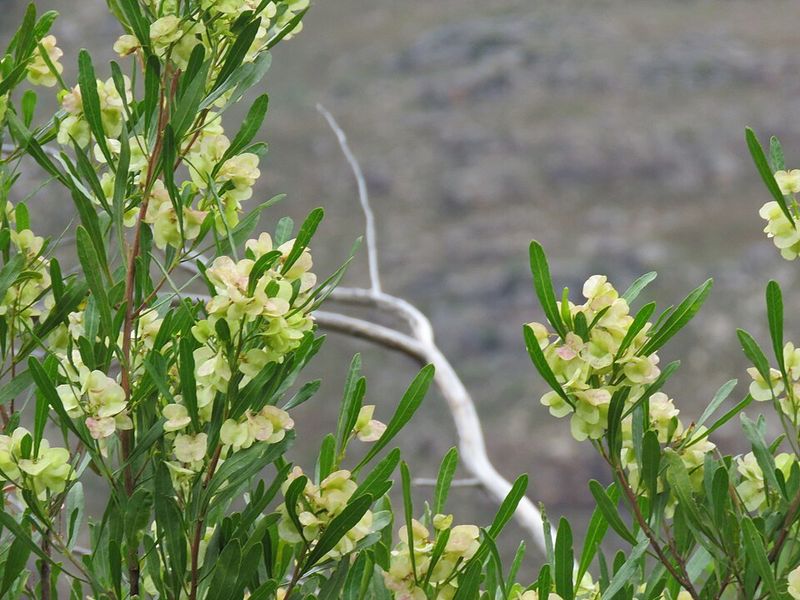
Speed matters when you want privacy fast. Hop Bush is one of the quickest-filling shrubs you can plant in a hot, dry backyard.
Under good conditions, it can push several feet of new growth in a single season.
Purple-leafed varieties like Purpurea are especially popular in desert landscapes. Their deep, wine-colored foliage holds color through summer heat without fading.
Planted in a row, they form a thick, attractive screen that blocks sightlines from neighboring yards or streets.
Hop Bush tolerates reflected heat from walls and pavement surprisingly well. Full sun is where it truly shines.
Shade slows its growth and thins out the canopy, so pick a bright, open spot for best results.
Water requirements drop dramatically once established. During the first summer, regular deep watering helps roots settle in.
After that, monthly irrigation is often enough in most desert zip codes.
Spacing plants about five to six feet apart allows each shrub room to fill out without overcrowding. Closer spacing speeds up the privacy screen but may require occasional thinning later.
Pruning is simple and forgiving.
One thing worth knowing: Hop Bush can reach eight to ten feet tall without trimming. If you want a lower hedge, light shaping in late winter keeps it tidy.
Overall, few plants deliver this combination of speed, toughness, and visual appeal in a desert backyard.
2. Texas Ranger Tolerates Fierce Afternoon Exposure Easily
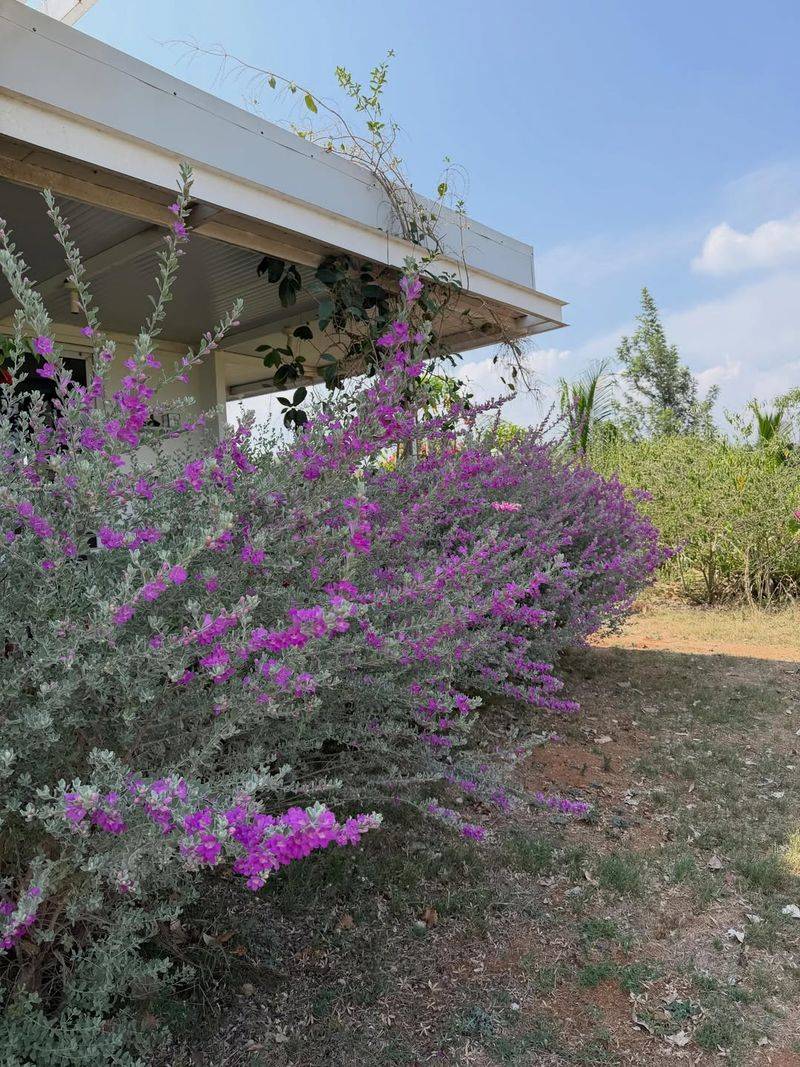
Few shrubs put on a show quite like Texas Ranger after a monsoon rain. Within hours of moisture hitting the air, the entire plant bursts into a cloud of lavender or purple blooms.
It earns its nickname, the Barometer Bush, for good reason.
Beyond the flowers, Texas Ranger builds a dense, rounded form that works beautifully as a privacy screen. Silvery-gray leaves reflect harsh sunlight rather than absorbing it.
That reflective quality helps the plant handle brutal west and south exposures that would stress most other shrubs.
Mature plants can reach six to eight feet tall and equally wide. Planted in a staggered row, they create a layered, natural-looking barrier.
No fence required when a row of these fills in properly.
Drought tolerance is exceptional. Established plants often survive on rainfall alone in low-desert regions, though occasional deep watering during dry stretches encourages fuller, healthier growth.
Your Arizona Garden Changes Every Week. Your Plan Should Too.
Gardening in Arizona changes quickly throughout the season. Every Friday you’ll receive a simple weekly plan showing exactly what to plant, prune, fertilize, harvest, and protect so you never miss the right timing.
Overwatering is actually more harmful than underwatering with this plant.
Soil drainage matters a lot. Rocky or sandy ground suits it perfectly.
Heavy clay soils that hold moisture can cause root problems over time, so amending or raising planting beds helps in those situations.
Pruning is optional but useful. A light trim after each bloom cycle keeps the shape neat without sacrificing next season’s flowers.
Left natural, it develops an open, airy structure that still provides solid visual separation in a backyard setting.
3. Yellow Bells Adds Seasonal Separation Near Outdoor Seating
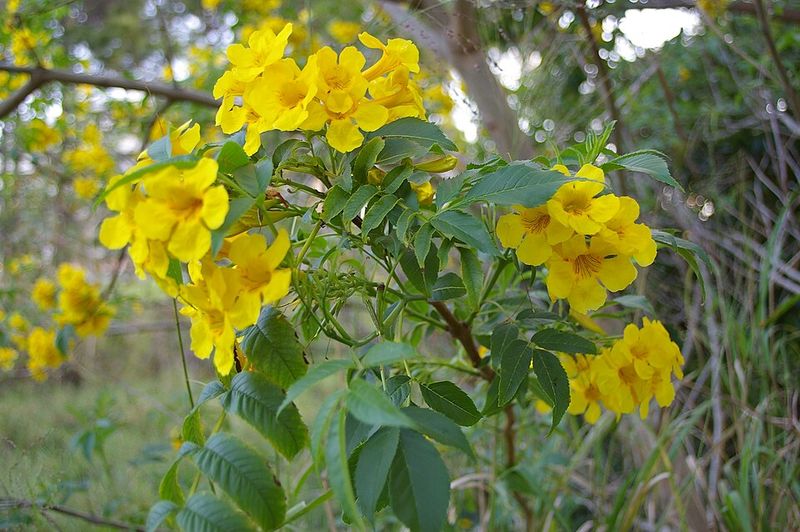
Bright yellow trumpet flowers covering a six-foot shrub are hard to ignore. Yellow Bells, also called Esperanza or Tecoma stans, brings bold color and reliable screening to backyard seating areas from late spring straight through fall.
Growth is vigorous once the plant settles in. During warm months, new branches push outward quickly, adding both height and density.
Near a patio or outdoor dining area, a row of Yellow Bells creates a soft, colorful divider that still allows a breeze to pass through.
Hummingbirds visit constantly during bloom season. If attracting wildlife is part of your backyard vision, this plant pulls its weight on that front without any extra effort.
The flowers are almost impossible to miss from across a yard.
Cold sensitivity is worth mentioning honestly. Yellow Bells handles summer heat without complaint, but hard freezes can cut it back to the ground.
Lower-elevation desert yards rarely see temperatures cold enough to cause serious setback, but higher elevations carry more risk.
After a cold winter, the plant typically rebounds from its roots with strong new growth once temperatures warm up. Cutting back frost-damaged stems in late winter clears the way for fresh shoots.
Recovery is usually quick and full.
Water needs are moderate compared to many desert plants. Deep watering every couple of weeks during the hottest months keeps growth steady.
Once temperatures cool in fall, irrigation frequency can drop without affecting plant health or flower production.
4. Arizona Rosewood Maintains Rich Growth During Harsh Summers
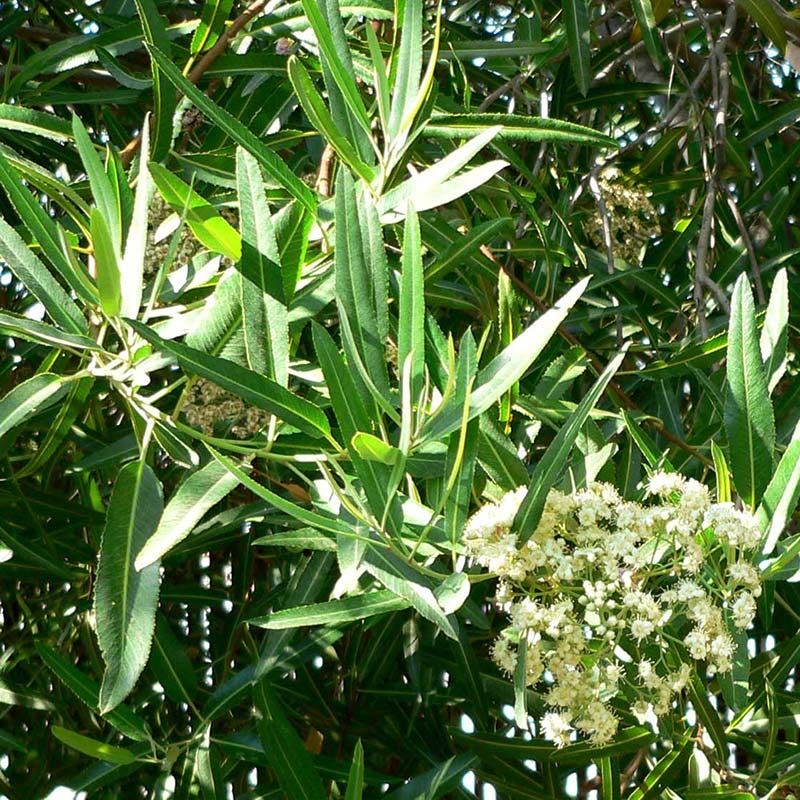
Not every privacy plant needs showy flowers to earn its spot in a backyard. Arizona Rosewood is all about structure, density, and dependability.
Its dark green, leathery leaves stay on the plant year-round without fuss.
Native to rocky desert canyons and mountain foothills, this shrub evolved to handle intense heat and minimal water. That background makes it one of the most naturally suited options for hot, exposed backyards across the low and mid-desert regions.
Height potential is impressive. Left unpruned, Arizona Rosewood can push past ten feet and spread nearly as wide.
For a tall, opaque privacy screen along a property line, few plants match its combination of size and leaf density.
Fragrant white flowers appear in spring and add a subtle, pleasant scent to the yard. The blooms are small but clustered, giving the plant a soft, finished look during the cooler months.
Summer heat fades the flowers, but the foliage stays rich and green.
Watering needs are genuinely low once roots are fully established, usually after the first full growing season. Deep, infrequent irrigation encourages roots to grow downward, which improves drought tolerance over time.
Shallow, frequent watering produces weaker root systems.
Pruning is rarely necessary beyond occasional shaping. The plant grows in a naturally dense, upright form that requires little intervention.
In tight spaces, light trimming in late winter keeps it within bounds without stressing the plant heading into summer.
5. Red Tip Cassia Reaches Impressive Height Without Heavy Pruning
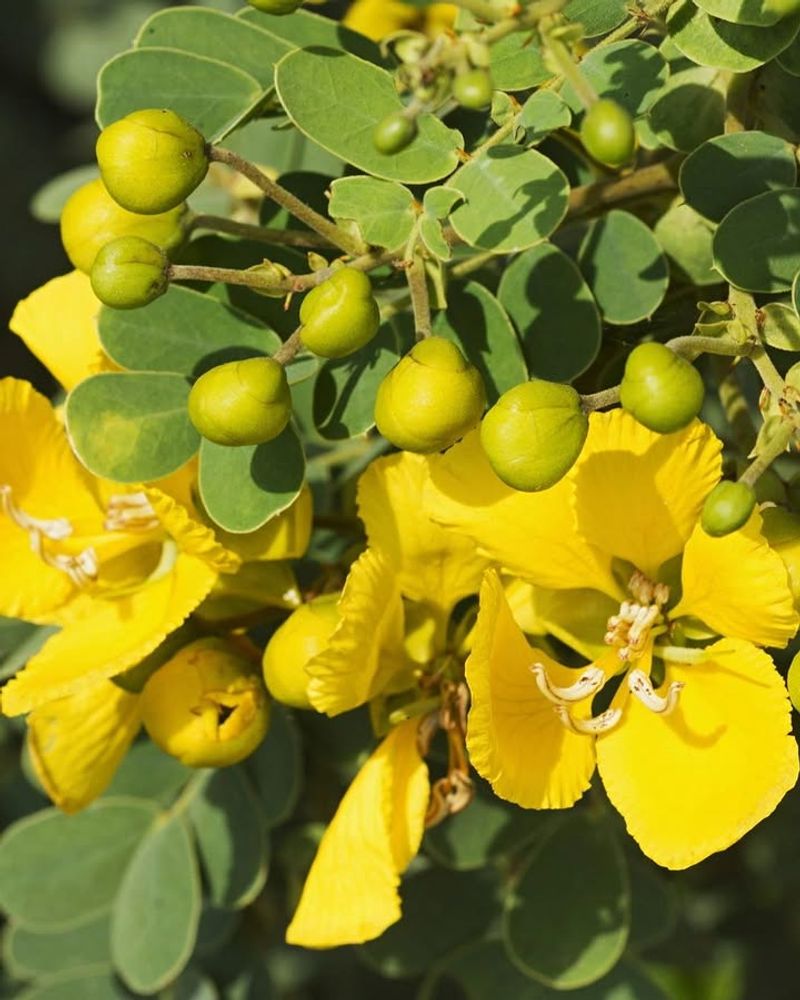
Walk past a Red Tip Cassia in late winter and the burst of golden yellow flowers stops you cold. It blooms hard before most other plants even think about waking up, making it a standout in any backyard from January through March.
New growth flushes with a reddish tint, which is exactly where the common name comes from. That contrast between fresh red tips and mature green foliage gives the plant a layered, textured look throughout the growing season.
It reads as ornamental even when not in bloom.
Height is a genuine advantage here. Mature plants regularly reach eight to twelve feet without any encouragement.
Planted along a fence or property edge, a row of Red Tip Cassia builds a tall, natural privacy wall that softens hard structures behind it.
Pruning is minimal. Light shaping after the bloom cycle finishes keeps the form tidy, but heavy cutting is rarely needed.
The plant naturally maintains a full, upright shape that fills vertical space efficiently.
Water requirements are low to moderate. Deep irrigation every two to three weeks during summer keeps growth active.
Cutting back on water in fall signals the plant to slow down and prepare for its dramatic winter bloom cycle.
One practical note: Red Tip Cassia can suffer stem damage in hard freezes. Wrapping young plants during rare cold snaps protects new growth.
Established plants typically recover well from frost without losing their overall structure or next season’s blooms.
6. Pineapple Guava Creates More Backyard Seclusion Over Time
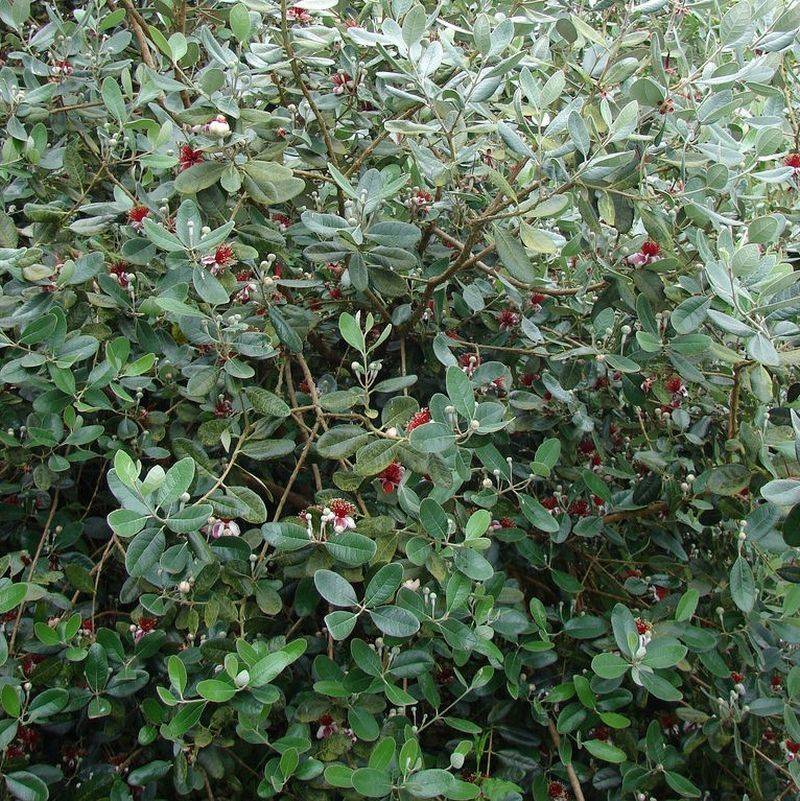
Patience pays off with Pineapple Guava. Growth is steady rather than explosive, but what it builds over a few seasons is a dense, silvery-green wall that genuinely blocks views and adds real structure to a backyard.
Leaves are thick and leathery with a silvery underside that catches sunlight beautifully. When wind moves through the plant, that two-toned foliage creates a shimmering effect that looks intentional and polished.
Few privacy shrubs offer this kind of visual texture.
Red and white flowers appear in spring and are actually edible. The petals have a sweet, slightly tropical flavor that surprises most people the first time they try one.
Fruit follows in fall on mature plants, adding another layer of interest to a backyard that already works hard visually.
Heat tolerance is solid. Pineapple Guava handles full sun well but also adapts to partial shade, which gives it more placement flexibility than many desert-specific shrubs.
West-facing exposures with afternoon heat rarely cause stress on established plants.
Cold hardiness is better than most people expect. It handles temperatures down into the low teens without serious setback, making it a workable option for higher-elevation desert yards that experience harder winters.
Watering every one to two weeks during summer supports steady growth. Deep, slow irrigation encourages roots to spread wide and anchor the plant firmly.
Once fully established after two or three seasons, water needs drop noticeably and maintenance becomes genuinely minimal.
7. Baja Fairy Duster Breaks Up Bare Fence Lines Naturally
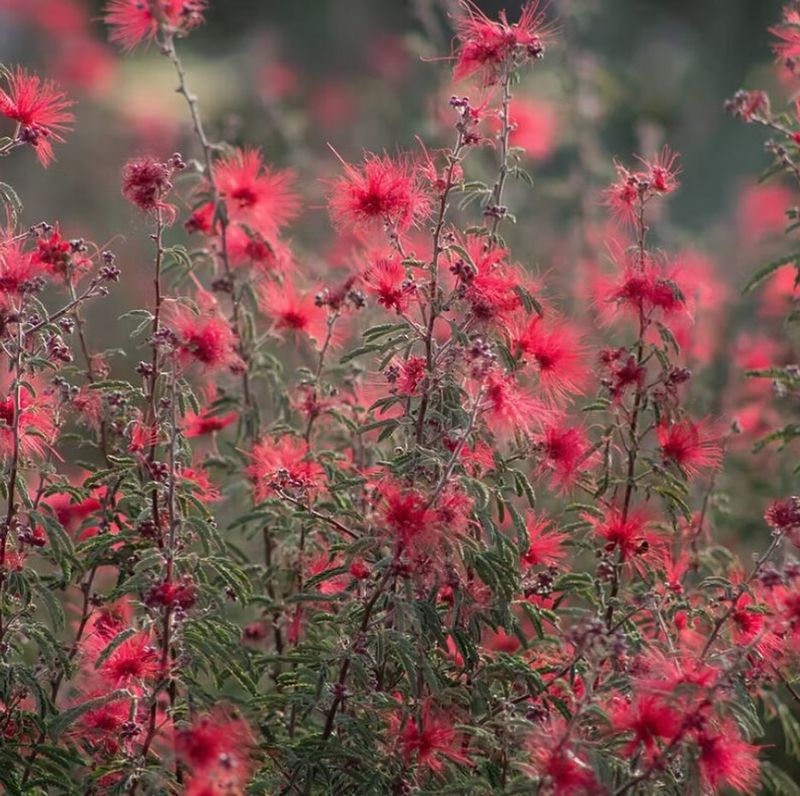
Bare fence lines in a hot backyard look harsh and unfinished. Baja Fairy Duster softens that hard edge with arching branches, fine-textured foliage, and powder-puff blooms in shades of red and pink that draw attention from across the yard.
Bloom season stretches longer than most desert shrubs. In mild winters, flowers appear as early as late fall and continue into spring.
Warm spells during winter often trigger repeat blooming, which keeps the plant looking active and alive even during cooler months.
Growth habit is open and airy rather than dense. Baja Fairy Duster does not create a solid wall of foliage, but it adds layers and movement along a fence line that make a yard feel more private without completely blocking airflow.
That openness actually works in its favor on hot summer days.
Hummingbirds and butterflies visit constantly during bloom periods. If pollinators matter to you, this plant delivers.
Planting it near a seating area means you get both privacy softening and natural wildlife activity right outside your chair.
Drought tolerance is outstanding. Established plants survive on very little supplemental water in low-desert settings.
A deep watering once or twice a month during peak summer heat keeps it looking full. Less water actually encourages more blooming in some cases.
Pruning once a year, ideally in late winter, removes older woody stems and encourages fresh growth from the base. Skipping pruning for a season or two is not a problem.
The plant recovers easily and reshapes itself quickly with minimal intervention.
8. Sweet Acacia Spreads Broad Canopies Around Property Edges
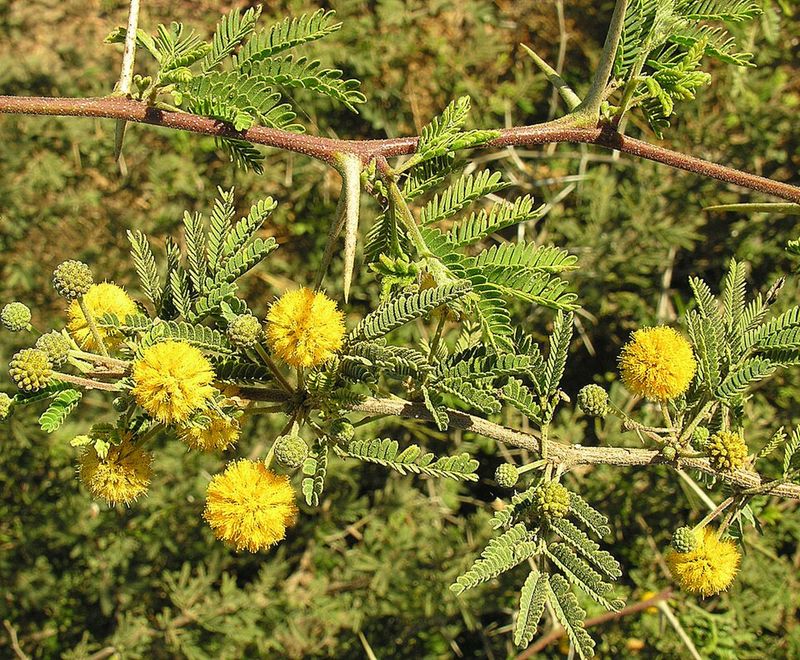
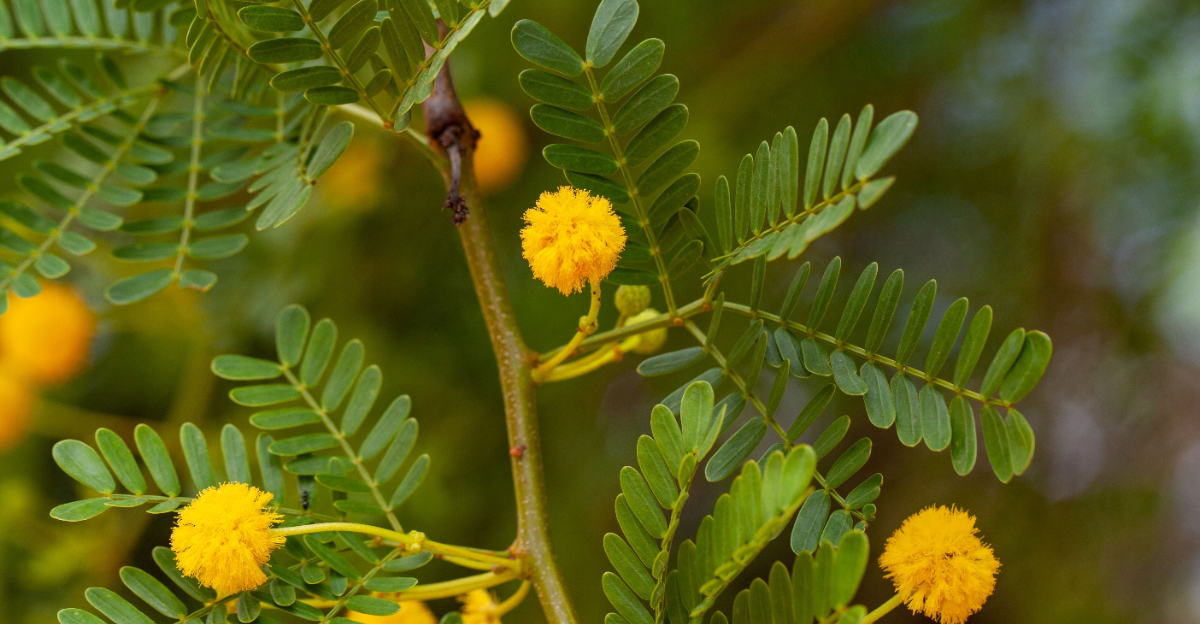
Sweet Acacia does something most privacy plants cannot: it provides overhead coverage.
While most shrubs block horizontal sightlines, this spreading tree creates a broad canopy that shades property edges and adds a sense of enclosure from above.
Golden yellow puffball flowers bloom in late winter and early spring with a fragrance strong enough to notice from several feet away.
The scent is sweet and distinct, and it fills a backyard on warm mornings in a way that feels almost tropical despite the desert surroundings.
Mature canopy spread can reach fifteen to twenty feet wide. Planted along a back fence or property line, a few of these trees create a layered overhead screen that cuts glare, reduces reflected heat, and gives a yard a finished, established look.
Thorns are present on the branches, which is worth knowing before planting near high-traffic areas. Along a property edge or back fence line away from foot traffic, those thorns actually add an extra layer of natural deterrence.
Placement matters more with this plant than with spineless options.
Water needs are low once established. Deep irrigation every two to three weeks during summer supports canopy development.
Cutting back irrigation in fall encourages the tree to harden off properly before cooler temperatures arrive.
Growth rate is moderate, typically two to three feet per year under reasonable care. Not the fastest option on this list, but the structure and scale Sweet Acacia eventually delivers makes the wait genuinely worth it for long-term backyard privacy planning.