Arizona’s Cactus Wrens May Build or Repair Winter Nests As Nights Cool
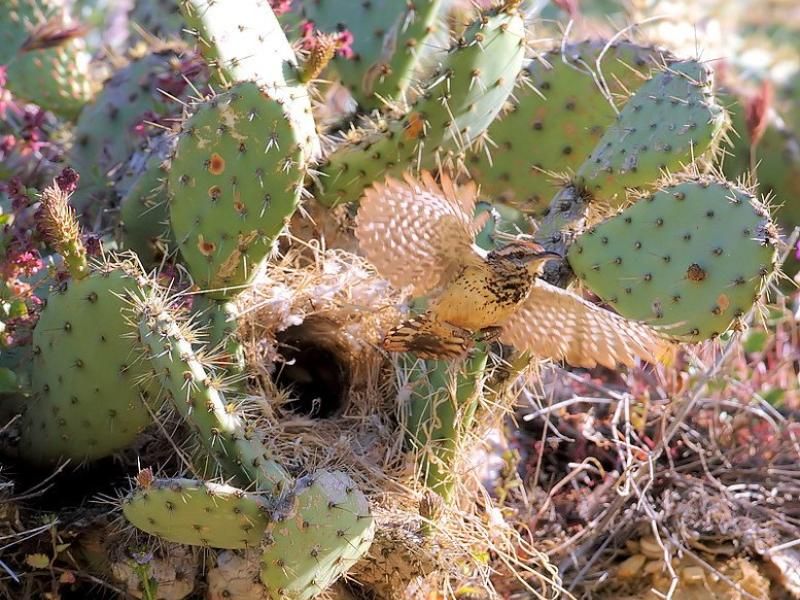
Walk a desert yard near dusk and you might see a plump, speckled bird slip into a ball of sticks tucked inside a cholla. That bird is a Cactus Wren, Arizona’s state bird, and it is heading to bed.
Many people think winter changes how these wrens sleep, but the real story is more interesting. Here is what the birds are doing, what may change as nights cool, and how to enjoy it without causing trouble.
Cactus Wrens roost in nests year-round
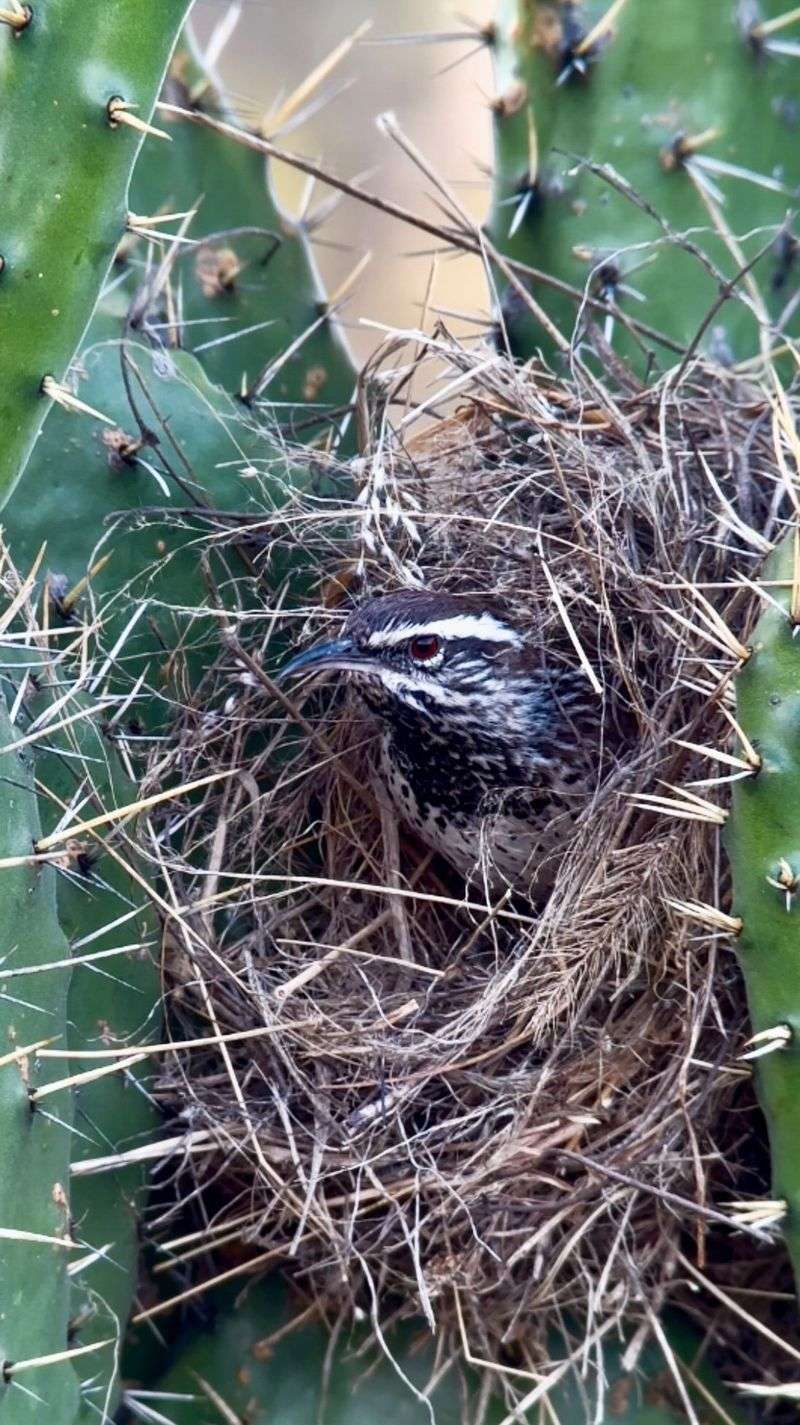
Here is the correction up front: Cactus Wrens do not start sleeping in nests when winter arrives. According to Cornell Lab life history notes, the birds return to nests after sunset and use them throughout the year.
A long-term Tucson-area study backs this up. The 1957 study by Anderson and Anderson recorded roosting nests in every month.
The wrens used habitable nests that already existed and built new ones when none were available.
So the better way to think about it is this: cooler weather may bring some building or repair, but it is not a brand-new nighttime habit shared by every bird. Winter alone does not flip a switch.
A wren that sleeps in a covered nest in July is doing the same basic thing in January, and what you notice in your yard may simply depend on which nests are in good shape.
The nest is enclosed, with a narrow entrance
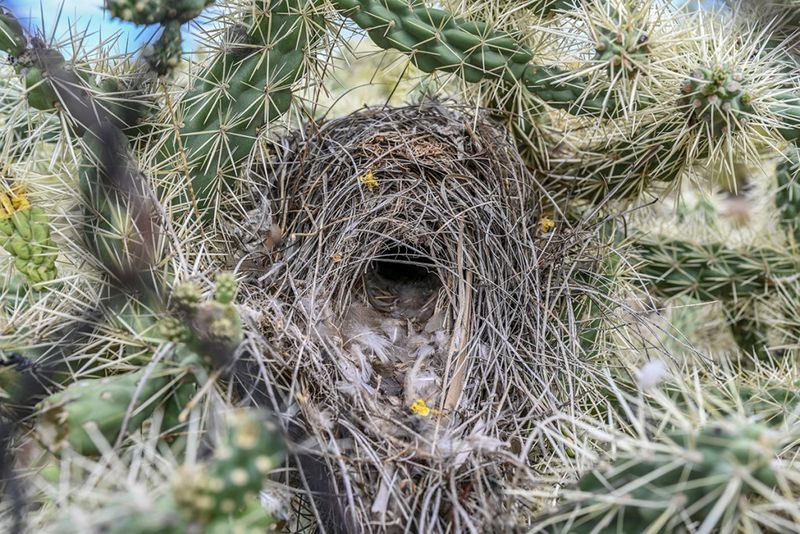
Picture a messy football of grass and twigs wedged into spines. That is a typical Cactus Wren nest: bulky, covered on top, and reached through a narrow, tunnel-like opening on the side.
Cornell describes the inside as lined with feathers, and both sexes help build it.
In Arizona, cholla is a favorite spot, and its spines give the nest a prickly guard. Wrens also use other cacti, plus thorny trees and shrubs such as mesquite, ironwood, palo verde, and catclaw acacia.
Arizona Game and Fish notes that the species lives year-round in southern, western, and central parts of the state.
Do not expect every nest to match this description exactly. Size, shape, and condition vary, and a nest that looks tidy from one angle may look ragged from another.
Looks alone also will not tell you what a nest is being used for, which is a puzzle we will come back to.
Cool weather may prompt nest repairs or new building
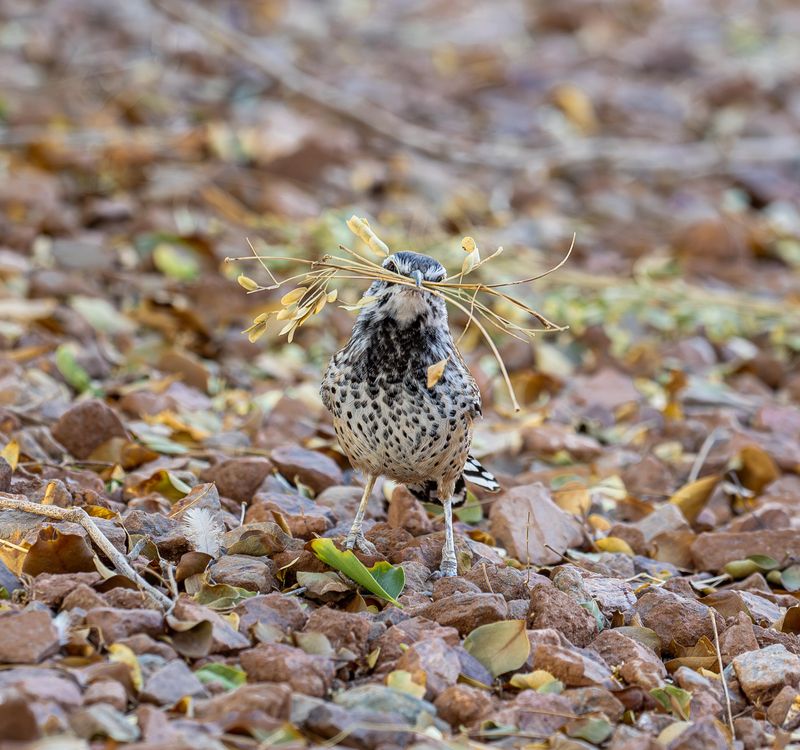
Accounts of the seasons do not perfectly agree. An older Arizona Highways account says the first cool September evenings prompt wrens to build or fix winter nests.
Treat that as one observer’s report, not a calendar date or a guaranteed trigger.
The Tucson-area study tells a slightly different story. It found covered roost nests in every month, with new construction when nests were unavailable or destroyed.
In that study, each adult slept in its own roosting nest, and building could continue through winter after nests were wrecked.
Those findings come from one study area, so they are not a rule for every pair or every yard. A wren with a sound nest nearby may simply move in.
Your Arizona Garden Changes Every Week. Your Plan Should Too.
Gardening in Arizona changes quickly throughout the season. Every Friday you’ll receive a simple weekly plan showing exactly what to plant, prune, fertilize, harvest, and protect so you never miss the right timing.
A wren whose nest was torn apart by wind or a predator may start from scratch. If you see a wren hauling grass in October or December, it may be repairing a nest or replacing a lost one.
Enclosed nests offer shelter, but their warming effect is unproven
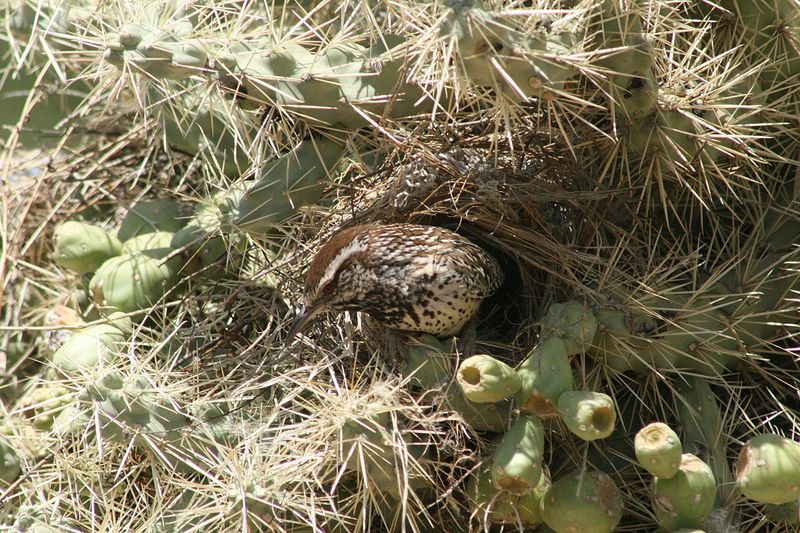
It is easy to guess why a covered nest ringed with thorns might help. A roof can block wind and some weather, and spines may make life harder for predators.
Those are sensible ideas, but they are interpretations, not measured results.
As for warmth, nobody can tell you that a winter nest keeps a wren a certain number of degrees warmer. An ASU symposium abstract on winter roost nests describes temperature regulation as a hypothesis that researchers were testing.
It does not report a proven heating benefit.
There is also no demonstrated survival boost to point to. For a backyard watcher, the safe takeaway is modest: the nest looks like shelter, and it may well serve the birds in several ways.
Whether it truly warms them, and by how much, remains an open question, so be wary of any claim that gives a firm number.
A bird entering a nest does not prove it is raising young
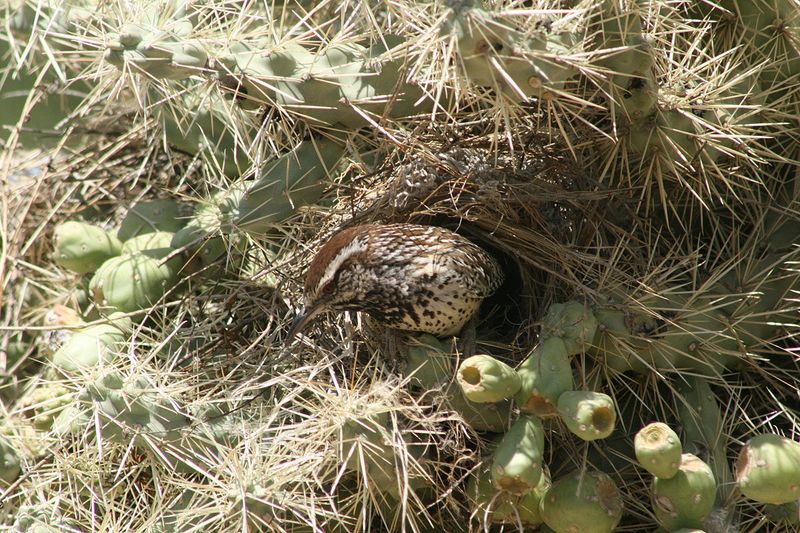
Seeing a wren duck into a nest feels like a clue that babies are inside. Not necessarily.
A roosting nest is simply one used for resting or sleeping, and it can look just like a nest built for raising a family.
Cactus Wrens build more than one nest, and different nests can serve different purposes. Cornell’s species overview and the Texas Breeding Bird Atlas account both reflect that nests are not all alike.
One nest may host eggs, another may be a bedroom, and a third may sit empty for a while.
Instead of guessing, watch patterns from afar. A bird that enters at dusk and stays put may be roosting.
Frequent trips with food during the day point toward young, though even then you cannot be sure which nest is active. Keep your conclusions loose and your distance generous.
Give occupied nests space

The best way to enjoy a wren nest is from a comfortable distance. Binoculars or a phone zoom work well.
Cornell NestWatch advises giving nests with eggs or young plenty of space and not moving active nests.
Cactus Wrens are on the federal list of birds protected under the Migratory Bird Treaty Act. If a nest creates a specific safety or removal concern, contact the appropriate wildlife authority, such as Arizona Game and Fish, before doing anything.
A nest that looks empty may still be in use, so do not assume it is fair game.
That is the practical side. The bigger picture is simple: winter may bring some mending, but the nighttime nest habit is nothing new.
Those thorny bundles are bedrooms all year, quietly doing their job while we sleep.