Native Georgia Trees That Thrive In Wet Soil After Heavy Fall Rain
A few Southern trees grow knobby wooden knees that poke out of swampy ground like tiny brown gnomes. Scientists still debate why those knees form, but they mostly appear where water sits for very long stretches.
Heavy October storms across Georgia can leave clay yards soggy for days, and plenty of shrubs sulk afterward.
Yet certain native trees evolved in muddy river bottoms and swamps, so puddles feel like home to them.
I have to admit that my own soggy backyard corner used to frustrate me every single autumn. Then I finally learned which trees actually enjoy wet feet, and that soggy spot became my favorite view.
You might notice a few of these sturdy beauties already growing along creeks near your Georgia home. That soggy patch in your yard might be the perfect place for one of these native trees.
1. River Birch
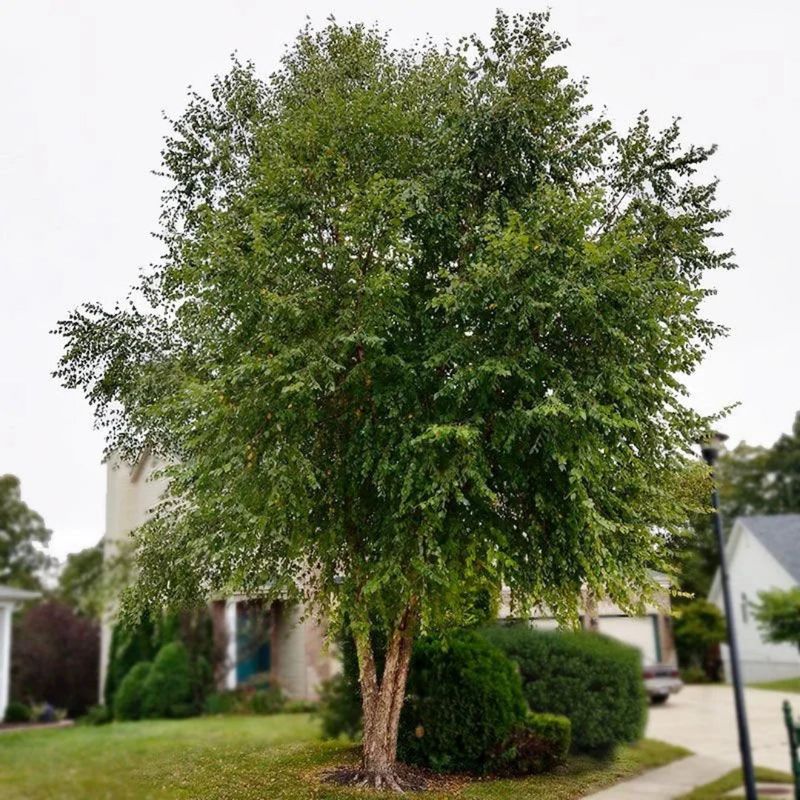
Peeling bark that curls like cinnamon sticks makes river birch look like it is shedding a sweater. I love running my fingers over those papery salmon and tan layers on a cool October afternoon.
This fast grower naturally hugs stream banks across the Southeast, so heavy clay and short floods rarely bother it. Expect a mature height of roughly 40 to 70 feet, often with several trunks rising together.
Give it full sun or light shade, and plant it where soil stays acidic, ideally below pH 6.5. In alkaline ground, the leaves can turn yellow because the roots struggle to take up iron.
Fall color is a soft butter yellow, and the show is brief, so enjoy it while it lasts. Personally, I think the bark steals the spotlight anyway, especially in winter when branches stand bare.
River birch also resists the bronze birch borer, a pest that troubles many other birch species. That resistance makes it a smart pick for Southern yards where heat stresses less adapted cousins.
October is a great planting month because cooler air reduces stress while warm soil encourages new roots. Keep the young tree away from septic lines and patios, since thirsty roots spread wide and shallow.
Birds nibble the small seeds, and the tree hosts caterpillars of several native moths and butterflies.
Pair it with native ferns or sedges underneath for a soft, woodland look beside the soggy spot.
2. Bald Cypress
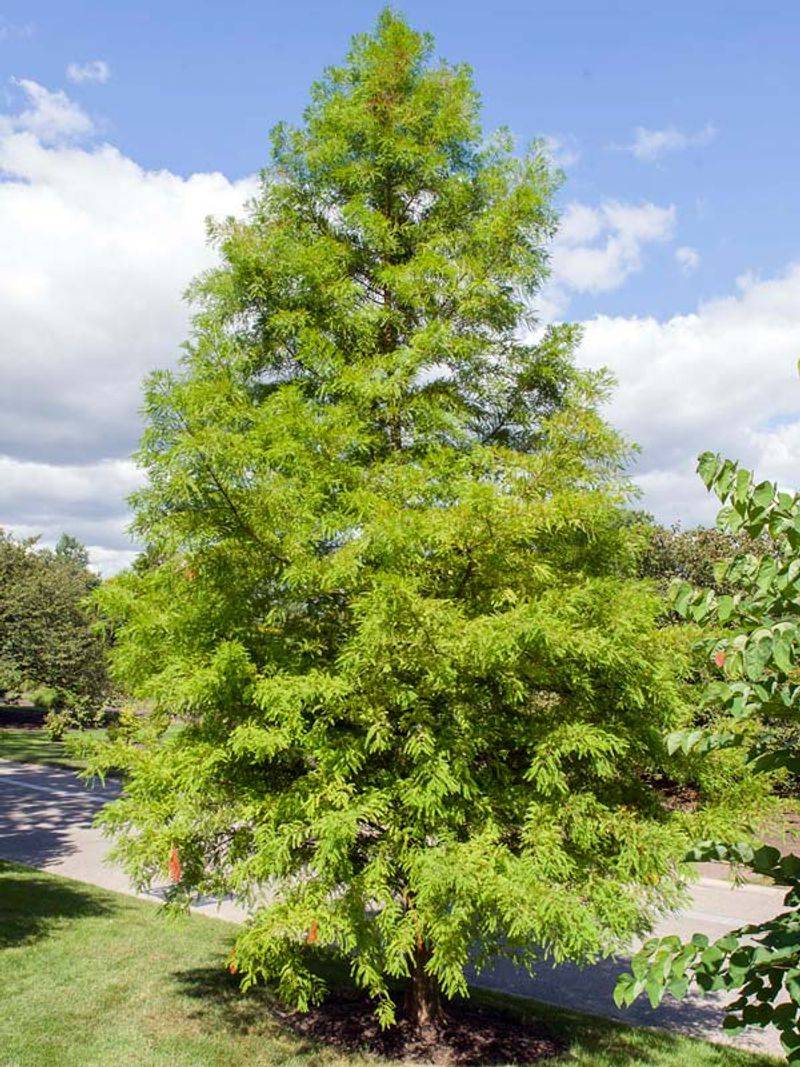
Few trees can stand in a flooded swamp for months, yet bald cypress treats standing water like a bath.
Its swollen, flared trunk base looks almost sculpted, as if someone carved it out on purpose.
Despite the needles, this native conifer drops its foliage each fall, which explains the bald part of its name. In October, the feathery green turns rusty orange before the needles start floating to the ground.
Mature trees usually reach 50 to 70 feet tall, so give them plenty of room to stretch. Full sun brings the best growth, although a little afternoon shade is perfectly fine for young trees.
What surprises me most is how well bald cypress handles ordinary yard soil once its roots settle in. That flexibility makes it a solid choice for spots that swing between soggy weeks and dry spells.
Your Georgia Garden Changes Every Week. Your Plan Should Too.
Gardening in Georgia changes quickly throughout the season. Every Friday you’ll receive a simple weekly plan showing exactly what to plant, prune, fertilize, harvest, and protect so you never miss the right timing.
Those famous knees mostly form in wet or flooded sites, so a regular lawn rarely sprouts them. If you plant near a pond edge, though, expect a few knobby surprises over the years.
Round cones break apart in fall, and squirrels and wood ducks happily eat the oily seeds inside. Bald cypress can thrive in large rain gardens and other wet areas, but planting one will not necessarily prevent stormwater from pooling near your house.
Plant a young one this month and water it during dry spells until next summer passes. With patience, you will enjoy a tree that can easily outlive several generations of your family.
3. Pond Cypress
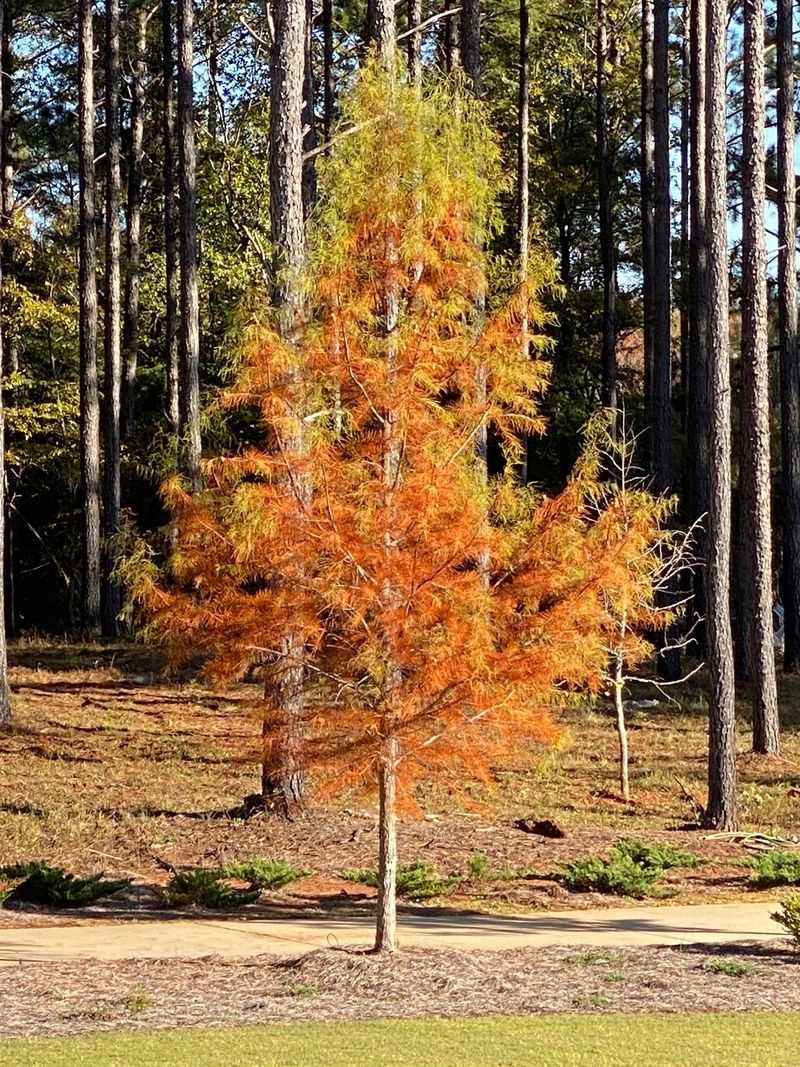
Slim and tidy, pond cypress looks like the bald cypress that skipped dessert and kept its figure. Its branches point upward, giving it a narrow outline against the blue October sky.
This native grows naturally in shallow ponds and wet pine flatwoods across the Coastal Plain of the Southeast.
Its leaves press close to the twigs, so the foliage resembles soft, fuzzy green threads.
Mature trees often reach 50 to 60 feet tall but stay much narrower than their famous cousin. That slim shape makes pond cypress handy for smaller yards where a wide canopy would crowd things.
Plant it in full sun with acidic soil that stays moist, since alkaline ground can yellow the needles. Periodic flooding is no problem, and heavy fall rain simply gives the roots a long, happy drink.
Right now, the foliage starts shifting toward warm rusty brown before it drops for the winter months. I like how the color glows softly instead of shouting, which feels calm and grown-up somehow.
Small round cones mature in fall, and birds and squirrels pick at the seeds tucked inside. Knees may form near standing water, though they tend to stay shorter than bald cypress knees.
You need to give young trees steady water until roots settle, which usually happens within one year. After that, this low-fuss tree mostly takes care of itself while your soggy spot finally looks intentional.
4. Black Gum
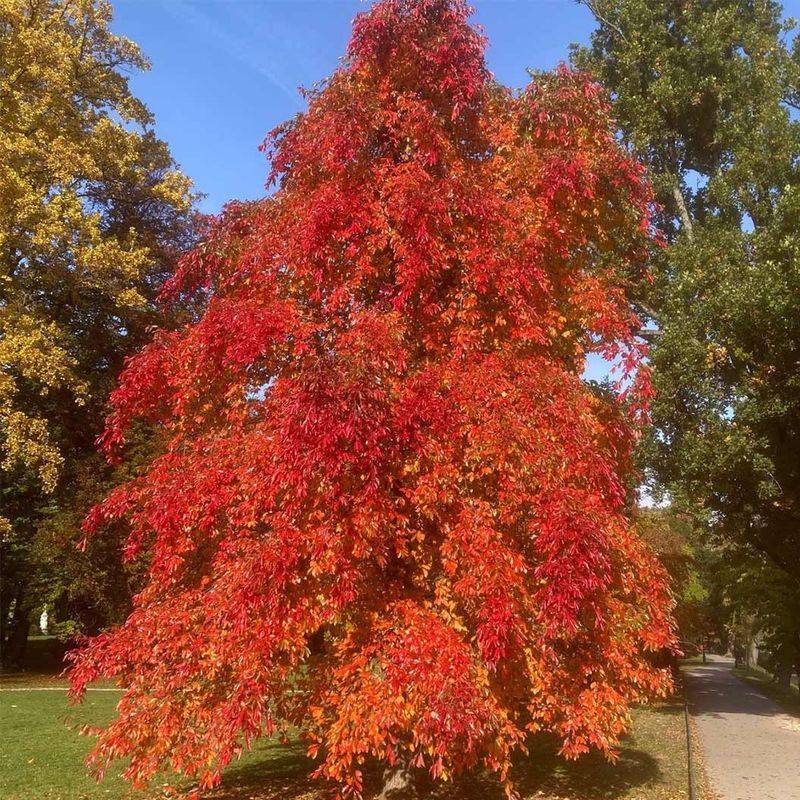
Every October, black gum seems to catch fire one leaf at a time, starting with a few scarlet flags. Within weeks, the whole canopy glows deep red, and neighbors start asking what that tree is.
Also called black tupelo, Nyssa sylvatica grows wild in swamps and on dry ridges, which shows its range.
It handles heavy clay and poor drainage, so soggy fall weather rarely slows it down at all.
Expect a mature height of roughly 30 to 50 feet, with a neat pyramid shape when young. Full sun gives the richest fall color, though partial shade still produces a pretty decent show.
Small blue-black fruits ripen in early fall, and migrating birds like thrushes gobble them up quickly. Bees visit the tiny spring flowers too, even though most people barely notice those greenish blooms.
Black gum grows a long taproot, so buy a small container tree rather than a big one. Younger trees move more easily and usually catch up quickly to larger transplants within a few seasons.
Its blocky bark looks a bit like alligator skin on older trunks, adding interest after leaves fall. Personally, I believe every Georgia yard with a damp corner could use one of these stunners.
Fall planting works well here, so mulch the root zone and water during any dry stretch. Keep mulch a few inches from the trunk to prevent rot and discourage curious gnawing critters.
5. Overcup Oak
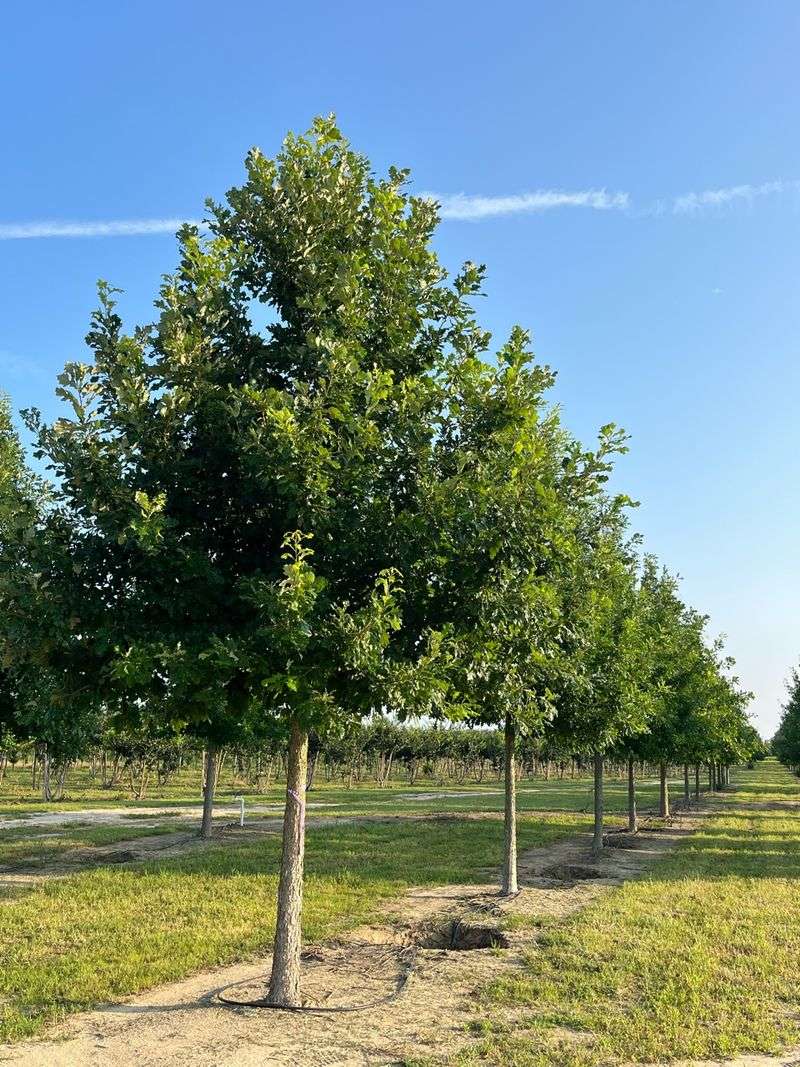
Overcup oak acorns wear caps so deep that the nut nearly vanishes inside, like a kid in a giant hoodie.
That shaggy cup may help the acorns float, which matters in flooded river bottoms where the tree grows.
This tough oak lives in low floodplain forests, where water can cover the ground for weeks each year. Heavy clay that stays wet after fall storms suits it far better than most oaks could ever manage.
Mature trees usually reach 40 to 60 feet tall, with a rounded crown that casts generous summer shade. Plant it in full sun for the strongest growth, and give it space away from buildings.
I have to admit, watching an oak thrive where water pools after rain feels wonderfully satisfying. It also tolerates drier stretches once established, so a surprise summer drought rarely causes it major trouble.
Leaves have deep, rounded lobes that look a bit like a lyre, which explains the name Quercus lyrata. By late fall they turn yellow-brown or rusty, giving your yard a quiet, earthy color show.
Wild turkeys and squirrels eat the acorns, and wood ducks find them in flooded bottomland forests. Planting one helps feed wildlife for decades, because oaks can live well beyond a human lifetime.
October planting gives the roots several cool months to settle in before spring, especially with container saplings. Look for it at native plant sales, since big box stores rarely carry this underrated bottomland oak.
6. Willow Oak
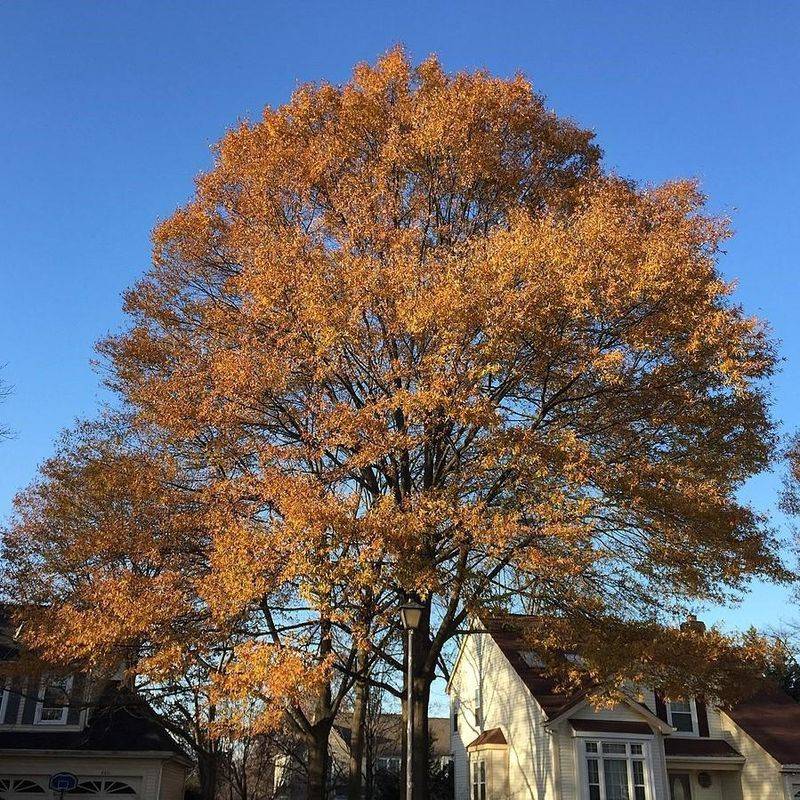
Skinny, pointed leaves fool plenty of folks into calling willow oak a willow rather than an oak.
Then they spot the tiny acorns underneath and realize the family resemblance was hiding in plain sight.
Wild trees grow along streams and in bottomland forests, so seasonal flooding and soggy clay suit them well. You will find many planted along city streets too, since they handle tough urban conditions gracefully.
This is a big tree, often reaching 40 to 75 feet tall with a wide oval crown. Give it full sun and plenty of elbow room, ideally far from driveways or underground pipes.
Acidic soil keeps the leaves green, while alkaline ground can cause yellowing from a shortage of iron. A simple soil test from your county extension office can tell you where you stand.
In fall, the fine-textured leaves turn soft yellow or russet, sprinkling the lawn with confetti-like bits. I love how easily they break down, so raking feels lighter than it does under bigger leaves.
Small acorns take about two years to mature, and blue jays and squirrels eagerly carry them off for winter. That busy activity turns your yard into a lively wildlife show during the chilly months ahead.
Willow oak grows faster than many oaks, so you can enjoy real shade within your lifetime. Plant one this October and water it through dry spells until roots grab hold next spring.
7. Possumhaw Holly
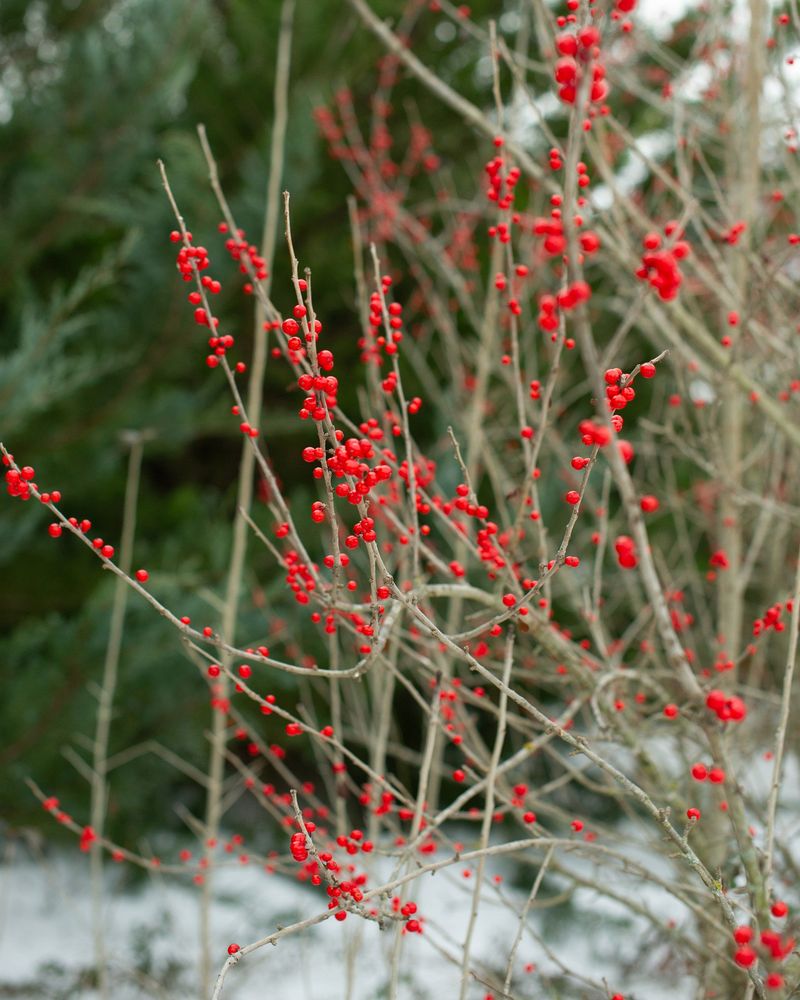
Bare branches studded with glossy red berries make possumhaw look like it dressed up for a winter party. Unlike evergreen hollies, it drops its leaves in fall, letting the bright fruit take center stage.
This deciduous native holly often grows as a large shrub or small tree, usually 10 to 15 feet tall.
Wild specimens in moist bottomlands sometimes grow taller, but most yard plants stay pleasantly manageable in size.
Damp floodplain soil is its natural home, so saturated ground after fall storms rarely causes it trouble. It also adapts to sandy or clay soils, which makes it forgiving for many beginner gardeners.
You need both a male and female plant nearby, since only females produce the cheerful berries. Ask the nursery to confirm whether each plant is male or female, and buy plants in October when fruit makes females easy to spot.
Leaves usually turn a modest yellow before dropping, and then the berries really start to glow. The fruit often lingers into late winter, until hungry birds finally decide it is time for dinner.
Robins and cedar waxwings rely on those berries when other food runs short in colder months. Small mammals like possums eat them too, which is likely where that funny name came from.
Plant possumhaw in full sun for the heaviest berry crop, though light shade still works decently. Prune only lightly in late winter, since heavy cuts can remove many of next year’s flower buds.
8. Sweetbay Magnolia
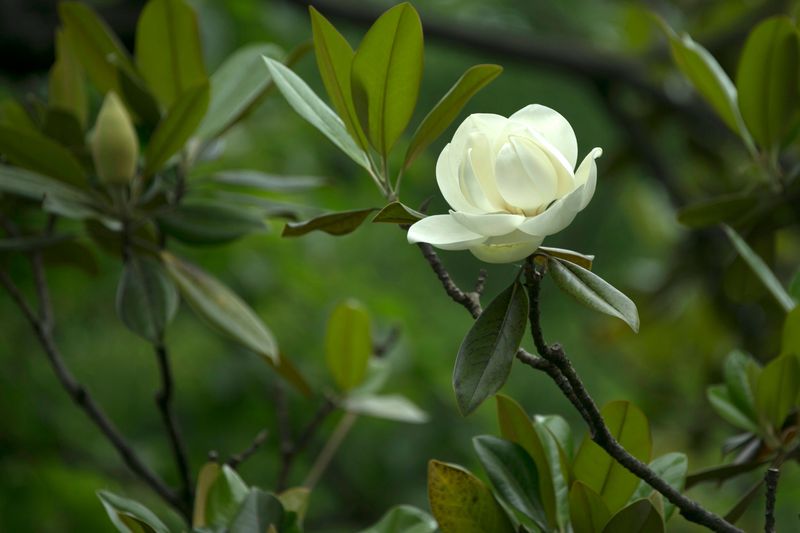
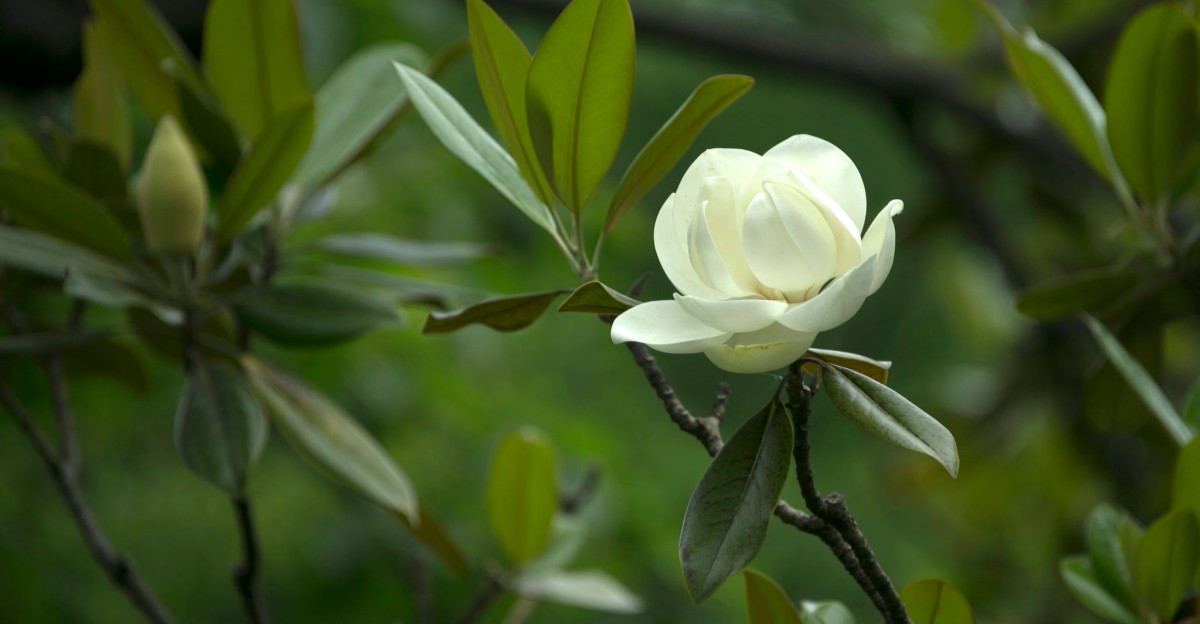
Crush a sweetbay magnolia leaf and you get a spicy, lemony scent that feels like a garden secret. Flip that leaf over, and the silvery underside flashes in the breeze like a hidden coin.
Magnolia virginiana grows wild in swamps and wet woods, so soggy soil feels perfectly normal to it.
In fact, it handles poor drainage better than most magnolias, including its famous big-leaved southern cousin.
Expect a size of roughly 10 to 35 feet, often with several trunks forming a graceful clump. Warmer areas may keep many leaves through winter, while colder spots see it act more deciduous.
Creamy white flowers open in late spring and early summer, releasing a sweet perfume that drifts across the yard. By fall, red seeds pop out of cone-like pods, and birds snatch them up surprisingly fast.
Sweetbay also feeds caterpillars of the eastern tiger swallowtail, plus the beautiful but less familiar sweetbay silkmoth. I can’t imagine a better small tree for a damp corner that butterflies can visit too.
Plant it in full sun or part shade, and keep the soil acidic for the healthiest leaves. Mulch generously this October, since its shallow roots appreciate cool, moist soil over the coming winter.
Its modest size fits small yards and patios where giant swamp trees would quickly overwhelm the space. You will love stepping outside after a heavy rain and catching that fresh lemony scent nearby.