Backyard Trees That Stay Small But Provide Huge Shade For New York Yards
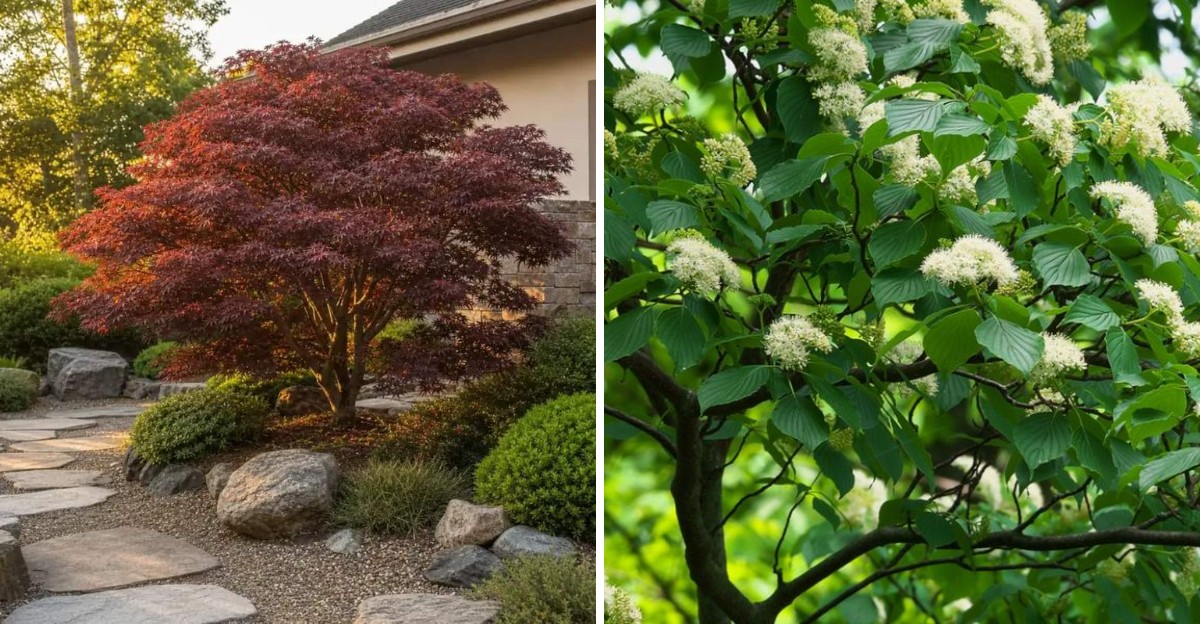
By noon, a sunny New York backyard can turn into a frying pan with a patio attached. Your lawn chair is too hot to touch, the dog is melting into the deck, and the kids sprint inside looking like boiled tomatoes.
Here is the plot twist: you do not need a towering giant that swallows the whole yard to cool things down. Plenty of trees stay small and still spread their leafy arms wide, like a friendly umbrella that does not ask for rent.
Consider it air conditioning with bark and zero electric bill.
They tuck in beside patios, fences, and tiny lots without any drama. The catch is finding ones tough enough for frosty winters and sticky heat.
Stick around, because your shady hideaway might be closer than you think.
1. Japanese Maple Brings Lacy Shade
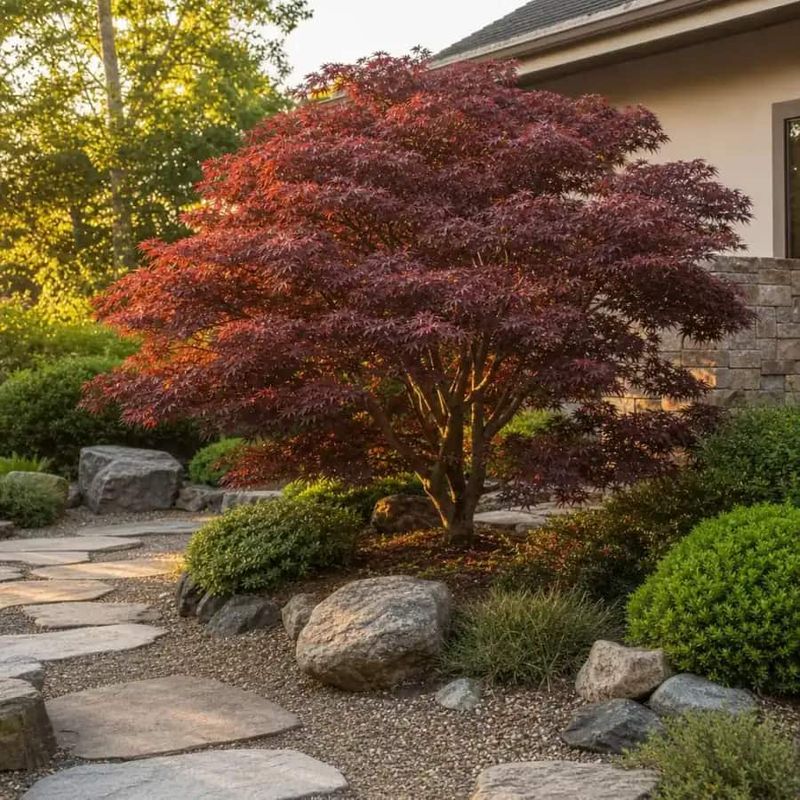
Few trees turn heads like a Japanese maple in full color. Its leaves look like tiny hands waving in the breeze, and its canopy often spreads about as wide as the tree is tall.
The species typically reaches 15 to 25 feet, and many cultivars stay smaller. Bloodgood usually lands between 12 and 20 feet.
That size makes them a smart pick for small lots in Long Island, Westchester, and the Hudson Valley.
A mature tree can shade a bistro table and two chairs with ease.
Plant yours where it gets morning sun and some afternoon shade. Hot western light can scorch the delicate leaves in July.
A layer of mulch, about two inches deep, keeps the roots cool and moist.
Choose an upright variety like Bloodgood if shade is your main goal. Weeping types are lovely, but they hug the ground and leave little room to sit beneath them.
Upright trees create a true leafy ceiling.
Water deeply once a week during dry spells, especially in the first two years. After that, these maples handle most New York summers without much fuss.
Skip heavy fertilizer, since it can push weak, floppy growth.
Gardeners in Japan have grown these trees for centuries, and plenty of people treat a favorite specimen like a family treasure.
Yours could become a backyard favorite, too, offering cool shade and fiery fall color for years to come.
2. Kousa Dogwood Gives A Flowering Canopy
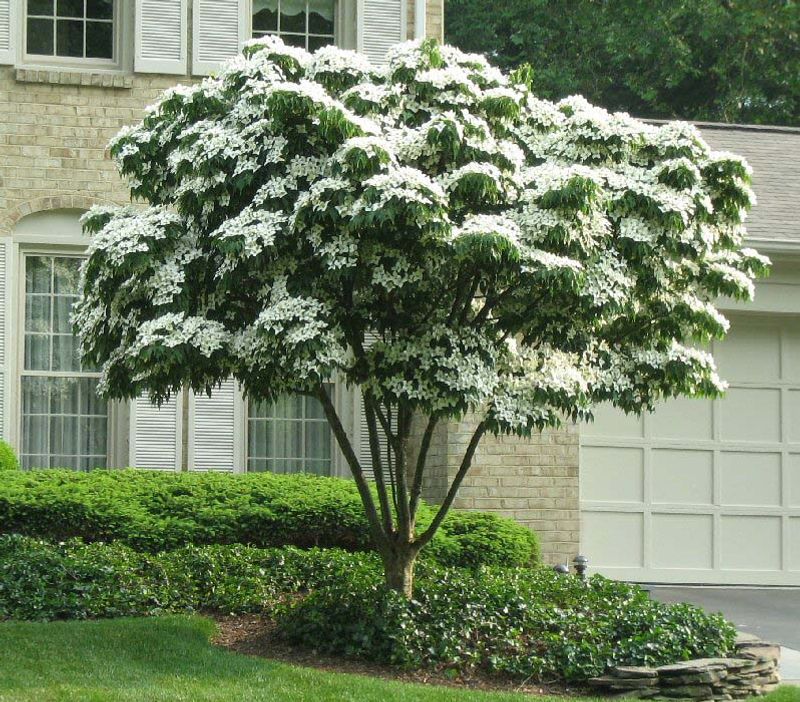
June arrives, and suddenly the Kousa dogwood looks like it caught a snowstorm. White, star-shaped blooms cover every branch for weeks.
Beyond the flowers, this tree is a shade champion for tight spaces. It usually reaches 15 to 25 feet tall with an equal or wider spread.
Its branches grow in neat layers, creating a flat, cozy canopy.
Many New York gardeners prefer Kousa over the native flowering dogwood. It shrugs off anthracnose, a leaf disease that troubles its cousin.
That toughness means less worry and more lounging.
Give it full sun to partial shade and soil that drains well. Slightly acidic ground keeps it happiest.
If your soil is heavy clay, mix in compost before planting.
In late summer, pinkish-red fruits appear that look a bit like raspberries. Birds go wild for them, so expect cheerful visitors.
Your New York Garden Changes Every Week. Your Plan Should Too.
Gardening in New York changes quickly throughout the season. Every Friday you’ll receive a simple weekly plan showing exactly what to plant, prune, fertilize, harvest, and protect so you never miss the right timing.
The fruit is edible for people, too, with a sweet, mango-like taste.
Fall brings another show as leaves turn deep red and purple. Then winter reveals patchy, peeling bark that looks like a puzzle.
You get interest in every season, which is rare for a tree this size.
Plant it about 10 feet from your house or patio. That spacing gives the canopy room to stretch while still shading your favorite seat in the afternoon heat.
3. Serviceberry Offers Native Shade For New York Gardens
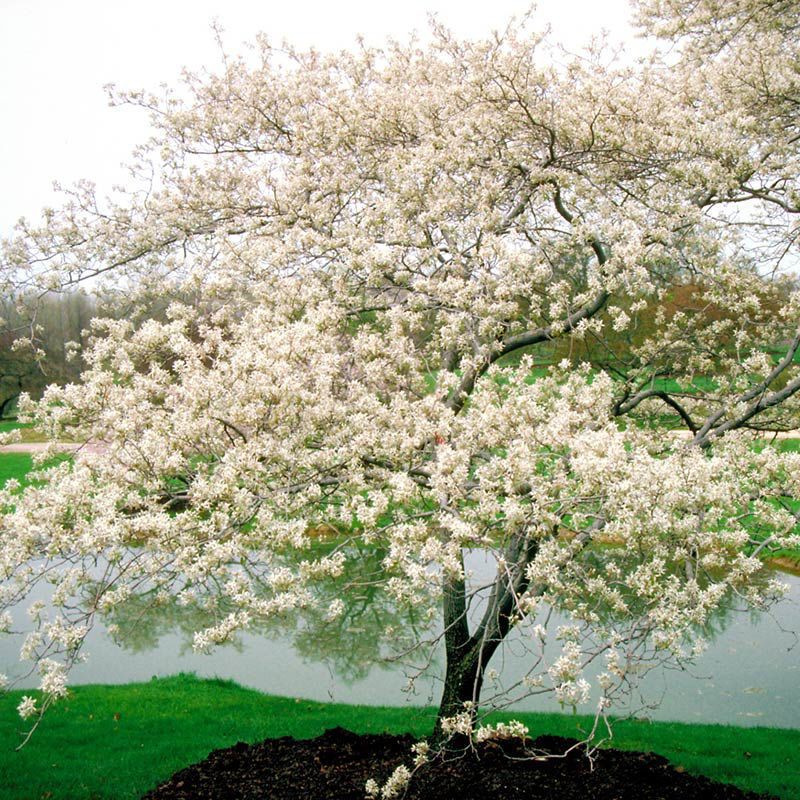
Ask any bird in New York what its favorite tree is, and it might chirp serviceberry. These native beauties feed wildlife and cool your yard at the same time.
Serviceberry grows 15 to 25 feet tall, often with several trunks. Those multiple stems spread into a rounded crown that throws generous, dappled shade.
It feels like sitting under a soft green umbrella.
Spring starts with clouds of white flowers, sometimes before the leaves pop out. By June, small berries ripen to a deep purple.
They taste like a cross between blueberries and almonds, and they make tasty jam.
Because it is native, serviceberry handles cold winters with no trouble. It grows wild in woods from Buffalo to the Catskills.
That means fewer pests and less babysitting for you.
Plant it in full sun for the most fruit and the best fall color. It tolerates partial shade, though, which helps in yards with neighboring trees.
Moist, well-drained soil suits it best.
Old stories say the name comes from early settlers. The tree bloomed around the time spring church services resumed after snowy winters.
Whether true or not, it is a charming bit of history.
For bigger shade, pick a single-trunk form and prune lower branches as it matures. You will gain headroom for chairs underneath.
4. Redbud Spreads Heart-Shaped Shade Across New York Lawns
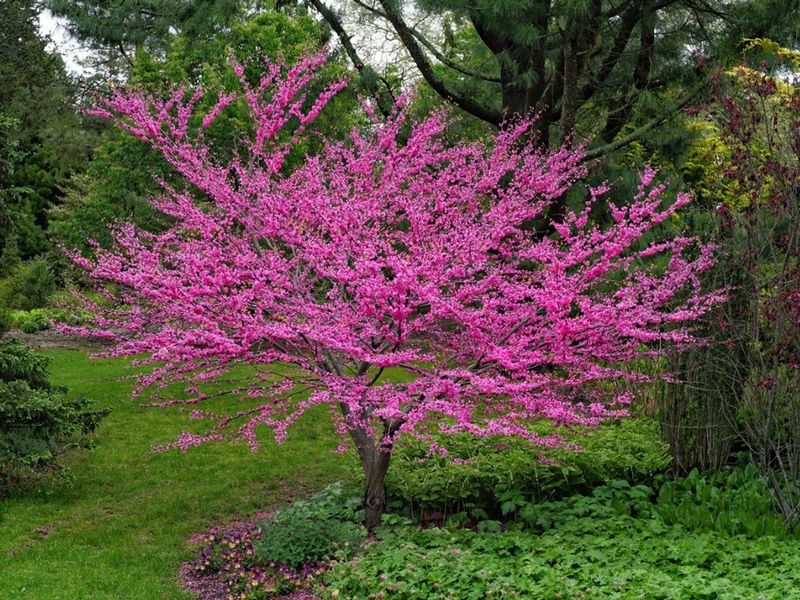
Hearts everywhere. That is what you get with an Eastern redbud, whose leaves are shaped like little valentines.
Early spring kicks things off with bright pink-purple flowers along bare branches. Even the trunk sprouts blooms, which delights kids and grown-ups alike.
Neighbors will stop on the sidewalk to ask what you planted.
Once the flowers fade, the heart leaves fill in thick and wide. A mature redbud reaches 20 to 30 feet tall, and its spread can reach 25 to 35 feet.
That wide reach is what makes it such a strong shade maker.
Redbuds grow at a moderate to fast pace when they are young. That is welcome news for new homeowners tired of a baking hot yard.
Plant it in sun or light shade with decent drainage. Soggy spots can cause root trouble.
Eastern redbud is hardy to about zone 4b, so it suits most of New York, though the coldest corners of the state may be too chilly for it.
Young redbuds benefit from early pruning to encourage one strong main stem. A sturdy structure holds up better during heavy winter snow.
The flowers are edible and add a pop of color to salads. Try a few on your next spring plate.
5. Crabapple Trees Create Cheerful Shade
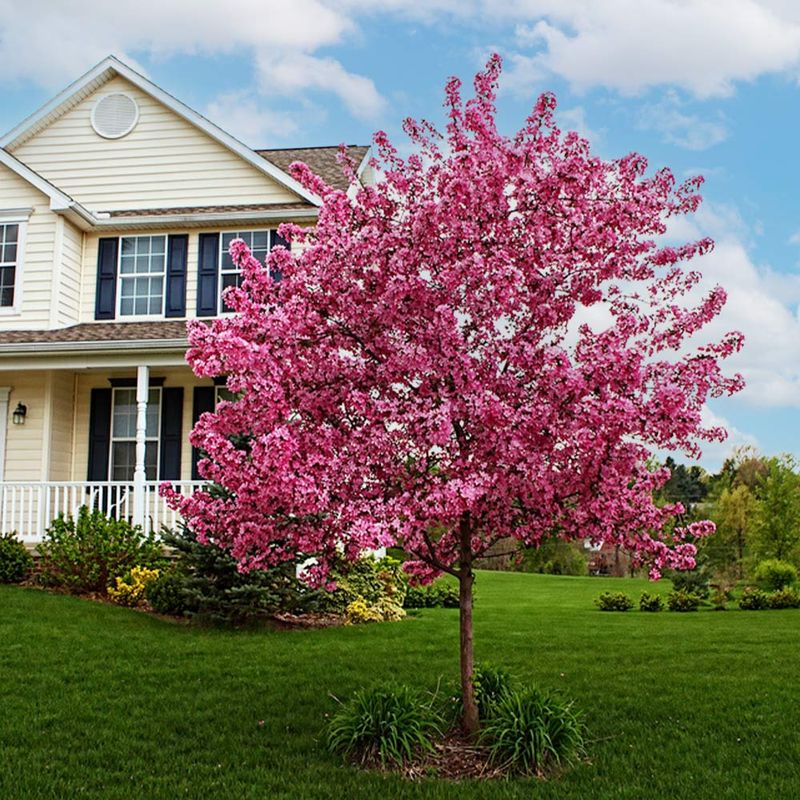
Grandparents across the state probably remember climbing a crabapple as kids. These sturdy little trees have been backyard favorites for generations.
Modern varieties stay between 15 and 25 feet tall, and many have rounded crowns that spread nearly as wide. That shape is great for shading a picnic table.
Branches start low, so they also make great climbing trees.
In May, crabapples burst into pink, red, or white blossoms. The scent is sweet and the bees buzz happily.
Then glossy green leaves take over for summer shade.
Older types had problems with apple scab, which spots and drops leaves early. Look for disease-resistant varieties like Prairifire, Sugar Tyme, or Adirondack.
Resistant does not mean immune, so even these may show a little spotting in a very wet spring.
Shape matters for shade. Sugar Tyme has a round crown and Prairifire an upright-spreading one, while Adirondack is a narrow, upright tree that suits tight spaces better than broad shade.
Yes, that one even shares its name with the famous New York mountains.
Small fruits follow the flowers and often hang on into winter. Cardinals and cedar waxwings feast on them during snowy months.
Pick a variety with tiny fruit if you dislike cleanup on the patio.
Crabapples love full sun and handle many soil types. They are tough against cold, wind, and even some salt from winter roads.
That makes them handy near driveways and sidewalks.
Prune in late winter, removing suckers at the base and crossing branches. Clean cuts keep the tree strong and the canopy full for the next summer of shady afternoons.
6. Japanese Tree Lilac Cools Small New York Spaces
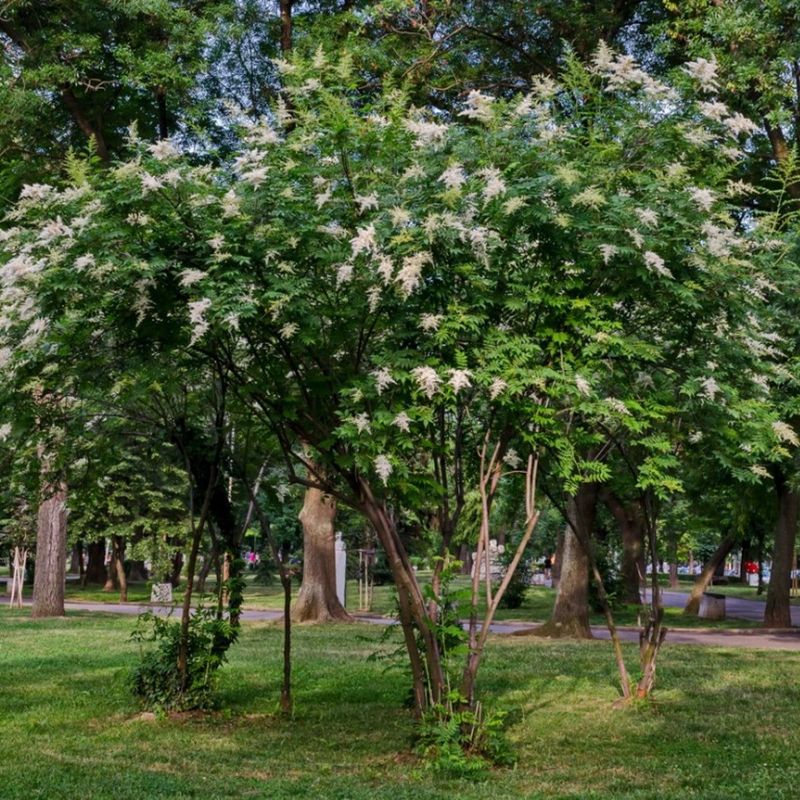
Lilac lovers, get ready for a surprise. There is a lilac that grows into a real tree, and it blooms weeks after the shrubs finish.
Japanese tree lilac reaches 20 to 30 feet tall with a spread of 15 to 25 feet. Ivory Silk, a popular variety, stays toward the smaller end, around 20 to 25 feet tall and 15 to 20 feet wide.
Its rounded crown casts solid shade over decks and small lawns.
Shiny, reddish bark adds charm, much like a cherry tree.
Big, creamy white flower clusters appear in June, and they can reach up to a foot long. They are fragrant, though some people find the scent similar to privet, so plant it a little away from windows if you are sensitive.
Toughness is its superpower. It handles cold well, tolerates city conditions and heavy clay soil, and even appears on New York City’s approved street tree list.
That city-ready nature makes it great for tiny urban yards. Its roots also stay fairly polite near sidewalks and foundations.
After the flowers fade, seed capsules form and can hang on through winter. Trim them off after bloom if you want a tidier look.
Plant it in full sun for the best blooms. It tolerates a range of soils as long as water does not pool.
Water weekly for the first year while roots settle in.
Ivory Silk has an upright, tidy shape. It works well where you need shade without crowding.
Expect a reliable, low-drama tree for many years.
7. Amur Maple Delivers Tough Shade For New York Winters
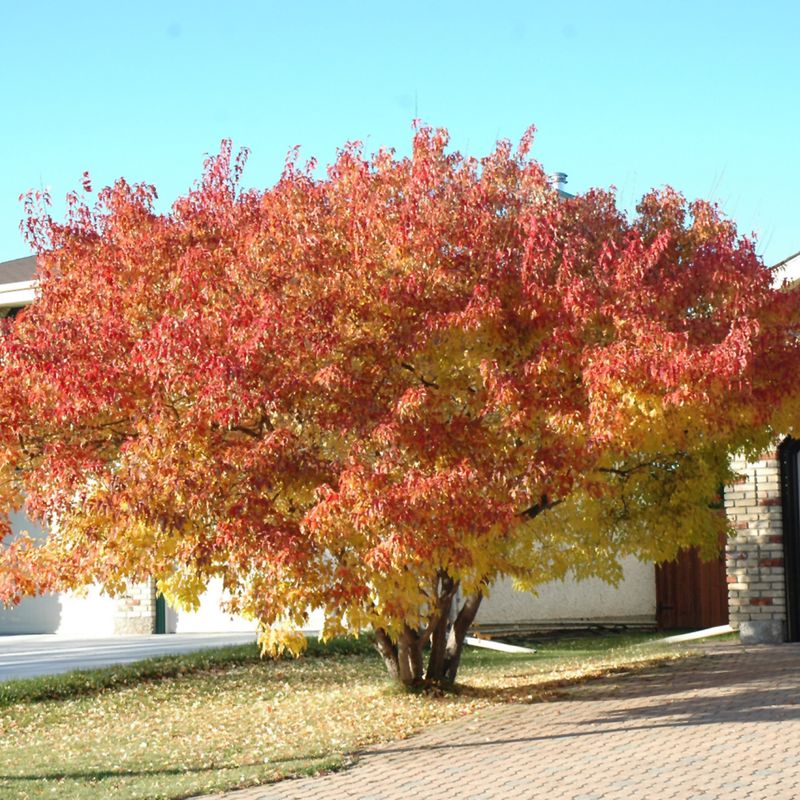
Not every yard is sunny, and not every small tree wants full sun. Striped maple, a New York native, is happiest in cool, partly shaded spots.
Its vertically striped bark can range from green with pale stripes to a deep purple-black. Broad, three-lobed leaves fill in through summer, then turn bright yellow in fall.
Striped maple typically grows 15 to 25 feet tall, with a spread that is usually no wider than its height. It grows slowly, so patience pays off.
Give it partial shade and keep its roots cool and moist. It does not tolerate hot, sunny locations, and it does best away from heat-soaking pavement or building walls.
The bark is thin, so keep mowers and string trimmers away from the trunk. A ring of mulch makes that easy.
Here is the catch. Another nickname, moosewood, comes from moose and deer browsing the twigs and leaves.
If deer visit your yard, protect young trees or choose a different species.
It is also called whistlewood, thanks to the old practice of carving whistles from its branches.
One more tip before you shop for any maple. Amur maple continues to be sold for small yards, but risk assessments rank it as moderately invasive in New York, and Cornell Botanic Gardens flags hedge maple as invasive too.
DEC keeps lists of regulated invasive plants, so check them before you buy.
8. American Hornbeam Shades Shady New York Corners
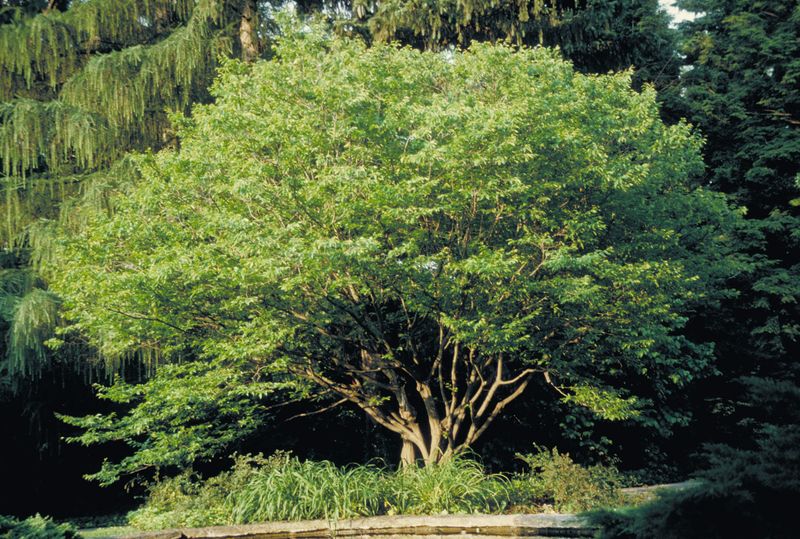
Run your hand along an American hornbeam trunk, and it feels like flexed muscles. That smooth, rippled bark earned it the nickname musclewood.
Native to New York forests, this tree stays roughly 20 to 35 feet tall. Its crown spreads wide, giving balanced shade over a large area.
Leaves are fine-toothed and turn yellow, orange, and red in autumn.
Hornbeam does something many shade trees cannot. It grows happily in partial shade under bigger trees.
If your yard already has some cover, this tree can still thrive in the gaps.
The wood is incredibly hard. Early settlers used it for tool handles, bowls, and ox yokes.
Another nickname, ironwood, came from that strength.
Plant it in moist, rich soil, much like a forest floor. It handles occasional wet spots better than many trees, but it can struggle in drought, heat, and compacted soil.
Mulch helps keep roots cool during hot August weeks, and a deep drink during dry spells helps too.
Growth is slow at first, so patience pays off. Buying a larger nursery tree can give you shade sooner.
Once established, it needs very little care. It has only occasional trouble with leaf spot, canker, and twig blight, and it is moderately resistant to deer, though they may still browse it.
You get a sturdy, handsome tree that fits right into the local landscape.
9. Pagoda Dogwood Layers Cool Shade Over New York Decks
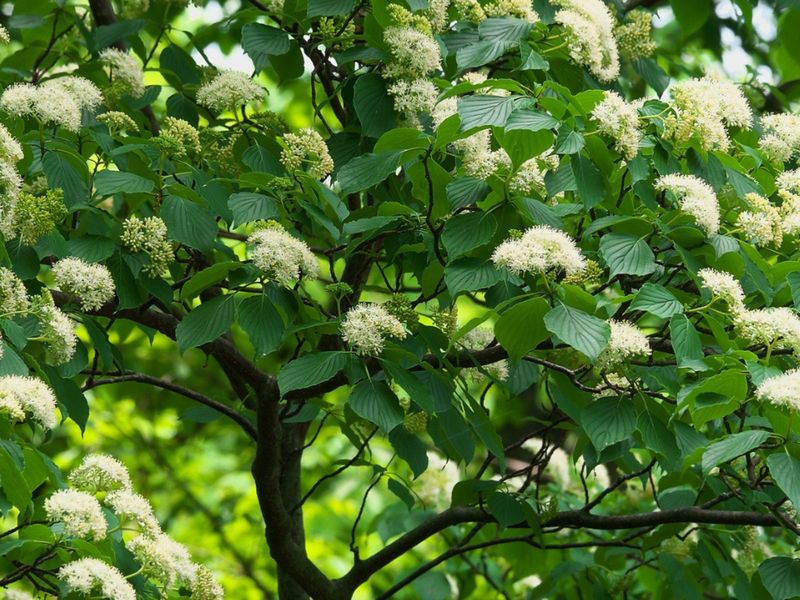
Some trees look like they were designed by an architect. Pagoda dogwood grows in flat, stacked tiers, just like the roof of an Asian temple.
This native tree reaches 15 to 25 feet tall, and its spread can match or beat its height. Its horizontal branches stretch wide, creating layered shade that feels airy and cool.
Sitting beneath it is a little like relaxing under a living patio cover.
Creamy white flowers appear in late spring in flat clusters. Then blue-black berries ripen on bright red stems by midsummer.
Songbirds snap them up fast, so enjoy the show while it lasts.
Pagoda dogwood loves cool, moist spots. It grows wild in cooler parts of New York, including the Adirondacks.
North and east sides of homes suit it well.
Hot, dry sites can stress this tree, so give it some afternoon shade. Mulch generously and water during heat waves.
Happy roots mean a fuller, healthier canopy.
Keep an eye on it as it matures. Pagoda dogwood can be bothered by canker and twig blight, so prune out any damaged branches promptly.
The variegated variety Golden Shadows has bright yellow-edged leaves. It lights up shady corners and pairs nicely with hostas and ferns, though it stays smaller, around 10 to 12 feet tall, so it gives less shade than the plain green type.
Plant it near a deck or reading nook where you can admire those layers. Few small trees offer such a unique shape, and its graceful tiers look lovely even in snowy winter months.