Before Planting Mexican Petunia In Florida, Know What The State Already Decided
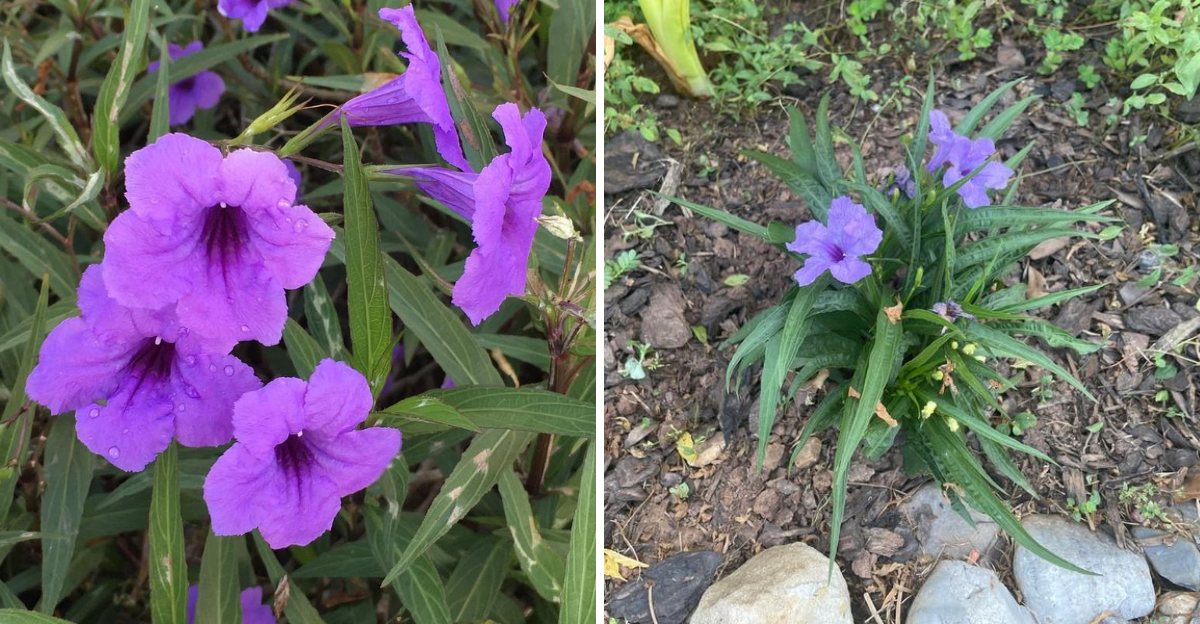
That cheerful purple flower at the garden center has a secret, and the state of Florida already knows it.
Many gardeners pick it up on impulse, attracted by the color, the low price, and the promise of easy blooms in the heat.
It goes into the ground, looks great for a season, and then something shifts. It shows up in the wrong spot. Then another wrong spot. Then somewhere you definitely did not plant it.
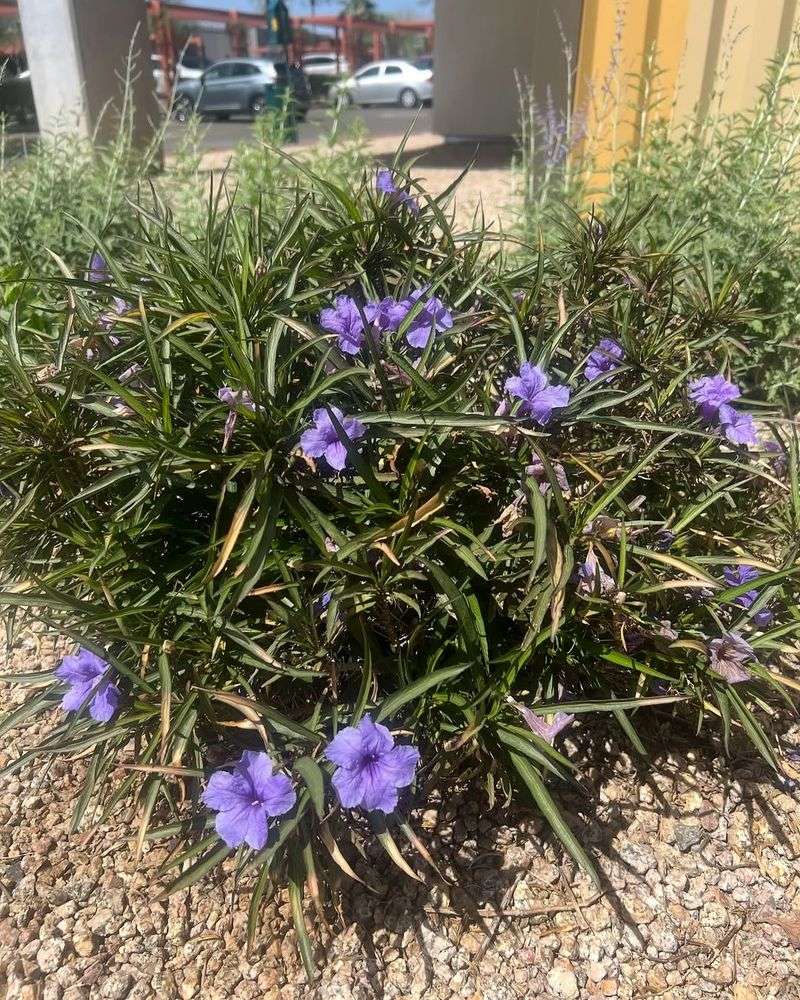
Mexican petunia, Ruellia simplex, has one of the more deceptive reputations in Florida horticulture. It presents beautifully in a pot and behaves very differently once it is in your soil.
Florida has not been quiet about this. The research exists, the ratings are official, and the concerns are specific.
This is not a case of gardeners overreacting to a plant that spreads a little. There are documented reasons the state flagged it, documented ways it moves through a landscape, and documented alternatives that give you the same look without the complications.
Here is what you actually need to know before buying.
1. Know Its Invasive Status First
Florida did not make its decision quietly.
The University of Florida IFAS Assessment has evaluated Ruellia simplex and rated it as invasive in Florida’s natural areas, and that rating carries real weight for any gardener who pays attention to what grows beyond their fence line.
The IFAS Assessment uses a scoring system to evaluate whether a non-native plant poses a threat to native ecosystems.
Ruellia simplex scored high enough to earn a Category I invasive listing from the Florida Exotic Pest Plant Council, also known as FLEPPC.
That designation means it has already been observed altering native plant communities in measurable ways, not just spreading into a few disturbed lots.
Gardeners in North, Central, and South Florida all need to pay attention because the plant behaves differently depending on the region.
In South Florida, it spreads more aggressively due to the warmer climate and longer growing season. Concerns about its spread into natural areas, roadsides, and disturbed sites apply throughout the state.
Checking a plant’s invasive status before buying is one of the most useful habits a Florida gardener can build. The FLEPPC list is free and easy to search online.
Knowing that Mexican petunia sits on that list is the first and most important piece of information to have before making any planting decision.
The state has already done the research. The only question is whether gardeners take the time to read it.
2. Avoid Wild Type Mexican Petunia
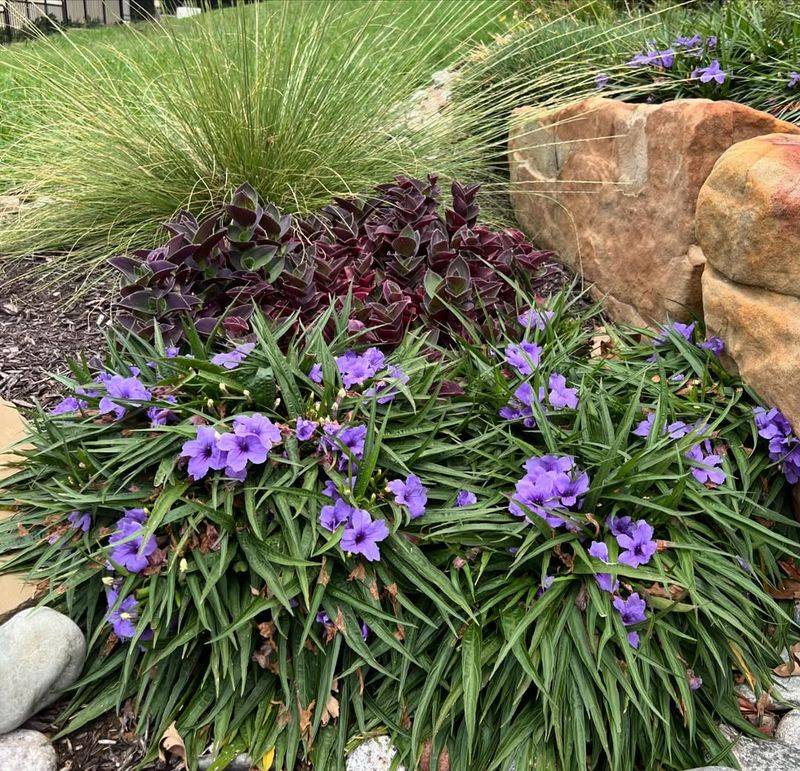
Walk past the tall, dark-stemmed plants at the nursery with caution. The wild-type Ruellia simplex is the version that Florida land managers and ecologists worry about most.
It grows aggressively, spreads freely, and reliably shows up in places it was never planted.
Wild-type plants can reach up to three feet tall and produce dozens of seed pods per season. Each pod can pop open and scatter seeds several feet away when conditions are right.
Add underground rhizome growth to that equation and you have a plant that is actively working to colonize new ground on two fronts at once.
Your Florida Garden Changes Every Week. Your Plan Should Too.
Gardening in Florida changes quickly throughout the season. Every Friday you’ll receive a simple weekly plan showing exactly what to plant, prune, fertilize, harvest, and protect so you never miss the right timing.
Florida extension guidance specifically warns against planting the wild-type form in Florida landscapes. The plant has naturalized across disturbed areas, roadsides, and the edges of natural areas throughout the state.
Once established, it competes directly with native plants for space, light, and nutrients in ways that show up clearly over time.
Some garden centers still sell it, sometimes without clear labeling, which puts the responsibility on the gardener to ask questions before buying.
If a plant tag just says Mexican petunia without specifying a cultivar name, there is a good chance it is the wild type.
That is the version that has already caused documented ecological problems in Florida and is best left on the shelf entirely. The color is not worth it when the native alternative looks nearly identical and costs the same.
3. Watch Rhizomes Move Through Beds
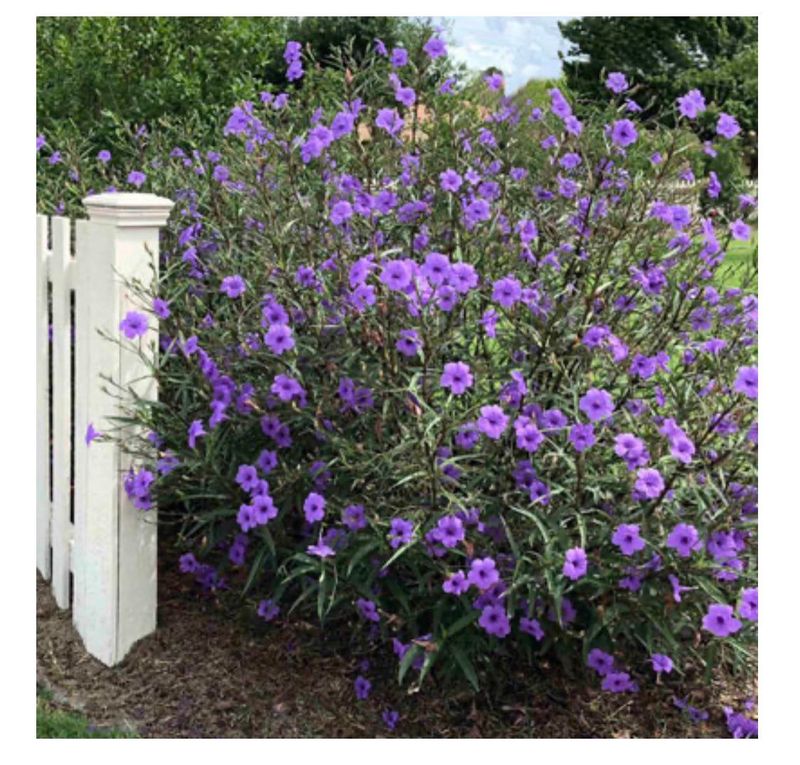
Underground, Mexican petunia is doing something most gardeners never see coming.
Rhizomes are thick, horizontal underground stems that creep outward from the main plant, sending up new shoots as they travel.
It is a slow-motion expansion that happens entirely beneath the surface while the garden above looks perfectly contained.
A clump that looks tidy above ground can be spreading sideways underground at the same time. Those rhizomes push into neighboring beds, under edging, and into lawn areas without any obvious sign until new shoots appear.
By then, the root system may already be well established and considerably harder to address.
Removing rhizomes is harder than it sounds. They break apart easily when pulled, and any fragment left in the soil can sprout a new plant.
This is why partial removal often leads to more plants rather than fewer. Getting every piece out requires patience and usually repeated effort over more than one season.
For gardeners who already have Mexican petunia in a bed, watching the soil around it for new shoots is a smart ongoing habit.
Catching new growth early, before rhizomes extend further, gives you a much better chance of keeping the plant where you actually want it.
Landscape fabric and physical edging barriers can slow rhizome movement but rarely stop it entirely.
The underground behavior is one of the biggest reasons Florida specialists caution so consistently against planting this species in the first place.
4. Expect Seeds To Travel
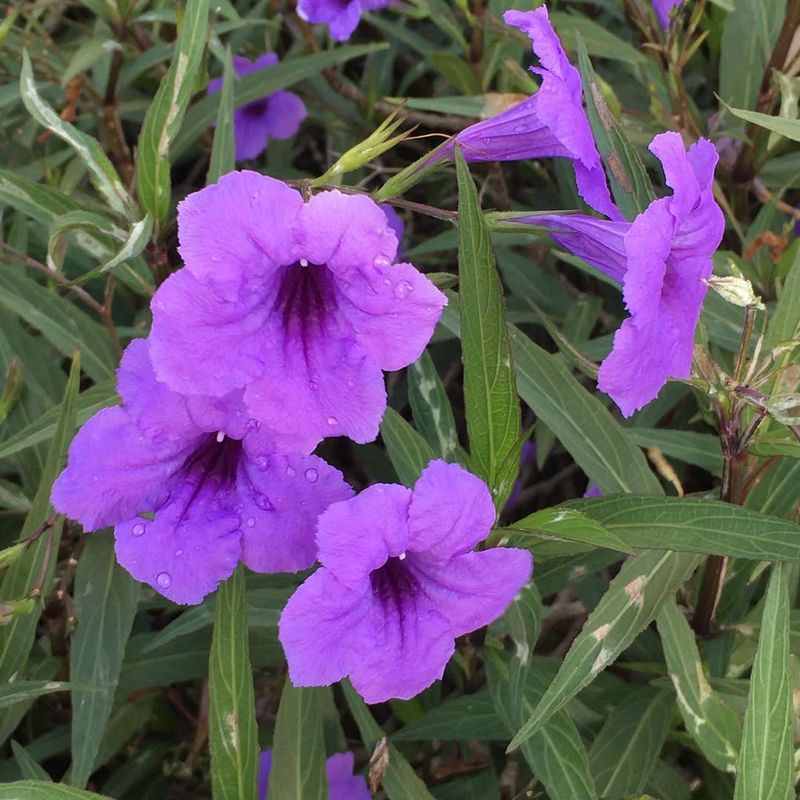
Seed pods on Ruellia simplex are not passive. When they dry out and reach maturity, they burst open with enough force to send seeds flying several feet in multiple directions.
This is called ballistic seed dispersal, and it is surprisingly effective at establishing new plants in spots the gardener never chose.
A single plant can produce a large number of seed pods throughout the growing season, which in Florida can stretch from spring well into fall.
That adds up to a significant amount of potential new plants, not just in your yard but on neighboring properties, in drainage areas, and in natural spaces nearby that you may never even see.
Water also helps seeds travel. Ruellia simplex seeds float, which means rain events and irrigation runoff can carry them into ditches, ponds, and waterways.
From there, they can establish in areas far from the original planting. Florida’s frequent summer rainstorms make this kind of seed movement especially efficient and consistent.
This combination of ballistic ejection and water transport is a significant part of why the plant has spread so widely across the state.
Gardeners who plant it near drainage features, retention ponds, or natural buffers are creating a pathway for seeds to move into protected areas without realizing it.
Even a well-maintained garden plant produces seeds that travel further than most people expect. Understanding how far and how fast those seeds move is essential to making a responsible planting decision in Florida.
5. Treat Sterile Types With Caution
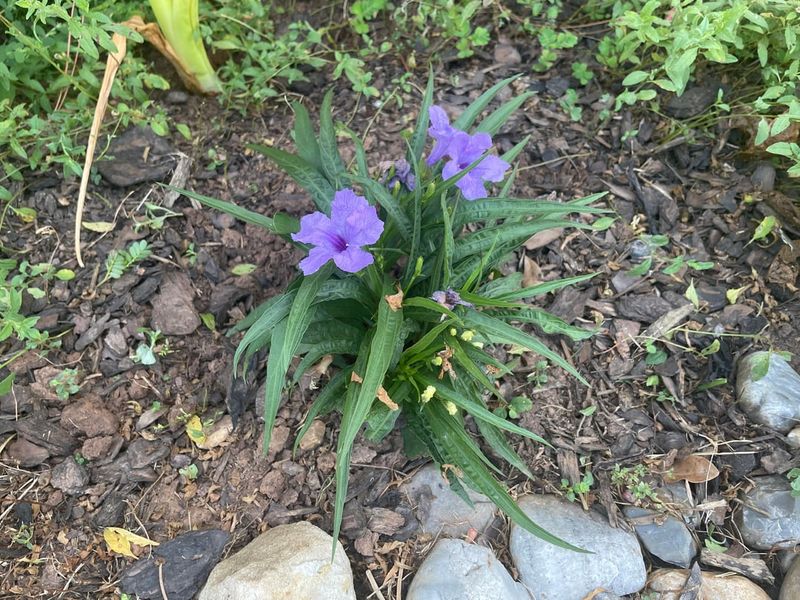
Sterile cultivars of Mexican petunia sound like the perfect solution, and plant breeders did develop them specifically to reduce the invasive spread problem.
The most well-known sterile variety is called Katie, a compact, low-growing cultivar that produces far fewer seeds than the wild type. But sterile does not mean problem-free, and Florida’s guidance reflects that distinction clearly.
IFAS has evaluated sterile cultivars and still assigns them a caution designation for Florida. The concern is that sterile cultivars can still spread through rhizomes even when they produce little to no viable seed.
That underground spread means they can still move into unwanted areas over time, particularly in moist or disturbed soils where conditions favor establishment.
There is also a cross-pollination concern worth understanding. When sterile cultivars grow near wild-type plants, there is potential for genetic mixing that could restore some seed fertility.
Florida’s landscape is complex, and controlling what grows near what is not always possible for home gardeners working in neighborhoods where plants are everywhere.
Choosing a sterile cultivar is a step in a better direction, but it is not a green light to plant freely in every situation.
Even sterile types are best kept away from natural areas and wetlands, monitored for spread, and evaluated based on their specific location in the yard.
Reading the plant tag carefully and looking for the actual cultivar name rather than just the common name is one of the most practical things a gardener can do before purchasing any form of this plant.
6. Choose Native Wild Petunia Instead
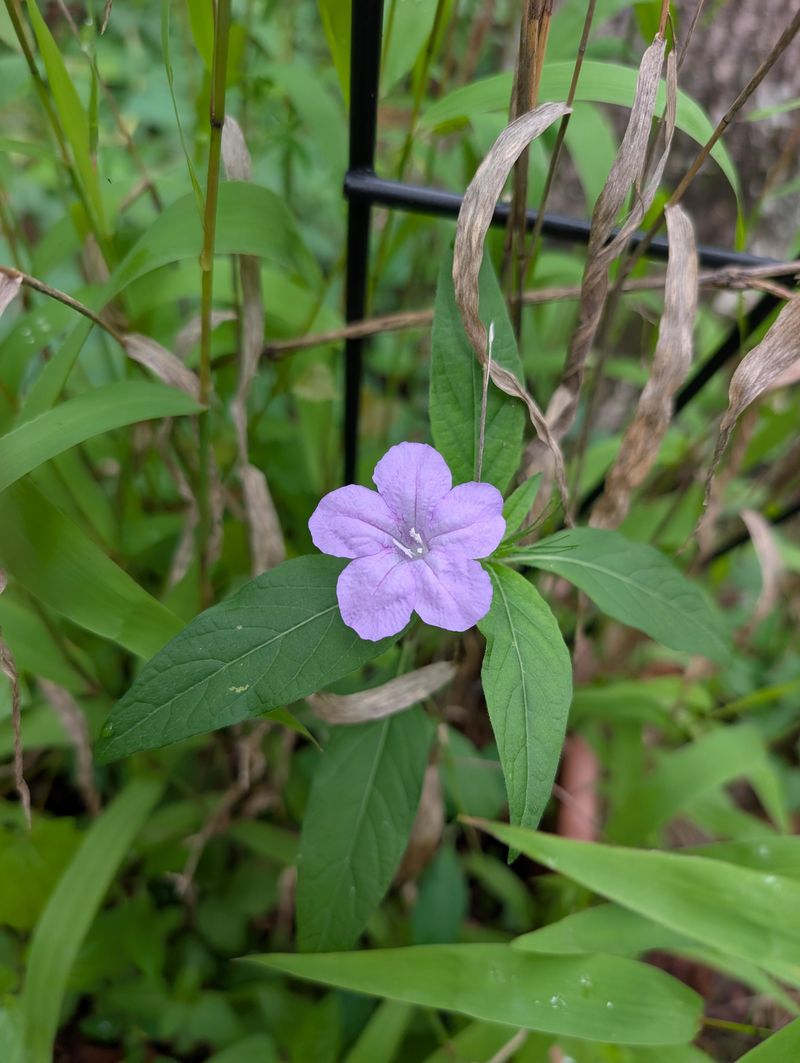
Here is where the story gets considerably better. Florida actually has its own native wild petunia, and it is a genuinely lovely plant that solves the problem almost entirely.
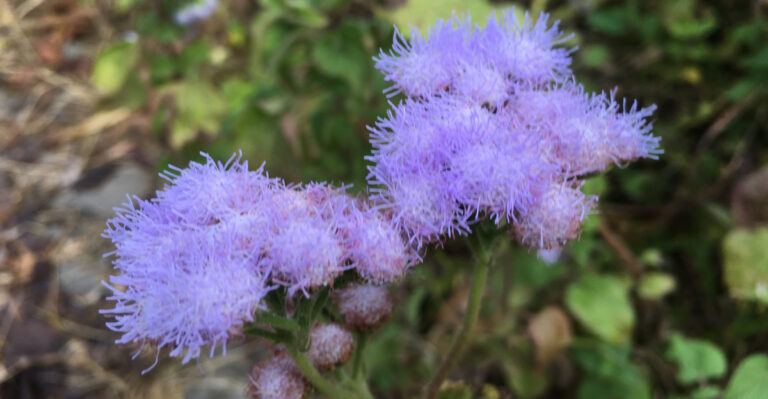
Ruellia caroliniensis, commonly called Carolina wild petunia or native wild petunia, produces the same kind of soft purple blooms that make Mexican petunia so appealing in the first place.
The difference is that Ruellia caroliniensis belongs here. It evolved alongside Florida’s native insects, including several specialist bees that rely on it as a pollen source.
It supports local wildlife without overwhelming native plant communities. It fits into the ecosystem rather than competing against it, which is a distinction that matters more the longer you garden in Florida.
Native wild petunia is also considerably more modest in its growth habits. It does not spread aggressively through rhizomes, and its seed production is much less of an ecological concern.
It tends to stay where it is planted, which is exactly what most gardeners actually want from a flowering perennial.
Finding Ruellia caroliniensis may take a little more effort than grabbing a flat at a big box store. Native plant nurseries across Florida carry it, and many native plant societies hold regular sales where it is available at very reasonable prices.
The Florida Native Plant Society website is a practical resource for locating nearby sources.
Swapping an invasive plant for a native one that looks nearly identical is one of the cleanest trades in Florida gardening, good for the yard and good for the state’s natural areas at the same time.
7. Keep It Out Of Wetlands
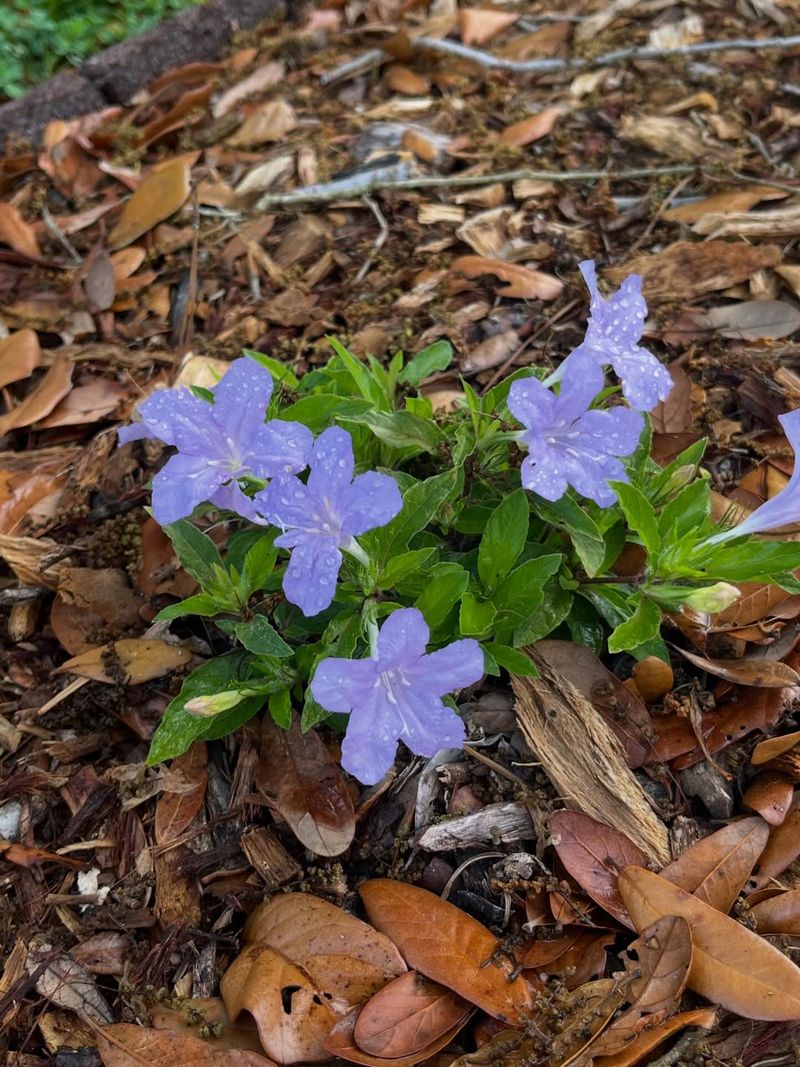
Wet areas are where Mexican petunia causes some of its most serious documented damage.
Ruellia simplex thrives in moist to wet soils and has been found invading wetland edges, floodplain forests, and the banks of natural water bodies across Florida.
This is not a minor concern. Wetlands are among Florida’s most ecologically valuable and most vulnerable habitats.
Once Mexican petunia establishes in a wetland margin, it can form dense stands that crowd out native sedges, grasses, and wildflowers.
Those native plants provide food and shelter for a wide range of wildlife, from wading birds to native pollinators.
Losing them to an invasive plant has ripple effects throughout the local food web that extend well beyond what any single homeowner can see from their yard.
Seeds that travel via water make wetland invasion especially difficult to prevent once a plant is established nearby.
Even a garden planting that sits well back from a pond or drainage ditch can contribute seeds to that wet area during heavy rain events. Florida’s hydrology connects landscapes in ways that are genuinely easy to underestimate.
Both IFAS and FLEPPC specifically flag wetland invasion as a primary concern with this species.
Land managers working to restore Florida’s natural areas deal with this plant in and around water features on a regular basis.
Keeping it out of yards that border wetlands, retention ponds, or natural drainage corridors is one of the most impactful choices a homeowner can make.
If your yard touches water in any meaningful way, proximity to that water should be a firm dealbreaker for planting this species.
8. Manage Escaped Clumps Early
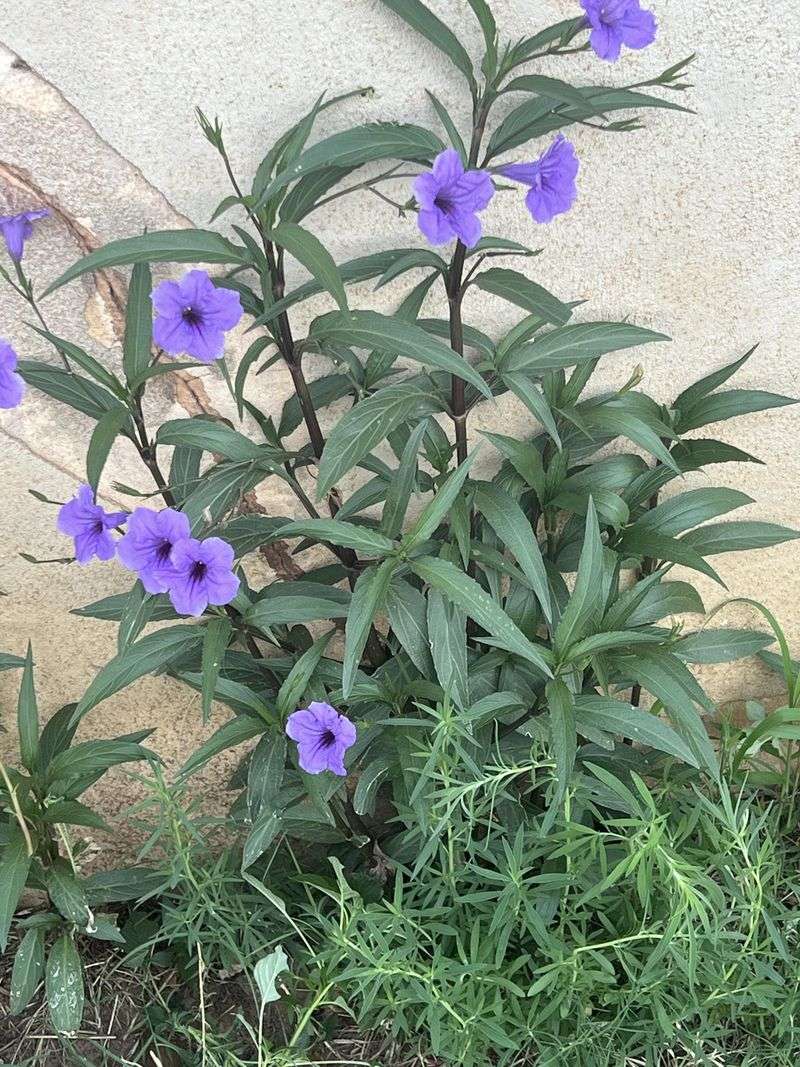
Spotting a Mexican petunia clump outside of where you originally planted it is a signal to act quickly rather than monitor and decide later.
The longer an escaped clump stays in place, the more time it has to extend its rhizomes and produce seeds that spread even further. Early action makes removal considerably more manageable than waiting a season to see what happens.
Small clumps can often be dug out by hand with a sturdy garden fork or trowel. The goal is to get as much of the root system as possible, including all rhizome fragments.
Leaving pieces behind means the plant will likely resprout, sometimes in multiple spots from a single removal attempt.
Checking back regularly for several weeks after removal is a smart follow-up habit that saves a lot of work later.
Larger infestations may require repeated removal over more than one growing season. For home gardeners, persistent manual removal is usually the most practical approach.
Bagging and disposing of removed plant material in the trash rather than the compost pile prevents any accidental reintroduction back into the garden.
Staying on top of escaped clumps before they mature and set seed is the most efficient long-term strategy.
A single season of unchecked growth can dramatically increase the amount of work needed the following year, and the year after that.
Treating early removal as a regular maintenance task rather than a one-time fix gives you the best chance of keeping Mexican petunia from expanding into spaces where it was never welcome.