Better Front Yard Trees Than Crape Myrtle For North Carolina Homes
North Carolina homeowners have long reached for crape myrtles to anchor their front yards, and it is easy to see why.
However, from the Piedmont to the coastal plain and up into the mountains, there is a growing interest in branching out.
Our state’s generous climate supports a fantastic variety of native and ornamental trees that offer more than just summer petals – think brilliant spring flowers, striking fall color, and year-round structure.
Whether your yard is a sunny coastal plot or a shady mountain retreat, there are plenty of distinctive options that bring just as much beauty as a crape myrtle while giving your curb appeal a truly unique edge.
1. Eastern Redbud Brings Early Color To Front Yards
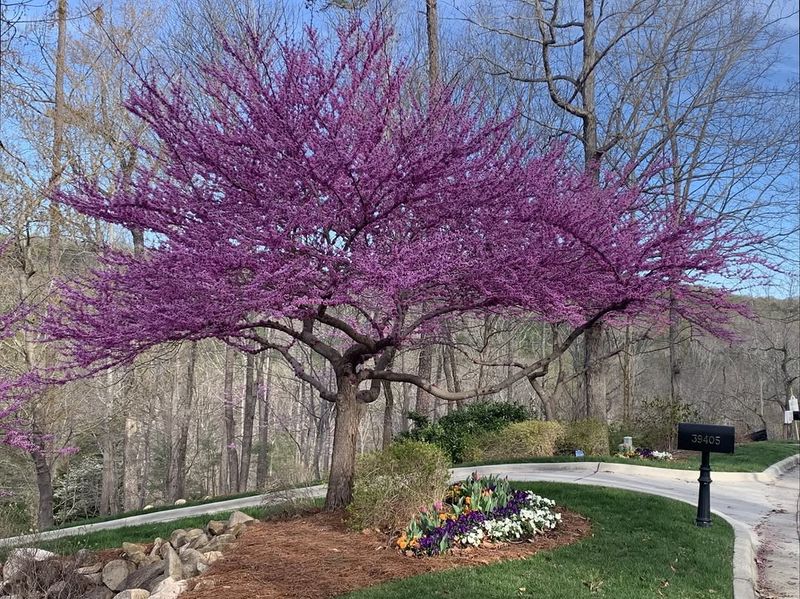
Before most trees have even thought about leafing out, the Eastern Redbud puts on one of the most eye-catching shows in the North Carolina spring landscape.
Clusters of rosy pink to magenta flowers coat the bare branches in late February through April, turning a quiet front yard into something genuinely striking.
Neighbors will notice, and for good reason.
Cercis canadensis grows between 15 and 30 feet tall at maturity, which makes it a strong fit for small to medium-sized front yards where a full-scale shade tree would feel overwhelming.
The heart-shaped leaves that follow the blooms add a soft, rounded texture through summer, then shift to a warm yellow in fall.
That three-season interest is something crape myrtle simply cannot match.
Across North Carolina, Eastern Redbud adapts well to a variety of soil types, including clay-heavy soils common in the Piedmont region.
It handles full sun and partial shade equally well, which gives homeowners flexibility when placing it near existing structures or mature trees.
Spacing it 15 to 20 feet from the house gives it room to develop its naturally graceful, slightly irregular canopy.
Low maintenance needs and strong drought tolerance once established make this tree a practical and beautiful front yard choice for nearly any North Carolina neighborhood.
2. Serviceberry Adds Flowers, Berries, And Fall Interest
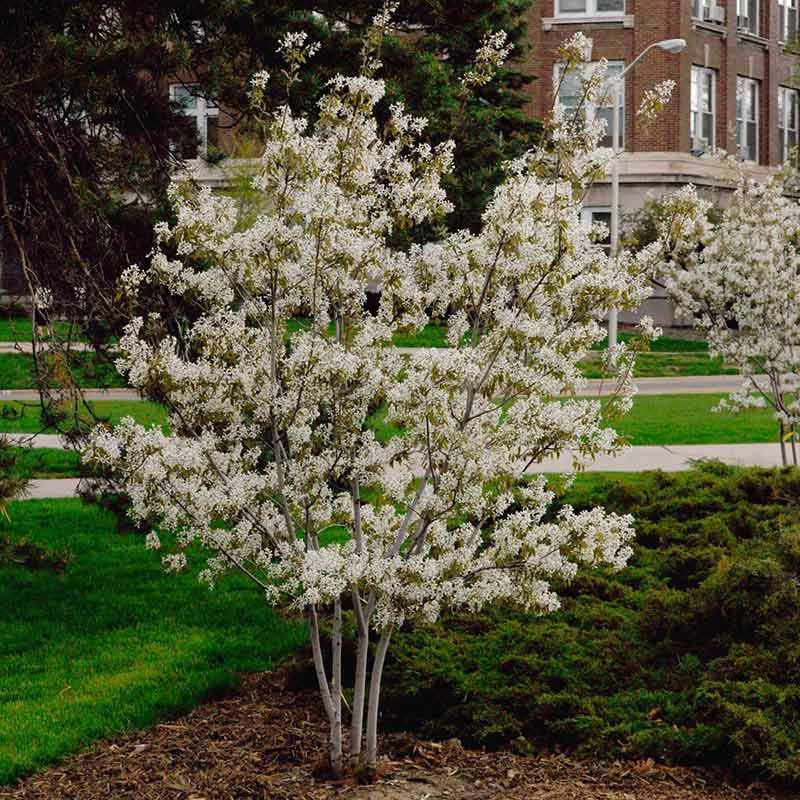
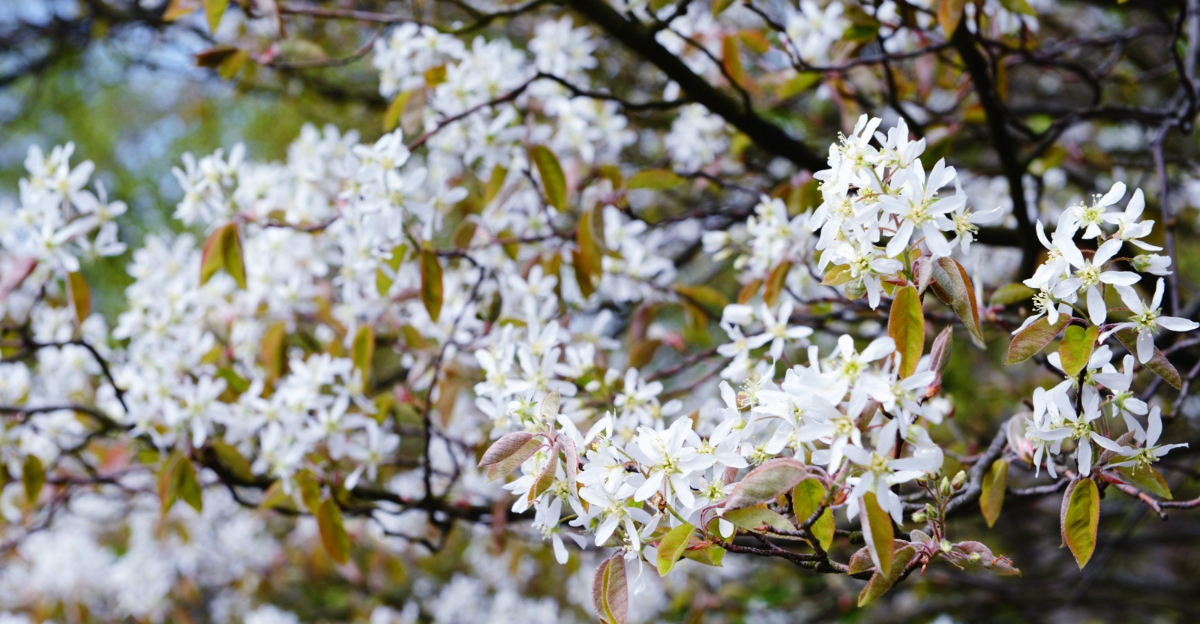
Few small trees pack as much seasonal value into a single planting as Serviceberry, known botanically as Amelanchier.
In early spring, delicate white flowers emerge just as the weather begins to warm, creating a soft, cloud-like effect that works beautifully against brick facades or wooden fences.
It is one of the earliest bloomers in the North Carolina landscape calendar.
By early summer, small red to dark purple berries develop in clusters, and they are not just decorative.
Birds, including robins, cedar waxwings, and mockingbirds, flock to Serviceberry for the fruit, making it one of the more wildlife-friendly choices for a front yard tree.
If you enjoy watching birds from your porch or window, planting one of these near your entryway is a genuinely rewarding experience.
Fall brings another layer of appeal, as the foliage shifts through shades of orange, red, and deep burgundy depending on the variety and growing conditions.
Most Serviceberry varieties grown in North Carolina reach 15 to 25 feet tall, though some multi-stem forms stay smaller and work well in tighter spaces.
Your North Carolina Garden Changes Every Week. Your Plan Should Too.
Gardening in North Carolina changes quickly throughout the season. Every Friday you’ll receive a simple weekly plan showing exactly what to plant, prune, fertilize, harvest, and protect so you never miss the right timing.
They prefer moist, well-drained, slightly acidic soils, which are common across much of North Carolina. Light needs range from full sun to light shade, and once established, these trees ask for very little in the way of ongoing care.
3. Fringe Tree Offers Soft Blooms And A Relaxed Look
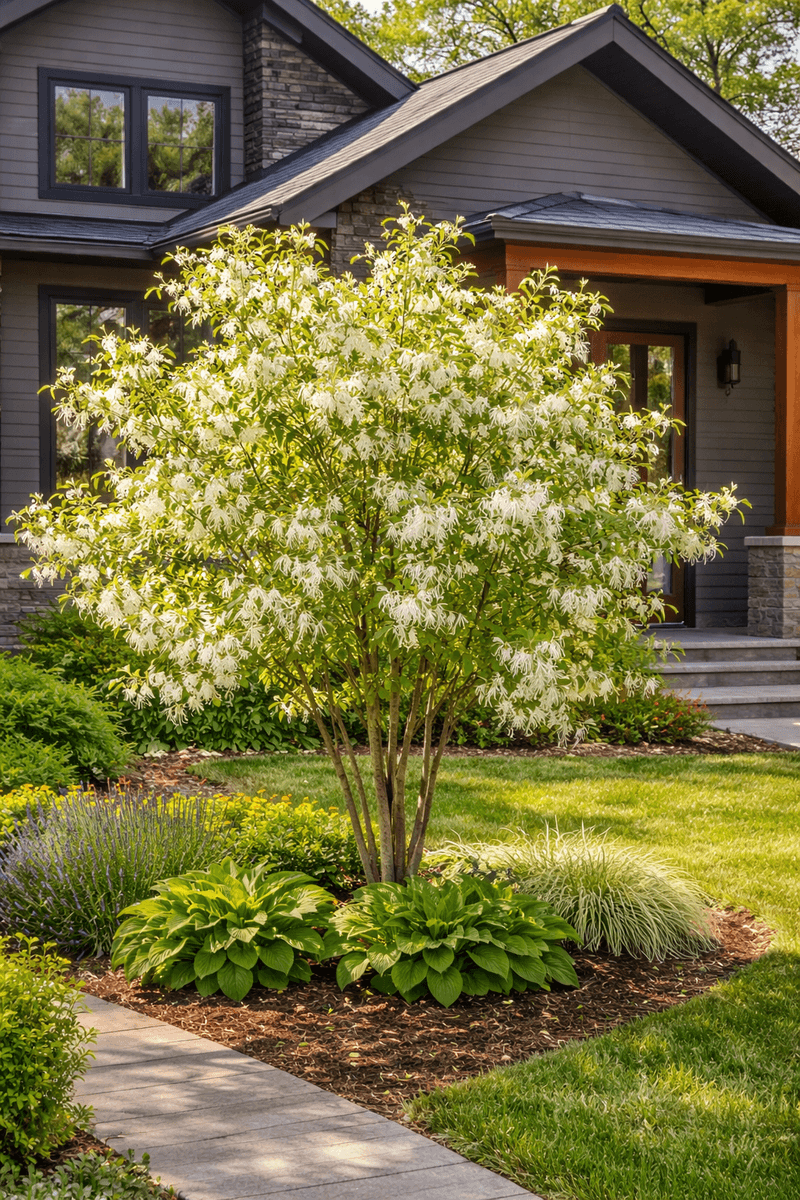
Walking past a Fringe Tree in late spring feels a little like stumbling onto something quietly magical. The blooms, made up of long, wispy white petals, hang in loose clusters that almost seem to float around the branches.
It has a soft, romantic quality that stands apart from more structured flowering trees, and it brings a relaxed elegance to front yard landscapes that can sometimes feel too formal or predictable.
Chionanthus virginicus is native to the eastern United States, including North Carolina, where it grows naturally along woodland edges and stream banks.
In a front yard setting, it reaches 12 to 20 feet tall and develops a broad, rounded crown over time.
The flowers carry a light, pleasant fragrance, which is a welcome detail when the tree is placed near a front walk or entry path.
Fringe Tree tolerates both full sun and partial shade, and it adapts to a range of soil conditions, including the clay and sandy loam soils found across different parts of North Carolina.
It is slower growing than crape myrtle, so patience is part of the deal, but the payoff is a tree that looks increasingly distinguished with each passing year.
Female plants also produce small, dark blue fruits in late summer that attract birds. For homeowners who want something a little unexpected in the front yard, Fringe Tree delivers with understated confidence.
4. Flowering Dogwood Adds Classic Spring Appeal
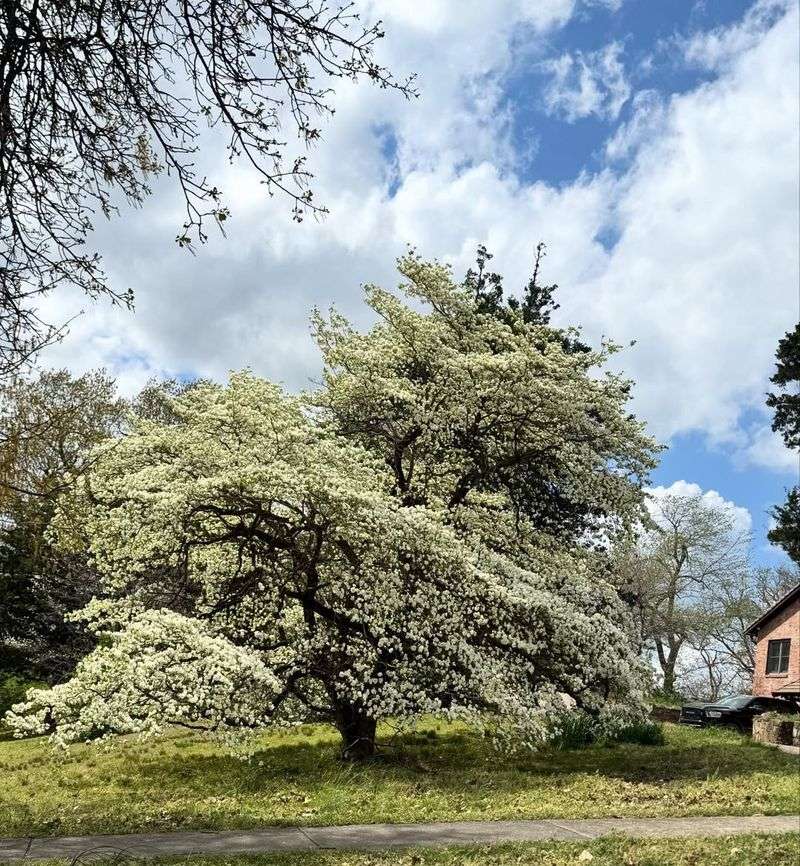
There is a reason Flowering Dogwood has been a beloved part of North Carolina landscapes for generations.
When it blooms in early to mid-spring, the large white or pink bracts spread wide against a backdrop of bare branches, creating a display that feels genuinely timeless.
Yards with a Flowering Dogwood in the front tend to draw second glances during peak bloom, and that kind of visual impact is hard to replicate.
Cornus florida grows 15 to 25 feet tall and wide, fitting comfortably in most residential front yards without overwhelming smaller spaces.
It naturally grows as an understory tree, which means it performs especially well when given some afternoon shade, particularly in the warmer parts of North Carolina where summer heat can be intense.
Well-drained, slightly acidic soil helps it stay healthy and vigorous over the long term.
Beyond the spring flowers, Flowering Dogwood offers red berries in fall that songbirds find irresistible, along with rich burgundy foliage that adds color through October and into November.
Compared to crape myrtle, which blooms in summer and fades by fall, Dogwood gives homeowners spring interest, fall color, and winter branch structure all in one package.
Mulching around the base and avoiding soil compaction near the roots goes a long way toward keeping this North Carolina native looking its best for many years.
5. Sweetbay Magnolia Brings Fragrance And Soft Structure
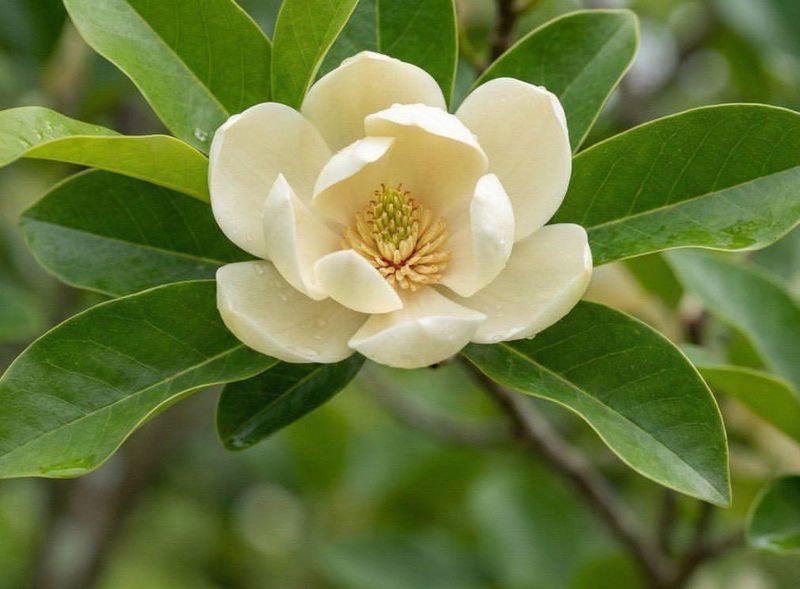
On a warm North Carolina evening in late spring, the scent of a Sweetbay Magnolia in bloom can stop you mid-step.
The creamy white, lemon-scented flowers open from May through July, and sometimes into late summer, giving this tree one of the longest bloom windows of any ornamental tree in the region.
That extended fragrance and flower display makes it a standout choice for front yards where sensory appeal matters.
Magnolia virginiana is a native species that grows naturally in moist lowland areas across eastern North Carolina, though it adapts reasonably well to a wider range of conditions in cultivated landscapes.
Most trees in home settings reach 10 to 20 feet tall, though some multi-stem forms stay more compact.
The glossy, semi-evergreen leaves hold on through winter in the warmer parts of the state, providing year-round greenery that adds structure to the front yard even when little else is growing.
Sweetbay Magnolia handles wet or poorly drained soils better than most ornamental trees, which makes it a practical option for North Carolina homeowners dealing with low spots or areas that stay moist after rain.
It prefers full sun to partial shade and benefits from a layer of organic mulch that helps retain soil moisture.
Compared to crape myrtle, it brings a quieter, more refined presence to the landscape, with fragrance as its signature feature and soft texture as its lasting impression.
6. Black Gum Delivers Strong Shape And Fall Color
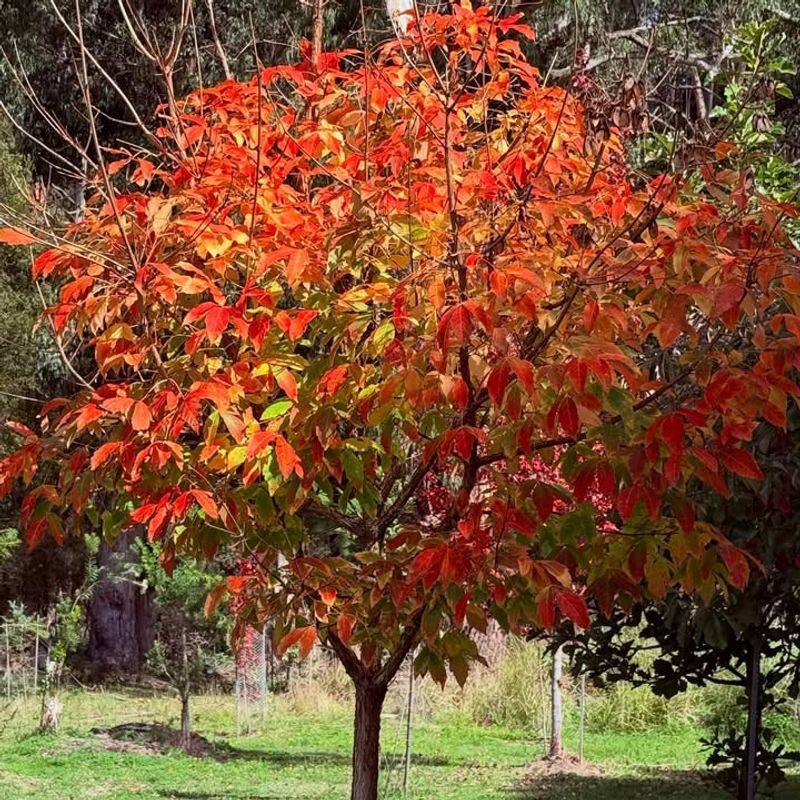
If fall color is what you are after, Black Gum earns its reputation as one of the most reliable performers in the eastern United States.
The foliage shifts to a fiery mix of scarlet, orange, and deep red in autumn, often earlier than most other trees, giving North Carolina front yards a bold seasonal statement that crape myrtle simply cannot match in the cooler months.
Nyssa sylvatica is a native tree that grows across much of North Carolina, from the mountains to the coastal plain.
In a front yard setting, it typically reaches 30 to 50 feet tall over time, so it suits larger lots where a more substantial shade tree is welcome.
The naturally pyramidal shape when young gives it strong visual structure even before the fall color arrives, and the horizontal branching pattern that develops with age adds character and year-round interest.
Black Gum prefers moist, acidic, well-drained soils and does best in full sun, though it tolerates some shade.
It can be slow to establish, so planting a younger tree and giving it consistent moisture during the first couple of growing seasons helps it settle in well.
Small blue-black fruits appear in early fall and are a valuable food source for migratory birds passing through North Carolina.
For homeowners who want a native tree with genuine four-season presence, Black Gum is a deeply satisfying long-term investment in curb appeal and ecological value.
7. River Birch Adds Texture With Peeling Bark
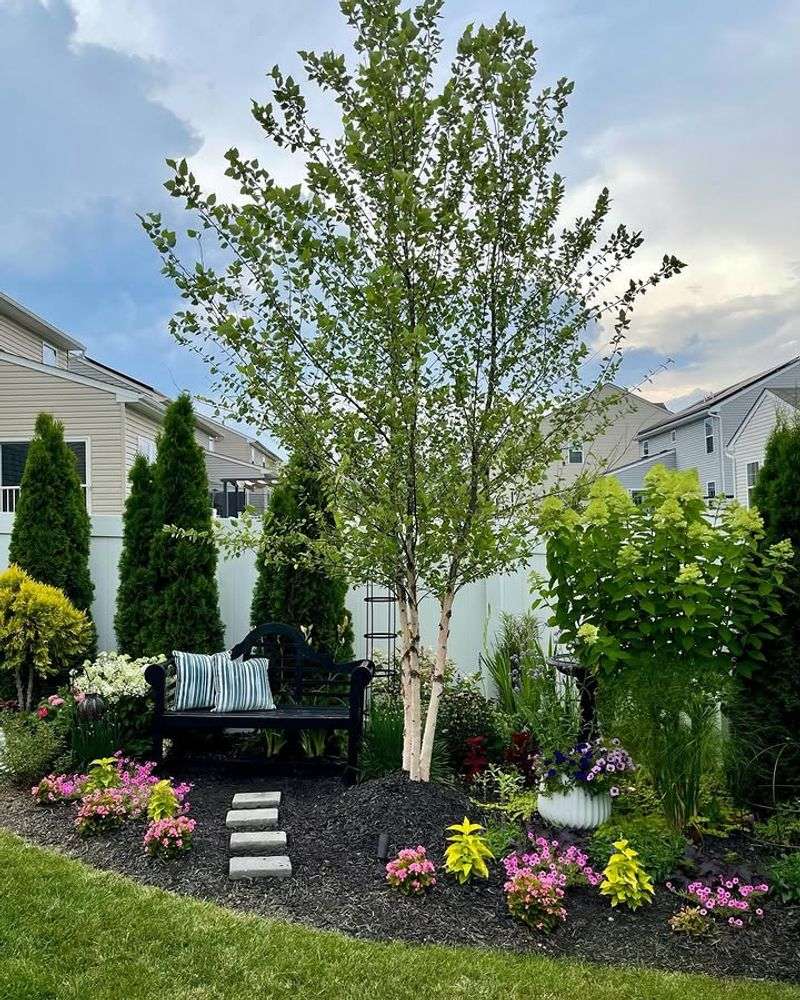
Most ornamental trees earn their place in the front yard through flowers or fall color, but River Birch takes a different approach entirely.
The bark is the main event, peeling back in papery layers of salmon, cream, and cinnamon brown to reveal fresh surfaces underneath.
Even in the middle of winter, when most trees offer little visual interest, a River Birch gives the front yard something genuinely worth looking at.
Betula nigra is one of the most heat-tolerant birch species available, which makes it a strong performer across North Carolina’s warm summers, unlike many other birch varieties that struggle in the southern heat.
It grows 40 to 70 feet tall at maturity in natural settings, though cultivated varieties like Heritage Birch tend to stay in the 30 to 40 foot range, making them more manageable for residential use.
The multi-stem form is especially popular in front yards because it creates a graceful, layered silhouette.
River Birch tolerates wet soils well, which suits the poorly drained areas found in parts of eastern and central North Carolina. It prefers full sun to partial shade and grows at a fairly quick pace, which homeowners who want faster results will appreciate.
The fine-textured, medium-green leaves flutter pleasantly in a breeze through summer, then turn a soft yellow in fall before dropping.
As a front yard specimen, River Birch brings a sculptural quality that makes every season feel intentional and interesting.